Transcript
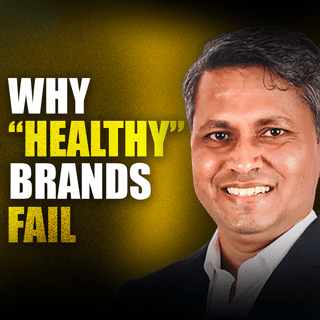
Speaker: Hi, this is Vineet Rai, founder of Avishkar. I'm glad to be here on this podcast with Daksha. So, Vineet, welcome to the Founder Thesis podcast.
Speaker: so ah we need welcome to the founder thesis podcast ah First of all, tell me exactly what is Avishkar? Avishkar is like this large behemoth which you started, you founded and you've been building it for decades. I want to understand what exactly is it?
Speaker: So the word Avishkar means in a innovation invention actually, literal translation is invention. I didn't come up with the words. So what is Avishkar? Effectively, I wanted to see how to help poor people become rich. And this was actually a question that came to my mind. And then I started looking for how do you become rich?
Speaker: of course there's a question of what is rich which also i met on the way but and it seems like and this is i'm taking you to 2001 startup ecosystem didn't exist even venture capital was extremely new to india and so what i could figure out is there are people they have ideas those ideas can become very bright businesses those businesses or around enterprises would make a difference to the lives of people from the lower economic strata but there is no money that is willing to take risks to back those ideas and so there is innovative ideas lack of capital and i was looking for people who will support me to raise this capital and then i
Speaker: met some people in Singapore who, A, helped me to come up with the name of Ishkar. And second, brought in the initial capital to help me start.
Speaker: But my theory didn't actually stop by raising capital and giving capital because that's actually reasonably conventional venture capital. what i And I'm a forester, so that forest background, we knew a world called ecosystem, which is now very common. It was very unknown at that time.
Speaker: So my question was, what I am doing is helping one kind of entrepreneur. But there are very different different kinds of entrepreneurs. Some are need-based entrepreneurs, some are necessity-based, some are innovation-based, and they require different kind of capital.
Speaker: So really what Avishkar group, which is what we are known today, is building an entire ecosystem supporting every kind of entrepreneur. So if you are a woman who want to sell flowers in a remote village and you require financing, we provide that as well.
Speaker: If you are an MSME that is actually looking for collateral free loan, we provide that as well. If you are a venture entrepreneur who wants to build a scalable business and has an idea,
Speaker: we provide capital for that also so that's equity capital if you are somebody who's scaling up fast and want to build an institution and require a larger amount of capital let's say 50 crore 100 crore we provide that as well and then we have intelli cap which actually advises and helps you raise capital in case you want to raise hundreds of crores of capital so in nutshell what is the avishkar group we provide capital to take all kind to allow entrepreneurs to take all kinds of risks.
Speaker: One request we always have for the entrepreneur is, would you integrate the lower economic strata into your vision? That's it. So that's the only ask we have. But we are essentially provider of capital to build the ecosystem across the board for all kinds of things.
Speaker: um okay what is your uh assets under management today like your AUM so I think actually dollar keeps moving up and down we have both so it's somewhere between 1.25 to 1.5 somewhere depending on where we are on our capital rates spectrum also somewhere in between you're saying billion dollars like one billion dollars 1.2 to 1.5 somewhere in between wow amazing there would be very few um like private market investors with this kind of a um in india right yeah a few but there are lots hopefully it will change we we used to be the largest but
Speaker: largest within the impact space. So let me be correct. There are many large, very large investors. We hope to actually become larger and larger. But I think India is very large. So sometimes Indians don't understand that 140 crore people and 4.5 trillion is we are very unambitious in our scale.
Speaker: And our capital providers like us are very small. i mean, at 1.2 billion, I keep giving people an example to set up a two gigahertz cell manufacturing facility, you would require billions of dollars.
Speaker: Just one factor. So in the new age economy, capital is far larger, far bigger and far significant. a So I think it's very important and for everybody to understand that we are all bonsai.
Speaker: We are not yet trees. So now this one, one and a half billion of capital, is this you told me that you give a debt, ah you give equity. Do you also give grants? like like What is the split of this capital that you're managing?
Speaker: So see, around 600 million odd equity, 600 million. Okay. Aughts a million is debt.
Speaker: And ah inconsequential amount is grants. That's largely our CSIS, our foundation, which is three years old. so okay But still half a million dollars right now. We're trying to make it to two, three million dollars. But this is largely meant for seeding...
Speaker: entrepreneurs in eastern UP where we are trying to replicate everything we have done at India scale only in a concentrated area in eastern UP. Okay. Okay.
Speaker: Okay. this, you know, how how is, are there further categorizations within this 600 million of e equity like different vehicles or different objectives in which you categorize it and same for debt also like is there like a, small cap, mid cap, something like that. or So see, basically equity, we generally used to do, we were the first investor in probably 70 odd companies.
Speaker: And then we started becoming started becoming slightly pre-series A, series A, series B investor, largely because of scale and size. And also there are so many early stage investors, so we don't need to take the risk. So a significant part of our money has gone into equity and we have built a lot of companies. Some of them have become quite large now.
Speaker: So that's actually the equity part of it. Then we have a microfinance institution, which is around 800 million. That's actually our own. And that actually gives loans from 10,000 rupees to around, to around sometimes up to 10 crores also. But largely, 90% of their capital is actually into very small loans and sometimes big loans. Then we have a credit fund of around 100 million now, which will give loans between crores to 50 crores. Okay. Okay.
Speaker: okay okay The credit fund is targeting startups. Like like this would be a venture debt. No, it's not a venture debt company. We call it performing credit, which is essentially, we are very focused on export-oriented enterprise that requires yeah esg in their format. So when you export to Europe, you need to actually meet an ESG compliance checklist.
Speaker: ah What we are trying to do is make entrepreneurs understand that ESG compliance is not a compliance activity, it is also a strategy. And that strategy can enhance your business, improve your returns,
Speaker: And therefore, seeing it as a tick mark, can you can incorporate in your strategy? And if you do so, we are willing to provide you capital that is tailored to your needs.
Speaker: Of course, it is debt, but it is tailored to your needs. So we can actually give a mix of only interest and then principle to be paid over a period of time.
Speaker: um So very different kinds of structured product that we can provide, which is rare to find in the market. So, you know, for for an outsider, what does performing credit mean? Like, why is this word performing used with credit?
Speaker: So, performing credit means that you as an institution are performing. That means you at least have an emerging bottom line. And you are not really... a venture debt goes in when you are essentially... Your last make business economics is not settled.
Speaker: Performing credits come in when your business economics is there, but your balance sheet and accounts does not actually support more credit. Okay, okay. So the the the loan is given only on the condition of adoption of ESG practices?
Speaker: not Not necessarily because that's very easy to do. But you have to have a proper business. You should be actually using. So generally these companies, because they are exporting, have some level of ESG.
Speaker: the Let me put it this way, that you can travel by an auto rickshaw, you can travel by a Mercedes-Benz, Travelling is travelling. What we are trying to do is since you have a auto rickshaw, you can take higher end. Your ESG practices could be slightly piecemeal or very basic.
Speaker: We would try to actually help you take them to a level where you can stand out from the crowd. And what's an example of a deal here in this performing credit fund, 100 million? so there is actually we've just announced a company horizon horizon spices it's an exporter of spices from africa to europe and yeah so this is actually so they export spices which actually means involving a lot of farmers, buying those spices, transporting them, collecting them. So the kind of practices, the kind of human intervention, the kind of harvesting practices you are doing, the engagement with the farmers, how you treat the farmers.
Speaker: So environment, how are you treating the environment? how How good is your governance? And how are you actually leading and dealing with the society? All the three things find significant evaluation in our society.
Speaker: in our investing thesis. And then then, of course, the cash flow of the business and what you are doing. Okay. And this is not an India-focused credit fund?
Speaker: Yeah. And also, we are Southeast Asia, India and Africa. okay the global south is what i think global south you called okay okay interesting um okay so i understood the credit fund let let's go from small to big uh so this 100 million is the credit fund then the next is your mfi how does an mfi operate can you just give me like a very basic understanding of what is an mfi how does it operate yeah so i'll take you a little bit so microfinance is very simple
Speaker: Basically, this came out of Bangladesh. It's called joint liability group, where the loan is given to a woman, but the guarantee comes from the group. So there are five women in a group. You give the loan to an individual person.
Speaker: But the group stands and says if the woman defaults, the group will pay for it. So that's how microfinance operates. Now, the loans generally, these women come from very poor background. They might be selling flowers or they might actually be, their husband might be looking for a rickshaw. The woman will take the loan, and give the rickshaw to the husband, the husband will drive.
Speaker: There are many different combinations of activities and they require 5,000, 10,000, 20,000, 50,000 rupees loans. which are normally paid between 12 months to 24 months.
Speaker: Now there is a regulation also. This is a heavily regulated sector. so So our microfinance tuition, so I was actually one of the first investors in microfinance space.
Speaker: I started looking at microfinance, it was 100 crores and overall, so everybody put together was 100 crores. Today, microfinance is around 4,50,000 crores. So in last 20, 25 years, I have seen the movement from $20 million at that time to roughly $50 billion. So I mean, you can understand it's huge scale. We are also around, so around till 2010, I was an investor.
Speaker: And we invested in very large institutions now. First check in Credit Grameen, in Equitas, in Utkarash Bank, in Suryoday Bank. and And these were equity checks?
Speaker: These are all equity checks. okay To people who were starting off with very little or no experience of microfinance, they were all, of course, experienced bankers. And we used to help them incubate.
Speaker: So not only would we actually give them money, but we'll work with them to actually start their business. ah Not everybody, but so for example, Utkarash and Suryoday, we actually created a whole incubation platform.
Speaker: then gave the capital and then worked with the entrepreneur to scale up. In Suryodha, we exited in 2017 when they became a bank. In Utkarsh, we continued to hold capital even now.
Speaker: two okay In 2010, there was a microfinance crisis where the government actually in Andhra Pradesh basically passed an ordinance that effectively led to a mass default.
Speaker: At that time, there was a lot of crisis. Of course, we lost a lot of money and lot of value as well. But I was convinced that the poor did not stop paying back because they didn't want to pay back. There was actually an external stimulus.
Speaker: So my theory was if the poor still wants the capital, there was an external stimulus. It is in a certain state. The rest of India should still function.
Speaker: And so with this great conviction, everything that we have actually collected between 2001 and 2012, we invested in buying Arohan, which was a small operating microfinance company. Also ah due to the crisis losing massively, it was losing pretty much two crores a month and its total net worth was 14 crores and it was losing two crores. So in another six months, it wouldn't have existed.
Speaker: So we took the risk of buying that company for, I think, 12 crores. If I remember, it's now 13 years, so my memory serves me right. For 12 crores, we bought it. And our plan was that we will turn this around and make this a model microfinance institution.
Speaker: ah And one of the things i we wanted to change was bring in very high-end intensity of technology usage in the lending. now The challenge is I am not a technology guy nor than my CEO Manoj Nambiar was a technology person.
Speaker: So we we actually brought in people from outside who taught us how to use technology. and I'm very happy to say that despite ups and downs, everything, Arohan is now around 7,000, 6,000, 7,000 crores in assets and is considered one of the most technologically savvy and advanced non-banking finance company, not just a microfinance, across non-banking finance companies.
Speaker: And we believe ah it's ah it's a technology that is stable, that performs and that delivers. What is the impact of technology? How how is Arohan using technology? Is it for collections? or So I think there are three parts to it. The first part is essentially how do I know the number in front of me in the balance sheet is true?
Speaker: Because the money is spread across 17, 18 states in thousands of branches. We have 9,000 employees. So first thing we wanted to understand is how do we know at any given point of time that the numbers that are being fed to us from the grassroots are actually real numbers.
Speaker: So we moved on. So first thing we did is is very basic, which core banking software. Now, it is unheard of of a very small NBFC to actually start using a core banking software.
Speaker: But I asked a very naive question and the answer was the only way you could do it I wanted to be very sure of what I'm actually signing out on. And the advice we got was, and Manoj was very clear, that the only advise the only thing that will work is a core banking software. Because 12 o'clock at night, it shuts down on its own and there is nobody who can actually do any.
Speaker: hanky-panky with it. so So, of course, transitioning into that software was a nightmare because we were in we we just didn't have the capacity. The six months of nightmare has kept us happy for the last 10 years. okay let me put this But the first six months were a nightmare. so that let me so So, getting that core banking allowed us to build a huge number of software on top of it.
Speaker: So for example, your entire human resources on a software, your entire prediction, what you predict about your future. We actually have every person of our all 9,800 or 10,000 odd employees.
Speaker: We are geotagged. So we can tell you who has gone, who has met the woman, how long they stayed in engagement with the with the lady who they were actually asking for a loan.
Speaker: That means you can create a very high level of transparency in managing and monitoring what is happening on the ground. Then of course, the entire process is not paper based, it is all technologically based, which I think many, all almost all microfinance institutions have done. So we are not unique there.
Speaker: But this geotagging, this following through, this getting, And then we can actually, then we use high-end deduping, et cetera. So those are things that you do at the backend. And then on the collection side, we are using UPI for payback, but we also use all kinds of partnerships with the other payment systems and mechanism mechanisms as well.
Speaker: So at this point of time, I would say around 90, more than 90, 95% odd is non-cash. We don't collect any cash. And that makes us very unique because when I started off in microfinance, it was cash logistics.
Speaker: It was really making cash available in the villages. That was our claim to fame. From there to actually be a completely cashless company where you are dealing with the bank accounts of the people. And finally, we have actually this very unique system where we have actually built a product that any woman can make an application to us.
Speaker: And in 30 minutes, we can actually approve the loan and have the bank have the money credited to the bank account of the lady. in any part of India. So we control, we control our software, we can allow you to make an application.
Speaker: But in 30 minutes, we can, of course, there is a condition. You have to be an experienced borrower, you should have a blemish list, track record, etc. But if all those are met, then in a very quick time, we can actually lend to you.
Speaker: You still lend to groups? Like you said, joint liability groups as the fundamental... Yeah, so we we do joint liability group, continue to be majorly joint liability group, but we are...
Speaker: Also, as i said, doing this direct lending, which is not necessarily a group lending, pretty much individual lending. Our belief is the group lending is a good starting point. So new to credit customer, customer who has never taken a loan should come through the groups.
Speaker: of Those who are still learning should come through the group. But those who have a very good track record of repayment should graduate to individual lending.
Speaker: So women who are part of a group, all of them then get a CYBIL score, like you're able to create credit history for them. Yeah, no, the credit history is actually, so individual credit history is different from the group credit history.
Speaker: ah Generally, Earlier for a very long period of time, used to penalize everybody for the group disintegration. As the loan sizes have become larger and larger, it has become more difficult to penalize somebody for for the performance of one individual.
Speaker: Also remember, today the option for lending is available from multiple sources. so So the credit bureau track record does not necessarily reflect the track record of the group. It reflects the track record of the individual.
Speaker: So how does a new to credit person get a credit history then? Because the credit history person, generally the she has to just go and meet today. Self-help group and joint liability groups are as mainstream as this thing. so every village will have 50, 100. And you need to find people who are not part of your relatives.
Speaker: ah but know you will. So therefore, you will generally know somebody in the village who will be part of these joint liability rules.
Speaker: Subsequent to joining a GLG, then how do they build their individual credit history so that they can apply for a loan individually? So see, the the process is actually a quite elaborate process. There used to be something called a group recognition test. We used call it GRD, where you try to first identify...
Speaker: Because sometimes what happens is so in a group, you can't be relatives. In a group, you need to know each other quite well. So we used to create a group recognition test, etc.
Speaker: Now it is all happened in a very short period of time. So the group can be formed and it happens very quickly. And then you actually make an application where this client, the customer service representative from the organization actually helps the woman identify her needs, articulate that need, makes a loan application.
Speaker: And then that loan application is fed into a tab from that tab. It goes to the central office. Uh, there may be some queries, et cetera. Once they are realized, uh, there is a process under which, uh, then there is actually a query that goes to the credit Bureau, whether this woman has borrowed any other loan as she defaulted, how many loans she has got.
Speaker: And then a loan is made and then loan is approved. And then the disbursement is into her bank account. Okay. Okay. Okay. and understood okay um you said there was a crisis in andhra pradesh what happened what was the story there and you also said this sector is heavily regulated i'm assuming these things are interlinked like there might have been some misuse or something because of which the sector got so heavily regulated no the sector is heavily regulated because we are all registered with rare as reserve bank of india because lending is a fairly regulated sector so once you start lending
Speaker: You need to be regulated. This is actually the norm. And the regulations come from Reserve Bank of India. There is a special regulation for microfinance institution because it's a slightly unique sector.
Speaker: It's called NBFC MFI regulation. So you need to become a NBFC MFI to to get regulated. Once you are an NBFC MFI, you can continue the business of lending in microfinance.
Speaker: And then there is a certain sub-regulation which essentially say that 60% of asset or 75% of asset should be in microfinance. Microfinance defined in this manner, your loan should be below 3 lakhs. Earlier it was defined as you should be engaging with the ah with the woman only through a group methodology.
Speaker: So microfinance definition itself has moved from it being a group methodology to any loan below 3 lakhs would be considered as a microfinance. Okay, okay. So regulations are to that level and therefore it's it's core reasonably complex on the ground on how you operate.
Speaker: and And what happened in Andhra Pradesh? So Andhra Pradesh, basically in Andhra Pradesh, I have an article, in how I wrote it for Harvard Business Review when the crisis happened. So it's public document, anybody can Google it, Vinitra, HBS, microfinance, you'll find that article.
Speaker: Basically, my takeaway was that in Andhra Pradesh, there were unique circumstances. Government was running a very large, ah state government was running a very large microfinance project of itself.
Speaker: a with a self-help group model, which actually has 20 women and the loan is given to the group. And then the group then lends to its own members, which is very different from the joint liability group that we are talking about, where you the loan is to the individual, guarantees from the group. In self-help group, the loan is to the group and then the group decides who to lend further down.
Speaker: so There were microfinance institutions, which were doing joint liability group, operating as private sector lenders. And then there was government-led, S&G groups,
Speaker: Over a period of time, the SSG groups and joint liability groups became mixed. That means the members of SSG were also the members of JLG. Now that led to competitive competitive behavior between the collection practices.
Speaker: And what started happening was that the self-help group model started losing capital. The default rates went up while microfinance model continued to claim a very high quality of performance.
Speaker: Now, as the intensity and the competition scaled up, there were some suicides, some deaths that happened, which were in my view conveniently blamed on microfinance system it does not necessarily actually I'm not absolving microfinance sector of its responsibilities and I'm also not absolving them from excesses that happens on the ground but at the same time everybody has lent the money so how do you distinguish between why did the person commit suicide my article basically explains that if you just go by the national uh criminal rates which actually predict uh statewide suicide the suicide rates generic suicide rates per thousand people in adhapradesh were quite high compared to other states and if you apply to the number of people ah microfinance was lending
Speaker: ah it actually felt that those rates were actually much lesser than what they were in general. So blaming microfinance, of course, if there are 10 million people being serviced, there will be all kinds of challenges and issues.
Speaker: It was not to downplay the challenges, but to say microfinance created suicide. And there has been enough, cifores same thing happens in agriculture loans also.
Speaker: pharma commits suicide and then say, oh money lenders actually made it happen. I think there is no correlation between lending and suicides. And there are enough studies that actually have busted that myth.
Speaker: But it is a political rhetoric and it comes every time there is a crisis. So Andhra Pradesh, this crisis scaled up quite significantly because government itself was actually a player on the ground.
Speaker: And there were very strong views from the government. And Again, I'm not absolving microfinance. Probably they deserved ah they deserved a hard wrap on their knuckles.
Speaker: Instead, what they got is a complete beheading. so What did the government do? like there is a loan The government passed an ordinance which effectively said that if you give a loan, it is the right of the person to return it when and if they want to return it. And which was and that you cannot go and demand your loan back, which pretty much, and if anybody is found doing that, will be put behind bars. And so pretty much put paid to any return. So all almost all the money was written off.
Speaker: And it damaged as much as the credit record of crores of women, I think 90 lakh or one crore of women. But it also damaged the government program as well. And Andhra Pradesh has not recovered from that. After that, the state has been split, et cetera, et cetera.
Speaker: And microfinance has slowly come back there. But it continues to have a negative connotation in the microfinance history. And that clause is still there, that it is there right, if and when. I think it has been diluted down quite significantly.
Speaker: And also there has been a Supreme Court, I think High Court or Supreme Court judgment, which very clearly says state cannot regulate non-banking finance companies regulated by Reserve Bank of India. that distinction between the regulators power and state powers has now been made very clear okay okay okay so you said this sector has grown a lot uh i think something like a thousand x growth or maybe more um so generally capital goes where returns are high right so what is the return profile like for an mfi what is the net interest margin
Speaker: So MFI is actually have a very high cost of delivery. Generally, the cost of delivery is around eight and 9%. The net interest margin. Yeah, because operating you have nine, 10,000 people spread across all India. I mean, we are actually delivering a loan in the house of the lady or in a central in the lady in a village.
Speaker: That's actually a very expensive exercise. You're collecting it back. Just imagine. Most microfinance institutions operate on a weekly collection model. That means you actually travel to the village four times ah and then disbursements. It's a very complex and very demanding model. So 8 to 9% is basic operating cost.
Speaker: Then you your borrowing cost is around 11%. eleven percent Average is between 10 to 12. So some some people get it at 10, some get it at 12.
Speaker: 12, 12.5%. organization, you get it at a higher price. So the smaller the or organization, the larger the base cost of borrowing. Because the larger the base cost of borrowing, add 9% of operating And then on top of that, add default. For a very long period of time, the defaults were very low.
Speaker: So 1% was normally added, so 22%. Then you can have 200, 300 basis point of margins. Unfortunately, lately what has happened is the defaults have gone up quite significantly.
Speaker: I mean, if you look up in the listed MFIs, you will see actually 6%, 7%, 9% defaults also.
Speaker: Now, that actually makes the model very challenged. So microfinance has faced ups and downs. ah Sometimes it has been the error on the part of the microfinance lenders. They have over lent and therefore the person has run out of capacity to repay and has defaulted.
Speaker: and when that default happens that those defaults actually make the business unviable so a lot of ups and downs lots of challenges it's a business of prudence it has a reasonable margin it's a reasonable profitable margin but remember the loans are unsecured loans so when you run on the wrong side you actually lose money so in a in a safe let me put it this way the borrower the lender a bank to a mbfc mfi is making 12 without any risk yes right microfinance institution must have the right to make at least 15 return for its investors ah and the sub and substance all commercial investors look at a 20 roe business anything below 20 roe is not commercial
Speaker: microfinance institution and often on given returns between 12% to 18%. Some have sometimes one year or two years have exceeded 20% as well, but that's simply if you're operating at full efficiency, that means your capital rate to case ratio 17, 18%.
Speaker: You are fully leveraged. You are operating at full efficiency. In that case, you can actually reach a 20, 22%, 25% also but because those cannot be sustained.
Speaker: Therefore, microfinance has the potential to go from 25 to then 5, 10, 15, 20, 25, then again minus 5. So therefore, it has been a little checkered. It is exciting when it does well for commercial reasons.
Speaker: And it becomes very unexciting when it is challenged. Right right now, it is in a very challenged circumstances. and it is not exciting for commercial investors so okay so one has to understand and microfinance cannot be measured by one year's performance one has to look at a five year or and ten year performance horizon in those five ten years horizon it gives a reasonable return 12 13 percent i just want to like simplify with an example for the listeners so basically if a mfi is lending 100 rupees of those 100 rupees 20 would be their equity and 80 would be money which have got uh as borrowings from banks and on that 100 rupees you're saying typically they earn 200 to 300 basis points so like say three rupees is what they would earn on that 100 rupees return on equity is three divided by 20 that 20 of the original equity which is low you're saying that because that just yeah 3 upon 20 is 1 upon 78 so you will get 10 12 percent
Speaker: 3 is 15 actually. Yeah, 15% whereas 20% is what is But 3 is actually not necessarily consistent. so okay It may go up to 4, 5 also sometimes and then come down to 0 and 1 or sometimes negative also.
Speaker: So 3 is more like an average. This up and down is totally on the default ratio. It's largely driven by defaults because the defaults, there are multiple triggers to default. There could be a bad monsoon. There would be a climatic intervention. There could be a political intervention.
Speaker: There could actually be some local disturbances, a riot. ah Everything actually influences microfinance. Bad monsoon, bad harvest, a war, anything can massively...
Speaker: influence this is a leading indicator for economists then to see like the default ratio in mfi will tell them how is rural india doing in a way yeah well rural and urban because there's a large amount of microfinance in urban india as well okay okay so why is the default ratio so high right now is there some stress on the economy yeah so di so basically what has happened is uh if you go back to elections last year and you will recollect it was extreme extremely hot that extremely hot period led to a reasonable meltdown in rural India.
Speaker: There was, and those, those defaults have continued. Now the problem is defaults have many different ways. So in, and in microfinance, because as I said, it is heavily regulated.
Speaker: Most of us are on IndAS. IndAS is means IFRS, equal. So let's assume for a minute, I am actually a borrower and I have taken a 10 rupee loan and I have an installment to pay back 10 rupees. Let's say every,
Speaker: Now, what I paid instead of 10 rupees, I paid 8 rupees. The entire loan stand actually as a default, even though I paid 8 rupees or 6 rupees.
Speaker: Okay. So unless I catch up and pay up 10 rupees for every installment, it will stand as a default. Now, from a provisioning perspective, even though almost all the women are paying,
Speaker: They are not really reaching that stage where they can pay. So what happens in microfinance, which is quite unique, actually, is a large percentage of the money that is defaulted comes back, but it comes back over a period of time.
Speaker: So that's really one of the biggest problems is ah so but accounting, accounting does not give you the leverage. So till the time the accounting was a little lax, we could get away, oh, everybody's paying, everybody's paying. But once the accounting has become very tight, the regulation has become very tight, the provisioning and capitalization norms have become very, very difficult. So so therefore, you see, so it's not that nobody's, people are not paying. people are People's capability to pay the full installment is not there. They are paying what they are paying.
Speaker: their ability to catch up and make everything good in the past is also very limited. Okay. And oh typically who finances MFIs? Is it like PSU banks or is it like... So but private sector banks, public sector banks, large NBFCs.
Speaker: PSUs are quite large percentage of the lending. Then there are external commercial borrowings. It's a fairly evolved sector, non-commonate NCDs, so you have global lenders you have india but most of the money comes from india so public sector banks and private sector banks and this is part of the priority sector lending mandate uh this is priority sector lending mandate yes okay so so banks have to put certain amount yeah it's it's a very good asset it's a good asset in good times sometimes they'll become bad but generally a good asset okay okay okay understood and understood so now i understand why this has grown so much because banks have a mandate to put money in priority sector and this is possibly the best option for them in the priority sector very interesting um okay uh you spoke of how today most of your collections is cashless i wanted to understand what are the government initiatives which have made this cashlessness possible is rural india now largely cashless or is it still ruled by cash?
Speaker: And I mean, you said both rules and urban. I just want to understand, like, what is the state of cash in the economy? After demonetization, people said there is more cash in the economy than there was pre-demonetization.
Speaker: just want to hear your take from a macro lens of cash in the Indian economy. So I think the Cham Trinity, UPI, both have played a very, very critical role in all allowing us to do it. I mean, without UPI, without the Jam Trinity, none of this has happened. So I think this whole... with The Jam Trinity is Jandhan Accounts and Aadhaar.
Speaker: And what's the M? Yeah, so it's Jandhan, Mobile and Aadhaar. The three combination of it actually basically helps you identify. One of the challenges that happened was Aadhaar was not being allowed to be used in between after the Supreme Court order.
Speaker: using the bank accounts for identification of the individual which now has actually been resolved but you need to actually get an authentic basically special registration with other authority to do that so that requires a significant investment so uh aruhan was one of the first ones to get that approval and i think that is one of the biggest movers and shakers in trying to create this entire base Now, is there more cash? The cash continues to have its demand and presence because there is a reason why cash is important it exists in very developed economies as well.
Speaker: India has been unique in that sense is because using Aadhaar and using the penetration of mobile phones, we have we we have been able to actually create and and then opening of the bank account. because Without the bank accounts, in any case, we would have not been successful.
Speaker: you can therefore become cashless. But cashless is always a demand because we don't want to handle cash. It's not that the customer doesn't want to handle cash.
Speaker: We don't want to handle cash because cash A has its own challenges. Then you are actually dealing with frauds. You are dealing with the attacks on our employees, etc. So going cashless is actually hugely beneficial for the institution.
Speaker: And therefore, we are massively aligned to it. The customer at the end of it, she will have to go to the bank to withdraw the money. So her preference is if the cash is given to her. And that preference is very natural. It doesn't matter if it is our customer or any bank's customer. That has not changed. It is still like there is still a preference for cash.
Speaker: Yeah. Convenience. Cash is convenience. That digital payment methods is not so prevalent outside of the urban cities, I guess. No, so repayments, which is quite significant. From 0 to 15, 20% is quite significant.
Speaker: ah Then we used basically payment banks and others to actually get remaining payments. So instead of, if they don't want to do UPI to us, they can go and deposit the money into a payment bank.
Speaker: And... and from that payment bank into our account so that can get created but we try not to touch the cash okay okay okay and understood okay um okay so you know let's first finish the business understanding there are a couple of other things also I wanted to ask you on a more macro level but I'll come back to those uh so we've covered two parts of the business the credit fund and the MFI now the equity, the the venture investing business is what you originally started with. Can you tell me that origin story? You said you were a forester. What do you mean by that?
Speaker: So I am a fawor from my Indian Institute of Forest Management, which is an institute that trains you to become a manager. It used to be sustainability way before sustainability became a fashion or let's say a centralized theme.
Speaker: ah our job was we were supposed to be part of the government but then by the time the Institute actually started graduating us we were not seen as part of the government so we had to go and look for jobs I got a job with Balharpur Industries which is a paper industry and a paper industry then this I'm just curious like forestry was it just that you got admission there and you picked it or like yeah I graduated I finished my graduation of physics physics chemistry and maths and Now, 1991 is a fabled year in India's economic history.
Speaker: So you can understand finding a job was impossible. ah Somewhere, ah my friend's father, Bhatia uncle, actually basically knew about this institute and he was convinced that I should actually apply and get into it, he forced me to basically appear in the exam.
Speaker: I had no clue what this institute was. I went for the interview and the building was beautiful. So I joined it. My personal ambition was to join Army. and the But unfortunately, I was rejected in the in both NDA and Combined Defense Services exams.
Speaker: So i i was I was left with no choice. And I think the most important thing in the addition was not just the building. I actually also was offered a full scholarship. so so And I think it was not unique to me. Everybody in that batch got a full scholarship. So we were just very, very lucky.
Speaker: Yeah, so I think I came from a middle class family. Father was a government servant. Didn't want to actually pay any big fees. Hmm. So you get into an institute, you're getting scholarship.
Speaker: I didn't ask anything further. Right, okay. By that time, I have been rejected by everything that is there in Army, Air Force, Navy, Short Service Commission, sir. Okay. So you joined Balarpur, which is the paper and manufacturer.
Speaker: Yeah, at that point of time, it was considered a reasonably good job. I applied. Not that people were expecting me to get a job. I got a job. i i was very happy in the forest chasing bear and elephant.
Speaker: and okay I mean, I had a vehicle, I mean, imagine 22 and a half, you have a you have a jeep, you have a motorbike, you had thousands of people under you.
Speaker: oh It sounded very exciting till I finally got married. And my wife, she tried to adjust to the realities of a forest and the remoteness of the place. But after a point, she said, let's actually...
Speaker: Let's actually find a place which is outside. And that started my hunt for a new job. I applied for everything from a car salesman and musket to whatnot. But I only got one invite, which was from IIM Ahmedabad, which I accepted because I had no choice.
Speaker: okay and And then when I landed up in IIM Ahmedabad, I got an opportunity to work on a biodiversity benefit sharing mechanism as a researcher eight months later i realized i'm not really cut out for it so i stepped away and then got an opportunity to set up probably and i'm i there is no guarantee i'm right probably india's first incubator if not the first first two three incubators most likely the first though in 1997. I ran it for four years. This was the Gujarat government initiative advised by Ahmedabad. Keshubhai Patel was the was the, it was Keshubhai Patel's vision and legacy.
Speaker: Professor Anil Gupta was actually the person who imagined it. I just happened to be the first CEO, which also was an accident. I was too young, too inexperienced.
Speaker: But somehow the government was very, very forward looking or whatever. They actually offered me the job. I was very happy to accept it. Ran it for four years and got introduced to innovations, complications of converting innovations into products and then business.
Speaker: Understood why innovators are different, entrepreneurs are different. And I mean, something as basic that innovators like to produce a new product every time and that entrepreneur's job is to produce the same product every time.
Speaker: yeah took me a couple of years to understand the difference between an innovator is an innovator and why an entrepreneur is an entrepreneur. Once I understood that, ah I realized that for every product transition I needed capital.
Speaker: I was lucky there was Technopreneur Promotion Program which was launched, so I drew a lot of money from there. ah I was also very lucky to use whatever limited social media that was available at that time to attract ah a lot more ah voluntary participation in helping convert these very crude but brilliant ideas into very good looking prototypes.
Speaker: So National Institute of Design and some other voluntary engineers played a very, very important role in creating these products, converting these products into worthwhile oh prototypes that people would be excited about.
Speaker: And then I started looking for entrepreneurs. And then one entrepreneur, specifically in a tilting bullock cart, which is where I got educated. This was a tilting bullock cart. And... the the entrepreneur The innovator said, I don't want to manufacture it.
Speaker: I had generated a lot of orders. Those orders were actually may advance being given by farmers. So I knew how much risk I'm carrying on my shoulders. So i ran around, searched for an entrepreneur who had a facility who was willing to manufacture it.
Speaker: And the entrepreneur told me that it's okay. You have given me this amount of money right at the start. And I'll produce each one of this and sell it. But what if i So I was encouraging him to take more innovations.
Speaker: And he said, what if I actually fail? And then he asked me, do you get a salary? I said, yes. So he said, you will get keep getting your salary. But if I will fail, what will happen?
Speaker: Now, imagine I was getting a salary. My father used to get a salary. I had never gone through a day where the salary will not hit my own bank account. yeah So it surprised me. I said, oh, yes. And then I realized what was available was a loan, a loan against collateral, a property, a house or something.
Speaker: And I said, hey, that is too risky. I mean, for somebody like me, I didn't have a house. So so so my personal quest to see myself as an entrepreneur also hit a roadblock because I realized nobody will give you money.
Speaker: So even though I went to a lot of banks, etc., I met people, I realized it just is very difficult to raise money. Then I went to my own board and I realized the board said, why don't you come up with big ideas? So I came up with a big idea. Give me 100 crore rupees, I will distribute it to people.
Speaker: They will build their business and come and I will return the money. That idea idea didn't go down very well. So the board got a little upset with me. And I was, by that time, I say again, the problem, Akshay, individuals, when you are young and you are driven, you start feeling that the others don't understand.
Speaker: Well, the reality was I did not understand how much challenge I was taking on myself. So I quit. That's easiest response. i will I will teach you how it is done.
Speaker: And then my own learning started after that. I didn't have much savings. Which year did you quit? 91. was actually, I remember the date, 1st March 2001.
Speaker: 1st March 2001. They asked me to do a transition. So my last date was, I think, 30th August. So 30th August was my last date, 2001.
Speaker: And then I tried to set up a Vishkar. So October, we set up this entity called Avishkar. India Micro Venture Capital Fund, the first entity in Gujarat. But then I realized Gujarat is not a place where I would be able to actually move forward. Not because of anything else. It was a beautiful state, beautiful people, but enough commercial capital capital of the kind that was willing to take risk with a person like me.
Speaker: and Traveling was challenging. There was no connections, etc. So I was advised either go Delhi or go to Bombay. I chose to travel to Bombay.
Speaker: And once I came to Bombay, I realized how expensive the world is. Because ah my son was studying in Akhlewe Foundation School, which was really, a really cost effective, even though it a very, very good school.
Speaker: In Bombay, even the lowest end school was asking for a 20,000 rupees fee. And 20,000 for a person who was whose life saving was 5,000 rupees was beyond belief.
Speaker: I fell off my chair when I heard that. But I had already made the move and I set up Avishkar first and then I moved to Bombay in 2002. And if i I don't remember exactly the date, but I think 22nd March 2002, IntelliCap, Intellectual Capital was also registered.
Speaker: So maybe four or five months gap between the first fund and IntelliCap. ah But fund was actually is finite entity. So that fund doesn't exist anymore.
Speaker: Right. so the structure was there for like today we have this aif policy there was no aif at that time they used to call venture capital fund vcf it was a seven or eight point uh line today we have hundreds and hundreds of circulars by that time it seven or eight point regulation okay okay so so this was like a special purpose vehicle which pooled capital and then invested forward capital from anybody who cares to participate the minimum amount even that time was five crores uh for the fund to close the part participation amount i think there was no individual there was a five lakh rupee was the smallest amount and five crore was the size of the for now i think it is one crore one crore is the minimum i think so opposed to the aif regulations lot of changes took place
Speaker: vcf was far simpler so five months did it take you to raise that did you raise it as a hundred crore fund or like how much did you raise no no i so my first ambition was five crores so five thousand to five crore itself looked like a very big ambition so i think between 2001 october and roughly five we reached one million dollar or roughly five cros So it took us that four and a half years to get my $1 million dollars together.
Speaker: Then we leapfrogged. As I mentioned, I knew microfinance quite well by then. This fund did not invest anything in microfinance.
Speaker: But IntelliCAP became a big advisor to microfinance between 2002 and 2006. That's how I survived. Because the fund paid me nothing. right I was literally running. on You get 2% as your fees. The question was, there was no question of taking fees. So my salary was 10,000 rupees. Because we had to keep, I mean, ah if I ate away everything, there was also cost of running, travel. And there was no fees. I was actually running the fund pretty much without fees, without anything, without a structure.
Speaker: so So, the fund used to give me 10,000 rupees of salary and will bear some cost on my travel, etc. That's it. There was nothing much we were doing with the fund. We wanted to invest as much as possible.
Speaker: So, next four, four and a half years went and... Investments from that fund?
Speaker: Yeah. I missed what you said. What were some of the investments from that fund? So the first investment was a company called Sarwal's Automation that used to make stove burners.
Speaker: The second was Shrikamdhenu Electronics. It used to actually provide electrical milk analyzers etc to cooperatives. Then we had Tide Technocrats which used to make Pico Heidel projects.
Speaker: Then there was something called Kraft Bridge. Then there was something called Naveen Gram. Some of these companies don't exist. some of those companies, Shrikam Denu still exists and still is doing well. Tide Technocrats also exists actually, is doing well. Sarwal's automation also exists and is doing okay. And who were the investors in this fund? Like who gave you money?
Speaker: Largely Indians living outside India. So Anant Nageshwan, who the current chief economic advisor, Sanjeev Sanyal, who is with the Prime Minister's Economic Advisory Council, Arun Dias, Arvind Singh, and a host of other people, Jennifer Meehan, Jayesh Parekh, Jayesh Parekh was the first one.
Speaker: So all these people, mostly Indians living in Singapore, of which Arun Dias actually came back with me. mean, he came back in India in 2002 and has been associated in supporting, mentoring,
Speaker: actually I had no money so Arun pretty much paid for all our dinners and lunches till as late as 2006. Okay. Okay. okay Got it. Okay. And did you generate like a good return for for the investors from that first fund? Well, I was, I struggled to return the fund because, so this is actually a myth. Generating returns from an individual company is very different from generating individual interest returns for the whole fund.
Speaker: My whole ambition was to return the fund, which means if I got one lakh, at least I should return one lakh back. ah We ended up finally raising 59 crore in that fund and we ended up returning, I think 63 crores or something like that.
Speaker: So we returned the fund and a little bit more. There were many ups and downs. There were lot of success stories that did not deliver returns. no So like yeah you also must have been learning how to identify what's a good investment.
Speaker: Yes, actually, you have to also remember there was no companies only. So forget about actually identifying companies to generate returns, finding a company and giving them money. People did not know what equity was.
Speaker: So it was really hard work. And again, generating return is very, very difficult even today. Forget about that time. Yes. That I returned the money itself is a miracle. it Return the money. Even now people struggle to return the money.
Speaker: Right, right, right. Yeah. The exit ecosystem is still weak. Yeah. there There are many different reasons for it. We have become very excitable about making investments at high valuations, not recognizing that venture capital ecosystem in India is not necessarily venture.
Speaker: And venture means stepping out and taking huge risks. We are right now creating all kinds of companies that deliver 2, 3x, 4x, 5x return. But we are valuing them so high that they will actually get end up giving you half ah half x return.
Speaker: And it has become a trend that if you don't give high valuation, you are seen as an enemy of the founders. which is very unfortunate. But it is also tide of the times because the salaries have gone up quite significantly in India.
Speaker: Therefore, the valuations asks have also gone up. So people have to jump from salary to starting an entrepreneur. They expect immediate miracles. $20 million valuation, $30 million valuation is now considered very low-end valuation.
Speaker: And $20 million dollars and in today's concert is $200 crores. Hmm. Hmm. Hmm.
Speaker: okay okay so that was fund one the first fund you did uh tell me this journey after that by 2006 i did first one and a second fund almost together in fact my second fund closed before my first one okay so how much did the microfinance fund okay it was an 18 million dollar fund which happened where natchiket more icc bank paid a very important and pivotal role.
Speaker: While I was running this fund, he knew what my role in microfinance through IntelliCap. And he said, why don't you, we will give you $2 million dollars to start a fund. i Because venture funds could not invest in NBFCs, I had to structure it in Mauritius.
Speaker: And the And because of his $2 million dollars commitment, I got commitment from FMO, IFC and many others and partnership with a friend called Wim van der Beek from Goodwill. So we created Avishkar Goodwill, raised $18 million dollars fund, invested in seven companies.
Speaker: We were doing so well that I used to think that I'm God's gift to investing. Then came 2010. and I was brought to earth with a third.
Speaker: But we still returned that fund 2x, dollar terms, which was not bad actually. Despite losing pretty much 45% of my capital, I still returned. So basically the remaining capital paid 5x.
Speaker: oh Right. so So it was still, but microfinance is a business like that because it was actually seeing lot of traction. So we were able to do it. Had I actually not seen those shocks that happened, we might have returned 100% or probably higher. error
Speaker: So that 1 million, 18 million from these numbers, how did you get to 600 million today? You said 600 to 800 million today, right? Yeah, so of course we kept raising. So we moved to, then I moved to third fund, which was 30 million, then raised a fourth fund, 93 million. then raised a fifth fund 100 million then raised the six these were not mfi focused subsequent funds these were like uh across no so mfi focused funds were only two actually not mfi the one was microfinance focus which was 18 million dollars the second was actually a financial services focused fund okay so there were two funds which were focused on financial services one was pure microphone and second was broader financial services
Speaker: no The rest of them were the first fund was essentially everything other than financial services. So agriculture, anything that is impactful. So toil first India's first toilet company, first waste management, first I don't know, all kinds of varied kinds.
Speaker: firstri text First first agriculture, first dairy in Jharkhand and Odisha. So those kinds of investments, largely trying to deliver impact at scale.
Speaker: So then 93 million, then 100 million, then 150 million. In between a $55 million dollars fund for South Asia, Bangladesh, Sri Lanka, and Indonesia.
Speaker: ah And then a credit fund, which is to Africa, India, and Southeast Asia. So all that put together is $600 million. Okay. Okay. Okay. and Is there... a i mean you know the the returns uh that we see through listing typically are like all these tech companies like say ola got listed or ether or zomato or sugi the sectors that you were investing in ah how did you see the returns like what was the
Speaker: exit like exit options for these investments? and So we listed, I think I have four listed companies. We took ah from the first check to listing, I have taken four companies. So Equitas, Credit Grameen, Suryoday and Utkarsh, four went, of which two we were still shareholders when the listing happened.
Speaker: Okay. We are hopeful our one will also get listed. So that will make us five. These are financial services, all of these, right? Yeah, all these are financial services. so we are expecting non-financial services companies probably to go listing next year.
Speaker: We are expecting GoBolt. We are expecting listing from Agrostar. We are hopefully expecting listing from ZOOP maybe three years, four years down the line.
Speaker: So at least three or four non-financial non-financial services company but we have done exits through full sales so we sold milk mantra we sold jaipur we sold jaipur to aditya barilla group consumers so okay a lot of uh
Speaker: sale of the companies a lot of listing and a lot of trade sales which means you sold it to some other investor coming in okay okay okay what do you ah look for in an investment like do you look at large market size or do you look at team or do you look at technology like like you know what's your evaluation framework and it must have improved and evolved over the years uh No. So I think, let me actually tell you that the more you know, the less confident you become. That's actually true. Because if when and I was a super confident guy when I knew very little.
Speaker: So when I used to meet a person, I was very sure i will invest or not invest. Today, I'm more circumspect because I know that by knowing what I know, that I really do not know.
Speaker: And that really is the is the issue that we have to deal with. so So I think, let me put it this way, that we are we are right now trying to look at businesses that have some level of track record.
Speaker: ah We have an entrepreneur who has a significant clarity of where they are going. We have an entrepreneur who is willing to engage, discuss and reflect around issues and still has the desire to give 200% towards his own delivering his own vision.
Speaker: These are some of the critical asks. Now, business model and its clarity is very important. Things may go wrong. Does the entrepreneur have the capability to stay on course?
Speaker: a Remember, it's not really about the entrepreneur alone. Entrepreneur's ability and charisma to attract better talent, entrepreneur's ability to actually deliver success. All those things actually become equally important. So these days we go further. And I think also a role on how will the governance play out?
Speaker: Governance has become a very, very difficult and a crucial area of of challenge, largely because of inexperience. A lot of entrepreneurs see governance as a negative,
Speaker: They see governance as an interference, while governance is actually the safety net that they need to deal with the extreme challenges that they are going to face.
Speaker: I think that confusion between agile governance and absolute whimsical management needs to be still plugged. i don't think so. i have I can very safely say i have the answer.
Speaker: But the more engagement, more debate, more discussion with entrepreneurs, more time being spent, ah being constructive rather than being negative, trying to block the entrepreneur, these are things that we should avoid doing.
Speaker: But entrepreneurs also need to understand that at some point of time, they need to actually deliver. And I can tell you both as an entrepreneur, known a lot of my investors who have invested in me may be unhappy with me.
Speaker: a because they expect you to deliver returns very quickly. So there are all kinds of investors. There are all kinds of entrepreneurs. I'm not saying that as an entrepreneur, I have solutions, everything that will keep my investor place.
Speaker: But what we can surely say is as investors, as entrepreneurs, we have kept our track record absolutely clean. We have very transparent governance. There are no issues in the company.
Speaker: We try to keep as transparent and we try to engage with entrepreneurs, with the investors as much as possible. The same thing applies as fund managers. We try to engage with entrepreneurs as much as possible. We try to engage with our LPs as much as possible.
Speaker: There will always be gaps. There will always be hostile situations. And you need to find your answers in dealing with those hostile situations. so i'm wondering how you compete with like say the um like you know the picoya the peak 15 and uh you know these kind of uh venture funds which have a western origin because their approach is very different uh or like say tiger uh they are more uh
Speaker: like entrepreneur friendly within quotes and the way of looking at valuations is very different from what you were mentioning. Do you ah feel like you lose deals to them or do you feel like you have different roles to play and they have their own a role to play and you have a different role to play?
Speaker: No, so actually we started by actually acknowledging that what I do has a very finite market. so So the mainstream market is actually the only path. So I cannot actually put a seed in a Saharan desert and put ah one glass of water and expect a tree to come out of it. Tree will require a lot of nurturing, a lot of support, a lot of people putting water into it.
Speaker: So once i understood that, and that's actually a forestry analogy, but that's just to give you an understanding that we used to reflect all the time. And I realized that if I can build a scalable venture with my small little investment, and if I can position my entrepreneur to engage with the what Sequoia and Accel and everybody else wants, then it may I may have a high probability of attracting them as potential co-investors.
Speaker: and you'll be surprised that Avishka's follow-on investors have largely been mainstream investors so we are co-investors with Peak15 we are co-invested with Axel with Shirate with Bertelsmann you name it and we are co-investors with all of them in different companies in different places so so that's that's actually the virtue the best thing that you can do to avoid the challenges come before them yeah true true but then you said that now with more money the come before them must be hard to do right because you have to deploy big checks now it's not going to move the needle if you give half a million to someone you want to give five million to someone now right so that actually actually is very easy you have to actually be very clear just because somebody has given high valuation doesn't mean I have to give high valuation
Speaker: And remember that 5 million checks are not easy to get in the market. 10 million checks are even more difficult to get. so So you have the probability if you actually want to get in, you will find your ways.
Speaker: Not necessarily always. And valuation, in my view, is not necessarily the only reason why entrepreneurs raise capital. If an entrepreneur is only chasing valuation, I will have a problem with them because valuation is not coming out of thin air. It comes out of performance.
Speaker: So if you are a great entrepreneur and if you're performing well, why would I not give you a high valuation if you can keep the performance going? and But for some reason, if the performance is not there or you are challenged and you require capital and then therefore performance will come.
Speaker: So it totally depends on whether performance is dominating capital or capital is dominating performance. If capital is dominating performance, then then I think the entrepreneur will have to buckle down.
Speaker: If the performance is capital dominating capital, then the investor will have to buckle down.
Speaker: ah What's your advice to founders who want to raise money from Avishkar? What kind of business models or sectors should they be operating in? What stage should they be at? Let me put it this way, Akshay, that you should never try to raise money from one each institution.
Speaker: So if I was an entrepreneur, I will actually first ask myself, what am I, which business am I What is it that business is doing? And I have a hard conversation with myself.
Speaker: Then articulate myself, go out to the investors and tell them. And first, when I go and meet the investors, I do a little bit of diligence and find out what do this investor is looking at? What has they looked at?
Speaker: Sometimes, ah if you don't want to do that, that's also fine, actually, frankly. If you know what you are doing, you go and meet lot of investors. Invariably, let's say, if it doesn't fit into Avishkar, this thing will very quickly tell you, oh, you don't fit into my mandate.
Speaker: So you don't waste your time, just move on. ah If it fits into my mandate, but you are absolutely clear what you are doing, that may make it much easier for us to make a decision.
Speaker: So an entrepreneur who is very clear, has a good management team, has a very and good understanding of unit economics and can actually predict where the business is going to go from here over the next five years is really what i what you call is a great entrepreneur for you to meet.
Speaker: Invariably, entrepreneurs have their ghosts in their own mind. And mostly the challenge is not with their business. Sometimes it is in their minds.
Speaker: And their minds then will actually start, put they will start saying things which are probably not relevant in order to actually convince the entrepreneur investor that they are the right guys.
Speaker: So I think very high honesty to yourself probably helps. A little bit of articulation and a little bit of smoothing the rough edges also helps.
Speaker: ah If we can say the right things without holding back and being very focused and having some humility actually largely helps entrepreneurs to do it.
Speaker: Can you give me some examples of entrepreneurs you were impressed by? Like what did you see in them? be I would not name people because then I will actually be excluding some, but there are entrepreneurs who talk a lot. Then actually, then when you start looking at the content, they're very polished, very smart.
Speaker: But when they start looking at the content, you realize you have heard a lot of English, but there's no content. Then there are entrepreneurs who speak ah very less, are very reserved. But when they say few things, they give you a lot more than what you had expected.
Speaker: So I think entrepreneurs who are simply building a business and are very focused on building their business and not necessarily doing co-investing, supporting, doing other things.
Speaker: ah You really feel that this person is building their own business fully committed and dedicated. and giving 200% of his or her time to make it happen is very aware and conscious.
Speaker: So those are the kind of entrepreneurs that you support. I mean, I have met great entrepreneurs. Vasu, Equitas, World Finance Bank CEO is a great entrepreneur. Absolutely clear. What impressed you about Vasu?
Speaker: Like walk this be the or the team or like? He walked in, he had a world-class board already in place. He only had a registration of an NBFC in front of him.
Speaker: There was no team, but whatever team he has put together, that team was world-class. And he walked in and he said, these are my terms, these are my conditions, this is what I want, this is where I will take you. ah And ah please tell me whether you are willing to give me money in this time period. Oh, wow.
Speaker: So much clarity. Yeah, he he had an absolutely clear idea of what he's going to do, at the pace he will operate, where he'll go. And he whatever he committed to me, he delivered.
Speaker: Phenomenal. Amazing. Okay. And he's like a seasoned banker. He was actually part of Chola Mandalam and also a bank. I think he was with DCB at that time.
Speaker: He was a phenomenal leader in his own right even before he became an entrepreneur. do Do you generally have a preference for people who have some grey hair? like No, I have no such difference. I have actually invested in 20, 80 years old also, 25 years old also, in thirty five and 35 and 45 at 70 also. So no preference. But one thing that we are reasonably clear is what I have seen is the energy of people post-50 starts going down.
Speaker: so And this is a long game, 10-year game. So if it is a structured organization, then you require grey hairs. So well for example, you build an NBFC or a bank,
Speaker: you require the experience. If it is actually a fintech or it is a waste recycling or something which requires or battery or EV, then age doesn't actually give you a huge edge.
Speaker: So anything that is energy-driven, youth entrepreneur. Anything which is driven by structure, experience works. Okay, understood. Okay. Thank you so much for your time, Vineet. It was a real pleasure speaking to you. Learned so much from you.
Speaker: Thank you so much, Akshay.