0 plays · Oct 16, 2026
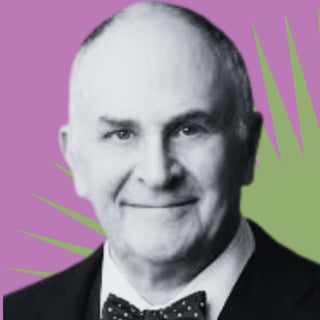
On 16 October 1962, exactly sixty-four years ago, photos of Soviet missiles on Cuba were shown to President Kennedy and the world faced nuclear Armageddon. The definitive account of that thirteen-day crisis, One Minute to Midnight, was written by today’s guest, the presidential crisis historian Michael Dobbs. He has now written about a crisis that few remember, but which he calls the climactic crisis of the Cold War.
It happened in 1983. In September of that year, the Soviets shot down a South Korean airliner with 269 people aboard, among them the most anti-communist member of the United States Congress. A few weeks later a Soviet early-warning computer reported that America had launched its missiles, and a colonel named Petrov, alone in a bunker at one in the morning, decided on his own authority that the machine was lying. In November NATO ran a nuclear release exercise called Able Archer, which Moscow took for the real thing.
The difference between 1962 and 1983, Dobbs says, was twenty years of technology. Kennedy had thirteen days. Reagan, by his own estimate in his memoirs, would have had six minutes. Thus the title of his new book, The Six Minute War, subtitled Reagan, Russia and the Race to Automate Armageddon.
As the incoming Moscow correspondent for the Washington Post, Dobbs had a front seat on the crisis. He arrived in Moscow just after the airliner came down, and his best material is anecdotal. He saw Russians bussed to a state-organised protest outside the American embassy, chanting on cue while jealously eyeing the Buicks and Cadillacs parked on the street. In a Moscow cinema showing Three Days of the Condor as anti-American propaganda, he watched the audience gasp — not at the dastardly CIA, but at the lavish contents of Robert Redford’s fridge.
Fast forward to today, and we get to the most worrying part of Dobbs’ analysis. The presidential crisis historian reckons we are now in a more dangerous period than at any point he can remember. We have more weapons, less warning, with our split-second decisions dependent on machines whose reasoning is increasingly hard for us humans to understand. Call the compounding annual risk one per cent. Multiply it across thirty years and the arithmetic isn’t reassuring. We might now be just a few seconds to midnight.
FURTHER READING
• Michael Dobbs, The Six Minute War: Reagan, Russia, and the Race to Automate Armageddon (Simon & Schuster)
• His Cuban Missile Crisis book, One Minute to Midnight (2008) — the thirteen days against which he measures the six minutes. Down with Big Brother and Six Months in 1945 complete his Cold War trilogy.
• The National Security Archive’s declassified sourcebook on Able Archer 83 — the NATO exercise the Kremlin read as cover for a first strike.
• Eliot Cohen made the companion argument on this show: that the nuclear danger now sits with Pakistan and North Korea rather than Moscow and Washington. Listen or watch.
• Harold James’s essay “Late Soviet America”, the gerontocracy parallel AK raises at 25:26 — among his Proje
40:09
43:55
48:01
46:330 plays · Oct 12, 2026
43:59
41:17