“We don’t have to choose between AI and no AI. The bigger choice is what type of AI we want, and who we want in control of it.” — Ben Green
INTRO
In our age of AI, do we want to be ruled by all-knowing engineer kings? Not according to Ben Green, a professor of information and public policy at Michigan, whose new book, Algorithmic Realism, presents “data science practices to promote social justice”. Unsexy? Yes. And that, according to Green, is the whole point of algorithmic realism. Such a down-to-earth use of AI is super unsexy by design, he explains.
Green’s critique is of Silicon Valley utopians who promote an algorithmic formalism. So he’s dismissive of the idea of “superintelligence” with its promise of curing cancer at the snap of a finger. He borrows from the sociologist Erik Olin Wright the idea of real utopias reached concretely, step-by-step. So he’s not exactly against algorithmic idealism. Just the lazy type that sees the world as an infinitely scalable laboratory.
Green describes working as a data scientist for the city of Boston and being asked to cut EMS response times. Instead of building some sort of super sexy algorithm, he went and talked to people, and found what was actually driving the call volume: mental illness, addiction and homelessness. Shaving two minutes off an ambulance would have done nothing for any of those people. What they built instead — and he is careful to stress the they — was a team trained to handle someone in a crisis and connect them to counselling and shelter. Super unsexy; and super useful.
• Matthew Botvinick of Anthropic on AI and Political Freedom — the inside-the-lab answer that Green doubts: listen or watch
• Sherry Turkle on Artificial Intimacy — the humanist case on AI: listen or watch
• Stephen Witt, Jensen Huang’s biographer, on the engineer king par excellence: listen or watch
FIVE TAKEAWAYS
1. The engineer’s mindset is the thing he is actually arguing with. Not engineering itself, which he wants more of, but a particular habit of mind: that problems have neat optimal solutions, that facts and reason settle things, and that building more powerful tools will of itself improve society. What that leaves out is power — who gets to decide, what their incentives are, and whether the decision might be worth democratising. He puts the underlying assumption plainly: our goal is to build more and more powerful tools, and as our tools get more powerful they will inevitably work for the betterment of society. He thinks that is a fundamental misu


 48:01
48:01 46:33
46:33 43:59
43:59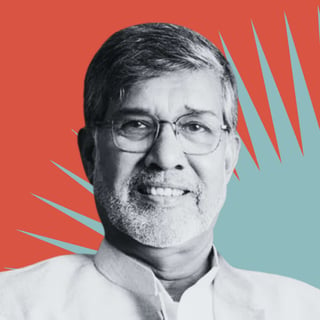 41:17
41:17 1:07:38
 1:01:51