How Osama Bin Laden and Barron Trump Explain the World: Franklin Foer on Arsenal, the MAGA World Cup and an Unlikely Theory of Globalization

“Globalization has revived tribalism. Instead of destroying local cultures, as the left predicted, it has made them stronger. Far from the triumph of capitalism that the right predicted, it has entrenched corruption.” — Franklin Foer
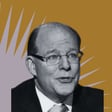
How do Osama Bin Laden and Barron Trump explain the world? According to Franklin Foer — senior writer at The Atlantic and author of How Soccer Explains the World: An Unlikely Theory of Globalization — they’re both (or were, in the case of Bin Laden), like Foer himself, rootless Arsenal fans. That’s the irony of our simultaneously tribal and globalized world. The more rootless we become, the sharper our imagined identities. Thus the DC-based Foer, who showed up for this interview flaunting his Gooner gear, never misses an Arsenal game on tv, even though he grew up almost four thousand miles west of Highbury.
Foer’s 2004 classic has been reissued with a new preface in honor of the World Cup. As he notes, this upcoming MAGA spectacle will only underline the tribal-global nature of the world. On the one hand, Trump wants to emulate Mussolini (1934) and Putin (2018) in transforming the sporting event into a celebration of localism. On the other hand, the expansion of the tournament into 48 teams mirrors the increasingly international reality of today’s world.
And then there’s the distant but delicious possibility of an Iran-USA final. In 2022 in Qatar, the Iranian players refused to sing the national anthem in the opening game to protest the killing of a young woman who wasn’t wearing a headscarf. Foer argues that the national team represents an idea of Iran quite foreign from that of the theocracy. While the anti-MAGA Foer wouldn’t support Iran against the USA, he does argue that one of the great failures of the American left has been its inability to speak the language of patriotism. So Kamala Harris and Gavin Newsom should wave the flag this summer. Whose flag he doesn’t say. Probably the Arsenal if the global Foer had his tribal North London way.
Five Takeaways
• Globalization Is a Form of Tribalism: Thomas Friedman said countries with McDonald’s don’t go to war with each other. Foer’s book said the opposite: globalization doesn’t dissolve tribal identity, it sharpens it. Barcelona can have Dutch DNA from Cruyff and a Qatari airline on the jersey — it’s still a symbol of Catalan nationalism. The cosmopolitan elites who predicted the melting of national borders were themselves a tribe that mistook its tribal identity for universal truth. Andrew’s formulation: globalization is a form of tribalism. Foer, cautiously, agrees.
• Trump’s Bread and Circuses: Trump has identified three spectacles as the tent poles of his presidency: the 250th anniversary celebration of the United States, the Olympics, and the World Cup — which he calls the biggest spectacle of his term. Every strongman in history has understood the distracting quality of a spectacle. Putin sat in Moscow in 2018, ominously presiding. Mussolini had 1934. Trump won’t be a passive participant. The expanded tournament was, Foer says, a greedy error — the early rounds will be poor — and the whole thing will unfold under the shadow of a president who wants to cosplay as president of the planet.
• The Financialization of Fandom: When Foer wrote the book in 2002, the transfer market was a big deal but not the phenomenon it is now. Fans have been forced to become conversant in the balance sheets of their clubs, getting upset when the club overpays. There’s something sad about that — your relationship to a team has been financialized. Meanwhile, the Premier League jacks up ticket