Transcript
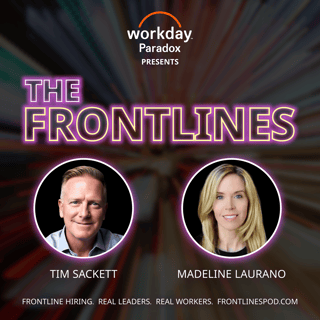
Tim Sackett: Hey, everybody. Tim Stackett. And I'm coming to you with our first episode of a podcast that my friend Madeline and i decided to start called The Frontlines, where we talk about frontline hiring, high volume hiring, all the hiring that we basically ignored for the better part of the last 50 years. And we just expected them to show up as soon as we posted a job.
Tim Sackett: Madeline, welcome. Obviously, we're doing this together. Introduce yourself to the to everybody, the millions of listeners that we already have on our first episode.
Madeline Laurano: Thanks, Tim. Hi, everybody. My name is Madeline Lerano. am the founder of a company called Aptitude Research, and we do research on the HR tech market.
Tim Sackett: Nice. I'm Tim Sackett. I own and run a company called HRU Tech Resources. I'm a Nepo baby. My mother started that 45 years ago. um And then I've taken over and run it for the last 15.
Tim Sackett: But we also both, like we we write and we we do research. We do all this stuff within the space of hiring and talent. um I've written a couple of books. um I want to start here though, Madeline, because like you and I, like people are going to go, well why are these idiots talking about frontline hiring?
Madeline Laurano: Yeah.
Tim Sackett: What's our experience? um I ran TA for Applebee's, so we hired 150,000 plus, you know, kind of frontline workers on an annual basis. I've worked at big health systems where we didn't, I wouldn't, I guess we could consider a lot of those people front lines, but it was high volume in terms of nurses because I hired over a thousand nurses a year and all the way in between.
Tim Sackett: Also, like we both worked frontline jobs. And so I want to start there with you of like, what's your best frontline worker story?
Madeline Laurano: Oh, this is a good one. i i mean, I started working when I was very young, probably 11, 12, working for just kind of local farm, child labor.
Tim Sackett: yeah Child labor, yeah.
Madeline Laurano: It was all these know illegal activities. No, but my first like real job was as a bus girl at a restaurant in our town.
Madeline Laurano: And I worked nights and weekends, all the hours that nobody else wanted, and basically had to put bread on the table and do dishes and bring everyone water.
Tim Sackett: Yeah.
Madeline Laurano: And it was very... difficult to do, even for, you know, not not a lot of work, but you're dealing with obviously customers that might not be happy and you're dealing with managing the dynamics of a very fast paced environment.
Tim Sackett: Yeah.
Madeline Laurano: And so that was like my first experience. i've worked yeah I worked at a local bookstore. I worked at, i was a lifeguard forever. So that was, you know, another kind of frontline worker, out-of-the-worker role.
Tim Sackett: Yeah.
Madeline Laurano: But My first experience, I think, was that, and there was so much drama. There was so much drama with, you know, kind of even how tips were handled at that time.
Madeline Laurano: like we basically, yeah, tip share.
Tim Sackett: Oh yeah. little tip share.
Madeline Laurano: We got nothing as bus people, but um if you had a nice waiter or waitress that wanted to give you a portion of what they got that evening, that was how that that worked. So that was my first experience.
Tim Sackett: I think I'm wired a little bit differently in terms of my first job was working at a local hamburger place in the mall of the city in Grand Rapids, Michigan, in Woodland Mall. Shout out to anybody. that hung out in Woodland mall in the late eighties, early nineties.
Tim Sackett: Um, it was Mr. Fables. So that was short for Mr. Fabulous. And they made like, they made like literally smash burgers before anyone called them smash burgers. And I remember I got a job the day I started the job the day after I turned 16. Like I applied before and they said like, well, Hey, we can't have you. So literally they scheduled me like, you know, the very next day. um,
Tim Sackett: um started like This is like the best story I think I've ever had because it's your first day of work. They're like, hey, we're going to throw you on the friars. and I was with this fat kid that was probably two years older than me, but he seemed like he was 20 years older than me because yeah like he had experience. right like He knew everything and he had probably only worked there like probably a year or something, but he was training me and he literally dumped a five pound bag of chicken tenders into the fryer. And I thought, oh, he's just teaching me how to do do chicken tenders because we also did hand dipped onion rings. And that was like the big thing he had to teach me how to do. yeah,
Tim Sackett: He ate five pounds of chicken tenders as he trained me how to make onion rings.
Madeline Laurano: Oh my god, they're
Tim Sackett: He ate the entire bag of chicken tenders. And I was just like, what is going on here?
Madeline Laurano: mine.
Tim Sackett: This is insane. Never even offered me one. I didn't get one. He's like nope. Like, it's just, these are mine. Get your own. i But I remember like loving – I remember laughing so hard at work constantly.
Tim Sackett: There was a dichotomy there of like – I was just there like you, like nights, weekends, shifts that nobody wanted. I love like the Saturdays, like during the holidays when it was completely insane crazy because like the time went so fast.
Madeline Laurano: Yeah. That is right.
Tim Sackett: But then then I also worked with these people that were frontline full time. Like this was their job. This is how they pay bills. And back then it never hit me like that, right? You just like, oh, like Ted or Mary and these guys over here, they're like the OGs, right? They like they know like how everything is done.
Tim Sackett: and not really realizing like, oh, they they're actually paying their rent based on the money they're making here. And I was just, you know, some dumb kid dinking around, having fun, making a joke of the whole world um in terms of, you know, not really taking it serious. And so like, for me, it was a different kind of thing, but like, that's the weird kind of dichotomy we have within this workforce, right? Is you have every generation, you have retirees coming back just to work a few hours, like
Madeline Laurano: Absolutely. And I mean, what we found, i mean, what I found when I was, like you know, had this experience at this restaurant is it was a lot of families too. There would be husbands and wives that worked there.
Tim Sackett: Yeah.
Madeline Laurano: Susan He was a bartender, you know, his wife might have been a waitress and the kids, you know, in my grade were also, you know, working as busboys and girls as well.
Madeline Laurano: And so it was really not just, you know, this is sort of the career of individuals, but it's also in in many ways, even if they didn't own the business, of family business in a lot of ways.
Tim Sackett: Yeah. Oh yeah. Cause it's kind of like, again, most of the, hiring like, again, locally, like a lot of that hiring, we do, we talk about that is, is like, it's referral based. It's, you know, oh I have friends or I have family and you just kind of pull in and you end up with these kind of weird, you know, kind of collaborations with people that like, it's like, Oh, this one runs really well because and like the mom works there and she has four people she brought in that she knows that she can basically mom, you know, it's like, she's not even the manager, but she can mom them to death. and it's like, oh okay.
Tim Sackett: um So Madeline, we um by the way, i want to shout out, and I should have opened with this, is like we are presented by Workday and probably the best frontline hiring solution on the planet in Paradox, and thankful for them to you know allow us to do this and give us the space and the time and the equipment to like come and talk about this.
Madeline Laurano: It's interesting.
Tim Sackett: One of the things that we want to make sure that we get out there first, you and i are super close friends. We probably text every single day with each other. We probably talk a few times a week.
Madeline Laurano: Well, wasn't in today.
Tim Sackett: um And yeah so people will see that when they see us interact.
Madeline Laurano: Yeah.
Tim Sackett: um I think we're very close from that standpoint. um But we also, you know, when we talked about doing this, we wanted to do it in a way that we could talk about because a lot of the podcasts in our space is like, oh, interview, interview, interview. And it's all interviewing other like people leaders, right? And how they do it. And it's it's cool. like Again, I learned from that. We want to do that. we were we when We will have those for sure because we want to talk about the people that are actually doing it. But we also want to talk to the people that are in the actual front lines that are going through the nightmare that we put them through sometimes. And I'm not saying that in there's companies out there doing really, really good things. And that's cool. And we'll talk about those.
Tim Sackett: But there's also companies that are still like literally making it a nightmare for somebody to actually apply to a job. And we want to talk to those people.
Madeline Laurano: Absolutely. And I mean, if you look at i even some of the research we do, it's you look at at frontline hiring and the interview process takes two to three weeks. so why is that happening?
Madeline Laurano: So it's just the most, it's probably the most important conversation in our industry that we don't talk about enough. And there isn't a dedicated podcast to that. That's why we really wanted to focus on this.
Madeline Laurano: We started doing research at Aptitude on the frontline workforce right before the pandemic.
Tim Sackett: Yeah.
Madeline Laurano: So probably end of 2019, early I talked a lot at that time to Josh Seacrest, who was running talent acquisition at McDonald's.
Madeline Laurano: He is now Paradox by Workday.
Tim Sackett: Yeah.
Madeline Laurano: And Josh was kind of sharing their approach to technology and saying, look, traditional technology doesn't work for the frontline workforce. We need a completely different path.
Madeline Laurano: He did this full transformation, bought Paradox, invested in you know Shaker and a lot of other providers to help build out a very different approach. A lot of organizations have copied that and you know, mirror that moving forward.
Tim Sackett: Yeah.
Madeline Laurano: um But at that time, we called it the forgotten workforce. And I'd love to hear what you think. I don't think it's the forgotten workforce anymore. I just don't think we're talking about it in the right way.
Tim Sackett: Well, you and I get to see like all like the vast majority of solutions that are on the market. And I think when we talk about like AI today and everyone's like, oh, what AI tools, what AI tools? Most of the proven AI tool use cases that we see. So when I say use case, it's a company that's actually put this in play. They're actually using it. And it actually has had make major impact. I had just interviewed Marriott's global head of TA, Jessica Lee, a few weeks ago.
Tim Sackett: And she said it went from literally days, I mean like you know multiple days to minutes in terms of getting somebody to apply to interview. And I think when somebody goes and we talk about those frontline workers, and again, high volume frontline, there's a little combination there. For the most part, if you're talking low-skill, no-skill workers, when they decide they want a job,
Tim Sackett: like they're gonna get a job that day. Like that means to be minutes, right? Where if someone applies, you better have somebody that actually interacts with them right away.
Madeline Laurano: It's a moment.
Tim Sackett: And the only way to really scale that is kind of through AI. And so it's, those are the tools that have been proven, which I think are really cool from that standpoint. um I do think though, up until the last like eight years or so, and really, i mean, when Paradox hit the you know the market, like it was something we were all kind of were like, oh my gosh, like this is groundbreaking. And now it's like everyone's just copying because you copy what is is great and what's working. And so you see everybody coming out with their kind of high volume hiring solution which is basically you know this the same kind of flow, right? It's like, hey, how do we use AI to to get a candidate to apply super fast, minutes?
Tim Sackett: And then how do we actually get them to like schedule themselves for an interview in minutes? And then hopefully you're smart enough as an organization to get them to actually show up that day, maybe within hours, if not within a few, because if you wait for a week, they're gone. they're You're not going to get them, you know?
Madeline Laurano: No, absolutely. it was groundbreaking because the alternative is you're waiting for an email that's going to go to somebody that does not have an email address. And then you're expecting somebody to take public transportation, spend money that could be used for lunch, could be used for anything else to come in at a time that a manager might not even be in a store or a restaurant.
Tim Sackett: It's a black hole.
Tim Sackett: Yeah.
Tim Sackett: Yeah.
Madeline Laurano: It's a huge ask. It's not thinking about what their experience is at all. And this this really changed the game. And it not only improves efficiency for employers, but i mean, that experience for a frontline worker has completely changed.
Tim Sackett: Yeah.
Tim Sackett: Completely. i did i did a big recruiting diagnostic for a large like global manufacturer. And this is five years ago. And they literally, they had, it didn't matter if you were the vice president for finance or if you were the hourly warehouse worker, you went through the exact same system to to get hired.
Tim Sackett: And it was the exact same process.
Madeline Laurano: Yeah. Yeah. It's Yeah.
Tim Sackett: And again, we still know companies today doing the same thing through a traditional ATS. Hey, we have one workflow. It was 15 different screens for the hourly worker they had to go through.
Tim Sackett: They actually had to build an application, like the resume, even though they were an hourly worker. And then the last step was actually having them upload their resume. You're like...
Tim Sackett: what do we you just had them build this. Why would they have to upload it? like like It was insane to me. and It was like literally 27 minutes for the people in the company to do it. and They knew what they were doing to actually complete.
Tim Sackett: and so A lot of their facilities, like the plant managers would go, well, no, they have to walk in here and like shake the front desk girl's hand and ask for an application. and they were just They went back old school that way. and that was just like I'm asking them questions like,
Tim Sackett: what What kid, 19, 20 years old, is going to walk in here and ask for an application? Like, what is this, 1974?
Madeline Laurano: No.
Tim Sackett: That doesn't happen anymore. You have to give them the ability to text and you know apply through text. And so for me, um like how like again, how the how we're seeing this, and I think most like you would agree, probably most of the Fortune 500 that does high-volume hiring is probably there.
Madeline Laurano: Do it through your phone. has to be through phone.
Tim Sackett: We see a lot of healthcare care that are switching to this. um But it's it's still, don't know. like Do you have any data around like what percentage of like the Fortune 5000 would even be using tools like this?
Madeline Laurano: Yeah, and we're doing some research right now on that. We'll we'll we'll do a whole podcast on on this ask that question.
Tim Sackett: Yeah.
Madeline Laurano: But it's it's not as many as you think. I mean, the opportunity is still there. It's tremendous to be able to flip this whole model.
Tim Sackett: Yeah.
Madeline Laurano: A lot of organizations are very interested in it, I think, that do a lot of high volume hiring. um We were just at an event you know not too long ago, the two of us, and i had posed a question to the audience about, you know do you have
Tim Sackett: Yeah. Yeah.
Madeline Laurano: high volume hiring needs? Do you you hire frontline workers? And like 70% of the audience had some frontline hiring. That's a big shift too. I mean, so it's not just these, you know, Fortune 100s or Fortune 500s that do have traditional frontline hiring.
Madeline Laurano: Now every organization, you know, just in all these different industries have some high volume or frontline hiring needs.
Tim Sackett: yeah
Tim Sackett: Well, I think it's it's it's going to um get worse before it gets better because we know like obviously we have a lot of onshore for manufacturing, see a lot, huge manufacturing growth within the U.S.
Madeline Laurano: Mm-hmm.
Tim Sackett: And that, by the way, it takes, when you onshore like that, it takes years for those plants and that like infrastructure to get built.
Madeline Laurano: Mm-hmm.
Tim Sackett: So like we're just starting to see the beginning of this. We're going to see much more of this kind of frontline manufacturing hiring that takes place. um We also have obviously a huge influx of data center built.
Tim Sackett: So you're like skilled trades, like the turnover of the skilled trades industry is insane. And so people have to move really fast in terms of of what they hire. And they also have to get away from a desktop, laptop, traditional thinking of, oh, someone's going to be sitting on a laptop or a desktop filling out an application. No, it's going to be on their phone only.
Tim Sackett: the you know the i mean, that's the other thing is like there's stats out there. They're like, I think like 85% of all frontline workers only access the internet or potentially like applying for a job through their mobile device.
Tim Sackett: Like they don't even have a laptop or a tablet or a desktop.
Madeline Laurano: No.
Tim Sackett: They only have their mobile device. And if you can't figure out how to get people to apply, you're dead, you know?
Madeline Laurano: Or an email address. No email.
Tim Sackett: Oh yeah. Even email address, right?
Madeline Laurano: Yeah.
Tim Sackett: Like, like, again, some of them are like, Hey, I'm just using, you know, my, my cell phone number, you know, it's like, are you allowing them to kind of like, you know, apply through that, you know, it's,
Madeline Laurano: Right. It has to be so simple. I, so this is funny. I kind of want to do this again for our podcast, but probably seven years ago, I had both of my kids when paradox first came out.
Madeline Laurano: you know someone sent me a link and said, you know test this out. And i was I put both kids in front of my laptop and said, or on the phone or whatever, and said, apply for a job.
Tim Sackett: Yeah.
Tim Sackett: Yeah. Do it.
Madeline Laurano: And we went to another site where they could apply online. They had no idea what to do. it was But I just left them alone on the phone and they both you know were applying for barista positions and got far along in the process.
Tim Sackett: Yeah.
Madeline Laurano: They knew exactly what was happening.
Tim Sackett: and Yeah. And they got interviewed and now they're working. They've been in Starbucks for five years now.
Madeline Laurano: Yeah. We've been to Starbucks for a long time. That's story. Yeah.
Tim Sackett: They're managing locations.
Madeline Laurano: Exactly.
Tim Sackett: Yeah.
Madeline Laurano: um So when you think, I mean, we've got, there's so much that we can do with this podcast. We both are so passionate about this topic that love we're doing it together.
Tim Sackett: Yeah.
Madeline Laurano: If you think about like top two things you want to cover, not necessarily guests, but just top two topics you want to focus on in two different episodes, what would it be?
Tim Sackett: Yeah. um One would be... I'm still, it amazes me and it's because of the lack of knowledge. So and I don't like put that on like as a negative towards the industry, but like i still have people that are like, well, we would never do ai apply.
Tim Sackett: because you don't know that chat bot could say anything to our you know our our applicants and we don't want that. And I'm like, oh, you know, Pookie, sorry. Like you don't even understand how AI works.
Tim Sackett: Like it's it's incapable of actually, you know, saying something.
Madeline Laurano: Mm-hmm.
Tim Sackett: i say that and then just today, so Adam Godson is the CEO of Paradox by Workday. On Chipotle in their um ordering system,
Tim Sackett: had so had an issue today where somebody actually did a Python coding thing with their chatbot. So like again, Chipotle decided, hey, for our ordering system, we're we're going to use some tech. That tech was built on a public model.
Tim Sackett: And thus, that public model, you could ask it questions that you normally couldn't ask a customer service kind of agent like ai And like, again, the one thing about Paradox is being built on, you know, kind of a private model. It doesn't have that ability, right? It doesn it doesn't know that there's Python coding out there. Like, it it would it would completely revert back. And then even the guardrails that are built around. So like, for me, really digging into those people,
Tim Sackett: that what are the, what are why is there this pushback? Why are you still hesitant? Because all the data, every single person that turns this stuff on is immediately like their time to fill crap. I mean, like 70% better. the The amount of applicants that get through are exponentially more, like three, four or five X more applicants that get through. Like everything just speeds up and the quality and everything kind of happens faster. So you're kind of like,
Tim Sackett: Again, is it just an educational side that they don't understand? The other piece of it is, is I really want to talk to you, and you and I like both have like ah shared this with each other. i want to talk to real people in the field and have them like do that side by side, have them actually apply, review and really just ask them a million questions around what is it what is it about this or this job, or what would you rather change, or what would you rather see? Because that's the other thing I don't think from a leadership standpoint.
Tim Sackett: When I talk to people who are turning all these tools on, They might go out and actually talk to some current employees they have, but they're actually not really ever talking to their candidates and saying, hey, what about this? Is this better? Is this worse? is How would you do it differently?
Tim Sackett: um and I know the company's building this stuff do this, not as much as they should. That's the other side, right? They just assume it's like, oh, I'm a software engineer and I applied to jobs and it sucks. And so I'm going to build this thing. you're like, have you applied to be like a barista? Have you applied to be a warehouse worker? Like, no, they haven't. So in their mind, even though they're building something, could it be even better?
Tim Sackett: And so I think talking to those people, um have a real interest in.
Madeline Laurano: Yeah, absolutely.
Tim Sackett: Those people, i get like, oh, like I got to, I was one of these people.
Madeline Laurano: laura
Tim Sackett: Like I hired these people. I worked on it with these people.
Madeline Laurano: and know I could be one of these people in a year. We don't know.
Tim Sackett: Yeah.
Madeline Laurano: yeah,
Tim Sackett: i maybe Maybe sooner. yeah
Madeline Laurano: maybe sooner. Yeah, for me, i think I want to do, i mean, you know, I love data and I love the research. We're doing some research on this, so I want to do a deep dive into that.
Tim Sackett: Yeah.
Madeline Laurano: But I also want to look at just research, statistics, BLS data, look at what the demographics are right now with frontline workers, look at the whole hiring process and do like a deep dive, an episode deep dive into data.
Tim Sackett: Yeah.
Madeline Laurano: The other piece that I definitely want to do, you brought this up, is around the demographics. Like we found right before the pandemic, there was a large, but I forget the percentage, but a large percentage of of hourly workers that were over the age of 50.
Tim Sackett: Yeah.
Madeline Laurano: And I want to see if that's flipped at all. I have a 16-year-old that wants an hourly job this summer, and he's struggling with the whole, like he doesn't know what to do, where to apply, if anyone will hire him. Most people want seniors and college students. They don't want 16-year-olds. So I want to look at just the demographics of what that experience is like.
Tim Sackett: yeah and Yeah, I'm so fascinated by it. You know I did my master's thesis with women in leadership in a retail setting. So what what I found too, which I thought was like so fascinating, was if I had a female leader, number one leader, so general manager of a location of a store – the demographic of that workforce was way more female than those that that were non-female leaders. So it's like even that of of going out to organizations on the frontline leadership side of saying, hey, what does the makeup look like? and what we know still today is that you have this weird makeup of like,
Tim Sackett: 70% of the workforce and a lot of frontline workers, like especially around hospitality and restaurants and stuff, are female. But it's it's flipped upside down when you get to leadership. And you're like, well, wait a minute. If you truly want more female females into this kind of frontline leader like frontline role of workers, then we have to like start to build more frontline female leaders. And thus, you know it's going to happen where they'll actually hire more females. and there's there's still like i mean When I was at Applebee's, like we struggled to get...
Tim Sackett: like our managers to understand, like, no, you can actually have females on the line as cooks. You can have female bartenders, like they can handle it, you know? And that was like, you would have these old school, like, you know, guys that are like managers, like, going well I don't know if Madeline can handle a Saturday shift on the bar.
Tim Sackett: Like she'll be fine. Like, you know
Madeline Laurano: Yeah, for the ola she's been doing this. Yes, it's I know that's very interesting to me as well. um The other one I throw in there, too, is around internal mobility, because it's It's so interesting. It's so important when you think about frontline hiring, but it's so different. Like frontline workers don't necessarily look at internal mobility like I need to be a manager or I need to be in a leadership position. Sometimes it's, I need a different shift. I need a different schedule. I can't work nights anymore.
Madeline Laurano: So how does that mobility work? I can't go to my manager and tell him I don't want to work nights anymore.
Tim Sackett: Yeah, the flexibility around this, right?
Madeline Laurano: Where the flexibility and to be able to manage that through technology.
Tim Sackett: Yeah.
Madeline Laurano: And sometimes again, it's just around schedules. So that's, that's going to be very different than how a company's looking at internal mobility for their knowledge workers. Yeah.
Tim Sackett: 100%. Yeah, I love it. All right. So that's what we're doing. The Front Lines, Madeline Tim, keep checking back. we'll We're going to have a multiple of these episodes. If you think of somebody or something you want to talk about, like hit us up. We're on LinkedIn. We're easy to find. We're not hard.
Tim Sackett: um And and we'll you know but we'll be ready for the for the next one. So Madeline, thank you for being a part of this. Also, thank you, obviously, to Workday and Paradox for for helping us present the front lines and getting this all to you guys.
Tim Sackett: And we can't wait to do more of these. We'll check everybody out soon.
Madeline Laurano: The front lines.