Transcript
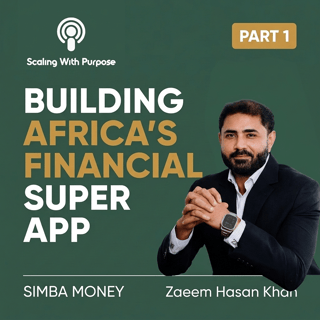
Speaker: Zaeem has shared a lot of wisdom with us in part one of the conversation and we will continue part two of this conversation today. We jump straight in to the subject and we talk about the competition in Tanzania and after that we talk about how to build a culture and we end with how the market works in Africa.
Speaker: Enjoy. I'm looking at the... competition in africa and especially in tanzania because it's one of the first uh or i should say tanzania right that's right way to to pronounce it so in tanzania it's one of the first countries or maybe even the first country that went a mobile first with banking with the fintech so there's a long history of this country
Speaker: in this industry. So there are also big players that are there for quite a while. So how do you compete with those? Is it not very difficult to enter this market because of that?
Speaker: perfect so think you know when as i said you know simba money the vision is unification all right uh unification of all product services uh features embedded all right and so telecos are the prominent brands all right so they have their own market share all right But Zenia itself is a very high when it comes to demographic, population, everything.
Speaker: All right. So there lots of pockets that are still available. All right. Like, for example, for the last 15 years, and that's my advice to all founders out there, like for the last 15 years, nothing has been done on the USSD side, the feature phone user.
Speaker: All right. So the entire digital innovation and everything was focused on the digital user, the app user, the iPhones, the Samsungs and everything.
Speaker: But you'll be amazed when you sit in a room with data, you're going to see that the highest person who brings revenue for a fintech is a feature phone user.
Speaker: Really? Because he's a merchant selling fruits. All right. All right. He is connected to the community. All right. He has a grocery store. right. And he's using his phone. All right. As a bank.
Speaker: All right. He receives money. He checks. Yes, money is received. He gives the product to the customer and everything. All right. So, all right. Africa, as I said, you know, Tanzania, the one of the biggest potential, right, is all about identifying those pockets, right?
Speaker: And for any founder of a fintech, all right, needs to understand that digital financial services, all right, operate in an ecosystem, right? Every ecosystem has patents, all right? Every patent is dictated by a habit-forming product, right? All right.
Speaker: If you have this market understanding, you're close to the customer, you get that customer centricity approached, you can easily identify which segments the competition or the giants of the market are not focusing on.
Speaker: Because if you start focusing on those pockets, because one of the biggest attributes for any fintech founder is trust.
Speaker: Trust is the ultimate attribute to achieve because this is where people will bring money into your wallet itself. start small to that identifier pocket, you generate the right amount of trust, your product, your brand becomes a voice of customer.
Speaker: Right. Right. It cascades through cross the demographics. You can start from ruler. All right. And then the ruler can dictate a transformation shift from the giant to your brand because they trust your brand more.
Speaker: These are the synergies that are available in the market. You just need to have the right people, the right technology, the right process to go and hunt and identify these attributes and bring into the table customer centricity.
Speaker: And there you go. You have a business. Yeah, interesting. So you're saying actually you're leveraging the network effect because big providers, they are actually focusing on the low-hanging fruit, which are the smartphone users, let's say, because it's very easy to create an app for a smartphone user.
Speaker: So they're leaving the feature phone users on the table. And You have eye for these feature phone users. And by gaining their trust, you create movement also outside this feature of a phone user's user base to use your product.
Speaker: Because I think also there's an interesting dynamic because fintech is really... a product that has network effect. I mean, if I'm using this bank, then big chance that my friends will use this bank.
Speaker: Or if I'm using this solution to send money and on the receiver end, they need to also install this application, then automatically the receiving side will also install this application. So this way it spreads...
Speaker: like in a circle around your user base that you have gained, already gained trust with. And I think this is a very interesting strategy. It's by finding the... user base that is not served, is underserved, and then providing very narrow, clear solution that really touch the heart of this person and gain his trust. And then automatically the word of mouth will spread and the network effect will be created around that.
Speaker: So I'm very curious. What is your model? Is it more business to business or business to consumer? So right now, for the last two, three years, we have actually gone live with B2B, business to business.
Speaker: So we're providing lot of technology services to the banks, mostly banks, right? And small fintechs, right? And normally we have gateways, right? We have technology hubs, which banks are using to provide various product and services to their consumers. right one of the biggest example is that simba money remittance hub that has more than 50 corridors right to send and receive money think and uh we are about to launch so we will be the second in the market as a fintech as a fintech number first but as a generic all right uh we'll be second in the market to launch uh merchant international merchant payments So the bank customers through their wall, through their smartphones, right, can actually pay a merchant in China.
Speaker: All right. For example, a merchant in a UAE, all right, when the goods are coming in. All right. So, so right now our B2B has been stabilized. All right. And now we're working with our banking partner to get the final approval for the B2C side. all right we have completed our alpha test beta test and now we are waiting for the final go ahead all right and then we're going launch our super app within tanzania itself how beautiful and if we're talking about expansion because sending money to to other countries that that is possible are you looking into into expanding into other countries do you have a roadmap for expanding
Speaker: Yeah, for sure. Because we are focusing ourselves on the East African belt. All right. Because there are lots of potential and my two founders who are out there, Madagascar, Zambia, Angola is huge swing potential, right? And the Western Africa part as well. So our idea is to actually, in the next three years, we'll be in five operations in Africa itself.
Speaker: Oh, interesting. And do you think that you will in the future go outside Africa, like Asia or Europe? Yeah, because we are open because, you know, the technology that we are bringing the table, it's like a laptop.
Speaker: right? It's not a desktop version of a technology. So it's a laptop, you can actually go to any country, you can actually plug and play with a regulation license, and you can start onboarding your live customers. So we are very much open to collaborations. If someone in any location wants to launch a fintech brand, we can actually not only give technology, but we have subject matter experts on the ground side on the go-to-market side all right we can actually nurture the initial one year all right uh before the final market activation takes off right so technology is there subject matter experts are available all right uh open for a collaboration
Speaker: I really like the analogy. I mean, it's not desktop, it's a laptop. You can take it anywhere. I like that metaphor. Yeah, beautiful.
Speaker: Now I'm curious. So let's say to go back to your journey, you had the idea, you wanted to start. How did you build a team? And I want to ask you also, how did that change? I mean, in the beginning, you built team and then now you are also probably hiring people. Did that process change in the meanwhile or did it stay the same in general?
Speaker: I think hiring was not difficult for me because in the end of the day, being very well connected part of this industry. And when it comes to FinTech, I bring trust.
Speaker: So that's my brand. I offer speed. I offer innovation.
Speaker: So it was never that much difficult for me to get the right people in, in terms of what, because again, I said, decisions can be taken easy. It's very easy for me to, like today I woke up and I said, I would unify everything under Simba Money, for example, but implementation is always the difficult part. And one of the implementation is communication.
Speaker: you know like talking to your colleagues all right that you have worked all right in different uh or they're working in a different brand all right it's talking to them making them understand what you want to achieve all right so like it's not a startup It's a vision. All right. It's not just an app. It's an infrastructure rail.
Speaker: We'll take this ecosystem from here to here. All right. Let's design. Let's contribute. All right. When you start. making sure that the people that you want to work with are also contributors. People start actually taking that leap of faith with you.
Speaker: Of course, you have the stakeholder engagement, you get the money and you have a business that I think if you have internet, you have mentors who can actually help you on creating a business proposal, getting the investment. You have lots of funds provider, but it's all about getting the team. It's like how well you convey the vision to them.
Speaker: All right. So that, you know, they take the leap of faith with you. again, you have to have your golden rules by customer centricity is one of the key, we achieve trust, right? We have speed to go to market. So, and these are the attributes that builds the culture of the company itself. So everyone starts following that culture, right? You start projecting, you know, as a leader, You need to walk the talk. If you want customer centricity to be your core, you need to go to the street as well. You cannot sit in your fancy offices having a Zoom meeting and saying that, you know, guys, be customer centric. No, you have to go to the street. You have to walk the talk. All right. So any new joinee that comes your people and culture or manager can proudly say that, you know, our CEO is also in the street. So that is how our customers are important. All right. So you start building those habits early on. All right. So that they're embedded in the foundation that the culture sits on.
Speaker: That's what it is. Yeah, beautiful. It sounds like you have your culture well-defined. Is that something you also advise startups and startup founders to do?
Speaker: Because I hear you have your pillars very well-defined. You have them already when you are saying what you think is important in your culture.
Speaker: So do you have a document for that somewhere? How do you... Communicate these values. I think, you know, I've been fortunate enough being part of really great institutes throughout my career. All right. Especially the employer side of it. I was blessed with great mentors throughout my life.
Speaker: And that success goes to them, actually. You know, being part of really great corporates. All right. That really polishes you out. All right. And one of the things that I observed that they really were sensitive about and they were really investing on it or it is the culture.
Speaker: Like for example, you have seen that when this telecom wave hit the world, so it was like French t-shirt culture came jeans came in, projection was that young and cool.
Speaker: So young people we gonna actually you know passion to deliver right so that was the statement that teleco gave to the world and that became the culture that everything has to be solution driven all right startups right normally when they are about to be formed and the first one here is always chaos all right it's called chaos management all right a good leader within startup has to be effective chaos manager, right? Because you are doing firefighting today, you're actually launching something, you're debugging something today. So it's like chaos, right? And this is very healthy.
Speaker: I always say that chaos is like really healthy, because it actually gives you the opportunity to identify what are the dynamics of your team, right? Why they are actually, you know, working beyond the call of duty,
Speaker: Why they are actually working beyond nine to five. And that is, these are the attributes. That is your definition of the culture itself.
Speaker: Document them, talk to them about it. Guys, like for example, one of the sales KPI or the golden rule, we are always closing.
Speaker: that we need to close. So that is a very good golden rule that no matter who, whatever you do, you need to close your sales. When it comes to experience, experience is a combination of effort and trust, for example.
Speaker: So when you start communicating and when you as a leader, when you're seeing people, under this chaos you are able to identify those ingredients that define your culture Then you communicate, you document, all right, just like an employer handbook. But now I think, you know, it's a digital age, all right. It has to be embedded in your product because culture cannot rest in a book, right?
Speaker: The culture needs to be out there. It has to be in your product. It has to be in your brand. It has to be the moment you enter your office it has to be everywhere all right so that's what what culture is you cannot capture culture in a book all right so i think you know as a leader you need to be very much adaptive all right you need to actually define and identify those uh right ingredients all right that defines your culture
Speaker: Yeah, definitely. Beautiful. I think that's an interesting viewpoint about culture. So what you are saying is the chaos that happens sometimes is actually very important data set.
Speaker: And if you are listening well enough through that data set, it can provide you a lot of ingredients for culture. creating a very healthy culture, let's say.
Speaker: And you need to listen very well. You need to observe very well as a leader and take those ingredients that are useful in your culture and amplify them as much as possible.
Speaker: Document them, but live them. That is the most important thing. Yeah, beautiful. Zaeem, I'm very curious. This also touched the culture thing.
Speaker: And as I have been listening to you, can see that you are making quite some impact in the world and that you are customer centric.
Speaker: What I think is very interesting to understand is how do you balance this impactfulness or purposefulness with the profitability?
Speaker: Because sometimes I can imagine that these come in some kind of clash. Mm-hmm. Mm-hmm. Because your profit or bottom line of your P&L, you can maximize that and lose some of the customer centricity. So how do you balance that correctly? And how do you make sure that you don't lose this very important value?
Speaker: Perfect. So I think I'll tell you one thing, you know, when you are customer centric, right, and all your strategies when I spoke about in the beginning market activation, normally, your profitability is affected by the amount of investment that you have done initially.
Speaker: Right. OK, so this is normally the definition of profitability. You know, your product goes live and then you start monitoring it until it starts making money to you. right.
Speaker: But what I'm trying to tell the founders today is that you fix your investment. You increase the efficacy of your technology and process in the beginning.
Speaker: Do not do fishnetting. you know to tactical marketing be customer centric why customer centric because if you are customer centric you're gonna create habit forming products habit forming products are trust generated they generate trust all right trust generate voice all right voice generates recommendation All right. So you can find customers coming in from those channels, which you have not even invested a single time on marketing because the trust is forcing them to convert and become your customers.
Speaker: Right. So if you implement the customer centricity approach in all aspect technology process people, all right. you will have the right impact.
Speaker: You don't need to balance between customer centricity and impact because profitability is actually an end goal of any business. All right. What is a business? Business is a transaction between product and services. All right. And both parties get something. It's a win-win situation. This is what business is. Right.
Speaker: All right. So in the end of the day, if you fix those things as an input, all right, Your output is profitability. Your products are habit forming.
Speaker: Habit creates trust. Trust creates voice. Voice creates recommendation. And this is what we learned in our university. Remember the theory of marketing, right? Yes. Customer centricity is a practical way to actually implement those things.
Speaker: Right. So normally what founders they do is that they tend to spend a lot. All right. On let's do social media campaigns or calling cold emails, do a market before even doing that.
Speaker: All right. All right. understand your customer demographics like for example Tanzania half of the like urban all right it's it's a it's a cultural mix but when you go in the regions you're gonna see religion or tribe driven regions all right you cannot market something that upsets one faith all right so these are the things so imagine you you have you're doing that you know like everywhere, right? And you create an ad, right?
Speaker: In urban, it is successful. But in ruler, maybe it actually hurted some sentiments. And the trust is gone now. If the urban guy says that, you know, hey, I want you to actually download this app, or, you know, use this product, they say, No, no, no, they're really bad, because they did this, they did.
Speaker: So customer centricity before even investing a single dime is super important. And end goal is profitability. You don't need to balance between customer sensitivity or impact. Customer centricity is the methodology to achieve profitability.
Speaker: Yeah, beautiful. Beautiful. I like this approach because you're saying there is no clash between those two things. Yeah. If you keep to your promise and if you really provide value, that is the best kind of marketing.
Speaker: And in the end, that will amplify your profitability anyway. So instead of seeing them as two contradictory values activities, they are actually quite aligned you pull it well, pull it out well.
Speaker: So don't be afraid. to really be impactful, but try to align your impact with your customer, with the audience.
Speaker: And if you do that well, you gain trust and that will automatically amplify your profitability. Perfect. I think the founders used to say that one hand on the marker to write something on the whiteboard and one hand to hug the customer. So that's issue, right? I love that. I love that. I think it's a very nice one to close with. I really want to thank you, Zahim, for all your insights that you have given us today. But before we close, I want to ask you how people can follow you on your journey. Do they follow you on LinkedIn? Do they follow you on a website? Where should they follow your journey?
Speaker: I think LinkedIn is one of the best. I'm very much active on LinkedIn. All right. I do write lot of articles. All right. I do consult to lots of brands. All right. And I'm available.
Speaker: Please approach me. All right. And I love to talk. All right. I love to share my experience. And I would actually, I'm a problem solver. All right. I like to actually, you know, learn new stuff. And I welcome people to, but come and talk to me.
Speaker: Wonderful. Wonderful. Thanks a lot for your time and hopefully we'll talk very soon. Likewise, Mohamed, thank you so much. I had fun. It was really good. It's a wonderful opportunity. And I think the mission that you have actually taken, it's great. Because I think I believe as an entrepreneur myself, I think bringing in subject and method expert through your platform is giving people the right knowledge
Speaker: to the new founders the existing founders. All right. And as you talked about impact a lot, you are bringing a huge impact to those companies as well. So you guys are doing an awesome job. Thank you so much. Thank Thanks for these nice words. Thank you.
Speaker: See you soon.