Transcript
Speaker: Welcome to the Especially for Athletes podcast, where we explore essential principles that empower athletes to learn life's most valuable lessons through sports.
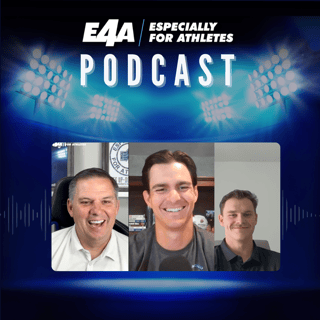
Speaker: Welcome everybody to the, especially for athletes podcast. I'm Dustin Smith. Here is with usual Shad Martin and our very special guest today. We're super, super lucky to have Austin Ainge, the director of operations for the Utah jazz Austin. Welcome to the podcast and thank you for joining us.
Speaker: Glad to be here guys. So Austin, a quick little recap on you. You you went to to school down in Gilbert, Arizona. um After having a great high school career in basketball, you went on to play at BYU where you had four great years there at BYU. I was reading up a little bit on you and saw that you shot 52% from the three-point line one of your years there at BYU, which is, that's shooting the ball, man.
Speaker: Nice of Wikipedia not to put any of my defensive issues on there. Well, the 52. That's the fifty would great things about you.
Speaker: Yeah, great things about you on Wikipedia. I'm not going to look any further. I'm to stop right there in case it does. um After finishing up playing, um you got right into into coaching. yeah I spent some time at Southern Utah and then with the main Red Claws, which I believe, correct me if I'm wrong, was that a G League team for of the Celtics? Yeah.
Speaker: G League, yeah. At the time, it was actually multiple teams. It it was before each team owned their own G League team. And so we actually partnered with a few different teams at that time. But yeah, G League, which is, for those who don't know, like AAA of basketball.
Speaker: Yeah, yeah. And then, you know, I wanted to ask you, between the 2011 season, And then until you, you know, you, you, you got the job here a couple of years ago with the jazz, you were all over the world, really. Right. Fill us in on kind of what you did those 12 or so years.
Speaker: Yeah, just front office with the Celtics, finding players and helping assembling a team there. So it's lot of scouting of college, pro, G League in Europe and Australia and Asia, all over the world. I did a lot of different jobs in that time at all the different levels, kind of working my way up through the NBA front office world. it was amazing.
Speaker: ton of learning. You just build a lot of teams in that time, Dustin. So you're doing, um you're building summer league teams, you're building G league teams, you're building NBA teams, you're competing in the playoffs. You're trying to make it better each year. You're getting draft picks, right? You're getting draft picks wrong and, and just learning, just learning.
Speaker: and Those were some exciting years, you know, for the Celtics. I mean, you were a part of some some great, great teams and and great runs there. That had to have been a an awesome experience, both the highs and the lows of of building that that team that still to this day is is benefiting from you and the guys that you were with at the time, you know, all that work that you did, what, what role did you have? I assume you were there when, when Tatum and, and you know, that, that, that big draft pick that dad was a part of what, what was the process in identifying him? You guys had a feeling on him, right?
Speaker: Yeah. I mean, all, all the way through the, you know, we, we basically from 2009 all the way until last year when I left, um, I was involved in all of those moves and, and, uh, you know it's a team job, Dustin, like we all have big staffs. Now my my job now with the jazz is managing, you know, around a hundred employees. So there's a lot of people involved. Um, I was very lucky to learn from a lot of great people and,
Speaker: lot of great help and including my old man all the way up. um you know But you the draft is crazy. You're trying to identify the best talent and the best people.
Speaker: And then you're trying to anticipate how 19-year-olds will react to millions of dollars and all sorts of fame. and And it's a lot of guesswork. I would say you do everything you can to you use analytics and science involved. And then in the end, it's a lot of art and and reading people. So let me ask you this about the um the identifying of the not just the the ability to play basketball. I mean, you can, there's so many great players out there, but I know with what I do in my other program with with these quarterbacks is i I oftentimes remind them about as as well as they play in high school and as well as they play in college,
Speaker: when it comes time to be a professional athlete, there's going to be people that they're paying. It's going to spend a lot of money on you. They're going to really look into, you know, what kind of person you are. I'm assuming, you know, you're how you go back into, you know, high school. Do you, I mean, it took to identify the character of a kid or to understand maybe what's going on in their life off the court, that's got to be a, a, a focus, right. And, and you guys have to be special in identifying that.
Speaker: Yeah, I mean, we spend a lot of time talking with everyone that works with and plays with and coaches these athletes to try to get a picture for who they are, because we can't spend a lot of time with them until very late in the process. We might get one interview or one day with them in the draft process. So, We try to do it. You know, our job scouting is almost like amateur private investigators. You know, we're talking to everyone involved and it's not about gotcha moments with young kids. Oh, they made a mistake here or there. It's just more of a totality of who they are, how they treat other people, how hard they work.
Speaker: How competitive are they? Can they remember plays? Do they treat others well? Do they treat the managers and the academic advisors and the ah assistant coaches well? You know, how how do they handle pressure?
Speaker: All these types of intangible things that we just try to total it all up along with their speed and size and athleticism and decision making. And and that we try to just add it all up and make the best decision we can.
Speaker: Yeah. Well, want to, want to ask you a question about leadership and then Shad, I know you have several as well, but when you're, well, we can even talk about the, the, the great teams with the Celtics and, and even this current jazz team.
Speaker: Um, What are you looking for in a leader? Because at the professional level, that leadership, there's the on the field or on the court leadership.
Speaker: There's the practice leadership. You know, there's there's the off the court stuff and in the community. What what to you is that is are the characteristics of those leaders that would it be attractive to Austin Ainge either as a potential kid to to trade for or to draft?
Speaker: Yeah, i i think um I think it depends on the definition. And you gave some different scenarios where the the leadership we can categorize in different ways. um I would say that everyone on the team should feel some responsibility to raising the level of the locker room and the organization. And there's different styles to do that.
Speaker: I've been around enough teams to where I've seen it done every different way. Sometimes it's a quieter guy. Sometimes it's lead by example. Sometimes it's more vocal. Um, you know, you hope that your best players can be a big part of that, but I've seen guys that don't play at all, have huge influence in the locker room.
Speaker: And, um, I think that as long as you're contributing and pulling in the right direction and and thinking about team first, I think the style is maybe overrated, Dustin and Chad. I think the the substance of the character.
Speaker: um And then, you know, we've we've talked a lot about it. We've had some teams where we thought we had maybe too many big, loud, aggressive personalities, and they didn't mesh.
Speaker: we We found that sometimes we need a balance of guys that will take direction too, right? If you want a great village, you need some guys willing to be villagers. um it's It's not always about...
Speaker: demanding and pointing and yelling at others. And in in fact, the the longer I'm around, maybe the less important I find that. and and And the more important I find someone that is willing to actually follow um at times and take direction. If your best player will listen to an assistant coach on something they may want to do, or a role player comes up to your best player and says, Hey man, we really need to look at this or Hey, help me if you did that. If he can say,
Speaker: you know what, you're right, that might be more important than anything else. That's really awesome. but When you think back to high school, like a high school kid, that's most of the kids that we speak to. Could you apply that to a high school kid? What advice would you give an excellent high school basketball player right now that's just about to start their season here in November about the importance of being a follower as well as a leader? think I think it's really applicable at every level, Shad. I think these things are universal. I think it's it's almost, you know, it's way beyond sports. It's just human interactions. And I would say the same thing for our corporate groups, for our analytics group, for our scouting group, for our medical group. It's the same thing as our team. And And to be honest with you, we have players right now that are 19, 20 to 21 year olds to 22 year olds. They're not much different ages than in your high school seniors. um and And so it it really is all the same. um
Speaker: I would say that some of the best advice I've ever gotten, and I just, really believe that um losing yourself in the team is the best way for both performance and happiness.
Speaker: If you can lose yourself in a bigger cause of winning um and and think of others than yourself, it's just one of these things that if you are down and not doing well, the more you think about how I can help my teammates, the the better you're going to feel.
Speaker: And I would say the same thing if you're feeling depressed or sad or in a tough time in your personal life, if you can think of how to make someone else like better, your life magically gets better. I just think that we're built this way as humans.
Speaker: However you want to ascribe the reasons for that, whether that's a God-given thing or evolution, i i think that we are just built this way that if we can think outside ourselves, we're happier and it makes everyone else happier and it just kind of snowballs.
Speaker: And I would bet. Well, so well said. Yeah. Yeah. And I would bet Austin and and Dustin, you've coached high school football, but, um, At every level, there are those kids that are like that, that are more arrows out, especially when it comes to the margins of who's going to make the team, who's who's going to get cut from the team, who you're even going to keep at the professional level.
Speaker: If there's someone who has that ability, i would think. that that would make a big difference to those decision makers, that this person loses themselves in the team. This person, even if they aren't as talented as another person might be, they're going to contribute more to the team.
Speaker: i know that's a true statement, but would would the two of you speak to that? How true of a statement is that when it comes to holding on to people? the the The holy grail for us in basketball is is if we can find the really talented people that also are secure enough in themselves and and think of others enough that they raise the whole group on top of having the talent, that's when you get the Steph Currys, the Tim Duncans, the Steve Nash's, you know, these types of people that are both.
Speaker: um And and it's it's really hard to be great at everything. But if you can be an elite talent, but also be willing to lose yourself in the team. And that doesn't mean you turn down open shots or you don't, you know, ah tell your coach, like sometimes like a coach, I could have a good matchup here, or i could use some more carries or whatever it is. It doesn't mean that entirely. It just means that when you, you know, when you see someone else down and you say, Hey, I got you this time. Hey, let's go. Let's, Hey, let's get a win here. Let's play better.
Speaker: I got you. I'm going to help you through this. Just those types of things, I think, um really, really change everyone's life. um And we have such power in sports when done the right way to change lives and and and have meaningful impact. And I think personally that that it those interactions on a daily basis maybe are the most impactful, even more than some of the big gestures guys can give.
Speaker: Yeah, I i i agree 100% with that. it's there's a There's a level of humility that the best teams have you know it with the individual pieces of the team. And when when you have that, then the sum of the team can be higher, better with maybe less talented players sometimes than the sum of the team would have been with better players who don't have that humility to be able to understand when it's time to be a follower, when it's time to be the leader, when it's time to back off and give somebody else the chance. And you get too many you know chiefs or you know cooks in the kitchen sometimes. And it can and I'm guessing at at your level, Austin, I wanted to follow up something you you said earlier, answering Shaz's question, is that you know at the professional sports level, when there's so much money involved and you get some guys that...
Speaker: yeah I mean, let's face it, every good athlete, you have to have, I think every good business person, every, but you have to have some sort of ego. And that's not, sometimes ego is looked at as a negative term. It's, it's only a negative term when that ego is an arrogant, you know, in your face, uh, ego, but we all have to have confidence. and And at the professional level, you won't survive without it. But how do you you know that's gotta to be difficult. Sometimes I'm guessing when you're asking these guys to, ah you know, to, to lose themselves in the team when there's also millions of dollars at stake and, and, you know, some, some, it's a job, it's a career. I mean, some of these guys, whether we win or not, I need a paycheck. Right. So how do you, and do you have a recipe or something that you look for to find these types of guys?
Speaker: Yeah, I think the um i think the definition that of humility that is best used, and you know I'm sure everyone's heard it, is is humility isn't thinking less of yourself. It's thinking of yourself less, right? So you you need to have all the confidence in the world that you can perform, right? It's just...
Speaker: You also need to recognize that it's a team and there are other people in the building and that to achieve the goals that everyone wants, it's going to take more. Michael Jordan didn't do it on his own. LeBron didn't do it on his own. Nobody does. Steph Curry didn't. These are, these are, this is universal. Every quarterback needs a great offensive line and needs receivers. And it, it just doesn't work. It doesn't work alone. And anyone who thinks that will, will fail.
Speaker: Um, And so I think it, it, it is. and And, you know, I will say that in our level, even though there are millions of dollars, I honestly don't find it that different than in high school and college when guys are trying to get scholarships or just minutes or, you know, they won't have scored 10 points instead of eight points. And it, it really is human nature is the same all the way through. And, um,
Speaker: Finding a few people on your team, and and especially if you're one of your two or three best players, is willing to lead by showing that winning matters more than those stats, that can set the culture of a team and just change everything for everybody. And and that's what we're always looking for is talent that is willing to focus on the bigger picture instead of just their own outcomes. um You know, we just we just signed Keontae George to $157 million dollars extension and he was crying. His family is now set for life and it changes everything for him.
Speaker: But the reason we were willing to invest that in him is because he's proven that even when he was so nervous and so wanted a contract like this, that he still thought of others along the way. And that's what gave us the confidence to invest in it.
Speaker: Yeah. I remember talking to your dad um in his office a couple of years ago. We had a great conversation with him and I'll never forget him bringing up three phases of of of an NBA player's sort of journey and and how they look at things. The three phases he mentioned is that most of these guys, when they get there, they want to be respected amongst their peers as a good player, right? They want other players to respect them as a good player. And then they want to get paid and then they want to win.
Speaker: and And somewhere in there, you you you know, he was he mentioned that that to him it was about the winning, right? He was looking for those guys that wanted to win, but he also had to understand that these guys want to get paid and they also want to be respected by their peers. um When you can get that special ingredient of of the winners, and and sometimes I'm guessing it takes a handful of years for guys to kind of settle into where winning is most important, and maybe after that big paycheck or whatever. Yeah. That's 100% the stereotype of and NBA players, and we certainly see it often. um But, you know, we're capable of more as humans. We're capable of maybe more than one goal or aim or emotion, right? There are guys that are certainly really want to be respected, really want that recognition, whether it's an all-star game or a starter or, you know, and we everyone wants to get paid. um But if you can have enough guys in your locker room that are pushing toward winning,
Speaker: we can, they can also care about winning at the same time. Right. And that's what we're trying to do with every team is that, that, yeah, even though guys want to try to play in college or they want to set a school record or they, you know, what whatever it is they're trying to do in high school that, yeah, but we can also try to get the team stuff and and maybe prioritize that and have enough of a culture where in the locker room, someone can grab the guy and say, Hey, like,
Speaker: go for those extra three yards. Don't go out of bounds. We need to win here. You know yeah this is you need some guys in that room saying those types of things. okay Yeah. but Can I switch gears a little, Dustin? I'm just super curious about something. So we have ah we have a principle called win the hour, which is, you know, you look at every hour of every day and you ask yourself the the question during those transitions, what do I need to do to win this hour to get the most out of this hour? And part of that is cutting out all the noise of the other hours. You know, when you're practicing basketball, not to be so worried about your academics or so worried about a relationship or kind of to learn to focus on what's ahead of you.
Speaker: When I was looking at the draft this year and everything that was happening, there was so much noise around the excitement of having the number two pick and people trying to say that certain people don't want to go to Utah or you know, all this stuff out there. I imagine as someone who's right there in the mix and making these decisions in that draft, that there has to be this ability in your position to take in information, but also cut out noise that could just get in the way of making the best decisions.
Speaker: I would be curious over your years of being in the positions that you've been in how have you learned to focus on the most important things and cut out the noise? Yeah, there's a lot of trial and error there. um ah You know, the the most noise comes from media, social media.
Speaker: um That stuff is pretty easy ah to cut out for me. It's something that we work really hard with our young people um on our team to varying levels of success to block out. But for me, like having...
Speaker: grown up and been around sports long enough, when you know what's going on for real, you realize that nothing is right in the media or on social media. So that stuff is easy for me to, to, to block out. Um, the other, the hard parts are weighing appropriately some of the the more nuanced noise. Like, you know, I have to weigh, medical reports. We have medical experts giving opinions and then we have, um, you know, a A kid's college coach could have issues with him. um An assistant coach could love him. Another assistant coach could hate him. a trainer could say he doesn't listen to me. An academic to but advisor could say he's the best kid I've ever had. and And you're just, you know, that stuff is kind of hard for me to weigh through and figure out, again, with limited access to the player. If I if i could be around him for a year, i yeah I could get a better feel. But relying on other people's narration um is hard for me. the The media stuff's pretty easy. Just ignore it all. It's not very helpful. yeah
Speaker: but We ah chat to that point of when the hour, the first chapter of our book and and the first principle of our program, you mentioned the social media thing. When you first started i coaching 2007 ish, right? um Social media was just, I mean, the iPhone was just being invented. So social media was just coming about. i you know, Facebook was right around 2006, seven. So Since that time, you've seen these athletes go from not having every play they they ever had successfully or or every failure on the court be broadcast to the world to now where it's a major part of most everybody's lives. I know at the high school level there is, and I know at the college level there is. At the professional level, is social media addiction and social media comparison and things something that affects
Speaker: NBA basketball players? Is that a worry or do you seen a change in athletes since you first started in this? It's a huge concern. It's a huge concern. I think it's societal, right? I mean, these are these are things that, and you know, like I said, we our guys are just as young as a lot of these high school and college kids. they're They're very young and impressionable and they don't have necessarily the experience to weigh through um or even understand how a lot of these things work, how um often the worst and
Speaker: least true and least valuable things go most viral, right? They they don't understand how, um you know, we try to educate them, right? We try to teach things like, you know, if a newspaper reporter or an ESPN columnist or um someone with a reputation writes something that you disagree with, we can talk with them and we can talk with you and we can sit down and we can work on it. If you're listening to you know, comments on X or Instagram comments or YouTube comments, there's nothing we can do to help you. If you, if you open those, you're opening up yourself to just a world of nonsense that it's just, there's just not really, we can't control it. We can't help you.
Speaker: It's just bad. And, and we know that the guys still listen to it and, and we, try to educate the families around these guys to say, don't don't bring it to them. They're trying so hard not to pay attention to it. And we're trying to put the good stuff in them and try to have them avoid that. Don't send them the link. Did you see what this person said? Don't do that. Don't help. So we, know you know, it's crazy how sometimes the parents are and the siblings or the friends send them the worst things that could possibly happen. And and so I think it's a group effort for teams and then families and friend groups to get together and understand, guys, let's let's just let's just ignore this nonsense because we know it it could be
Speaker: the a 12-year-old just making a joke. He may not even, you know, just ignore it all. Yeah. What about, Chad, one more, and then a question on that. um What do you, because it's a thing now, it's, in fact, you just had, you know Kevin Love was a part of the jazz, and he's been a guy who's really been outspoken on this, which is so...
Speaker: know, should all be so thankful for that. There've been others, but the, you know, the mental health stuff, it went from when you were playing ball, when Chad and I were playing ball in college, that word wasn't even something.
Speaker: i don't ever remember hearing that mental health um or or getting help. If you felt like you were struggling with mental health, I know that in the, and at all levels, especially college and professional, you have the greatest, you know, mental health experts in the world that are helping these athletes. But, you know,
Speaker: You know, what what what do you do at the at the jazz level? Because I think we see these kids on TV. When I say we, I mean general public. I i think we understand it a little bit better. But we see these guys on on TV and think,
Speaker: They're just, they're, they're locked in the robots. They're happy. How could anything be bad in their life? They got all this money. They're famous. They're playing in the and NBA. Right. But behind the scenes, a lot of these guys go home and they're sitting by themselves and, and they're, they're not happy and they're, so and they, they, you know, they're struggling a little bit. What do you see that? Is that something that, and what do you do to address and help these athletes?
Speaker: I would even say, Dustin, that the the pressures of professional athletics, um I think, are are extreme. And it is a more lonely life than people would imagine. Imagine being 19 or 20 and leaving home and going on your own and having the weight of the world and the financial burden.
Speaker: security of your entire family on your shoulders. it it is a really stressful, hard thing. And, um, we, we do a lot of work with our players because it is, it is really challenging. Um, we kind of separate it into a couple of different categories. We, we would say maybe, um, mental skills, which we do, um, dealing with pressure, dealing, you know, calming yourself before a free throw, game preparation, breathing techniques, um handling difficult interactions with a coach or a teammate, kind of workplace management skills.
Speaker: which um we have on staff and we deal with every day. We talk about it like form shooting. It's just get yourself right. Everyday fundamentals, chipping and putting, right? This is what we do to to get you right. And then for some...
Speaker: ah Deeper, more personal issues. We usually recommend outside. We have a bunch of outside people ready to consultants that um that guys can try and find someone that maybe they mesh with closer because nobody necessarily always wants to talk about some of deeper things with a person that that's at work every day. So we kind of separate those two things. ah The mental health ah performance-based stuff, we do in-house every day. And then some of the the more mental health of of dealing with life, um we kind of go with outside consultants, of which we have a list for our guys to to work through. yeah And it's we've seen huge improvements. And every guy is different. Every guy, they have to be ready, right? So they have to be...
Speaker: You know, we we kind of push everyone to do it and everyone does it, but you have different levels of acceptance and um and willingness to really dive in. And so we we see it sometimes guys don't get a lot out of it for a year or two. And then the third year it clicks for them or maybe right away it starts to help. And everyone's a little different, but we we try to provide it and and push them to use it. And it it really is helpful for for on and off court life.
Speaker: And I would ask this question, Dustin, in following that up, like we still have a generation sometimes out there that coach kids at a young age that acts like all of this stuff is voodoo, you know, that the old ice is for lemonade adage, right? That if you need help, if you are seeking help, then somehow it makes you a weak person.
Speaker: With the growth that you've seen among your players, what would you say to someone who hasn't had that click in their mind that, this mental side of the game and even getting help if you're emotionally having a hard time as a young athlete is important. What have you experienced that you would say to that that coach who acts like that's weakness and therefore that player can't be counted on anymore?
Speaker: Yeah, i think that um I think that almost every coach should maybe go through some of it. You know, i think I think we as adults should, but before we judge quickly, we should go and take read a couple books on sports psychology, um read a couple books on mental health skills, and um and and maybe, you know,
Speaker: it's It's wide. It's kind of like choosing doctors of ah medical doctors or ah coaches or they're they're there's wide approaches. There's all different ways to do it.
Speaker: You know, there's and different therapists and different mental health professionals have different strategies. You can instead of dismissing the entire thing. out of hand, I think doing some research and finding maybe some of the approaches that you do agree with and do believe in maybe could be more helpful. And and every athlete or every person will find some of these strategies work better for them. And so I would say maybe keep shopping mental health specialist until you find one that fits some of your personal philosophies or your um personal styles, because there is a wide range out there. It's not just one or the other. i Austin, a couple more and then we'll let you go. and thank you so far. This has been ah a great conversation.
Speaker: um we have four core principles. We talked about the win the hour. That's one of our four, three others that we get into and we'd speak a lot about, wrote about in our book, try to get and our guests on this podcast to give some thoughts on to me, the, the, probably the most important of the four to me. And in my experience working with, with athletes is this principle of resiliency. It's something that I think Some of the kids are our current generation get a bad rap in some case. They're they're told they're they're spoiled and they're they're they're kind of catered to. and they're
Speaker: But there is ah there is, in my opinion, an issue with a level of resiliency with a lot of our our young people now. um Mostly, I think, because parents ah are are robbing their kids of the chance to learn resiliency because we want to make everything so good for them. We don't let them struggle a little bit.
Speaker: um What would you what advice would you give to a parent um who has a kid coming up about how important it is to be resilient? And do you know, what do you look for in athletes as it relates to their ability to to bounce back and and to be resilient? How important is that at at your in your job?
Speaker: I mean, like life is going to give everybody tests. It's just, if you ever look at someone and think they have the perfect life, there's there's things going on. There just is. it it it it's It's without fail and without exception. and um And if you haven't had a chance to experience some difficulty, um you will, and it'll come. But I think that just as as adults in kids' lives, the more we can push them,
Speaker: with love and understanding, but don't give up on the pushing, right? We can hold high standards. We can give hugs and we can pick them up and we can dust them off, but we can push back again and, and demand the, the, the continued effort. I wouldn't even say performance or, or excellence, but Continued effort. That's the part we can demand and um and do it in ah in a loving and understanding way, but don't stop asking them to try and push. I think that's just the only way I know how as a parent or as ah a basketball person.
Speaker: Great answer. really good. Yeah. Another one we have is compete without contempt. And I have to say, I've watched both ages compete. um You were playing when you were BYU. That was my senior year at BYU. And I watched you compete there throughout your time. And and ah your dad is legendary for his competitiveness.
Speaker: And sometimes competitiveness can boil over and and cross the line and and things like that. But it's something that we have to try to manage. And and so we try to teach athletes to not have hatred be the fuel of their competitiveness, that you don't have to hate the person that you're competing against. But we spend a lot of time on the importance of being a competitor, right?
Speaker: And I would just love you, someone who I've seen compete. You are a very competitive person. What have you learned throughout your career? And now as it transitions into this other after the playing days, now in the executive realm, how do you compete the right way? What are some of the lessons you've learned to be a really competitive person, but to do it the right way?
Speaker: think practice in a competitive realm is just important. Compete in every drill, compete every day in practice, compete in, um, with your friends, compete with your enemies. Right. Uh, I, I always, I get a little tired of the, um, the narrative from some of the, commentators in our sport that say, because guys give each other a hug after the game that they didn't compete. I mean, I, I, There's no one I wanted to beat more than my brothers or my dad or on the on the golf course now. Right. i I mean, I love them, but man, do I want to beat them? Right. It doesn't matter if we hug it out after. um i mean, there's stories. If you guys watched the last dance that was on during COVID, my dad and Michael Jordan would play golf the day in between playoff series. And then they got in fights, literal fights on the court. and it's okay to, know,
Speaker: to I remember my AAU teammates who were, you know, some of the other best players in your city. You'd go back to your high school teams. There was no one I wanted to beat more ah than those guys who were some of my best friends. And I don't think they're necessarily related enmity or hatred and and competitiveness. I think it's I think learning to enjoy the fun.
Speaker: competition. And it really is, there's there's nothing more fun than two people that are doing everything they can and then pick each other up after. Yeah. Awesome. Well said.
Speaker: Well, well, before we go last question, um, and, and I just want you to be honest here, cause this one's maybe the most important question of the entire, uh, interview here. Would you just explain to everybody,
Speaker: What's the longest putt you've ever seen made in a golf tournament? Go ahead. I mean, 120 feet by Dustin Smith. I don't know if I don't even know if I've seen an attempted longer putt. Oh, that was a long day or longer. ago I didn't know it was me.
Speaker: Oh, I'm sorry. I didn't even know I didn't know mine was. Most people trust their wedges, Dustin. Yeah. yeah they're go that The reason it was such a long putt was because of how bad my, the rest of my game is, but Austin was there for it. So I do have a witness. If anybody challenges me on it, I hand up. I was amazing. It was incredible. You know, Dustin, that's the first time that question hasn't backfired for you. Like you've been on with other people and said, so who's the, and they'll give another answer. I remember one where they gave another answer and you're like, yeah I thought it thought that was going to be me.
Speaker: Yeah. Well, Austin, thanks again for joining us. Busy day for you and in jazz land. And you took time to meet with us. We really appreciate it. Best of luck. appreciate We're excited for what you're doing with the Jazz, by the way. I don't have a team that I cheer for other than the Jazz. That's the only team I've been a fan of. No college teams, nothing. i I'm a Utah Jazz guy, and what you guys are doing, it's a fun time, and we're we're going to see a trophy here someday and in Utah, and you're going to be ah a major part of that. So thanks for all you're doing.
Speaker: well Well, thank you guys, and thank you for all the work you're doing. It's really important work, and it's awesome, and I hope to support it more. Thanks, Austin. Everybody, thanks for joining us.
Speaker: Keep your eyes up and do the work. Thank you for joining the Especially for Athletes podcast. To learn more about Especially for Athletes organization, get a copy of our book, The Sportlight, or to bring our program to your team, school, business, or organization, visit us at especiallyforathletes.org.