Transcript
Speaker: Hello and welcome to Pieces of History. I'm Colin McGrath and in each episode i explore both the well-known and the overlooked stories that have shaped our world. Today we're travelling into the heart of South America to the Bolivian Amazon in a vast seasonal wetland known as the Leanos de Mojos.
Speaker: For a long time, the Amazon was imagined as an untouched wilderness, a pristine, hostile environment where complex societies could never really take root. But over the last few decades, that picture has been steadily and dramatically overturned.
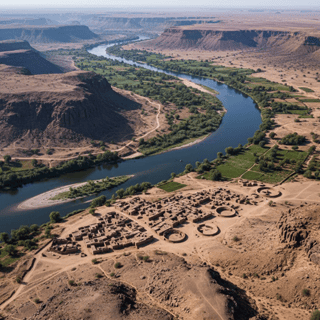
Speaker: Beneath forests and floodplains, archaeologists have uncovered evidence of enormous human-engineered landscapes, raised agricultural fields, forest islands, canals, causeways and carefully managed waterways, all pointing to centuries, even millennia, of deliberate environmental design.
Speaker: My guest today is Dr John Walker, Associate Professor of Anthropology at the University of Central Florida. Dr. Walker received his PhD from the University of Pennsylvania and has spent much of his career working in the Amazon basin, investigating how pre-Columbian societies shaped, managed and lived within these environments.
Speaker: His research focuses on political and social organisation, landscape archaeology and the long relationship between human communities and ecological systems, particularly in Bolivia, the Amazon and the Andes.
Speaker: In his work, including Island, River and Field, Dr Walker invites us to think of places like Mojos, not as collections of isolated ruins, but as lived landscapes, shaped by everyday activity, farming, burning, building, fishing and managing water across generations.
Speaker: In this episode, we explore what the Leanos de Mojas actually looks like, and how its raised fields and forest inlands functioned as an integral system, why the myth of an untouched Amazon lasted so long, and what these landscapes ultimately force us to rethink about human relationships with so-called natural environments.
Speaker: I hope you enjoy. John, thanks very much for joining me. I really appreciate you taking the time of your busy schedule. So before we dive into the Lanios de Mejos and the Bolivian Amazon, could you tell the listeners a little bit about your background and what first drew you to this region in particular?
Speaker: Sure. um So I'm an archaeologist. I was born in the United States. I was born in the middle of the United States in Illinois. And I was trained as i have a degree in history and a degree in anthropology. And then I went off to the big city to study archaeology in Philadelphia.
Speaker: And i have a PhD in anthropology. That's where archaeology is in in for most places in the us And then i went when I went to graduate school, I knew I wanted to be an archaeologist, but I was not really very clear on where I wanted to do that. And i had a great teacher, i had a great advisor, a man named Clark Erickson, who didn't have funding to help me go to the field that first summer, but he connected me to two of his colleagues and I went to Ecuador actually. And i went to Ecuador basically without speaking ah with speaking very little Spanish. And I had a great experience in the Highlands and then a great experience on the on the Pacific Coast. And I just fell in love with Latin America. And then so the next summer when...
Speaker: I had a chance to travel with my advisor to work on his research project in Bolivia. i don't know. it's I think the the easiest way to say of how I got to be working in the Amazon is I had some great teachers all through my education. And then I had just some great experiences with people in Latin America. I think I sort of fell in love with South America and and then especially Bolivia.
Speaker: and so it's ah It's really that combination of great teachers and a beautiful place. What was it specifically about this region that you really wanted to dedicate your career to this area? And suppose, again, this is kind of getting into your research, the actual landscape itself.
Speaker: Yeah, to get a little more specific than just, wow, people were nice to me or people are people are great. um The thing that makes this part of South America and this part of the Amazon interesting is the sort of the I mean, every place in the Americas has amazing archaeology. And there are so many questions that we don't have the answers to. But back in the late 1950s and early 1960s, there was a geographer, a guy named William Dennevan, who was there to do his PhD research. And when he got in an airplane and started flying just to get from one place to another, on this big, flat, open savanna landscape, he started seeing all these straight lines and shapes. And he realized that these were earthworks, things that people had made. And there was no, ah essentially, To make it a simple story, there was not really any historical record of this. And he was really amazed. And that really changed his perspective, not just on the area, but that he was part of that first generation to really start looking for these kinds of earthworks really all over South America and into North America as well. So that was the the big story that um
Speaker: back in the 70s and the 80s was like, wow, this is incredible. We have to find more about this. So I'm sort of the second generation into that. If you think of my advisor's generation as being the first archaeologists that started to tackle this problem. And then I went to work there in the 1990s and I did my dissertation work in 96 and 97.
Speaker: But the um so that question of this, this is the Amazon, but it doesn't sort of fit the stereotypes that we have of the Amazon. It's a big, grassy, open savanna. um It's a sort of a seasonal swamp. And yet in this sort of environment that a lot of people would think of as like, wow, this is don't want to live here. This is the place where we have evidence for lots and lots of people living there, maybe. at least in some in some places, a hundred times as many people as live there today. So that made it that makes it a fascinating question for me. And I quickly got interested in the question of agriculture and how agriculture works. and
Speaker: And then just doing field work in these in in the Amazon was a real attractor for me. Before you even got there, and suppose you're the second generation as well, was there any local or native archaeology done around this particular region itself before Westerners got to it?
Speaker: Yeah, oh, that's a really interesting question. That's a really good question. And of course, maybe the main thing you need to know about Bolivian archaeology is that Bolivia has a really strong and proud tradition of doing archaeology. Like, it's not something that...
Speaker: Bolivians are waiting around for people from the U.S. s to do. um And i I would encourage anyone who is interested to go look up Bolivian archaeology in places like Tiwanaku and the Highlands, not just the place, the region we're talking about. I'm not sure if I've even said this. The place we're talking about is called the Llanos de Mojos, and it's in the the Beni is the name of the department in Bolivia. So but I guess my point is that For many Bolivians, this sort of spectacular archaeology of the highlands, you know stone architecture and ah um painted ceramics, and also actually a very ah similar agricultural system around the lake, Lake Titicaca. That's what a lot of people think of as South American archaeology, sort of Andean archaeology. after the mountain range. um but there's
Speaker: But we're finding lots of interesting things down in the Bolivian lowlands as well. And so to get back to your point, I think a lot of people in Bolivia in the lowlands have a sense of you know a sense of history, a sense of archeological interest. And a lot of it centers around the Jesuits who were the first Europeans to come and stay.
Speaker: And that's an ah that's an amazing, incredible story that could be investigated further with archaeology. But that's so that's from around 1665, I think, to about 1767, I think, is when they're expelled from the Americas. And so that's what a lot of people go back to is like, oh, well, in the time of the Jesuits or we were interested in the time of the Jesuits.
Speaker: Yeah, so it's it really is a partnership between us and Bolivia. Of course, not everybody in Bolivia is interested in archaeology, just like here, but there are there are plenty of people who have ah who have an interest.
Speaker: More specifically, are we in Bolivia then? And for some people, they do roughly know where South America is, can you even like narrow it down to Bolivia is a landlocked country surrounded by Brazil on one side, Chile on the other side, Argentina at the bottom. Is that correct?
Speaker: That's right. That's right. So whereabouts is your region then? Yeah. so So, I mean, a lot of people in the... People used to talk about ah Bolivia and but probably still do as sort of like the Switzerland of South America, the landlocked country in the middle. And if you sort of are throwing darts at a map of South America, it is in the middle. um But a lot of people focus on that highland part and and it really is high up. um My favorite, I have a sign on my door about the the motto that Bolivia has for their national soccer team or a football team, which is Se Juega Lone Se Vive. They have a stadium that's, I think it's something like...
Speaker: 13,000 feet above sea level. It's an incredible altitude. and It's a big home field advantage. Yeah, got to plug Bolivian soccer because they have a chance to go to the World Cup. um But that's not all that Bolivia is. About half the country is highland like that, and then half the country is down the lowlands. So we're in the northeastern part of the country, a big department called the Beni. I'm sorry, i don't have a good geographical comparison to the UK, but it's a huge area. it's and the And the sort of region, this sort of seasonal swamp,
Speaker: where we work is ah a little more than 100,000 square kilometers. So it's a big region. Yeah, I think when if you especially if you don't think about South America all that often, the scale of the continent and the scale the region is really quite big.
Speaker: The Amazon itself is about as big, I think, as continental Europe. It's a huge it's a huge place. um So the just to sum up the environment in a few words, it's very, very flat, ah very, you know, only a few meters difference in elevation across the whole region. ah It's very warm. it essentially never goes below freezing.
Speaker: um It really never goes below freezing. um And the the the other thing about it that's really important to know is that it's very seasonal in terms of precipitation and water so that the same landscape goes from being very, very dry to being very, very wet. And that's it just a fact of life for for for everything, you know for getting around. And for and for ah for me, I'm interested in the agriculture.
Speaker: So that's the problem they're trying to solve. um So your book, Island River and Field, you describe the region as a landscape shaped through everyday tasks rather rather than isolated sites, which I suppose a lot of people, like you said, your second generation, first generation, they maybe thought, you know, these are going to be individual areas. We've got a village here. You've got a village over there. and people were downed dominated by nature itself, but you're going the opposite way. So you're you've come up with a phrasing taskcape rather than like a collection of ruins. How do you describe taskcape and what exactly what does that mean? and How did the people use the land for for them rather than living against the land, that makes sense?
Speaker: Yeah, the um that word taskcape is one that I ah borrowed from a brilliant anthropologist, a guy named Tim Ingold. um And I don't think we have to focus too much on the term. ah it's But the the way that I found that useful when I wrote my book is I think a lot of us...
Speaker: ah When we live our daily lives, we don't necessarily think of, oh oh, I'm crossing the line, now I'm leaving the site and I'm going off the site, right? we just I'm here, I'm sitting in my office today and i ride my bicycle to work and I ride my bicycle from a house that's, you know, maybe 20, 25 minutes away. But I don't think there's like this clean boundary between, oh, now we're in a natural place and now we're in an artificial place. and And but you can't i don't know, I don't blame any of my archaeological colleagues like we're just doing the best we can trying to locate things in the world. But I think that especially in
Speaker: ah maybe especially in the world, not the world that you and I live in today, There's um people spend a lot of times outdoors. People spend a lot of time walking from one place to another, taking care of all kinds of different activities in all kinds of different places. And that idea of how you sort of schedule your time and schedule your activities in places and not just individuals, but groups of people. I i found that a useful way of thinking about this problem. And so and maybe the.
Speaker: Easiest way to think about that is going back to those earthworks people were talking about. There are these huge agricultural fields that are 20, 30 yards wide and 200, 500 yards long.
Speaker: So I don't know much as an archaeologist, but I know that people built that and it's still there where it was in the past. And that's an advantage that we have. that a lot of people, archaeologists who are interested in agriculture, they don't have that because they don't know, they they don't have access to where those fields were. So that's why that was interesting to me. And just making a map of where all of these different places are, it can be a really powerful way of trying to understand how people lived there.
Speaker: And so what timeframe are you talking about then? Hundreds, thousands of years pre-Columbian? Great question. And because we're kind of new to archaeology, and by new, I mean in sort of the big picture of how many archaeologists have worked in the place over how many years. um We're always trying to make that picture better, but we have some radiocarbon dates that help us you know establish where and when people were living. And we're pretty confident based on about 50 of those radiocarbon dates that a lot of people were living in this region between, say, 40.
Speaker: 500 years in the common era to about 1500 years when the Europeans arrive in the New World or arrive in the Americas. So we're pretty sure that there was a lot going on during that time frame. We dig in these, ah we call them forest, island or the people living there call them forest islands, east of the little bosque, that are sort of raised up places with a different kind of forest on them. And we have a very, basically,
Speaker: four out of five times we go into one of those forest islands, we find broken pottery on the surface. There's a really strong correlation there. um So anyway, we find a lot of dates in that time frame in those forest islands. But then we also find dates that go back thousands of years. And um in the area, some of my other colleagues from other universities have found dates going back eight thousand, nine thousand years. So we're We're pretty confident that people were there a long time. And I would you know, this is a sort of a data free statement, but I'm pretty sure that as when people were living in the Americas, it won't be much long after that that people are living in this place. It's a good place to live.
Speaker: But yeah, so to give you an idea that time frame and there's just lots of gaps in that sequence for us that we're trying to fill in. And John, reading your book as well, and it's so it's essentially a managed landscape that these people were living in rather than the traditional thought of they just lived there on these banks or in these raised you know islands.
Speaker: They used fire, they cultivated crops, they had their own villages. Why did we have this misconception that they weren't able to do these things 500 to years ago? what Why is that in Western thinking?
Speaker: Yeah, I don't know. i mean, i'm I think a ah thing that's really powerful, though, is that that sort of opposition between we're culture or we're humans and and we're over here and there's something opposed to it or something different from it, nature. And it's a powerful idea. And it really conditions a lot of the you know the ways we think about the world. um I'm sort of thinking of the idea of a but of a forest as ah a place that's different and maybe dangerous and maybe opposed to the city that goes into a lot of, you know, sort of mythology and folk tales and that sort of a thing. um
Speaker: And then the sort of... I don't know, I'm not much of a philosopher, but that sort of Cartesian idea of there's you know us on one side and and nature on the other side. And ah there's there's a lot of great anthropology that's been done on this problem that I am interested in, of you know how we think about animals and and how we think about nature. And maybe to ah to just give you a taste of that, there's an anthropologist named De Colla who's ah worked on this idea of do people in the Amazon sort of think about nature differently and ah and a bunch of other cultural anthropologists as well, thinking about the idea of
Speaker: For you and I, maybe the dog is like us biologically. It has a similar sort of body to us. You know, we have these things in common as organisms, but we have, you know, we have rational thought and the dog does not, or there's some difference in how we think. Whereas for some Amazonian people, the Shuar, for example, this group that, um,
Speaker: this anthropologist studied. The difference is not like that. The difference is that we all have culture, you know, like and the example is a jaguar. A jaguar has a village and a jaguar has, you know, eats food and has drinks beer and does all the things that humans do. But the jaguar sort of puts on this artificial clothing of being a jaguar, whereas underneath we're all the same, right? So just a sort of a it's kind of hard to get your mind around this, but the idea that people sort of think about the world differently, that's to me the most the fascinating, the best part about anthropology is thinking about those variations. So I've kind of straightened off your topic, but what would that mean if you thought about the world differently?
Speaker: And yet you were doing all these things like using fire to change the change the vegetation or or damming up the water to change the way water flows in the landscape. but but You might do something different than we would do.
Speaker: Just on a personal level, Joel, whenever you're down and you're working in these particular environments and the local people, do they have a strong oral tradition of passing stories down from one generation to the next, so and so forth? Because I think a lot of your research is you know, anthropology and archaeology, getting speaking to the actual people, have you got many stories from from them, like from going back two, three, four hundred years? Because I know within Ireland, we have a strong oral tradition here because really the the country hasn't has only been literate literate for about, you know, 100, 150 years. So we were it's through ballads, songs, stories. that's That's where we passed on our information. Have you found that as well locally?
Speaker: yeah Yeah, that's a great question. And it's one I haven't thought about a whole lot in those exact terms. But um I would say that there's a really rich sort of folk life and a really that's i don't know if that's a word I want. um to But the really rich tradition of people telling stories and I maybe don't tap into that as much as I used to, but when I was there as a a student researcher and I would be living out in the countryside for four five, six weeks at a stretch when there's nothing to you know, there's no generator, there's no electricity, there's nothing to do out there at night. So then there's a little more scope for people telling stories and.
Speaker: Oh, playing songs on the guitar and so forth. And I think the the the only way I the only the only experience of that I have is asking people questions and getting stories about particular places, you know, like, oh, do you know about this place? And getting some stories about, oh, yeah, that a lot. I've i've talked to people a lot and heard a lot of stories that sort of focus on the Jesuits, you know, like what what was what was that time like? And of course, that's a few hundred years ago now. Right. And that's a.
Speaker: Um, lots of stories about where they went and, what, what this, I think a really rich thing is that names of places, right. And that would be a great project. It's one I've always dreamed about, but I've never done of getting people, especially, you know, elderly people who, who remember things from before. Tell me about what happened in this place.
Speaker: Um, Yeah, so I think it is a very rich think it is a very rich tradition, but I would always frame that with what I think is a really important thing to always remember is that there was a real demographic catastrophe, a really horrible century between in you know in the fifteen hundreds sixteen hundreds And, you know, the best guess of ah really a lot of meticulous people who've done a lot of work on the subject is perhaps 90 percent of the people living in all across the Americas.
Speaker: ah It was a 90 percent depopulation, and that's pretty ah catastrophic event. And so I, you know, I would think of that as shaping a lot of those questions of oral history and and memory of stretching back before then.
Speaker: So if if we go on to that topic, John, which leads me quite nicely into my next one. So 1492, arrival of Columbus. um So how dramatic was European contact for this particular region for the people? And whenever they first arrived, um the Spanish, do we happen to have happen to know what a day in the life of the local people was like before the Spanish came?
Speaker: Do we have archives from the conquistadors of... life was like then. And I suppose like a lot of your research you said were, they assumed that these people were, again, backwards. They didn't know how to manage fire. They didn't have flood control. They didn't know how to work a plane.
Speaker: It's a great question and it's it's complicated and you know like I can't claim to be an expert. I can claim to be an expert on a very tiny, tiny sliver of that, right? and' But thinking back to some of the stuff we've said about the Amazon more generally, there's been arguments in the past of like a few decades ago about looking at some of those first accounts of by European writers about the Amazon.
Speaker: And for some people, accounts that talk about lots and lots of people or big villages or, you know, big, beautiful streets and lots of houses next to them.
Speaker: um For some of my colleagues, that was like, oh, well, those are just people, you know, they're just lying to make themselves look good or it's all ridiculous. Whereas for others, it was, well, with let's take that seriously and see if if it provides a basis for interpreting the past. And there's been a lot more, well, first of all, there's just been a lot more archaeology done in the Amazon than, you know, over the past few years than previously. But we're finding more and more evidence of ah people living in the Amazon and in some places, really large numbers of people living in the Amazon and, you know,
Speaker: big complicated networks of earthworks and places that some people are calling cities or low density urbanism. um So those accounts are becoming more and more credible. And then for the very few that I've read, the ones that are sort of directly relevant to Mojos,
Speaker: The 1492 is a big date, but people don't really even, Europeans don't even sort of wander into this place until the 1500s, pretty far into the 1500s. And then it's these Jesuit missionaries who come to stay, and that's not until like 1660, right? And um so there's there's a huge sort of black box that we don't know about what's going on between 1492 and then. And then the Jesuit period, there's not really a lot of knowledge either. There are these sort of fragmentary letters and accounts of people.
Speaker: um But a lot of the people in Mojos, the Jesuits loved them. They said like, oh, we these are great people because they wear clothes. They have these woven cotton clothes and they're very sophisticated and they um You know, we we are eager to go there. And and of course, from a but very a particular point of view, the Jesuits have this stated goal of saving souls and converting people. But the thing that makes the thing that makes some of those accounts, I think, gives you some insight. In addition to this, there's some good description of, you know, details of how people make a living and how they ah
Speaker: ah they make their clothes and ah make their pottery and that sort of thing. But a thing that's kind of sad is that the some of the letters from early in that time, from the you know sixteen hundreds late sixteen hundred s then to the 1700s, in the earlier letters, you're hearing about like, wow, there were so many people here. There was just people everywhere. And then in the later letters, you're hearing stuff like, oh, well, these these three villages, are they've been ah ah consumed, I think is the verb I'm thinking of. They were consumed by the disease or they were consumed or the Portuguese came and drove them away. or So it's just this sort of backdrop of like, oh, well, used to be there was all kinds of people and now there's not so many people. And and so that's sort of reading between the lines, you hear more about that. It's it's not at all inconsistent with those with that idea that there's, a which I think is pretty, ah we have a lot of evidence for it of that depopulation.
Speaker: And John, as well, reading from a lot of your publications, which are fantastic as well, I really advise people to seek out a lot of your work. One of your arguments is that this, these people or this area, sorry, it was a real frontier, that people just weren't living in isolation. One of the things that jumped out at me as well, and you you mentioned it at the top of the show, is that we are talking about such a vast area, you a huge, the size of the continental United States. And they did have networks between, you know, the Amazon Basin, sorry, and Andean areas as well and flexibility was seen as like a real strength, not not a weakness.
Speaker: Have you found a lot of, what whenever you're doing your research and your your archaeology work, is have we found a lot of like say pottery or or any works between village and village which are maybe hundreds of miles apart?
Speaker: Yeah, no, that's a great question. And um some of that some of the evidence we have for that comes from the Andean side. um The Inca wrote about, or you know the people who contacted the Inca wrote about their relations with people sort of down the mountain to the east. and one of my i have a colleague who works with paleoethnobotony. He studies plants. And he did his dissertation work on the other side of the mountains, way down on the Peruvian coast. And I remember him saying to me early on when I met him, he said, like, well, all the you know all these plants that we're finding down there, and he didn't mean literally every single one, but many of the plants were domesticated on the Amazonian side. So to me, that this particular place, the Llanos de Mojos, I forgot, there's something I got to tell you about, which is that...
Speaker: Of the places in the world where people are studying the number of languages there, this is there's no place in the world with a higher density of different languages. There's some places in New Guinea that have many languages, but it's something like... And this is just the languages that can be recovered from that early historical record. It's something like... um 50 or 52 languages in seven different families. and And those families are as different as like Indo-European and, ah you know, as different as English and ah Mandarin, right? Like those families are very different languages.
Speaker: And then there were, I think, 12 languages that are completely isolated. There's no relationship to any other language. So that that idea of linguistic diversity is really, I don't know, I find that fascinating because when I think of lots of languages in the same place, I think of something like, I don't know, some huge city, right? And it's not a city, but it is a region that's kind of in the middle and all these different languages. And so i've I love talking to my colleagues at Study Language, and one of them, her name's Patty Epps. And she says, oh well, these you know we think these languages were in contact with each other for thousands of years. So I find that to be a really interesting sort of subplot to that. And then, oh, yeah, I got to do the last one. The last one is that...
Speaker: the Again, those the people who study plants argue that some really important plants were domesticated in this area of the Amazon, in the southwestern Amazon. And among them would be manioc or cassava or yucca. It's a super important plant. it it feeds something like 500 million people around the world.
Speaker: It's not really like a cash crop. you know It's not really marketed. it doesn't have a huge... international market, but it feeds a lot of people and it was domesticated there and also the peanut or the ground nut, I guess some people call it.
Speaker: um some species of pepper. And so it was an important place sort of agriculturally going back thousands of years. um Does that help? Oh, no, I know. i Sorry. One more thing is the idea of contact. And maybe the easiest one is because there's essentially no stone here because of the this is sort of like the old ocean bed and it's ah just a long way down before you get to any stone. But there are stone artifacts. They are these sort of T-shaped stone axes. It kind of looks like a I don't know how do you describe it, but sort of lozenge shape with a two bar two ears sticking out of the top. And those occasionally show up. And those stone tools, they have to have come from somewhere outside the region and probably from the Andes, but maybe also from some of the um places a little further to the some of the really old eroded mountains in Brazil off to the northeast. So...
Speaker: Between the languages and the plants and the stone tools, we have some pretty good evidence of context. And then, you know, making comparisons to other places within the region.
Speaker: It seems like it's it's kind of like a crossroads in some ways. John, we're coming up to the end. So I've got a few more questions before let you go. Over your career and during your career,
Speaker: archaeology work. Have have you had ah one particular eureka moment where you've been in the field and you've found something and you've just thought, this is absolutely fantastic. Nobody else has maybe touched this in 500 years, a thousand years. Is there one particular object or it could be two or it could be three?
Speaker: Yeah, yeah, yeah. Maybe this is going to a hard one to convince you that this is such an aha moment, but it is something that I used to talk about that, some of those ideas that we've talked about, which is one time working with my team, and by the way, i should hasten to make this point, my team has always as many Bolivians work as non-Bolivians work. And that's a really important part of how archaeology works in Bolivia. So I'm working with a couple students from the United States and a couple students from Bolivia and my Bolivian co-investigator. And we're digging in ah a sort of a ring ditch, maybe something that it might be similar to things that your listeners have thought about before. So a circular ditch that's maybe 100 meters across. um And it's not really deep, you know, it's not so noticeable, but you can see that it's there. So we're digging a ditch, ah digging an excavation across this ditch.
Speaker: And um it's in the dry season, but it's still pretty wet in the bottom of that ditch because that's where water is accumulated. And we're putting all the dirt through a screen, you know, to make sure we catch everything in it. And there's a fish.
Speaker: There's a fish in the screen. And it's a fish that's, oh, I don't know, about as wide as your hand, a little wider. And it has it's ah it looks like something out of ah ah some kind of science fiction movie because it has these armored plates all over it. It's like an armored catfish. And we're looking at this fish, and it's a fish that can—it doesn't exactly breathe air, as I understand it, but it can do really well with very low oxygen. It sort of like sleeps in the mud for a long time. And i mean, it was a surprise to find a fish in an archaeological excavation. But also it sort of shows that what the people were doing in the past, they were excavating this ditch and they were probably well, there's lots of reasons why they might have been doing that. But the decisions that they made, we think that ditch was at least
Speaker: trying to think of what dates came out of that ditch, um probably about a thousand years ago, at least a thousand years ago. So those decisions that people made in the past, they still sort of carry on and have effects, not just on other people, but also on plants and animals. And so I sometimes use that to to talk about the idea that, well, wow, the past is not, you know, the past is not some other country that we are distant from. It's like conditioning things that are happening right now, you know, like the way plants and animals are living. And that's, you know, that's a pretty important,
Speaker: I think that's a pretty important thing to think about when you think about the Amazon and this part of the Amazon in particular. So that's my aha moment is that like, what is a fish doing here? Well, John, that's fantastic. So my last question then, so you've completely enlightened me in an area and a region of the world which I've never never never really known much about. So for those people who are interested here, maybe be consider an archeology, who are archeologists themselves, i um I'm gonna assume there's a vast amount of work still yet to be done in the region
Speaker: What's next for you and for this particular area of Bolivia as well going forward in the next, say, 10, 15, 20 years? Yeah, no, that's a great question. So one of the one of the big things I would say is I'm really interested in helping ah ah being a part of some of the great things that are going on in Bolivian archaeology, especially in the lowlands. i was I was lucky enough to be a part of like a panel discussion when, this is a couple summers ago, I think summer 2024, when people in the lowlands are thinking about how they want to manage and govern archaeological resources. That's super exciting. I have some friends and good friends in this town called Santana del Yacuma, and my the family that I've...
Speaker: lived with and worked with for many years is the Bochetti family. And Jaime Bochetti is the a person who runs this archaeological museum called the Museo Yakuma. and they You can find them on the Internet. um And that some of our efforts to make archaeology something that people think about and and talk about and the you know from the elementary school ah level on up um And then for maybe some of the scientific questions or some of the heritage questions all kind of rolled up together in one is there's just a lot of diversity in the landscape in this area that we we're talking about.
Speaker: We sort of think we know something about and and I have great colleagues at other universities. You'll find some work about using LIDAR to find to to Well, not really just find, but sort of document and a map earthworks that are underneath the forest. And that's showing us incredible things. So we know a lot about some sort of little points on the map, but sort of connecting that up into a larger into a larger story and trying to understand why there's all these different It's almost like it's a it's a chalkboard or a whiteboard or something that where you could draw lots of things on it.
Speaker: um And people have drawn a lot of different things over. Oh, i think sorry. I'm just it's hard not to keep talking. um But anyway, there's lots of there's lots of patterns on all on this chalkboard.
Speaker: And why did they do it in one way here and in another way there? And is that something to do with you know Is it the people who speak one language here and another there? I'm not so sure about that because probably people were speaking two, three, four different languages. Is it about the plants that they wanted? is it about why did people get together and in in large numbers and what did that mean for how they ah manipulated the environment?
Speaker: ah i think that's I think that's a really cool question. And it's it's especially important if we want to make good decisions about how to interact with the environment going forward. That was Dr John Walker, Associate Professor at the University of Central Florida, sharing his remarkable research into engineered landscapes of the Bolivian Amazon and the long human history of the Leanos de Mojas.
Speaker: My sincere thanks to Dr Walker for guiding us through this extraordinary region and for showing how fire, water, agriculture and long-term planning shaped an environment too often misunderstood as pristine or empty.
Speaker: His work challenges some of the deepest assumptions about the Amazon and reminds us that human history is often written not just in monuments but across entire living landscapes. If you'd like to explore this research further, I highly recommend Dr. Walker's book, Island, River and Field, along with his wider work on Amazonian and Andean archaeology.
Speaker: Don't forget to subscribe and rate Pieces of History on Spotify and iTunes. It really helps the show reach new listeners. And if you'd like to get in touch, you can email me at piecesofhistorypod at outlook.com or follow the podcast on social media at Pieces of History.
Speaker: Thanks for listening.