Transcript
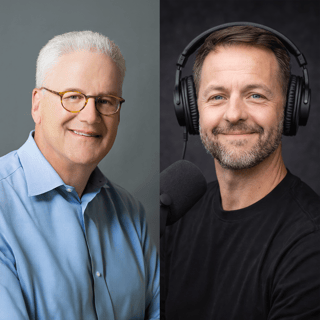
Speaker: Jonathan, thank you for joining me. I really appreciate you being here. As we get into this conversation, can you tell me a little bit about yourself or at least the things that you feel like it would be important for a listener to know?
Speaker: I'm a journalist by profession, born and raised in Phoenix, Arizona, educated um at at Yale and started in the newspaper business.
Speaker: Moved quickly to magazines and books, which is really what I've been doing ever since. I am a little unusual for a journalist because I work both sides of the fence. I can go out and report an article on nuclear power, or I can actually write theory about the importance of Christianity in a liberal society. And it's great. I can move back and forth and combine the two.
Speaker: What about you? What's your story? You're obviously a podcaster, but what else are you? So podcaster, as you said, a lot of my career has been in marketing as I've come up through marketing.
Speaker: A lot of it has been digital, but I have always been interested in synthesis of ideas and I'll read one book or have one conversation and two seemingly disconnected things will for one reason or another connect in my mind and then I play with that idea and often want to talk to people about those things.
Speaker: Otherwise, I am married. I have three kids. I will celebrate my 16th wedding anniversary in two days. Congratulations.
Speaker: Where should we start? I believe I first became aware of you because of your book, The Constitution of Knowledge, which I mentioned before we started recording was a five-star read. I thought it was spectacular.
Speaker: I've gone back and read some of your other books, but more recently you published Cross Purposes. So I thought maybe we'll start there and see where things going.
Speaker: Could you tell me a little bit about what you were going for? Sure. um I'll explain it two ways. First, I'll just say a word about where I'm coming from, and then I'll I'll give a very ah bullet point sort of summary of of the book.
Speaker: I'm a lifelong atheist. I'm a Jew. Those things can kind of go together. I've never been a believer, and I'm also gay, so I grew up very much outside the church, believing that it was hypocritical and bigoted and focused on immiserating people like me.
Speaker: I began to have second thoughts about the church when my first college roommate was the first, I thought, real Christian I'd met. He walked the walk, didn't just talk the talk. And yet, as late as 2003, was still writing in The Atlantic in celebration of secularization.
Speaker: I just thought, you know, if religion's getting less important in American life. God is just receding, and that's going to make things better. We'll be more like Scandinavia. We'll not be as divisive. um Religion's a very divisive force, and we'll be less dogmatic.
Speaker: And I do public policy for a living. That did not work out the way I expected. What in fact happened was that people substituted politics for religion and they turned their partisan affiliations into their sources of identity and meaning.
Speaker: And politics became a high stakes, constantly apocalyptic war between good and evil for both sides. And I'm sitting in Washington, DC at the Brookings Institution where I work writing about policy and thinking this is not what James Madison had in mind. So I had to do a massive rethink about the role of religion generally. But my book, my thinking is specifically about Christianity.
Speaker: It is not addressed to the broad topic of is religion important in American life? It says, let's look at the teachings of Jesus and let's look at the teachings of James Madison.
Speaker: And guess what? Jesus is a lot closer to Madison than to MAGA. Just tons closer. There is so much overlap between the vision of the founders and the vision of Jesus and so little between the vision of Jesus and Donald Trump.
Speaker: And yet... the white evangelical church, which is the focus of my book, has drifted into a kind of partisanship, a partisan alliance that's almost really a merger with the Republican Party.
Speaker: And that's reduced the power of Christian witness in American life, which is bad for Christianity, but it's also bad for American life. So my book is asking Can Christianity realign itself both closer to Jesus Christ and James Madison?
Speaker: And how can that happen? And it focuses on some specific churches and individuals who are now working to make it happen. Why is it that you chose Christianity rather than religion generally?
Speaker: Because Christianity is our founding and prevalent faith tradition in America. there's you know There's stuff you can say about Islam and Judaism and its overlap with you know liberal democracy, the Constitution, the vision of the founders. But the fact is there just aren't enough Jews and Muslims to be a determining force in our politics and our culture.
Speaker: But Christianity, especially white Protestant Christianity, which is our founding faith, not in the sense that it's in the constitution or the founding documents, but in the sense that that's the prevalent um Christian pillar of our culture.
Speaker: When that goes out of commission, when it gets out of alignment with the vision of the founders and with our liberal democracy, we're in trouble because those institutions are so important in our democratic and social life.
Speaker: Jonathan, I guess after all of the research, after all the interviews that you did for Cross Purposes, did you come to a conclusion about where we were at at the time or what our near future might look like?
Speaker: at least as relevant as what I thought is what the Christians I interviewed and read think. um I'm an outsider to the church, but folks like David French and Russell Moore and Pete Wehner and the pastors I talked to, many others, Ryan Burge, a demographer whose work I drew on, thinkers like Catherine Du Mez, for example, Kristin, excuse me, Kristin Du Mez.
Speaker: I drew heavily on those people's work and they think we're in trouble. we're in a place now where the white Protestant church, white evangelical church, not so much the mainline, has effectively merged with the Republican Party and has brought a lot of politics into the church.
Speaker: um And in doing so, they say, and I think this is true, they've sacrificed a lot of the witness of Jesus Christ. So the church is not about power.
Speaker: In fact, In Matthew 4, Jesus founds his ministry on the renunciation of earthly power. This is after he's been baptized. He goes to the highest mountain. and He goes on a 40-day retreat.
Speaker: And there he encounters in the desert, he encounters Satan, who takes him to the highest mountaintop in the world and says, all of this can be yours if you'll bow down and worship me.
Speaker: And as I hope many Christians know, he rejects that offer. He says, go away, Satan. And that's the moment when his church is founded, the renunciation of earthly power.
Speaker: So, okay, fast forward to January of 2016. Then presidential candidate Donald J. Trump is in Iowa speaking at a white evangelical college called Dordt University.
Speaker: And in that speech, he says two things. And I'll bet you didn't know he said these two things in the same speech to the same audience, though you knew he said them both. The first thing he says is, and by the way, Christianity will have power without having to form. Because if I'm there, you're going to have plenty of power. You don't need anybody else. You're going to have somebody representing you very, very well. Remember that.
Speaker: A little while later in that same speech, he says, my supporters are so loyal, it's unbelievable. I have the most loyal people. Did you ever see that? Where I could stand in the middle of Fifth Avenue and shoot somebody and I wouldn't lose any voters, okay? It's like incredible.
Speaker: Now look what he's doing there. He's offering a deal. He's saying, I will give you power and you will give me loyalty. That is the exact deal that Satan offered Jesus.
Speaker: White evangelicals accepted that deal. 83% of them voted for Trump in 2024, similar margins going back, and before him, other Republicans.
Speaker: It's reached the point where Ryan Burge, the demographer I mentioned, says that you've almost got the label white evangelical being less about theological beliefs than being a partisan identifier.
Speaker: And you've got a lot of people who come into the church who don't even attend on a Sunday because identifying as white evangelical is part of what Republicans do. So that's where we are, and it's not a good place to be. That is not the role of the church, qua, as far as Christianity goes.
Speaker: And maybe this is our next subject of conversation, but it also can't fulfill what a democratic republic needs from Christianity.
Speaker: What does a democratic republic need from Christianity? So the founders rejected the idea that America is a Christian nation.
Speaker: They weren't pressured at the time by the people we now call Christian nationalists to include Christianity, the name of Jesus in the founding documents. They rejected that, and that was very deliberate.
Speaker: At the same time, though, They told us that they could give us the structure of a government, of a democratic republic, but that the core values on which that would rest, what they called the republican virtues, would have to come from the people.
Speaker: And they said, Madison, Washington, Franklin, Hamilton, all said, if the public is not virtuous, This republic won't survive regardless of whether, as Madison called the Constitution, there are parchment barriers.
Speaker: So where was republican virtue supposed to come from? So civil society, which means family and community and in local institutions, but very heavily, maybe predominantly, it should come from faith institutions.
Speaker: which should answer the transcendent questions about why am I here on the planet. They should address people's need for solidarity, to worship together, to focus on higher things. They should teach virtue to adults and provide the context for them to teach it to children. And they should provide an anchor for morality, a sense of right and wrong that transcends just what can I get away with right now.
Speaker: And they were counting on Christianity to do that. So they needed a partnership with faith. And then Alexis de Tocqueville comes a couple generations later, and he says exactly the same thing.
Speaker: um And that worked, that compact, that bargain, that worked for a long time. Sometimes it worked better, sometimes it worked worse, and there's always tension between the democratic element, which is secular, and the religious element, which is predominantly Christian.
Speaker: And yet, as you mentioned earlier, I see those two things as if if you take one plank, it won't stand up. But if you take two planks and you lean them against each other, they will stand up.
Speaker: So despite that tension... In the founder's vision, the Christian element and the secular element need at least to be aligned. They don't need to always be allies because they're separate realms, but they do need to be aligned. And if they're out of alignment, they're in conflict all the time, nothing else will work as well.
Speaker: Politics becomes apocalyptic, religion becomes corrupted. So that's what they were looking for from from the religious religious environment.
Speaker: If I'm not filibustering, please continue the next big chunk of that is what it was specifically about the Christian faith that they needed.
Speaker: And this is, you know, you get some of this in Judaism and so forth. But there are three core doctrines of Christianity which map very well onto the three core doctrines of Madisonian democracy.
Speaker: So, the first of those Christian doctrines is don't be afraid, which biblical scholars say probably the most frequently repeated injunction in the Bible.
Speaker: God has a plan for you. Don't be too preoccupied with this world. Be afraid of God, but don't go through life with a sense of crouching fear because you'll make bad decisions. You'll hurt yourself and others.
Speaker: Second is imitate Jesus. Jesus is uniquely for his time and all of human history, a radical egalitarian. He believes in the equal worth and dignity of every human individual.
Speaker: He does not exalt the rich man over the poor man, in fact, just the opposite. He also believes that individuals should never be used as means to an end and manipulated. Each individual is sacred and special and an end in herself.
Speaker: and imitate Jesus. That's really hard to do. The third Christian principle that's so fundamental is forgive each other. Judgment belongs to God, not to man. Remember, you yourself are a sinner.
Speaker: So, before you go out on that holy war and start killing people because they're wrong, show some humility before God. So those things translate pretty straightforwardly into core elements of what the founders called Republican virtue.
Speaker: Don't be afraid translates into sometimes you're going to lose an election, but it's not the end of the world. Have some faith in our constitution, have some faith in your fellow citizen that you might learn something while you're out of office and then come back and govern better when you're in office.
Speaker: That's rotation in power and nothing else works if one or both parties is so afraid of losing that they start bending or breaking the rules. Second, imitate Jesus, that radical egalitarianism and that equal dignity and worth.
Speaker: The way this translates is obvious, especially in the 250th anniversary. All men are created equal and endowed by their creator with certain inalienable rights, life, liberty, and the pursuit of happiness.
Speaker: That statement comes right out of Christianity. Also Judaism and the imago Dei, but right out of Christianity. And that says in a liberal republic, we don't treat people as mere devices to be used by the state.
Speaker: And all people are equal before the law. So you must respect others' rights just as they must respect yours. They are fully your equal citizens. You don't have to like them. but You do have to treat them as your civic equals. That's really hard to do.
Speaker: The third thing, forgive each other. Well, sometimes you win an election, but the goal of politics is not to destroy the other side and wipe it off the map.
Speaker: The goal of politics, when you win, is to work with the losers to make the country better for all of us. And if your goal in life is to wipe out the other side and enslave their women and children and salt the soil with their tears and and all of that, you can't have rotation in office.
Speaker: But worse than that, you can't have a democracy in which people have any confidence that they can ever afford to lose. So you've got to have some forbearance. So I'm looking at these things. I'm seeing these close parallels.
Speaker: On the one hand, I'm seeing how much Christianity could do if it chose to support and align with the values of our democracy.
Speaker: And then on the other hand, I and a lot of Christians are looking at what the white evangelical church, in fact, is doing. Which is often apocalyptic, fearful rhetoric about what will happen if the left takes over, why it's necessary to have a mean son of a bitch president. You're not electing a priest, you're electing a president, but he looks after our interests and we have power.
Speaker: You see the rhetoric about we're going to lose our country. It will no longer be safe for Christians to walk the streets. There's a war on Christmas. It's all about fear. It's not Christ-like at all.
Speaker: And I'm an outsider, but I look at this, Eric, and I say, wait a minute. We need Christianity right now to be Christian. Do you see a starting point for this? You said that this, the two planks leaning against each other worked for a long time.
Speaker: Oh yeah. There's, there's a lot to work with. So you asked in the pre-show conversation, what's happened in the year and a half since the book was published and, you know, nothing huge and dramatic.
Speaker: Well, maybe even that's not quite true. A few important things have happened. We're seeing, in general terms, growing awareness among thoughtful Christians that something is wrong.
Speaker: and a growing desire to fill the gap of what's sometimes called civic theology. And that answers the question of how would Jesus Christ want Christians to behave in the public realm, meaning basically social media and politics? Because it's no good to say, you should you know, I'm great in the soup kitchen, too bad I'm a jerk on Twitter.
Speaker: So if you take a Christlike demeanor and view into politics, that looks very different. From, for example, a person who refers to an entire category of human beings as vermin.
Speaker: Such a person is president right now. So it addresses politics in a very different way. And you've got some some Christians that are thinking about that and writing about it. You've had the foundation a couple years ago. It's not new. of The Center for Christianity in Public Life.
Speaker: Places like Trinity Forum are thinking about this and working on it. A second thing that's happened, again, not brand new, it's highlighted in the book, but it's continued to develop, is the Church of Jesus Christ of Latter-day Saints, a.k.a. Mormons, has emerged under their new president, Dallin Oaks, as a real leader of thinking about the question How does God speak through the Constitution and what are the obligations of Christians in our civic realm?
Speaker: And what President Oaks and his church are teaching is that God expects and blesses Christians to engage in patience, um negotiation, and mutual accommodation,
Speaker: you're not You're not there in the civic realm, even if you think you're right and God's on your side, you're not there to dominate the other side. You're there to work with the people you disagree with to try to expand the realm So there's more room for all of you. And that's what their church has been doing. And they did that for gay people like me. They're against gay marriage. They're against homosexuality.
Speaker: But they helped push through the Respect for Marriage Act, which increases federal support for same-sex marriage while also increasing federal support for religious liberty. So they're doing that. And the architect of those ideas, who himself is a very distinguished constitutional scholar, University of Chicago law professor in his secular time, former justice on the Utah Supreme Court.
Speaker: President Oaks is now president of the church. He's coming to Washington in September. to give a major address. He doesn't do many of those because he's 93 or 94. And so we should all be watching what he has to say.
Speaker: Another thing that's happened is we have an American Pope. And we've got very, of course, impressive encyclical on artificial intelligence, which has reminded us all of what a truly Christian voice and what Christian theology can add to deepen and enrich our debate on these core principles.
Speaker: But we've also seen that he was attacked by the Trump administration and that is as Pete Wehner says, he didn't even respond. He transcended it. It's water off a duck back. And just by giving the example,
Speaker: that is he says, you know, the church was here a long time before Donald Trump, and it'll still be here a long time after, and by pushing back on issues like immigration, I think that's also reminded us that the church can be can improve our politics by being above politics.
Speaker: And then I'll add one more thing. I could go on. I could talk to you about Episcopalians. They're really cool and interesting right now. But the thing I want to add is Minneapolis.
Speaker: And that had not happened when I'd written my book. But when we saw federal forces... wearing stormtrooper-like outfits, in the case of Greg Bovino. When we saw men in masks pull people, American citizens, out of cars, terrify, question them, push them against the car, only to disappear minutes later.
Speaker: And then when we saw two American citizens shot on the street, when we saw tactics that were clearly designed to intimidate and terrify, to own the streets and take it away from the people of Minneapolis, one of the things we saw happen was a national call went out to clergy.
Speaker: It was all informal. They expected maybe a couple hundred. They got a thousand. Just people who got on planes. The next day, this isn't like come a month from now. This is come tomorrow.
Speaker: And you saw a clergy of all kinds out there on the streets holding their phones, witnessing to what was happening. You saw prayer meetings, you saw marches, but you saw real mobilization, particularly the mainline churches, to say, we're going to be here witnessing to what the government is doing and we're going to be here witnessing to Jesus Christ.
Speaker: And that contributed to the sense that civil society was not going to roll over and play dead. So, There's a lot going on, actually, out there that suggests Christians are doing a rethink. Not all of them, by any means. You know, the MAGA church is what it is.
Speaker: The religious nationalist movement is what it is. But there are a ton of Christians who don't want that future for the church, and we're starting to hear from them. It sounds like your feeling is that for some amount of time, five, 10 years, give or take, you mentioned Trump's speech in 2016. So we're looking at about a 10-year period potentially here.
Speaker: For some amount of time, we've been in a bad place in one sense. And yet you're not fatalistic that you're thinking that we will remain on this trajectory because you're also talking about certain you know ah groups responding, pushing back.
Speaker: And so in addition to, I'm wondering why this has all happened. But in addition to that, I'm really curious about your feeling about where might we be in a year or in another 10 years. I'm not asking you to predict the future as much as to respond to that set my sense that you don't seem fatalistic about where we're going or where we are right now.
Speaker: Well, I'm definitely not fatalistic, but I'm not quite optimistic either. I'm somewhere in between, maybe hopeful. Why it's happening is there's a bunch of reasons. You can talk about politics and sociology, but at bottom, you can't really understand creedal faith like Christianity or for that matter, Islam or Judaism without understanding that it's not just what anyone happens to believe someday who calls themselves a Christian that defines Christianity.
Speaker: It's based on teachings in a book. It's a creed, and that creed is meaningful. And there does come a time when Christians of good faith look at what the book says and then look at what churches or church leaders or politicians they support are doing, and they begin to think, you know, that's not quite right.
Speaker: And I think that started to happen. The words of Jesus are pretty clear on the page. The story I told you about Matthew 4, there's not a lot of doubt about where Jesus comes down on the question of should we sacrifice Christian principles in order to have power, even if it's power to do good things.
Speaker: So I think that's a lot of what's happening. And plus there's discontent with the way the world looks right now. When the Church of Jesus Christ of Latter-day Saints participated in, spent a lot of lot of energy defeating gay marriage in California in 2008, much to the despair of people like me.
Speaker: They got a huge backlash against that. And they looked at themselves and they said, is this really what we want to be doing? Can we find a different role in American life? And that set them on the journey of reaching out to the Utah State gay group, gay and lesbian LGBT group, and rethinking the role of the church, not to make it more liberal,
Speaker: but to dedicate itself to what it calls peacemaking. So you see, people can change as they see the effect that they're having. And I think that started to happen to Christians.
Speaker: I mean, it's always happened to some Christians, but I think we're seeing more of it. And I think, frankly, the Trump administration and Stephen Miller are a cause of that. They're really pushing the limits with the stuff they're doing.
Speaker: You know, they they were elected to expel criminal illegal immigrants. And now they're stopping people's husbands and wives at the airport who are here applying for normal immigration status.
Speaker: It's not what the public wanted. Okay. So that's, that's the why. What will happen? You're right. I don't know. I don't have the proverbial crystal ball. And I could fast forward the tape with either of two scenarios and One is that the white evangelical church continues to be as partisan as it is. That as a result of that, the church continues to collapse in numbers. We've seen an unprecedented collapse in institutional Christianity over since the turn of the century.
Speaker: Right through the beginning of polling in the 20th century, 70%, 7, 0% of Americans said they were affiliated with a church. In this century, that's dropped to below half.
Speaker: And a lot of that is because a lot of people look at the political church and they say, well, look, if I want to do politics, I don't have to give up a Sunday. So I think it's very possible white evangelicals will stick to their guns.
Speaker: And the partisanship, the rot will continue and you'll see more people leave the church. And that is already becoming a self-reinforcing cycle because the children of people who have no church lives themselves tend to fall away from Christianity.
Speaker: so
Speaker: Christianity in America might be circling the drain. But I can write another kind of scenario which Christians talk about people like Russell Moore, who's one of the former leaders of the Southern Baptist Church.
Speaker: Um... And they say it's Christianity has multiple times in history gotten in trouble by getting too close to power, allowing its teachings to be corrupted.
Speaker: um We saw that in Roman imperial days. We saw it in the Middle Ages. And they look at that and they say, the church has managed to reinvent itself. And the way that that'll happen, he says, it's not going to be like a giant schism with a clash between the MAGA church and the mainline churches.
Speaker: He says if it happens, it's going to be from the bottom up. It's going to be church plantings by young people who feel a need for spirituality and are attracted to Christianity but don't want to do it their parents' or grandparents' way.
Speaker: This church might be more of a street church. They want a church that they can take with them, not a church that's always within four walls. They want to see less of the church that's about money and ritual and more about applying these principles in daily life.
Speaker: But if this happens, it means that we'll see kind of bottom-up upwelling of a younger generation that begins returning to Christianity and revivifying Christianity.
Speaker: We don't know yet. There's sort of faint rustling, something like that may be happening. It's more anecdotal than it can be found in evidence. But the young people, of Gen Zers,
Speaker: are interested in the church, are filtering back. um Catholic Church and the Orthodox Church are both reporting influxes of of young people coming in.
Speaker: um I saw that for myself at an Episcopalian church in Philadelphia, younger contingent. So it's way too early to have a prediction. It could go either way. I don't know.
Speaker: In Cross Purposes, you spend a decent amount of time talking about post liberalism and contending with, I guess, the general mindset of post liberals or post liberalism. So I'd also love to add in here first and foremost, what is post liberalism? And then also what your thinking is on post liberalism today.
Speaker: Post-liberalism is the idea that the core concepts of the founding of America are obsolete. um Those core concepts, you know, all men are created equal and endowed by their creator with certain unalienable rights.
Speaker: Among those are life, liberty, and the pursuit of happiness. They say, I'm generalizing here because there are tons of people who are post-liberal and some don't even call themselves that. It's ah just a huge variety.
Speaker: But I'm gonna just say what I'm talking about in this conversation. they say those ideas are obsolete or self-defeating because they led to such a high degree of consumerism and individualism that um they undercut the core values of faith, family, nation, and tradition.
Speaker: And so liberalism became like the acid that dissolved itself. it It dissolved its own foundations. And all that was left is this kind of hyper-individualism and hyper-consumerism, which devours everything in its path.
Speaker: And so the result of that, perversely, they argue, is it actually leads to authoritarianism, because then people turn to authoritarian leaders, dictators, populist demagogues, and that sort of thing, to supply the values that liberalism has um chewed up and destroyed.
Speaker: So that's kind of a general sense of where they're coming from. And I guess your second thing was, what do I think about it? Yeah, where do you think post-liberalism stands today as far as influence or general acceptance among the population? I don't know that the general population thinks about it all that much.
Speaker: It's very, very influential. I think we can safely put the president and the vice president in the post-liberal camp. President is no theoretician. But he is an authoritarian.
Speaker: And I've argued that the philosophy of his administration, if it has one, which is questionable, but the philosophy is a lot more like fascism than it is like Madisonian democracy.
Speaker: And when you hear someone like Stephen Miller, the most important aide in the administration, say that, let's get, I'm i'm again paraphrasing, but saying, let's be realistic.
Speaker: The iron law of the world is strength, power.
Speaker: That's a post-liberal or pre-liberal idea that, And it is a deeply pagan idea. So they're saying stuff like that. J.D. Vance has emerged as a critic of liberalism. He says the kinds of things I've been telling you.
Speaker: So it's hugely influential right now. It commands vast swaths, not not the entirety of the American right. You've still got you know your libertarians out there. But it commands...
Speaker: a lot of power and a lot of support. And it's a big challenge for those of us who are liberals. I should say by liberal, I don't mean progressive. I don't mean left. I'm using it in the the older sense, the classical sense of people who believe in democracy, science, rule of law, rule of evidence, minority rights, the stuff that's in the Constitution, the founder's idea of the world, that's liberal.
Speaker: The core idea of liberalism is that all people are born free and equal. And our institution should be based on that. Do you think, Jon, that it is, that I'm thinking of post-liberalism fairly, if I think that whether someone is a theoretician or not, if they have a post-liberal or generally post-liberal worldview, and you ask them about you know solutions to the the challenges that we face, that
Speaker: very often you will end up with either those authoritarian, fascist sort of advocacy or those sorts of approaches, or you'll end up with kind of a hand-waving response that doesn't really get down to any solution that is practical or that we can actually implement.
Speaker: Because it seems to me like the post-liberal worldview falls apart, I guess, when you get down to what is the actual critique beyond the fact that You're just dissatisfied and not willing to put in the work that it takes to have a ah democratic republic where everyone gets their say, where we have transitions of power and where you have to share influence, I guess.
Speaker: Well, post-liberals, of course, often don't want a democratic republic with transitions of power, but there's a range of them. We alluded to this earlier.
Speaker: On the far right, you've got post liberals like Viktor Orban in Hungary, who was recently blessedly defeated, or Vladimir Putin in Russia, who has co-opted and aligned himself with the Russian Orthodox Church.
Speaker: um And Orban has called himself an advocate of what he calls illiberal democracy. And Putin has critiqued scathingly the idea that liberalism and freedom is really good for a country. He says all these things about undermining faith.
Speaker: So you've got a contingent over there and some here. Like there's this guy named Curtis Yarvin. I think that's his name. I think Curtis Yarvin was Mencius Moldbug.
Speaker: Is that right? Yeah. So he's, these guys are, he's an influencer and they would do away with liberal democracy as we know it. Mencius Moldbug, if that's his pseudonym, says he wants to have some kind of techno monarchy.
Speaker: No one knows what that is. Well, we know what happens when you put Orban and Putin in charge, which is your democracy dies. It almost died in Hungary. They got him out just in time. And of course, Russia, we know what happens.
Speaker: So they're theocrats or really they're just autocrats masquerading as theocrats. So that's the hardcore crowd. And then you got the softcore crowd. And those are folks like Yoram Hazony, who's an Israeli Jewish political philosopher, ah but believes in a kind of Christian hegemony.
Speaker: You got J.D. Vance. Patrick Deneen would be in this school, a guy named Adrian Vermeule. Now, these these folks are intellectuals, and they're not hardcore authoritarians.
Speaker: And in fact, their critique of liberalism is that it leads to authoritarianism by the back door. The problem there, Eric, is exactly what you alluded to, which is we don't really know how they would govern because they don't want to tell us.
Speaker: Maybe they don't know, but they won't tell us. When they do come up with with workable programs, they tend to be kind of small tweaks to the system that you know regular Democrats and Republicans are perfectly happy to talk about.
Speaker: you know like more support for working families, or lot of them like protectionism because they think it's good for their country. Well, I don't like protectionism, but we had it for many years and was part of our liberal democracy.
Speaker: So it's really unclear what they would actually change in real life beyond the rhetoric. And again, we don't know because they won't tell us. you You said something about not having a democracy anymore or something of that nature.
Speaker: And one thing that occurred to me is that There's plenty of, there are plenty of questions right now about what's going to happen to jobs with, you know, artificial intelligence. Is it going to replace everybody's jobs? Will the government be forced into or legislate for some universal basic income or any number of things? You know, we can speculate on all sorts of responses, solutions, potential challenges that we'll face in the future.
Speaker: But One thing that occurred to me as you were saying that, or that I was reminded of is that in a lot of countries,
Speaker: you Even if it's not a democracy, one way that an individual and groups can exercise power is economically. They can choose what they buy, where they buy from, all of that.
Speaker: But in addition, if you live in a democracy, you also have a vote. And so these things are kind of sort sort of floating around in my head about if our country or any other country was to drift away from democracy where whether you can vote or not, at least your vote may not have any influence, then the only influence you might have is economically or militarily, but you know, there are many militias nowadays have no influence to the extent that, you know, our police forces or military do.
Speaker: And if you lose your job because of artificial intelligence or some other change of that nature, and you're not able to vote, then it sure seems to me like your ruling classes, your politicians are left serving their primary stakeholders and or, if that differs from, perhaps large organizations.
Speaker: And as you were talking about that, I just started to think, might a change in the the potential to even find a job in in the economy, you know, how many jobs are available,
Speaker: go hand in hand with a drift towards authoritarianism and away from you know having the power of the vote, for example. Yes. um I wish I had insight for you on this, Eric.
Speaker: I listen to as many podcasts as I can find by smart people talking about what AI will do to the world. And I've been doing public policy reporting and research since 1981. So what's that? 45 years, I guess.
Speaker: And I have never seen an area, a field where the ratio of prediction spans such a wide range of outcomes from on the one hand, a cure for cancer and we never have to work again to the end of the human race and everything in between.
Speaker: And the ratio of claims to evidence is higher than I've ever seen before. So I don't have answers to this question.
Speaker: Your answer is better than mine. I'd be curious what it is. people People believe that what's coming is going to be big.
Speaker: The question seems to be, we've seen big stuff before. We saw huge disruptions when the economy industrial revolution, and they were not just economic, they were social.
Speaker: But the first industrial revolution, when people's lives got shorter and men got literally shorter and factory jobs, miserable factory jobs and coal dust were killing people.
Speaker: And Marx comes out of that and communism. And then the second industrial revolution, when you see the the fights against unions, the robber barons, all of these things were hugely disruptive.
Speaker: So first of all, does what's coming next dwarf even those? Are we talking the level of humans changing from from hunting, gathering to living in cities and doing agriculture?
Speaker: But that took hundreds of years. This might take, like I don't know, three years, right? It might come very fast. so I wish I had insight, but fortunately I'm 66. So no one's looking to me for the answers. I'm like, okay, I'm going to check out. I'm just going to watch what happens. then And you young people, you're going have to clean up the mess.
Speaker: I have a really hard time. not being, I don't think the right term is pessimistic. I I think I have a really hard time seeing the solution, feeling confident about a solution. I do feel positive, I guess, but only in a sort of,
Speaker: You know, like it's it's almost sort of an immature sense of just things will work out. like You know, when you're a child and your parents just take care of you or money just shows up and you're able to buy clothes or I don't know what it is. And you just have the sense that, well, whatever goes wrong, things just do seem generally to get better. Much like I think Americans felt in the 50s where Everything was just, not everything, for a lot of people, everything was getting better.
Speaker: And I do feel like that about the future. I have a hard time predicting what it might look like though. It might look like the 60s when it looked like a lot of things were getting worse or the 70s, which is even even more of that.
Speaker: Well, you tell me, you you've got a 12, 10 and eight year old. what do you What do you tell them the future looks like? I don't know, maybe your 12 year old's not quite old enough to say, daddy, and I am I going to have a job?
Speaker: But that question will come up in four or five years. I don't have anything specific. I will tell you, though, that I've talked to a number of people recently who are beating the drum about philosophy being more important than it has ever been because being able to understand the world and make meaning out of our place in the world or the things that happen will be more and more important as what it means to be human seems to be chipped away by artificial intelligence or change. And
Speaker: At the same time, I feel like what's going on with artificial intelligence is hitting just about all of us. or Sorry, let me phrase that a different way.
Speaker: I think we all have largely been impacted by artificial intelligence at just about the same time. Unlike, for example, the Gutenberg press, which was an amazing invention, right? But the thing was that not everyone was impacted by that at the same time. And I also do not believe that something like the Gutenberg press or the telegraph, the radio, social media, electricity,
Speaker: Many of these things, these these technologies that substantially changed the world, I don't think they had nearly as great of an impact on how we understand our place in the world, how we understand meaning generally.
Speaker: And I I do have this sense that the uncertainty that many people feel at the moment, that how AI is just generally impacting the world, I think that that is impacting how we understand our place in it, how we understand meaning more generally.
Speaker: And so coming back to you know how I might talk to 12-year-old,
Speaker: I don't have really a a specific position as much as I feel very sensitive to helping my children try and think as clearly as possible and be dare I say open-minded or at least not so quick to judgment because if the ground is shifting under your feet, if I can throw in more and more metaphors here, then I think while you do have to move forward, you have to make decisions and you can't just constantly wait for more and more information. I do feel like
Speaker: not being quite so rash, not being quite so confident as you might've been 20 or a hundred years ago is probably a ah behavior that will serve us well in the near future.
Speaker: So you mean having hope and confidence will serve us well, regardless of how the technology works out? I think that hope and confidence, I'm not sure.
Speaker: I do think that having a positive mindset, so for example, I don't think that there are many entrepreneurs, that there are not many innovators, entrepreneur or otherwise, that there are not many people that create something new that actually changes the world or has a meaningful impact on a community that are pessimists.
Speaker: I think that in order to be an entrepreneur, in order to be an innovator, 99% of the time, you have to believe that the thing that you are working on will make tomorrow better than today.
Speaker: And, you know, like in, I think it's in Proverbs that it says, where there is no vision, the people perish. And Emerson and other people have made statements like this. And what I take away from that is fundamentally that You have to have some idea that tomorrow will be better than today in order to make it worth putting forth any work.
Speaker: If you don't believe that tomorrow will be better than today, then I think you do what, on average, Americans have been doing more and more in recent decades, which is you get more into protectionism, that you're less willing to share, you are less willing to trust, and you start to just take care of me and mine.
Speaker: And I'm not saying that I advocate for my children to, you know, be 100% trusting necessarily, but rather that you coming back around to what I might tell my children about, will they have jobs in the future, for example, I think that you have to believe that what you're doing will make tomorrow better.
Speaker: And that as you are judging what's going on in the world around you at the same time, as you're judging other people, as you're making plans, even if you don't feel extremely confident or even if you don't always feel positive, that building the habit of being as clear and reasonable of a thinker as you can will give you the best possible chance to not be misled by logical biases, logical fallacies, yeah fake or whatever.
Speaker: who Who knows? So will you encourage them to consider ah philosophy major, history major, political theory major, as opposed to, I don't know, science, engineering, coding, accounting, the useful things, the quote unquote useful things?
Speaker: I really love that question, Jon. you know, the position that I take right now is that
Speaker: I want my children to work on things that they believe that they can get better at.
Speaker: And that they need to understand that the things that are hard aren't always hard because just because you're bad at them and you will never be good at them or something of that nature, but rather that if you decide to study philosophy or if you decide to study accounting, that just because it's hard or just because you're not good at it today does not mean you shouldn't do it.
Speaker: but rather, you know, these statements that you see in movies or whatever else that like we do the hard things because they are hard. But why, some say, the Moon?
Speaker: Why choose this as our goal? And they may well ask, why climb the highest mountain? Why 35 years ago, fly the Atlantic?
Speaker: Why does Rice play Texas? We choose to go to the Moon. We choose to go to the Moon.
Speaker: We choose to go to the Moon in this decade and do the other things, not because they are easy, but because they are hard. Because that goal will serve to organize and measure the best of our energies and skills.
Speaker: Because that challenge is one that we're willing to accept, one we are unwilling to postpone, and one we intend to win, and the others too.
Speaker: One reason that we do those hard things is because we get we have a better tomorrow. So would I advocate necessarily for you know philosophy over something else?
Speaker: I'm not sure right now, as much as I would want my children certainly to feel like it's worth working hard at something.
Speaker: And then, you know, where does that leave them in relation to, you know, maybe the the robots replace all of us? Well, I really hope that they don't end up studying the wrong thing, but I'm not sure.
Speaker: Why read a book if you can get Claude to summarize it? Why write an article or a paper if if you can get ChatGPT to spit one out? It's going to be a question.
Speaker: I can't recall if in your writing you've talked about this, but I know plenty of other writers have talked about the movie Her with, I think it's Joaquin Phoenix. And, you know, he's talking to his AI, you know, friend.
Speaker: Basically, I think it's Scarlett Johansson and he falls in love with her. And I think that there is a likely future for a large percentage of people that is like that.
Speaker: where it's just easier to you know, 20 years ago, 40 years ago, it was just easier to watch TV than it was to read a book.
Speaker: Then it became, it was much easier to spend time on social media and read headlines rather than to actually read a book, have a conversation and so on. And so I do envision a future where a large percentage of people are like that. It's just easier to have Claude or whatever it is, summarize things for you.
Speaker: But I do think that as you were saying that I was also thinking, I have yet to have a feeling of inspiration or insight when I'm interacting with artificial intelligence of the type of inspiration or insight that I have had when I'm running along, listening to one of your books.
Speaker: And I feel like I never thought about that. Now, will it happen in the future? Of course it will happen because there will be millions, hundreds of millions of those experiences. It's bound to happen. At least for me, ah do feel like the effort that is put forth in a conversation like this or in reading a book is, it it gives me a much better chance of having some depth of experience and some more meaningful outcomes than having Claude summarize your book for me.
Speaker: Well, you are a parent of the generation that this experiment will be conducted on. You look to be in maybe in your 40s. You got it.
Speaker: And I'm in my 60s and we're fully formed adults and we grew up with books and you might even remember rotary phones. I do.
Speaker: You probably could work one if you if you saw it on the table. That's not true of your kids, right? Right. Yeah. They will, especially the eight-year-old, will not remember the world before artificial intelligence and before asking Claude,
Speaker: And you will be trying to teach them what you just told me. Do it the hard way, not the easy way. Go through all the steps in your mind of um not just spitting out the words, but learning the thinking behind the words.
Speaker: And they might look at you and say, why? ah People once said, figure of master master logs and take square roots and no one does that anymore.
Speaker: So it's going to be interesting because you're, you're the point of the spear on this, Eric. Well, I will take that as a positive challenge, but you know, one thing you remind me of Jon, as you're saying that is I believe if I recall my Huxley and Orwell correctly, you know, the, the, these two gentlemen had, you know,
Speaker: different ideas about how the future would roll out and Orwell more or less argued, you know, if you take 1984 as an example, that the the government would become increasingly fascistic and authoritarian and we would lose power and choice and so on.
Speaker: not because we don't want it or not because we weren't willing to fight back, but we just lost power. Whereas I believe I recall in Brave New World that the idea was essentially that was it Soma or something like that. I forget what the drug is that we would just be so entertained. We'd be so distracted that we would let the government do whatever they want.
Speaker: And at least My, my general feeling is that we're drifting more and more toward the Huxley scenario. And I'm not saying that I don't believe that we are on a path that will never change.
Speaker: I do think, as I said earlier, I have a very hard time predicting what the, what the response will look like. But I feel like it would not behoove my children to feel negative about the future, to have any possible chance, if not as a country, then at a bare minimum as an individual, they have to believe that what they're doing is worth doing that hard work.
Speaker: Otherwise, they have no influence. They have no control over a potential positive future. I hope you can instill that. Has your 12-year-old used an AI for homework?
Speaker: I don't recall if she's used it for homework, except for perhaps behind my back in some respects. she has She's built websites with ChatGPT. She's done a number of other things. So she certainly understands how to utilize it.
Speaker: Well, it'll be interesting. it It brings us back to the first part of our conversation, but the Pope's encyclical, mean, it's long and it's not easy reading, and I confess to skimming chunks of it, the history of Catholic social social teaching under the previous Pope Leo.
Speaker: I hope God will forgive me, but... It's a pretty profound document because it's asking these questions and it's saying what makes humans different from anything these machines will ever be and how do we value that at a time when it's going to be very tempting to say what's really the difference between between them and us.
Speaker: And that's going to be an issue for their kids. And one of the things, as I say, I'm not a person of faith, and I'm not prescribing that anyone should be. I'm not a Christian because I don't think it's true that Jesus came back to life after three days in the tomb.
Speaker: And yet, I think that religious tradition, and my tradition, the Jewish tradition specifically, have a huge amount to teach folks like your kids that And I do wonder whether another reason to hope for the health of of our great faith traditions in the United States is to provide some kind of anchor for your kids beyond just, well, you should develop yourself as you know as a thinker.
Speaker: There's deeper ways to think about that. I would say that Everyone has some type of belief about all sorts of things, right? We we can talk about the conscious mind and the unconscious mind. We can go back to Julian Jaynes and we can talk about the, what did you call it? The origin of the bicameral mind. There are any number of things that we can reference.
Speaker: but ultimately Ultimately, what I'm going for is that you reach some point where even if someone else knows the truth about something, like why gravity functions the way that it does, or you know how much do we actually know about whether Jesus existed or not? Even if someone else knows the truth, you or I have reached the limits of our knowledge, and we just have to believe after that point.
Speaker: And when you say that you know ah a belief system like Christianity or Judaism has a lot to teach, perhaps you know my children are the next generation.
Speaker: I agree with you 100%. hundred percent I think that to have 100% confidence when you simply don't know, that that is likely to lead you into making bad decisions.
Speaker: And not all of those will be fatal, but some of them you could have ended up in a better place had you just been willing to acknowledge that there are limits to your own knowledge.
Speaker: Amen to that. That's certainly not not something I could I could argue with. And yet, intellectual and moral humility are such difficult virtues to to cultivate and so easy to forget.
Speaker: I'd like to be your kids, though, Eric. I think you're probably a terrific father. And the way you're thinking about it, if you and your spouse can introduce these issues around the dining room table, make your kids think, and help point them toward having disciplined minds and thinking a little bit more deeply than just how do I get an A on the next paper, that's a real victory in this world, right? It doesn't all have to be macro. It doesn't all have to be about reforming Christianity or the country. it can just be about shepherding the next generation through what's going to be an unprecedented challenge.
Speaker: Well, I appreciate the kind words. And yes, I agree with you. Jon, where should somebody go if they're interested after this conversation? Well, I'll soon have my website back. The company that that hosted it went out of business, but it will be JonathanRauch.com. I've got a page at Brookings, Google search on my name, all my stuff comes up. I'm not really on social media anymore. I got tired of it.
Speaker: It just, I don't know, started seeming annoying and inane, but I have a Bluesky account. But the main thing to do is just go to Amazon and type in Jonathan Rauch and a bunch of books will come up.
Speaker: And folks may find something they like to read in there. None of my books are long and none of them are painful to read. I pride myself on being more concise than I've been on this interview and more readable than your average thoughtful writer.
Speaker: Yes, I, well, I agree with that. And there are several of your books that have been very influential and have been ah enjoyable. I found them valuable. So.
Speaker: Well, don't forget they're available at fine bookstores everywhere. Exactly. Jon, I appreciate you being here. Who knows? Maybe we'll get a chance to talk in the future, but for now, thank you for joining me today.
Speaker: Thank you.