Transcript
Speaker: Yeah, so I think, you know, that's the thing. If someone, like, is I'm going to move to Japan, I'm going to do this, yeah you're going to quickly realize that everything's in a book. And if you try and veer from that book, it's it's very hard to get done.
Speaker: um They're not huge on change. Obviously, that's how they've kept their culture over the years. So you've balance culture and change um really well. um And that's what I'm trying to do to make...
Speaker: you know, still follow the rules, make sure everything's in that place, but then offer an easier route for foreigners coming in um to be able to do it.
Speaker: Welcome back everybody to another exciting episode of buying a house in Japan. I'm your host, Joey, joined by co-host Take. ah For those of you new to the podcast, Taki and I have purchased six properties in Japan so far, and we're documenting our journey along the way.
Speaker: Today, we have a another exciting guest. Taki and I are on site in Iiyama, Japan, visiting our friend Mitch, who runs a company called Ikigai Collective, specializing in building luxury tiny homes.
Speaker: Welcome to the podcast, Mitch. Thanks guys, good to have yous at it. Damn, this place is so beautiful. You picked a real good spot. This is my first Iyama. I think maybe I've driven through it, but um I mean up until like 10 minutes ago was nice and cloudy and now we're in the full on in the heat inferno. But Mitch, thank you for having us. We are so excited to kind of ask you some questions about the build process, how you got to Japan. But why don't you give us a quick intro of yourself.
Speaker: Yeah, okay. So I've been a builder for 15 years. I guess if you know that the meaning of ikigai, so the ikigai, the word, Japanese word, means purpose for being or purpose for living.
Speaker: So like six years ago, I sort of sat down with myself. was like, what is my ikigai? Like, what do I want to do with my life? Which direction do I want to go? And all arrows pointed back here to Nazawa Ronson and building tiny homes for the community. So five years ago, I moved to Japan and then three years ago, started Ikigai Collective. um And three years in, we've got our beautiful display village, like you said. on then five minutes out of Nazawa Ronson.
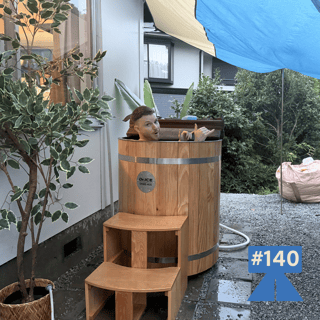
Speaker: ah You can come stay with us here. We've got three display models. We've got our saunas, cold plungers. and yeah that's sort of how i got here but yeah we'll speak a bit more or less along this this chat about the all the things in between and everything else totally did you see that ikigai diagram i is that what got you like it's like i you what you're good at what the world needs like your vocation i have seen that actually wrote it down i started filling it out and then yeah ah like my number one passion snowboarding so To be able to live in a ski resort year round and do what I love doing, which is building and business and community. Yeah, it's pretty special.
Speaker: Okay. Snowboarding one circle, other ones building, in right? what's What's that third wildcard one? i I guess business, right? Like, yeah, trying to grow a business with team members, you know, leadership, all that thing that comes along with it.
Speaker: That's what it gets me up in the morning. So I want to rewind the clock a little bit. You said 15 years experience building. Could you talk about that? That wasn't all in Japan, right? And I also want to touch on your experience in Japan prior to to coming here and starting this business.
Speaker: Yeah, so now around the world, my whole family were carpenters growing up. um So didn't really want to do it, and then just circumstances led into me doing it and ended up being the best decision I've ever made because it took me all around the world. you know i've I've built houses in Australia, in America, in Canada, in Japan.
Speaker: was saying to you guys yesterday, like experiences through all those different... geographical regions of different building codes, different building types. I was able to learn along the journey and put everything I learned across those 15 years into these tiny homes so that these tiny homes are snow proof, they're weather proof, the insulation, earthquake proof, all those aspects of building that I learned go all into these one builds now to perfect the builds.
Speaker: Right on. going to pause real quick. And we are back. So 15 years of building all around the globe. What brought you to Japan? Was it that Ikigai diagram that you sat down and and drew? or So I first came to Japan chasing powder um after living in California doing Squaw Valley, Heavenly, and then going up to Canada, Big White, Whistler.
Speaker: Japan was the number one powder hounds kind of thing. Powder hounds. That's a good phrase. Powder hound? Powder hounds. ah I guess it's a saying in the snowboarding community, chasing pow. okay and So I went to Niseko my first season, went up there and didn't really feel like i was in Japan. I guess so we've heard i never been it's changing over the years. right so After that season, I was like, I want to go try and find a smaller ski resort, more traditional, try and get the Japanese experience. And um that's when I found Nzauronsun.
Speaker: Lucky at the time, it was right as COVID started. So I got to experience cleared out two seasons in Nozawa with no foreigners here. Ski resort still running, two incredible power years.
Speaker: And that got me thinking, i was like, right, well, this, this is my key guy. This is where I want to be. How do I do that? And at the time had a tiny home company in Australia called Stay Tiny Cook. um We ran that out of the Sunshine Coast.
Speaker: So ended up, is that Brisbane Sunshine Coast? Yeah, about an hour north of Brisbane. Okay. So yeah, from then I just put the business plan together. How was I going to move here? and What was I going to do?
Speaker: and kind of just sat down with myself. That's why I drew the Ikigai diagram. um And then yeah, it went all in throughout everything I had in Australia. All my old rugby trophies, all everything that I've hoarded for years and made the move to Japan. i like that. Yeah. So i've got I've got nothing left in Australia now. My whole life's here.
Speaker: on I think we there's a common trend a lot with a lot of these people we're helping buy. A lot of people just like completely exit where they were previously to get rid of everything and they kind of restart here and go all in. And I think that's like, seems to be a yeah common theme and it works well for people. I think everyone who has done that.
Speaker: has been quite successful in what they're doing here when they go like full focus. You their attention is not split amongst two countries. Exactly right. Spoke to someone recently too. We do these consults for people looking to purchase property in Japan and someone was telling me that's his exact plan, sell everything he's got. And I think he was looking at Fukuoka, but repeating. It does come with a word of warning like we were speaking about before. Like Japan is not an easy country to move to as a foreigner. Yeah. um And that's what I've concentrated over these last three years of building the business is to be able to make that process of buying land and having a house in Japan easier for foreigners because there's a language barrier. There's all these cultural differences that you're not aware of when you say, oh, I'm going to do it. And then you get to that roadblock and you don't know how to go through to the next step.
Speaker: So that's what I really concentrates on taking that pain away from for the client and customer. Oh, there's roadblocks. we Especially with starting business in Japan. i don't know if you've had a similar experience. How how was your experience actually incorporating and and I guess you're your own representative director for the business? like How was that? a representative director for two companies in Japan.
Speaker: um one is the, have Ryokan in Nozawa Onsen as well that we manage. Is that the one we saw? Yeah. Such a cool spot. Yeah. So that was the second one. So I guess I i took a lot from what i learned with Ikigai and renewed that into the second one. But no, I've i've had some help through our friends and partners along the way to learn.
Speaker: We've got seven awesome staff at Ikigai, some Japanese, some foreigners. So they everyone's got their sort of roles and we we all click in together to get it done. Going back to this area specifically, so it sounds like you first went to Niseko and maybe was felt crowded. like Again, how did you find this spot's like truly a gem?
Speaker: ah It was this a snow me, we call them. for Snow friend. no Snow homie. Snow me. wow Snow hound. Snow me. Yeah, someone who I knew from Australia and we had seasons in Canada together, he had done seasons here and just got word of mouth. And he was like, you should go check out in a Zara. And I was like, all right, I'm going to come down and check it out. and Yeah, never back.
Speaker: For anyone who's not familiar with Japan, Nozawa is kind of, it's in Nagano, right? Or is it Niigata? We're close to the border, but we're in Iiyama and Nozawa's right next to it. Nozawa is a very like picturesque ski town from like except Japanese version I don't know how to describe it but it's really charming yesterday you called it like Tahoe-ish I called it like almost like Telluride I said it was like but Bavaria if anyone's been to Germany like they like a kind of like super old school like the roads rather the skinny roads purple roads there's 13 free onsens that you can go they're all free i smell oh really free there's a donation box you can use um okay but yeah the community all chip in together to clean them and make sure they operate
Speaker: Brad, and we've we've been seeing like a high, high influx of people coming to this area. So we've actually in the past year helped maybe six folks by everyone, mostly Australians who want our snow hounds, I guess, maybe the snow means snow means are telling them. But I mean, it's it's interesting. How is this area changing? Do you feel that foreign kind of population coming in now?
Speaker: For sure. Like it's always, I wouldn't say always been here, but over since I've been here, it's always been here. But Nozawa did a really good job at managing that. Like Yuto Yoeno, the new elected mayor from this year, is the youngest mayor that's been elected in Nozawa Ronson. So he's advocating for a lot of change and a lot of the younger generation having a voice in the village.
Speaker: But the thing with Nazawa is like there's no more place to build. You can't build up. You can't build the IAR. You can't build down into the rice paddies. So what's in Nazawa now is that's the most where you sort of can fit in there. So I don't think it's going to change too much over the years. And the Yakuba, like the local council, they do a really good job at controlling the influx of foreigners, but also letting foreigners come in and enjoy it and, you know, help the economy as well.
Speaker: We noticed with a lot of these ski towns, it's such a seasonal thing when we we tend to come off season. And I think I personally enjoy the fall. It seems to be when we come to this area. you know how big of a How big of a surge do you do get every winter? Is it just like super, super packed? yeah I call it the yin and yang. It's ah summer and winter. yeah you I got eight months of summer where Ikigai is in full production through the summer. and Then the snow comes and we start to slow down just because of access and snow and materials.
Speaker: And also my passion for snowboarding. How could it make some more time in winter? Okay, there we go. And that's where it gets back to the balance between work and life and your passions. I try and keep that close in the business model as well.
Speaker: But yeah, there's about 4,000 year-round residents in Nozara Onsen. 4,000? 4,000. Not a lot. No. I mean, as you I don't know if you walking around last night at dinner. know There probably wouldn't have been that many people last night. No, buddy.
Speaker: Come... Late November, early December, you the Nazaurant line of bus from the Yarmouth station just filled every bus. People just start coming in. And then pretty much from January 1st, every room, every hotel in Nazaurant is booked out.
Speaker: i want to see When does the season start and like the girl from when to when? The Golden River generally opens the last week of November. um And that's just the top Yamabika around. um And then they stay open until Golden Week. So they stay open through Golden Week and then close up. So like so first week of May.
Speaker: So for people, i kind of a little bit jumping the gun here, but back to the tiny homes. um Do you see, so you do rent these out as an Airbnb during the winter, right? What sort of occupancy do you see?
Speaker: We're seeing about 60 nights through winter at the moment. 60 nights through winter. Okay. And you do you think that's going to, I mean, it's obviously probably going to get more crowded this year and next year. i think, so we're five minutes out of the village here. So we're the closest accommodation that's not in the village. So we're getting the overflow of what's, you know, people can't find any more rooms in the village now. Mm-hmm.
Speaker: So they're coming out here and we're out here in Japan Lake. We you know come have a sauna hot tub, stay in the tiny homes. It's five minutes out of the village. Like if you're driving a car, you you want to go to Madarao, which is 35 minutes away.
Speaker: Kijima Daida is just here. You've got Torgati as well. And then Miyoko is only an hour drive. So it's pretty central to a lot of ski resorts. So um there's a lot of people, powder hounds, that have booked this place as a central location to ride a lot of different resorts.
Speaker: Do you see those powder hounds as the main customer base for the tiny homes as well? Is that kind of like who you envisioned when you built this product? Like people that love Ski Japan, want to buy land, they want that professional A to z everything set up for them type service?
Speaker: Sales... Not so much. I think like a like the combination we had here, the first thought with this was for people, because they were we're building a product that Japan hasn't seen before, right?
Speaker: So we needed a display village where people could come feel it, feel the size, see the detail and come experience that. After we built it, it's really nice. So it'd be a bit of a shame for to not let people come and stay in it and trial it, right?
Speaker: So then from that, the location where we are, we get the 60 nights in winter, but we get a lot of Japanese during the summer that just come use the sauna and use the cold plunge and just come lounge out on the deck, which is really nice.
Speaker: Well, you smashed it out of the park with these units. So Joey and I, you know little bit of context. We got in contact with Mitch. We are interested in actually putting some of these units on our Miyoko property, which is why we got in contact. And we were that test case where we come and try the the units out and You did a great job. You know, so comfortable. You did a great job with the design of the spacing, but the sauna and the cold plunge, holy shit. That's so Cream on top.
Speaker: I do just want to say like Taki and I have stayed in, maybe not stayed, but like, you know, toured a lot of Akiya's. We've also stayed in our own Akiya's and to think about a different sort of path to, you know, buying property in Japan and then dropping one of these on there. It's just such a comfortable entry point. Like, yeah, the Akiya game, it's an ah it's an adventure. This is like a buy it, you're gonna be comfortable right away and you know start filling it with some furniture and have a good time. Yeah, so that goes back to like the audience, of like the sales audience that we're trying to target. and ah And there is that big foreign market, probably more people that have a tie in Japan, either a company, yeah family, or you know someone that comes back every year to snowboard.
Speaker: And they want that holiday base. and Like I said, doing the Akio route, it could be very time consuming, a lot of lessons learned. So Ikigai tries to take that process away from that and he'll help from a to Z. So all the pre-constellation stuff, all the way to aftercare and set up. So you can pretty much...
Speaker: buy the land or even look at the land and then send it to us. We then go back and forth like we were doing with your Muircourt property right now. See if it's going to work, if we get the home there, see what services we need, talk to the local council about what we need permitting wise, make sure that's all sorted for you.
Speaker: Just take all the stresses out of trying to have a a roof over your head in Japan. he Mitch sort of brushed over a few details there, but like, you know, for example, when you said like talking to the local council about getting something done, like that's a huge problem. Like, you know, for someone that doesn't speak Japanese and maybe doesn't understand it, like that is a big task. And like for Mitch to handle that, that is something I'm personally excited about having that taken off my plate. Yeah, we were saying yesterday too, like you need a fax machine in Japan to get anything done. There's a lot of paper, there's a lot of paperwork, there's a lot of Japanese writing. i had to learn to use a fax machine here because I never learned to use one before, but they use it a lot here. have no idea. Congratulate your fax machine owner. Do you need to like receive, like if someone's sending you fax, you need to like push a button when they're sending it to like receive it or anything or just it just runs? It'll come through. Okay.
Speaker: ah Interesting. ah So a few more interesting things about these tiny homes I was hoping you could comment on is this this it's not ah It's not a structure, right? It's a vehicle, which I think is interesting. And the depreciation is also quite interesting. Yeah. So the trailer gets registered, what we call here is shacking.
Speaker: So once the trailer is registered, we then build the home on top. It's a detachable home as well. So the home can be craned off on and off the trailer. They're designed to do that um just to simplify the registration process. If you need to renew or move the trailer or else so want to sell the home later. Yep.
Speaker: And then yeah, with because it's a new vehicle, you got a four year depreciation on the asset as well. So here companies in Japan, that's a big benefit. Heck yeah. One thing I just thought about that I hadn't thought about before.
Speaker: There's in where we first bought our first property in this town, Beppu down in Oita prefecture. There is a ah half built, like someone was trying to build an onsen ryokan on kind of this mountainside. There's a ton of natural wild hot springs there.
Speaker: And the story that I heard was that, oh, he couldn't get the building permits um because it's in like a landslide zone or something like that. Now, potentially, I'm not saying it's a good idea to put a structure on a landslide zone, but let's say there's a property, a piece of land in Japan that you buy. And for whatever reason, the government says you can't build a house here. Could you put one of these there?
Speaker: So this is why we talk to the the local council, right? So it it goes by region. So that's, we go and consult with them. By law, you can put them anywhere you can park your vehicle, as long as you have a two meter wide road access to a main road.
Speaker: So that's the trailer house laws in Japan at the moment. So yes, you technically, yes. about This is like our team goes and makes sure that it's going to be okay with so the local council before we proceed as well.
Speaker: Very cool. is there what Are you guys at like the max size? Could we go even bigger than what you currently have? Or what does that trailer house law kind of entail? So this is the max size because of the way we build. Obviously, we're not building with, like we said about drywall and wallpaper. We have full insulation, vapor barriers, moisture barriers.
Speaker: So weight is the issue. So three and a half ton is the max amount of weight we can build to. If you go over three and a half ton, then it can't be registered as a vehicle anymore. So then you've got to go through a different route of being able to get registration to be able to tow it. It's got to have pilot vehicles.
Speaker: There's about a four month wait to get that permit to move it. um There's other companies in the area like Cumberland that are doing a bigger sort of builds. and But we're trying to get these more accessible to more places, tighter areas.
Speaker: so building to that 6.6 long, 2.4 wide and 3.8 is the maximum height from the ground as well. It gets us to about 3.2, 3.3 ton as it is. So yeah, unfortunately we can't go any longer than that.
Speaker: Interesting. and then we we we've driven around a lot and we've been kind of looking for this solution for quite a while we we'll drive by a lot of these like i don't know with joy what joey what was that like building we saw in the park it's like basically shipping container like a portable kind of unit like oh yeah you like unit or something like that like basically you've seen those construction sites in japan and they'd like plop on office there right it's these boxy type things probably no insulation or anything in them but we were thinking about buying that because they're like you know how do we but start buying these tiny homes. We've been searching for a while actually before we came across your business. And was that ever a consideration on the path or you knew like, let's go this kind of on wheels tiny home route from the beginning?
Speaker: Wanted to go the on wheels tiny home route and there was already other some companies doing the on wheels tiny home route in Japan. So the the difference I wanted to do was that higher end model and quality, you're right? You're not going to get cold in winter. You're not going to get hot in summer. you're not going to have mold problems in your walls because of, you know, your vapor barriers, your moisture barriers aren't there.
Speaker: um You've got snow loaded roofs so you can have up to two meters of snow on your roof before you have to clear it. double glazed windows, all Japanese sugi, and a lot of natural timber that we get milled up locally around here as well. So, and it's all built from scratch, right? We build from our hands. There's no kit part of it. Everything's framed up, clattered, everything in there is hand built. So you don't get like a pre like skeleton kind of thing or is it like? So we do shells. So like what you see on the outside is we can build the outside then if your hand, that takes away like we do all the structural stuff. of that right You know, it's going to be strong enough to go on the road or it's waterproof because all the windows, the roof, then we can leave you an empty floor space inside for you to ah finish off your kitchen, your bedroom, however you kind of want to lay it out.
Speaker: How long does it take you to build one? Like, let's say you got like all your dudes, like we got to push this out. Like, is it a month? Is it two months? It's at the moment, it's six weeks okay and we want to get it down to four weeks. okay Six weeks always all already feels quite fast. like We got a tour your warehouse behind, which a by the super, super impressive, excited for the the warehouse parties. But do you use a lot of machines or anything? Is it all just like manpower putting it up or?
Speaker: ah We have some like scissor lifts and forklifts. We help to use material and scissor lifts to get up and down the roof. Other than that, no. How do you actually weigh it? do you have like a massive scale or something that you, how do you weigh them? There's weigh stations. So like the, ah the gommie huts around here, and there's different weigh stations we can drive them to and weigh from that. Yeah.
Speaker: Back to the drop on one of these on a piece of land that you can't build a house on. You can do these completely off-grid as well, right? Yeah, so we offer incineration toilet and compost toilet options. um So we don't have to hook into any sewer. Then we've got solar packages as well for electricity. Very cool.
Speaker: And then there's gas, like a lot of gas. So we can have gas heating, gas stoves, all of that. You showed us the incineration toilet. That was like, that blew my mind a little bit. So it's basically like ah a ah toilet and then you have like a,
Speaker: I know, like a tray at the bottom. And so does it burn your poop underneath or like So it goes underneath and then it's got kind of like flamethrowers that like just heat it up to incinerate it. Okay. And it goes to ah an ash.
Speaker: Like it looks like a campfire kind of ash afterwards. Yeah, really fine. And it it gets it, what's the word? like height It's not hygienic, but it's it's not like dirty. So you can just push it out into your normal rubbish bin and get rid of it that way. Okay.
Speaker: Put it in your garden. Yeah, yeah you can spread it anywhere, right? Oh, geez. Okay. So I'm curious, like, percentage-wise, how many people go for that off-the-grid option versus kind of like the...
Speaker: tied down to public the sewage and stuff like that? No one yet. No one yet? No. Okay, Joey. Yeah, yeah. Maybe we... I saw property in... What was that? Amami. It's like literally right on the beach.
Speaker: And I don't know if you can build there. In Australia, it was a lot more. Like ah compost toilets are ah huge in Australia. And that's the differences about, you know, the learning stages through Japan, like what products are available and the trailer house industry isn't really big here. So there's like, I worked closely with the Japan Trailer House Association in the office in Tokyo.
Speaker: And we talk through laws about what needs to be changed, what needs to be adjusted, what we can do better as companies. um And we're all in a forum online to like all the members of that trailer house association.
Speaker: And we all throw ideas out there and just try team together to to build the industry and change the laws that need to be changed. Because at the moment, they're not really favorable for what we're trying to do. So there's just little things. And I think really the tiny home industry in Japan is about to take off. Yeah.
Speaker: Okay, hopefully you're well positioned. I think you it's it's really impressive the infrastructure you built. Like, again, going back to this super mega warehouse behind us, like you built this from just your like yourself or what how how did you build this we had a factory? We had a team of four people over a year. was our one project for the year.
Speaker: And that goes back to about like being well positioned. I had the vision of making this company and helping a lot of people, right? And I didn't want to start... and then not have the accessibility to expand before we started. So we built this, this factory to begin with, to make sure we're well positioned in, into this boom of, you know, helping people solve these problems in Japan.
Speaker: This warehouse is massive. you It's like a airplane hanger kind of equivalent or like I can imagine like a Tony Hawk half pipe like skate park in there or something. In winter there was so much snow we could snowboard off the roof. What?
Speaker: So yeah I'll show you some videos after. You would drop off the roof? Drop off the roof and we could come up and jump this sauna. What? And land down on this hill there. What? What? Yeah. It's at least like a... It's five meters apex to the outside and eight meters at the top and that factory went completely under last winter. Wow. Okay.
Speaker: I'm a soft Californian who has not had too much experience with snow here. How much snow are talking about in this Iyama and Nozawa Onsen area? How much do you get per year? think it's about 14 meters at area. 14 meters? Times three is feet, right? Roughly. Yeah.
Speaker: Oh my gosh. Okay. 42 feet. So we we brought this spot in Myokokogen and we're going to put this tiny home right here. Like This thing should be able to withstand snow as long as we two meters on the roof. as it but Yeah, that's where you're at. If there's anything over that, you should really get up there and shovel it off.
Speaker: Depending on where you are and like the melt freeze layers and the sun, um the pitch of the roof, it can slide. Okay. It appears to get continuous fresh snow. It might adheres to itself and not slide.
Speaker: Like, is there a world where the window up to the windows, it's like you can't see the snow. Can you open the door? Is that an issue you think you we would encounter? If you left it, yeah. I mean, we snow shovel this deck every day, right, um as we have guests in winter.
Speaker: So we we try to keep the snow off the wid off the walls and we just walk around, make sure you can walk around. like We've got gas bottles beside that the gas company need access to to be able to replace.
Speaker: Do they salt the roads in Japan or no? Yeah, they do. They do Yeah. So there's a lot of heated heated roads, like and knowza all of Nauzau's roads are heated, and then they salt and and clear them. they have like a little water sprinkler things? water sprinkler, and they've also got kerosene heating mats under the concrete. So when the the snow sort of hits the road and it turns to water straight away.
Speaker: Can we do heated roofs on these, like to melt the snow or is that a thing? Yeah, hey there it is. um We haven't got the product price yet, but we've been in contact with an American company about heating these roofs. So yeah, you don't have to get up there at all.
Speaker: All right, we're One more thing on the the A to Z service. Do you offer, like say someone purchased, not land, but it's got an old Akiya on it, for example, similar to our property in Miyoko.
Speaker: Do you offer sort of like tear that down, throw down a concrete slab or whatever needs to be done, like prep the property for to drop one of these on as well. Yeah, great question. So where i' display village is now, it was ah an old house that got all its eaves, all its roof, all are snow damaged from the big season in COVID.
Speaker: So the owner kind of just left it there and didn't do anything. Then when he offered it to us, we're like, well, let's tear it down and build this display village. So that's exactly what we did there. And it goes back into me learning all these steps over the time. Right now I know the process. I've got the contacts. um So yes, if you're in the area, we offer that. If you're down in Okinawa or in Niseko, we can contact people to put you in the right place. And our team does all of that to say like, you need to knock it down. You need to have a flat base.
Speaker: And then we draw designs of where you need to put your plumbing, where you need to put the new electrical pole, and all of that. And we help you through that stage. So yeah, definitely possible. Yeah. I liked how you were like, I got a guy for that.
Speaker: And you were like, yes. And I think something we really appreciate, we had a conversation before this over Google Meet and something we really appreciate about just kind of your attitude is like the can-do attitude. We have dealt with other more traditional home builders in the past that we were like, hey, can we do this? Can we do that? And I think we were talking about, we had a conversation about making a garage or something. You're like, give me enough time and I'll figure it out. And i think for us, that was like, okay, that's a a huge thumb up.
Speaker: that we don't typically hear from the Japanese builders. And I think that's what potentially differentiates you from the crowd as well. Yeah. So I think You know, that's the thing. If someone like, za I'm going to move to Japan, i'm going to do this. yeah You're going to quickly realize that everything's in a book.
Speaker: And if you try and veer from that book, it's very hard to get done. They're not huge on change. Obviously, that's how they've kept their culture over the years. So you've got to balance culture and change um really well.
Speaker: And that's what I'm trying to do to make. still follow the rules make sure everything's in that place but then offer an easier route for foreigners coming in to be able to do it yeah ah going back to location you mentioned you know getting you're specialized in this area but how far away would you be willing to do a tiny home project joey's trying to move to okinawa for example like what's within scope for you Yeah, no, Japan-wide.
Speaker: Japan, let's go. We deliver anywhere in Japan. okay um Obviously, Okinawa would be the delivery fee would be a little bit more just because of the boat, but no, definitely not a problem. So the the minimum qualifications is needs to be have a road access?
Speaker: Main road access, two meters wide. Two meters wide. Joey, how big is our, you know that burned down lot in Beppu? Is that... Oh, interesting. Does that ah property have a two meter wide?
Speaker: Okay, so what if what if, like, this road next, this house next to us in Beppu burned down. Great lot. ah We would love to put a tiny home, but, like, the road is kind of like, I don't know if a,
Speaker: Is the two meter wide, sorry to cut you off, is the two meter wide, is that the crane related rules or or where does that rule come from? It's just yeah is this the trailer house law in Japan. Trailer house law, okay.
Speaker: So like, but could you just repeat that one more time? So if you go onto the Japan Trailer House Association website, they've got a really good write up about what the trailer house laws are. um Another thing is is that every connection, every lifeline connection, gas, plumbing, electricity, it all needs it needs to be tool-less.
Speaker: So all your connections need to be able to be undone by hand. So we have all those connections, you know all our gas connections, all our electricity connections, they're all done by hand. So if you go on that website, it lists a lot of the laws and that way one of the main ones there is the main road access.
Speaker: Okay. Maybe giddy giddy for that better property. We can widen roads, though, too. like if you if there's If the boundary's there and there's there's space to widen it, then, yeah, as that's in the scope of works as well. Okay. How far can a crane drop? like you know is there could We're sitting right here up until that. Could a crane drop something that far?
Speaker: like i have to talk to Harusan, our crane operator. Okay. You got a guy. but Yeah, we got a guy. Okay. His crane's a five-ton crane, so that he's weigh about 3.3 ton. So he's got a little bit of reach, but yeah, I'm not 100%. imagine as you go further out, it gets a little sketchier and sketchier, right? Exactly you're right.
Speaker: Cool, man. think this is, yeah, we're really excited for our Miyoko project. We definitely want to try to do this. I think the sauna and the cold pun just really differentiate. Like, I don't think any of the builders are thinking about saunas, and saunas are such a huge thing right now in Japan. They're going hand-in-hand with these tiny homes, right? Like, it's always going back to the g glamping experience. You know, you've got this nice little cozy home, then you out to get warm, then you get cold, and then you go back in into warm, and it's ah yeah, it's cool little retreat.
Speaker: want to kind of shift gears a little bit. Again, you've been in Japan for quite a bit of time. It seems like you really have embedded yourself in the community, ah kind of given back. and you know Can you talk about this little skate park you built back here? It's rad.
Speaker: Yeah, so shout out to Masa and Woody. Those boys came to me and with the idea. We had the land. They had the idea. So we collaborated together to to build this bowl. We got some professional bowl builders come and help us as well.
Speaker: Professional bowl builders. Yeah, they build skate bowls for the government all over Japan. Oh, really? Yeah, so they came out and helped us. and Did it over three days, had a bunch of fun. and Measure the thats fast too three angles and the slopes and stuff like that. Yeah, exactly. I mean, the concrete was three days. The boys dug that thing out, did all the rebar, did all the drainage for months before. Right.
Speaker: yeah but it's been really we've had a lot of cool people come skate it we've had some events out here some magazines and photo shoots um some you know the kids from zauer come out with master as well and they come practice and he teaches them so yeah really cool pilot there's such a cool culture up here i think we went to this thai restaurant yesterday was really good and just kind of like you could tell the young it was like a younger crowd everyone's like a snowboarder skier and like I don't know. Very like chill, chill vibe.
Speaker: That's what like through that COVID season, right? I, we had a very tight friendship group and that's what brought me back here. was like, it's such a different style of living, especially in summer. Like everyone slows down. Everyone starts growing their rice.
Speaker: Um, everyone takes deep breath after winter. Um, so here we go. ging This is ginger, little ginger trying to come up. So yeah, just that community feel is is awesome. Everyone sort of knows each other. It's small town vibes. Um,
Speaker: Yeah. So like I got a meeting with the local council and the the younger mayor I was talking about on Wednesday, actually, about what we can do to help the village. We've got no real set plans, but Ikigai has the facility, the skills to be able to help, to see what they need. So we're going to sit down with them and see how we can help.
Speaker: This is definitely something we really stress as we help people buy. And and especially in this area, we've asked them, like, we've we've told them you need to contribute to the community as you can. You can't just be in your own little bubble here.
Speaker: Any advice for someone who's moving in specifically to this area on how they can get involved or what what but would you do or what would you recommend they do when they move here? I would try and just study the language a little bit first. um There's always like village leaders like Mizuahoyu, like a small village. Town chief. Yeah, you're a town chief, right. And if you can connect with that person, they always love foreigners coming in, but you just need to be able to communicate a little bit. They'll invite you over to drink sake with them.
Speaker: um You know, you'll go out and you'll clean the gutters in Nozawa. We all have our own little sections that we help clean the onsens. um And that that town or village leader calls those days, you know, sends a message out. Everyone comes out.
Speaker: There's a lot of nonun communication, like drinking communication meetings. So there's really cool things to be involved with. um It's just the the language is is probably the first step to getting involved in that.
Speaker: Interesting. Good advice. Yeah. probably back to sad
Speaker: I forgot. Joe, you got something? It's beautiful out here, man. We're surrounded by the mountains. What a day, yeah. Okay. I remember my question. If you had a magic wand to change anything about Japan, what would you change?
Speaker: Cool. Hit me on the spot there. Yeah. i mean we we've We've asked ourselves this, you know, like there's lot of frustrations as a foreigner moving here, building a company. Like, what would you change if you had the ability to make a change?
Speaker: probably move to a more digital system yeah um paperwork it is just crazy fax machines like i i don't even have internet banking like to be able to check my bank i got to go put an old paper book into the machine oh you're using print print print it out um and then that's how you check your bank balance right so like there's all these things where they think oh japan's living in the future technology which is true in some aspect But when you get into the nitty-gritty and the everyday taxes, you know, company filing, um employees, there's a lot of paperwork to deal with. And it's just hard.
Speaker: How do you navigate that? Do you have someone helping you? My wife helps. Okay. All right. My wife helps a lot. And I've now like we have like got bilingual staff as well. So we've got everyone in their departments doing their own thing.
Speaker: Okay. Yeah. we We totally feel the same. Joey's really been handling the brunt of all the banking and frustration with SMBC. Online banking is no better. Even if you get online banking, it's not any better than, I feel like, the Tsucho. And then you get a debit card. you Cash card. Cash card. You can't even use it at the store.
Speaker: Yeah, so all all this kind of paperwork frustration is is actually why we made our website, why we're helping people buy, and I think why you've made your company. we really I think we have some partnership we're trying to build here where a to Z, we in the perfect world, we can help someone get the land, build the property, a to z even property manage and run the Airbnb.
Speaker: You I think it's it's so cool to meet you and you're on a similar wavelength as us on like, let's try to make things as easy as possible for foreigners because it's just so freaking hard sometimes. Yeah, I think our collaboration is going to be really key for a lot of people. Like if we can get it up and going, like you guys have the database of land and yeah houses, um then I've got about like the production facility to put the houses there.
Speaker: So we can really extend that ATAZ even further now. So dream state here. It's not built yet, but on Akiyamara, we hope to eventually have land and we'll pull land from a couple aggregated websites. customer finds said land, says, hey, I want to buy that.
Speaker: Are you able to help them purchase that land? i we I think we might be able to, but I'm curious. Currently, if if someone came to you like, hey I want to buy this piece land, are you able to help them? if Depending on where the area is,
Speaker: by Via phone call for sure. We've got our staff that can talk to the real estate agent yeah and do all that. You know, that's if they're planning to go put the tiny house on there and do that a to Z. um If they're planning us to to buy the land, not not so much. But if, you know, if the land tiny home package, then we can come in and help. And just make sure but like before you buy the land, you want to buy the land and then realize you can't put a tiny home on there, right? So we we do those back checks and make sure it's all good before you pull the trigger.
Speaker: Let's say someone is looking at land. So what are they looking for to be able to put a tiny home? It seems like road access is probably the biggest, right? and Accessibility. So hills. Oh, yeah. depending on where you are, right? they're They're tiny homes, but they're not that small. So by the time they're on the truck and you're towing them, you're definitely going to notice it on the road. So once you get into smaller back roads in Japan, yeah and hills can be a problem. And then just by law, it's the two meter access.
Speaker: And then other than that, services. So like, is there ah a sewer line, like city sewer line close to where you want to put it? Is there water access? Is there a power line we can pull power from? Yeah, those kind of things. But if you contact us before that stage, we go through that stage with you as well and help you along the way.
Speaker: Right on. Reminds me of, as like, me and Joe here in Santa Cruz, California, and we saw this guy moving in, like, a ah crane operating, or he was, like, moving in a huge mobile home into a tight spot, and we're like, holy shit, man, you have balls. And he's like, I'm too stupid to be afraid. That's what he said. Do you drive these?
Speaker: and Like, who operates this? Like, have you come across a lot of sketchy situations where you're Ah, am I going to hit something or? Yeah. So through the Australian company as well, i weve I've built a lot of tiny homes over time. um Delivery day the most rewarding day, but also the scariest day. and Not because of anything of the home that I'm worried about. I'm just, why you know, there's low hanging trees. and There's other people that, you know, they're not expecting to see a home on the road.
Speaker: And, you know, wind can be an issue from the highway and, you know, get a big gust of wind. So yeah, I mean, there's definitely a lot of things I've learned over time. We've got our own tow vehicle here, so I drive and deliver these tiny homes.
Speaker: Tacoma, looks like. Hilux. Hilux, yeah. The GR ah Sport. So no, but the rewarding thing is, right, you you get the home there and then you get to see the customer's face of excitement. Yeah. Like there' they've been through this process with us, you know, over the last few months. So then to see the home there on site, it it it always is like, right, this is why I do it.
Speaker: Rad. Hopefully we have that experience after the winter in our Miyoko Kogan spot. I'm excited. 2026, our year. 2026, Mitch. We hope to not order one, but hopefully three of these.
Speaker: ah we're After this podcast, we're going to go drive over to Miyoko and check it out. Yeah, I mean, any advice for someone or like any tips of if someone considering this, do you think they should just reach out to you? Should they do some research? Where can they find you? Stuff like that. If you're in Japan.
Speaker: The Yama Station, Shinkansen, we can come pick you up from there. Just get on the train, come out here, come stay, come get a feel for the home, you know experience it. I'm always here to chat. I would check you in through all of that as well.
Speaker: that would be a number one recommendation. And then if you can't, just get onto our website. We've got a contact form there. Shoot away any questions and yeah I'll answer them there. Shinkansen comes here. Didn't know that. him Yeah.
Speaker: Well, Mitch, thank you so much for being on the podcast. We're really thankful for you letting us stay and showing us this slice of nature. The dragonflies landed on your head. had like four times. I'm just like, what? Magical.
Speaker: But yeah, man, we really hope to keep partnering with you. I think there's a lot of opportunity here. And again, hopefully we get one of these, couple these houses on a Miyoko Kogan spot. So thanks for being on the podcast.
Speaker: Thanks, Tucker. Thanks, Joey.
Speaker: Thanks for listening to this week's episode of Buying a House in Japan. If you find the show helpful or at least entertaining, give us a five-star rating. Takes five seconds and really goes a long way. If you or someone you know is looking for a Japanese home, check out Akiyamart.com, our English-friendly site that lets you browse over half a million listings.
Speaker: That's A-K-I-Y-A-M-A-R-T.com to find your dream home in Japan. If you've got questions or feedback, drop us a line, email contact at akiyamart.com.
Speaker: You can also find us on Instagram as well as TikTok, where we post properties, tips on the home buying process, and updates on our own purchases and renovations. Thanks again for listening, and we'll see you next week.