Transcript
Speaker: I was first super scared because I just kind of had this image that was like, countryside Japan is going to be super rough, they're going super accommodating, they're to be like scary and yell at me and be like, oh, you're foreigner, get out.
Speaker: But that was the complete opposite. Like I've experienced so much welcome, like welcoming energy in the countryside and like the vibes and just the way people are, it's so chill. That's awesome hear. I think that's one of the concerns for a lot of our customers who is just like, Hey, I'm going to go countryside. Am I going to be like welcome? If you're willing to make the effort and be hospitable, then they're going to be hospitable as well. That's all it takes. As long as you're making effort, then Japanese people also want to make an well.
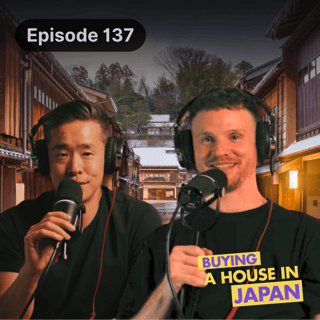
Speaker: Welcome back to the Buying a House in Japan podcast, the number one Akiya podcast in the world. Today we're recording live from Tama Basecamp with a special guest. I know we always say that, but special they're all very special.
Speaker: ah My name is Take, this is Joey. We're the co-hosts of the podcast. And today we have Sam Hanada on the podcast today. Sam is one of our new um i guess employees here at Akiyamaart. He's doing been doing consults, he lives in Chiba, but I'll let him give the quick intro. Sam, who the heck are you?
Speaker: Yeah, my name's Sam. I'm half Japanese, half Kiwi. was born and raised in New Zealand and then moved to Japan about four years ago. And I've been working at Akiyamaart for the past two and a half months now. Yeah, cool. It's a bit about me.
Speaker: Sam's going to be running our affiliate program, the Akiyamart Mokomoko Ambassador ah Program. So stay tuned for that too. Yeah, I'm looking forward to it for sure. sam what have you been doing?
Speaker: and the You said you moved here four years ago, right? Yeah. What kind of work have you been doing up till now? I think part of your history your your job history here in Japan has been interesting. It's really interesting for sure. So I was working in the local government for three years, first three years that I was here. um so I came to Japan through the JET program.
Speaker: Oh, you came through with JET? yeah didn't know that. So JET isn't just teachers. So JET has three different specialties within its program. So it has the ALTs, which is the teachers, and then it has SEAs, which are like sports instructors. Oh really? oh the Sports instructors. They like sports coaching in schools and something like that. And then the position that I was in was called CIR, which is a coordinator for international relations. And so with that job as well, it's pretty broad depending on where you're sent. um
Speaker: But basically what a CIR is, is someone who is acting as a bridge between your country and Japan as well. And the difference between CIRs and ALTs is generally the level of Japanese that they're able speak. just about to ask, yeah. Yeah.
Speaker: there's like a japanese requirement since you're going to be working with the government and working in like city hall um some people work in different facilities but for me i was in city hall and so with that you're your level of japanese i would say like nine out of ten ten out of ten type range right like i would say i'm fluent i'm not native that's for sure i mean i grew up with both my parents speaking Japanese to a degree, but I definitely spent more time learning Japanese myself after getting into high school.
Speaker: um So I just kind of decided I wanted to connect more with my roots. So I started studying Japanese more and then in university I was originally studying um health sciences so i was going to go into medicine and then just had a kind of change of heart and moved into international relations um languages and so my focus was in japanese mainly similar to you i grew up trying like learning some japanese and i honestly just never got it but like for you it sounded like so there was a point in high school where you werere just like i'm gonna learn japanese like what what was that like yeah so my
Speaker: grandma yeah she would send me letters in japanese okay and so i couldn't read them yeah and i felt i always felt so bad not being able to reply to her and so that was kind of like the cook it the start because i was like oh i want to be able to speak to her more and then as i progressively started learning more and more japanese and getting involved with the japanese community in new zealand um That kind of just sparked my interest even further and I was like, well, I want to move to Japan and like experience what like this other half of me is. Like, yeah. So I just kind of kept studying and then made it my goal to just move to Japan at the end. And JET was the easiest way to come to Japan.
Speaker: So yeah, you have basically set salaries and everything and it's just super easy because they organize flights. and everything for you, so I got to Japan super easily. I want to hear your, so earlier you're mentioning, i want to hear your opinion. You're saying kids that grow up with one Japanese parent, one non-Japanese parent, it depends if the mom or dad is Japanese on their Japanese language ability. Yeah, they get for sure. And I was talking to this a little bit more, talking about this a little bit more with Taki as well. But yeah, we both have Japanese dads. And so when you have a Japanese dad, they kind of don't have the motivation to teach you whatsoever. Very, very true, actually. yeah like It's always the mom that will sing to you in Japanese or whatever their language is And I noticed that as well. like
Speaker: In New Zealand, it's like 80%, 90% Japanese mom, white dad. Or and then in my case, I think there was two other people that I knew that were Japanese dad, white mom.
Speaker: um The funny thing for me though is that my mum also speaks Japanese to a degree. So even though my dad was like, we live in New Zealand, we're speaking English. My mum was like, well, your son is half Japanese, we need to teach him Japanese. And so my mum's mentality was like, well, if you're not going to teach him Japanese, then I'll have to do it. So my mum tried her best to teach me Japanese, but her Japanese is also not that great. Yeah. So, yeah, i kind of didn't have the best Japanese up until high school, really. um
Speaker: I did move to Japan for a little bit when I was like eight, but you move to Japan for a little bit, you move for a couple months, six months, then move back to New Zealand, and you just kind of lose it all.
Speaker: So, I always had like the basics, but I didn't really have conversational level until like getting into that high school phase. So again, this is the first time actually hearing about the three paths of JET. So you picked the, what was it called again? The CIR. CIR. So they check Japanese fluency at that stage and then you're placed into a government office. is that right? Yeah. So it really, it's kind of funny how JET works. Like you can...
Speaker: say you in the application form you can be like, hey I want to move to this area, this area, in this area. So I specifically put down Kanagawa, Aichi Prefecture and Hokkaido because my family is from Aichi. My family is from Hokkaido and then I have family also in Aichi Prefecture.
Speaker: But obviously being young, I was like, I want to go to Tokyo and experience the city life. yeah And then they didn't take any of that into account and just kind of threw me into countryside Japan. um So I was placed in Chiba.
Speaker: But... How'd you how' you feel when you were placed? You're like, yeah I want these three places. in the like Close, but not close enough yeah to Tokyo. It was a bit like, ah I'm in countryside Japan. But like it was also, my mentality at the time was like, oh, at least I'm in Chiba. It's close enough to Tokyo. And then I actually got to where I am and First step, get there. Get to Japan. It was two and a half hours by train to get to Tokyo. It's like, Chiba is right next to Tokyo.
Speaker: You'd think, oh, it'd be easy enough to get there. But when you're based in the countryside and you only have one train an hour, and it's a kaku-e-kiteisha, and stops at every single station, you're not getting to Tokyo fast. Are you the beach at least or not even by the beach? No, no so I'm based in a small town called Sawara. The city itself is called Katori City and then I'm based in this like historic Edo town called Sawara and it's like along the Tone River and so it was famous as like a merchant town during the Edo period for like being a stopping point before people sent goods to Tokyo.
Speaker: Yeah, so it's got a lot of history and a lot of like potential as a tourist town. But just the infrastructure and transport is terrible.
Speaker: So if I'm like a sports coach yeah in America our or New Zealand. Boxing coach. Yeah. What level of Japanese do I need to be part of that sports jet program? Do you know? believe the sports one as well. You don't need any Japanese. yeah I think for ALTs and the SEAs, I think that's what they're called. Like the sports coaching ones, they don't require Japanese. And sometimes they actually prefer that you don't speak Japanese. Because it means that the kids are getting more of that immersion. Okay. How interesting. Yeah. The jet program has changed so much. i feel over the past 20 years, like at some point when the yen to dollar was it like favorable for the yen, like yeah it was like a lot of money. Yeah, it was huge like 20 years ago. like the
Speaker: The amount people were earning was so much. It's crazy, right? When I was on your program, it was kind of like, also depending on the area you get sent, you get a lot of different things. So for some of my friends, they got like the Yatchin Hojo, they got all of their rent paid. well um For me, I didn't have any of that.
Speaker: So it really depends on the place you're put and like the city, like they have different Jorgen, they have different requirements and they have different things for each person. So i kind of got the worst of the bunch because every other place in Chiba, they all got the housing support and things like that. Whereas my city was the only city that didn't have it.
Speaker: Have you ever recommended, like after going through the part the JET program, have you ever like recommended it to someone else? Like, hey, you should like you should do it. I think it was a good experience. Or have you not never recommended it once?
Speaker: the There's a slogan for JET and it's every situation is different. And so for me, I literally had like the best time on JET. Oh, really? thought it was going to be the worst. I was like, I'm going to just spend the first year here. It's going to be my like experience.
Speaker: my foot in the door to basically get into Japan um and then I'll just quit and find a job in Tokyo and then I did it for a year and I was like actually I'm kind of enjoying myself and so I contracted for another I renewed the contract for another year and then did a third year and then once I got to my third year I was like don't see any more growth and so that's why I kind of stopped um and was like hey I'm not re-contracting this year and they were like oh, we wish you would.
Speaker: but So I'm curious about your experience working in the local government. I know that, um so in Ishigaki down in Okinawa, I had to do some things at the city hall. I got there right before lunch or just as the lunch break was happening and they like, I could see back in the office area, they like dim the lights and there was dudes kind of Like in their chairs, like dozing at the desk. yeah It seemed kind of peaceful. Is that what happens? Yeah, it definitely is. ah I think it happens in more of the countryside city halls as well. they di lights They're so chill. They dim the lights. Everybody's asleep at their desk. um
Speaker: No, they really dim the lights? Yeah, they do. They turn off all the lights on my floor as well. So I was on the third floor. We had a seven floor city hall um and I was on the third floor. But the first floor of our city hall was pretty busy during lunchtime. So people would just have to like go in and out of breaks. Like they'd have to take turns going in and out of break.
Speaker: um They don't get a lunch break. Yeah, basically. So if you're on the first floor, you got like the worst. where everyone's coming in. That's where everyone's coming in and you kind of have to be alert the entire time. But third floor super chill. had all of, like, the rougher kind of divisions. So, like, the people who are doing, like, the... We had the doboku-ka, so, like, the city planning and, like, stuff like that as well.
Speaker: And then noien-ka, so, like, all of the agricultural and, um... Yeah, that kind of stuff. So it was pretty chill for my floor. but Yeah, did they get it like a siesta. is like Yeah. So what exactly did you do in in the city hall?
Speaker: For me, my role was in the kankukha. So I was in the tourism division. So I was basically doing local revitalization stuff and then also content. Mm-hmm. So my main goal was basically to bring English-speaking foreigners to the city.
Speaker: So I would be creating like posters in English, I'd be creating content and in English, showcasing all of these different tourist spots in my city.
Speaker: um and like events as well. And then I also did um translation, interpretation, and then some like PR and promotion stuff. So I would go overseas to different travel fairs, travel expos, travel companies, and basically promote the city and be like, hey, this is a spot you want to add to your itinerary to Japan.
Speaker: Um, but yeah, that was kind of like the main stuff that I did, but other than that, it was just kind of like free for all. They would just kind of randomly throw different jobs at me. So we we're doing right now too. Yeah. Every day was different and I'm so used to having so many different jobs thrown at me. So city hall definitely built up my resilience. So you get yeah pulled in different directions. Yeah, like I've become so adaptable and that's something I'm super grateful for. um And that's the thing about City Hall as well. City Hall, basically you stay in the same division for three years and then you get moved somewhere completely different. Okay.
Speaker: At that same location or like somewhere else in Japan? Sometimes. Sometimes you get moved to different locations. Sometimes it's just different places in City Hall. So my original manager was my manager for one year and then she got sent off to Narita for two years. um And so she had to work for the airport for two years, even though she wanted to stay at the City Hall. They kind of were like, this is... Tenshoku or... It's like, um, it's kind of like a call come program. So like to get you to learn more skills about what 90 tires like and kind of bring that back two years later and see how we can apply it to us. i Okay.
Speaker: Nine times out of the 10, they don't apply it in any way. so it's no point. Specializing them, not specialized. Journalist. The motive was good. Basically, that's what City Hall is. They want to keep you a generalist. They don't want you specializing.
Speaker: So that's the kind of sucky thing about it because you're stuck in this position. you're You're learning something. You become a specialist in something for three years and then you get thrown somewhere else. So you'd be doing the tourism division for three years and then all of a sudden you're going to be in the tax division. Okay. That's like, it makes no sense. Do you guys do Rageo Taiso in the morning? Oh, really? No.
Speaker: Sometimes I see i see it happen in Ishigaki. Actually, what kind of like... That's funny for... I didn't have Rageo Taiso in mine. We had Chode. That's the morning exercises exercise, by the way. Yeah. And so sometimes like Japanese companies or government, like the employees get together and they'll exercise in the morning. Yeah, yeah exercise together. What's Chode? Chode is like a morning meeting.
Speaker: And so every time you'd come in, you'd have to sit down or stand, actually you have to stand up for these meetings. Everybody in your division stands up for five minutes and then the kachou, like the head of the division, will just kind of say. Speech. Yeah, basically he gives a speech saying what everybody is doing for the day. And so he's like, this person is doing this thing. This person is doing this thing. This person has a meeting ah across the city. This person is going to do this or whatever.
Speaker: and then you get into your work basically has that ever been helpful do you think it was ever helpful to learn it's a helpful thing no yeah it gives you an idea of what each person is doing because there's parts where you're not communicating with each person so you sometimes don't know what they're doing so it's kind of helpful in that sense but also the funny thing for me is that i started half an hour later than everyone so i missed four day almost every single day How can we start half an hour later than everyone? So it was actually a stipulation in my contract and it's a stipulation in all jet contracts actually. So we're contracted for seven hours a day.
Speaker: that was nice. I think it's like you get seven hours of work and then one hour of a break. Okay. Whereas the typical company in Japan is eight hours of work and then one hour break. I think for city hall, it's a little shorter. So they start 8.30 in the morning and they finish at 5.15. Okay.
Speaker: So it's just under that threshold. Okay. But yeah, so my contract was stipulated like that. So I just would come in 9 on the dot, leave 5 on the dot as well. Chode 8.30. Yeah, so I didn't have to deal with all of that. I just come in halfway through the day and be like, hey, it's nice to see you all.
Speaker: Okay, so your job was to attract more tourism to Katori. Yeah. Tell us a little bit about Katori. Like why should, me and Joe have never been there. Like why should we go as as tourists? Yeah, so basically what I did while I was there, my whole point of um promoting Katori is that it's literally 30-40 minutes from Narita Airport.
Speaker: If you're driving from Narita Airport, it's 30 minutes. If you're catching a train, it's about 40. And so for me, the way I promoted it it was always just like, it's the perfect first stop or last stop during your trip.
Speaker: um And the reason why it's a great stop is because it's got so much history. So basically the town that I live in, Sawara, it's this 300 year old town, right? And so it's got all of these UNESCO heritage buildings and like,
Speaker: um Not UNESCO, sorry, like, um heritage buildings, and then it's also got like UNESCO festival. And so it's got all of like this history that makes it super, um how to say it, like super desirable place to travel, but it doesn't have all of the tourists. So it's basically like... It's like a river you mentioned too, with the old houses on each side of the river. So it's called Little Edo, basically. That's what the townspeople call it. They call it Kuedosawara. So a Little Edo-Sawara. And Little Edo is kind of often thought of like Kawagoe.
Speaker: People think of Kawagoe rather than where I live. But like Kawagoe is so tourist-focused. town now and same with Kyoto as well like it's so historical it's beautiful it's great but you're walking through streets filled with so many tourists so many people and you can't really enjoy then whereas like the city that I live you basically have no one in the streets and you can like wander around the streets take beautiful photos and like wear the kimono, do the whole traditional Japanese thing, but you're not in a congested crowd and you're not like fighting for your life yeah amongst like several hundred other tourists and waiting in lines for like hours.
Speaker: So that was kind of the way that I promoted it, but like with that as well it was super difficult because it is countryside Japan. And even though it is a 30-40 minute train ride from Narito Airport, it's like it's also a 30-40 minute express train to Tokyo now. So it was super hard in that kind of sense to kind of promote. So you think the perfect way to experience Sawara is at the start of your trip or at the end of your trip, do your thing in Japan. And when you're coming back, maybe spend, do you spend, would you recommend spending the night in Sawara and then going to Narita the next morning? Or what's the optimal path? think, yeah, spending the night.
Speaker: For me as well, I personally think spending the first day is optimal because we also have a bus that goes straight to Tokyo, so straight to Tokyo Station.
Speaker: So like first night, you're super tired, right? You get off the plane and you're like exhausted. Why not spend a day or two and like a slower paced town rather than going straight into the chaos of Tokyo. Close to the airport. Yeah, close to the airport.
Speaker: You're not dealing with all the chaos of like Tokyo, the lights and things like that. And then once you've kind of like got over the jet lag, settled down, enjoyed a little bit, then going to Tokyo was kind of the way that I went about it Do you see in Sawara or Katori, like, the population decline? Is that yeah kind of pretty apparent? That's really apparent. So I've been there four years now.
Speaker: um When I was... for When I first moved, the population was 72,000. Okay. okay So for the entirety of Katori City, 72,000. And then now it's like 68,000. Okay. So just in four years, it's already lost 4,000.
Speaker: But the funny thing is as well that... My town, like Katorishi wasn't Katorishi. So in Japan, a lot of towns are Gappe. So like they're coming together because the population is so low.
Speaker: And so originally Katori city was four different places. So it was one city, three towns. And so because all four of those places were experiencing huge decline in population, it was just easier to combine it to one city.
Speaker: I know there's like, I've just, you know, I've been working on the website and I do some, you know, I'm researching Japanese geographical stuff. And I know that there's, I don't know off the top my head, the numbers, but there's certain thresholds where like Amuda, like these are government mandated, i think numbers where like Amuda becomes a city yeah and, you know, vice versa. So I feel like if they drop below a certain threshold, okay, now we're no longer a city we're a village so maybe we combine together with to keep the state to keep the status yeah basically yeah that's kind of how it works as well yeah it's also just to make the because the city hall as well um when the population declines as well there's less people to do the admin and so less taxes what was the average age of your co-workers at the city hall
Speaker: That's actually quite funny because we had a quite diverse age range in City Hall. I would say majority of people are in their late 40s. Okay, that's the only way I thought it would be.
Speaker: But a lot of the people in my town kind of... They have a lot of jimoto ai, so people love their hometown and my like town that I specifically live in. So they go to university in Tokyo and then they actually decide to come back. oh alright So we had a lot of fresh graduates in City Hall as well. We also have fresh graduates from high school come into City Hall.
Speaker: To work. Straight interns. Yeah, so they'll rather than going to like university they'll just come in straight out high school and work for City Hall and then we also have people who come in from like SEMONGAKU so like they'll go two years to a like community college or a specific um school that specializes in like policy and sort of getting you into that government role and then they'll do the two years there and then just come straight into city hall so it's an interesting mix for sure Switching it up a little bit, I'm curious about the story moving into the Black Kigyo.
Speaker: I want to hear what hat what's the story behind that. yeah so What is a Black Kigyo? Black Kigyo is... Because it's after City Hall. You decided to leave City Hall and now you're going to this this new company. Yeah, and ah yeah Black Kigyo in Japan basically is a company that overworks you, underpays you, also does some very sketchy things, often borderline illegal or actually illegal. Is that like illegal activity in terms of like labor, employee rights or like they're like, I don't know, tax fraud or like yeah selling poison as candy. Honestly, it's kind of a mix of things. um
Speaker: The place that I... It's funny because I quit after a week. You quit after a week? I quit after a week because I was like, I do not feel comfortable. yeah Yeah. So I did the whole interview process and I was like, wow, this company looks like incredible. I went through the interview process and I felt like... Because it was technically geci care so a foreign company. Yeah.
Speaker: But they had a base in Japan and they'd been operating in Japan for over 20 something years. um Yeah, usually people ah expect the Geishike to be a lot more relaxed, more like an American company. yeah And then it's funny as well because I was taking a pay cut.
Speaker: But I felt so strongly that this would be a great job. It was kind of in the tourism industry. It was, I would say, like tour guiding, i guess. But I guess a lot of tour guide companies are also black kigio.
Speaker: ah from what I've heard from other friends but um yeah I got into this company and then when I was going through the interview process they just didn't mention a lot of things and then I did the orientation and they started mentioning all of these random things and I was like um I didn't hear about any of this like what yeah give us and give us examples here So they were going to put um funds that I would use for customers. So for example, I'd be doing two week tours or things like that. I'd be doing tours with like groups of people and they were going to put all of those funds into my personal bank account.
Speaker: and So I was like, why why are you putting company funds and like customer funds into my personal bank account with my pay? And they were like, we've always done it like that. And I was like, that's that's really weird. I'm not comfortable with that. And they were like, oh, it it gets easier. You'll get used to it over time. And I was like, I don't want to get used to it. I'd rather you send me like a company card. And they were like, we can't do that because if we had a company card for every single tour guide, it would just be too much to manage.
Speaker: And I was like, m yeah wait, so they were sending their, like the, the customer's funds to you and that they were taking it back out or like, is that the, it's gotta be some weird yeah tax avoidance strategy. They would basically put in, i don't know exactly how much it would be because I quit, before that could happen but they would put like say they'd put gohyakumain in and my account to deal with the customers for two weeks okay and then at the end of the year the that's the funny thing as well it was the end of the year not end of every tour they were like any leftover funds that you have from these tours we'll just collect back from you we'll just have you send it back
Speaker: and like Strange for sure. I'm not sure what they're they're thinking on their end. I'm not just going to put our funds in a new employee. There's got to be something sketchy for them to be doing that. Hold this money for us. yeah like That was the main thing that kind of set me off. and then The job was advertised as a remote job. and I know as a tour guide, obviously, you're not going to be fully remote. You're going to be doing tours and things like that two weeks on a row. yeah They just lied. like but I had this assumption that... like for the remote part of the job, like, because you obviously have to plan these tours beforehand and like write reports after the tours and things like that to just kind of give an update of what it was like.
Speaker: They were like, oh, you write reports every single day after you've like done the tour. Like you have to write a little write up every single night and send it to us. hmm. But you've just done like 10, 12 hours with these people.
Speaker: And so you're going back to your hotel at like 8pm, 9pm. And then you're writing a report for an hour, two hours. And then you're going and doing it all again at like 7am the next morning. And you're doing that two weeks in a row. And then the planning for the tours beforehand as well. I thought you'd get separate time to do that.
Speaker: like separate work hours, but no, it's your personal hours are expected. Basically your personal hours to write up all of this stuff. And I was like, Not worth it. did they do So like I've been learning more about like employment contracts in Japan. It sounds like maybe even this extends past Black Kigyo, but definitely it sounds like it's it happens with Black Kigyo. But your salary will be whatever, and then the hours you work to get that salary include the overtime. So if you yeah don't like if you were not to do the overtime, you wouldn't get that full salary.
Speaker: The thing in Japan is like, it's, I can't remember what the word it's like Minoshi Zanggyo or something. So you have like set Zanggyo hours in your contract. So you have 15 hours already applied to your contract or 30 hours already applied to your contract. all of the time And so if you go over that 30 hours, they'll pay you more.
Speaker: But if you don't go over that 30 hours, your salary stays the same. But if you still you still have to do... that It's weird. I don't know how to explain it perfectly. But like, that it's not...
Speaker: that they're gonna lower your salary if you don't do the overtime, but... But you have to do the overtime. But you basically have the overtime and you have to do it. Yeah. And even if you have overtime, like, yeah.
Speaker: The ones that are the good companies, it's like... For the good companies, it's 15 hours. For the bad companies, it's 30 hours. But it's like... It's like an extra week of work. Yeah, it's an extra week of work that you're doing and it's kind of expected. It's insane. Well, it's in your contract. Contract, yeah.
Speaker: I mean, there's times where you will do and there's times where you won't do it. It also depends on the company. um And the company that I'm working for now has Zanggyou, but I'm also on the contract.
Speaker: Like, I'm ah'm not a full Seixia-in at the company. I work part-time there, so all of my zanggyul gets paid to me. So I have to get paid for any overtime that I'm done, but like doing, whereas the people that work full-time, they have 30 hours stipulated in their contract.
Speaker: How does it, did you do overtime at the at the city at the city hall or not? That's funny thing as well. So my, code with jet contracts, they don't have overtime.
Speaker: So you don't get paid overtime. You get furikai kiuka. So you get extra time off if you work overtime. That's nice. Yeah, but it also depends on the city hall. So some city halls, my city hall was super lex about it. Like, because obviously working in tourism, you have to go to like city events. You have to go, i did overseas shi chou, so I was going overseas doing, um,
Speaker: like extra hours in that sense. And so I had a lot of overtime that would just become that hurikai. And I was cool because we have on season off season at my city hall for tourism. So during the winter time, I could literally take off a month at a time and go back to New Zealand, visit my family.
Speaker: which was super cool i think that's unheard of in japanese so unheard of yeah but like that was the first thing that my manager said to me she was like you're gonna have a lot of overtime and i was like oh oh and i was super scared at first but like the overtime that i was doing was all festival related events related yeah fun was fun stuff fun to be honest and i was getting all of this extra time off to be doing fun stuff for.
Speaker: Good job. Not bad. Chat program. If you can speak Japanese, you can go to City Hall. But it also depends on each City Hall. So my best friend, she worked at Chiba City Hall. um And so Chiba City Hall has their own different regulations as well. And then other City Halls across the country have different regulations. So I had another friend in a different part of Japan. i can't remember exactly where, but she had in And her contract, she when she did the overtime, she could only use it within the week.
Speaker: She had to take the time off within the same week. Some people had like eight weeks beforehand or afterhand that they could use it. You gather it to one chunk. Yeah. So that was where I was lucky. So I could gather it and just use it whenever I felt like it.
Speaker: And then, yeah, some people didn't have that luxury. And also depending on city halls as well and different areas, people had different amounts. What was the jet slogan again? Like it your results may vary or something? was it? Every situation is different. Every situation is different. So I had a friend who only had 14 days of annual leave. Oh no. But I had 20. Okay.
Speaker: So it really depended on the situation truly. Yeah. So in that sense, I lucked out a lot. I just didn't get the housing support or anything. Okay. But yeah. Going back to black, you know, like how do you, you know, for someone who is job searching in Japan, like, yeah, what's like, if you were giving advice to someone who's on the job hunt, like what are, what are some signals of like, okay, this is not a, not okay. Or like anything in the interview process or any advice or website you can look at or something in person interview too, or was it, I did,
Speaker: Was it in person? Over like Zoom? I think it was all over Zoom. I think I first went to a career fair. Okay. So I went to career fair. Flag one career fair. Just watch out. Yeah. I went to them in person and I met them and I just, the vibes were so cool. Like they seemed like great people and seemed like a great opportunity. Like, You get to travel all over Japan doing this job. Yeah.
Speaker: But they kind of just didn't stipulate that you'd be working all the time. You'd basically be on the clock twenty four seven for that two weeks. All right, one warning sign. Hit us with one warning sign. warning They're very... um especially if you're looking at like gaishike that works in japan we're a team we're we're like a family yeah we're a family yeah we're a family we work hard play hard that's their kind of vibes as well but also when they're very vague about like the the the details yeah that was something that i found to be a red flag um yeah do those companies typically sponsor visas
Speaker: Yeah, they do. But for me, i didn't have to have a visa sponsored because I'm on a family visa anyway. So, but yeah. So some folks who do get that sponsorship are trapped in their company, unfortunately. Yeah, that's the thing about visas in Japan as well. Visas in Japan are crazy and they're getting even crazier. Like you're marked by different specialties, right? And so if you're leaving company and you're not moving to a company that's like the exact same type of work, you have to reapply for a new visa. Yeah.
Speaker: Actually, sorry, going back to... so so For a listener who obviously maybe doesn't have a visa, they're they're trying to maybe they're buying a house, they want to get a job here. like Do you think Jet is a is a good first step? Yeah, I think Jet... Again, yeah, every situation is different. Some people have a terrible experience on Jet. But I would say a majority of the people actually enjoy their experience. And they help you set up like the bank account. They like help you along that setup, which I feel like is very difficult, as you've seen in the City Hall of stuff too, right? I think...
Speaker: Yeah, for me, I had to do a lot of it by myself. They set up the bank and everything for me, but I had to find my own apartment. But I was also able to speak Japanese, so it wasn't as difficult. And I think CARs kind of expected to to be able to do that kind of stuff to some degree. I mean, they still help you. At my city hall, they did. um But if you're doing ALT and SEA, the sports coaching one, that they basically do everything for you.
Speaker: I think there's something like magical about that, as yeah Jerry probably knows. yeah It's a good way to get your feet on boots on the ground and kind of have it set up. Get into the system, like yeah the bureaucracy machine here.
Speaker: yeah And then so, JET's a good way to get in. And then once you... um I'm curious, on on City Hall, actually, like most of our customers, if they buy in Akia and they they live there, they're going to have interactions with the City Hall. Yeah. like How would you um prep someone who's never been to a Japanese city hall? like How do you interact? Any advice for someone who's who's going to the city hall, needing to do paperwork, stuff like that? like Anything? Yeah. is it ah Any advice for someone walking into the city hall?
Speaker: Bring... everything. okay You'll need it. That's true. You need everything. You need your passport, you need documents, you need everything. It's so annoying, but city halls, the amount of paper that they go through is insane. Everything is on paper.
Speaker: It's so backward, but like, yeah, you just need to be overly prepared when you go to the city hall. um Also having like the kind of things you want to talk about set up, like translated into Japanese first. So it makes it kind of easier process. yeah I mean, if you're in a bigger city as well, there's definitely English speakers nowadays, so it's not that hard.
Speaker: um But if you're in a countryside like mine, um I was literally the only English speaker. that my Sam, get over here. Yeah, basically. would get calls. I would literally get calls and they would be like, hey, we have this foreigner that can't speak Japanese. It sounds like they can speak a little bit of English. Can you help? And I'm like, I'd go down there and they'd be able to speak like the most basic English.
Speaker: And it was like, I have no idea what you guys are talking about. Shut And then we also had a Thai person in my division as well. So whenever we had like Thai people, we'd have him come down and do all of that stuff as well. Okay. So going back to be prepared, translate stuff beforehand. Yeah. And like.
Speaker: My experience City Hall, it's a lot of like you get in and then there's the lady at the desk, the information. She tells you like which place to get the ticket for. You get the ticket, you get the document, they stamp And then they're like, okay, now that line next. Then you get the next ticket. and then like, now that you're always like, You know, they're moving for expect to spend at least half the day at City Hall when you go, like especially on start like in the beginning. Spend, yeah, probably half a day. Maybe you'll have to go in multiple times as well.
Speaker: and And bring every document you have. Okay. He's going like, is there a better time like right when they open or like at the afternoon, anything along those lines? I'm actually the worst. I always go in lunchtime. Okay, lunchtime. yeah Don't go but during lunchtime. No, I go at lunch lunchtime. Lunchtime is actually kind of the best time to go in. Okay. Because everybody kind of thinks, oh everybody's going to lunch. Yeah, that's what i would think. But my city hall, it was kind of like the lunchtime was...
Speaker: the low time but there's still people coming through so it was easy to get through and out quickly yeah if it was lunchtime and then if you go in the afternoon people are already super tired and super over it so I recommend not going in the afternoon because they're just going to be a lot more angry and a lot more cranky um yeah definitely early in the morning or just before lunch is the is it his own good time to go I think even as someone who worked in city hall going to city hall It actually annoys me. I hate it.
Speaker: Like every single time I'm just like... Say hi to your homies. Like, hey, I'm back. Literally, literally. They're like, what are you doing here? And I was like, oh, I have to file out some forms and stuff. And they're like, good luck. Yeah. Oh, man. Okay. Switching gears a little bit. Like, Sam, I think you've done a really good job of living in kind of Inaka era, but integrating with the society. I think you you you participate in a lot of like Matsuris and like, tell me a little bit about that. And how did you get involved in that space?
Speaker: It's funny as well because that was actually City Hall related. So I joined the festivals for work not originally. yeah And so the festival in my city is three days long and it's from 10am to 10pm.
Speaker: And so i was like, can I join this festival for work? And my manager was like, if you're going post about it, I can't see why not. If you can post about it. anyway Yeah, so I got 12 hours of work to participate in a festival when you're drunk, basically. hey um The way I got started was through a co-worker at City Hall.
Speaker: He was like, you want to join? And I was like, oh okay, I guess I'll try it out. And then I joined just like to try it out. And then they were like, you're going to do it next year, right? Yeah, that's how they get you, huh? And now I'm like stuck. And so I did the first one, which was in summer. It's actually next week. um So I did the one in summer and then they also have one in and the autumn.
Speaker: And so one of my friends that I made while I did the summer one was like, I do the autumn one as well. Do you want to try out the autumn one and see what like the differences are like? And I was like, oh, it could be interesting. So I did. What do you mean by doing it? like Are carrying the thing?
Speaker: ah My local festival is a dashi maturi. So it's like a float, like a giant float. Oh, you carry the thing? No, you pull it. Okay. I've done the carrying one. Those things suck. The mikoshi is awful. So painful. have mikoshi as well, but it's not as...
Speaker: Often or prevalent. It's the, yeah, definitely. I'll never do in the Miko. So, so bad. Your shoulders get super boko boko. So messed up. You get like huge bruises your shoulders.
Speaker: But yeah, the festival that I do is a float festival. And so it's like this three ton, 10 meter tall, like float on wheels, basically.
Speaker: And it's just all of those people are pulling the float around the city. like they'll pull the flood around the city get money from local stores get drunk um dance like it's yeah it's interesting for sure it's a 300 year old festival and so it's got a lot of history and a lot of like um details behind it. um but Dashi Matsuri you said? Dashi... What's Dashi mean? Dashi is... The kanji for it is Yamakuruma. Yamakuruma. Yeah, so it's mount outiccar mountain car. okay um And so it's just these giant like floats, like 10 feet tall floats on wheels and so you pull them.
Speaker: There's quite a few in different areas around Japan. So my festival specifically is called Sawara no Taisei. So the Sawada Grand Festival. And so yeah, you just pull these floats all day long. Float of what? Like what is it of? So the floats have like historical figures in Japanese history. So you'll have people like and the first emperor of Japan or like warlords. Sometimes it's like Japanese poets. So it's a very varying.
Speaker: um It depends on each ward in the city as well. So we have different wards throughout the city and people who live in those wards take part in those wards typically but some of those wards also don't have enough people living in the area so they kind of ask people from different areas around the city. So that's kind of how I ended up in the ward that I'm in now because they just didn't have enough people and they were like hey Come on, we need your We need help. I feel like they're always trying to recruit people. Yeah. I think, yeah, the population is going down. Like Sam is young, strong guy. Like, come on, Sam. We need your help. But yeah, being in one of the wards that doesn't have as many people is exhausting because you're working 10 times more. So the one that I do for summer has so few people. So I'm like doing all the work. But the one in autumn has enough people that I'm like, I'm just pissing around half the time going off. hang out with friends, drinking, having a good time. Having a good time, for sure. The reason I started it as well is I kind of wanted to experience more Japanese culture and get in touch with like Japanese local people because I didn't want to just be like talking with my like Japanese Kiwi friends here in Japan. I wanted to make friends in the community and also just you know actually immerse myself
Speaker: in the area rather than, you know, spend my time working in the city and then every weekend and go off to Tokyo and just hang out with my friends there. I wanted to make some deep connections and like, in turn, that helped me in different business aspects as well. I was able to get like different freelance jobs.
Speaker: Um, my current job as well, like other job that I do, I was able to get that through the festival. like So it's such a good way to build connection and just try to things as well as being likeck immersed in your community. And I think it's super important.
Speaker: And I was first super scared because I just kind of had this image that was like, countryside Japan is to be super rough. They're going super accommodating. They're going to be scary and yell at me and be like, oh, you're fine. Get out.
Speaker: But that was the complete opposite. Like I've experienced so much welcome, like welcoming energy in the countryside and like the vibes and just the way people are, it's so chill.
Speaker: And yeah, that's definitely why I've been there so long for sure. that's That's awesome hear. I think that's one of the concerns for a lot of our customers who is just like, hey, I'm going to go countryside. Am I going to be like welcome? And I think the over the resounding thing is like if you're involved in, if you want to be involved with the community, join the MatsuTi is the the quick one. But I think with Japanese, like culture as well it's such like an omotenashi thing like if you're willing to make the effort and be hospitable then they're going to be hospitable as well like that's all it takes as long as you're making effort then japanese people also want to make an effort as well yeah so that's kind of just how i approached everything i want to make as much effort as people are going to put in for me as well you know yeah
Speaker: Sam, that's an awesome place to end. And I think like that spirit is really important for anyone that comes to Japan and and being prepared to carry that float thing that's super heavy or like helping your neighbors, and I think, especially with the aging population. they're They're looking at the young folks and like, I need your help with this and that. And there's no shortage. So like if you are entering one of these communities, I think it is expected that you will need to help and be called upon. And it's it's good. you know That's the quickest way to get ingrained probably with the community, right? Yeah, for sure. They need help too, especially these like these more, the more rural and regional you go, they're going to need more help with the Matsui, it sounds like. Yeah.
Speaker: And I think that's super important as well. It's so important to like keep that history alive. Mm-hmm. And I think as someone who has that Japanese background and also like an English background, being able to showcase that history and that like um culture in another language as well is super important and it kind of brings that spotlight on that as well and that's something I'm super passionate about.
Speaker: Yeah, for sure. Cool. Well, Sam, um thank you for being on the podcast. Thank you for working with us. For listeners, if you book a consultation, you there's a chance you work with Sam here. He can kind of guide you through how to navigate countryside Japan.
Speaker: And um other than that, Sam is leading our affiliate marketing program. So you may be hearing from him. If you want to work with us on an affiliate program, Sam's your man. Yeah. Cool, Sam. Well, thanks for so much for being on the pod. Thanks you for having me.
Speaker: Enjoyed it.
Speaker: Thanks for listening to this week's episode of Buying a House in Japan. If you find the show helpful or at least entertaining, give us a five-star rating. Takes five seconds and really goes a long way. If you or someone you know is looking for a Japanese home, check out Akiyamart.com, our English-friendly site that lets you browse over half a million listings. That's A-K-I-Y-A-M-A-R-T.com to find your dream home in Japan.
Speaker: If you've got questions or feedback, drop us a line, email contact at akiamart.com. You can also find us on Instagram as well as TikTok, where we post properties, tips on the home buying process, and updates on our own purchases and renovations. Thanks again for listening, and we'll see you next week.