Transcript
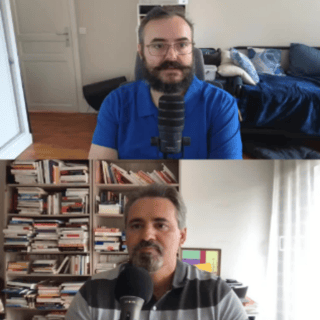
Pascal-Emmanuel Gobry: Hello, everyone, and welcome to another edition of the Sphere podcast, which is shot from my terrorist hideout in Gaza City. ah As you can see, it's beautiful out there.
Pascal-Emmanuel Gobry: It's, you know, it's lovely August. um And I have with me a ah very good guest, um and it's Yoram Hazoni. Yoram Hazoni probably doesn't need any introduction to the people who watch this podcast, ah but...
Pascal-Emmanuel Gobry: In case and guess you do need an introduction, he's a political philosopher by training. He's had many academic posts, but he's become particularly famous in the sort of intellectual political world in recent years because he founded the National Conservatism Conference.
Pascal-Emmanuel Gobry: uh which the first one was a huge hit i i i remember it uh i was i was not i was not technically supposed to attend but somebody snuck me in um and but it was it was very successful and then the other editions were very successful and you had rome you had brussels we'll talk about that uh welcome
Yoram Hazony: a Pleasure to be here. Good to see you.
Pascal-Emmanuel Gobry: Likewise. um So, okay. So I guess to sort of frame the discussion because... ah Not everybody who watches this is in the sort of NatCon world. A lot of people are sort of traditional DC people.
Pascal-Emmanuel Gobry: ah I thought it might be useful to start with a very... I love asking very dumb questions, and it's a very good interview technique. um you know Explain this to me like I'm a six-year-old or a sixth grader.
Pascal-Emmanuel Gobry: Why, what, what is national conservatism and why do we need new name, a new movement, a new body of thought ah to tell us, you know, what the right is, what it should be and so on and so forth.
Pascal-Emmanuel Gobry: Yeah.
Yoram Hazony: Okay, good question. I don't and don't know if I can keep it down to sixth grade level, but ru let me try and, right, ah i'll i'll I'll try to keep it down to ninth grade level and we'll hopeful we'll see if you can adjust the knob if you think I'm not doing a good job.
Pascal-Emmanuel Gobry: Precocious sixth grader.
Pascal-Emmanuel Gobry: Okay.
Pascal-Emmanuel Gobry: Okay.
Yoram Hazony: All right, so um first of all, ah I'm ah the first to admit, and I i admit this often, that I i think it is annoying to have a national conservatism movement in addition to simply having a conservatism movement.
Yoram Hazony: in In theory, um it you know you really shouldn't need the the the two descriptors. And I'm looking forward to a time when we can just call it conservatism.
Yoram Hazony: The problem is, you know as you know, and i I think it's pretty well known at this
Pascal-Emmanuel Gobry: Right.
Yoram Hazony: at this point, uh, the, the term conservative, uh, which, uh, classically, and it's sort of, it's, it's, uh, original meeting. Meaning if you go back two centuries, uh, referred to, a traditionalist, uh, politicians of a traditionalist bent defending, uh, a, a political order based on, uh,
Yoram Hazony: traditional ah inherited ah ah English, British, French, and other ah other European traditions. It was imported to America around the same time.
Yoram Hazony: um And i those traditions were ah were ah what I would call ah nationalist. They had the ah the the concept of of an independent nation at the heart of them ah separate, you know independent from other, ah from other nations and political powers and with its own inheritance.
Yoram Hazony: They, ah they had
Pascal-Emmanuel Gobry: Right.
Yoram Hazony: are a ah religion at the center of them, which was an inherited religion, a constitution at the center of them that was inherited constitution.
Yoram Hazony: And ah these things were not the same, obviously in, in, in every nation, but the, The term conservative ah at at the time was, it was reasonably clear what it was talking about.
Yoram Hazony: this This word has been um re deconstructed, reconstructed and abused since then. And ah in the minds of all too many, ah certainly certainly certainly in the United States, certainly in Britain, and but but also more generally across ah Europe and in the democratic world, the world kind of the word conservative for ah various benign and utterly malignant reasons has been hijacked to refer to liberalism.
Yoram Hazony: And liberalism, you know as as ah Roger Scruton wrote and in in in one of his books, is the ah is the is the principal enemy of conservatism.
Pascal-Emmanuel Gobry: Right.
Yoram Hazony: And people who don't understand that liberalism is the principal enemy of conservatism tend to be very confused. Okay, so by liberalism, I mean a political theory that has at its...
Pascal-Emmanuel Gobry: Right. ah was my That was my next question because that's that's a that's another word that sort of gets thrown around a lot. So how how do you define liberalism for the purpose for for these purposes anyway?
Yoram Hazony: Yeah, i you know, I i know that Academics spend a great deal of time arguing about the minutia of it, but I think that if if you're looking at it...
Pascal-Emmanuel Gobry: Hey, we we both have training in philosophy. It's okay to want to define terms. It's you know it's not a dirty word here.
Yoram Hazony: ah yeah well
Pascal-Emmanuel Gobry: You're like you're allowed to do that.
Yoram Hazony: no i just you
Pascal-Emmanuel Gobry: This is a safe space.
Yoram Hazony: i no i've I've been using a ah definition for quite some time that i I find that people simply don't object to it. i I know that you can ah you can enter into endless...
Yoram Hazony: endless nuanced debates. But in in general, people do not object when I say liberalism, as it's understood in political theory, ah is ah is a ah ah political framework which ah asserts and assumes that you you know most of what you need to know about politics if you concede or assume that human beings are born perfectly free and perfectly equal.
Yoram Hazony: ah that they undertake obligations, moral and political obligations, through consent in one way or another, meaning you have to agree in order to for someone to come and say you have an obligation.
Yoram Hazony: and And finally, that the purpose of government is to is to defend these ah individual liberties and equalities and the the right of consenting to obligation before you <unk> you're you're obliged.
Yoram Hazony: That's the purpose of government. So that's a very broad ah definition that encompasses a great deal of variation. It certainly includes, you know, and in in ah America and in ah in in Britain, you'll tell me whether it works in France as well,
Yoram Hazony: ah the the um the overwhelming majority of the public figures that are considered to be left of center and right of center for over the last 60, 70 years.
Yoram Hazony: sixty seventy years
Pascal-Emmanuel Gobry: Yes.
Yoram Hazony: and
Pascal-Emmanuel Gobry: Yeah.
Yoram Hazony: And in order for us to not be utterly confused, we should be saying that conservatism is not that. That conserva conservatism, there are different kinds of conservatism, but they all agree that that liberalism is a it is itself a revolutionary movement.
Pascal-Emmanuel Gobry: Right.
Yoram Hazony: You know, whether whether it's armed and in the streets or not, it's a movement that seeks to uproot, overhaul, overthrow,
Pascal-Emmanuel Gobry: Yes.
Yoram Hazony: And in practice, that's what it does. It is it it uproots, overhauls and overthrows. um So when we look at the at the politics of ah democratic countries beginning around 2016, around ah Brexit and the Trump movement, but we we we enter into a period where liberalism is kind of ah run amok.
Pascal-Emmanuel Gobry: Right.
Yoram Hazony: ah It's morphed into the liberal the so-called liberal international order, ah which which either explicitly or implicitly is about creating some kind of governance, which is a you know and a different word for government of you know all nations and the whole world to whatever extent is possible by liberalism.
Pascal-Emmanuel Gobry: right
Yoram Hazony: And that universal liberalism in 2016, it becomes the the the the primary target of Brexit, of the Trump movement.
Yoram Hazony: ah There had already been in 2016 similar similar ah political upheavals in in Hungary and Poland and and India and elsewhere and and was you know soon followed by ah but by by the rise of such movements and in other countries.
Yoram Hazony: And the the the problem that we had 2016 in coming twenty sixteen in coming stepping forward and and saying, look, as as intellectuals, academics, ah ah writers, journalists, policy people, ideas people in general, who are sympathetic to these movements and think that they are, you know rather than being some monstrous, pernicious development, they're actually a road to to so possible health and wellbeing ah for for the for the countries involved.
Yoram Hazony: and for the world more broadly, for those of us trying to say ah at that moment, ah we're conservatives, ah was kind of a non-starter since so many of the supporters of this crazy global internationalist thing were calling themselves conservatives.
Yoram Hazony: so
Pascal-Emmanuel Gobry: Right.
Yoram Hazony: So there's some on the right who you know understandably just said, look, forget it. The word conservative is is the way it's used today. It's it's it's synonymous with ah with universal liberalism.
Yoram Hazony: so So the word is ruined and there's no point in using it. and and And we should just come up with something else.
Pascal-Emmanuel Gobry: yeah
Yoram Hazony: And various people, you know friends of ours have proposed different things. The problem is that and none none of those different things has caught on so well.
Pascal-Emmanuel Gobry: Right.
Yoram Hazony: And
Pascal-Emmanuel Gobry: i i I agree with that.
Yoram Hazony: and
Pascal-Emmanuel Gobry: like people try People have tried to come up with these new terms that they just don't catch on. And there's something paradoxically you know very left-wing about saying, no, no, no, no. no no Actually, my pronouns are...
Yoram Hazony: Yes, it's...
Pascal-Emmanuel Gobry: neo-monarchist, you know, or or or reactionary or right-wing. I use the term right-wing, but ah because I think it's a broader...
Pascal-Emmanuel Gobry: um
Yoram Hazony: yes
Pascal-Emmanuel Gobry: And right-wing is descriptive in the original sense of the French Revolution because that's where it's come from, which is everybody who's against the left.
Yoram Hazony: it's
Pascal-Emmanuel Gobry: Right.
Yoram Hazony: Yep.
Pascal-Emmanuel Gobry: Everybody who looks at the left's program and says, no, I don't want that. And that's descriptive with sort of factual content. ah Anyway, yeah just, you know, i yeah it's something that's frustrated me for as long as I've been in the conservative movement, um which is starting to be a long time now, which is ah all of these...
Pascal-Emmanuel Gobry: ah I was going to say Jesuitical, but that's pejorative, debates about but the meaning, capital M, of conservatism, capital C, ah which have no relevance to ordinary people or or or or or anybody who doesn't know what the National Review is.
Pascal-Emmanuel Gobry: um yeah But also, you know, and then there's the second thing, which is, oh, let's come up with some new word, even though, again, like normal people, they think, oh, somebody's on the right that's a conservative, right?
Pascal-Emmanuel Gobry: They think Donald Trump is a conservative. They don't think he's a national populist. They think he's maybe a different kind of conservative, but they would say he's a conservative.
Yoram Hazony: right
Pascal-Emmanuel Gobry: Right.
Yoram Hazony: Right.
Pascal-Emmanuel Gobry: um And he would say he's a conservative. Anyway, i' I'm just, I was interrupting you, but to agree with you. um
Yoram Hazony: Yeah, well, so I just, I think i think i think the term the right ah is is useful for all sorts of things.
Pascal-Emmanuel Gobry: Just about the nomenclature issue.
Yoram Hazony: But but as you say, ah the the the right includes all sorts of groupings that are um ah that are not nationalist and not not conservative.
Pascal-Emmanuel Gobry: Right.
Yoram Hazony: so So that and for the purpose of trying to gather together a large, broad ah coalition of perspectives that roughly, generally, ah circa 2016, 2020, 2024,
Pascal-Emmanuel Gobry: right
Yoram Hazony: um the twenty sixteen twenty twenty ah twenty twenty four um are appropriately rallying behind ah Trump and Vance and Rubio and Victor Orban.
Yoram Hazony: It could be Le Pen and so certainly the the the Brexit movement, but i I would say at this point, you know the right of the Brexit movement the and others.
Pascal-Emmanuel Gobry: Right, right, right.
Yoram Hazony: and and others If the goal is to is to explain and understand the historical, the philosophical, and the policy aspects of this of this grouping, ah then then you need a term which I think the right term is conservative, but in the context of all of these liberals and libertarians and and and revolutionaries saying that they're conservatives, it was helpful to ah for the organizers of this conference did this series of conferences to add the word national, since the nation is really what distinguishes conservatives in you know our day from the libertarians and liberals at the center of the political spectrum.
Yoram Hazony: ah and And so that that that's how it was chosen.
Pascal-Emmanuel Gobry: Yes.
Yoram Hazony: It's worked well, it's caught on. And i think you know the goal obviously is to is to defeat all of the imposters who are, you know, who are ah liberals, heart and soul, and use the word conservative. Once we've ah done with that, mostly we can just drop the national part and just be conservatives.
Pascal-Emmanuel Gobry: Right. ah Okay, so I'm i'm going to ask the inevitable devil's advocate question, um although we don't have to spend too much time on it. But, you know, let's say I'm, you know,
Pascal-Emmanuel Gobry: I'm an American conservative. um And i go, look, ah Dr. Hozoni, like all of that is very good. But like I've read the Declaration of Independence. I've read Jefferson. I've read ah the Federalist Papers and the notion that ah individual rights are central to the political proposition that li individual liberty and equality ah are central to the political
Pascal-Emmanuel Gobry: to ah what government exists to secure, that government exists to secure rights or God-given rights, ah is what America was founded on. It's pretty clear. And you know all of this stuff is it's is like European ah ah authoritarian ah reactionary. And you know if it works for Europeans, that's fine. like i I don't hate...
Pascal-Emmanuel Gobry: Orban. I probably prefer Orban to Ursula von der Leyen. But here in America... we're special and unique country where we have figured out a way to make those ideas work. And that's what, that's what we need to conserve.
Pascal-Emmanuel Gobry: ah And, you know, I might, you know, and that's, that's why I'm a conservative because I want to conserve those things, which were at our founding, which, you know, depend on a sort of Christian je christian or Judeo-Christian or Protestant culture and so on and so forth.
Pascal-Emmanuel Gobry: But fundamentally, it's a liberal ah project. What would you say to that?
Yoram Hazony: Well, I would say that that ah Thomas Jefferson ah was fundamentally about a liberal project and Tom Paine was fundamentally about a liberal project. and and in you know And they were both extremely sympathetic to the French Revolution. ah And and probably if they could have, they would have had that happen in in the United States and in Britain as well. i mean, these...
Yoram Hazony: shocking letters of Jefferson looking forward to the to the French Revolution coming to to to Britain and overthrowing everything. So yes, if you are ah if your view is that the American founding is entirely encompassed by Thomas Jefferson and and his is close revolutionary radical allies,
Yoram Hazony: um then ah then you think that way. But historically, um it it's not you know it's an optical illusion, a myth. you can you can You can even say that it's it's worse than that.
Yoram Hazony: it's you know It was actually ah something designed during the 1940s, during the the Roosevelt years. the
Pascal-Emmanuel Gobry: Interesting.
Yoram Hazony: ah The and purposeful, I mean, you know the the the Democrats looked at the history of America and saw that the the the the Republican party had all the heroes, that that the the the Federalists, ah Washington, Hamilton, Adams, the Constitution was was was drafted by a fellow named Governor Morris, John Jay.
Pascal-Emmanuel Gobry: Thank
Yoram Hazony: If you take that party, you know which kind kind of represents the the the traditional worldview of of the of the the American right, So it is on on a great many issues, ah very, very close to the inherited Anglo anglo tradition, ah so much so that that that ah Jefferson considered them to be heretics, to to have been ah to to have ah betrayed the revolution with the constitution that that they drafted, which he saw as being you know simply copied more or less from from
Yoram Hazony: ah from the from the British constitution. And um you know you can get into the details of this argument, but fundamentally the view that goes um America was liberal, its founding.
Pascal-Emmanuel Gobry: Yeah.
Yoram Hazony: it's founding The founding father was Jefferson, not Washington. you know Washington confused.
Pascal-Emmanuel Gobry: Right.
Yoram Hazony: washington yeah you though he was confused Washington was a bad liberal.
Pascal-Emmanuel Gobry: Washington was not a liberal.
Yoram Hazony: Jefferson was a good liberal. you know No, seriously, that's what, if you read Lewis Hartz, when he talks about the American, he's like you know one of the primary primary architects of this, you know in in the 1940s, 50s of this theory that America was founded liberal and there were no conservatives.
Yoram Hazony: And when you when you read Hartz, what he says is, yes, you know there there are the true liberals like you know like Jefferson and and and his party,
Yoram Hazony: and and And so what were the Federalists who actually fought the Revolutionary War and then created the Constitution and then governed the first, well, like what were they?
Pascal-Emmanuel Gobry: Right.
Yoram Hazony: so he said, well, they were bad liberals, not conservatives, just confused people who couldn't figure out liberalism.
Pascal-Emmanuel Gobry: right Right. right
Yoram Hazony: Okay, so so look there's this this whole mythology from the 1940s that was created in order to give legitimacy to the liberal the the the liberalism
Pascal-Emmanuel Gobry: Right. Interesting.
Yoram Hazony: of the Democratic Party.
Pascal-Emmanuel Gobry: Fascinating.
Yoram Hazony: And that's when the the Jefferson Memorial was created. And you know if you look into it, you find out that you is it that the the quotes from Jefferson have been spliced together in order to hide his actual views.
Yoram Hazony: And anyway, so so that there's this this crazy post-World War two liberal inheritance, which claims not only to stand for universal truth,
Yoram Hazony: and
Pascal-Emmanuel Gobry: Right.
Yoram Hazony: But it also claims that the American founding was Lockean and Jeffersonian alone and that nobody opposed it, and nobody objected. And and it is what it is, it's a it's a way of erasing ah conservative impulses, conservative national figures, conservative substantive and philosophy and worldview from the American founding.
Yoram Hazony: And what I would say to Americans, I wrote a book called Conservatism, a Rediscovery, and the first couple of chapters deal with this. and And what I would say to Americans is, is is first of all, stop the brainwash.
Yoram Hazony: you know you you can argue You can argue for liberalism without completely distorting the the the American founding and and and everything up until the nineteen forty s
Pascal-Emmanuel Gobry: Yeah, I mean, we could have an entire conversation or seven about ah historical lies and historical myths, um because so much of the sort of, and not just popular, but academic history it is is somewhere between, you know, extremely misleading to outright fake.
Pascal-Emmanuel Gobry: um and and you know And then there's another conversation about you know when revisionism goes too far in the other direction. ah But that's an aside. All right. a Final question about national conservatism.
Pascal-Emmanuel Gobry: um and and And I mean the NatCon movement conferences.
Yoram Hazony: Yep.
Pascal-Emmanuel Gobry: ah ah your movement, not not the theory. um You've had conferences in London, in Brussels, in Rome. There's a very fascinating aspect to this. Of course, you know myself as a French citizen who opines a about American politics, I'm ah you know I'm i part of this whether I want to be or not.
Pascal-Emmanuel Gobry: There's this fascinating movement of what a friend of mine called the international of nationalists, which seems like a contradiction in terms.
Yoram Hazony: yeah
Pascal-Emmanuel Gobry: ah But it's very real. it's it's it Empirically, it works, quote unquote, in the sense that whenever we you know people of our ilk from different countries meet up, we get along famously. We sort of share goals. We share worldviews.
Pascal-Emmanuel Gobry: um Why did you want to internationalize the NatCon movement? why do you think that Why do you think it's important? Why do you think that there is this sort of international that you've sort of fostered and helped to grow and flourish, but it was it was there before NatCon ah nacon Global or whatever you want to call it?
Pascal-Emmanuel Gobry: ah Yeah, your thoughts about that?
Yoram Hazony: Well, you know, I'm i'm hesitant to um ah to to say that that i you know I didn't create that aspect of of the movement. it was It was kind of there by the time that but by the time that ah that um Krista Muth and Anna Vellish and I and Rusty Reno and our are our our various friends and and and colleagues, by the time that um that we had our first conferences in ah London and in Washington in 2019.
Yoram Hazony: I think that the and the the the feeling that ah nationalists in ah many different countries shared a great deal and in common already already existed.
Pascal-Emmanuel Gobry: Yes.
Yoram Hazony: so I mean, it's true that we've enabled it. We have fostered it and enabled it you know we've we've we we have
Yoram Hazony: know, by inviting people from different countries and allowing them to meet, um, we, we've definitely encouraged it, but, but it existed, you know, it it simply already existed.
Pascal-Emmanuel Gobry: Yes.
Yoram Hazony: And so the question, by the way, I have a new edition of the virtue of nationalism just out a few weeks ago. And, uh, there's a, ah respond reply to critics at the back of the book.
Yoram Hazony: And one of one of the questions people ask is some people are actually alarmed by the the international nature of this this nationalist um ah movement.
Pascal-Emmanuel Gobry: Yeah.
Yoram Hazony: they They think it's like pernicious. And so, so so i I mean, this is one of my replies. for for First of all, i I don't think, I mean, just as a matter of human nature,
Yoram Hazony: and nationalism is it's a worldview that seeks a world of independent nations. It doesn't necessarily, it's not utopian, it doesn't necessarily say that you know every group that calls itself a nation can can have independence, but but in general, the world is governed best when nations are, ah many nations are allowed to pursue their own ah their own inheritance and their own direction and their own interests.
Pascal-Emmanuel Gobry: Yes.
Pascal-Emmanuel Gobry: Yes.
Yoram Hazony: um And so there's kind of an ah assumption that you hear sometimes, you know especially on the American right days, especially on the american right these days this this this kind of, um ah you you you anyone who feels sympathy for some other country is you know it it is ah treated as though he's like inherently ah you know treasonous or something.
Yoram Hazony: I think that this is, you know it's just a denial of of human nature. the The fact is that human beings who are ah who who feel a great love and loyalty to their own nations
Pascal-Emmanuel Gobry: Yeah.
Yoram Hazony: also tend to have a great deal of sympathy for at least some other nations. ah yeah the the when when they see i Just a concrete example.
Yoram Hazony: When I see um the courts in France making Marine Le Pen the an outlaw, ah the the the the leader of the the the opposition ah in in in France is is outlawed and is walking around with one of those you know ah ankle ah ankle transmitters.
Yoram Hazony: I mean, the the the attack on the French inheritance, on French democracy, on french on the French people, the insistence that they can only have they can only have leaders who are who are approved by the the but by by by Brussels and by the liberal ah the the the liberal internationalists. Otherwise, yeah you're not allowed to win.
Yoram Hazony: So I personally, i feel identity and outrage. Now, I i don't mean to say that I agree with everything that Marine Le Pen has ever said or everything that that she thinks, but ah but my ah natural impulse to ah to to identify and and and ah and and and wish the the the French nationalists well and and to be horrified by ah but by by the way that they're abused, this is completely natural. And this is what people find, they come to our conferences,
Yoram Hazony: And they ah they they they they discover a um a a spirit of kinship, ah so something like brotherhood.
Yoram Hazony: If you don't like brotherhood and and you want to reserve that for the nation, then you can say that...
Pascal-Emmanuel Gobry: The universal brotherhood of men. That's that's really what NatCon is about.
Yoram Hazony: no, it might be the brotherhood of nations. But if you don't like it, in...
Yoram Hazony: the brother of nations but um but if you don't like it you know in in
Pascal-Emmanuel Gobry: you call it Comintern.
Yoram Hazony: if
Pascal-Emmanuel Gobry: That's a catchy name. ah
Yoram Hazony: Well, look, in...
Pascal-Emmanuel Gobry: That would be a really good name for like a right-wing like bar, like speakeasy type bar in New York because there's all this, these hipster reactionaries now in in New York and other places.
Yoram Hazony: that's thats Right.
Pascal-Emmanuel Gobry: Like that would be a really good name for like a,
Yoram Hazony: Okay, well, listen, i if if if you want to open it, you know, I'm there with you and and and and and we'll work on it. I'll... i'll um i'll I'll design the logo.
Yoram Hazony: so Okay, but um but but ah seriously, the um there's always been sympathy for certain other countries.
Yoram Hazony: At the American founding, that there were two parties.
Pascal-Emmanuel Gobry: Yes.
Yoram Hazony: the The Jeffersonians loved and were sympathetic with with the the the French revolutionaries, and and the the Federalists ah loved and felt sympathy to to the the English inheritance and wanted a close close relationship with them despite the war that had just been been fought.
Yoram Hazony: And and that's you're never going to be able to uproot the fact that people who love their own country ah understand and and sympathize and feel an affinity for other people who love their country. The only people who do not feel this sympathy is the liberal internationalists who feel a sympathy for other liberals in every country in the world, and a horror for for you know for for people who love their own country and their own inheritance everywhere.
Pascal-Emmanuel Gobry: Right. Right. right Right. Yes. Yes. Yes. Yeah.
Pascal-Emmanuel Gobry: No, i obviously, I completely agree with that. i I sort of have a rant I could launch into here, but I'm not going to ah because it would it it would sort of seem defensive probably for good reason.
Pascal-Emmanuel Gobry: ah Let's talk ah quickly about another topic ah and then we'll we'll jump to the final topic, which is the one that I'm actually interested in. ah That's not true, but it'ss it's the one that's the most selfish. But let's first talk... so um I remember when the first NatCon was sort of announced, it was pitched as an academic conference.
Pascal-Emmanuel Gobry: I remember there was this thing, oh, do you want to present a paper? like it's like which is what you say at a Which is what you say at an academic conference. It's ah it's a highbrow conference.
Yoram Hazony: most of the most Most of the speakers were not academics, though.
Pascal-Emmanuel Gobry: True.
Yoram Hazony: actual Actual academics, you know people people ah sitting in in in universities we're were always a minority in the ah in in the leadership of the movement and and in the speakers. It's still the case.
Pascal-Emmanuel Gobry: Fair enough, ah but it's it's highbrow, and which is not a bad thing. ah you know i'm I'm an unashamed elitist. I'm a populist elitist, and you know I theorized the concept of the populist elitist.
Pascal-Emmanuel Gobry: um Anyway, I just wanted to bring up the this issue of you know what's known as elite theory or um you know there's a problem with all these quote-unquote populist nationalist movements, which is the need for what's been called cadres, what's been called elites.
Pascal-Emmanuel Gobry: um And it is it is a real problem on the right. like let's not Let's not beat around the bush.
Yoram Hazony: Yep. Yep. yeah
Pascal-Emmanuel Gobry: ah You need competent, high IQ, high agency, maybe sort of even sociologically elite or not, but certainly...
Pascal-Emmanuel Gobry: ah empirically elite, meaning very intelligent, very talented ah people to sort of run a government, run an effective political movement. um and And this is, this is ah ah we have a deficit there vis-a-vis the liberals and arguably vis-a-vis the sort of establishment right.
Pascal-Emmanuel Gobry: What are your thoughts on this issue? ah What do you think causes it? What do you think could be some potential remedies? is Is the idea of NatCon to sort of be a remedy by being as this sort of intellectual center of gravity?
Pascal-Emmanuel Gobry: Yeah.
Yoram Hazony: yeah Well, yeah yes. i mean, what let's start with what causes it. ah there's ah There's a discussion of this in in Chapter 3 of my book, Conservatism.
Yoram Hazony: um And i I assert there, I argue there that... that that to be a conservative requires you to ah to be realistic about a number of of key aspects of human nature.
Yoram Hazony: the the The first of them is that ah the ah human beings are born into families and tribes and nations. That is that that we're not born you know perfectly free to anyone and we're not born you know perfectly equal to anyone. We're born into families.
Yoram Hazony: Our families ah take care of us because of loyalty and and we grew up loyal to them. I'm not saying teenager teenagers don't rebel, but just as it as a general rule, which has you know plenty of exceptions, but as a general rule, everywhere you look, human beings form these ah loyalty groups and concentric circles, ah families, tribes, nations, families of nations.
Yoram Hazony: It's universal. It exists everywhere in human history. and and And a second universal aspect is that these groups compete with one another. um they they ah ah when When they're attacked, they they join forces. And when they're not you know when they're doing well, they they start to fight among one another.
Yoram Hazony: And a third aspect is that they're internally hierarchically structured. And that that is completely natural. It's absolutely universal. and it and this And this aspect of it is emphasized by the the elite theorists that the the you're alluding to.
Yoram Hazony: the The fact that it doesn't make any difference if you know, yeah you're a communist and you believe in the absolute equality of people and your goal is the absolute equality of people.
Yoram Hazony: Nevertheless, ah your your communist party is almost instantly from the moment that it's created, it's hierarchically structured and and people rise and
Pascal-Emmanuel Gobry: That's strange.
Yoram Hazony: Yeah, I know, but it's just, it's true everywhere. So in every um human ah ah organization and loyalty group and movement, there is hierarchical structure.
Pascal-Emmanuel Gobry: Yes.
Yoram Hazony: There's there's always there's always a leadership
Pascal-Emmanuel Gobry: Yes.
Yoram Hazony: which is a small number of people. There's always follower a followership, ah a base, as people like to call it, which is much, much larger numbers.
Pascal-Emmanuel Gobry: Yes.
Yoram Hazony: and and and And people compete to b to you know to rise up in these hierarchies, to be more influential. to be better you know better known and better loved. But I think that the key to it is that the higher you are in the hierarchy, the more weight the things you say ah carries with people. Not you know not everybody sits around um you know like a little Nietzsche inventing a worldview you know out of his own individual soul.
Yoram Hazony: Most people most people on most issues
Pascal-Emmanuel Gobry: Right.
Yoram Hazony: are very happy to ah to adopt or to adapt the things that they hear that the leadership in a hierarchy that they like saying. If they don't like the leadership, then they may leave and find some other hierarchy. But as long as they're they're comfortable and happy, there is a leadership.
Yoram Hazony: And that leadership ah know They may may have certain arguments amongst themselves, and they do, but that leadership is um is both able to ah to ah influence to a very, very great degree what it is that the that that the base thinks. I'm not saying that they don't also listen to the base, but leadership has a massive influence.
Yoram Hazony: If you just just think of the way that Donald Trump changed the way people speak on the right, the things they care about, the way they speak, right?
Pascal-Emmanuel Gobry: Yeah. Yeah.
Yoram Hazony: and and And this is natural.
Pascal-Emmanuel Gobry: Okay, so why do we have this deficit relative to other political ah movements and families?
Yoram Hazony: true no
Yoram Hazony: Well, the the the the deficit is not, it's not that we don't have ah leadership I mean, the that there is a leadership at any given moment. You can
Pascal-Emmanuel Gobry: Right. Right.
Yoram Hazony: you you can um ah make a rough estimate of, you know, Trump trump is more.
Pascal-Emmanuel Gobry: Yes, but there's there's there's the cadre problem.
Yoram Hazony: Yes. Okay. So,
Pascal-Emmanuel Gobry: it's the It's the lieutenants and captains and and majors.
Yoram Hazony: yes. okay so
Pascal-Emmanuel Gobry: We have great generals and we have great ground troops, ah but any successful military, I assume you've served in the military for ah for some time as an Israeli, ah you need you need every rung on the ladder and the middle rungs are probably the most important actually.
Yoram Hazony: yeah
Yoram Hazony: I have, yes. Yeah.
Yoram Hazony: Right. Right.
Pascal-Emmanuel Gobry: um and And that is ats where we have a a real deficit.
Yoram Hazony: so So every...
Pascal-Emmanuel Gobry: I mean, you know, J.D. Vance is an extremely intelligent person. He's probably you know he's probably got 20 IQ points on anybody in the Democratic Party, for sure.
Pascal-Emmanuel Gobry: But the Democratic Party has a cadre of activists who are numerous.
Yoram Hazony: Yeah.
Pascal-Emmanuel Gobry: They're all relatively intelligent ah and they're sort of very well practiced and so on and so forth.
Yoram Hazony: Yes. Yeah.
Pascal-Emmanuel Gobry: ah And same with Marine Le Pen, who she's an extremely impressive person intellectually, actually, what you when you ah when you meet her. um She has this sort of populist persona, but she's she's a very intellectually impressive person.
Pascal-Emmanuel Gobry: um But there is a cadre problem in the national rally. I'm not going to discuss it too much ah in public, but i I think even people who supported that party would admit broadly that this is the case.
Yoram Hazony: yeah
Pascal-Emmanuel Gobry: Why is this and and what can we do to fix it?
Yoram Hazony: um why it is, is, uh, I think pretty obvious. I mean, the, the, uh, the, the reason that I don't, um, that I think it's worth, in one of the reasons I think it's worth insisting on the word conservative is because there are plenty of people on the right who, who, who, um, write very eloquently about, you know, like, you know, they have these fantasies about how you could, um,
Yoram Hazony: just run America like a corporation. i mean, it's it's i'm not I'm not just talking about Curtis, curtis I'm just talking about Curtis Yarvin.
Yoram Hazony: There's many, many different kinds of things on the right.
Pascal-Emmanuel Gobry: Yes, there's a traditional conservative version of this.
Yoram Hazony: what but where they're revolutionaries, um you know, which is, it you know, it itself not you know, in all situations inherently bad, but their thinking is all we need to do is to get the right guy on top and he'll and and he'll issue dictates and and then and then things will work.
Pascal-Emmanuel Gobry: Mm-hmm.
Yoram Hazony: And reality doesn't I don't think reality ever works like that, but um but most of the time certainly it doesn't work like that. And the the the the way that human beings, that human societies deal with the hierarchical nature of of the society and it's and the desire to perpetuate it and to propagate it over time is by creating institutions, um especially schools, you know educational institutions whose purpose it is to to take the
Yoram Hazony: um the the most ambitious, ah the most ah intellectually sharp, ah the the the most talented in in different ways. mean, human beings of a ah variety of different talents.
Yoram Hazony: and and a good traditional educational system, what it does is it it identifies ah the young people who have you know a whole range of different talents and offers them um both real training, inherited real training,
Yoram Hazony: and And also an incentive in terms of the honor that's given them if they if they graduate, if if they finish that training. So that sometimes some of the training is actually useful and helpful, learning about the past, sharpening your skills, learning from others who have the same skills and learning to be better.
Yoram Hazony: and and And some of it is ah is is just a question of creating a kind of esprit de corps among these people prospective elites who are rising, um teaching them to ah to to ah value one another and to help one another in their effort to inherit what the older elites, what's good about them to improve things and to then inherit the responsibility for for leading the nation or the tribe ah or the empire ah going forward.
Yoram Hazony: So these institutions, it takes a lot of time and a lot of money to ah to build them. Okay. I mean, it's they're all they're also kind of natural, but in an advanced society with that has a lot of money, it you know, you look at, I mean, everybody knows this, that that ah if give
Pascal-Emmanuel Gobry: Yeah.
Pascal-Emmanuel Gobry: Right.
Pascal-Emmanuel Gobry: So you you think it's a lack of institutions on our side?
Yoram Hazony: Well, yes, because I mean, to begin with, just, you know, like who who are the people who are the the the leaders right now? So, you know, and Donald Trump went to Penn and to Fordham and J.D. Vance went to went went to Yale.
Yoram Hazony: And I don't know if i get included in this, but I went to Princeton and and so many of the leaders and potential leaders leaders and potential leaders of the right are people who they're they're actually ah dissidents and breakaways from who who were trained in the existing elite institutions.
Pascal-Emmanuel Gobry: Right.
Pascal-Emmanuel Gobry: Right.
Yoram Hazony: Now that training, it gives them a number of things. First of all, they know how to speak in yeah in certain ways that are accepted by elites yeah in America and in other places.
Pascal-Emmanuel Gobry: Right. right right
Yoram Hazony: they They have connections. You know, even, you know, when I was in college, I never, I wasn't one of these people who like ever, I didn't think I needed connections.
Pascal-Emmanuel Gobry: right
Yoram Hazony: I was dumb. I didn't like sit around, like writing down people's names so I'd have connections. But it turns out, you know, 30 years later, you know, still all have all these friends and now they're senators and, and, and, and it, it, the,
Pascal-Emmanuel Gobry: No, it's it's it's tremendously helpful.
Yoram Hazony: so so So what's bad about this?
Pascal-Emmanuel Gobry: Yes.
Yoram Hazony: What's bad about it is is that that those of us who really understand what we're trying to do are half half ashamed of the fact that that we survive these institutions.
Yoram Hazony: Because, no, seriously, JD gave a a talk at at at one of the NatCon conferences that was called, you know the universities are the enemy.
Pascal-Emmanuel Gobry: yes
Pascal-Emmanuel Gobry: the the The famous Nixon line, yes.
Yoram Hazony: And yeah, so.
Pascal-Emmanuel Gobry: Yes. I love, because this clip gets has been replayed, you know, roughly a million times now.
Yoram Hazony: Okay, but but but you know but in in in part it's a rhetorical rhetorical flourish, but in part it's just true that like if you want someone to explain in detail how ah these educational institutions corrupt and destroy the elites, twist them and turn them away from everything that is healthy in their national inheritance and their religious inheritance and
Pascal-Emmanuel Gobry: Yes.
Pascal-Emmanuel Gobry: Yeah.
Yoram Hazony: and their understanding of philosophy and science and art. if you see if you
Pascal-Emmanuel Gobry: Okay, so it's the universities.
Yoram Hazony: If you want a lecture on this, I could go on for hours. People who've been through it, the the they know exactly why why it's so pernicious.
Pascal-Emmanuel Gobry: Yeah, yeah.
Yoram Hazony: and and And so that that's why, i mean, I'm speaking for myself personally. I've spent most of my adult life trying to establish competing elite institutions that will be be able to ah to take ah ah young people on the right and give them an education that's appropriate ah for them to be able to enter the leadership. instead of Because otherwise what happens is everybody in the right, you know so ah but we've got some good ideas, then we send our kids to the university, our kids are ruined.
Yoram Hazony: they they They grow up, they inherit our our names, and then they they like destroy everything because, I mean, I won't... Everybody knows a few people like this that I'm talking about. They inherit the names of their great you know forebears, and they walk around with those names being prestigious, but actually they're just spokesmen for for you know for for the liberal internationalists who hey hate their tradition.
Pascal-Emmanuel Gobry: Yes.
Pascal-Emmanuel Gobry: Yes. yes
Pascal-Emmanuel Gobry: Yes. For the Borg.
Pascal-Emmanuel Gobry: Right.
Yoram Hazony: So so so there there must be alternatives.
Pascal-Emmanuel Gobry: Right.
Yoram Hazony: Now, as it as it happens, um i'm I've spent 30 years on this particular problem.
Pascal-Emmanuel Gobry: Yeah.
Yoram Hazony: And I've tried on numerous occasions, I've tried I've been involved in trying to establish all sorts of different institutions, um both in Israel and in America and in other countries.
Yoram Hazony: ah in In Israel, I've so tried three times to establish a an institution of higher education for conservatives.
Pascal-Emmanuel Gobry: Yes.
Yoram Hazony: And i so far I failed three times and well we'll we'll see what happens the fourth time. But um the the but I'll tell you what the the primary problem is, is that these institutions um then it's not just that they have billions of dollars in the bank.
Pascal-Emmanuel Gobry: yes
Yoram Hazony: They have um ah donors who are loyal to them, not just liberal donors, but all these conservative donors, all these conservative, the you know it' not not just the establishment conservatives, even Trump-loving billionaires.
Pascal-Emmanuel Gobry: Yes. Right.
Pascal-Emmanuel Gobry: Right.
Pascal-Emmanuel Gobry: Yeah.
Yoram Hazony: you know Check, find out, are they still giving money to you know to Harvard or these crazy crazy leftist lunatic
Pascal-Emmanuel Gobry: Oh, yeah.
Pascal-Emmanuel Gobry: Yeah, because they want they want their kids to attend. and and And this is part of the racket, right?
Yoram Hazony: but but Yeah, but why should they want their kids to attend? i mean, they really, they should not want their kids to attend, but the but but they know that the the power structure in the country is still such that you're better off going to such a place.
Pascal-Emmanuel Gobry: Yes.
Yoram Hazony: i Okay, as i look i yeah don yeah now you look, now you've really got got me going.
Pascal-Emmanuel Gobry: ah let look i let's let I'll be the devil's advocate on this.
Yoram Hazony: Yeah.
Pascal-Emmanuel Gobry: Yeah, yeah, no, I can tell you're really passionate about this, so I want i want to i want to keep rolling with it.
Yoram Hazony: yeah
Pascal-Emmanuel Gobry: ah And I agree, like this is a very this is a very real thing. you'll you know ah i've i've been in numerous events and I'm sure you have the same stories where you're at ah some, so some sort of conference with like GOP donors and so on and so forth. And you talk about how the the left is crazy. The universities are crazy. The media is crazy, blah blah blah, blah, blah, blah. And then you get to the dinner and you chat. It's like, Oh, you know, what's up? Do you have kids? and the Oh yeah. my My daughter just, just started at Princeton.
Yoram Hazony: Yeah.
Pascal-Emmanuel Gobry: I'm so proud. And it's like, and But at the same time, as you said, the system is such that um but the incentive to send your kids to to one of those places, unless you're an actual billionaire where you can sort of create your own Abbey de Telem or your Russovian tutoring system for your child or whatever,
Pascal-Emmanuel Gobry: ah The benefits of going to these institutions are immense. um and i and I'm thinking about this because i'm starting my my my children are growing up. The oldest is 13 now. ah and She's academically quite talented. like She's very, very good academically. and so She speaks English very well.
Pascal-Emmanuel Gobry: So she could potentially go to an Ivy League school, go to Oxbridge, or go to one of the the great content cards in France. And you know what would you What would you say to someone like me who says, look, i i I agree these institutions are toxic in all these sorts of ways, but I have a a child who's academically gifted.
Pascal-Emmanuel Gobry: I want to give her all of the opportunities in the world, practical opportunities, but also scholarly opportunities. Let's say she, you know, ah if you're...
Pascal-Emmanuel Gobry: you know, if you become interested in some, you know, niche topic, let's say, you know, youre you want to you want to ah do research on Chaucer or or Wordsworth or some obscure academic. Well, you're better off at Harvard than you are at, you know, as as as much as I love that place, you're better off at Harvard than Hillsdale or or or whatever your conservative, this is not a knock on Hillsdale, which is an amazing institution, but ah these it's the the top universities really do have amazing resources.
Pascal-Emmanuel Gobry: So what would you say to someone like me?
Yoram Hazony: Well, the first thing I would say is, is, ah is it's, it's, it's just not worth it. It's not, it's not worth the very great likelihood that you will lose your kid.
Yoram Hazony: I mean, the, the, the entire concept of a, of a university that at the age of 18, you leave your hometown and your family and your and and your religious upbringing and whatever it is you've you've got.
Yoram Hazony: And at the age of 18, you're ready to go be in a box with 5,000 other similarly totally uprooted kids with no guidance from ah from from parents or pastors or or or or responsible adults of any kind.
Yoram Hazony: i mean, this is an is an kick no it's it's an educational it an educational abomination and
Pascal-Emmanuel Gobry: can can can Can I just be politically incorrect for a second?
Yoram Hazony: it
Pascal-Emmanuel Gobry: It's a very Jewish and very Israeli thing. no not Not all of us live in a country that you can traverse in a 20-minute car ride, and and not all of us have you know overbearing, overprotective mothers.
Yoram Hazony: not no but No, I look, I think look, it it may be it.
Pascal-Emmanuel Gobry: I'm sorry, I couldn't resist making that joke. No, but i I understand the point you're making, but people have been doing this since before the 60s, right?
Pascal-Emmanuel Gobry: Sort of leaving home and pursuing educational opportunities, right? that This wasn't invented by the left.
Yoram Hazony: but that that's that's That's for sure. But the ah the question of um whether you seriously are going to be able to live with with yourself once you see what happens to your daughter after four years away from you in one of these places.
Yoram Hazony: I think that the, look, I have, Yael and I have nine children. ah the the The oldest really wanted to go to Princeton because her parents met at Princeton.
Yoram Hazony: And she went there. She she survived and she flourished. um And she's she's an an ort ahx Orthodox Jew and ah and a and a conservative and a nationalist.
Yoram Hazony: And um it was extremely painful for her. um And and i i don't I'm not certain that it was at all worth the pain, but at least she was one of the ones who ah came out of it very well.
Pascal-Emmanuel Gobry: Right.
Pascal-Emmanuel Gobry: Right.
Yoram Hazony: um i'm We're fortunate in that ah the rest of our, like the we we have eight more children, none of them have wanted to go to undergraduate universities um ah far away from their parents. None of them wanted to do it.
Yoram Hazony: And we're delighted that they they didn't want to do it. so
Pascal-Emmanuel Gobry: Well, okay.
Yoram Hazony: I have one son.
Pascal-Emmanuel Gobry: yeah your I take your point.
Yoram Hazony: No, I just rounded out. I have a son who who stayed close to home until his ah doctorate. And he applied to Notre Dame and he's doing a doctorate with Patrick Deneen.
Yoram Hazony: And that's also extremely difficult for him, but it's much, much better at that age then than it was for for my daughter who did it as as an undergraduate.
Pascal-Emmanuel Gobry: Yes.
Pascal-Emmanuel Gobry: Okay, but um like let's grant that you're right. ah i it It doesn't answer the question, which is what do I do? like do do Do I send my incredibly you know intelligent and talented child to a third-tier education?
Pascal-Emmanuel Gobry: Here's the thing, like the third tier university is also going to be like a left-wing brainwashing machine. um
Yoram Hazony: i
Pascal-Emmanuel Gobry: Do I just say, like sorry, you're you're not gonna have this sort of ticket to to to the global elite, which it is.
Yoram Hazony: No, i think i I think it's, first of all, I think it's not. I think that that the, i no, i think I think that the brand, the brand of places like Harvard and Yale and Princeton has been very badly damaged in the last decade.
Pascal-Emmanuel Gobry: i mean, it might change in the future, but it still is today.
Yoram Hazony: I mean, you know it's it it was harmed before, but at this point it's very badly damaged. and the um And I'm not at all certain that you want your daughter to have a ticket into that elite. I mean, the question you started with is is ah the alternative elite. I would like for my children to have tickets as you know to the degree that it's possible, to the degree that that it's appropriate in terms of their talents.
Yoram Hazony: I would like them to have dig degree um ticket to the top of the universe of ah of elite nationalists, the new world that we're building.
Yoram Hazony: If they decide that they want to ah to take the risks or they don't agree and they want to defect and they want to be part, you know if if they decide that, I think at this point we can give them a good enough education so that they will be able to to do that.
Pascal-Emmanuel Gobry: Right.
Yoram Hazony: Now, there is a network at this point of of ah professors ah in various ah universities who are are are sympathetic to our movement. There are also new institutions being built.
Yoram Hazony: that they are They're still small, but they they they exist and they're growing. There are many red states in which the government is now ah funding the construction of different kinds of institutes, um which are kind of You know, they're kind of um ah conservatism.
Yoram Hazony: ah what What do you call it? Places of refuge on the campuses where where there are professors who are more or less conservative.
Pascal-Emmanuel Gobry: Yeah.
Yoram Hazony: Some of them are more so and some less. And if it if I were right now trying to figure out where to send children,
Yoram Hazony: um i would do what ah what we did with Achiad, with my son, which is to figure out where where on the face of the earth is there a professor who is an appropriate role model for for the kid to go and study and for that professor to be the you know the the uncle, like the the the the the surrogate for the parents.
Pascal-Emmanuel Gobry: Interesting.
Pascal-Emmanuel Gobry: Right.
Yoram Hazony: That's exactly what almost no one ever does when sending their kids to these universities. We didn't do it with Avital as an undergraduate, and we should have. that the The number one question is, does this campus have someone who you would trust, at least one, you know, hopeful hopefully 10 professors, but at least one,
Pascal-Emmanuel Gobry: Right, right, right.
Yoram Hazony: who who you would you would call them up and you would say, look, um I would like for you to meet my my son, meet my daughter, and I want to know whether you're willing willing to take responsibility for looking after the for looking after them educationally and morally while they're there.
Yoram Hazony: Now, the kid may not want it. but But let's assume for the moment we're talking about a kid who actually does not does not want to rebel and become a leftist fruitcake and spend their time on you know sex and drugs and whatever it ah whatever whatever else there is is used in order to to make sure the kids don't come don't come out religious or or traditional in any way.
Pascal-Emmanuel Gobry: Right.
Pascal-Emmanuel Gobry: Right.
Pascal-Emmanuel Gobry: Right.
Pascal-Emmanuel Gobry: Right.
Yoram Hazony: the thing to do is to um to go to ah particular professors, particular corners that, you know, for all I'm, I mean, literally you and I should be, you know, ah licensing these plates, not not not obviously literally, but we should be saying to people,
Pascal-Emmanuel Gobry: Okay. That's, that's practical advice.
Yoram Hazony: here's a list of professors will take care of your kid. I'll make an introduction if you want. And if there's no if there's no such professor, and and obviously that's not everybody who calls themselves conservative.
Pascal-Emmanuel Gobry: Right.
Yoram Hazony: has to be somebody who's really a conservative.
Pascal-Emmanuel Gobry: Right.
Yoram Hazony: But if there's ah it if you have such a name,
Pascal-Emmanuel Gobry: right
Yoram Hazony: then that's more important than the the reputation of the school. That's much more important. And I think we can do that in in some of the existing institutions.
Yoram Hazony: But let's not skip the the crucial part of this, which is that creating a new institution, ah in the end, it requires one, one a very wealthy person who is ah insistent that the system's got to change.
Pascal-Emmanuel Gobry: Yes.
Yoram Hazony: And one of the frustrations is that ah is that intellectuals and you know theory types, we get to this conclusion much faster than the businessmen do.
Pascal-Emmanuel Gobry: Yeah.
Yoram Hazony: And ah so so there's a delay.
Pascal-Emmanuel Gobry: Yes. I've had that conversation many times because this is also a topic I think I've applied.
Yoram Hazony: Right. Okay. but i So I've also had the conversation many times and there there is a delay, but it's going to happen eventually ah because the because as the
Pascal-Emmanuel Gobry: Yeah.
Yoram Hazony: the site as the this as the bitterness of the right against the liberal institutions rapidly grows, and it's it is it's rapidly growing,
Pascal-Emmanuel Gobry: Right.
Yoram Hazony: and as the um the ah attractions of being part of the ah the right for ah for ah ah billionaires and other wealthy people and other powerful people who are sick and tired and they're exhausted and the scales have fallen from their eyes, they're beginning to actually see what you know what do these institutions really do?
Pascal-Emmanuel Gobry: Right.
Yoram Hazony: What do they really stand for? and and
Pascal-Emmanuel Gobry: right
Yoram Hazony: eventually some of them, they come to say, this is poison. I'm going to not stop giving my money to poison.
Pascal-Emmanuel Gobry: Right.
Yoram Hazony: So one of those people, a few of those people are going to have to, in different places to say, that's it. You know, what my legacy is going to be um is, is going to be a new institution that is going to be conservative from the ground up and that is going to be an alternative. And i It can be done.
Yoram Hazony: um the the The personnel exist to do it. the the The motives exist to do it.
Pascal-Emmanuel Gobry: Yes.
Yoram Hazony: But we could use a little bit of help with the funding.
Pascal-Emmanuel Gobry: Yes. All right. ah We've done an hour. You're a busy you're a very busy man because NetCon DC is in three weeks, four weeks.
Pascal-Emmanuel Gobry: ah So we're going skip.
Yoram Hazony: um second September 2nd through 4th in Washington, D.C.
Pascal-Emmanuel Gobry: what
Yoram Hazony: Go to
Pascal-Emmanuel Gobry: September 2nd through 4th in Washington, DC. Get your tickets. Get your t-shirts.
Yoram Hazony: yeah NatCon.org.
Pascal-Emmanuel Gobry: ah
Yoram Hazony: Go to NatCon.org and sign
Pascal-Emmanuel Gobry: napcon.org. Sign up for the mailing list. um if If you've stuck out this long, you're definitely in the target audience.
Yoram Hazony: up.
Pascal-Emmanuel Gobry: ah So we're we're just going to skip the third topic that I wanted to talk about because ah ah I guess it'll just be an excuse to have you on again.
Yoram Hazony: We'll it next time.
Pascal-Emmanuel Gobry: ah But we finish our podcast with a traditional question that we ask every guest, which is ah recommend a book. It can be any book.
Pascal-Emmanuel Gobry: ah
Yoram Hazony: Thank you.
Pascal-Emmanuel Gobry: ah fiction, nonfiction, written by a dead person, contemporary, and so on and so forth, that is not in your area of expertise. So not political philosophy, not current events, not
Pascal-Emmanuel Gobry: not geopolitics.
Yoram Hazony: Oh, I just read you know Patrick O'Brien's, um ah the first the first volume in the Master and Commander series. and and And I loved it.
Yoram Hazony: i absolutely I absolutely loved it. it's it's very It's very different from the film, ah which which I also enjoyed, and I know it has ah as a big following.
Pascal-Emmanuel Gobry: Thank you.
Yoram Hazony: ah But it's a um ah it's an extraordinary, it's really an education how um in how incredibly detailed um ah historical research can allow you to to to to bring a world that doesn't exist anymore alive in in an astonishing way through literature.
Yoram Hazony: And um I would say, you know, ah not not every aspect of it is conservative. It has conservative characters. It has liberal characters and the struggles among them. It has nationalist characters and and and all sorts of all sorts of fascinating things.
Yoram Hazony: But, um, you know, it, it's, uh, as a, it's a social study. You get to see different kinds of people in, in a, uh, in a traditional environment and understand, ah what, what the tradition of, of seafaring of, of, of combat in, in little wooden boats with, you know, shooting cannons at one another.
Pascal-Emmanuel Gobry: Yes, yes, this is, yeah.
Yoram Hazony: It's, uh, And it's very illuminating if you think about it from the perspective of think how deep the traditions had to be to make it possible to make these ships maneuver, to make them maneuverable, to make the crews be able to make them fight against one another. It's it's an astonishing astonishing reconstruction and very helpful, I think, for conservatives to to immerse themselves in it.
Pascal-Emmanuel Gobry: Yes, that's that's a very good, that's an excellent ah observation. I remember I once read, i was reading about like French naval history and sometime in the 17th or 18th century, the the king wrote a memo to his minister of the Navy saying, you know, what do we need what do we need to do to catch up to the English?
Pascal-Emmanuel Gobry: What do we need to do to have a Navy that's as good as the English? And he wrote back something to the effect of, depends what you mean by that. If the question is, how can we have you know as many ships that are of sufficient quality, we can have that in two years.
Pascal-Emmanuel Gobry: Could we have crews that are as good and as well-trained? That would take a generation. Yeah.
Yoram Hazony: You know,
Pascal-Emmanuel Gobry: And so the the the fact that it was the product of a a culture, a tradition, and so on and so forth is absolutely ah well ah well taken. i have I've seen the movie like everybody else. I have i heard the books recommended many times.
Pascal-Emmanuel Gobry: I kind of have an aversion to books where like the good guys are the English and the villains are the French.
Yoram Hazony: but you
Pascal-Emmanuel Gobry: i'll be I'll be honest.
Yoram Hazony: You know, that's that's that I only read the first book, so I you know i can't tell you what happens ah onward.
Pascal-Emmanuel Gobry: Right. But it is about the Napoleonic Wars, right?
Yoram Hazony: But but no you it it it is, but it's it's the first volume at least is not constructed that way. yeah You will be ah you'll be surprised that um ah one of the one of the most,
Yoram Hazony: ah the deepest um aspects of the picture that's being painted is the way in which they ah they the the the French and the English treat there um that they're rot that their opponents, their wartime enemies, um as as ah equals and potential friends and colleagues in
Pascal-Emmanuel Gobry: Yes.
Pascal-Emmanuel Gobry: Yes.
Yoram Hazony: and and and and people to enjoy and appreciate and ah and and and even to to help in the midst of wartime.
Pascal-Emmanuel Gobry: Yes.
Pascal-Emmanuel Gobry: Yeah.
Yoram Hazony: Now, this is not a pacifist book. By any, it's not a touchy-feely book, but the the picture that it gives you of the of the French commanders is admirable.
Pascal-Emmanuel Gobry: yeah
Yoram Hazony: It's admirable and and and the English ah appreciate them.
Pascal-Emmanuel Gobry: Yeah.
Yoram Hazony: They don't you know they don't sit around hating.
Pascal-Emmanuel Gobry: Yes. It was it was the the last era of gentlemanly warfare.
Yoram Hazony: So there there's some of that sometimes that's less gentlemanly, but if you're worried that you know that it'll treat the the the French as monsters, not in the first volume.
Yoram Hazony: There's no...
Pascal-Emmanuel Gobry: it that thank you for Thank you for that. But it's just, i so I don't like reading about the French losing. It's just generally... There there there are some there are some periods that are very difficult for me to read about.
Yoram Hazony: okay
Pascal-Emmanuel Gobry: The French Revolution is one of them. The Russian Revolution is another. It's just... it's just Anyway, I'll probably pick it up someday, but i' this is just one of my ah sort of misgivings.
Yoram Hazony: but
Pascal-Emmanuel Gobry: you know like I could read about anything. I don't have to read about like friend so France losing battles and losing wars.
Yoram Hazony: All right. So I screwed that up. That was... That was like a...
Pascal-Emmanuel Gobry: but No, it's ah it's a great, I mean, this is why it's such an interesting question.
Yoram Hazony: That was a total...
Pascal-Emmanuel Gobry: You always get interesting recommendations.
Yoram Hazony: so was a totalne
Pascal-Emmanuel Gobry: If you ask people, recommend a book, they'll just like talk about a book that's in their area. But if you say recommend a book outside your area of expertise, you always get interesting recommendations.
Pascal-Emmanuel Gobry: That was a very good recommendation.
Yoram Hazony: Yep,
Pascal-Emmanuel Gobry: I don't think anybody would have expected Yoram Hazoni to recommend the Master and Commander books. So that's that's ah that's a very good conclusion. Thank you very much for your time. ah This was a lot of fun. This was very interesting.
Pascal-Emmanuel Gobry: ah and And I guess you know if you if I want to ask about your other books, you're you're just going to have to come on again.
Yoram Hazony: yep that's true. Will do.
Pascal-Emmanuel Gobry: all right. Thank you very much. Have a nice day.
Yoram Hazony: Thank you for that.
Pascal-Emmanuel Gobry: Bye.