Transcript
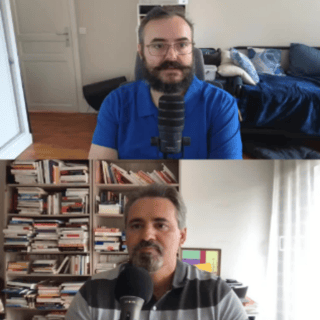
Noah: have to Hey, I'm Noah Smith and I'm here with ah PEG, which stands for Pascal amanuel Emmanuel Gobri.
Pascal-Emmanuel Gobry: ah
Pascal-Emmanuel Gobry: Yes.
Noah: how How was my pronunciation?
Pascal-Emmanuel Gobry: that's pretty That's pretty good. That's pretty good. ah So welcome, welcome, Noah, to the Sphere podcast. you wanted you You challenged me. You challenged me, sir, ah not to a duel, not yet, but to a debate on immigration. And you know i'll i'm I'll debate anybody.
Pascal-Emmanuel Gobry: ah and i I do think it can be an interesting debate. So since you since you started since you fired the first shot, go
Noah: Right. Well, anyway, i'm I'm trying to do more debates after on Econ 102. I did a debate with Orrin Cass. It turned out really well. And then I did a debate with Orrin McIntyre.
Pascal-Emmanuel Gobry: cool
Noah: um
Pascal-Emmanuel Gobry: so cool
Noah: And then that turned out okay. um Yeah, we ended up getting very sidetracked on that, but it I think it turned out okay anyway.
Pascal-Emmanuel Gobry: Well, that can be fun too.
Noah: So... Yeah, yeah, yeah. Anyway, immigration. so So the background here is that I thought we should have a debate because we were arguing about something on Twitter and I forget what it was that we were arguing about and it wasn't immigration. It's actually something else.
Pascal-Emmanuel Gobry: Yes. Yeah. No. So you I i remember it's it's this Twitter crap that just that just goes.
Noah: Wait, what what were we arguing Do you remember? Yeah, yeah.
Pascal-Emmanuel Gobry: ah You challenged Mehdi Hassan to a debate.
Noah: That is true. Got it.
Pascal-Emmanuel Gobry: And I said, well, i'll sure, I'll debate Mehdi Hassan too. And that's when you DM me and said, you and I should have a debate. And then and then i said, you could pick the topic and and you picked immigration.
Noah: ah
Noah: Well, yeah, because I figure immigration is something that everybody likes to shout about. And so, you know, we might as well talk about it a hot button issue.
Pascal-Emmanuel Gobry: Yes.
Noah: i was going to write a book about it. So I read about 30 books about immigration and assimilation and, you know, related issues.
Pascal-Emmanuel Gobry: Wow. So I'm very outmatched.
Noah: i am a I am a bit of a scholar now, I feel. That was
Pascal-Emmanuel Gobry: your business that's that i'm i'm i'm only ah i'm I'm just a guy with a Twitter account.
Noah: i was in 2018-19.
Pascal-Emmanuel Gobry: ah So, you know, I'm i'm i'm already ah overmatched.
Noah: That's all anyone really is these days.
Pascal-Emmanuel Gobry: I mean, I get so...
Noah: um
Pascal-Emmanuel Gobry: there I guess there's two kinds of debates. There's this sort of philosophical debate, ah which i get I think is important, which is oh what I believe is that any country's immigration policy should be based on the interests of its current and for and future citizens, as opposed to sort of humanitarian concerns, as opposed to sort of abstract rules, ah as opposed to sympathy for other people who you know would have a better life if they were in France rather than Mali or in the US rather than Honduras.
Pascal-Emmanuel Gobry: ah I think that's an important philosophical debate because the thing I've noticed, especially on the American left for the past, i since the since the Trump era, or I don't know, is ah sort of devaluing of the very notion of the nation state and of the very notion of borders. And there is a huge segment of the left, um including ah federal district judge last week that clearly believes that any form of border enforcement, any form of saying, look, so not everybody gets to come, sorry, is tantamount to some sort of you know horrible Hitler-type thing. And I think that's extremely dangerous because so far as we know, the nation state is the only political form we know that sort of works well.
Pascal-Emmanuel Gobry: ah and And it's dependent on having borders, having rules for who gets to live there, who doesn't get to live there, who gets to be a citizen, who doesn't get to be a citizen, and having those ah role those rules be enforced by the state.
Pascal-Emmanuel Gobry: And so I think the sort of open borders thing on the left it is it frankly very concerning for me as a sort of centrist moderate.
Pascal-Emmanuel Gobry: So I guess that's the philosophical thing, or we can do the econ thing.
Noah: well Well, the thing is that that this debate is apparently off to a very poor start because I agree with everything you just said.
Noah: And I think that almost everybody agrees with this. Like there are a few people who think that borders are some sort of like injustice that needs to be fought, but there're they're tiny. There's a tiny percentage, like almost no Democrats in America think that.
Noah: Yeah.
Pascal-Emmanuel Gobry: In opinion polls, sure.
Noah: Yeah, if you just ask people, like, should nations have borders?
Pascal-Emmanuel Gobry: But...
Noah: Should they decide to control who gets in and who doesn't? People would be like, yeah. And then if you just walk up to people on the street or or even if you if you walk into, like, some, like, you know, lefty party in Brooklyn, you know, and you ask people this, like, some people will say, a few people will say no, but they're they're trolling, you know, and...
Pascal-Emmanuel Gobry: Yes.
Noah: and um maybe they they really believe there that shouldn't exist. And then there's the w a few wacky libertarians like, you know, Brian Kaplan, who are ah think open borders is a great idea. But like, I think it's really hard to find people, ah you know, who who like the idea of open borders.
Noah: It's easier to find people who reflexively oppose every form of border enforcement to the point where they sort of accidentally back into being de facto open borders people.
Pascal-Emmanuel Gobry: Right. Right.
Noah: But it's it's hard to find people who support it in the abstract philosophical sense.
Pascal-Emmanuel Gobry: Right. Well, I mean, you know, this is like saying they they they don't support four, they just support two plus two. um Like, like ah you know, they they they they have views that just sort of naturally lead them to supporting that policy.
Noah: Well, no, it's not.
Pascal-Emmanuel Gobry: Right. Whether it's the actor whether they have this sort of full thing in their head.
Noah: Sure. Sure.
Noah: um Yeah, no, I mean, of course, that's right. if If what we care about is which policies people like support, you know, then then that does matter or which policies they indirectly support by voting for candidates.
Noah: But the thing is that if people are supporting policies that don't fit their philosophical idea, of what a nation state should be, then it's actually, I think, fairly easy to flip them by giving them more information about what's going on. Because I think often these people don't understand what's going on, the facts on the ground.
Noah: They don't understand how the policy opinions that they formed from watching the news lead to conclusions they don't want. You know, they just don't understand.
Pascal-Emmanuel Gobry: Right.
Noah: People are are poorly informed. And I think that, you know, Dealing with poorly informed people by like attacking them on mass doesn't is is suboptimal. And I think that instead we should just inform them better.
Noah: And, you know, this is exactly what Trump did. Right. So or or not even Trump, but the red state governors took the all of these quasi legal immigrants, these people who, you know, cross the border illegally, but then turn themselves into to ah border security and get request an asylum hearing and get to stay in America in the meantime.
Noah: you know, let's call them quasi legal immigrants um because they're illegal and then they're legal afterwards. But then um what what ah what the red state governor started doing during Biden's term was shipping them all to New York and to you know other other blue cities, most East Coast.
Noah: And um it caused this massive, massive backlash against specifically that kind of immigration because people, you know, people didn't know what the hell was going on. It wasn't that people understood what was going on and simply thought, ha, ha, ha, those Texans can suck it.
Noah: You know, those Floridians can suck it. It wasn't just that.
Pascal-Emmanuel Gobry: Maybe a little.
Noah: what
Pascal-Emmanuel Gobry: Yeah,
Noah: i mean, there's I'm sure there's a few people in Brooklyn who do think that way. but But I guess more to the point, people didn't understand what was going on.
Pascal-Emmanuel Gobry: yeah. Yeah, i'm I'm joking, but I take your point.
Noah: And once it arrived on the doorstep, they got it.
Pascal-Emmanuel Gobry: Yeah. ah Yeah, I mean, yeah.
Pascal-Emmanuel Gobry: i i get I guess we're sort of talking past each other because you're talking about like opinions of voters in opinion polls, and like Democratic voters are largely quite moderate. i'm I'm talking, and again, I'm saying like this is adrift. I'm not saying this you know this is what the Democratic Party is. I'm just saying I have watched this sort of change in the discourse over the past few years, and and it worries me, which is the sort of...
Pascal-Emmanuel Gobry: i I hate that word, the the elites, the sort of tastemakers, the sort of ah
Pascal-Emmanuel Gobry: intellectuals and activists of the Democratic Party and activists are very powerful in the Democratic Party. That may change in the future, but for now, they're still extremely powerful. Like you do see a lot of people and they're who who sincerely believe that one illegal.
Pascal-Emmanuel Gobry: no one is illegal Right. No human is illegal. Like I have seen that poster with my own very eyes in like fancy neighborhoods in lots and lots of blue cities in the US. And like it's the same thing as, you know, maybe if you sit down these people and like, oh, are you really you really agree with like a billion people coming here? They would say, oh, no, maybe so. They don't believe four, but they believe two plus two.
Pascal-Emmanuel Gobry: And so it is worrying. And it is strange, which and it is a shift from the sort of 2008 Obama era thing where Obama would say, look, I'm for border enforcement. I'm for deporting people who shouldn't be here, blah, blah, blah.
Pascal-Emmanuel Gobry: And it's in the national interest of America to sort of legalize some of the people who are here and allow more people, which is a very, very different position than no human is illegal.
Noah: Right.
Pascal-Emmanuel Gobry: You know what I mean? And and I do, you know,
Noah: Right. Exactly. And so it's affective, you know, like the the idea no human is illegal. It's um it's people see the word illegal. They don't like it.
Noah: It feels like you're you're, you know, impugning a whole class of people. Right. And you're saying, oh, you you are illegal as a person. You have no rights. We can just abuse you however we like.
Noah: And they they they don't like that, you know. So and, you know, they have a point because, um you know, the Parsley Massacre. have you ever heard of the Parsley Massacre?
Pascal-Emmanuel Gobry: No.
Noah: Okay, so ah the Dominican Republic borders Haiti. The Dominican Republic is much more economically successful.
Pascal-Emmanuel Gobry: Yeah.
Pascal-Emmanuel Gobry: Yes.
Noah: Many Haitian people illegally immigrated to Dominican Republic um in the like early 20th century in order to work in Haiti.
Pascal-Emmanuel Gobry: Yes.
Noah: hey i I'm sorry, in order to work in the DR.
Pascal-Emmanuel Gobry: Right.
Noah: The Dominicans didn't like this. And they had a dictator named, I think it was Raul Trujillo.
Pascal-Emmanuel Gobry: Yes.
Noah: And he ah basically said, you know we'll kick him out or kill him. And so he sent guys around to say, you know, but esto and and you know like what is this? And then and then if they and and it's parsley, like it's pet heel.
Noah: Right. and And like if you can't say that because you're a French speaker, you die.
Pascal-Emmanuel Gobry: Right.
Pascal-Emmanuel Gobry: Ah, right. I see.
Noah: Or if you're just nervous, you know, so French or nervous, you're dead.
Pascal-Emmanuel Gobry: Right. Right.
Noah: And so.
Pascal-Emmanuel Gobry: Right.
Noah: They killed you know most of the Haitian migrants. It was you know maybe less than 100,000, I think, but it was quite quite a lot, ten many tens of thousands.
Pascal-Emmanuel Gobry: Yeah.
Noah: and um And they killed they slaughtered him with machine guns. and then And then the Haitians didn't come again. so But I don't think americans i don't think America is going to send out ice with machine guns to slaughter people who aren't here in the country if they can't pull out their birth certificate.
Pascal-Emmanuel Gobry: and and i And I don't want them to.
Noah: Right. But when you see what they are doing, you know, there was that hairdresser guy who was like raped in a Salvadoran prison. You know, you've got US citizens being randomly pulled off the street and detained for like weeks because like someone just thought they looked, their face looks like ah an illegal immigrant face ought to look.
Noah: And they put them in a thing and they, of course, they don't papers with them. So they throw them in a cell while they get their papers and then they let them out. And then, you know, or or at the border, you see people, citizens being detained.
Noah: And then, of course, you see people who actually are here illegally getting treated fairly badly. you know alligator Alcatraz, like that's the conditions there are are just horrible, you know, like women being forced to poop in front of men and, you know, like ah just all kinds of like just terrible conditions in that in that detention center.
Noah: And so i think the statement, no human is illegal, is ah it's ah it's a nonsense statement, right? It's affective. It's purely just an emotional response to the word illegal applied to a person.
Noah: But when you look at the actual policies trump the Trump administration feels that it's entitled to do to people who are here illegally, that looks bad and I don't like it.
Pascal-Emmanuel Gobry: That... it A couple points. So first of all, you know, ah the the kind of people who post these signs, they they all have graduate degrees from like prestigious ah institutions.
Pascal-Emmanuel Gobry: And they all, you know, are in their 30s and 40s and have like six figure jobs working for NGOs or universities or healthcare systems or things like that.
Noah: or Google.
Pascal-Emmanuel Gobry: They're not 19 year olds.
Noah: No.
Pascal-Emmanuel Gobry: You know what I mean?
Noah: no
Pascal-Emmanuel Gobry: They're they're responsible adults and they they're not shooting it when They're not saying it when drunk at a party. They made the affirmative positive decision to purchase a sign and put it on their lawn for the entire world to see.
Pascal-Emmanuel Gobry: This is like one of the top three most important things, I believe. yeah Like that.
Noah: right
Pascal-Emmanuel Gobry: I mean, i I just I just find that just astonishing. Yeah. That's number one. ah Number two on the whole immigration enforcement thing, I mean, so first of all, I don't want to get into a factual discussion about like which reports of what atrocities and alleged atrocities are are are true or not.
Pascal-Emmanuel Gobry: um ah because that i let me concede that there's probably some horrible shit and hopefully you can concede that a lot of those reports turn out to be false because a lot of them did turn out to be false ah like the the the infamous ah quote unquote Marilyn dad who turned out to actually be a gang member and actually a human trafficker and a wife beater and apparently somebody who collected child porn
Noah: Yes.
Pascal-Emmanuel Gobry: um And and and the a senator, ah ah the Maryland senator, flew to El Salvador to have his photo taken with him. So, you know, there's all sorts of stories in both directions.
Pascal-Emmanuel Gobry: I just, I, like, enforcing rules is always ugly, and I find it always striking that the ugliness of enforcement catches a form of attention that isn't caught.
Pascal-Emmanuel Gobry: ah or that isn't focused on the ugliness of what happens when you have unchecked mass third world immigration into a country, which also causes a lot of very real human suffering.
Noah: Right.
Pascal-Emmanuel Gobry: Yeah. Yeah.
Noah: right So it's basically just people, you know, saying, just focusing on different, different, you know, sort of extreme cases and thinking about those extreme cases and getting upset about those extreme cases and then advocating, ah you know, policies based on doing whatever the opposite of those extreme cases are.
Pascal-Emmanuel Gobry: yeah
Pascal-Emmanuel Gobry: yeah
Pascal-Emmanuel Gobry: Right.
Noah: And so that's not a constructive way to deal with the situation in my view.
Pascal-Emmanuel Gobry: Okay.
Noah: I think if you want illegal immigrants to leave, i feel like the easy way to do that is just prevent them from getting jobs. You just, ah you know, you you audit companies. You say, look, you're hiring these guys. You pay a fine. Like, we're not going to send jackbooted thugs onto your lawn and break down your door.
Noah: We're going to send you a penalty via the IRS. And you'll have to pay ah ton of money and maybe you'll have to close up shop or maybe not, but you're just going to pay a lot of money for doing this.
Noah: And then everyone will be like, ah we don't want to pay the fine. So we're going to, you know, we're going stop hiring these people. Sorry, you're not a, you know, legal worker. So we're not going to hire you.
Noah: And then everybody's like, shit, there's no jobs in this country, man. And they leave. And so like, there's precedent for this working, which is the great recession. After 2007, you know, we had this big recession. It was coupled with increased enforcement by the Obama administration. But honestly, it was that for like 10 years, there weren't really that many jobs to be had.
Noah: And, um, And so people left, like, I think, even if you accept, even if you like the the higher estimates of the total number of illegal immigrants in America, you know, the the total amount that it the number went down was like one and a half million ah over those years. And that's ah that's a substantial amount of the net decrease.
Noah: And then um ah the number of people you deport, of course, is much, much larger than that. But then um but then the the total number went down by like one and a half million.
Pascal-Emmanuel Gobry: Yes.
Noah: All the estimates agree. And um just do that times five by by auditing companies that hire illegal immigrants. And then you don't have to put anyone in like alligator Alcatraz or send them to a Salvadoran torture dungeon or do these other things which whose purpose is to scare people away.
Pascal-Emmanuel Gobry: yes
Noah: You know, you can instead just we reduce the pull factors that pull them here.
Pascal-Emmanuel Gobry: I mean, ah why not both, right? I mean, the the sort of ether is fine.
Noah: because one has much higher side negative side effects and and the other is sufficient.
Pascal-Emmanuel Gobry: ah I don't know if it's sufficient.
Noah: That's why not both.
Pascal-Emmanuel Gobry: um
Noah: will It will get rid of many millions of illegal immigrants. Will it bring your illegal immigration to zero? No, but neither will turning your country into like an armed camp. I mean, like the only, really the only thing that would bring it to zero is actual, you know, parsley massacre type of of genocide. And we're not gonna do that, okay?
Pascal-Emmanuel Gobry: Yeah.
Noah: um So like nothing's gonna bring it to zero. The, you know,
Pascal-Emmanuel Gobry: you can you can get You can get pretty close to zero, and I think there's value to having deterrence.
Noah: you know
Pascal-Emmanuel Gobry: I think there's value to sort of loudly communicating your goals, and I completely agree. And like the issue of E-Verify, it's a huge problem because basically Congress has made it so that you can't make it mandatory.
Pascal-Emmanuel Gobry: um And so... And by the way, the Trump administration has done like workplace raids and so on and so forth because I track this. And you're right. like This is a problem within the Republican coalition because if they go after employers a little too much, ah you know ah trump Trump gets an angry phone call from his golf buddies.
Pascal-Emmanuel Gobry: ah And... um And so he changes his mind and then Stephen Miller comes after him and then changes the policy back again.
Noah: right
Pascal-Emmanuel Gobry: ah you know i mean I think deterrence is good. i think it you know it's important to let people know that if they break the law, there are consequences ah and that if they come to America illegally, there are going to be consequences and they might be detained.
Pascal-Emmanuel Gobry: Yeah.
Noah: Yeah. But then a lot of the, you know, I mean, every administration detains people, right? The Biden administration detained tons of people. The Obama administration detained tons of people. just look at the detention numbers.
Noah: I mean, like we could, I could look it up right now. um
Pascal-Emmanuel Gobry: Well, the the Biden administration detained people and then released them immediately with UTS.
Noah: I existed under both of those.
Noah: Okay. But like, if you look at the total stock of people who were detained, you know, yeah.
Pascal-Emmanuel Gobry: And... And my understanding is that this is this is why there was a huge ah immigration package in the big, beautiful bill is the the Biden wave really was like unprecedentedly large.
Noah: yeah
Pascal-Emmanuel Gobry: And so from all the people that I talked to in DHS and CBP and all of that, what they tell me is that the Biden wave was so large, there isn't the sufficient infrastructure physically.
Pascal-Emmanuel Gobry: ah to deport people.
Noah: To detain all the people. Yeah.
Pascal-Emmanuel Gobry: Yeah, because they they do need to be detained while they're being processed, right?
Noah: It's absolutely true. That's true.
Pascal-Emmanuel Gobry: Because they are not actually doing the the sort of Dominican thing of like, oh, you're brown, get out, right?
Noah: Right? Yeah.
Pascal-Emmanuel Gobry: they're They're grabbing people. If they don't have papers, they put them in facility and then they sort of look they actually investigate what their status is. um But that required and and and then if they're illegal, they send them out so um or they put them in front of a judge and then they send them out.
Pascal-Emmanuel Gobry: Uh, so that requires a process that requires infrastructure that requires state capacity, which the United States government is not great at historically generally. and, but particularly on the issue of immigration enforcement, because there's this huge backlog and it's sort of been neglected for, for, for a very, very long time.
Pascal-Emmanuel Gobry: Um,
Noah: That's right. I mean, almost any country would be hard pressed to deal with that. Like France certainly would. And they're known for higher state capacity than America.
Pascal-Emmanuel Gobry: yeah. Yeah, oh, absolutely. Yeah, I mean, ah yeah, yeah we we would probably solve it the Dominican way.
Noah: Right. But there's another thing we can do, by the way, besides the employer audit thing that I talked about. There's a second thing you can do, which is you can change asylum law.
Pascal-Emmanuel Gobry: Yeah.
Pascal-Emmanuel Gobry: Yes.
Noah: And you can say that if you come illegally, you are not entitled to asylum.
Pascal-Emmanuel Gobry: Yeah.
Noah: unless there's some special dispensation.
Pascal-Emmanuel Gobry: I mean, that was the remain in Mexico policy of the ah of the Trump administration, which was Trump one, which was overturned by the Biden administration, which is how you got all of these, as you put it, like legal, illegal guys.
Noah: That was not the Remain in Mexico policy. It was not, actually. it um That would require the policy I just described of changing ah the requirements for asylum, um requiring you to present yourself at a port of entry,
Pascal-Emmanuel Gobry: Right.
Noah: That policy has to be passed by Congress because it has to change our fundamental asylum law.
Pascal-Emmanuel Gobry: Okay.
Noah: And ah so far, um
Pascal-Emmanuel Gobry: But Remain in Mexico was like a version of that.
Noah: Remain in Mexico, it was attempting to sort of jury rig, ah you know, a way around the law, but the law needs to be changed.
Pascal-Emmanuel Gobry: like i don't I don't remember the legal technical stuff. That was the same idea.
Pascal-Emmanuel Gobry: Yes. Yes.
Noah: And unfortunately, Trump has never tried to change that law. um The law, yeah.
Pascal-Emmanuel Gobry: Yeah, because they're... they're they're they're
Noah: change the law.
Pascal-Emmanuel Gobry: there You can't... you can't ah I mean, right now, the Amnesty Caucus in Congress is too strong, so you you're you're not going to get any law passed. It's very doubtful that you can get any law passed, period, but it...
Noah: But it's not it's not a subject for amnesty because these people aren't subject to amnesty.
Pascal-Emmanuel Gobry: No, but i'm there there's a critical mass of senators in both parties who will not allow any immigration bill to advance unless it contains ah very large amnesty provisions.
Noah: Okay, I see. Got it.
Pascal-Emmanuel Gobry: ah
Noah: Well, that yeah, I see that. So, but then...
Pascal-Emmanuel Gobry: that That's what they meant by comprehensive immigration reform in the and
Noah: Okay, but that's... I know. But that's... um ah the First of all, the 2013 bill was good, I think. It had amnesty in it. But um that aside, you can...
Noah: You can change people's minds on a bill by yelling about it. You can draw attention to the people who are blocking it. I haven't seen that done.
Pascal-Emmanuel Gobry: Right.
Noah: I haven't even seen such a law proposed saying, oh, there's this caucus that'll block it. I mean, like, okay, but try at least try, like, you know, Biden tried, ah you know, to bring a million bills that got blocked and like yelled about them. And once in a while, one of them would get through.
Noah: I think that this one's common sense enough. Like if you, if you explain to people that our asylum law says we can't discriminate in asylum hearings against people who came illegally, people would think that's nuts.
Pascal-Emmanuel Gobry: right
Noah: And people would like say, no, that needs to be changed. Even most liberals would say that that's nuts and needs to be changed. Um, only very hardcore, like committed progressive people who think that, you know, asylum, uh, spamming is basically human right.
Noah: ah
Pascal-Emmanuel Gobry: Yeah.
Noah: It includes a lot of lawyers. would ah would Would, you know, um yeah, i have I have lawyer friends who was like, wait, no, that's ah the basic human right. I'm like, no, no, it isn't. No.
Pascal-Emmanuel Gobry: Yeah.
Noah: but But, right, so the the the right to be not discriminated against in asylum for breaking the law is not not a basic human right.
Pascal-Emmanuel Gobry: Intended to appeal is not a human right.
Pascal-Emmanuel Gobry: Right.
Pascal-Emmanuel Gobry: Right.
Noah: Breaking the law should allow you to be discriminated against in asylum here.
Pascal-Emmanuel Gobry: Right.
Noah: But it's not because of our current law. So some you know people need to yell about this. And and i I worry, what I actually worry is that the Republicans have no desire to change that law because it allows them to continue having this problem that they must be elected to solve.
Noah: And that's maybe that's cynical, but I worry that they don't want to address the root cause. They just want to treat the symptom kind of like you know, pharma companies that sell painkillers, but don't want to cure underlying diseases.
Noah: It's like, you know, we'd rather, we'd rather make recurring revenue, treating the thing than make one time revenue, fixing the thing.
Pascal-Emmanuel Gobry: ah Okay, so...
Noah: I worry that I don't, I don't think I know that.
Pascal-Emmanuel Gobry: yeah, yeah.
Noah: i just, I worry about it.
Pascal-Emmanuel Gobry: i So... the The thing is, if you want a kind of like, quote unquote, common sense immigration bill passed, like the kind of bill that you and I would agree on.
Noah: Mm-hmm.
Pascal-Emmanuel Gobry: ah and and And presumably, like if you know if you create like a super committee of like Noah and Pegg, like you would get a bill that every reasonable conservative and every reasonable liberal would agree with.
Pascal-Emmanuel Gobry: um If you want that bill passed, with a Republican president and a Republican majority, you need to convince because Republican voters and Republican activists um are traumatized by the 1986 event when ah ah Reagan passed an amnesty bill and the bill included both amnesty and enforcement provisions and the amnesty was implemented, but the the enforcement never happened.
Pascal-Emmanuel Gobry: And so... If you want Republicans to agree...
Noah: Wait, no, the corporate enforcement was stripped out, right?
Pascal-Emmanuel Gobry: What?
Noah: Wait, the corporate side, I mean, the they they added some border patrol people, ah agents in that, but the um but the corporate side was stripped out. Like the, you know, the um they the they were going to have ah um not E-Verify, but a similar system where you'd you'd have to do that.
Pascal-Emmanuel Gobry: Right.
Noah: And they they took it out of the bill. It wasn't in the 86 bill, but it was in the 2013
Pascal-Emmanuel Gobry: Yeah. Yeah. No.
Pascal-Emmanuel Gobry: concern ah I don't remember the details of the 2013 bill at the top of my head.
Noah: I think I'm pretty sure like E-Verify was in that 2013 bill.
Pascal-Emmanuel Gobry: i
Noah: Hold on. Let me let me make sure.
Pascal-Emmanuel Gobry: I don't remember a single bill that came close to passing in the time that...
Noah: Let me make sure.
Noah: Yes, it did. The E-Verify was in this the bill that failed in the Senate.
Pascal-Emmanuel Gobry: Yeah.
Noah: in 2013.
Pascal-Emmanuel Gobry: Well, they were telling the Senate.
Noah: It included amnesty, but included enforcement, actual like, you know, robust enforcement instead of. And so 1986 added a bunch of Border Patrol agents, but they didn't do much.
Noah: Right. It didn't have much effect because it stripped out the corporate side enforcement.
Pascal-Emmanuel Gobry: Yeah. Yeah.
Noah: But then in the early in the
Pascal-Emmanuel Gobry: yeah
Noah: late nineties and early two thousands, we added a lot of real enforcement. We built fencing along all the main crossing points, which made it much harder and more dangerous to cross. We, um, we, uh, you know, really increased the number of border patrol a lot.
Noah: And we also cut immigrants off of various forms of federal welfare in 1996, but then, but enforcement in terms of a big fence and a lot more border patrol happened.
Noah: And you can look at research saying this had a major effect under George W. Bush. Enforcement didn't solve the problem, but it worked. And one of the reasons why the giant illegal immigration boom of the 90s and early 2000s came to an end, you know, one reason was the Great Recession, but one reason was massively stepped up enforcement. So we didn't get an 86, but it's not to to say that enforcement is is powerless.
Pascal-Emmanuel Gobry: i hey
Pascal-Emmanuel Gobry: that i'm I'm making a different point. I'm not saying there was never any enforcement ever.
Noah: Mm-hmm.
Pascal-Emmanuel Gobry: I'm making a different point, which is that if you if you want a majority of Republican voters and and elected officials to sign on to an immigration to a common sense immigration bill, you need to first establish trust that you are serious about enforcement.
Pascal-Emmanuel Gobry: And so... My, you know, my sort of, if i if I was a conspiracy theorist, which of course I'm not, um i I would think that's Trump's plan. I would think that that is what he actually wants to do because he's he's a he's actually a moderate on immigration, right?
Pascal-Emmanuel Gobry: um
Pascal-Emmanuel Gobry: He wants to spend like three years enforcing maximally and then ah during year four, he's going to, you know, throw Stephen Miller in the mouth of the Sarlacc and then do an amazing bipartisan integration deal with ah Chuck Schumer and John Thune and the Chamber of Commerce and so
Noah: Yeah. yeah
Pascal-Emmanuel Gobry: But the only way that bill is going to pass is if he's first deported 10 million aliens or whatever, some very, very big number. Because for all that you just said about enforcement and and and all that, like and immigrant population the the illegal population in the US s has been growing.
Pascal-Emmanuel Gobry: you know Maybe there were years where it was sort of flat or a little built down, but like over the past 20 years, it's just been growing massively. like it's just It's impossible to walk around and not see it.
Pascal-Emmanuel Gobry: So there there is an issue here. And you want... if you want voters who care about immigration to sort of be willing to hear out a lot of the very reasonable stuff you've said, which I agree is very reasonable, you first have to sort of earn some trust.
Pascal-Emmanuel Gobry: And maybe that's irrational, but it's also very human. And the way you earn trust is by doing, you know, ice raids and, you know, memes on Twitter about ah immigrants getting deported.
Noah: Whose trust are you earning?
Pascal-Emmanuel Gobry: Republican voters who are ah who who care deeply about immigration about illegal immigration but are not you know full-on restrictionists.
Noah: Republican voters.
Pascal-Emmanuel Gobry: Yes.
Noah: So that Republicans in Congress will support them.
Pascal-Emmanuel Gobry: the the media The median Republican voter... is A, extremely angry about immigration, a because of that issue, and B, because it's a sort of synodarchy for elites not being responsive, government not being responsive, democracy not being responsive, and so on and so forth. And we can talk about these broader issues.
Pascal-Emmanuel Gobry: And so he's very, very angry about immigration and especially illegal immigration. But he's also like not a restrictionist in the sense that his ideal immigration policy would be like zero legal immigration forever.
Noah: Right.
Pascal-Emmanuel Gobry: there's There is zero constituency for that in in the Republican Party. There is less constituency for that than there is for open borders in the Democratic Party.
Noah: Right. So, um, you,
Pascal-Emmanuel Gobry: But he's he's he's not going to listen to arguments about legal immigration until he stops being angry about illegal immigration. and And he's only going to stop being angry at illegal immigration when you know he sees a raid down the street from him, when he sees that you know the the population, Costco, the population is different and so on and so forth.
Noah: Right. But we see Trump's approval rating on immigration falling. And. It's falling, i believe, among Republicans, too, although it's from a very high base.
Pascal-Emmanuel Gobry: Yeah.
Noah: um But it's but it's falling a little bit. And so some people like. I I'm not sure I've seen evidence of the trust being built, i Maybe it's maybe it's there.
Noah: um People still approve of Trump on border security, but then approval of Trump on immigration general has gone down because people see these abuses.
Pascal-Emmanuel Gobry: yeah
Noah: They see the ICE raids everywhere. They see the you know, they hear about the, you know, alligator Alcatraz. Don't call it a concentration camp. They hear about the detention centers and the you know, they hear about the the like
Pascal-Emmanuel Gobry: i mean It's a meme. it's it's it it's It's a detention center and they they made a moat around it and they called it Alligator Alcatraz because it's in Florida. It's it's just a detention center.
Noah: Yeah. What's the conceptual difference between detention centers and concentration camps, by the way, just out of curiosity?
Pascal-Emmanuel Gobry: I don't... i I think it's all fake. Uh...
Noah: I mean, how do i how do I tell when ah one of those words is the only appropriate word or versus when the other word is the is appropriate as well?
Pascal-Emmanuel Gobry: You know, I've never given that issue ah much thought. ah I mean, it's a mix of why are people sent there and be what happens to them while they're there.
Pascal-Emmanuel Gobry: um As far as I know, nobody is being sent to alligator i'll get or elgaor oh Alcatraz for being Jewish or gay or communist.
Noah: I think that's right. I think that's right.
Noah: Right.
Pascal-Emmanuel Gobry: um Not yet, anyway. Dun, dun, dun. ah and And look, I haven't looked at the reports about how horrible it is there, but i i I would bet a good amount of money that we haven't reached, you know, Auschwitz tier yet. Sure.
Noah: True, but I mean, you know, i think that most concentration camps that history are not death camps. For example, the Boer concentration camps that the British used in the Boer War were the original.
Pascal-Emmanuel Gobry: or
Noah: That was where the name came from, I believe.
Pascal-Emmanuel Gobry: that That's what I heard because the the term concentration camp just means detention center, right? It's just we no longer use it because it's tainted.
Noah: I think. Right, you're right. And I think it but I think it means I think if you have a detention center where people are sent there ah for group characteristics instead of individual actions.
Pascal-Emmanuel Gobry: Yeah.
Noah: then I think that ah that's kind of the salient thing to me. That, you know, if we want to backfill this term with a meaningful definition that we can then apply.
Pascal-Emmanuel Gobry: Sure, but again, like i i there's some sense in which it's ridiculous to even have this conversation because the idea that you know whenever we're discussing detention, we have to like go back into World War II history to find out whether we're doing a Hitler or not, I find kind of silly.
Pascal-Emmanuel Gobry: ah Like... you know the The French Republic used to have the Banyu, which were ah labor camps in French Guiana, so in the jungle. They were pretty bad.
Pascal-Emmanuel Gobry: like The detention there was was famously very bad.
Noah: Yeah. Yeah. right.
Pascal-Emmanuel Gobry: ah you know and they They sent Alfred Dreyfus most famously, but like also the people who were sent there, you know apart from Dreyfus, who was innocent, were mostly sent for like you know murder and robbery and rape and so on and so forth.
Noah: yeah
Noah: right
Pascal-Emmanuel Gobry: Do I lose sleep over the fact that you know my country under a democratic regime sent people to like a pretty gross labor camp, but also you know usually only murderers? like i don't I honestly don't really care.
Noah: I mean, like you know i would care.
Pascal-Emmanuel Gobry: And I certainly wouldn't care if we reinstated it tomorrow.
Noah: I would care. I think that's you know that's that's not...
Pascal-Emmanuel Gobry: And I would be very happy for France to create alligator or alligator Alcatraz in in in French Guiana.
Noah: I mean, those those French Guiana labor camps are pretty horrible, man. like the conditions in them were really horrible. Like, I don't think that any, those people deserve to be treated like that, especially because as you noted, some people, ah were sent there who, you know, by accident and then, oops, you, you, if you're sent to, you know, some people are always going to be sent to a place by accident.
Pascal-Emmanuel Gobry: Yeah?
Noah: There, there will be accidents and, you know, yeah.
Pascal-Emmanuel Gobry: in practice ah In practice, it's very, very low. you know it
Noah: Really? Okay.
Pascal-Emmanuel Gobry: yes
Noah: But what's low? I mean, like, it depends, you know, if low, if your total number of people is like a hundred thousand and you're, you know, you have like a, um, you know, a 0.1% uh, thing that's, that's a significant number of people.
Noah: So.
Pascal-Emmanuel Gobry: i mean i I find this whole discussion so funny because, of course, how um
Noah: i'm trying to explain I'm trying to explain the the viewpoint.
Pascal-Emmanuel Gobry: how many how many girls raped by illegal immigrants are you know the right number? how many like We're focusing on the pain and the suffering of you know either criminals or illegal immigrants, depending on what we're like speculating about, which...
Noah: um
Noah: right
Pascal-Emmanuel Gobry: And it's just something that i I'm not interested in because what I'm interested in is the health and welfare of my fellow citizens. And so in the case of the Guyana camp hypothesis, I'm interested in the health and welfare of law normal law-abiding French citizens, which is improved if there is strong deterrence against people committing murder and robbery and rape and arson.
Noah: Now
Pascal-Emmanuel Gobry: And the case of illegal immigration, you know again, there are very significant harms that come to very ordinary people. due to unchecked mass third world immigration. And I have a lot more empathy for them than I have for anybody who decided to break the immigration laws of any sort of civilized country that I care about.
Pascal-Emmanuel Gobry: And so I, you know...
Noah: now I have a question for you.
Pascal-Emmanuel Gobry: i don't I don't want them.
Noah: I a question for
Pascal-Emmanuel Gobry: I don't want us to be like actively sadistic towards them or like throw them in a volcano or anything. But beyond that, I i just I really don't care. And and and and maybe you think that's just horribly cruel.
Noah: Okay.
Pascal-Emmanuel Gobry: I just I just think it's normal.
Noah: Well, some people are gonna, some people are gonna think that that, that is cruel and you have to, you know, accept that some people care about that. Like people, people care, but, but I think you're right that we should also focus on the benefits of mass deportations and carried out by various mechanisms. So you were talking about like, you know, mass detention in, in bad conditions, but, but we get, you know, at the end of the day, we get a benefit. We get fewer people, fewer of the, you know, illegal immigrants in the country.
Noah: And so here's a question in the United States, I'm not talking about France, um, because you know, we're bigger.
Pascal-Emmanuel Gobry: Yes.
Pascal-Emmanuel Gobry: Yeah.
Noah: Um, that's where I am right now in the United States. If you were to, ah deport 10 million illegal immigrants, let's say, would the total number of native born Americans who get victimized by violent crime go up or would it go down?
Pascal-Emmanuel Gobry: Yeah.
Pascal-Emmanuel Gobry: The total number of Native Americans who were victimized.
Noah: The total number of native born Americans. So I'm saying, suppose we don't care, ah or, or let's, let's native born Americans and legal immigrants.
Pascal-Emmanuel Gobry: Yeah.
Noah: Okay. So we, we,
Pascal-Emmanuel Gobry: Right, right, right.
Noah: ah but people who are in the country lawfully, who are not illegal immigrants, would the total number of violent victimizations of those people increase or decrease if we were to deport 10 million illegal immigrants?
Pascal-Emmanuel Gobry: Right.
Pascal-Emmanuel Gobry: I mean, it would decrease. Are are we going to do the whole like illegal immigrant crime rate thing?
Noah: But it will so illegal immigrant crime rate doesn't quite answer this. If it were illegal immigrant crime rate, we'd know the answer right off the top of our head. But the thing is that since most of the crimes committed by illegal immigrants are against other illegal immigrants, it doesn't answer the question that I was asking, which is about victimization of people who are legally in the country.
Pascal-Emmanuel Gobry: Oh, I see.
Pascal-Emmanuel Gobry: Right.
Noah: but So I don't actually know the answer to this. um It depends on some parameters that that we don't really know. but um i I did some guesstimation and I had AI do some guesstimation and it looks like it looks like the total change would be about zero.
Pascal-Emmanuel Gobry: Right.
Noah: um Because again, like you said, you know illegal immigrants have a lower crime rate than the native born. um
Pascal-Emmanuel Gobry: Sort of.
Noah: And then, yeah, I mean, they like, like on average, it's just an average, right? Like we have a lower crime rate than they were born on average.
Pascal-Emmanuel Gobry: yeah Yes.
Noah: And since a vastly disproportionate amount of those victimizations are against other illegal immigrants,
Pascal-Emmanuel Gobry: Yeah.
Noah: Basically, illegal immigrants are living in these enclave, mostly living in these enclaves where they don't encounter other people much. And when they do, it's usually through like work, going to work where they're not going to, you know, those are the people who do work and they're not going to commit a lot of crimes.
Noah: The crimes they do commit are against others of their own kind in their own neighborhoods, um primarily. And so because of that, I think that if you're looking at the safety of people like me, you know, citizens of America, the native born, my safety is statistically on average.
Pascal-Emmanuel Gobry: Yes.
Noah: I don't know about me personally, right? But statistically on average, it's not enhanced by all those mass deportations.
Pascal-Emmanuel Gobry: right
Noah: i don't become a safer person statistically, I think.
Pascal-Emmanuel Gobry: So, OK, so couple of things there.
Noah: Where am i benefiting?
Pascal-Emmanuel Gobry: ah
Noah: Where am I benefiting from the mass deportation?
Pascal-Emmanuel Gobry: it So first of all, it it would, so first of all, it it certainly wouldn't make you worse off, right, in terms of public safety.
Noah: What do I get?
Pascal-Emmanuel Gobry: It wouldn't cause an increase in crime if you
Noah: it might make me a little bit worse off. It might make me a tiny bit worse off, it largely unchanged. let's assume yeah Let's assume that it's exactly zero instead of almost zero.
Pascal-Emmanuel Gobry: secondly Secondly, empirically, the links between illegal immigration, certainly in the US, and sort of organized transnational crime and drug trafficking are so real and so extensive. like Every human trafficking network is also a drug trafficking network and vice versa, right?
Pascal-Emmanuel Gobry: And and And drug cartels in the U.S. have distribution networks in the U.S., in part because there has been laissez-faire, relatively laissez-faire attitude towards enforcing immigration laws, right?
Pascal-Emmanuel Gobry: And so...
Pascal-Emmanuel Gobry: Your ah mass ah ah you you're you're sort of purely abstract sort of ah ah percentage calculation just doesn't take account the fact that if you're removing en masse these sort of enclaves, as you said,
Pascal-Emmanuel Gobry: ah because most illegal immigrants live in these enclaves, which ensures that most of the crimes they commit, but you're also by definition
Noah: You know, enclaves. Yeah.
Pascal-Emmanuel Gobry: ah striking a huge blow against people all sort of South American and South American originated ah transnational crime, which includes ah all sorts of horrible human trafficking and which of course includes the the the the drugs and and the drug epidemic in the US.
Pascal-Emmanuel Gobry: And yes, the fentanyl that does come from, i mean, some some ingredients are made in China and then they they get them to Mexico and they do the final manufacturing in Mexico and then they bring it to the US.
Noah: and And this is not counted as violent crime.
Pascal-Emmanuel Gobry: So again, like in the real world, like yes, absolutely.
Noah: Just to support what you're saying.
Pascal-Emmanuel Gobry: like Criminality would just drop like a rock and and and and it would be much beyond you know the probability of sort of Noah Smith ah getting stabbed while he's walking to the store.
Noah: right.
Pascal-Emmanuel Gobry: ah And another point about you know ah those ah who gets victimized by those crimes, like a lot of those communities also have a lot of legal immigrants. right They have a lot of you know Salvadoran Americans or whatever who are legal citizens, and they're disproportionately also the victims of illegal immigrant gang-related crime. right it's it's like It's women who are being pimped, it's ah who are being forced to work as drug mules or lookouts or whatever, or or just generally the criminality of you know lawless, poor areas.
Pascal-Emmanuel Gobry: and so
Pascal-Emmanuel Gobry: those people who are US citizens also deserve protection from that kind of crime. And so Noah Smith, economist, commentator, his crime rate isn't going to be affected, but like poor minority US citizens in poor areas, their crime rate, their probability of being victimized by crime will change.
Noah: The argument here is that we shouldn't look at violent crime rates. We should look at indirect crime indirectly caused by like the drug trade and things like that.
Noah: that what you're asking?
Pascal-Emmanuel Gobry: Sorry, I just finished my point so I didn't hear what you were saying.
Noah: Sorry. I was saying, so you're, huh.
Pascal-Emmanuel Gobry: It's not a debate if I don't talk over you.
Noah: If ah so, you're basically saying that the indirect effect on crime rates via curbing of the drug trade would be in addition to whatever direct violent crime rates we observe.
Noah: And so, you know, because when people import fentanyl into the country, it's not counted as a violent crime, but it could encourage violent crime because then people fight over the fentanyl or whatever later on on down the chain.
Pascal-Emmanuel Gobry: Right.
Pascal-Emmanuel Gobry: Right.
Noah: And maybe those people are citizens or illegal immigrants or whoever.
Pascal-Emmanuel Gobry: Right.
Noah: Right. And so it gets gets counted as non illegal immigrant crime, but the links would be broken, thus making drug enforcement easier.
Pascal-Emmanuel Gobry: right right
Noah: OK, yeah, I buy that. That's possible. I'm not I'm not 100 percent sure how true that is, but I buy that that's that's possible. That that, you know. Asylum seekers, even if they don't carry the fentanyl with them, you know, because if you turn yourself in with Fent,
Noah: You know, cause remember these are almost all this so-called illegal immigration right now is people crossing the border illegally and then immediately turn themselves into the authorities, right? It's quasi legal.
Pascal-Emmanuel Gobry: Right.
Noah: Right. And then, um, and so those people, no,
Pascal-Emmanuel Gobry: Well, that was true under the Biden administration because they had the CPB program. So they were inviting people to do this. It was essentially like a way of just like bringing in, you know, as large amounts of people as possible with just no vetting and just like the thinnest veneer of legality.
Noah: but it's also our law. It's our basic law,
Noah: but you could
Noah: What I'm saying is that this is this is our law. Our law says that you have to do that. That is America's asylum law.
Pascal-Emmanuel Gobry: I mean, it it it is a it is a a sort of extremely, you know, ah
Noah: I don't like the law, but it is our law.
Pascal-Emmanuel Gobry: tendentious interpretation of the law.
Noah: Not necessarily.
Pascal-Emmanuel Gobry: um
Noah: No, it's not because the law very clearly states that you're not, that asylum claims cannot discriminate against people based on um whether they enter the country legally or legally.
Pascal-Emmanuel Gobry: No, i and i and i and i just I understand that, but there there's there
Noah: that law ought to be changed. That law ought to be changed, but it is our law.
Pascal-Emmanuel Gobry: there's there's There's lots of technicalities in every direction because of there's the credible fear standard. And so you have to show credible fear, except that the way people show credible fear is totally you know people's explanations are taken ah at face value.
Noah: Okay.
Noah: No, but... Wait a second. Oh, I understand. But um what I'm saying is that, listen, the credible fear standard determines whether people will be given asylum once they get the hearing.
Noah: And in fact, That is the basis for the fact that we deny most asylum applicants because they don't have credible fear. They're just economic migrants and we boot them out. That's what we do to most asylum seekers.
Noah: The problem is that we're, because of that law that I described, we're not allowed to, so when they turn themselves into the border patrol, we're not so allowed to simply put them in a truck, drive them back and say, bye.
Noah: You know, we're not allowed to do that.
Pascal-Emmanuel Gobry: Yes. I understand that.
Noah: They have to get a hearing. And so that's the law. That's the problem. um And that's the law that I think should be changed, but, but you know, currently law.
Noah: And so um nobody who does that is going to have fentanyl on them when they turn themselves in, because then you're arrested with fentanyl. So maybe some people could like plant fentanyl in the desert, and remember where to come back and get it. But then primarily um what you're talking about is human networks.
Noah: that the that the ah quasi-legal immigrants that are then in the country, you know, send text messages to the mafia and help them help them smuggle drugs in by being their person on the their contact on the other side.
Pascal-Emmanuel Gobry: I mean,
Pascal-Emmanuel Gobry: as as far as I know, I've never seen anybody dispute that the networks that traffic people across the border are the same networks as the networks that traffic drugs across the border.
Noah: They may be, but but I assume they are.
Pascal-Emmanuel Gobry: And that they're linked to the distribution networks
Noah: They are the same networks. I agree. But what I'm saying,
Pascal-Emmanuel Gobry: in American cities that cause all of the violent crime because then there are fights over drug turf and like all of the crime that comes with drug trafficking.
Noah: agree however However, it's not clear that, so border security, obviously, you know, stopping people at the border, catching more people at the border will obviously disrupt those networks. But why does mass deportation disrupt those networks? That's what I'm trying to get at here.
Noah: Because remember, the overall question is, how does mass deportation help Noah Smith?
Pascal-Emmanuel Gobry: Oh.
Noah: How do I benefit as an American person from this? What do I get? and And this is this is trying to answer that question.
Pascal-Emmanuel Gobry: Right. ah I mean, so first of all, the the the problem the problem is there i mean those networks sort of continue to exist in those enclaves. I mean, i don't i i don't know how else.
Pascal-Emmanuel Gobry: i don't understand I guess I don't understand what you're not understanding, which is like, you know,
Noah: If I deport people, how does that disrupt the drug trade?
Pascal-Emmanuel Gobry: i i i'm
Pascal-Emmanuel Gobry: I'm Bob in El Salvador. I paid $10,000 to a guy to get me to across the border. Some other guy picks me up and gets me to New York where i start to wash dishes or whatever.
Pascal-Emmanuel Gobry: That entire thing was executed by a very large, very organized transnational criminal network.
Noah: I see. So the idea is you start off as a mule and then you claim asylum.
Pascal-Emmanuel Gobry: um i i don't I don't know exactly where the process is.
Noah: You drop off your, you you come across the border with your client,
Pascal-Emmanuel Gobry: i just i i just It just seems obvious to me that you can't ah deport large numbers of people who came in through those networks without disrupting those networks.
Noah: Okay. All right. um So even though I don't entirely understand the mechanism by which the networks are disrupted, I'm open to the possibility that there is such disruption, but I would like to see some empirical evidence that this works.
Noah: Do you know Okay.
Pascal-Emmanuel Gobry: i I'm not a criminal. like I mean, you know, it just seems so obvious to me
Noah: We all have AI now, man. We all have AI to do a literature search.
Pascal-Emmanuel Gobry: ah
Noah: We can just ask the robot.
Pascal-Emmanuel Gobry: that I don't have a study on on on water being wet either. I mean, i it it just seems like because those...
Noah: we can't We can't just say sounds legit and make policy on sounds legit. Like we got we can need some evidence here and we've done lots of deportations. We've done mass deportations and we should there we should be able to tell.
Pascal-Emmanuel Gobry: Yeah, we should. I'm
Noah: So let me let me ask a robot real quick. Do we have evidence of whether, yeah, yeah, I am asking Chai GPT, of whether mass deportations disrupt drug networks into the US.
Pascal-Emmanuel Gobry: but are are Are you asking chat GPT right now?
Noah: And um you know at some point, it'll come up with an answer. And then we'll have an answer, some of which may be hallucinated, but we can always go run it down and check.
Pascal-Emmanuel Gobry: Yes. ah are you are Are you doing deep research?
Noah: so
Noah: ah No, 03, which is the engine behind deep research, but is a little faster.
Pascal-Emmanuel Gobry: Right.
Noah: um it will It will get the things without like asking follow-up questions. Anyway, and it won't be as long. um So, all right, I'm just, but I'm not telling you you're wrong, okay?
Noah: I'm saying I want to understand the case because we've, you know, we've talked about the the potential harms of mass deportation.
Pascal-Emmanuel Gobry: Yeah.
Pascal-Emmanuel Gobry: Yeah, we haven't been fighting enough. this is This is terrible television.
Noah: Yeah, but we've we've talked about the potential harms, but I want to understand like what I, as an American, get. And and I think, honestly, you've so far missed the big one.
Noah: which is the fiscal cost of providing for all these people at the local and state level. that's the That's the thing that made all the New Yorkers mad.
Pascal-Emmanuel Gobry: there's There's that. I mean, i didn't know. and There's that. Yeah, absolutely. i have
Noah: I think that's the main cost that New Yorkers got mad about because people were getting...
Pascal-Emmanuel Gobry: i mean, certainly in blue states, it is enormous.
Noah: Yeah, yeah, it's enormous. Even in red states, there's some government support.
Pascal-Emmanuel Gobry: Because...
Noah: It's not zero.
Pascal-Emmanuel Gobry: Yes, yes. And this ah this is the other thing about the the liberal talking point about, oh, you know, illegal immigrants don't get benefits, except that the enforcement is up to the states.
Noah: And so it's big, it's really big.
Pascal-Emmanuel Gobry: And it's very well known that especially that in quote unquote sanctuary states, they they basically they basically don't. Well, they don't ask for your status.
Noah: Well, they do get state benefits.
Pascal-Emmanuel Gobry: And so you could just it's it's based on the honor system.
Noah: They get state benefits.
Pascal-Emmanuel Gobry: And so, you know.
Noah: but they But they already do get, they get state benefits and and local benefits depending on state and local law.
Pascal-Emmanuel Gobry: Yeah, yeah.
Noah: That's always been true.
Pascal-Emmanuel Gobry: Yeah.
Noah: And if states and some, you know some programs are block granted to the states and the states can do whatever they want with it.
Pascal-Emmanuel Gobry: Yes.
Noah: And the federal government can't determine who that gets given to.
Pascal-Emmanuel Gobry: Yes.
Noah: Anything that the states do can be, and and in fact, this is the main fiscal cost of immigration.
Pascal-Emmanuel Gobry: Yeah.
Pascal-Emmanuel Gobry: Right, right, right. I'm saying they they explicitly give benefits to to illegal aliens, but also in the case where they're not allowed to give the benefits, they still give it to them because they don't enforce the prohibitions.
Noah: We do.
Pascal-Emmanuel Gobry: um
Noah: Right.
Pascal-Emmanuel Gobry: ah This is well known about Medicaid in florida in California. I don't know specifically about Medicaid in New York.
Noah: Right.
Pascal-Emmanuel Gobry: um there there's There's several other cases.
Noah: Okay. So the GPT-03 is finished. ah Do you want to hear what it says?
Pascal-Emmanuel Gobry: Okay. ah Sure.
Noah: All right. We'll ask, consult the robot. I love robots. It says, so far, no rigorous empirical study shows that deporting large number of non-citizens meaningful meaningfully interrupts the flow of fentanyl, cocaine, meth, or other drugs into the United States.
Noah: The available evidence instead suggests that most illicit drug couriers caught at or inside the border are U.S. citizens using ports of entry, not migrants arrested between them. Interior deportations overwhelmingly remove longtime residents whose most serious offense is low-level drug possession or sales, not cartel logisticians.
Noah: After two decades of high deportation rates, U.S. street prices, purity availability, and overdose deaths has showed no sustained improvement. Large-scale removals can even feed criminal criminal groups abroad by delivering experienced recruits to gangs and cartels in Mexico.
Noah: some
Pascal-Emmanuel Gobry: did did you did and that That last one was was hilarious. It's like, no. no ah Removing them does doesn't reduce crime because they're not criminal. And also it increases crime in other countries because you're exporting criminals to other countries.
Pascal-Emmanuel Gobry: ah There was also another sleight of hand in the idea that immigrants who...
Noah: Right.
Pascal-Emmanuel Gobry: immigrants ah who with drugs in the US ah are a small time or they they're just arrested for possession. Overwhelmingly, when somebody's, you know, it's like, oh, there are nonviolent drug offenders in prison. It's that the offense was bargained down.
Pascal-Emmanuel Gobry: But the actual fact is that that person was caught dealing drugs and then they took a a plea deal so that there wouldn't be a trial. But like like that person was absolutely doing drugs.
Noah: I mean, that's what a nonviolent drug offense is. Like, yeah, it it wasn't a, you're not talking about a violent offense changed to a nonviolent offense through a plea bargain.
Pascal-Emmanuel Gobry: What? Yeah.
Pascal-Emmanuel Gobry: Yes, well, OK, but you and you understand what I'm saying.
Noah: so that Occasionally that does happen, but it's pretty rare.
Pascal-Emmanuel Gobry: It's like 99% of the time, like 99% of or 90 something percent of ah criminal convictions in the US are plea bargains.
Noah: Sure, but you don't, violent offenses typically do not get changed to nonviolent offenses in the plea bargain. If you bargain it down to a lower offense in the same category, so you could bargain felony assault to misdemeanor assault, I don't know.
Pascal-Emmanuel Gobry: Oh, right, i see.
Pascal-Emmanuel Gobry: Yes, yes, yes, yes, yes. Right, right. Well, yes. so but like so you know if right
Noah: Or felony possession to misdemeanor possession.
Pascal-Emmanuel Gobry: If somebody's in prison for possession, it's not because they were caught you know smoking a joint. It's because they were actively dealing and they got plea bargained down to to possession. And so i'm i'm just I'm just pointing that out in context of the GPT-03 saying, you know,
Pascal-Emmanuel Gobry: um Oh, ah illegal immigrants who get arrested in the US mostly just get arrested for for possession or nonviolent offenses. It's like, well, you know that's that's due to the that's most likely due to the plea bargaining system. It doesn't mean that they're not ah involved in serious crime.
Noah: Um, it's just because that's just base rates, man. That's the fact that most offenses are nonviolent.
Pascal-Emmanuel Gobry: Sure.
Noah: Like that.
Pascal-Emmanuel Gobry: Anyway.
Noah: So, so yeah, anyway. Um, but I mean, I don't think violent offenses are getting plea bargain away. It's just that most offenses are nonviolent to begin with. Anyway. Um, so I guess what do I, the idea is what do I get from mass deportation? I get,
Noah: um lower taxes at the federal, state, and local level by some amount, a bit of lower taxes.
Pascal-Emmanuel Gobry: Yeah.
Noah: And then I get potentially, if you believe Peg and not the robot, I will get less Fent in the country, less Mnoth. less ft in the country
Pascal-Emmanuel Gobry: Yeah.
Noah: less
Pascal-Emmanuel Gobry: Which is pretty big. like You, you will, you will get. lower organized crime, you will get lower disorder because there are there are forms of disorder that broader than crime. ah you know ah the i i remember I'm old enough when there was this guy on Fox called Tucker Carlson who was ah canceled for saying that immigrants make cities dirty, quote unquote.
Noah: Well, you are old
Pascal-Emmanuel Gobry: But like there are absolutely cultural norms around littering and they are and they differ by population. And like there's absolutely a link ah And like there are all sorts of forms of disorder and decline of quality of life that come with ah mass illegal third world immigration. So public safety, taxes, ah and and generally ah a sort of ah greater sense of democratic responsiveness and accountability because you you you will you will have the the the the justified feeling
Pascal-Emmanuel Gobry: of living in a country where you know the laws that are written on the book get enforced and the government enforces the laws, instead of living in this very bizarre world where you know ah everybody knows that there's one set of laws on the books, but that's not the real law that exists in the real world, and everybody obeys by a different set of laws, which is incredibly corrosive to public trust, trust in institutions, trust in democracy, and so on and so forth.
Pascal-Emmanuel Gobry: ah Denmark is a very good example of this. i was speaking with somebody from Denmark ah recently who as our viewers may know, you know is is the sort of case study for like very strong anti-immigration policies ah by a sort of center-left government. And he was saying like, on top of like the benefits to like crime and public safety and so on and so forth, there was a a sort of renewal of civic and democratic engagement because people were like, oh, you know, we say we want this, we vote for it and then we get it. Like that the system works, that's good.
Pascal-Emmanuel Gobry: Right. and And that's definitely something that America needs right now.
Noah: Yeah, I mean, maybe, but but when I look at Trump, you know, and I think, you know, when I look at Trump's actual actions on immigration, i see trust falling. i see I see disapproval, you know, rising and Trump underwater on his on immigration, which was a signature issue.
Noah: And I think a lot of your case here, that this is is ultimately a good thing, rests on this sort of supposition that this is some kind of preamble, that this is some kind of inevitable base satisfying move before Trump pivots to a reasonable compromise.
Pascal-Emmanuel Gobry: I didn't, i I, no, I sort of floated it as a sort of semi, you know, semi-serious conspiracy theory.
Noah: You talked about that.
Pascal-Emmanuel Gobry: I'm not saying this is Trump's agenda and this is, like, I think, I would like that to be true.
Noah: Okay. Okay. You don't think this is actually likely? Understood.
Pascal-Emmanuel Gobry: I would like for the, the, Trump and the Trump administration to sort of solve the illegal immigration problem in a way that's so decisive that it sort of moves us to moves the country to a different chapter and then people can have the actual important discussion, which is what what's the kind of immigration system we want. Now that we know...
Pascal-Emmanuel Gobry: that we can enforce the laws now that we know that it's not a big joke to change the law or to rewrite the law. What kind of law do we want? I absolutely want that. ah And I think it's a necessary, not sufficient, but necessary ah preliminary step.
Pascal-Emmanuel Gobry: But I also think that the illegal immigration problem is is worth solving on its own. i it's just It's just so alien to civilization and good government to like just have like millions of people in your country just because they showed up one day and and then you're like, oh, but they've been here for a very long time, so I guess they just get to stay here now. like ah That's deranged.
Pascal-Emmanuel Gobry: It's I really think it's a very serious, it's a it's public safety problem, so it's an economic problem, and so on and so forth.
Noah: So you feel that for you, for you personally, mass deportations build your trust in the system.
Pascal-Emmanuel Gobry: Yes.
Noah: And that makes sense.
Pascal-Emmanuel Gobry: mean,
Noah: And I'm sure that there's a non-trivial number of people who think like you. who think like that and who agree with you. But when I look at what the you know what the average American thinks, I don't see people taking heart from this policy. I don't see trust our institutions rising from the ICE deportation rampage. I don't see it.
Noah: I don't see this in the data. I see disapproval rising.
Pascal-Emmanuel Gobry: I mean, it's it's only been going on for six months. i you know I haven't looked at the polls, and and i'm you know I'm a policy guy.
Noah: Farrell?
Pascal-Emmanuel Gobry: I very deliberately don't look – I mean, I look at issue polls, but I don't look at like Trump polls. So i I don't have an opinion on like which polls are good or bad and and so on and so forth.
Pascal-Emmanuel Gobry: And you know there are definitely fake polls out there. like That's not a conspiracy theory or just like very bad polls.
Noah: There's a lot of polls and on this topic. And then the aggregators like, you know, Nate silver and G Elliot Morris and these other guys.
Pascal-Emmanuel Gobry: Yeah.
Noah: try to do their best to figure out what's going on look at the quality of the polls.
Pascal-Emmanuel Gobry: Yeah.
Noah: And, you know, i I understand that polls aren't a perfect guide to public opinion.
Pascal-Emmanuel Gobry: Yeah.
Noah: There's many problems with polls, but I don't see.
Pascal-Emmanuel Gobry: yeah
Noah: um Yeah, maybe out there trust is silently being built, um but it doesn't it doesn't look like it. I don't see it. I just see people who, you know, the minority of people who are just enraged about immigration.
Noah: you know, think, yeah, get them. This is the thing we've been waiting for for a long time. And of course, of course, there are people who, you know, from from all the way from like the 80s and 90s have just been like, you know, get them out, get them out. And and just been yet getting increasingly mad since the 80s and 90s about this.
Noah: And those people are going to be pleased. Like there was never a time when you thought this wasn't a problem, right?
Pascal-Emmanuel Gobry: ah There was, yeah.
Noah: When? When did you think this wasn't a problem?
Pascal-Emmanuel Gobry: ah Before Trump.
Noah: Like under Obama?
Pascal-Emmanuel Gobry: Yeah.
Noah: Huh. That's interesting. Cause we had a, we had a wave of asylum seekers, all those unaccompanied children.
Pascal-Emmanuel Gobry: oh you you you you you could You could Google it. I wrote columns in favor of immigration amnesty in 2014, 2015.
Noah: I see. And it was, when did you, when you change your mind about this?
Pascal-Emmanuel Gobry: I got radicalized.
Pascal-Emmanuel Gobry: ah When America elected a crazy orange guy.
Noah: Then you agreed with the crazy orange guys policies because of he's a crazy orange guy.
Pascal-Emmanuel Gobry: ah Well, the open question is like what level of immigration is sustainable without causing too much sort of social and political and cultural disruption. And the fact that your country elects a crazy orange guy is a pretty good hint that, you know,
Pascal-Emmanuel Gobry: you've had that point and you should therefore backtrack.
Noah: Right.
Pascal-Emmanuel Gobry: i It wasn't like an overnight thing. Oh, Trump won. Therefore, I completely changed my mind on immigration. But like the fact that so many Americans were so...
Pascal-Emmanuel Gobry: ah ah passionate about this and sort of prioritizing this over everything else absolutely made me think, oh, like I'm the one who's missing something here. I'm the one who doesn't fully understand what is happening.
Pascal-Emmanuel Gobry: and and And, you know, i i I couldn't tell you like a moment where I was yeah where I became sort of ah extremely anti-immigration. ah But yeah, that it's a sort of... it i say that jokingly, but yeah it's kind of ipso facto.
Pascal-Emmanuel Gobry: And again, if you believe in democracy, as we all do, it is kind of Ipso facto the case. like if I'm not saying you know every every poll is right, and when 51% of the country says something, it's it must be right every time.
Pascal-Emmanuel Gobry: But when you have this level of public dissatisfaction for so long, it it should tell you something. um And so I learned more about fentanyl. I learned more about you know what was happening in sort of white working class communities in the Midwest of the US. I i learned more about you know wages and and so on and so forth. and and And I became radicalized. Absolutely. And now I i absolutely believe that it's
Pascal-Emmanuel Gobry: you know the most important issue for America, for Europe, ah and that it's sort of it sort of preconditions everything else, ah because it's both on its own and because it's a ah symbol and a kind of synagdarchy for
Noah: Thank
Pascal-Emmanuel Gobry: a host of other issues related to public trust, related to whether government exists for the interest of the whole population or an elite and so on and so forth. And so, yeah, so that's that's my answer to your question.
Noah: Okay.
Pascal-Emmanuel Gobry: No, I i haven't. I absolutely, I was i was pro-immigration for because I was a good enlightened, elite, ah
Noah: Okay.
Pascal-Emmanuel Gobry: white collar graduate degree, blah, blah, blah person.
Noah: yeah Yeah. let me ask you a follow-up question then, which is, what would what is there any degree to which Trump could overstep in his immigration policy that would make you change your mind about this and think, okay, the costs of this policy are too high.
Pascal-Emmanuel Gobry: Right.
Noah: And what would that be?
Pascal-Emmanuel Gobry: ah
Noah: What would that look like? What would make you change your mind on that?
Pascal-Emmanuel Gobry: I mean, I can imagine like immigration policies that I would disagree with, but like Trump couldn't legally do that. Right. The most thing he can do is like deport people who are already here. And I'm OK with that. And, you know.
Pascal-Emmanuel Gobry: I mean, and or or, you know, I mean, we can come up with, like, science fiction scenarios where, you know, he sends death squads into out alligator alcatraz and blah, blah, blah. But that's not going to happen.
Pascal-Emmanuel Gobry: all know that.
Noah: You don't really need science for that. We have the weapons.
Pascal-Emmanuel Gobry: Yeah, we have the weapons.
Noah: We don't need to invent anything. It doesn't need to be AI doing it. i don't know. um
Pascal-Emmanuel Gobry: i
Noah: But yeah, so you think death squads or mass execution of illegal immigrants would flip you on this?
Pascal-Emmanuel Gobry: Yeah, I would consider that a bridge too far. i so An open question for me is the extent of the economic disruption.
Noah: Okay.
Pascal-Emmanuel Gobry: um
Noah: Hmm.
Pascal-Emmanuel Gobry: And because I do think that if you start, you know, because now there's such a backlog of criminals and unemployed people, but, you know, the big open question is what happens when they start actually hitting into, like, people who are employed and so on and so forth.
Pascal-Emmanuel Gobry: ah And I fully expect some level of economic disruption, which I don't mind, but I think it's an open question just how much there will be.
Pascal-Emmanuel Gobry: um That being said, it in some, I don't want to say perverse way, but in sort of paradoxical way, the more economic disruption there is, the more that I would see that as evidence that the system was just fundamentally broken and really needed to be resetted. like if the If it really is the case that the American and economy absolutely needs...
Pascal-Emmanuel Gobry: you know, $5 an hour waiters or or or whatever absolutely needs this sort of like servant caste ah to operate, then then, you know, it's all the more evidence that the that we need to shift to a very different system very quickly.
Pascal-Emmanuel Gobry: Yeah. ah
Noah: So economic stuff is not going to make you change your mind, but, but death squads would. I have one more. What if we start seeing, what if we start seeing, us large numbers of us citizens detained or deported?
Pascal-Emmanuel Gobry: Yeah.
Pascal-Emmanuel Gobry: Yeah, I mean, yes. Like, if there if there was some sort of, like, crazy thing where... Yes. um
Noah: Okay.
Pascal-Emmanuel Gobry: Sure. I mean, Yeah.
Noah: What if here's another one?
Pascal-Emmanuel Gobry: Yeah.
Noah: What if Trump in suppose with or without the Supreme Court's blessing?
Pascal-Emmanuel Gobry: yeah
Noah: But lets what if what if Trump changes the law and birthright citizenship to strip citizenship from people whose ancestors were illegal immigrants or suspected of being illegal immigrants?
Noah: And so we have mass stripping of citizenship from large numbers of American citizens.
Pascal-Emmanuel Gobry: I mean, suspected of, i mean, obviously, you know, if it's suspected of being illegal immigrants, it's like a giant blue pole.
Noah: What I'm saying suspected, I mean, you can't prove they were legal. And so therefore you don't have citizenship.
Pascal-Emmanuel Gobry: Oh, right. so you and So basically, everybody would have to prove that their ancestors were legal.
Noah: After some certain date, let's say when they think that proof is available, because obviously for my ancestors who came in the late early there was
Pascal-Emmanuel Gobry: Otherwise, they get...
Noah: there was no proof
Pascal-Emmanuel Gobry: Right.
Noah: you know, there no proof of legality because we didn't have those systems in place yet. But suppose that we say, okay, so if you came since sometime 1965, I don't know, whenever, and then, and you, and we can't prove that you can't, that your ancestors came legally, we can strip you citizenship and then send you alligator alcatraz and then, or deport you to el Salvador, wherever the fuck.
Pascal-Emmanuel Gobry: Right.
Pascal-Emmanuel Gobry: Yes.
Pascal-Emmanuel Gobry: ah
Noah: What about that? Because that that is sort of what I painted as the worst case scenario in Trump's first term. I said, this anti-immigrant backlash, how far could this go? What's the worst thing I can possibly think of that we might actually do?
Noah: And it was that. And I can't put this idea in 2017, so a long time ago.
Pascal-Emmanuel Gobry: Well,
Pascal-Emmanuel Gobry: Well, I mean, the the you saw, and and it's just a meme, it's not going to happen, but you saw the thing about Memdani, right? Which is there there is a legal provision that basically, ah if you're a naturalized US citizen and you're a communist, that means that that basically it the law presumes that you must have lied during your naturalization process,
Pascal-Emmanuel Gobry: about being a communist and that therefore ah you can be stripped of citizenship and deported.
Noah: we can strip your citizenship of that. We do have a law that allows you to do that perfectly legal.
Pascal-Emmanuel Gobry: um i've i you know
Noah: Okay.
Pascal-Emmanuel Gobry: it' it's If Trump started sort of vigorously enforcing that law, i mean if you know ah prison there there would be a threshold where I'd be fine and there would probably be a threshold where I would no longer be fine.
Noah: So suppose one of your ancestors...
Noah: No, I'm...
Noah: Right, and keep in mind, by the way, I'm not talking about stripping citizenship from people who naturalize, which the law you're discussing is about stripping citizenship from people who naturalized.
Pascal-Emmanuel Gobry: Right. Right. Yes. Right.
Noah: That law will not allow you to strip citizenship from the kids of those people.
Pascal-Emmanuel Gobry: Yes.
Noah: So if you lie and say, I'm not a communist and you are a communist, right, right.
Pascal-Emmanuel Gobry: Yes. so i i understand that's different I understand that's different from the question you asked. I'm just i'm like...
Noah: I'm talking about stripping citizenship from people based on their ancestry.
Pascal-Emmanuel Gobry: Well...
Noah: Would that be enough to turn you?
Pascal-Emmanuel Gobry: whether whether whether they're Whether their parents came here illegally is not exactly the same thing as their ancestry, right? Because...
Noah: I'm talking about their parents or their grandparents, let's say, or just say parents, just say parents, your parents came here illegally.
Pascal-Emmanuel Gobry: Right. ah I don't...
Noah: You're born here. You're but because they came illegally. You're not a citizen and you must now leave. What about that?
Pascal-Emmanuel Gobry: I...
Pascal-Emmanuel Gobry: um i
Pascal-Emmanuel Gobry: I'm trying to come up with a way of saying, you know, I'm not wild about it, but I also wouldn't, you know, like, light my hair on fire and start, you know.
Noah: If people were punished with revocation of citizenship for what their parents did,
Noah: that wouldn't, that's, I can't think of a single case where we punish people for the crimes of their parents in this country or where we ever have.
Pascal-Emmanuel Gobry: Well...
Pascal-Emmanuel Gobry: Yeah, you're right. ah Yeah, I guess. Yeah. Yeah. No, i would I would disagree with that policy.
Noah: for me, that would be like, yeah I mean, I don't support Trump's mass deportation policy in the first place because I think it's, you know, there's much easier alternatives that are much less disruptive.
Pascal-Emmanuel Gobry: um
Noah: But I think but i think this that policy that I just described of punishing people with citizenship stripping for their parents being illegal immigrants, which I think is on the table.
Pascal-Emmanuel Gobry: Yes.
Pascal-Emmanuel Gobry: Yes.
Noah: you know, they discuss it, they talk about doing it. um
Pascal-Emmanuel Gobry: I've literally never heard this.
Noah: That would scare the hell out me. I would be really scared.
Pascal-Emmanuel Gobry: i mean, that i swear I'm not trying to dodge your question, or like but like I've literally never heard this.
Noah: You didn't dodge it. You didn't dodge it. You know, okay, you didn't dodge it at all. I'm not accusing you dodging it. You did not. You addressed it. I'm saying that i that I have heard this being discussed, and I could send links, whatever.
Noah: um And that that is a policy that would deeply scare me and and make me think, you know, um like i'm not looking I'm not living in a country with basic human rights anymore.
Pascal-Emmanuel Gobry: No, I understand.
Pascal-Emmanuel Gobry: I understand. I understand. ah i I, yeah, i I think it would be a dumb policy. the The reason why I'm being so hesitant is that, you know, we draw this bright line between legal and illegal, citizen and non-citizen, and rightly so, because those are important and meaningful legal categories. But at the same time, you know there's a bunch of people who got citizenship who probably, if the law had been well-designed, wouldn't have gotten citizenship.
Pascal-Emmanuel Gobry: ah And so i i i understand the point you're making. Denaturalizing someone because they're of something their parents did, I agree that's a bridge too far. But denaturalizing someone because they should never have been naturalized to begin with,
Pascal-Emmanuel Gobry: ah is not something that I object to as a matter of principle. um and and And by the way, i like my preferred version of this policy is you should never have been naturalized to begin with.
Noah: So denaturalizing someone who lied about being in the country.
Pascal-Emmanuel Gobry: Goodbye. here's ah Here's a big check. here's ah Here's a check for like two years of your past income. Go build a new life in Uganda, Mr. Mamdani.
Pascal-Emmanuel Gobry: Good luck to you. Best of luck to you. um
Noah: Is mom dying natural?
Pascal-Emmanuel Gobry: i don't think I don't think that would be you know terribly inhumane or Nazi.
Noah: All right. Well, I think that's a good place to stop. I can't think of, I think that we've basically covered like the main, um you know, we didn't talk about things like high-skilled immigration or cultural impacts.
Pascal-Emmanuel Gobry: Yeah, yeah. i mean there we we did We basically didn't talk about economics, even though you're you supposed to be an economics guy.
Noah: Yeah, well, we could have a follow-up where we do another, but I got to go eat lunch.
Pascal-Emmanuel Gobry: Yeah, and I've got to go eat dinner because we live in a big planet. ah
Noah: Yeah, but this is fun.
Pascal-Emmanuel Gobry: We have...
Noah: And this is fun. i liked it. We could do it again. um Yeah, I think we we we covered basically the whole issue of mass deportation and illegal immigration and illegal immigration and all that.
Pascal-Emmanuel Gobry: Sure. yeah
Pascal-Emmanuel Gobry: Yeah. yeah we yeah we did we did Yeah, we did mostly deportation, but not really the economics of immigration.
Noah: Right. Next time we could talk about should we be bringing lots of people legally and what would that what should that look like?
Pascal-Emmanuel Gobry: All right.
Pascal-Emmanuel Gobry: Yes. Yes. Yes.
Noah: Cool.
Pascal-Emmanuel Gobry: Yes.
Noah: All right. Well, signing off.
Pascal-Emmanuel Gobry: All right. Cool.
Noah: Talk to you later.
Pascal-Emmanuel Gobry: Bye. Ciao.