Transcript
Speaker: Let's fast forward to the outbreak of the Ukraine-Russia conflict. I'm sitting in the Pentagon you know in my position you know as Assistant Secretary for Critical Technology, and I get a message on my LinkedIn profile. Oh, wow. Because that's the only social media I'm on from the people who I used to work with at Chernobyl.
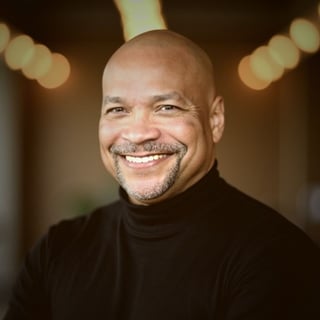
Speaker: And they were like, help, the Russians have come. and have damaged our equipment, we need help. Hey friends, I'm Scott Hanselman and it's another episode of Hansel Minutes. Today I have the distinct pleasure of chatting with Maynard Holliday. I could spend the next 30 minutes talking about Maynard Holliday and all the things that he's done. He performed the duties of Assistant Secretary of Defense for Critical Technologies in the office of the Undersecretary Defense for Research and Engineering and he has been a roboticist probably since he could walk.
Speaker: um His resume is long and storied, and we are very fortunate to have him on the show today. How are you, sir? All right. Good to be with you, Scott. So we have to point out for folks that are listening and not seeing this, some folks will see it on YouTube, some folks will be listening in their car, but behind you is a wonderful ah series of Marvel characters. I see Captain America there in the form of Falcon. I see Storm. I see Black Panther.
Speaker: Are you a comic nerd from way back? I am. Original Marvel... ah true believer ah from the ah stain Stan Lee, Jack Kirby years. And but some of my earliest motivations come from the the comic realm.
Speaker: How important is that though? Iron Man? Very important. yeah Yeah. Tony Stark has no superpower but his mind. and And so that made an impression on me you know as a young young boy. And then to see reflections in comics of people of African descent in positions of power, authority, and and knowledge. And Black Panther, T'Challa in the comics
Speaker: is the chief scientist of Wakanda, not Shuri as depicted in the current MCU. And so T'Challa, in his instantiation in the comics, was an early role model for me as well.
Speaker: And also people can see you've got it looks like NCC-1701, the original Enterprise in the back there, which I would assume then means that you're a Trekker or a Trekkie. Absolutely. Depending on who ask. yeah And it's worth noting, of course, that you know Richard Daystrom was in the original series.
Speaker: Right. one of the you know One of the chief geniuses that was compared to Einstein. He's compared to you know, he basically created like all the computers in the 23rd century. And he did it when he was in his mid-20s. Right.
Speaker: Was it so important to see that when you were growing up and just say, yep, I can do that too? Absolutely. ah It was... ah pivotal in, in my, uh, you know, early development to see that strong, um, you know, African, well, not American, you know, he was from some other planet, uh, know, by the 23rd century, but to see, uh,
Speaker: him represented. And as you said, Scott, you know, he architected, you know, the, the compute for Starfleet. Right. Basically the cloud, Starfleet's cloud. Right. Right. And so that was a powerful, you know, inspiration for me um as as a young boy who was, you know, looking to, you know, kind of define what I wanted to do with, with my life. And both,
Speaker: Tony Stark, T'Challa, Richard Daystrom, early inspirations for the career that I eventually embarked upon.
Speaker: And you went to Carnegie Mellon for your undergrad, and then you finished up with a master's from Stanford. Right. Yeah. So Carnegie Mellon, um where i majored in mechanical engineering and got the the robotics bug there, ah was ah ah in school when Three Mile Island happened.
Speaker: Oh, wow. And ah Carnegie Mellon, ah one of the... ah now emeriti professors red whitaker uh the father of field robotics which is the practice of robotics you know in the environment not in you know factories or you know very you know controlled environments was contacted by westinghouse the owner of through mile island to develop robotics to help characterize what was going on
Speaker: you know, at Three Mile Island to make sure that, you know, there were no radioactive leaks and to help remediate it. And so that was an early inspiration for the robotics that I did later in my career.
Speaker: Yeah, because for context, for folks that may not remember, Three Mile Island, 1979 was a partial meltdown, had minimal radiation release, but it changed how people felt and thought about nuclear.
Speaker: And then Chernobyl happens just seven years later, except Chernobyl was not a partial meltdown. It was catastrophic. And it wasn't a pressurized water reactor. It was an RBMK, a graphic-moderated reactor. right At this point now, you're you're out of school.
Speaker: Yeah, I'm out of Carnegie Mellon. I had already gotten a scholarship and had finished Stanford in 88 with a master's of science in mechanical engineering, where I concentrated in robotics and arms control because I was at the Lawrence Livermore National Lab.
Speaker: And so... As you mentioned, Chernobyl happens. ah But fast forward to, as they like to say, when peace breaks out in the early 90s and the Soviet Union disintegrates, we as a government decide, and rightfully so, to you know spend a few billion dollars more to help stabilize these newly independent states.
Speaker: And we wanted to engage the Ukrainians. who in exchange for Western aid sent all their nuclear weapons back to Russia and became ah for a brief period of time, the number three recipient of US foreign aid behind Israel and Egypt.
Speaker: And I was part of that foreign aid in 2018. the mid 90s, where i I went to Ukraine to work with an institute that did the guidance and control for the Soviet ballistic missile force so that they wouldn't migrate to you know rogue states back then, Iran, Iraq, North Korea. So we wanted to gainfully employ them on things of mutual interest. And when we got there, they said, hey, we need help at Chernobyl.
Speaker: And so that's how I began working with the engineering team at Chernobyl on excuse me how to stabilize the and characterized the sarcophagus that was hastily built right after the accident.
Speaker: So the sarcophagus is this thing that goes around it. It's a containment zone. Right. Exactly. So it was hastily built right after the accident and it was crumbling and they feared a a secondary release of radioactive material.
Speaker: So they needed a robot to be able to go into the basement, ah specifically room 305, where what was called the elephant's foot, which was a amalgam of ah graphite, you know, the, as you pointed out, you know, the fuel plus, you know, the, uh, uh,
Speaker: radioactive or a radiological absorbing material, the helicopters drop to help mitigate, you know, the, ah um you know, reaction, you know, of the explosion that happened. And so it was this amalgam of material that had solidified and, you know, they needed to characterize, you know, what the, you know, the radiological,
Speaker: you know footprint, you know, both virtually and figuratively ah was. And so the robot to get into this room. So we, we, we help, you know, design that with help from Professor Whitaker and his spinoff company called Red Zone that did the robots for Three Mile Island.
Speaker: Right. So Red Zone comes up with an agreement between Lawrence Livermore National Laboratory and NASA and the DOE and Chernobyl. This is all these groups working together back by everyone back when everyone could work together. Right. And said, this is a problem. We got to do this. But you can't get anywhere near it as a human. Right.
Speaker: What does radiation do as a robot to a robot? Is it a processor issue? Is it cameras? Is it wiring? Yeah. So kind of all of the above. It it it embrittles ah ah you know elastomers and and also has a and an effect on electronics. And so one of the unique things ah you know that we did for the robot was make it modular in the sense that ah components could be unplugged and you know then decontaminated. But the the key ah you know design feature was that we made it tethered so that most of the electronics were off board and yeah on the robot just got signals.
Speaker: And so there was a control panel. And so we you know, this is well before. you know more robust kind of wireless technologies. And so the the robot was tethered.
Speaker: The tether was structural, meaning it you know if the robot failed, it had enough strength that you could you know pull the tether and then pull the robot out.
Speaker: And another ah key design feature was we polished lead to optical quality so that the CCD cameras would not have to look directly into the solid angle of you know, radiation and then cause the CCD pixels to ionize.
Speaker: And so, yeah, so this, the CCDs were off axis, you know looking at, ah you know, reflection where, you know, lead would, would shield. So it only get the optical. So you bounced, you bounced it off of a lead mirror. Exactly. Exactly.
Speaker: Wow, that's like pinhole cameras or how, you know. Interesting, interesting. Would you consider Pioneer, this robot, a robot or a remotely operated machine? Tele-operated, yeah. Tele-operated, okay. Yeah, so that's how I'd characterize it.
Speaker: Yeah. The only thing that was automated was the vision system that NASA developed to map the room. And so you didn't have to manually actuate the vision head.
Speaker: you You know, it could... audit automatically ah survey the room and create a 3D map. there's There's a bunch of funny people online that are looking at like the moon footage and now the Mars footage and they make the comment that we have these better cameras on our iPhones now than we you know we ever had when we were off in in in space.
Speaker: And they've also noted that the Loch Ness Monster and Bigfoot and all of these things that we want to see have never shown up since everybody got a 4K camera in their hands. Tell me about the camera technology. What are we looking at here? Is it analog? Is it low resolution? you able to see what's going on? Yeah. So it low resolution. So think about it. This is early technology.
Speaker: early ninety s technology And yeah, nowhere near, you know, 4K resolution. And, and the other thing that happened was once we delivered the robot, the Ukrainian government said, you know, all the data at Chernobyl is a is classified by the state.
Speaker: oh no And so that's one of the you know disappointments that, you know, the data was never shared with NASA because one of the, uh,
Speaker: attractants for NASA to even join the project was they wanted in an analog for an interplanetary environment, you know, because they go to Mars and, and this is, you know, still to this date, you know, the world's worst nuclear accident. So this was an analog for an interplanetary environment and they wanted the the data, which unfortunately they, they never got.
Speaker: Hmm. Yeah. The um so even now is that you can't get them on the corn and get that data back. but So. let's Let's fast forward to the outbreak of the Ukraine-Russia conflict. I'm sitting in the Pentagon you know in my position you know as Assistant Secretary for Critical Technology, and I get a message on my LinkedIn profile. Oh, wow. Because that's the only social media I'm on from the people who I used to work with at Chernobyl.
Speaker: And they were like, help, the Russians have come. and have damaged our equipment, we need help. And so what I was able to do was put them in touch with a Department of Energy Nuclear Safety Working Group because the Russians had taken over Zaporizhia, if people remember, which is Europe's you know biggest nuclear power plant.
Speaker: They had taken it over and were lobbing shells at the Ukrainians because they knew the Ukrainians couldn't retaliate because it was a nuclear site.
Speaker: And so anyway, the Russians are at Chernobyl busting, you know, I won't swear, busting stuff up. and And so what I did is I put them in touch with this nuclear safety group who was able to get them computers and other things to help them monitor the condition of the the new sarcophagus, which I think was completed, you know, probably less than a decade ago now by... um
Speaker: the European Bank for Reconstruction. So they put a, you know, large like hangar type structure over a Chernobyl unit four. But then the Russians like attacked it and flew a drone into it and caused you know, put a hole in it.
Speaker: So, yeah. So before this conflict broke broke out, they had contacted me because they wanted to help designing robots that would be gantry, like to disassemble the original sarcophagus and size reduce ah the nuclear fuel.
Speaker: Wow. Wow. in In your role now, like, are you connected to these things? Is it one of those things where, with with all due respect, there's like aging people in this area that know stuff. And when when I'm gone, when you're gone, who's going to know these things? Yeah, yeah. So great question. you know I have you my own little LLC that you know I strategically advise companies that have technologies that were germane to my old portfolio.
Speaker: And, ah you know, I just from afar keep tabs on, you know, what's going on in Russia-Ukraine conflict. So I haven't closed the loop with any of the the people, you know, back at Chernobyl. You know, the Russians eventually, you know, kind of left because they were they were getting irradiated.
Speaker: yeah I mean, nobody wants to be near there right now. And so they left. So I think that the situation there has has stabilized. And I think they patched the hole in the in the roof.
Speaker: and And so that's as ah you know good as we can ah you know expect right now. pivoting a little bit, you helped establish the original Defense Innovation Unit Experimental, which was intended to connect the Pentagon with commercial technology companies. And as as a civilian myself who is often talking to startups, I feel sometimes like founders and startup people, they get stars in their eyes and they go,
Speaker: oh, our product works. We should get the Pentagon to buy it. I'm i'm curious what founders misunderstand when they have that level ignorance. sure. So back in 2015, then Secretary Ash Carter gave a speech at Stanford called Rewiring the Pentagon.
Speaker: and And in that speech, you know he he rightly pointed out that you know, the global market, the addressable market, you know, is driving innovation.
Speaker: And, you know, the defense department who used to be a big customer was now a niche customer and needed to first and fast follow industry. And so he wanted to create this defense innovation unit to to do just that. And, and,
Speaker: So I spent the summer of 2015 talking to my former colleagues out here in Silicon Valley about what would bring them in ah to work with the government. And to your earlier point, Scott, about what...
Speaker: founders sometimes miss is what is the military problem that you're solving? And so one of the things that we learned in doing a survey of other similar institutions, you know, In-Q-Tel has been in the Valley for, you know, kind of decades before diu And their secret sauce was being able to write unclassified problem statements for classified intelligence community problems. And so this is one of the things that that we adopted on at on the DIU side is we...
Speaker: took military you know bespoke military problems and and wrote what we call commercial solutions offerings. So we would put a problem statement, an unclassified problem statement, and and this is still the case you know with DIU now, on ah you know the website and open it up to industry, you know to startups.
Speaker: and And so rather than ah to your earlier point about a company saying, hey, you know, the military should buy this. Companies can now look at a problem statement and then, uh,
Speaker: develop technology or change a given technology or system to solve that very specific problem statement that the commercial solutions offering is stating. And so DIU has or had liaison officers from all the services who knew from their, you know,
Speaker: for a big army or a big navy or a big air force what problems they would like industry to solve and and so they would then uh be able to put these commercial solutions offerings out and then like shark tank get pitches from from these companies you know and then short list them and then and then get them under contract and that was one of the things that my former Silicon Valley colleagues told me was, hey, we need to get these people under contract, not on a year time scale, but you know within weeks, two months at the at the most, because you got to move at the speed of you know Silicon Valley business. Right.
Speaker: Now you've described that products go through kind of three processes and there's three potential, what you call valleys of death, places where things stop. Going from the lab to a prototype, that's a moment where you can screw it up and it's over. From prototype to product and then from product to scaled production to actually happening. And then your advisory work is focused on crossing that gap. How often do companies just fall directly into that valley of death and say, hey, work in a lab. Yeah, but it's not going to be production. Right. Yeah. So very often, and the Defense Department has recognized this. And when I was in office, we stood up the Office of Strategic Capital, which is the only group in the Defense Department that is doing loans.
Speaker: And so they loan companies that have capital-intensive project funds to get help them bridge you know those valleys of death that you described from you know lab to prototype or from prototype to to product and then you know ah product to to scale. So yeah, so there's a whole suite of you know government programs, you know the Small Business Innovation Research Grants, also known as CBER, and they're they're phased you know from one through three, and the dollars amount go from six figures to you know seven figures.
Speaker: And you know there's DIU as a funding source. They're all the software labs, AFWERX and Softworks.
Speaker: So there's a myriad of yeah funding mechanisms to help companies bridge those various valleys of death. And now we're in a moment where we've got cheap drones, arguably cheap and on-the-edge AI, theoretically small like you know small and medium-sized language models that could even run on a drone.
Speaker: You worked on a tethered, tele-operated robot. Now one, if one wanted to, has the the Lego pieces available to make a drone.
Speaker: I could do it myself in a weekend. I could make a drone that could do something bad and make it autonomous and send it over anywhere. You've called these high stakes AI, and you've got some strong opinions about what we what we should do about these things. We need receipts.
Speaker: Right. Yeah. So... These drones yeah have changed ah you know warfare. And yeah when I was in office and getting you know my regular intelligence briefs, you know we would see you know these one-way attack drones, essentially you know almost single-handedly obsoleting armor as vehicle of maneuver.
Speaker: a vehicle of a maneuver And so in unless ah you know you had you know some very um robust you know cages and and well, even the explosive armor that protects you from side projectiles, you know our javelin system that you know has a ballistic trajectory and goes straight down on the turret you know made that kind of protection obsolete. ah But you know drones
Speaker: and The fact and and one of the things in in military jargon, you know, quantity has a quality all of its own. Right. and And so if you're able to saturate, ah you know, an enemy enemy's air defenses, have too many targets for air defense radar to track.
Speaker: and And this is what you're seeing on both sides now. And and, you know, it's escalating. And, you know, the. counter system yeah that are using you know electronic jamming. And so you're seeing a lot of tethered drones now that that are immune to that jamming because the signal is is going through the tether and you know it's not the you know going through you know the electromagnetic spectrum where it could could be jammed. And so, yeah like I said, is it's ah it's evolving and and the US s has recognized
Speaker: that, you know, we're, we're behind, but, you know, need to, ah to catch up in, in these attributable, you know, assets. Yeah.
Speaker: You know, but commercial companies and certainly in the world of, in the, in the world of ai the time of AI are moving extremely quickly and it's very much a move fast and break things situation. ah Certainly offense gets to move fast and break things, but is it fair to say that defense systems demand assurance that,
Speaker: and there's a certain amount of caution that needs to be you know put together before something is deployed. How do you how do we balance that? Like things are moving so fast, but we really need them to not move fast. Well, we have to be comfortable with iterating.
Speaker: And so you know in Silicon Valley, You know, they they iterate ah you know on the software side. and And what, you know, SpaceX has been able to pioneer is, you know, that fail fast and then iterate. And, you know, you can look at the timeline of, you know, the evolution you know of their of their engines, you know, for the Falcon nine, you know, from a part count to, you know, where they started and to where they are now.
Speaker: And, you know, it's it's remarkable. And so we have to be comfortable with iterating, ah you know, at speed and, you know, not having, you know waiting for the 100% solution, but being satisfied with the 80% solution. Yeah. But then, of course, you get back into the valley of death in the sense of the 80% solution may be very inappropriate 20% of the time.
Speaker: Right, right. Yeah. So I'm i'm curious, i am I'm 53 and I am overwhelmed with existing this long and looking back at when I started on a Commodore 64 in 1984.
Speaker: And now we have pocket supercomputers that talk to the world AI. And you know like I'm curious with even more historical context that you have, How often on a random Tuesday afternoon do you just kind of go, holy crap, I am i'm living in the future. Yeah, I yeah i you know i have to pinch myself sometimes to say, you you know, ah you know and you and I talked about this earlier, you know the the Star Trek technology that was supposed to be 23rd century, you know we have realized now, you know the communicator is the cell phone, right? Being able to talk to your computer, you know like ah you know Spock and Scotty you know did in in series. I always use that Star Trek for when they're going to save the whales and it's down on the Macintosh and he's like computer.
Speaker: Right. Oh, just use the keyboard. Oh, how quaint. Right. But now we can do that. Yeah. You know, you know, we can voice prompt, ah you know, Claude and, and chat GPT.
Speaker: And, and so, yeah, so I'm excited, ah you know, that these technologies are, ah you know, being realized. And, And then, you know, science fiction serves to, you know, kind of...
Speaker: you know, be that engine of innovation. And, and i remember, you know, this is a, and I don't remember what DARPA program. but So for, you know, the uninitiated DARPA is the defense advanced research projects agency, which gave us, a you know, the internet, which gave us, you know, the GPS constellation that we depend on for navigation and, and, um,
Speaker: and other things, and you know the miniaturization of you know accelerometers that you know tell you which way the gravity vector is pointing, you know these small cameras.
Speaker: But I remember a DARPA program manager showing a a clip from Minority Report. if if you If you remember when Tom Cruise is trying to hide from you know, the pre-crime team and they put the spiders, you know, under the doors, you know, and a program manager said, I want that.
Speaker: And so, you know, so you think about it, you know, these science fiction, um, you know, kind of concepts, you know, help motivate the imaginations of, ah you know, engineers and scientists, and, you know, obviously of the of of the military to look for, you know, things that would, you know, help our, ah you know, our our our war fighters. and And so what, you know, DARPA does is biden just buys down technical risk,
Speaker: you know, and, you know, invest in things that are not yet commercially viable, but, you know, have a military utility. from From a less military utility perspective and a human perspective, I could say that I am thrilled with my robot vacuum. I'm curious if you have robots in your house and what robots do you want in your house that don't have yet. I feel like the clothes folding robot is the, that's the next one.
Speaker: Yeah, but, you know, so I'm going to be a little contrarian here. you know, there are other people who, you know, in the robotics community, you know, may disagree and some may agree. But I think human humanoids are the wrong form factor ah for for home.
Speaker: So I would qualify that to say, you know, the upper torso is, you know, so a torso with, you know, a six degree of freedom arm with, you know, at least three finger end effector.
Speaker: but bipedal locomotion is really hard. And I, excuse me, I would point back to the DARPA Grand Challenge where It was used to replicate ah the actions needed to mitigate what happened at Fukushima. So the the bipedal robot had to drive an ATV and get out, open a door, use a tool, i'm open a valve, which was key in the Fukushima ah scenario because they couldn't
Speaker: you know, get the cooling water, you know, to, you know, the reactor cores. And so they had the explosions. And so the, the robot that won it had a, um,
Speaker: you know, it was hybrid. It could walk, but it also had a wheeled base to allow it to go over, you know, kind of an unstructured, you know, uneven terrain. And and so in people's homes, but you know, there are stairs and and things like that.
Speaker: And, you know, there was a robot that I um worked with, again, in my Lawrence Livermore days, you know, called the PackBot and its architecture you know the The remit from DARPA was, hey, we want to replace the point person in a platoon because you know that person you know draws the fire and is you know the one that gets taken out at the base of a staircase. And so the robot had to be able to climb stairs. And so you know the company that unfortunately ah you know went bankrupt recently, iRobot,
Speaker: developed the pack bot that had these folding kind of treads that allowed the the robot to to climb stairs. And so I think you know the the form factor that will be successful in a home is going to be you know a torso um with, the yeah like I said, the the same degrees of freedom as as a human or or maybe even more.
Speaker: But the base is going to have to be some hybrid of yeah of tracks and and wheels to get over uneven surfaces. Yeah, I think you're right. I think roboticists and ones that are insistent on humanoid robots need to understand that humans are funny shaped things generated over billions of years of evolution. And we may not be the optimal shape.
Speaker: Right. Yeah, right absolutely. Absolutely. Well, I could talk to you for hours. You you are an absolute joy. i would encourage people to check out your website at MaynardHoliday.com. You're doing a lot of really great work in this space. You're national recognized leader in security strategy, defense innovation, and you certainly help people bridge that space between commercial and defense. And we appreciate the work that you've done over the last several decades.
Speaker: Yeah, it's honor and privilege you know to have served in two presidential administrations. And you know I want to to make sure yeah we we maintain our technological edge. So as my my old boss used to say, to make sure our soldiers, sailors, airmen, and guardians are never in a fair fight.
Speaker: And we appreciate their service. Thank you so much, Maynard Holiday, for chatting with me today. Yeah, my pleasure. This has been another episode of Hansel Minutes, and we'll see you again next week.