Transcript
Speaker: to inventing these protocols or discovering them. and That's a silly question. Okay. Thank you for that, sir.
Speaker: Is that truly a silly question? Is that an inappropriate question? Because I feel like if you accept the laws of quantum mechanics— it's not my It's not my favorite silly question, but...
Speaker: It's like saying... Oh. Oh, if the if if the world runs according to... laws that are mathematical. Could it be that we're just in a computer simulation of the world?
Speaker: that's not super it's It's a question. it's It's along the same lines as whether that. The tree that falls down in the forest doesn't make a sound unless there's somebody here that hears it. Hey friends, shout out to Text Control for sponsoring the show. Developers are asking a new question. Do we still need third -party libraries if AI can just generate all the code?
Speaker: For common UI tasks, maybe not always, but deep functionality is different.
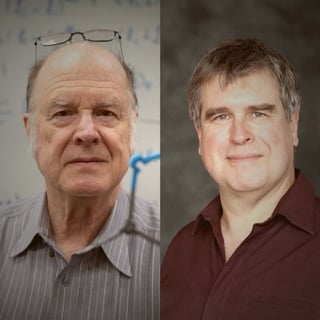
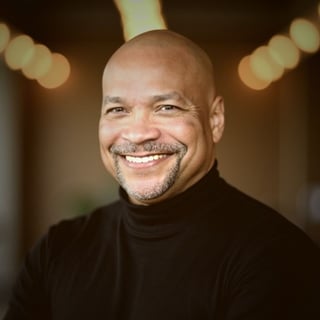
Speaker: Document editing, PDF generation, rendering, conversion, enterprise document workflows are the results of years of engineering, lots of extensive testing, and millions of real -world deployments. AI can generate a lot of code, but it can't instantly generate decades of proven document technology. And TXT, text control, gives developers that foundation so you can focus on building your application and not rebuilding a document engine. Learn more at textcontrol .com. Hi, I'm Scott Hanselman, and this is another episode of Hansel Minutes. Today, we have the pleasure of chatting with Charles H. Bennett and Gilles Brassard.
Speaker: They are the ACM AM Touring Award. winners And we have the distinct pleasure of speaking with them in association with the ACM ByteCast. Thank you both for your time and for spending it with me today.
Speaker: Um, Is it in fact true that you met each other in Puerto Rico in 1979 and that... Gilles, you were swimming and ah Charles just came up to you because he'd heard you were interested in the same things he was interested in.
Speaker: That's pretty accurate, yes. And the reason he knew that is that This took place at a conference. Um, And. In the program, Charlie noticed that I would speak and on the last day on.
Speaker: cryptography and oracles. And these were two topics after his heart. In particular, He had submitted a paper at the same conference on oracles. and his paper was rejected.
Speaker: But... He came in nevertheless. And i remember I remember he told me about the contents of that paper. Not that they've been rejected. when we met in 79.
Speaker: And I remember at the end of my talk or some so sometimes during my talk, I mentioned that the most exciting thing that happened to me at the conference. Wes? to hear about Charlie's. idea.
Speaker: about oracles. and and And I hope that there were people in the program committed there. We're gringed. uh because I was just telling them how wrong it had been in in rejecting the paper, even though I didn't know it had been rejected.
Speaker: or submitted. So you you each, correct me if I'm wrong, but you each came at this. From a different direction, you know, Charles from the physics of information, you from computer science and cryptography. Is this a situation where the difference in your backgrounds?
Speaker: is actually necessary because you can see something that you would not be able to see on your own. and But together, you're better than the sum of your parts. Absolutely. it's It's a beautiful example of...
Speaker: multidisciplinary research. and And really what we did... ah came about. from the meeting not only of two people. but of two fields. namely computer science and cryptography on my side.
Speaker: and physics and physics of information. on charlie's side it's really because These two fields met. in the ocean in San Juan, Puerto Rico. That's ah the meeting of the fields, not just of the people.
Speaker: that made all that possible. Hmm. And Charles, what did you see in Gilles that made you think? This is the person I need to talk to about this. This is somebody who gets it. Oh.
Speaker: Well. and Nothing originally. i the As he pointed out, it reminded me. Uh, uh. A paper of mine Oh. I think it was the one on on the random oracles, right? That's correct. we Yeah, so that was rejected. And that later turned into ah a... somewhat worthwhile paper, I think. with with another person whom I didn't hadn't met before going to the conference, which is...
Speaker: John Gill, who is the my co -author. But... So I told him about that, but what... The the important thing about... this meeting and then also emphasizes this.
Speaker: interaction between the two fields, which We're much more separate then than they are now. uh, is that I told him about something I had known about for, uh,
Speaker: almost 20 years. that seemed just like an interesting curiosity about the way information behaved. And he said, no, this is important. It connects with ideas in cryptography, which I hadn't heard about.
Speaker: and which So he said, irobu this This stuff that you're telling me about, if it's really true, we should write a paper about it. And so I've been sort of sitting on this thing and telling people about it. on and off isn't this interesting thing without really Taking it. very seriously myself.
Speaker: So he was the first computer scientist. If I may interrupt, if I may interrupt, sorry. uh The main reason why I was the first person to... be interested by.
Speaker: you're trying to... Tell these ideas to many people. is that all the others were physicists. The others were... for me. We're... He was saying that the others are physicists. He's saying that you were running around telling everyone about your ideas, but the... The other people I talked to, they thought it was interesting physics, but they didn't think it was.
Speaker: they They went back to their day jobs as doing other kinds of physics. Right. So bringing computer science into it. ah makes a difference. Which makes me. wonder, and I I am not a ah theorist. My degree is not in computer science, but my degree is rather in software engineering. And I struggle sometimes to bridge the theoretical to the practical. And I don't understand the leap that happens.
Speaker: or the work that happens in fundamental research, and then how it turns into something that affects my... daily life. And I know that you both feel. very strongly about the importance of fundamental research, you particularly you. You feel all that fundamental research is something that we're going to lose sight of if we're not careful. Is that correct?
Speaker: Well, not necessarily But... but it's something that has to be encouraged. Uh, and funded. Because... You know...
Speaker: innovation and and what happens in ah in practical life. is the end of a pipeline. And that pipeline has several stages in it. including um marketing, innovation.
Speaker: all sorts of things but this pipeline starts with Fundamental Research ah by which I'm in research. that is curiosity -driven. by people who have no reason to believe that it's ever going to be useful for anything.
Speaker: a research whose only purpose is to understand nature. And. And then maybe maybe it will... Remain. Sort of useless forever. from a practical earth perspective. did or maybe there would be completely unpredictable.
Speaker: application that would come up years later. And the best example of this is. the development of relativity by Einstein in quantum theory. by Bohr and others.
Speaker: in the early 20th century. These people... work. doing this research. purely Fort. understanding nature. And they had absolutely no idea.
Speaker: that A few tensi - Tens of years later, the entire society. would be completely transformed by their discoveries. We don't have computers today, I mean, not electronic computers.
Speaker: without understanding of quantum mechanics. and And in fact, quantum theory appears. in almost every gadget. Good. that you have in your in your life today.
Speaker: Out. and And again, we thought this. fundamental research. that had no practical purpose whatsoever. we would not be here today. and We will not be talking. at a distance.
Speaker: uh So. Pharma research is is absolutely... essential. Fort. for for science to continue. but also for practical applications. to follow. Sometimes, sometimes not.
Speaker: But you don't know in advance, so you have to continue anyways. I think the... The... the the Part of this that...
Speaker: I would like to emphasize is that. Oh.
Speaker: BEEP the the The reason it should be driven by curiosity. is because If you try to make the basic research discoveries that you need.
Speaker: in order to build something that you want to build.
Speaker: You will probably... Miss. What? turns out eventually to be important.
Speaker: Interesting. So in other words, you. will That's the reason that... understanding of course there are engineering problems like you you have to Yeah, I know. it IBM, one of the things that they...
Speaker: Dealt with. was so some problem of electromigration, and they solved it by using copper. with copper instead of aluminum. So there they were trying to solve a problem and they had... they There's some... applied research to solve it.
Speaker: But. the examples that Gilles gave and many others. You could say that um Number theory was invented ah by by people like... ah ah Fermat.
Speaker: Uh... and was considered long to be the most among the most useless parts of mathematics. And yet it's application. What? And it was called the Queen of Mathematics. The Queen of Mathematics. and queen made self So what why the queen?
Speaker: ah because number theory was... Very beautiful. and completely useless. So that's why they call it the queen of mathematics. and then Of course, numbers theory became central to cryptography.
Speaker: when Oracy and Diffie -Hendon were invented. in the mid 1970s. Now... it's all This is all going to fall apart. when we have a quantum computer. But still.
Speaker: for us. half a century. This useless. Number three. took center stage. to Yeah. attempts Unfortunately, vain attempts at protecting our privacy.
Speaker: Hmm. i ah I understand that both of you agree that searching for things that don't necessarily have practicality is important, simply exploring because we are exploring.
Speaker: matters. Do you think about... There's a problem and I'm trying to solve it, which is one kind of research. I've identified a problem and I'm going to work backwards from that. And then there's the.
Speaker: pulling on a thread on a sweater. Like, I don't know, I want to pull on the universe's thread and see what... What does on the other side? I'm curious, Gilles, how do you approach that? Are you more of an explorer or are you more of a solver? Both both ways, both ways. Sometimes I have a problem that I...
Speaker: find very interesting and i work and work on it and bring my students to work with them with me And sometimes we manage to find an answer, sometimes not. But at other times... for my most important discoveries.
Speaker: with Charlie and others. Um, It was good. Complete serendipity. We were not looking for anything and just fell and up fell on on our lap. like quantum teleportation.
Speaker: We were not trying to self -conduct. We're not trying to find a way to to do what is now known as teleportation because Of course that's impossible. We were working on something else. And... and the solution that came For the other problem was, oh, let's invent quantum teleportation.
Speaker: And. So complete, complete serendipity. All right. And same thing for... Okay. Quantum Cryptography It was also Senator Charlie.
Speaker: just went from up to me. and that we started talking. ah and And then we started working. having ideas on how how how to... proceed further and and get more and more interesting.
Speaker: ideas along the lines that we set up initially. Bye. But there was no... and It was not that I i thought. I said, well. Let's try to find a way to use...
Speaker: Alright. these ideas for cryptography. It, it. it we work as you As you said, putting the thread. and it it appeared by itself. is my very much rely on serendipity.
Speaker: But also sometimes... I have a pet problem, I work on it, and sometimes not very. Not so often. I get to find a solution. Um, Charles, some people have said when they have invented something, whether it be a protocol or a way of thinking, that they didn't invent anything. They, in fact, discovered it or uncovered it.
Speaker: It was kind of the theory that the information is out there. It just needs to be observed and then written down. Were you two inventing these protocols or discovering them? and That's a silly question.
Speaker: Okay. Thank you for that, sir.
Speaker: Is that truly a silly question? Is that an inappropriate question? Because I feel like if you accept the laws of quantum mechanics— it's not my It's not my favorite silly question, but...
Speaker: It's like saying... Oh. Oh, if the if if the world runs according to... laws that are mathematical. Could it be that we're just in a computer simulation of the world?
Speaker: That's not stupid. It's a question. it's It's along the same lines as whether that. the the tree that falls down in the forest doesn't make a sound unless there's somebody here it hears it Okay, I agree that the last one is silly, but not the first one.
Speaker: One of my... one of my favorite papers of mine. It is all about it. simulation question. Do we live in a computer simulation? And I'm very proud of that paper, which I published in the Proceedings of the Royal Society of London.
Speaker: Well, why why don't you just say that we will live in the equivalence class of... of a possible real world and then all of the simulations of it. And that's all we can say about it scientifically. As opposed to in superposition.
Speaker: As opposed to what? in superposition. Yeah. I do appreciate both of your your perspectives. but when i do an interview, I'm always hoping someone will say,
Speaker: Oh, that's a good question. That's a thoughtful question. right i' I think that's a silly question. You're going to get the opposite risk risk response most of the time. Well, you won't know. You don't know until you observe it. So I appreciate i appreciate your honesty in that.
Speaker: i just I'm curious, though, because there's there's an enormous gap. between the elegance of quantum information theory and its theoretical sense and the engineering required to realize it at scale. And I'm trying to figure out how that.
Speaker: how those jumps. happen. Well, I'd like to draw your attention to something else. Which is? Uh... Aside from looking at things Just because they're...
Speaker: Uh... Interesting. there's it's a Fascinating. There was something that that drew me to these questions. When I first heard about them from Mike,
Speaker: Late. a colleague and classmate. Stephen Wiesner Which... seemed intrinsically interesting. End. It caught. Gilles right away.
Speaker: Uh... Peace.
Speaker: Is. pointing to something that the founders of information processing, namely The Mishanen and Turing. Lift out.
Speaker: Mm -hmm. Of course, they they left out a lot of things deliberately. ah like whether the message was carried by punched card holes, or or radio waves.
Speaker: But.
Speaker: What? What I saw was that this example from of Wiesner. of multiplexing two messages into a form for which the receiver could receive one but in doing that with and destroy the other.
Speaker: and then of course the record could choose which one to receive nothing Yeah, could choose either one, and the even the receiver wouldn't know. The senator wouldn't know. But. Uh... So this said this seemed to say to me...
Speaker: Of course, that they... in Information... Technologists. had a tremendous chip on their shoulder. They thought they, because they had revolutionized the world, they pretty much understood everything about information.
Speaker: And this was a physicist, this this colleague of mine, who said, well, wait a minute, some of the information doesn't really behave that way. You can't copy it. or if you try to read it, it'll disturb it. And one of the things that you can do from that...
Speaker: is to put this seeming disadvantage. to an advantage by making this sort of self -destroying multiplex messaging. Of course, I guess we have social apps that... promise to erase the message after you yeah but you just have to trust them to do that Oh.
Speaker: So this, when I first heard about it, I said, you know, this is a very fascinating thing about information. I wonder if any of these information. theory theory People are interested in it. And I tried to explain it to some people. and Gilles and I are not... too much later, tried to explain it to some Ugh. Professional.
Speaker: quantum optics people And they said. Oh you know you guys just don't understand what you're talking about. So there was a bit of resistance arrogance on both sides.
Speaker: ah which we... Which... we helped overcome when we brought the two fields together.
Speaker: Hey friends, it's Scott, and I want to give a shout out to one of our new sponsors, SERP API. That's S -E -R -P API. It's a web search API that gives developers real -time structured access to search engine results. Works great with AI agents and AI assistants. I actually use it on my own personal OpenClaw instance. You've got usage for research tools, market intelligent platforms, RAG workflows, anything that needs...
Speaker: fresh information from the web. You can get your results back from the web search as clean, structured markdown, which actually uses about 50%. fewer tokens than json on average
Speaker: Very, very clean, very simple integration into your existing AI workflows. There's actually 100 plus SERP APIs that are available to you. So instead of building or maintaining, scraping infrastructure and trying to scrape the web, SERP API handles the complexity, delivers search results as structured data that your application can just use. Like I said, there's 100 plus APIs. You've got access to Google, to Bing, to Amazon, to Walmart, to YouTube.
Speaker: lots and lots of different. sources They've got enterprise -grade security and compliance, all the certifications, making it a really strong option for organizations where security and compliance matter.
Speaker: Best part? You get 250 searches every month for free. You can check them out at serpapi .com slash HanselMinutes. That's S -E -R -P -A -P -I.
Speaker: dot com slash Hansel Minutes for 250 free searches a month. I'm curious. have um been Again, I'm hoping this is – now every question is potentially a silly question, so I've got a little bit of analysis paralysis. But I'm curious, have you – now in in the 2020s spent time with.
Speaker: a quantum machine and thought back to the We were thinking about this in the 70s, 80s, and 90s, and now here I'm looking at the thing. I'm just curious about the scope.
Speaker: of this amount of time that has passed. And if you've actually been able to... spend time with physical realizations of things that you thought were theories in 1993. Well, better than that, we build a further... The theories are still there. Yeah, you sorry.
Speaker: I said better than that. Well, we've spent, both of us spend a lot of time with implementations of quantum cryptography. Of course. And with... with very the very rudimentary quantum computers that they've been able to construct so far.
Speaker: and But I think we're not discouraged that it's it's a big slog and it takes a lot of engineering work. Jill, you were going to say? Well. That not not only have we...
Speaker: been in contact with physical realizations of our ideas, but we actually built the very first prototype. for Yeah, right. for Indeed. or follow cryptography, but... Five years after...
Speaker: inventing the protocol in exactly 10 years after meeting in the ocean. Right. um And... and But other than that, we're not. I'll turn you now on. pure theoreticians. where We're not experimental physicists.
Speaker: Um, But I have kept in contact with some experimental physicists who... or Implementing these ideas and on a lower scale starting with Nicolas Gisin in Geneva. was the first person to implement quantum cryptography.
Speaker: Over it. tens of kilometers. of real distance, not just... Address it. If. a coil in This pool. with with fiber optics 10 kilometers long. But then Alice and Bob were next to each other.
Speaker: Um, But by the real physical distance, the first time was Nicolas Gisin. We did that under under Lake Geneva. to link Geneva with Nyon and later with Lausanne. Um,
Speaker: and and And more recently... and China. There's been extraordinary work. Thank you. Yeah. Practical work. ah for implementing. quantum cryptography on a lower scale.
Speaker: They have 10 ,000 kilometer of what they call a backbone. of quantum cryptography. which is fully integrated with their space version. So we they have satellites, and they can...
Speaker: do quantum crypto between a satellite and a backbone and and and back. And so... At the moment in China, it's it's ah it's amazing how how well they are. Equipped?
Speaker: in implementing our ideas for quantum cryptography. Hmm. That's 105 million users already. of quantum Right. I'm trying to Now, you were just there. Is that correct, sir? Yes, yes, yes. I i was there. a few weeks ago. That's right.
Speaker: But I did not visit their laboratories. i did It was. Oh. I gave talks and and I met... and i um i I spent... several days with that person who's Related Chief and The top leader.
Speaker: an experimental quantum crypton in the Yangui Pan. known as All right. Um,
Speaker: Sorry, I'm black here. um Doesn't matter. And. um It was very, very very pleasant. And. Very pleasant time with... Yeah, the way we discussed some of his the nearest achievement.
Speaker: but but We did that indeed. Desert. Gubi Desert Uh, riding camels. ah So so and we didn't get to actually... i didn't get to see the apparatus or and any anything But...
Speaker: If I saw it, it would make no difference because I would not understand it. where Yeah. where whether I understand the theory and and I love talking to people. Yeah. experimentalism by the theory. Right. So then like the ah the satellites, the quantum experiments at space scale, these are all 10 years old now. So these quantum key distribution experiments that were decoy state.
Speaker: Yeah. BB84 protocol were deployed. over a thousand kilometers. Oh. Well yes, that's correct. that That's right. did The first space experiment done with satellite misuse.
Speaker: It was in 2007. Teen, I think. Mhm. So yes, it's 10 years old. Um. but um but they've improved tremendously since then.
Speaker: that you've built. smaller and better and smaller. Satellites More of them. ah smaller and smaller receiving stations back on Earth. All right. and In the the original version, you would need several months to build.
Speaker: a a receiving station. Now now they they have one in a truck and they can deploy it in hours. and You can bring it anywhere you want and deploy it in hours. Oh. It's... some the enormous progress. Um...
Speaker: in the film. as there is enormous progress in this. forwarded. building a quantum computer. about which we haven't really talked so far. So quantum computers are really fascinating, but...
Speaker: But that too is... Something wish. for which there has been enormous progress, technological progress in but in the past few years. I have heard ah people, I think I would say that the rank and file software engineer, the kind of people that I talk to every day are not thinking about post -quantum cryptography, but there is a there is a ah growing group of people who have. deep concern that this is something that's going to happen and it's going to happen very quickly.
Speaker: I'm curious, where where should my... Where should I? Where should my feelings be around post -quantum control review? Somewhere between panic and enthusiasm? Or panic. a total panic.
Speaker: But. um You see post -quantum cryptography, maybe you don't know, maybe you do. the difference between post quantum cryptography and quantum cryptography. That's a great point. Very different things.
Speaker: Mm -hmm. Quantum cryptography is what's right. I invented it. 1984, 83, actually. ah by which we use a lot of physics to. Transmit or to establish. a secret key that is Uh,
Speaker: unbreakable by the laws of physics as long as as as as the apparatus is built correctly, which is not the longest thing to do. Whereas what is known as post -quantum cryptography, is an attempt.
Speaker: to ah use. purely classical techniques. to achieve the same goals. as what RSA and Diffie -Hellman and the current The current cryptographic infrastructure, which would completely fall down.
Speaker: Fall apart. When a quantum computer is available, So. People are trying to... Scramble to find... different. ways to to achieve the same. ah Benefits.
Speaker: by purely classical means, but that would be unbreakable by quantum computers. since we knew that. the current infrastructure is. It's available. The trouble with this.
Speaker: Is that? Post -clinical cryptography is... Oh. trying to build something, to design something for which we have... I've seen no idea how we can. even start to think about how to prove it's secure.
Speaker: And so all of this post quantum crypto by definition. Adam, for... My definition can be broken. again went with unlimited computing power. whereas quantum crypto cannot.
Speaker: And. Moreover, post -mortem crypto is based on beliefs it' It's really wishful thinking. that what they're inventing will indeed be. ah be unbreakable.
Speaker: with a quantum computer, what could happen is that not only is it vulnerable to quantum computer attack, It could even fall against a classical computer. Because... what is used in post quantum crypto.
Speaker: or problems ever. or sort of new. that have not really been studied for centuries. Whereas ORS here was based on factoring. which which was a very old problem, but it was good reasons.
Speaker: to believe the effect of his hoard. And a big surprise that quantum computers can... Can break that. whereas the post quantum crypto It is being developed. There's absolutely no reason to believe that any of that offers any security.
Speaker: So yes or yes? So we say not absolutely no reason. Really? Okay. Because. they They look for things that that look different enough from factoring that...
Speaker: that if, for example, And so a lot of people suspect. Oh. One -way functions still exist. ah And that so P is different from NP.
Speaker: That could also happen. We don't know. Oh. classical cryptography except for the one -time pad and quantum cryptography Are...
Speaker: are provably Insecure Yes. but may be practically secure if certain hard problems are really hard. Well, now. Factoring used to be thought to be a hard problem, but it's not hard anymore for a quantum computer.
Speaker: So... The quantum in the phrase, in the what you might call a marketing phrase, Post quantum cryptography is post quantum computer. cryptography thus post quantum cryptography cryptography. The reason. the our kind of quantum cryptography isn't a total solution is that a lot of nice things that you can do with the information infrastructure, like. digital signatures and well, especially.
Speaker: Uh... Oh. Public key cryptography, where people who don't know each other at all can can make sure who they're talking to and that they're messengers. That's harder to do.
Speaker: with. with Quantum Cryptography With absolute security. Oh, yeah? I see. Volume typography. solves the problem of secure communication.
Speaker: Yeah, that's financial communication. Does not solve. many other problems that you have That's good. Post -quantum crypto has a chance to solve, even though we cannot prove it does. But let me come back to, should we panic?
Speaker: the The main reason to panic is not what I just said. It's much, much worse. Yeah. ah but By the way, when you ask, you should pen it. I sure don't. jumped on it and said, what a good question.
Speaker: i would have That would have made me feel better at this point. Sorry I didn't say it anything immediately, but it is. So the reason we should panic, the main reason is that... It's known as the Harvest Now.
Speaker: and decrypt later paradigm. by which and Nothing prevents a... An opponent. of Intercepting all. cryptic communications that go on the internet.
Speaker: just copying them and and storing them. and keeping them at home. So all this cryptic information can be... already. as torrid somewhere. Probably is, actually.
Speaker: uh in the hands of... would be opponents who are totally unable to decrypt it. because they don't know how to break RSA yet. But... when whenever a quantum computer becomes available to them.
Speaker: They can't go back. take it all out of storage. and decrypt everything retroactively. In other words, because rsc and defiendment were essentially the only crypto tools used ever since the little padlock appeared in your browser. Toot. make you believe that it's safe.
Speaker: Ever. Almost. every communication. from that time. for tens and tens of years. was encrypted using rsc or dv henman Both of them were broken with a quantum computer.
Speaker: In other words, Um, whenever they're quite. quantum computer becomes available. Everything that has... circulated on the internet. becomes an open book, retroactively.
Speaker: And worse. There's nothing you can do to prevent it. because this cryptic information is already. in the hands of the opponent. You cannot take it away from them. You cannot. prevent them from decrypting retroactively when you have a quantum computer. There's nothing, absolutely nothing you can do. to save the past.
Speaker: All you can hope for is you have the future. by using different techniques. either quantum or post quantum crypto. and because of a post quantum crypto you also have Do you have faith? Um,
Speaker: But of course, quantum crypto also need faith. for quantum crypto to be Quantum Crypto is proven. Secure. absolutely secure events against an opponent, with unlimited computing power. and unlimited unrestricted technology.
Speaker: But it's proven secure under two conditions. What is that corner? Theory is correct. And we don't know that. ah and the other is is that it's implemented correctly. which is hard to do So an iter is perfect.
Speaker: So... if it's To paraphrase and make sure that I'm understanding, if host if post -quantum cryptography... as a software -based defense, that is going to ensure that today's classical communications will remain secure against future quantum computers, while acknowledging that there's a significant window where we weren't doing any of that. No, no, sorry. No, no, no, no, no. You know. Both quantum crypto.
Speaker: ah If we switch from... the current infrastructure to both quantum solutions. Mm hmm. Bye bye. And by the way, it would take years to do that, but if we switch today. It will not...
Speaker: in any way ensure Safety. in the future. That was my question. There's no guarantee. Nor safety of... whatever will be encrypted. between uh between that moment Mm -hmm. And we'll switch corner to... Post quantum crypto.
Speaker: ah and And a later time when Babs... someone finds how to break it. All of that can be broken retroactively in the same way. Horvath's Noun Decrypillator Paradigm. And in fact, the main advantage of quantum crypto... Uh, And my eyes is not.
Speaker: That is provably secure because it's not if it's not... able to correctly The main event of Quantum Crypto is that it's not subject. Toot. Harvest Noun. the grip later attack. If.
Speaker: and and And if it is dropper. Uh, has found a way to break into to explore it. Some. weakness in the implementation.
Speaker: which allows him to Toot. Obtain the key. without being detected. And that's not impossible because there are imperfections. in the implementation. But if an eavesdropper finds a way to do that,
Speaker: He needs to... Apply it. while the communication takes place. There's nothing left for the eavesdropper to work on afterwards. So the real... now The real thing about quantum crypto that we can be. proud of is And here I quote Norbert Luttenhaus.
Speaker: are from and What is a Waterloo? Oh. Thank you. Hey. When you use quantum crypto, End quote. Now, I quote Lutgenhaus. The key.
Speaker: will remain as safe. for eternity or forever. as it was immediately after transmission. Hmm. i see i see i really think of quantum crypto's main advantage that there's no...
Speaker: No possibility for bad people. Coop. Store anything. in order to... Decrypt later. they If they find in 10 years, they find a way. If I, oh. or there was a weakness.
Speaker: in the implementation of ah that that that these people used 10 years ago. But it's too late. No ears to that. Interesting. it makes me When you were saying that, it popped into my head that the universe has created a one -time pad for us to use, and and it will be implemented one day.
Speaker: I saw you moving there, Charles. Did you have something that you wanted to add? Oh. Well... that Actually, the most... of
Speaker: No, no, I don't think I wanted to add anything there. I was going to make a... a Oh.
Speaker: A somewhat facetious remark. So speaking of the of the. The. Uh... Panic now and decrypt later. Approach. Oh.
Speaker: One thing that we can do... about the insecurity of this stuff that's already been harvested. Of course, it can be used If... If...
Speaker: If some of our communications are of... a diplomatic or military interest. They can be used for Oh. Thank you. purposes of of national competition and security and so on.
Speaker: but they can also be used for blackmail. Like if you said something embarrassing in an email at one time. And... We can't destroy this information. Feasibly.
Speaker: But what we could do... is Oh. Publish multiple additional copies of it. so that the The price that the blackmailers will charge.
Speaker: Gets depleted by an excessive supply and you don't have to pay so much Oh. To get them to not. They have less of a, no one blackmailer can threaten you as badly. So you say, you know, why? It's going it's going to be published anyway.
Speaker: uh you know Make my day. instead of, okay, here's your money.
Speaker: There's going to be a lot of very interesting ethical and societal questions that will be explored when ah when all of this stuff happens. Uh, I'm curious. When we say that this is emergent and that it's coming soon, ah I've long felt that everything is soon. It's just five years from now.
Speaker: It's always five years from now. So just N plus five. ah Do we have a sense of how imminent? these things are going to happen? Or is it one of those things where we're going to... overestimate how long it happens and then underestimate the ah the impact.
Speaker: You're talking about having a quantum computer powerful enough to Break cryptography. and and And affect my life and the life of people who do not understand such things, but rather see its effects.
Speaker: Well, it should affect your life already. Okay. because of what I explained, even if no... First of all, we don't know. There might be already a full -scale quantum on computer. running somewhere in the basement of someone.
Speaker: ah So we don't know that. We have no way to know. That is not the case. Hmm. But as I just explained, ah Not only should you issue it already, impact your life because you shouldn't worry about what's going to happen.
Speaker: even rhetorically, sir. So nobody should just... sit down and relax and say, well, I'm going to worry. whenever it happens because then it's very much much too late It would be like... not taking care of climate change.
Speaker: and saying, oh, we're going to worry it when the earth is destroyed. Right. And of course, society would never do that. No, of course not. No. No. Goodness, no.
Speaker: um Wow. So given that the panic. Time is now. How can one use this information in their life and make good choices and good decisions so that they don't get burned later? What are the kinds of things? What is the equivalent of? you knowid reduce, reuse, recycle. when one is thinking about information science in this way.
Speaker: Got it?
Speaker: I don't have any particular advice other than just generally not saying things that you'll be embarrassed if they leak out Always good advice. Always good advice. Evergreen advice, indeed.
Speaker: Yes, sir. Well, other other than that, it's um All right. Don't blindly trust the... current infrastructure, ah Be aware that. everything you say.
Speaker: on the internet. is susceptible to becoming known at some future which... One is not clear. Bud? Um, So be aware of that and and and therefore, yes, don't say what you might regret later.
Speaker: Or else... Buy yourself quantum cryptographic equipment. to talk to your friends. Yeah, which is in my basement. Actually, I forgot to tell you Also...
Speaker: about when we'll have a quantum computer. Uh, powerful enough if there is not one already. Um, No, I'm not going to tell you in five years. But what I can tell you is that There's been.
Speaker: unbelievably fast progress technologically in the past few years. So... and this it it's It's very, very clear that nobody can... can say just close their eyes and say, oh, it's never going going to happen.
Speaker: 15 years ago. It was okay for someone to say no. There's still a few people who say that, but they're not. But you know in the last year or two, maybe three years, it does feel like we're starting the beginning of the hockey stick upwards in that space. That's right. That's right's right. that there's really been extraordinary progress, technological progress.
Speaker: ah to make us believe that it's... is coming up soon. Now, how soon, I don't want to try to predict. Yeah. Well, ah thank you both for your time and for your contributions to the space. We appreciate you very much, and and we appreciate you taking time to chat with me.
Speaker: on the ACM ByteCast. Thank you so much, both of you. Well, did you want to hear about... ah Feel part of the expression. Artificial intelligence? If you want, i know that I know that some of us are interested in the topic. I think I would be interested. Charles H. Bennett, in your perspective on... AI as it relates to it taking my job away.
Speaker: But. um I want to ground it in in in some kind of tip or facts that I can take with me into my day and how I should feel it about it. but If you have something you want to share, certainly feel free. Well...
Speaker: I think the reason this Uh... Hurts More. then when machines were able to take over other ah routine activities.
Speaker: Uh... is that People think of.
Speaker: Oh. Scientific Research And the kind of... works that like mathematicians and theoretical physicists do. trying to Prove things.
Speaker: is like the highest. The most
Speaker: intellectually challenging Humid activities. So if they. If they... If computers can do that so better, so much better.
Speaker: Then what is there left for me? Mmm. and the the The example I'd like to... Bring up here Is, is. something that comes from Computer Science of
Speaker: yeah
Speaker: Okay, yes. So, uh... So I'm going to take ah some part of of Theoretical Computer Science Which is... known to to many of the people in the ACM, but...
Speaker: but maybe not all of them. And this is what's called the theory of interactive proof. Good. This involves... ah The question of...
Speaker: questions that you can normally complexity classes like p and np and p space have to do with how much of some resource like time or space.
Speaker: ah you need to use in order to solve a problem. But this is a problem solving situation. in which a There are two participants or two kinds of participants.
Speaker: There's so ah a... Uh. Honest but limited participant. That's nicknamed Arthur. And I... infinitely wise, but completely untrustworthy participant.
Speaker: called Merlin. Like to the Merlin the mere Magician. And the idea is... Is there a way? For Merlin.
Speaker: To convince Arthur that something is true. that Arthur couldn't convince himself was true just by trying out whatever all of the tests he needs to do to find it. because it might take him Too much time.
Speaker: Now...
Speaker: Well, the the theory of interactive... Prove. Sears. There's several results in it, but One of them, one of the most famous results is that if The.
Speaker: If Merlin... and Arthur interact for a Just a polynomial amount of time. hu Then Merlin can convince Arthur. of the truth or falsity of any question That. that Arthur by himself would require polynomial space to to solve.
Speaker: Another is something that appears to include exponentially harder problems. including most of those of interest to mathematical physicists. Of course, it's an unrealistic model because it involves this character.
Speaker: Merlin, who is supposed to know everything. perhaps even the the solution to the halting problem. But... Just giving the Arthur the opportunity to talk to him and ask him.
Speaker: Adaptive Questions Where if he starts lying, Arthur will catch him within a polynomial amount of time. That gives this much greater extra power. and that A more recent result in that field, which is connected Two.
Speaker: Quantum Computing Mm -hmm is or at at least quote quantum information processing is like teleportation is that if instead of just one morelin Merlin, You have two of them.
Speaker: And they are quantum Merlins. Arthur is still classical. and still limited in polynomial time. but the quantum merlins are entangled. but not allowed to talk to each other.
Speaker: So Arthur can ask these two entangled Merlins, Questions that will trick them up if they try to lie. ah Especially because he asked them separate questions.
Speaker: and their entanglement will help them. cooperate to to in some ways, but not well enough to fool Arthur. And the result that was proven about six years ago.
Speaker: was that in this situation, These Merlins can convince... Arthur of the halting of any Turing machine. In other words, that any kind of computation that might take, you you you have no idea how long it would take.
Speaker: For example, the most sort of the simplest one is, There's an outstanding conjecture in mathematics called Goldbach's conjecture, which says that Every... Even number.
Speaker: Uh, besides two. is There's some... of Two primes. Now, you could go testing that forever, but no... They haven't found a proof of it, nor... Of course, an example of an even number that can't be made by adding two primes.
Speaker: Now... In. if In this scenario, if the If there is a negative answer, to Goldbach's conjecture. In other words, If it's false,
Speaker: Two. quantum provers. could prove it. To Arthur. in a very limited amount of time in it with a proof that Arthur could actually.
Speaker: but Believe. Neldy. The subtle interesting feature of this, or one of them, is that... Suppose that Goldbach's conjecture is true. And that, in fact, if you started looking for a counterexample, you'd never find it.
Speaker: We would say. Well... These two quantum provers They're infinitely wise, so they already know the answer to that. Can't they just tell Arthur? Yeah, the answer is no.
Speaker: There is no counterexample to call it a conjecture. No, because... They can tell, they can convince Arthur if the answer is that they're is a code example.
Speaker: But they can't convince him that there isn't because... They know the answer to the holding problem, but they're unreliable. So if they tell him the answer is no, that doesn't enable him to believe that it's no.
Speaker: So it's a very subtle thing, but what it says is, that it taking the analogy farther, back into regular everyday life is if you think. Video. Your relation to and artificial intelligence.
Speaker: is like Arthur's to Merlin. You shouldn't trust what it says, but you should trust its ability to help you. convince you of something that is true because you just have to learn to ask it questions in the right way. And I think that's what we should, the way we should approach artificial intelligences. is to say,
Speaker: We can't trust them, but they can help us because... We can figure out how to ask ask them questions. where if they they're either telling us the truth, or we'll catch them at line.
Speaker: Okay, let me add that. the invention of And. directive proofs was awarded the Turing Award in 2012. to Silvio Michelli and Chevy Goldwasser. Although it was also invented independently by Laszlo Babay.
Speaker: who did not share a Tony Award in 2012. we'll love Yeah. but But because the Turing Award was also about the cryptographic applications. Yeah. but So, well, then the IP and PSPACE was a little even earlier than that, right?
Speaker: Wasn't that Shamira or something? looked Yeah. So anyway, these this is this is a very hot topic in theory. It had to be. for that no IP equal equals PSPACE had to be afterwards. It had to be. Oh, yeah, yeah. If it were invented.
Speaker: Yeah. But I'm not even sure which order the trigger order was given though. Anyway, it it got at least one touring award. that And the and the the newer work may get another one eventually. Oh, yeah. yeah Absolutely, true yes.
Speaker: So I think that's an optimistic reason is to say, look. the the The machines are taking over. Actually, the less important part of our job and our job is to learn how to be good authors.
Speaker: And not be. fooled by these machines, even though they're that were being enormously helped by them. I don't know if either of you are thoughtful sci -fi, certainly in the space you operate in, you must have to think about such things. But when you were telling that story, it immediately made made me think of the hairy mud. episode of Star Trek.
Speaker: when ah Captain Kirk says, everything Harry tells you is a lie, no matter what. Everything he says is a lie. And then he says. I'm lying. And then the android can't reconcile the statement that he's lying is a lie. So he's telling the truth and then he explodes.
Speaker: So in that case, the humans made, they they got around the artificial intelligence by being. smarter and using the liar's paradox. Right. Well, Mike. Granddaughter's version of that is... ah
Speaker: How would... Pinocchio React If you would. Asked him if his nose was about to get longer. Ooooooooh That's a good one.
Speaker: there Well, thank you both for giving me so much of your time. You're very generous. I want to thank you both. Charles H. Bennett. And Gilles Brassard. You have a middle initial too, right?
Speaker: Me? You? No. No, okay. the That i I put, I... I did my research. A stickler about the H because.
Speaker: Charles and Bennett are very common names, and there are a fair number of other times Charles Bennett scientists. No, understood. I respect the the the middle initial Charles H. Bennett. ah And we have been chatting with Charlie H. Bennett and Gilles Bessar, the Alan Turing Award. honorees uh foundational Alan M. Turing. That's good. Touché. Touché.
Speaker: um ah for found for foundational contributions to quantum information science. Thank you both so much. Thank you, Scott. It was a pleasure talking to you. Yes. ie bye