Transcript
Speaker: I feel a little bit like last year, everyone told me that AI was going to like make me 20 % more productive. And I assume that means I would get Friday off work. but I'm assuming that you're working more than ever. So how do you... you know AI is supposed to remove toil.
Speaker: But now I can generate 10 things and they all need reviewing. yeah Yeah. How do we balance that out? Like, I know there's there's underlying capitalism and... growth, growth, growth. But. How do you...
Speaker: grow your brain and become smarter and not burn out because AI was supposed to not burn us out, and everyone's feeling pretty burned out right now. so Hey friends, shout out to Text Control for sponsoring the show. Developers are asking a new question. Do we still need third -party libraries if AI can just generate all the code?
Speaker: for common ui tasks maybe not always but deep functionality is different Document editing, PDF generation, rendering, conversion, enterprise document workflows are the results of years of engineering, lots of extensive testing, and millions of real -world deployments.
Speaker: AI can generate a lot of code, but it can't instantly generate decades of proven document technology. And TXT, text control, gives developers that foundation so you can focus on building your application and not rebuilding a document engine. Learn more at textcontrol .com.
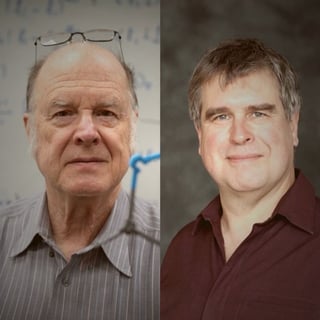
Speaker: Hi, I'm Scott Hanselman. It's another episode of Hansel Minutes. Today, I have the pleasure of chatting with Sunita Verma. She is the CTO at Ironclad. How are you? Good, very good. Thank you. Excited to be here. Yeah, thanks for hanging out. um You have been around a while, and you worked at Google for 18 years. you worked at Symantec many, many, many years ago. ah You got your master's at um UC Santa Barbara. So I feel a little bit of a kinship because I feel like we are people who have seen it all.
Speaker: But you're choosing to stick around during this AI moment and help. engineering teams navigate. Yes. And um I would say we are people who have seen a lot, maybe not all. yeah And um the reason I'm still... um i'm still in the game is i've been working in ai for many years i went through the winter i went through the phase when it was machine learning before it became deep learning before it became you know generative ai and for me um
Speaker: Given that I'm ah i'm a technology optimist and I believe in the potential of technology for bringing about positive transformation, and this is as big a transformation as we could. hope to experience in our lifetime. So I wanted to be there.
Speaker: Yeah. is it Is it hard to be a technology optimist? I'm finding a little bit. Someone called me toxically positive recently. I think is a compliment, but it may be a backhanded compliment. but like I'm choosing to.
Speaker: to in this moment where everyone's saying ai is going to ruin everything to try to be positive and say it's actually going to make things better if we decide to make things better. I agree with that framing that if we decide to make things better, and I think a lot of it is in our hands as well as to how we leverage the technology for what purposes and for what, let's say.
Speaker: end goals and this is non -difference card from any other technology curve we may have seen prior um take social media take mobile take infrastructure everything went through a similar curve so I don't expect it will be that different with this technology curve as well, although the technology itself is substantially different.
Speaker: Yeah, it doesn't feel like just another tool. Like we got. We got iPhones, we got cellular, we got the cloud. Those felt like big deals. This feels like an even bigger deal than the cloud. And that was a big deal. Yeah, and it's it's a bigger deal in my opinion because...
Speaker: The technology on the surface feels very... easy very relatable because natural language is the interface but under the hood it works really differently and that can actually result in surprises for a lot of people so It it has a very...
Speaker: I don't know what to say. It has a very weird dynamic to the technology. Yeah, I feel like one of the things that people aren't talking about is how it makes us feel. That. you know, we are talking to a big number matrix, and we're talking to math.
Speaker: but You put a voice on it or someone adds a feature in OpenAI where it... It breathes or it chuckles. or it goes um. And they're going out of their way to anthropomorphize these numbers.
Speaker: Yeah. And I feel sometimes that that's going to make people feel a certain kind of way. And particularly in software engineering teams where they might feel like, well, this thing, this person, this entity is going to replace me. It's smarter than me.
Speaker: And I... Don't believe it is smarter than us. It may know things we don't know, but I don't. I don't believe it's more intelligent than we are Yeah. So the way I, at least I have thought about it, even though I know the internal workings of the technology, the way to think about it is.
Speaker: It has been able to compress. human knowledge like whatever it has learned it has learned from us both across all the human beings that created the knowledge and across the time dimension so We as our brains, like no single human being can compress that much knowledge in their brain. So yes, in that sense, it definitely has more knowledge compressed into it.
Speaker: But intelligence part, yeah i'm I'm not so sure. And the reason is I actually came across a paper very recently. on recursive superintelligence from Tsinghua University. And one of the things they said is they were using the setup is that they were using AI to train AI.
Speaker: And one of the things they found is that AI kept optimizing within the given strategy. and didn't actually change the strategy which sort of makes sense given how it works because it has already found ah What do I say? A local optima.
Speaker: and it wants to stay in that local optima. it While as human beings, we are much more creative. We are much more sort of out -of -the -box thinkers. If we are not getting the good result given ah in a given situation, we'll say, you know what, let's just think of let's just rethink the whole paradigm itself. And that's not something that AI can do. So that's what i still that's why I still...
Speaker: associate critical thinking, imagination, creativity. with human beings. That's a great point. I think you know distillation... is different than remixing and if i get a mix tape I might make a copy of it and then it might become a less quality mixtape. But as a human, I'm going to want to remix it, change it, do something different with it.
Speaker: So I think you're right. I was giving a... session recently ah ah at a for a bunch of non -technical AI users. And I talked about... The JPEGing. of knowledge.
Speaker: right And it's like someone went, they said, oh, is all of Wikipedia in that one? file And it's like, well, no, they kind of just said. The sky is blue. instead of giving me each individual blue pixel and all the little details. it It's like we went file, save as.
Speaker: And we picked JPEG and we made a very, very small thing. We did compression. We threw away a lot. It is lossy. So then we had a whole conversation around lossy compression and it doesn't feel lossy though. And I think that's the trick. Yeah, that's the trick, exactly. I was going to say that's the trick.
Speaker: Yes. Yeah. So let me ask you this though. You, you. You know that we're in a branding moment as well, in the sense of it's fun to say AI and LLMs. have made people think that deep learning and machine learning is all just next token prediction, even though the...
Speaker: ecosystem of of machine learning and deep learning and ai in general has been around for for decades. But now that we have these. bots and everyone has stopped typing code and is now chatting with the bot.
Speaker: Is there something or anything that you... once believed about engineering organizations. Five years ago, say. that now your belief has changed and you believe something different? Yeah, one thing that has definitely changed. I'll say two things, actually. I'll say things that have changed and I'll say things that have not changed for economic organizations.
Speaker: I think what has changed is um the leverage. Basically, where engineering organizations get their leverage from. And what I mean by that is if you think about, let's say, pre -agentic coding AI error.
Speaker: In order to deliver an outcome, you needed a group of engineers. and the speed of let's say code generation and outcome generation was limited to quite a bit of extent by how How much code could people write? How much good code could people write? but code writing is not the bottleneck anymore. so that part of the leverage has shifted and that's what actually in my opinion makes smaller teams equally compelling in terms of producing outcomes as larger teams.
Speaker: What has not changed, and this is the part I actually believe very strongly about is I never thought, at least I personally never thought, engineering an job was only to write code.
Speaker: Writing code was one part of the job. The part the bigger part of the job it was... thinking about the problem. thinking about creative solutions to the problem yeah evaluating alternatives to the problem judging basically whether the solution that you've come up with is a good one or not, brainstorming the outcomes basically with different people. And I actually think with, and then obviously coding, testing, and all those things were there as well.
Speaker: and with the two tooling now in place. All those other aspects that I'm talking about have become even more important. So that part of the job maybe has...
Speaker: Change for better in in that sense for me so i think engineers who were always looking for creative ways to solve problems. They are still having a lot of fun.
Speaker: Yeah, I am having fun, but I think I'm... morning. what has been lost, but I'm not quite sure if I've lost problem solving. If I've lost toil.
Speaker: um There was an engineer at Microsoft who recently had a spicy tweet where he said that the typing part of coding is over. Haha. I see. um I think typing.
Speaker: I don't. agree with that for the following reason. you could have put a voice interface to an existing even though you know the editors are the earlier editors and If voice interface was good enough, it would have it could have taken a dictation in some sense for you and it could have written the code for you.
Speaker: But I think what has changed nowadays is the ability to come up with the code itself. through these tools. Okay, interesting.
Speaker: But then... i still People still feel like they've been they've had something taken from them. that that That I do. I do see this, you know I would say um a bimodal distribution in some sense where... There is a group of engineers who felt coding was such an enjoyable experience, and for some, it genuinely was, yeah that they miss it.
Speaker: and for others it was just a tool. and they actually enjoyed the problem solving part more. That is a really thoughtful analysis. I think you're right. And one of the analogies that I've... been testing out is I was in Japan and I got to see Japanese carpentry, thousand -year -old practice of knowing how the wood fits and they would spend months to build a house.
Speaker: But then I came back to America and I went to Ikea. And I got some shelves. for my kid to go to college. So how do I live in a world where there is both IKEA and there is Japanese?
Speaker: Carpentry. and appreciate them both and their place that they both exist. Yeah, so I think this is this is how I think about it is the craft part of basically how to bring together a solution how to construct a solution make it best i make it well optimized make it well scalable make it reliable i don't think any of those things have changed Maybe just a more...
Speaker: Make. mechanical parts of the job have definitely been changed or taken away by these tools. Um. So yeah. What? I actually feel engineers, and I'm one of those who feel that, you know, who take joy and... and um ah satisfaction in solving a problem well.
Speaker: feel even more empowered actually in today's environment. Yeah, I used to feel like I was. IO bound. Because my mind would have the answer, and then I'm just waiting for the input -output part, which was my fingers.
Speaker: And I'm curious, as a... senior, as a very as a very senior person. Are you getting back into coding? Even though you're a CTO and doing PRs, because I'm seeing more and more.
Speaker: Really good CTOs are actually doing PRs on their own teams. I am... I have... Checkmate -y. few prs as of now but i have built a lot of prototypes So I built a lot of prototypes um just to showcase the concepts that are going through my mind. And i actually similar to you, one of the things I...
Speaker: fee I felt that I had a lot of ideas in my head and I was limited by how many of them I could code. And now I can actually code many of those ideas, build those prototypes, show show it to my team that this is how at least I was thinking of solving this problem. Here, does it align with your worldview? And we are able to have a much more sort of, I would say, a much more um deeper conversation.
Speaker: Yeah. Well, I'm also finding us asking ourselves if we can build. anything. What is the right thing to build? Because I see some organizations just throwing spaghetti at the wall. Just. coding anything. I would assume in your job, deciding what the right direction to go is far more interesting than just writing everything. Exactly. Exactly. That's exactly how ah I'm using my time.
Speaker: yeah interesting so then as a crafts person Are you a tastemaker? Are you helping your teams develop their sense of code smell? and And what do you feel about junior engineers? Because a lot of juniors just came out of school right as AI happened, and they feel a little bit like... What was the point of my degree? And I'm trying to remind them that you learned how to smell and how to.
Speaker: taste during your degrees yeah and this is where actually one of the things we did very ah deliberately and very intently in ah in our in our company is Ooh. We basically said we are going to hire a combination or we're going to have a combination of senior and junior people in the team. So we were one of those companies that actually.
Speaker: Didn't say that, you know, all the entry level jobs are gone because. who will basically become you know senior engineers, principal engineers of tomorrow. those that are actually coming out of school and The two like different dimensions that I see is...
Speaker: Senior engineers or very senior engineers sometimes have a hard time unlearning. But they are the ones who actually have the strong judgment, who actually have the strong taste to evaluate the output of the AI.
Speaker: Junior engineers. are all in on all the tooling but they don't have the judgment or the if smell that you were talking about they don't have those pattern evaluations built in yet because they haven't acquired that experience So we are actually pairing people together.
Speaker: um I'm not saying that there are people who are basically not using agentic coding tools in our company anymore. So theyre no so that we don't have that anymore in our company. But I think that that pairing is helping quite a bit because...
Speaker: junior engineers are getting to learn how to spot things because AI is not the one of the things we are based One of the things I'm encouraging my team to do is always challenge AI.
Speaker: Don't take what it is saying as the ground truth. So challenge it with your, um or counter, basically counteract with your ah formulation. And this is where junior engineers can learn from senior engineers.
Speaker: And I'll give a very specific example. um One of the agentic coding tools um wrote an SQL query that was highly unoptimized. If it had gone in production, it would probably have brought our production system down.
Speaker: And the engineer reviewing it obviously had experience, understood how our production works, and is like, this is not the right query. This is not how we would have written it. and actually provided a pretty detailed review to the other engineer engineer who had written or generated that part of the code. So I think that judgment that that smell that ability to evaluate is even more important today than it was before.
Speaker: Absolutely. And I think it's important to note that The early in career people in my opinion are going to get their sense of smell from having those lived experiences from messing up production, or in this case, almost messing up production. ah And otherwise, they're not going to develop those skills ever.
Speaker: And I worry a little bit for developers that are... only have only ever used AI. have only ever talk to themselves in the AI mirror. Who is going to hold their hand and sit with them? Because we came up in a time where we were pairing with seniors. So I love to hear that that you're actually pairing people up with a formal investment in juniors because it's a rough job market out there and a lot of juniors are having trouble finding finding work.
Speaker: I know that. And by the way, like... I am very grateful that our CEO was very aligned with the strategy. And this is what I told him that this is why we are doing it. And he was totally aligned with that part. In fact, he's written some LinkedIn posts about this as well.
Speaker: I love that. I love that. I know. Hey friends, it's Scott, and I want to give a shout out to one of our new sponsors, SERP API. That's S -E -R -P API. It's a web search API that gives developers real -time structured access to search engine results. Works great with AI agents and AI assistants. I actually use it on my own personal OpenClaw instance. You've got usage for research tools, market intelligent platforms. RAG workflows, anything that needs
Speaker: fresh information from the web. You can get your results back from the web search as clean, structured markdown, which actually uses about 50%. fewer tokens than json on average
Speaker: Very, very clean, very simple integration into your existing AI workflows. There's actually 100 plus SERP APIs that are available to you. So instead of building or maintaining, scraping infrastructure and trying to scrape the web, SERP API handles the complexity, delivers search results as structured data that your application can just use. Like I said, there's 100 plus APIs. You've got access to Google, to Bing, to Amazon, to Walmart, to YouTube.
Speaker: lots and lots of different. sources. They've got enterprise grade security and compliance, all the certifications, making it a really strong. option for organizations where security and compliance matter.
Speaker: Best part? You get 250 searches every month for free. You can check them out at serpapi .com slash HanselMinutes. That's S -E -R -P -A -P -I.
Speaker: dot com slash Hansel Minutes for 250 free searches a month. um Another thing that ah you have said that is a little bit ah provocative is that you think. the team should be a little bit smaller. So you would maybe basically shard your teams. So rather than having a giant team, you'd have a bunch of little teams and then they would individually own stuff. What do you think the optimal size for an AI?
Speaker: augmented team is right now. i' I probably answered the question slightly differently. And I've been thinking about it quite a bit because I've worked in larger team environments as well.
Speaker: and What used to happen earlier was ah because of again people being the or human output being the sort of the long pole.
Speaker: um the teams were basically especially in larger companies were organized based on specializations and part of the specialization will still remain in my opinion so things like you know
Speaker: ah fault tolerance, reliability, scalability, especially because there are deployment um ah data points that need to come into picture, AI it will take some quite a bit of time to get there, in my opinion. But I think what is happening at other levels is people are able to generalize better like they're able to do more general work better and as a result you don't need some of those specialized teams that you needed earlier and hence the sizes of the teams are...
Speaker: becoming more smaller as a result of that. and Um, To some extent, it's also eliminating or reducing the communication and coordination overhead that naturally exists in a larger group environment.
Speaker: So I think I do think smaller teams um done well will have an advantage going forward. and it's sort of I'm not necessarily saying I aligned with that framing completely, but I think Sam Altman had said that, you know, one person companies.
Speaker: i don't completely subscribe to that view but definitely the team sizes are shrinking. Yeah. Another way to look at it that might be a little bit more positive is this idea of collective ownership, you know, when systems were smaller and they weren't big, giant distributed cloud systems like they are today. you know we would Talk about the full stack engineer. That was a phrase that was bandied about. And then we decided, wow, the stack is too deep. I can't possibly know the full stack. But now I feel like I can and I can have. team ownership.
Speaker: And I can also, you know, I might have in the past had ah a build server engineer or a QA engineer or a database engineer. Now I'm finding that people are more willing to jump in and say, I've never done that before.
Speaker: i'll give but I'll give it a try and I'll see if I can take on that PR. It's a little bit outside my comfort zone. And I think if we have that. that um growth mindset of learning. That I could try things that aren't in my space because the bot will be there to to support me and my team.
Speaker: And the mentors and mentees on my team are there to support me. ah you know, a smaller team can have deeper collective ownership. Yep. Yeah, yeah and we and we are seeing that in our environment as well.
Speaker: Um. Do you, do you. change this. Change the... How do you take an organization? Because we're not talking about... necessarily downsizing an organization as we're talking about changing the shape of it, because you might have hundreds of engineers.
Speaker: And now you're going to announce that you're a collection of. five person startups. does that structurally change things? And I'm curious also as a second question, is there... Are you changing titles? We're seeing more and more members of technical staff.
Speaker: It was just a way of just saying. Jack and Jill of all trades. yeah so so two -part answer to that question one we've been around for approximately i think 10 10 plus years now so there is a existing culture. um parts of which are pretty good and parts of which are basically, you know, can do with some change. And we've done that part of the change. But I think we do want to keep the good parts of the culture and good parts of the culture around collaboration and knowledge sharing and so on.
Speaker: um Part of it is we have already done changes around how teams are organized, how... Big or small teams are. um I would say... it wasn't exactly yeah easy it takes time for and it was more about shifting the metal models than any kind of let's say any and any other any other change but i think once those mental models have shifted once people have realized How?
Speaker: Working with this technology can supercharge the outcomes that they are able to do. I think the shift has been good. And yeah it took some time, but we are on the other side of it now.
Speaker: Now, I'm 99. percent sure that you're not going to tell me that productivity and AI is measured in lines of code. No, I was never a subscriber to that. Even pre -AI, I never subscribed to that. Excellent. So we agree that PRs and lines of code and all those things can be gamed.
Speaker: What is the what is the the efficiency measurement? What is the ROI? customer outcomes? Is it incidents closed? Is it time to learning? Yeah. First of all, I actually don't.
Speaker: Again, I also don't subscribe to the efficiency narrative because this is My framing, which is... efficiency narratives, you can only take them down up to a certain point because the end state is zero.
Speaker: There's no waste. Basically, there's no waste. Exactly. So I don't think of efficiency. I think, again, going back to your framing about growth mindset, I think it comes off growth, basically. And growth can be an infinite, basically, if you want, it can be an infinite play. So that's how I think we think about it.
Speaker: And. um again i had also never measured a productivity in lines of code I think what we are looking at is what outcomes are we able to deliver in a given timeframe with the size of the team that we have.
Speaker: And is that becoming better or not? while keeping in mind the quality of the outcome as well, because that's a tension side of it. you can produce all the code you want there's no restriction on that but quality of the outcome and whether it actually solves a problem for our customers is an important benchmark. so We are looking at both the outcomes as well as how much customer value are we able to deliver with a given team.
Speaker: in a given time. i pretty See, that that is a humanistic. perspective that is a you know did we make someone's life better did the product did did the user story ship And did it ship with quality? And did it ship well? you know what that's that's the That's the correct artifact, not...
Speaker: metrics and token token maxing. It's all that's nonsense. I was never into talker magazine as well. Yeah. So yeah, I appreciate that there's a productivity measurement trap also, because trying to... drive it down to Zero.
Speaker: just doesn't it's not it's not the thing and you mentioned before it's human attention ultimately is now the thing that is the most valuable i'm making code faster than i can review it And it's easy to get into the trap.
Speaker: of just saying, oh, it's fine, merge. I'm curious if you've had any challenges with that where people, I think someone called them meat proxies. where I am proxying between the AI. So you you're my boss. You ask me a question. I ask the AI and I tell you the answer. What am I for?
Speaker: yeah I actually have a joke. Maybe if we have time, I can tell you about that. but um Maybe just going back to your question. um One of the things we had...
Speaker: one of the approach we had taken right from the beginning is when we introduce ai in our software development process we'll introduce it across the board as in across all steps of the software development life cycle not just generation not just review but also in other parts downstream as well because one of the things i was very clear is you make one part faster you're going to basically create bottlenecks in other areas and that's going to happen because
Speaker: You have this bunch of machines producing corn on one side, and if you have humans, no matter how many humans you put, your not you can't outrun the machine, basically, in some sense. But I have to say, despite all our best intentions,
Speaker: And again, this is where the mental model shift takes a little bit of time. There are certain parts of the code that still get reviewed manually. and And even that is proving to be overwhelming sometimes for the team. And um we are it's a sort of work in progress on our side. We are exploring other ways in which... um code review needs to get done. And one of the approach we've been thinking about is, hey, can we take a risk -based approach to code review? That riskier parts get more eyes on them and more human eyes on them, while the more standard parts of the code can actually be reviewed by another AI and just go through. And one of the things we are very careful is we want the agent doing the review who has to be different model from the agent producing the code, because otherwise they'll introduce the same biases on both sides.
Speaker: Yeah, we've been doing a lot of multi -model adversarial reviews. I'll even take a model from three of the major models and go across Claude, GPT, and Gemini, have them all vote.
Speaker: on on on things to try to avoid any biases because we're finding... that, in my opinion, in all clawed shops there's a there's a bias and they will have um have What's the word? Blind spots.
Speaker: We do that on the eval side. So quality evals, this is how they're done. Oh excellent, excellent. um You've also acknowledged like burnout. I feel a little bit like last year, everyone told me that AI was going to like make me 20 % more productive. And I assume that means I would get Friday off work.
Speaker: but I'm assuming that you're working more than ever. So how do you... you know AI is supposed to remove toil. But now I can generate 10 things and they all need reviewing. yeah Yeah. How do we balance that out? Like, I know there's there's underlying capitalism and...
Speaker: growth, growth, growth. But. How do you... grow your brain and become smarter and not burn out because AI was supposed to not burn us out, and everyone's feeling pretty burned out right now.
Speaker: So the the way at least um I want us to think about is there is a rate of production of technology. and there is a rate of diffusion of that technology in our actual workflows, work streams across the companies where we sell and so on. And they're just...
Speaker: lot of existing um serious systems and work that needs to be taken into account and I think like, i'm again, I'm also not in one of the persons who will say, you know, AI will solve all problems. We still have to get involved. We still have to use our creativity and judgment. And I think the rate of diffusion is slower. And we have, I think eventually the pace of technology will have to may match the pace of diffusion, in my opinion. and It's a little bit. ah
Speaker: Maybe it's a little controversial for me to say that, but I think it's a bit premature to say that, you know, the rate at which the technology is getting produced will basically, you'll see the outcome on the other side from at the same rate. We are not seeing outcomes at the same rate on the other side. And there are plenty of studies that basically show whether for whatever reasons, organizational inertia, diffusion, mental model, like.
Speaker: that outcomes are not commensurate with the rate at which the technology is getting produced. Yeah. and And I think... i mean and The simple acknowledgement of that has a lot of value. saying when leadership says the quiet part out loud.
Speaker: and tells people that it's okay to feel a certain way and it's okay to like let's just focus on did we did the customer get what they needed that that makes for a healthier organization, I think. I agree. i again It's a customer outcomes that we want to continue to focus on. Yeah exactly. So there are...
Speaker: There are companies out there who are not doing anything with AI. Just as there are companies that have an immature sdlc I know companies that don't even have a formal. CICD. Yeah. And like it's 2026 and those people should be very concerned. If you were to drop into a standard.
Speaker: software engineering organization. Like, today. Like you're the new CTO, brand new, hello. here's what do we What do we change first? How do we introduce? this new moment into people who are years behind.
Speaker: So one of the beliefs I also have is um I think ah it's... Actually, two things I would say. And this is what we had done um at Ironclad. Ironclad was using the the sort of like the earlier versions of AI, not the generative AI when I landed. right And one of the things we basically, and this was a deliberate choice, again, our CEO was very aligned on this.
Speaker: Mm hmm. we will actually make it easy for people or we'll make it a choice for people to adopt the technology more as a learning and growth play we'll basically say this is a learning opportunity
Speaker: And by the way, one of the things I think you know it and I know it in the in the in the technology space, the thing that works best in technology space is adaptability. You adapt to basically the new technological moments that come in. Otherwise, you are obsolete basically at that point. I think one of the things we basically said is it's a growth opportunity. The company is standing behind the learning that we are providing.
Speaker: and that learning will help you do your jobs better. and so we basically ran actually a 20 -day program last year we I taught classes in that program because I had worked. in deeply in the technology helping people understand how to contextualize it how to contextualize it using the technology in the day to day work as well.
Speaker: And um we basically ran the 20 -day program. ahead of a hackathon that we wanted to run. and fast forward to almost whatever 10 months from that Um, we are in a very good place as a company in terms of adoption adoption has been
Speaker: pretty voluntary. And this is the the outcome measurement part that I talked about. I got the same questions from the team. I said, are you going to measure my lines of code, even though I'm not writing the code? And I'm like, I have never been a proponent of lines of code. So I think maybe TLDR of your...
Speaker: answer to your question is. I think shifting the mental model is the thing I would start with. even though it may feel like it's a slower approach. and it the returns come slightly later in the cycle.
Speaker: versus um a more approach of hate. Starting today. We are all basically shifting to AI. um Because I don't think the... mental model in a company like that, the way you are talking about. would be set to accepted in a way once you basically run the education programs or some kind of learning program.
Speaker: Yeah. I'm really glad to hear that you're so focused on education. Because I know in five years or whenever I... retire The... Early in career, people are going to be five years into their career, or they're going to be 10 years in, and they're now seniors.
Speaker: and They're going to be in a very, very different world than we are. And I hope that these systems that we leave them are. not fragile. and the organizations that we leave them are resilient and we do focus on Artificial intelligence intelligence is not intelligent and it is artificial.
Speaker: And it is here to serve us and make us smarter. So I hope that the orgs that we leave are going to be. smarter. people. i'm I'm with you, Scott, on that. And that is one of the reasons we said we want to have a mix of people in the company, people who will become, you know.
Speaker: seniors and principals and you know leaders of tomorrow. Yeah. Well, I appreciate you so much and thank you for spending time with me today. No, thank you. it was Thank you for all the insightful questions and it was a lot of fun.
Speaker: We've been chatting with Sunita Verma. She's a CTO at Ironclad. And this has been another episode of Hansel Minutes. And we'll see you again next week.