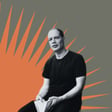
Politics Without Politicians: Hélène Landemore's Case for Citizen Rule

"How can you not be a populist in this day and age?" — Hélène Landemore
In February 2020, The New Yorker profiled a Yale professor making the case for citizen rule. Six years later, that political scientist, Hélène Landemore, has a new book entitled Politics Without Politicians arguing that politics should be "an amateur sport instead of an expert's job" and that randomly selected citizen assemblies should replace representative democracy. Landemore calls it "jury duty on steroids."
Landemore draws on her experience observing France's Citizens' Conventions on both climate and end-of-life issues to now direct Connecticut's first state-level citizen assembly. We discuss why the Greeks used lotteries instead of elections, what G.K. Chesterton meant by imagining democracy as a "jolly hostess," and why she has sympathy for the anti-Federalists who lost the argument about the best form of American government to Madison. When I ask if she's comfortable being called a populist, she doesn't flinch: "If the choice is between populist and elitist, I don't know how you can not be a populist." From the Damon Wells'58 Professor of Political Science at Yale, this might sound a tad suicidal. At least professionally. But Landemore's jolly argument for a politics without politicians is the type of message that will win elections in our populist age.
About the Guest
Hélène Landemore is the Damon Wells'58 Professor of Political Science at Yale University. She is the author of Politics Without Politicians: The Case for Citizen Rule (2026) and Open Democracy: Reinventing Popular Rule for the Twenty-First Century (2020).
References
Thinkers discussed:
● G.K. Chesterton was the British essayist who defined democracy as an "attempt, like that of a jolly hostess, to bring the shy people out"—a vision Landemore finds more inspiring than technical definitions about elite selection.
● James Madison and the Federalists designed a republic meant to filter popular passions through elected representatives; Landemore has sympathy for their anti-Federalist opponents who wanted legislatures that looked like "a mini-portrait of the people."
● Alexis de Tocqueville warned about the dangers of trusting ordinary people—a caution Landemore pushes back against, arguing that voters respond to the limited choices they're given.
● Max Weber wrote "Politics as a Vocation" (1919), arguing that politics requires a special calling; Landemore questions whether it should be a profession at all.
● Jean-Jacques Rousseau and his concept of the general will has been blamed for totalitarian impulses; Landemore rejects the comparison, insisting her vision preserves liberal constitutional frameworks.
● Joseph Schumpeter defined democracy as "a method for elite selection"—precisely the technocratic framing Landemore wants to overturn.
Citizen assembly experiments mentioned:
● The Irish Citizens' Assembly on abortion (2016-2017) is often cited as proof that randomly selected citizens can deliberate on divisive issues and rea