Transcript
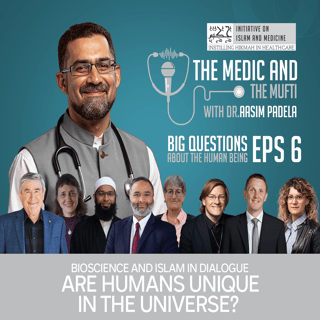
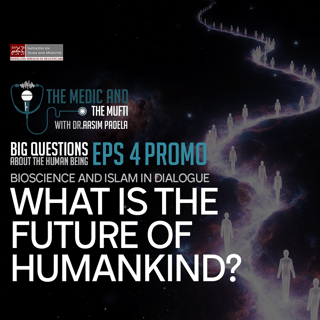
Speaker: Welcome everyone in house and around the globe to the premiere of Big Questions about the Human Being, Bioscience and Islam and Dialogue. I'm Dr. Austin Padella, your host us for today and for this series.
Speaker: And for those of you, i think 25 of you who were online while we were dealing with these technical issues, I apologize. Hopefully this recording is much better than what you heard online with all those echoes.
Speaker: Nonetheless, I'm delighted to be here with you today and to be joined by Dr. Hassan Arrozola, Dr. Raoude Yunus, as well as Kirsten Dwight, who will share a little bit about the background of this series with you today.
Speaker: It is our inaugural series, so we expected those technical delays and difficulties, but again, thank you. We're very grateful that you've brought with us. So by way of background,
Speaker: I'm an emergency medicine physician, and over the last 20 years, I've been investigating the intersection of Islam and biomedicine using theological, textual, and empirical research. This background in these two fields is what was birthed in this podcast series, where it bring together insights from the Islamic faith and meld them with understandings from bioscience.
Speaker: Indeed, that is what makes bioscience and Islam come into dialogue. So ah as for how I became a podcast pro, I'm not quite sure. i have a background in some theater in my high school days.
Speaker: And for those who listen to this podcast series, you'll see me bring some snippets from my old life from 25, 30 years ago. But for now, given that we're recording this for some preview of the podcast series that we're introducing you I will let our panelists introduce themselves and I'll pose those some questions and give you a chance to get the background story of this podcast.
Speaker: So I'll begin with Dr. Arouzullah. You want to introduce yourself, please? As-salaam wa-alaikum, everyone. My name is Asana Arouzullah. I'm a physician researcher. My primary job is in the pharmaceutical industry.
Speaker: where work to develop new drugs primarily in the oncology space. And my particular interest in this area of Islamic biomedicine really stems from my work with Dharr al-Qasim College and the Alameen Ethics Institute under the leadership of Sheikh Amin Khawadiyah, where we have a cohort of bioscientists, medical professionals that grapple with many of these big questions that we'll be talking about in this podcast series.
Speaker: And just very grateful to Dr. Asim and Dr. Radha for coordinating everything on our behalf. We're delighted to have you, Dr. Rawdia Yunus. Yunus, why don't you introduce yourself? Right. Salam alaikum and hello everyone. My name is Rawdia Yunus and I am a postdoctoral fellow at the Medical College of Wisconsin.
Speaker: I have been with this project since its very beginning, three years back in July 2022. And I'm very pleased to be we're here with all of you today.
Speaker: um
Speaker: i I don't know what else to say about myself. I was a physician before, for a couple of years back in Malaysia before coming here to join the project in the United States. And um yeah, so um I've been working with Dr. Padilla.
Speaker: I guess he will give you all of you you know a better overview introduction to this podcast, inshallah. Thank you. So let me start with the first question for you, Kirsten. You've been central to shaping this podcast from behind the scenes.
Speaker: How did you get into the podcast work and what excites you about storytelling? So um it's just really great to be here with you all and collaborating on this project has been amazing. um My start in this whole audio world was making BBC radio documentaries and my subject was around the themes of religion and ethics and more specifically how those integrated into various fields like science, culture,
Speaker: human rights, peacemaking. um And I moved on from that to teaching religious studies at the Open University ah here in the UK. It's a really large university.
Speaker: And um
Speaker: also moved into work creating broadcast and learning resources for the Open University on a range of subjects. And that led me to getting involved in intercultural dialogue with a project that we um were a partner for with with the project led by the British Council, where we had dialogue between Egyptian students at Al-Azhar University who were dialoguing with Open University students,
Speaker: on um it just themes of um citizenship and modernity and democracy. And it was very exciting because this was in the aftermath of the July 25 revolution.
Speaker: And what was the best thing about that experience was that that the preconceptions that people had of each other were absolutely dissolved so that people could find that they could come from very different religious positions, very different philosophical positions, um live in very different cultures, but yet find commonalities and respectful ways of learning about each other's experiences and each other's views. um so So that was very transformative for me.
Speaker: And the commonality, ah I guess, through all of that has been making connections. And that's where this project is is really the ah pinnacle, I guess, of that endeavour to make connections between different perspectives and actually to create connections and create new communities of of discussion and dialogue.
Speaker: What was makes this particular podcast special from other ones that you've been involved with? um How long have you got? It's been really a privilege to work on this. And i think like for me, one of the things I've enjoyed most about this is is the scope to really go into a great deal of depth.
Speaker: If you're working with a particular curriculum in a university, or if you're working even on a very in-depth documentary that is on radio or television, you've always got parameters and you know time limits and things like that.
Speaker: And um what this project gave us the scope to really be able to to go into depth with our scientists, our philosophers and our Islamic scholars and thinkers.
Speaker: um So so that was that was an amazing experience to to have that freedom really, to to go into the depth, to go into complexity, to go into nuance. um And it's also been different in the sense that it's it's um it's brought together people.
Speaker: Sorry, I've lost my thread a little bit. So yeah, it's it's different mostly in that area of depth. um But then also the collaboration that emerged was um really ah wonderful experience to be part of because when you're asking the really big questions about just even the questions of human existence on this planet, let alone what can, what does human consciousness consist of? um Do we have free will? All of these big questions that humans universally have asked, um how do you even begin to tell that story?
Speaker: And collaborating on writing, collaborating with all of our wonderful interviewees who so generously shared their time in scholarship, was really a privilege. And we saw something emerge where the the whole is more than the sum of the parts. There was there were real synchronicities there. and And that was just delightful to be able to be part of.
Speaker: Well, I think that you made that delightful, actually, by bringing these people into conversation for us. Thank you so much, Tristan. Dr. Rosala, my first question for you is, you tackled very interesting theme on whether there is intelligent extraterrestrial life.
Speaker: How did you pick up that topic? Sure, no, thank you, awesome. ah I think um a big component of that, ah where we started our project with was was with a series of big questions.
Speaker: And one of those big questions was about was revolving around the question of human uniqueness. What makes the human being unique? And i think this is a critically important question in this day and age.
Speaker: I recently became a grandfather, so I'm particularly interested in this subject when I think about my grandson, what makes him unique. I'm also very interested in the sense of there is, I think, growing in the mainstream a concept that maybe there isn't so much unique about the human being.
Speaker: um I had an experience walking into a store the other day where I dare say the section for toys for pets was actually bigger than the section of toys for children.
Speaker: and And that really struck me as really the first time that I've seen this kind of movement away from, i dare say, even the valuing of the human being in place of the of other values that have superseded it.
Speaker: We see this in terms of discussions around the planet in terms of discussions of other species. So when we took up this question around human uniqueness and how we as Muslims may bring forward our perspectives on this, it seemed like a scientific, very very real kind of concept that was related to this was the search for extraterrestrial intelligent life.
Speaker: and This is something I've been a big Star Trek fan, I'd say, as opposed to Star Wars as a kid. And I've always been fascinated with the idea that there are beings, creatures that exist outside of Earth.
Speaker: And so understanding that search, sometimes one of the ways that you understand your own uniqueness is to understand the search for something that might be similar. And so that search for extraterrestrial intelligent life seemed like a very relevant scientific topic that related to this big question um from a theological and and a Islamic perspective.
Speaker: The last thing that was very interesting is the amount of resources that we spend searching for extraterrestrial intelligent life. um We are in the midst of, I think, very important conversations society wide about where we put our resources and really delving into is this the appropriate use of resources um to build a rocket ship is it is a lot of money.
Speaker: um And is that money better spent or would you do better to give it to someone like me to search for a cure for cancer? So I think there are different ways to think about ah this scientific question, but the intersection of that with the the question of human uniqueness is really where we came about for this topic.
Speaker: so So Dr. Yunus, you were quite humble in your background. So I'd like to give you a chance to expand upon that. I mean, I know you very well for the last three years. You are individual who brings together these two universes of Islam and biomedicine. As a practicing clinician, someone who has a doctorate in public health So I'm giving you chance again.
Speaker: Tell us a little about your journey from Malaysia to the United States. And you are the glue that held this project together. So tell us or share with us an interesting story about this project now that you can reflect back upon it.
Speaker: Thank you for the kind words. Sir, can you hear me? Yes, we can. OK. So um I wouldn't say i was the glue, but I was just fortunate to be in a position where I could connect different pieces of the puzzle.
Speaker: and keep the momentum going. It was very much a collective effort, this whole project and the podcast. The journey from Lumpur to Milwaukee was really a mix of um curiosity, a leap of intuition, and I guess a bit of uncertainty as well.
Speaker: And of course, a lot of unexpected discovery along the way. So back in Malaysia in 2022, before coming here, I had reached a point where I wanted to pause and reflect on where my career was heading.
Speaker: At the same time, I was kind of searching for something that aligned more deeply with my core values, something that's more intellectually challenging as well, and something that would stretch me in new ways.
Speaker: So that's when I came across the initiative on Islam and Medicine. I think you were asking me the other how did I come to know about it? I did not know about this specific project at that time, but something with the something about the initiative just kind of resonated and I followed that intuition. i made an application and it led me to Milwaukee, to this team and to a project that, alhamdulillah, ended up being so much more than I expected.
Speaker: Thank you for that background. So share with us an interesting story. You know, everybody was involved with this project, both near and distance. So something ah remarkable that you want to share with the audience? um You mean, is it a story about how I came to Milwaukee or a story about the podcast? About the podcast itself.
Speaker: Something that was intriguing that you want to share with the audience. OK. um So I guess um maybe, yeah can I share maybe you something that really stood out that i learned from the experience of you know doing this this podcast.
Speaker: Sure, except for don't mention the technical difficulties. making about No, no, I'll put that aside for now. So I think um one of the things I want to share is that um through observing Kirsten's work and Martin, he's not here today,
Speaker: um one One very interesting that stood out to me is that developing and editing a podcast is not easy at all. It's a lot of work. and It requires a lot of creativity and imagination.
Speaker: i'm very much into arts and painting. And before I start working on an art piece, I generally spend quite a lot of time just imagining how it would or it should turn out. So I think ah making a podcast is similar in that sense. Kirsten can correct me if I'm wrong, but you kind of need to be able to imagine first before starting the actual work.
Speaker: how it should come out a camera in the end. and For example, what kind of music to use, the vibe and mood that you want to create for listeners, and the emotional journey that you want to take people on.
Speaker: So it's kind of like starting with the end in mind. You picture the finished product, and then you look backward around that step by step to get there. But of course, along the way, you know just like when you paint, you may decide to take a step back to make changes and to adjust, and that's completely fine.
Speaker: um and And I guess the second ah most important thing that but that I learned from this process is that you don't necessarily need to have that radio voice or that golden voice just to be able to speak in a podcast.
Speaker: And what I learned from Kirsten is that it's way more important to just be authentic in what you say and express. That is what makes a podcast more human and relatable.
Speaker: So for example, like when we we were trying to decide which Quranic recitation we wanted to use for the podcast, And who could we get to read out the translation, so we ended up choosing the Egyptian body shape Muhammad. mean show me and with me doing the translation, so I had initially thought that we need to we needed to get a voice that is very polished very elegant, especially when it comes to the poor any versus in his translation, but I noticed that.
Speaker: our podcast producers were clearly more interested in a voice that was, you know, just clear, simple and down to earth. So a voice that that sounds genuine, some something that the audience can relate to.
Speaker: So it wasn't really about being impressive. It was all about touching people's hearts. Well, thank you for sharing that. That's really insight and perhaps give some people out there the himma, the energy to put their own podcast together.
Speaker: So ah before we kind of close this background preview, and I invite the listeners to then go to the YouTube channel where the 12-minute preview has dropped, let me just share a little bit about the background from my perspective of this podcast series.
Speaker: And then where you can go from here, I'll ask each one of you one thing to share with the audience about what they'll get out of this podcast. The background to this project was what Dr. Rode mentioned three years ago. this is a large project bringing together a team of theologians, bioscientists, and educators to develop a novel curriculum at the intersection of Islam and bioscience, focused on the fundamental questions about the human being that this podcast is about.
Speaker: And that curriculum was put together, iterated over, ideated over, and actually implemented in Chicagoland and Malaysia and in DC with three different types of cohorts.
Speaker: High school students, college students entering the medical school phase, and medical students. And that was a project that led to these big questions that we're bringing forth to you today that you'll hear over the next six episodes.
Speaker: We actually interviewed people who are at the leading edge of the science in this area but also the theologians who were reflecting about these questions from an Islamic perspective. So this is one public engagement activity from this larger project, which has a curriculum, which has a set of teaching modules, and other material that is on the website medicineandislam.org. I invite you to look at those materials.
Speaker: But one thing I'll say now, what you'll find in this episode is that you listen to will be a little bit of quirkiness for myself and clips of movies that I like to watch. So you'll hear things from Star Trek, as Dr. Rolza mentioned.
Speaker: You'll hear clips from The Matrix. We're going to bring these things into real life by presenting scenarios that actually occurred within these popular media. And the other bit that you'll hear is that you'll hear a clinical case that starts each podcast.
Speaker: bringing the real practical questions at the bedside that influences bigger questions about human being. And I will close with a reflection on those questions, those ethical questions, those theological questions that are part of that clinical case and that the panelists will discuss.
Speaker: So that's the one thing I would tell our listeners to hold on to. The beginning and the end of each episode is you will get some clear insights of how this matters to those ah the level practicing medicine.
Speaker: But let me start back with ah Kirsten. One thing that the people who are listening in should pay attention to as is this podcast series. um i might I might be a bit of a rogue interviewee here and pick two things. so um So one of the things that was really fantastic, which which you know we didn't expect, we couldn't predict this, but these big questions, they can come across as a bit abstract and they're still worth asking and they're still exciting and fun to engage with.
Speaker: um ah But we actually had breaking science happening in the course of doing the podcast. So journalist's dream is that you suddenly have a breaking story.
Speaker: So I'll just give you some little glimpses. I don't want to do too many plot spoilers. um and But um while we were in production, there's an exoplanet with a really memorable name of And...
Speaker: and ah There was very interesting signature which um you know has some implications for how possible is it that there could be life of some form um on exoplanets.
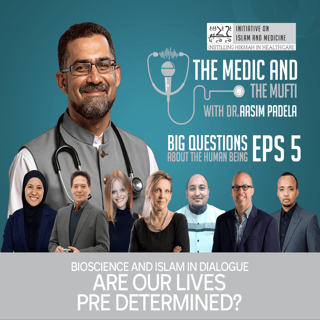
Speaker: um So you know we had a ah ah top planetary scientist come in, just break it down for us and explain it. So that was really cool. um On the issue of free will, we spoke to a researcher who who's doing a fantastic array of work and she's got some very new emerging early stage research and she was kind enough to share some of her insights that she's, um you know, getting from from this emerging evidence.
Speaker: And this is looking at really on the issue of free will, that sounds very abstract, but when it comes down to it, this is life and death staff. And, you know, she's managed to um interview people who have been survivors of human rights abuse situations, even genocide situations.
Speaker: and to start to come up with what are the commonalities of the people who um and didn't resist, didn't stand up, didn't disobey orders and what are the commonalities of the people who um didn't go along with the orders and in some cases heroically and altruistically um even rescued other people at at risk of their own lives.
Speaker: So that that really brings it home to some of the deepest questions about even just the nature of being human, the the worst decisions we can make and the best, even most heroic decisions that we can make. But what are the actual mechanisms in our brains?
Speaker: What are the conditions in our lives that are um ah forming that character that will make those decisions? So that seems but really important. And I'm really excited to see where her research takes us and I will be following her research over the next few years and then we had a very exciting another breaking research so this had just been published. um ah So Professor Ronna de Joni, who's molecular biologist, um worked with a team who found
Speaker: ah really interesting things about epigenetics and about how a response to trauma and again you know like like Dr Emily Kaspar and I also should have mentioned Professor Monica Grady um for our planet K2 18b so ah Professor Rana Dajani
Speaker: And has looked at situations where there was a massacre that people survived and then the epigenetic effects of that going down through the maternal line, through the generations. And the way that she frames that really difficult stuff is really inspiring because she frames it as resilience and as, you know, that that life will find a way in a way.
Speaker: ah so So that was very inspiring and very exciting to hear about that that um very very new research. So um that that was great and a real privilege to be able to talk to these people who are who are literally just you know making these discoveries.
Speaker: i'm But then um the other thing is that I remember there's a sort of, I heard this from a philosophy educator who, you know, we've all heard of the straw man, which, you know, you put your opponent's position, you know, you kind of give a caricature of it and then you pick it apart and, you know, you just have to ah turn your phone on in the morning and you see a lot of that.
Speaker: um And he was saying, well, we need a steel man, you know, which is, represent somebody with a different perspective, represent their arguments, represent their point of view as if it is you know the most logical, the most coherent, the best, you you represent the best of their argument. And then you say, okay, and here's,
Speaker: here's my position, here's where I agree, here's where I differ. And I really, really believe, and this is a credit to every single person who took part this project and in the podcast, that we have created, you know, steel man or steel woman, if you like, arguments in the sense of the the way that the arguments are engaged with is is this one of absolute respect.
Speaker: And even where the views are very different, that there's never a denigration of of those views and there's never a ah misrepresentation of those views. and And this is what we need in order for dialogue, for for people to really meet meet, meet people where they are, not with a sort of projected cartoon of where they are. So that those are my...
Speaker: There's many great takeaways, but but but those are two really wonderful ones for me. and And I should also mention ah my co-producer, Martin Redfern, who complements my religious studies background with a science background. So if I can make a corny joke, he does the theology and I do the theology. And that was fun.
Speaker: but Well, thank you, Kirsten. And and the listeners should perk their ears up for that dialogue. I think we need more heroism today as well. So again, this is how this podcast is actually seeing my things on the ground, a life that we're living presently. So thank you, Kirsten, for those insights.
Speaker: Talk to you about that one thing or maybe two things you want to say that people should pay attention to as they listen to. Well, I guess ah from from the perspective, Well, first of all, I'm just kind of you know working in the sort of the background. I'm featured in one of the episodes.
Speaker: Yes, but Kirsten would be the best person to to answer that. and i i would say that I want people to maybe remember after listening to the podcast that from the conversations that that I've kind of heard of, progress is not just about technology or big ideas.
Speaker: um it It essentially boils down to us caring for each other, you know, having the courage to ask difficult and honest questions. and And as Kristen said, it's very important for us to acknowledge the diversity of views and opinion with respect as we move forward together.
Speaker: ah Because at the end of the day, the future that we envision, it has to be human. So i guess that's one thing that really comes to my mind as I was, you know, going through the process of doing the podcast.
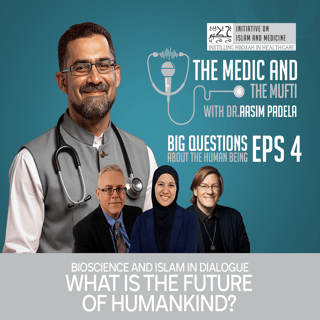
Speaker: Thank you, Dr. Roda for that insight. But some might say we have an AI feature. That's actually a topic we'll get into in the podcast. Dr. Rosalo, one thing you want to mention to the audience to pay attention to Sure. I think, Awesome, for me, it's the transition between epidemiology and epistemology.
Speaker: Awesome, you and I, we were trained as clinical epidemiologists. A big part of our understanding of science comes through the lens of evidence. and how we actually appreciate evidence, the layers of evidence, and how much certainty are we able to actually conclude with based on empirical and even rational knowledge.
Speaker: And one of the critical things that I would ask the listeners to really listen for in these broadcasts are about the epistemology of the different speakers. Really ask yourselves, what are the sources of knowledge that the different perspectives are based upon?
Speaker: And I do think this is a place where we spend not enough time in our dialogues now. It's to really understand the sources of knowledge from which people come to conclusions. And that actually is, I think, a great source of being able to appreciate why people come to the conclusions that they do.
Speaker: and where the differences exist and allowing people to be able to access those sources of knowledge. And so I think the epistemological framework, it's intended as the first chapter of the book that is kind of ah going to be speaking about these podcasts and and the content is something that I really would encourage the listeners to spend a little bit of time thinking about and reflecting on as they listen to these.
Speaker: Thank you for that insight, Dr. Arasala. So with that, that's the background to this wonderful podcast series. Whether you're in Antarctica or Australia, whether you're in the United States or Japan, I believe there's something in this podcast series for all of you.
Speaker: And whether you're from a medical student or a high school student or a practicing clinician, or a theologian. There's something in this podcast for you that will be of intriguing interest as we approach these big questions about the human being.
Speaker: Thank you for joining us with all the technical difficulties. I invite you to subscribe to the channel, and we'll certainly put on a show for you as we journey through these big questions. So in the end, thank you, audience, for joining us.
Speaker: Thank you, Dr. Rosalau, Dr. Yunus, and Kirsten for joining us virtually in studio for this preview of the podcast series. And we look forward to the feedback we got. Signing off for now. Take care, everybody. As-salamu alaykum.