Transcript
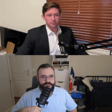
Pascal-Emmanuel Gobry: Welcome Ross Douthat to the Sphere podcast. um
Ross Douthat: Thank you. Thank you, Pascal. It is a great pleasure, as they say in your part of the world, to be a vacuum.
Pascal-Emmanuel Gobry: May we, may we?
Ross Douthat: I'm going to do this whole thing in in pigeon in pigeon French. That's that's my goal.
Pascal-Emmanuel Gobry: Yes, yes, we're going to do it in Franklish. um No, this is it's it's it's great to have you. It's great to talk to you. ah You and I have ah known each other for a very long time. ah You are one of the smartest people I know. um This is a great moment for fans of Renee Zellweger everywhere.
Pascal-Emmanuel Gobry: um i For those who don't know, Ross is a columnist at the New York Times and he You know, he has a very, very difficult job of being the only real conservative at the New Year. And...
Ross Douthat: to say? People are people. People always say that. And, you know, there's there's there's I certainly certainly many readers of The New York Times consider some of my colleagues to be real conservatives as well.
Ross Douthat: So I think I think I think and what is honestly in this Trumpian age, what is real conservatism anyway, Pascal?
Pascal-Emmanuel Gobry: yes, yes.
Ross Douthat: You know, I think I think that's that's itself ah an open question.
Pascal-Emmanuel Gobry: Well, thank you for ah thank you for bringing up our first topic. Uh, which is that, um, you know, uh, this, uh, this crazy orange guy got elected president. He got elected present president in a decisive fashion with a multiracial working -class coalition of, um, sort of traditional conservatives, but also new voters. And, you know, this is interesting and relevant because
Pascal-Emmanuel Gobry: Many, many, many years ago, you and Raihan Salam wrote first an article and then a book arguing that the natural base of the Republican Party was working class voters and not, it turns out, private equity billionaires, that they're not actually 51 % of the country, um and therefore the party should cater more to them and less to to the other. so do Do those results make you feel vindicated?
Pascal-Emmanuel Gobry: Are you crying victory? Are you?
Ross Douthat: Completely, in every in every respect. This is exactly exactly how we envisioned it happening.
Pascal-Emmanuel Gobry: Yes, it's exactly how you planned it.
Ross Douthat: It's precisely. um now i Actually, Raihan, my co -author and I, we recorded a podcast for the New York Times itself talking over sort of how how our vision has has been vindicated and hasn't been vindicated in in
Pascal-Emmanuel Gobry: Yes, they got your first draft, but now I get the ah the the better version.
Ross Douthat: in different ways. You can get the better version, right? we We worked it out. Well, you can just get my take. I was sort of trying to coax cokes a strong take out of Rahan. But no, I think i think we were we were completely correct in terms of what the foundation of the 21st century right was going to be.
Pascal-Emmanuel Gobry: which is always this way.
Ross Douthat: I think we were correct in ways that have applications in you know the United States and and Europe as well. um the The general trajectory of a kind of the emergence of a kind of blue collar right and a kind of Brahmin left is one of the fundamental realities that both political parties in the US, s multiple political parties in your beloved France um have to cope with. And so that that part that part we completely saw coming, I would say,
Ross Douthat: not just sort of Trump himself, which obviously we didn't see coming. When I talked to Raihan about this, we talked a little bit about sort of our... try We spent some time 15 years ago, 20 years ago, whenever this started, trying to imagine the ideal figure, but at no point did we say the ideal figure is going to be Donald, Donald J.
Ross Douthat: Trump, which was our failure, right? we I think there are certain, he was already, he was already famous and there were various ways in which he turned out to be, you know, precisely the right fit for this moment.
Pascal-Emmanuel Gobry: He was already famous. He was already very famous.
Pascal-Emmanuel Gobry: Yeah.
Ross Douthat: But part I think part of why we, that's right we thought it meant, we thought it meant policy proposals, Pascal.
Pascal-Emmanuel Gobry: What did he think populism meant? Was it vibes, essays?
Pascal-Emmanuel Gobry: yeah
Ross Douthat: We thought it meant, we thought it meant white papers. I mean, we did, right? I mean, that was that was that was that was the thing, right? we were you know we I grew up in the 1990s, a child of Bill Clinton's America.
Ross Douthat: And the interesting thing about Bill Clinton, looking back, was that he was, in his own way, a populist, sort of the last guy who was able to keep ah working class, lower middle class America in the Democratic tent.
Pascal-Emmanuel Gobry: Yeah, it's true. true.
Ross Douthat: And the way he did it was a mix of vibes, schmoozing, I feel your pain sentimentality, and policy. He was really good at making those things fit together to say, you know here's why here's why the Republican Party is out to take your Medicare.
Pascal-Emmanuel Gobry: True.
Ross Douthat: um I feel your pain. you know right I mean, that was that was his, he he could give, he gave up the speech he gave for um Barack Obama's 2012 renomination was this kind of masterpiece of moving in and out of sort of you know rhetorical appeals and actually using policy detail to sort of filet the Romney Ryan ticket.
Pascal-Emmanuel Gobry: Yeah?
Pascal-Emmanuel Gobry: mean he yeah He's the greatest politician of my lifetime in any country that I know at explaining public policy to the average person.
Ross Douthat: so that that was
Ross Douthat: Right. So that was what we were looking for. We said, look, the Republican Party, one, it needs more of an agenda for its actual voters, right? It can't just be the party of supply side tax cuts, now and forever, world without end. a And it needs policies that are actually suited to some of the problems created by family breakdown, de -industrialization, all of these things.
Ross Douthat: we We were always occupying an odd place where we were arguing against the libertarian right, who said everything is great economically for the working class, but also against the economic left, who said everything is terrible.
Pascal-Emmanuel Gobry: Yeah.
Ross Douthat: Our position was, everything is you know a little bit mediocre, stagnant, and and could be improved.
Pascal-Emmanuel Gobry: Right.
Ross Douthat: That was sort of our view. um And so, yeah, so we were looking, we had sort of, you know, a sketch of what that agenda should be. And we were looking for a politician who could, who could speak for it.
Ross Douthat: And I think in certain ways, you could say that um J .D. Vance, the vice president elect of the United States, is close to the kind of politician we were looking for.
Pascal-Emmanuel Gobry: Never heard of him.
Ross Douthat: And you you haven't. Yeah, I mean, he's um he was a Marine. He wrote a book. that some people read at some point and was active on social media for a while.
Ross Douthat: So those are all places you can you can look him up. But I think if you watched his his his performance in the vice presidential debate with ah Tim Walz, that was what that was what the yeah was what you know the grand new party vision was about.
Pascal-Emmanuel Gobry: Okay, well. Yes. Yes. Joking aside, yes. He had that throat. Yeah. Yeah.
Ross Douthat: You get someone who has you know working class credibility, a sort of blue collar background who you know has is capable of you know operating among the elites, but also critiquing them, who can stand up and say, here's what we're going to do about family policy.
Ross Douthat: Here's how it fits in with your challenges, middle America.
Pascal-Emmanuel Gobry: Right.
Ross Douthat: Obviously, that's not really what Donald Trump did. and and i i do think you know i was I was a never -Trump -er. I was very anti -Trump in 2016, and my view in 2016 was that he was speaking to all of the anxieties and concerns that Rayhan and I were talking about, but he was doing it in a toxic polarizing way that was both sort of bad in and of itself, but also couldn't possibly build a majority for the Republican Party. And not even though he won in 2016, I think that analysis sort of made sense of that victory, right? His victory was he didn't win a majority of votes. He maxed out Republican support among the white working class, but didn't make big inroads then among minority voters.
Ross Douthat: he He was sort of perceived as a candidate of white identity politics, and obviously he had strong economic appeals as well. But there was that quality. like This is the guy who's speaking to the white part of the middle and working class. But eight years later, um and things things look different. He has not a not a sweeping majority, but he has the kind of multiracial working class majority that we envisioned, and so toxic or not, you have to credit him with that success.
Pascal-Emmanuel Gobry: yeah i mean so
Ross Douthat: even though even though he doesn't you know even though he doesn't really want to talk about family -friendly tax policy or one whatever whatever else. I mean, what he wants, like like look, part of the lesson of 2016 that I tried to take to heart at least right was that you know there's a lot of voters in America, not just America.
Ross Douthat: There's a lot of people who don't want to be told, here's this sort of complex
Pascal-Emmanuel Gobry: Yeah, I mean, so
Ross Douthat: policy add -on to the existing policy landscape that will boost your take -home pay by $2 ,000 a year and therefore make it easier for you to raise you know to raise your kid.
Ross Douthat: People would rather hear, American factories are going to be open again.
Pascal-Emmanuel Gobry: Yeah.
Ross Douthat: America is going to boom again.
Pascal-Emmanuel Gobry: Yep.
Ross Douthat: We sold out our industrial base to China. We're going to bring it back. like People want that kind of sweeping, dramatic story. And that was a big part of Trump's success relative to the kind of reform, conservative, wonk driven alternative.
Pascal-Emmanuel Gobry: Right. Yeah, I mean, so that's... You know, looking back over the whole, and I was talking about this ah with someone recently, like somebody someday should do a like a history of the reform book, a book for five people to read.
Ross Douthat: No, no, no false, incorrect.
Pascal-Emmanuel Gobry: a But looking looking back on on this, I mean,
Pascal-Emmanuel Gobry: I, having been sort of a marginal part of that world, I, you know, I reflect so, A, there was a kind of naivete, you know, about the whole Vibes Papers questions. Like we we fantasized about guys like Mitch Daniels and Bobby Jindal, which with all due respect,
Pascal-Emmanuel Gobry: you know we're not going Put aside Trump, they were not Nixon either, if you know what I mean, or Reagan's. And we sort of didn't realize that populism had to be populist.
Ross Douthat: So, if you have any questions, Yeah, I mean i think in defense in defense of the project, right the like for instance, i I never thought that, jeb i mean one, there was just the populist vision in, after George W. Bush's administration fell apart, it just naturally fell on hard times, right? because Because George W. Bush, for all his faults, was trying to do something in the kind of populist space. That was what compassionate conservatism and the ownership society, all those things were all about. it was like
Ross Douthat: how do you do conservatism but for the middle and working class?
Pascal-Emmanuel Gobry: Yes.
Ross Douthat: And it didn't it didn't work. It ended in a housing bubble. It flopped. And so then you had this period where Republicans were just returning to basics.
Pascal-Emmanuel Gobry: yes
Ross Douthat: We're just cutting government. We're anti -Obama. We have no affirmative message. And that was the time when it was like, oh, you know, well, Mitch Daniels, at least he sounds smart. You know, at least he knows how to run the government, right?
Ross Douthat: Like that kind of thing. ah you know they There just wasn't a lot there. By the time you got to 2014, 15, and so on, I don't think... I think you like I certainly was under no illusions that Jeb Bush was the ideal tribune right for for a more populist conservatism. um may Some of us probably put more stock in Marco Rubio because he was more he was a more gifted rhetorician and had a better personal story. um But I don't look back on that era and say, oh, you know we we we were sort of convinced that we had the perfect candidate. I wasn't like wildly optimistic about
Ross Douthat: the future of conservative policymaking, I don't think in 2014 or so. um But I still didn't, yeah, didn't expect the Trumpian eruption.
Pascal-Emmanuel Gobry: neither Neither did I. ah Okay, so given everything we've just talked about, given the sort of this emerging coalition, let's not talk it let's let's not call it emerging majority yet, but emerging coalition, given who Trump is, given the direction of his cabinet, which is seems to be sort of balanced ah between the various wings of the party, like what what's next? what What can we expect from ah Trump 2 .0?
Ross Douthat: Well, I think one theory is that um relative to where we were 10 or 15 years ago, a couple of things have happened that have actually made it easier for the Republican Party to hold together both its sort of new voters, its you know multiracial working class voters,
Ross Douthat: And parts of um parts of the old country, club it's not, no and you know, nobody belongs to a country club anymore, but we'll call we'll call them country club Republicans for want, want of a better word, right?
Pascal-Emmanuel Gobry: Well, because you can't keep women out anymore, so it's the what's the point?
Ross Douthat: That's that's right. um Absolutely. That that is that is the key, the key issue. um I think the I think part of it is that The original Republican coalition, the Ronald Reagan -Richard Nixon coalition, right was created in part by failures of liberal governance in the 60s and 70s, issues of crime, you know urban urban decline, inflation, all of these things. right And when in thinking about populism and a new conservatism 10 or 15 years ago, those issues all seemed relatively distant.
Ross Douthat: America's cities were gentrifying. Crime was not as low as it could be, but relatively low. Inflation was a distant memory. And, of course, the period, events of the last, let's say, six years have brought all of those 1970s era issues back.
Ross Douthat: and so In a certain way, that's just made the Republican Party's job easier. It doesn't necessarily have to craft some ah perfectly visionary agenda in order to get a lot of ah lot of votes. It can just say, look at what the liberals have done again. right so it has it has it has that It has that going for it. There are certain ways in which you know It's just easier to run as a Republican in 2024 than it was to run as a Republican in 2012.
Ross Douthat: So that that change, you know we'll see we'll see how how long the Democrats continue being trapped in their own world of activist litmus tests and you know misgoverned misgoverned blue states and blue cities.
Ross Douthat: But that's a reality that's different than it was a little while ago.
Pascal-Emmanuel Gobry: right
Ross Douthat: i In terms of affirmative policy, I think it's really, really unclear what the what the Trump -era Republican Party wants to actually do.
Ross Douthat: It's clear who it wants to represent, right? It wants to be representative of a larger group of people than the Romney -Ryan Republican Party, and that's how you have
Pascal-Emmanuel Gobry: Right.
Ross Douthat: you know, for instance, the the Trump cabinet, right? it It doesn't just add diversity of various kinds by having Tulsi Gabbard and Robert F.
Pascal-Emmanuel Gobry: Yes.
Ross Douthat: Kennedy Jr. representing, um you know, I think we can call them sort of various views that were fringe in American politics, more associated with the left, anti -war politics, you know sort of crunchy holistic critiques of the medical establishment.
Pascal-Emmanuel Gobry: Yeah.
Ross Douthat: Those are now inside the Republican tent in some strange way, right? and But we don't know what that means yet. We don't know you know. There are things robert kennedy Robert F. Kennedy would like to do about public health that you know ah a libertarian Republican would hate and oppose right so it's unclear exactly how that cashes out but similarly on economic policy this you know you have you have a republican party that on the one hand is still still very much the party that wants the stock market to go up it wants to be
Pascal-Emmanuel Gobry: Right.
Pascal-Emmanuel Gobry: yes
Ross Douthat: It's certainly not going to be raising taxes anytime soon. It wants to extend the original tax Trump tax cuts, which were you know sort of creative in certain ways, but still more an extension of traditional Republican tax policymaking than anything all that novel.
Ross Douthat: um But then you know trump Trump picks for his labor secretary, one of the most pro -labor Republicans in the House of Representatives, to to howls from um ah other parts of the right.
Pascal-Emmanuel Gobry: Yes. Yep.
Ross Douthat: right So he wants
Pascal-Emmanuel Gobry: Grover was not happy.
Ross Douthat: Yeah, he want he wants some kind of representation for teamster republicanism, whatever that means, right?
Pascal-Emmanuel Gobry: Yeah. Yeah.
Ross Douthat: And then he's got, as his vice president, Vance, who, again, what Vanceism cashes out and specifically is unclear, but clearly it's substantially different from whatever Paul Ryan wanted to do in 2016.
Pascal-Emmanuel Gobry: Yes.
Ross Douthat: But I just think it's really up for grabs. I think if you wanted to make a story, if you wanted to tell ah a optimistic story, and I'll probably write something about this at some point soon, but you you would say, look, there is a sort of a new fusionism might be possible on the right that brings together basically the fancy and desire to sort of protect and uplift the working class and the American heartland with the Elon Muskian desire to build big, deregulate and go to Mars.
Pascal-Emmanuel Gobry: Yeah.
Ross Douthat: Now, ah so in in an ideal world, you get a conservatism that fits those two things together somehow that is more attuned to um sort of maintaining an economic foundation underneath blue collar America.
Pascal-Emmanuel Gobry: Yeah.
Ross Douthat: but also is not just trapped in a kind of populist nostalgia politics, right which is which is, I think, clearly clearly a potential trap.
Pascal-Emmanuel Gobry: Yeah.
Ross Douthat: You need the musky and dynamism as well. But can those two things fit together perfectly?
Pascal-Emmanuel Gobry: Right.
Ross Douthat: It's it's hard to say. you know if musk just If Musk's like project for government efficiency It could be incredibly successful, or it could just be sort of like, you know, Tom Coburn, the Republican senator from Oklahoma, listing, like, right, like, let's make fun of 0 .0001 % of the federal budget and not actually do anything to reform the rest of it.
Pascal-Emmanuel Gobry: Yeah. Woo. They spent $20 ,000 studying the sex life of raccoons.
Ross Douthat: So it I think it's all very up in the air right now.
Pascal-Emmanuel Gobry: Yeah.
Pascal-Emmanuel Gobry: Okay, ah so you have not one, but two books coming out to just every every one of us feel bad.
Ross Douthat: Neither, no, you don't you don't need to feel bad, but neither of them are about domestic policy.
Pascal-Emmanuel Gobry: ah
Ross Douthat: Thank God.
Pascal-Emmanuel Gobry: Yes. So, uh, we had the requisite chat about domestic policy, but now I'm going to talk about what's actually interesting, which is your, uh, uh, okay. So let's start with the real book,
Ross Douthat: Wait, which is the real book?
Pascal-Emmanuel Gobry: which, which is the real book.
Ross Douthat: the the one that's The one that's being published between covers, right? yeah Yes.
Pascal-Emmanuel Gobry: Yes, exactly. Exactly.
Ross Douthat: Yes.
Pascal-Emmanuel Gobry: the The one that my grandmother would call a real book.
Ross Douthat: Yes.
Pascal-Emmanuel Gobry: Um,
Ross Douthat: um Yes. so that So I have a book coming out in February, um which is relatively soon, that is called Believe, Why Everyone Should Be Religious.
Ross Douthat: And it is essentially my attempt to do for do for religion
Pascal-Emmanuel Gobry: Well, because otherwise Project 2025 will throw them in in a prison camp.
Ross Douthat: That's right. it is it is actually the the The third chapter is called Building the Republic of Gilead, ah one you know one one step at a time. um No, it's sort of a it's a book that my theory of our cultural moment is that there is a kind of opening for religious arguments in much the same way that there was a big opening for militant atheist arguments 20 years ago. And so I'm essentially trying to step into that opening with a book that is um in certain ways, it's my most liberal book, I think, in the sense that it takes a very
Ross Douthat: ah very open approach to religion. It's trying to offer very general forms of encouragement to the kind of people who sort of hover on the threshold of religious practice.
Ross Douthat: um And while it does end, the final chapter is about my own Christianity and makes a case for Christianity. It's not a sort of, you know, Catholicism is the one true faith kind of book.
Ross Douthat: It's much more a, you you know, you should
Pascal-Emmanuel Gobry: It's a generic dazed book.
Ross Douthat: You should you should try to be religious. You should join one of the major world religions. And it's very American in that sense.
Pascal-Emmanuel Gobry: It's a very American book then.
Ross Douthat: Yes. And just making the attempt is worth a great deal in the eyes of God, even if you don't get everything right. So that's you know, that's that's a liberal.
Ross Douthat: That's kind of a liberal sentiment. um But it's also very, you know, it will be perceived as.
Pascal-Emmanuel Gobry: Going back to your walkthrough. but
Ross Douthat: Sorry.
Pascal-Emmanuel Gobry: Going back to your West fruits, it doesn't doesn't matter what you believe as long as you believe in something.
Ross Douthat: that's That's right. going Going back as long as you believe in something. um it didn't know it doesn't It doesn't go that far. It has
Pascal-Emmanuel Gobry: Okay, I'm mucking you, but I mean, you know, the the the the ah ah the Catholic Church rejects nothing that is true and holy in other religions. there's there's some it's not you know from From a Christian perspective, it's not wrong to say that every religion has some sort of, I don't know if the right word is validity, but sort of ah wisdom and so in that sense, i'm you know I'm making jokes because that's what I always do, but I'm not um im not hostile to it. what i I guess the question I'm groping towards is it is why why is that the argument? Why did you choose to go with that argument rather than the sort of more big athlete argument?
Pascal-Emmanuel Gobry: Is it just publishing industry economics or?
Ross Douthat: i No, I think it's partially the sense that so part of the book, the initial claim of the book is a very strong one that I think a lot of people are not accustomed to, and by people I don't mean our friends in traditional Catholicism, ah but normal people um who, you know, i i keep having people I keep having people say to me after I, you know, they've they've seen something about the book and they'll say something like, oh, this so this is a book about how, you know, you should just try practicing a faith and then, um you know, and ah in practicing it, you will discover
Pascal-Emmanuel Gobry: Yes. The normies.
Ross Douthat: the deeper truths of that faith, but you don't have to fully believe in God to start practicing the faith. So it's sort of a, you know, the idea being it's a sort of religion is useful useful before it's true. and And that's not what the book is doing. The book is saying that, in fact, there are certain basic but substantial features of the religious perspective on the world um that you can assume are true before you start practicing a religion. And these don't extend all the way to um the dogmas offered in the catechism of the Catholic Church, but they do include um things that
Ross Douthat: Again, sort of normal people in the broad Western intelligentsia have a really hard time with, like not just you know that God might exist, but that the supernatural is probably real, that you know you people there is almost certainly life after death, there are heavenly and hellish possibilities available, these these kind of things. right that i think indeed
Pascal-Emmanuel Gobry: we're We're going to do the UFO podcast later.
Ross Douthat: The UFOs are really only a footnote in the book to to people's disappointment. That will have to be the next book. I have to figure out what the UFOs are before I write the UFO book, I'd say.
Pascal-Emmanuel Gobry: you You should, you should co -write it with Tucker Carlson. I would.
Ross Douthat: Yes, yes. Well, if he figures it out, then then we can then we can then we can do that.
Pascal-Emmanuel Gobry: You could, you know, okay. So you should go together on a road trip. to try to figure out and film yourselves as you're doing so. And that would be, that would be an outstanding.
Ross Douthat: that's that that is I will I will talk to the Times about that idea and see maybe we can do a Tucker Carlson media New York Times UFO I think I think that no I think that could be that could sort of define American media for the 21st century um
Pascal-Emmanuel Gobry: eight times slash tucker calls the network so lab
Ross Douthat: Yeah, but yeah, so i'm it's sort of, so, you know, C .S. Lewis wrote a book called Mere Christianity, right?
Pascal-Emmanuel Gobry: Yes.
Ross Douthat: And that was written at a time, he was a Protestant, but that was written at a time when Christianity was, you know, to him it seemed much weaker than it had been in the past.
Pascal-Emmanuel Gobry: He was a Protestant, so.
Pascal-Emmanuel Gobry: Right.
Ross Douthat: But to us, Christianity at the time he wrote, that seemed much more culturally potent, certainly certainly institutional Christianity.
Pascal-Emmanuel Gobry: Yes.
Ross Douthat: So there is a way in which what I'm doing here is sort of mere religion, right but um which is again a sign of you know how far we've fallen even from even from Lewis's point.
Pascal-Emmanuel Gobry: Yes.
Ross Douthat: But I also think that that there is a...
Pascal-Emmanuel Gobry: Yes, good point.
Ross Douthat: you I'm trying to get... to get a certain kind of reader to accept or entertain a set of premises that are actually sort of more radical, given their presuppositions, than the further further steps into the specific dogmatic claims of my own church. And I think that's enough for this this book. Again, it ends with with some pro -Christian propaganda, um but i think it would be I think it would be enough to try to convince someone that you know the things that the big religions are arguing about are really important to argue about because the things the big religions have in common in their beliefs are broadly true.
Pascal-Emmanuel Gobry: Okay, so those things are life after death, the supernatural.
Ross Douthat: the universe The universe is a created thing. The universe was created for a purpose.
Pascal-Emmanuel Gobry: Yeah.
Ross Douthat: We human beings, conscious life, have some very important role to play in that purpose. The universe is not just a big cosmic randomness.
Ross Douthat: I mean, I'm arguing against You know, in in part the sort of default assumption that um that the perspective of modern science has revealed human beings' insignificance.
Ross Douthat: I am specifically arguing that, in fact, the combination of what we know about the fine tuning of the universe and the role of human consciousness, its ability to understand the universe and so on, all point to
Pascal-Emmanuel Gobry: Right.
Pascal-Emmanuel Gobry: right
Ross Douthat: a central role for human beings, even if we are on a small planet in a vast galaxy. that That's not the only indicator of relevance and centrality. I think we have pretty strong indicators.
Ross Douthat: um And then I'm arguing, yeah I'm arguing with um Hume among others about how we should think about supernaturalism and the plausibility of the supernatural.
Pascal-Emmanuel Gobry: Hate that guy.
Ross Douthat: I think i think we've i think we've just learned, I think we've learned a lot though since the 18th century about where where religious experience, spiritual experience, where it comes from, right? If you go back and read Hume, there's this sort of assumption that, okay, yes, you know, there are religious experiences, people have them, but really, most people believe in the miraculous and the numinous because their priest told them to, because there's some cultural accretion of myths and legends.
Ross Douthat: people
Pascal-Emmanuel Gobry: It's a very English book.
Ross Douthat: It's a very English book, but it's a very late 18th century book. It's like, okay, we've lived under the rule of priests for so long.
Pascal-Emmanuel Gobry: Yes, yes.
Ross Douthat: Now we're getting out from under that rule. And once we do, people will stop believing in this supernatural. And that's just not, you know, now we have 200 years of data since then that shows that
Pascal-Emmanuel Gobry: Any day now, any day now.
Ross Douthat: You can, well, you're right. You don't, the reason that people believe in the supernatural is that people have supernatural experiences and they keep on having them even if they aren't living in a medieval Catholic village where they're taught to believe.
Pascal-Emmanuel Gobry: Even if they themselves believe that such experiences are not possible.
Ross Douthat: Even, even then. Yes.
Pascal-Emmanuel Gobry: Yes. All right. I, mean I, I, I, I approve of the book and, and, you know, I, when, when it's out, I will tell everyone, I know all of my, uh, whatever a thousand followers on Twitter, my 12 best friends to, uh, to buy it.
Ross Douthat: The important, well, I think i think the the hope, the commercial hope, right, is that it becomes a book that nice Christian grandmothers buy for their you know surly teenage grandchildren just before they go off to a godless university in the hopes of you know keeping them keeping them religious.
Ross Douthat: If it's ah if it's a big bestseller, that's that's the key and's the key demographic I'm going for, yes.
Pascal-Emmanuel Gobry: Right.
Pascal-Emmanuel Gobry: Right click to demo. Well, you know, boomers are dominating, you know, they're going to keep ruling us forever. So they're also the book market. They're the TV market.
Ross Douthat: They're there. They're they keep their undoubtedly keeping the print book market alive and we will all authors will be sorry when the boomers are gone.
Pascal-Emmanuel Gobry: They're the voting market.
Pascal-Emmanuel Gobry: They're there. That's true. ah All right. Next book.
Ross Douthat: Yes.
Pascal-Emmanuel Gobry: Uh, I'm, I'm, you know, I'm running, uh, I'm running a commercial show here at Daft that we have a schedule. All right. So, uh, okay.
Pascal-Emmanuel Gobry: So, uh, it's called the Falcons children. It's on sub stack. Uh, it's very well written.
Ross Douthat: so So less, less a book, less a book, one might say, than an experiment. Yes.
Pascal-Emmanuel Gobry: Well, it's, a I mean, serial publishing of books is, you know, has a great tradition, like all of Balzac's Earth was serially published and and many other great writers.
Ross Douthat: Mm -hmm.
Pascal-Emmanuel Gobry: um
Ross Douthat: Yes, no, I it is.
Pascal-Emmanuel Gobry: it
Ross Douthat: I am I am much like Bowser and Dickens. I am I am the yes. So this is an experiment. This is a novel. It's a fantasy novel.
Ross Douthat: It is like all proper fantasy novels. The first book of a trilogy. I'm not writing it and publishing it. I had already written it. So I'm honing it and putting chapters out into the world and um I would like to say that it is a you know that this is that I am pioneering a new form of commercial publishing that will revolutionize the publishing industry. But ah the reality is that I would have happily published this with a major fantasy publisher and they you know they they declined. So here here we are, right? um And it's fun. I mean, the the truth is that, you know as you know, having
Ross Douthat: labored in the vineyards of opinion journalism in your own way for many years. It is really nice to do kinds of writing that are not just focused on on policy, as important as policy is, which is why everyone should subscribe to policy sphere.
Pascal-Emmanuel Gobry: Right, right
Pascal-Emmanuel Gobry: Right.
Ross Douthat: But um but yeah, I'm i'm I'm enjoying the experiment. I don't have any intense expectations for what what it will become.
Ross Douthat: um Although i am I do have to decide, actually, based on you know interest, subscriptions, these kinds of things, whether I could just have enough of a readership base to go ahead and write the sequel immediately.
Ross Douthat: um that that is's one of the well you i Otherwise, I'm George RR Martin.
Pascal-Emmanuel Gobry: Well, you have to now because otherwise, you know.
Ross Douthat: No, I know. but i think
Pascal-Emmanuel Gobry: Exactly. ba v don't Be Don't be George Martin, be Balzac.
Ross Douthat: Yes. Right. But the truth is that I have um five children and various various professional obligations and It's easier to go ahead and write the next book if you have a if you have at least if you have at least a thousand paying subscribers clamoring to read it.
Pascal-Emmanuel Gobry: if that if there's If there's a financial incentive to get it, yes.
Ross Douthat: um But and the French and then it has to be translated.
Pascal-Emmanuel Gobry: Yes, yes. and so
Ross Douthat: What would it be? be laenfant de falcon What is falcon? Falcon? Falcon.
Pascal-Emmanuel Gobry: so
Ross Douthat: fa um let fond de for con Right.
Pascal-Emmanuel Gobry: not from focon
Ross Douthat: so So it has to be translated en français as well.
Pascal-Emmanuel Gobry: yes
Pascal-Emmanuel Gobry: Well, of course, it's the language of civilization. So, you know, if that goes, you know, otherwise it's not real. So I should say I've, I've read the first three chapters. I believe I want to read the others. I, I think it, I've really enjoyed it. I want to read the rest just because I like it and not because, uh, can you give me a moment?
Pascal-Emmanuel Gobry: ah There will be editing. My dog is... All right. I was just saying before ah before my beautiful dog started acting out, I was just saying that ah I really enjoyed ah reading the book, which is relevant for several reasons. First of all, I don't like fantasy as a genre. So, you know.
Pascal-Emmanuel Gobry: Uh, I wouldn't say that if I didn't really, really like it. Uh, it's infuriating because I, you know, you're already the best prose writer I know in nonfiction.
Pascal-Emmanuel Gobry: So it's really infuriating to find out that you're also an excellent pro stylist in fiction and narrative fiction, which is different. So that's, that's, it's just, it's just, you know,
Ross Douthat: But surely it's on sub -stack, Pascal. So that that can you can temper you can temper your your fury at my and my my all -around excellence with that knowledge.
Pascal-Emmanuel Gobry: well no but i so as ah as the
Pascal-Emmanuel Gobry: Well, no, as ah as a you know as an appreciator of the craft and as an occasional craftsman myself, it's very, very frustrating. um I guess you know the reason why I'm interested in talking about the novel is why is it that attracted you to fo to fantasy as a genre? And why are there so many conservatives writing fantasy books in their spare time? Because you're not the only one, and I think you know you're not the only one.
Ross Douthat: I mean, I think this the second question is easy to answer that, you know, a fantasy is a is a genre that is set in a imagined past um that tends to be occupied with um sort of the transitions back and forth between modernity and pre -modernity, between enchantment and disenchantment. Those are all, I think, generally interesting topics, which is why part of why I'm interested in them, but they're obviously of special interest to conservatives, right? The you know the running joke that all
Ross Douthat: All young conservatives are either you know radicalized by the fantasy novels of J .R .R. Tolkien or the fantasy novels of Ayn Rand. right is is you know there's There's profound truth to that.
Ross Douthat: i I always find it in a way more interesting that fantasy has so many left -wing and progressive fans. I think if you look if you if you look um you know ah both around the broad landscape of
Pascal-Emmanuel Gobry: so Yeah.
Ross Douthat: um American culture, ah but also just if you wander through, do you are there Renaissance Fairs in France, by the way? I know i know that there's like the you know the theme park in you know somewhere in La France Proffonde that has you know sort of jousting.
Pascal-Emmanuel Gobry: Yeah. Yeah.
Ross Douthat: and right but But are there Renaissance Fairs?
Pascal-Emmanuel Gobry: yeah yeah
Ross Douthat: Is there a French equivalent to that American custom?
Pascal-Emmanuel Gobry: Well, I mean, I'm sure there must be. ah We had...
Ross Douthat: I guess you just have fares. There's no need there's no need to pretend. It's like you know farmers farmers bringing their goods to market somewhere south of Lyon.
Pascal-Emmanuel Gobry: Yes, we have actual fairs. So by my um I can talk about this because as you know, my mother is now a public figure as a member of the French National Assembly.
Ross Douthat: Yes.
Pascal-Emmanuel Gobry: And like one of the reasons she became locally famous is because she would do events and fairs to promote like local agricultural produce and and things of that nature. And the last one she hired, um I mean, not hired, but brought a group of Gaulish reenactors to like recreate a a Gaulish village ah off to the side of the fair between the parking lot and the
Ross Douthat: So this this is like Asterix and Obelix kind of like, okay, yes.
Pascal-Emmanuel Gobry: Yes, yes. but they they And they were they're real, you know, they're real everyday people. And what they do on the weekends is they, you know, reenact a period accurate, Gaulish village life. And I didn't know they existed. Once I found out I was, you know, over the moon, they they take They're very ah careful about doing things in a historically accurate way ah you know the the the the women we leave the men ah forge and ah so presumably there are also medieval Renaissance early modern.
Pascal-Emmanuel Gobry: ah i i wouldn't I wouldn't be surprised at all if there was Imperial, if there were people reenacting, you know, Husser charges and Asterlets, so.
Ross Douthat: Right. Presumably, yes.
Ross Douthat: Right. Well, right. The Napoleonic, I mean, yeah, I would assume that there's amazing Napoleonic yeah reenactments of some of some kind that it can't just be you know can't just be American. But ah my point was, if you go to an American Renaissance fair, and we you know there's one in Northeastern Connecticut, the this the state this the American state where we live, and which we've taken our kids to on several occasions, and you look around the crowd there, it's not a crowd that I would assume is breaking hard for um Republican presidential candidates.
Ross Douthat: right
Pascal-Emmanuel Gobry: they'rere They're not national review and first thing subscriber.
Ross Douthat: so that they're they're not right. so So that in a way is the thing to be explained, not why there are a lot of conservative writers who secretly would like to imitate J .R.
Pascal-Emmanuel Gobry: Right.
Ross Douthat: or Tolkien, but why there is this, the the breadth of the appeal of fantasy, but also sort of the particular appeal um to people who have politics quite different from Tolkien.
Ross Douthat: Now, if you go back to the 1960s, the hippies loved Tolkien, right? There was a whole
Pascal-Emmanuel Gobry: Sure.
Ross Douthat: you know, led Led Zeppelin sort of in back back, you know, back to the land, like there's ways in which environmentalism clearly fits in quite
Pascal-Emmanuel Gobry: And the hippies are Megan now, so it's all, it all,
Ross Douthat: Right, the hippies are magga. Yeah, so it all it all so it probably probably I'm going to go back to the Renaissance Faire, and it's going to be all, you know, make yeah um right um make Aragon great again.
Ross Douthat: ah right the you know make ac I shouldn't say, ah make aquitain make Aquitaine great again.
Pascal-Emmanuel Gobry: With Numenor great again.
Ross Douthat: Right, no, make Numenor great again. Well, they did that a little bit in the terrible, terrible Amazon tolkien adaptation ah where they were trying to portray the internal politics of Numenor and they had um you know aggrieved workers complaining about like elf way elves elves undercutting their wages or something like that.
Pascal-Emmanuel Gobry: Yes.
Ross Douthat: So you know be careful what you wish for.
Pascal-Emmanuel Gobry: I saw that clip, yes.
Ross Douthat: um But yeah, I think fantasy, you know in a way, if you wanted to push things a bit further, you could say that the two the two books that you're asking me about do share a similar preoccupation in that I think that the um religion and religious arguments are interesting. They're always interesting, but they're especially interesting right now because you do have a sense of sort of you know the kind of secular um ah ah Sort of plastic sheen over the world cracking up in all kinds of ways and weirder weirder things are sort of creeping back into Western life um For good and ill it's not all it's definitely not all good. But so fantasy is a genre that is preoccupied with those kind of Issues and moments like is magic still here can magic return right like, you know, what what is the line between?
Ross Douthat: the modern and the pre -modern, the enchanted and the the disenchanted. So in that way, writing about religion and writing a fantasy novel where um you know the realm of fairy is sort of breaking into a more prosaic medieval reality, and they're sort of the same book maybe in the end.
Pascal-Emmanuel Gobry: yeah
Ross Douthat: I don't know.
Pascal-Emmanuel Gobry: ah No, well, yeah, okay. oh
Ross Douthat: not they're They're not the same book. And there's i'm not writing I'm not writing an allegory for the Trump era by by any stretch of the imagination. But there i don't think I think there are connections between the cultural landscape of the cultural landscape that we're heading into in the Western world, which I think will be weirder and in certain ways more supernaturalist, and the preoccupations of the fantasy genre, definitely.
Pascal-Emmanuel Gobry: Yes.
Pascal-Emmanuel Gobry: I mean, so I'm, I'm just sort of like being, I mean, I don't know if devil's advocate is the right, is the, is the right a phrase, but, um,
Pascal-Emmanuel Gobry: You could equally argue that, you know, I don't know. i This is just me just not liking fantasy as a genre.
Pascal-Emmanuel Gobry: Like I liked and read The Lord of the Rings and that's it.
Ross Douthat: This is just me
Pascal-Emmanuel Gobry: And I'm also enjoying yours, ah mostly because it's very well written and I want to and i want to know what happens next. um
Pascal-Emmanuel Gobry: i you know you could you could write You could write historical fiction, or you could argue that you know conservatism is ah belief in right reason, um belief in ordered cosmos, and that you know woo -woo stuff.
Ross Douthat: But go on, yes, yes.
Ross Douthat: Right.
Pascal-Emmanuel Gobry: seen broadly um is the domain of the cultural left. I mean, that's not that's not very true in this ah current cultural moment.
Pascal-Emmanuel Gobry: um
Ross Douthat: So right so my belief is that my my personal belief is that Woo -woo and the supernatural is only really interesting and credible if it belongs to a some kind of ordered cosmos.
Ross Douthat: not that Not that the order is something that is going to be completely accessible to us, right? by By its nature, the supernatural order is not accessible to us in the way the natural order is through scientific investigation.
Pascal-Emmanuel Gobry: Right.
Ross Douthat: um But I am against the conceit that says to be religious, to be supernaturalist, to believe in spiritual realities is to set empiricism aside and to just sort of embrace vibes to go back to where we started, feelings, woo -woo sentiments.
Pascal-Emmanuel Gobry: Right.
Ross Douthat: I think that you know and fifth fantasy, it's not just vibes.
Pascal-Emmanuel Gobry: Did you think fantasy was just vibes? Well, no, it's not.
Ross Douthat: Well, no, this is why Tolkien cast such a long shadow over the genre, right? It's precisely that he was a philologist.
Pascal-Emmanuel Gobry: Right.
Ross Douthat: He was you know a systematizer, a creator of languages you know on a scale that
Pascal-Emmanuel Gobry: Right. Right. Right. He built the entire universe before adding the stories and the characters. And so it feels profoundly, not just real, but ordered.
Ross Douthat: Yes.
Ross Douthat: Ordered. Yes. And that is something that I think different fantasy writers wrestle with.
Pascal-Emmanuel Gobry: um
Ross Douthat: It's really hard to match Tolkien in world building.
Pascal-Emmanuel Gobry: Yes.
Ross Douthat: You can rebel against, you know, you could argue that one of the, and people have argued this, right, right -wing critics of George RR Martin have argued. that one reason Martin has been unable to finish A Song of Ice and Fire, the saga that's the basis for Game of Thrones, um is that he wanted to rebel against Tolkien in certain ways by rejecting the sort of, you know, fundamentally Christian vision of the cosmos that Tolkien had.
Pascal-Emmanuel Gobry: Yeah. yeah
Ross Douthat: But then having done that, he had no way to actually end his own saga because he was still working with the same basic ideas. He still had, you know, for all the shades of gray and blood and sex and gore in Martin's books, you still have good guys and bad guys.
Ross Douthat: You still have a supernatural enemy lurking in the frozen north.
Pascal-Emmanuel Gobry: Right. Right.
Ross Douthat: Right. And and Again, I don't think this is the only reason he can't finish the series, but I think there is sort of a problem of
Pascal-Emmanuel Gobry: Maybe also because he's extremely rich.
Ross Douthat: it's He's extremely rich. He lives in the Southwest, which deadens. I think the yeah the you know the it's it's where great artists go when they've finished doing their best work.
Ross Douthat: D .H. Lawrence, Cormac McCarthy, all these people. um No, I don't know.
Pascal-Emmanuel Gobry: You have to be in wanted New England.
Ross Douthat: this is ah That's just something someone said on said on Twitter. I don't know if it's true. I don't want to cast aspersions on New Mexico. um but But he's he's ah Yeah, he he wants to do subversion of the kind of order that Tolkien had, but he can't figure out how to do that and still land the plane, right?
Ross Douthat: Bring the saga to a conclusion.
Pascal-Emmanuel Gobry: Right. Right.
Ross Douthat: So in that in that sense, I would be... And again, this applies to both fantasy novels and to religion. I am a defender of the idea that if something is real,
Ross Douthat: even if it's not fully comprehensible by human beings under our current limited conditions, it does have to make sense.
Pascal-Emmanuel Gobry: Right.
Ross Douthat: And this is similar, you know my other recent book that I wrote about my my struggles with Lyme disease and chronic illness and so on, also had that sort of theory running through it, right?
Ross Douthat: That I wandered into some really strange territory trying to get better from this illness. But even while I was wandering in that strange territory, I did still want the weird things I was doing to make sense.
Ross Douthat: Like if some alternative medicine worked, I wanted to know why it worked.
Pascal-Emmanuel Gobry: yeah
Ross Douthat: um And I thought, you know, even if I couldn't fully understand it, because who can master the intricacies of your own immune system? The idea that it should make sense, that it shouldn't just be woo and vibes and so on is important to me, I think.
Pascal-Emmanuel Gobry: Yes. I mean, you are a writer of the overlap between the natural and the supernatural. I think that's that's fair to say. I think that's a theme running through your your entire writing. So in that sense, it makes sense why you would write ah a fantasy ah novel.
Pascal-Emmanuel Gobry: I'm just curious about the, you know, I mean, maybe this is just me being an ornery old man, which is my privilege as a conservative to just be ornery about certain things. But, you know, you look, so to to to bounce off what you were saying about ah Martin, like one of the great inspirations for his work was the series, The Accursed Kings by Maurice Drouin, who was himself a conservative.
Ross Douthat: Yes.
Pascal-Emmanuel Gobry: ah and a hero of the of Free France. And the books are historical novels. they are They're novelized tellings of actual real world historical events in 14th century France. And um well, if, you know, they have also their share of like sex and, you know, Machiavellian intrigue. Hello.
Pascal-Emmanuel Gobry: And ah this is authenticity. we're we're We're bringing authenticity into the podcast. Yes. Hello. um And, you know, all of that. And it ends in a satisfying way because, you know, the ending is in the history books.
Pascal-Emmanuel Gobry: um
Ross Douthat: Right. Well, so that's I think you can argue this both ways. But I think clearly part of the appeal of fantasy, not the supernatural part, but just the Machiavellian part that Martin does in Game of Thrones is having that kind of story without one with the author having a little more freedom because you get to make up what happened and also with the reader having a little less knowledge.
Pascal-Emmanuel Gobry: Right.
Pascal-Emmanuel Gobry: Right, right.
Ross Douthat: Like people love novels, you know, about the, you know, Anne Boleyn and Henry VIII. Every time I wander into a bookstore, there's you know six new novels about the tutors and their you know their intrigues and so on.
Pascal-Emmanuel Gobry: Right.
Pascal-Emmanuel Gobry: Yeah.
Ross Douthat: But you know in the end, like we know we know who died, who was beheaded. You can cheat a little and have some...
Pascal-Emmanuel Gobry: Right.
Ross Douthat: You you can write alternate history too. um I guess I think an open question is, you know is there more fundamentally, is there more creativity in inventing your own version of the medieval world where it's sort of open -ended and there's more narrative possibilities? Or is that just sort of, yeah, a form of ah form of laziness masquerading as creativity? And in fact, the greater artists are the ones who accept some boundaries set by what actually happened in the world and tell their stories
Ross Douthat: within them and within them. And I, you know, again, I like fantasy, so I'll defend the creativity involved. But it is also the case that the fact that Martin and couldn't end his saga is not a big advertisement for that approach.
Pascal-Emmanuel Gobry: the Right.
Ross Douthat: And I think that there is a way in which There is definitely a way in which not only Martin, but a number of the most successful contemporary fantasists have tended to get lost inside their worlds. And Robert Jordan, who was a bestselling fantasy author I read as a teenager, um he he didn't have writer's block like Martin.
Ross Douthat: he But he did his he just he kept writing more books, and his world kept sprawling more and more, and then he got cancer and died, and the books had to be finished by ah Brandon Sanderson, who is now himself a bestselling fantasy author.
Pascal-Emmanuel Gobry: Right.
Ross Douthat: But that you know that was a case study where the first the first four or five books of martin saga i sorry if Robert Jordan's saga were terrific, and then you got to like book 10 or 11, and you were like, well, is this ever going to end?
Ross Douthat: um There's a writer who I i don't
Pascal-Emmanuel Gobry: Right.
Ross Douthat: uh, particularly, uh, like, but, um, who wrote to, um, what, what, what are those? But see, I'm, I'm even blanking on the name. Anyway, there, there are other.
Ross Douthat: There are other fantasy novelists currently hanging around who have some big unfinished sagas. And then you have examples where they were finished and they just weren't very good in the end.
Ross Douthat: And so i think I think you could certainly fold that pattern into a version of your grouchy historical realist critique, right?
Pascal-Emmanuel Gobry: Yep.
Ross Douthat: And say, I think you could frame it this way. You could say, yes, there are some big narrative possibilities available to fantasy novelists that aren't available to historical novelists.
Pascal-Emmanuel Gobry: Right.
Ross Douthat: and at their best, you can do some really impressive things in that zone. But the temptation to never, you know, to just to never, you know, to never finish that is is a real one.
Pascal-Emmanuel Gobry: Right.
Ross Douthat: And sometimes you're better off just knowing that, OK, you know, by 1570, the Reformation has just started, right? Like, you you know, you you have historical fiction imposes on you and and limits, as conservatives all know, are good for creativity.
Pascal-Emmanuel Gobry: Right. Right.
Pascal-Emmanuel Gobry: Indeed. Well, i guess I guess we have to end here as your time is very precious.
Ross Douthat: Well, I think we've it's precious, but but we've really covered you know we've we've covered everything, right?
Pascal-Emmanuel Gobry: We've covered everything. they There's no...
Ross Douthat: The past and future of the Republican Party. What do you think?
Pascal-Emmanuel Gobry: Yes.
Ross Douthat: Wait, no, Pascal, what do you think is going to happen? We'll we'll end with me interviewing you for a moment.
Pascal-Emmanuel Gobry: Okay.
Ross Douthat: What what do you think the policy agenda of ah the trump and the second Trump administration and the Republican Party is going to be?
Pascal-Emmanuel Gobry: Uh, I think that, um, I think there's going to be some, if, you know, gun to my head forecasting, I think there's going to be some deportation of like the worst criminal elements, but it's not going to go further. Um.
Pascal-Emmanuel Gobry: I think the tax bill will mostly be bad. ah I think they're going to bring back salt. um i what i'm
Ross Douthat: good Good for those of us in Connecticut, it must be said. and says my you know i It's a win -win with salt.
Pascal-Emmanuel Gobry: i mean that's that's That's the priority. you know We need to get the we need to get the Connecticut voters. that's That's what really matters. um And what I am interested in and hopeful on is ah trade policy and administrative state reform. ah and I think the people working on that ah are good. I think the appetite.
Pascal-Emmanuel Gobry: and the sort of political capital for it is is is is strong enough that I think probably something is going to happen. I don't know exactly what, ah which is, you know, you have to subscribe to PolicySphere to find out as I do from ah my yeah my exclusive sources, but ah there you go.
Ross Douthat: You do. You do. you
Pascal-Emmanuel Gobry: That's my answer to your question.
Ross Douthat: OK.
Pascal-Emmanuel Gobry: Very very unprepared and very...
Ross Douthat: Sounds good. Because you're talking, well, you're talking to you know Vice President Vance every day. So i I rely.
Pascal-Emmanuel Gobry: yeah
Ross Douthat: I rely on you to know what is coming. If not now, then certainly four years from now.
Pascal-Emmanuel Gobry: and not And not just him.
Ross Douthat: um No, not now.
Pascal-Emmanuel Gobry: i have I have many sources in Capitol Hill and the government.
Ross Douthat: No, I mean, you're also ah you're also talking to, ah RFK jr. Every day policies policy sphere is brought to you. It's brought to you by um
Pascal-Emmanuel Gobry: Well, I mean, he could certainly like, I mean, if, you know, if you wanted to make, to give maha a kind of substance, uh, I think that copying France would actually be like a pretty good on, on, on a lot of agricultural and like food regulation stuff would actually be like a pretty good, uh, pretty good guideline.
Ross Douthat: Yes, no. I mean, that that that was always the destiny. ah American populism would end would end with a Kennedy implementing French agricultural policy.
Pascal-Emmanuel Gobry: with with a kennedy making america like man
Ross Douthat: I mean, this is this is one of the yeah this is the the the fundamental reality of um not just American, but certainly American politics over the last 15 or 20 years are surprises that you know require you to be amused to some degree by them, I think, in order to just
Pascal-Emmanuel Gobry: And to believe in the supernatural.
Ross Douthat: and to believe that Providence is steering all of this for the amusement of the thrones and dominions high up in the angelic choir. So anyway, Pascal, this has been a pleasure.
Ross Douthat: Thank you so much for having me.
Pascal-Emmanuel Gobry: With that, thank you very much for ah for doing this. And ah happy Thanksgiving since ah this is being recorded and just before Thanksgiving and it's going to air in a couple of weeks.
Ross Douthat: Oh, abs just before. That's right.
Pascal-Emmanuel Gobry: ah But yeah, thank you very much for doing this.
Ross Douthat: It was my pleasure. Talk to you soon.