Transcript
Speaker: Welcome to Voices in Pharmacy Innovation, the podcast where we spotlight bold ideas and groundbreaking practices that are transforming pharmacy practice and healthcare care delivery. I'm Dave Dixon, professor and chair at the Virginia Commonwealth University School of Pharmacy and core faculty member of the Center for Pharmacy Practice Innovation.
Speaker: In each episode, we'll sit down with pharmacists, healthcare care leaders, and changemakers who are rethinking how pharmacy can improve patient care and push the boundaries of what's possible in our profession.
Speaker: Together, we'll share stories, explore new models of practice, and amplify the voices driving pharmacy innovation forward.
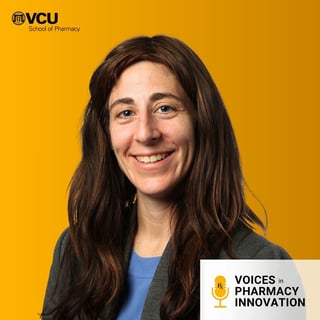
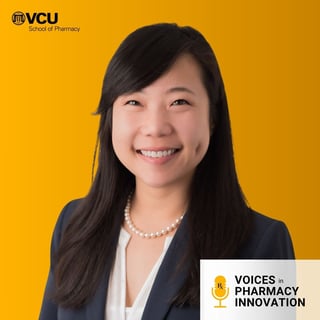
Speaker: Today, I'm really excited to have our very own Dr. Teresa Salgado with us on the podcast. Dr. Salgado is an associate professor in the Department of Pharmacotherapy and Outcomes Science at VCU School of Pharmacy. She's also the director of the Center for Pharmacy Practice Innovation, which of course is the sponsor of our podcast.
Speaker: Her research interests focus primarily on how pharmacists can improve medication use and health outcomes, as well as on interprofessional collaborative models for delivering healthcare. She's doing some incredible work here in Virginia, helping us understand the prevalence and impact of pharmacy deserts,
Speaker: as well as improving the implementation of statewide protocols and billing. Over the last decade, nearly one in three pharmacies in the United States has closed, leaving almost half of all counties as pharmacy deserts.
Speaker: At the same time, states have expanded pharmacists' scope of practice, authorizing services such as tests to treat for infectious diseases, and creating new payment pathways for these services.
Speaker: So on one hand, pharmacists are being asked to do more than ever, On the other hand, there are fewer pharmacies and fewer resources to do the work. That tension has made implementation incredibly challenging.
Speaker: That's why we're excited today to have Dr. Salgado with us to help us understand how the profession is responding and what solutions are emerging. Welcome to Resetting.
Speaker: Thank you for having me. I'm very excited to be ah here in our podcast. Yeah, I, you know, we thought about having you on as the very first guest, um but I think this is a good point in time to have our center director on. So thanks for joining us. And before we jump into learning more about your work, ah tell our listeners a little bit more about your background.
Speaker: Yeah, so I am a pharmacist by training. I graduated with my master's in pharmaceutical sciences from the University of Lisbon in 2008. I worked as a community pharmacist a little while, and then I went on and completed my PhD at the University of Lisbon as well in 2013. Then worked as a hospital pharmacist for a year and a half, and I guess I realized that my passion was in academia, and so I wanted to come back. I came to the University of Michigan for a postdoctoral fellowship.
Speaker: And um that was 2014 through 2016. And then joined the VCU faculty as an assistant professor back in December of 2016.
Speaker: So here we are today and very excited about this trajectory and very excited to be here at VCU and leading the center. Yeah, well, we're happy you're here too. And, you know, I think it's interesting, you as well as a couple other guests already have talked about sort of, you know, a circuitous path to where you are today and kind of getting a taste of different aspects of pharmacy before kind of landing where you want to be and what was the best fit for you. So i think that's a good thing for our students or other trainees that might be listening to the podcast to take away that you don't have to have it all figured out right away.
Speaker: yeah Absolutely. And that is something that I usually remind the students that, you know, you think your passion is in one way. and And I thought my passion was really being a hospital pharmacist. And then when I became one, I realized, no, no, academia is really my forte and where I thrive and and where I am really happy and feel 100% fulfilled. So, yeah. Excellent.
Speaker: all right, well, let's jump in. So from your perspective, what has been the biggest consequence of widespread pharmacy closures for patient access and public health? Yeah, so pharmacy closures really across the country, it's a nationwide issue, have resulted in the rise of what has been termed pharmacy desert. So very pretty similar analogy to the food desert nomenclature that we've heard before. And so these pharmacy deserts are areas where access to pharmacies by the populations is really ah compromised.
Speaker: So pharmacy deserts are really not just prevalent in rural areas or remote areas as one might, you know, conceive. ah It really also happens in urban settings, especially in areas with a high proportion of minority residents, uninsured, those on ah Medicare or Medicaid only, and low socioeconomic status.
Speaker: So we see in both areas. and And really the implications for patient access and and public health is, first of all, you have decreased access to a highly skilled healthcare professional. The pharmacist is an expert on medications, an expert on chronic disease management. And really, they are, you know, that almost like the the the first point of contact with healthcare care that you can have.
Speaker: So in addition to losing access to this highly skilled healthcare professional and obviously the ability to ah feel your medications, but there's other services that are provided by pharmacists beyond medication dispensing that also disappear when a pharmacy goes away, when a pharmacy closes. And so these include vaccinations as the probably the most well-known by the community, but other services like test-to-treat, for example, Being able to be ah tested for streptococcus and understanding if you have strep throat and being able to be prescribed an antibiotic on the spot or a UTI or influenza. So um services like that. And then also point of care testing for cholesterol or glucose or insulin. even taking your blood pressure if you don't have a monitor at home. But then, you know, since 2020 in Virginia, there have been a number of statewide protocols approved for other things, such as contraception, emergency or regular contraception. ah The naloxone, we already had a statewide standing order.
Speaker: ah But things like HIV, PEP, and PrEP. So there have been so many there having so many protocols approved that... All of these services can be right now provided in community pharmacies. And when a pharmacy closes, those are ah lost as well.
Speaker: And so, you know, the literature is is ah starting to emerge with the consequences for public health of pharmacy deserts. And we see that this has been associated with lower receipt of influenza vaccines or ah higher risk of COVID-19 infection. So those um studies have been conducted.
Speaker: Obviously, you know, from a medication adherence perspective, there have been studies as well showing that after a pharmacy closes, medication adherence decreases and and and sort of the ability to fill ah prescriptions also decrease.
Speaker: And so those are, you know, big implications from a patient access and public health perspective. Yeah, thanks for that great summary. And, you know, we've certainly seen this firsthand in Virginia, right? And even here in the greater Richmond metro area, a number of pharmacies have closed, and particularly in the east end of our city, we have one lone pharmacy that fortunately has recently been acquired by our v by VCU Health System in order for it to stay there as ah an integral access point for care. And I think, as you mentioned, it's really important
Speaker: about providing access. And this is stemming from kind of a a multifactorial issue, of course, one of which is a decline in the access of primary care and primary care providers. We have an aging population. And so, yeah, I think this is definitely a critical issue facing not really just our profession, but the healthcare system as a whole.
Speaker: Yeah, absolutely. Absolutely. So as I mentioned in the introduction, states are rapidly expanding pharmacist scope of practice. We have many states now that have passed legislation for statewide protocols, even more advanced prescriptive authority.
Speaker: But we also are seeing this trend of more and more pharmacies closing. So how do you kind of reconcile those two trends? Yeah, that is a great question. I don't know if I have the best answer to that question, but it's it's definitely a big conundrum that pharmacies are facing now. um I think, you know, states expanding pharmacy scope of practice really stem from a recognized need.
Speaker: Oftentimes, the areas where we see the pharmacy deserts are also healthcare provider shortage areas. And so ah really the need for pharmacies to have a more prominent role in those communities in in sort of providing some of this primary care, ah you know, first-line acute treatment or even chronic disease management is is a real need. and And definitely, I think pharmacies have the skills to step up and and provide those services.
Speaker: Now, I was ah preparing for this podcast and I noticed that last month there was a qualitative analysis published in Jaffa and that really ah examined through focus groups the impact of pharmacy closures. And they divided into like four categories, communities, pharmacy operations, job experience and patients. So for the communities, the pharmacy deserts are really harming local economies and And they complicate workforce recruitment beyond, you know, the the pharmacy industry. um In terms of pharmacy operations, something that we don't realize is when when a pharmacy closes, then the the other pharmacies that remain, maybe one, will have to take over all of those additional patients and prescriptions. And so that really increases the prescription volume.
Speaker: Which, you know, can be a good thing. But if your staffing remains the same, then you have, you know, you have a problem where you have a lot of work and then the same staff. And so staffing challenges also arise.
Speaker: And so, you know, an operational stress ah is sort of created in those remaining pharmacies. And then, you know, obviously this will have consequences at the staff level in terms of emotional and psychological, you know, well-being and stress and burnout. So I think these are consequences that we sometimes forget to see, right? In addition to the consequences to patients in terms of, ah you know, increasing their wait times and disrupting continuity of care. Sometimes some of the pharmacies may not be a part of their pharmacy preferred networks for their insurances.
Speaker: And so it has so many layers of complexity, this problem, that, you know, sometimes we think only from the patient perspective, but then it's it's compounded to affect some other areas. So just to go back to your question, which I did not forget, ah when we talk about the impact of pharmacy closures on the existing pharmacies,
Speaker: This can also prevent the expansion of services of the statewide protocols and the adoption. So in a steady state, we already see pharmacies and pharmacists having a hard time implementing new the new statewide protocols as part of their regular workflows, let alone when you are facing the consequences of pharmacy closures around you.
Speaker: And really, you're almost struggling to, you know, to keep your operations. So, you know, it's it's really tricky. And definitely there is a need for the expanded scope of practice. There's a need from the community. We need to figure out the best way to incorporate that in our workflow.
Speaker: But the pharmacy closures are also putting a strain in the remaining pharmacies, which can prevent the adoption of these new pharmacies. you know protocols and and ah additional services that can be provided through them.
Speaker: Yeah, I think that's a great summary and some great points. And you know pharmacy, the profession can certainly advance forward while same is simultaneously dealing with some of these other issues, right? And ah one of the connecting points is In many cases, there may be an expansion of pharmacist scope of practice, but that doesn't always guarantee that the pharmacist or the pharmacy is going to get reimbursed or or paid for those pharmacy services, right? So that's certainly one of the the practical barriers. and And I'd like for you to dig into that a little bit, but also ah give us a sense of what other practical barriers may prevent implementation of services like test to treat or point of care testing.
Speaker: Yeah, absolutely. So we have conducted research in this area within our center, and that was part of one of my former students' PhD dissertation. We conducted two qualitative studies, one examining the contextual factors affecting the uptake of statewide protocols, and the other one affecting the uptake of Medicaid billing, right?
Speaker: And I say statewide protocols because some of the test-to-treat services are under those statewide protocols. And so just thinking more broadly about the the statewide protocols. So we've seen from our research that workforce integration can be a major barrier.
Speaker: And then, you know, obviously with the need for additional or structuring the staffing structure of the pharmacy, whether providing more um autonomy to pharmacy technicians to release a pharmacist to perform some of those duties or, ah you know, hiring additional pharmacists.
Speaker: So I think that is something that, you know, pharmacists will have to figure out. Obviously, this comes with the time constraints and and some of the operational pressure that, you know, especially those working in the community pharmacy ah space that is associated with the chains, they face it more so than those working in independent community pharmacies. But, you know, those are some of the practical barriers to the uptake of of of the state-wide protocols. In some cases, access to clinical data for PEP and PrEP, for example, access to clinical data, laboratory data can also be a challenge, right?
Speaker: And then, of course, you mentioned a payment, which, ah you know, since the early days of pharmaceutical care and figuring out how to incorporate all of this, we talk about payments in all these different countries, Australia, Canada, United States. ah Right now in Virginia, in 2023, we passed legislation mandating Medicaid to pay for pharmacy services under state-wide protocols and ah collaborative practice agreements. And so that really helps us to open the opportunities for really billing Medicaid for some of these services.
Speaker: I don't know if people know, but we do have provider status under for the commercial payers. We just don't take it not not take advantage of it. But I think it's more complicated than it, you know. On paper, it looks great, but then when you try to implement it's not Yeah, it's like a lack of structure to be able to actually do it. Yeah.
Speaker: Yeah. And so um really, I think now this opens up the opportunity of really billing Medicaid and and getting something started and demonstrate some of the the ability and some of the value of us providing those services and billing for it.
Speaker: Now, there are some barriers associated with that. First of all is really training in medical billing. Our pharmacists, and and I know that the professional organizations, several of them are pushing, you know, strongly to train some of the pharmacists and and and offering programming around medical billing.
Speaker: ah We also in the schools of pharmacy are looking to incorporate that as part of the curriculums. So that's one aspect. The second one is really the upfront costs of the medical building software.
Speaker: So we learned in our qualitative um you know work that that can be expensive and and hard to justify when you're just trying to to keep your pharmacy afloat. um And then, you know, you need personnel to deal with the claims that have been denied, which is something that as we learned that from the pharmacist, you know, in the field, it's like, oh, I guess, yes, I guess we need to prepare for that. And I was recently last weekend at the VPHA, Virginia Pharmacists Association, annual meeting and and was able to hear firsthand from some of the pharmacists trying to implement this and and how they manage the claims denials and and sort of that ah behind the scenes that need to happen.
Speaker: And it was really, you know, humbling to understand, well, OK, this is it's more complex than it seems. For sure. Yeah. So, yeah, and then the other one, the other aspect is really the complexity of getting credentialed with Medicaid and the MCOs to be able to bill for services. And so ah it's hard for a busy pharmacist to sit down and figure out you know, all of this on their own.
Speaker: So, yeah. So these are some of the barriers. um We always think about the pharmacies and the pharmacists when we talk about barriers. But one thing that is important is that we need to think that from a patient perspective, we need to make sure that the patients are aware that these services are being provided or can be provided by the pharmacists.
Speaker: ah in in their, you know, local community pharmacy. So I don't know if we need what perhaps we need, you know, to raise awareness just the same way that we did for immunizations, ah maybe be creating some campaigns. But then again, we can only do that when the services are actually being provided and adopted in like clinical practice.
Speaker: Yeah, i think that's a great point about the patient perspective. And once again, you know, pharmacy as a profession, we've always struggled with communicating our our message in terms of what we do and our role in the healthcare care system. And so there's certainly an opportunity there. And i think that's a really great point.
Speaker: So I want to transition to talk a little bit about your work ah here in Virginia in trying to help overcome some of these barriers and honestly just give you a chance to toot your own horn for some of the work that you've been doing ah through the center. And so tell us a little bit about some of the programs or initiatives that you're leading to help pharmacists adapt and succeed in this environment and overcome some of these challenges.
Speaker: So in response to the findings from our two qualitative studies, and I think specifically to address the issue that came up with the complexity and and where to begin when getting credentialed with Medicaid and the MCOs, we developed a toolkit that's formally designated – it's a mouthful, get ready – Virginia Medicaid Pharmacist Provider Enrollment Guide. And this was developed in conjunction with several of our partners, including Dimas, our Virginia Medicaid, who reviewed and approved the final version of the toolkit. um
Speaker: The Virginia Pharmacy Association, Virginia Board of Pharmacy, and then Practicing Community and Ambulatory Care Pharmacists. So the toolkit was officially launched in last weekend at the VPHA meeting. It was received with enthusiasm, and ah and we got very positive feedback. We have structured the toolkit in five parts. So the first one deals with group enrollment, how you enroll your pharmacy as a Medicaid provider.
Speaker: Part two, individual within a group. So each of the pharmacists needs to sign up individually but be associated with a pharmacy where they work as part of their group enrollment. And then part three, the credentialing with each of the managed care organizations and how you do that. And then, you know, part four is a little bit about the medical billing ah process, the codes that exist and some clinical scenarios and how you would bill in those situations. And then part five is like really FAQs and a glossary.
Speaker: But we sought to provide step-by-step instructions and very clear and visually appealing, ah you know, process and and maps to really help people navigate this process.
Speaker: I would be remiss if I didn't give a huge shout out to my former graduate student, Dr. Rana Amaira, who worked on the content of the toolkit, and to our very own program support assistant, Ms. Sydney Weber, who really worked on the design of the toolkit and made it what it is today. thank you.
Speaker: Very exciting. um And we're very proud. It was a lot of work. And we love to see it now printed and ah bound and in the hands of the pharmacists.
Speaker: Yeah, that's phenomenal and such a great example of partnership between academia and state pharmacy associations and practicing pharmacists and pharmacy owners to ah help address some of these issues.
Speaker: And we'll put a link in the show notes so that our listeners can take a look at the guide and maybe there's an opportunity for some partnership with other states to develop similar tools because I do think that this is really a huge barrier As much as we all want to be paid for the services we're providing, ah we all do have to realize it does come with additional complexity and work to try to adhere to all of the rules that come along with with billing.
Speaker: um so Well, Dave, now that we are on the topic, if any pharmacist out there here in Virginia is listening to us, we are still sort of piloting the toolkit and we invite you to be a part of that process. All you have to do is use the toolkit to to get get credentialed and then complete a survey at the end and you will receive a $25 gift card. If you're interested, feel free to reach out to cppi at vcu.edu. We would be delighted to have you as part of the study.
Speaker: Fantastic. So let's say that we're having this conversation again in five years. What changes would you most like to see in community pharmacy practice? Yeah, that's a great question.
Speaker: Well, I hope that our toolkit has been used by multiple pharmacists at that point across the Commonwealth. I hope to see that ah it helped to increase the number of pharmacists that are credentialed um with Medicaid.
Speaker: And then I really hope that there is a larger uptake of the statewide protocols, not so much the number itself, because the communities may have different needs. And if um a community may need to adopt, I don't know, HIV, PEP, and PrEP, but not oral contraception, you know, that's fine, you know, depending on the community. But I really hope to see a larger uptake of ah the statewide protocols.
Speaker: We monitor that through the annual license renewal survey that's released annually by the Department of Health Professions and which we actively monitor. And we're also doing some additional research that we will present at APHA later this month. But yeah, I really hope that we will we will be able to see some of the the the needle moving in in the positive direction. I think personally in the next five years, I really hope to be able to get a group of this pioneer pharmacists together and figure out a business model and like the the secret sauce for the workflow for the implementation of the state-wide protocols in routine clinical practice.
Speaker: a And yeah, and to conduct a prospective study examining the impact of state-wide protocols. I think that would be outstanding and really starting to create, to gain traction and to help other pharmacies really deploy these these new services.
Speaker: Phenomenal. All right. So we're going to close out with a few questions here for our reflection and perspectives here. So what resources have you found most influential when you're thinking about innovation and pharmacy practice, given that it's not exactly something that comes in intuitive to people?
Speaker: practicing pharmacists as well as academics. Hmm. Okay. That is, yeah, that's, that's interesting. Um, and I think I draw a lot of my thinking from talking to people and whether it be at conferences or other meetings, uh, you know, i think understanding, again, I am a pharmacist by training, but I do not practice, you know, right now. And so I think just learning from directly from those in the field, what is happening and and what are the challenges and what are the problems that we need to study and, and,
Speaker: I think that is really the synergy ah for why I quit being a pharmacist and and wanted to become a pharmacy practice researcher so that I could um you know conduct research and inform specific aspects of pharmacy practice and and changes that needed to occur. So I think talking to other people And then, you know, I do a lot of reflecting on my own, doing mundane tasks like doing the dishes or folding laundry. I do find myself thinking about these things, you know, in in those circumstances. But then really attending very important classes.
Speaker: events, for example, recently, last year, actually, in 2025, there was the innovations in pharmacy training and practice to advance patient care. It was a workshop at the National Academy of Medicine in Washington. And that really brought together all of these experts and and really thought leaders in pharmacy practice and pharmacy education and innovation. And I thought that was really, really helpful.
Speaker: I mean, shameless plug here. We have our monthly CPBI seminars. We always have great speakers that deliver thought-provoking presentations. and And so I think those are also ways to expand our understanding of what's happening, you know, at the at the national level with these innovators that we bring. So shameless plug, fourth Monday of the month at noon easter time Eastern time. It's free. And we can you can sign up through our website, cppi.pharmacy.vcu.edu.
Speaker: And then, you know, i am a bit old school. i I read papers, and especially when I'm working on a grant, it's when I learn the most and when I do a lot of the thinking. And so, yeah, I think, I don't know if this is the, if you expected like a super elaborate response to like great resources. No, this is perfect.
Speaker: No, I love it. I think, um you know, using your network, right, and learning from others is is really important. Taking advantage of opportunities to learn from others at conferences focused on these issues.
Speaker: And of course, our monthly seminars, as well as our monthly podcast. I'll put that in there. course. As well. And you can definitely tell that we are over 40 years of age, given that we are probably are both very much into reading. and The reading of papers is still very much top of mind.
Speaker: Maybe not so much with our younger generation. So as millennials. Yes. Elder millennials. So transitioning to thinking about our our students, so how should pharmacy education and training evolve to prepare students for practice in this changing community landscape?
Speaker: Yeah. I think the mindset towards community pharmacy is not always very positive, and and that needs to be changed. With the opportunity now to implement so many services under the state-wide protocols and to be able to build for those, I think it's a great timing to try to change that mindset and to show our students how important these services are, how important community practice is, and how ah that is a very exciting job in addition to all of the other job opportunities that we have as pharmacists.
Speaker: um I know AACP has been placing a lot of emphasis in in community pharmacy practice and really changing the mindset. And I think that, you know, it's part of each school to really promote community practice as an important avenue ah for a future career. Now, we need to provide them with specific skills, and that's medical billing to begin with. So incorporating that as part of the curriculum.
Speaker: training them on the implementation of state-right protocols and and having them practice and make sure that they are highly proficient because when they go out to their placements, APPEs or residencies, maybe they can be those agents, those change agents to really provide information.
Speaker: maybe the mentorship to their own preceptors who may not be as familiar or who may not be as confident implementing those protocols. And so I think also recognizing that our students can be change agent agents in the workplace is an important aspect. And finally, I think we need mentors. We need role models in this space.
Speaker: to really help the students, you know, visualize what the profession is in the community setting. um And so I think, you know, that really inspires many students. and And I think those are some of the things that we schools of pharmacy needs to be thinking about.
Speaker: Well said. Well said. What's something you're looking forward to in the next six to 12 months? This can be personally, professionally or both. Yeah. Well, if we had talked last month, I would have told you that I was looking forward to spring break because we ah went, we traveled to the Caribbean. and We had some great quality time as a family and sunshine. And that did not disappoint. So I come relaxed and excited for the next adventure. Yeah.
Speaker: Well, having said that, our next trip is not until Christmas when we go and visit family in our home country, Portugal. But we have a whole summer ahead of fun and quality time. And so I do look forward to that.
Speaker: I mean, professionally, I think we're at a point where we have published, we have the connections, we're starting to have things in place that I am really looking forward to working on a grant this summer.
Speaker: after a very busy semester. But I'm really looking forward to starting to put all of this together and and pull the partners and the right people to sit at the table and figure out how are we going to increase the uptake of statewide protocols and Medicaid billing here in Virginia? Who are we going to work with as part of this, you know,
Speaker: process, who is going to help us correct the code. And so really bringing all of those people together and write a ah good grant. I think, I know, i'm i this is us, academics. We look forward to writing grants. That's what we do. But yeah, so I think those are the things at a personal level and and professional level that I'm looking forward to.
Speaker: Outstanding. A little jealous of your trip to the Caribbean as I was ah stuck here still doing the grinds. But nevertheless, I want to thank you ah for sharing your your work and and outstanding insights on these issues. Please let our listeners know where they can connect with you to learn more about your work.
Speaker: Yes, so they can email me directly, tmsalgato at vcu.edu. They can also ah use the CPPI email, cppi at vcu.edu, or ah follow us on social media, attend our seminars, follow our podcast. There are multiple ways to engage. Sign up for our newsletter. But yes, we are here. We are looking forward to engaging with ah you all and to really drive the change of pharmacy practice in the Commonwealth of Virginia.
Speaker: Thanks so much, Teresa. Thank you so much. I also want to put in a plug for next month's episode as we are having Dr. Tana Kafer, the Director of Clinical Services at Brimo Pharmacy, join us as she'll provide a boots-on-the-ground perspective on some of the topics we discussed today.
Speaker: Thank you to our listeners for tuning in to this episode of Voices in Pharmacy Innovation. If you enjoyed today's episode, please subscribe, share it with a colleague, and join us next time as we continue to spotlight the innovations that are shaping the future of pharmacy practice and healthcare. care
Speaker: Thank you for listening to today's episode. Voices in Pharmacy Innovation is published monthly. You can listen on Apple Podcasts, Spotify, or by visiting our website linked in the show notes.
Speaker: If you have any questions or comments, you can contact us through our email cppi at vcu.edu. We appreciate your engagement and look forward to having you join us next month.