Transcript
Speaker: Welcome to Voices in Pharmacy Innovation, the podcast where we spotlight bold ideas and groundbreaking practices that are transforming pharmacy practice and healthcare care delivery. I'm Dave Dixon, professor and chair at the Virginia Commonwealth University School of Pharmacy and core faculty member of the Center for Pharmacy Practice Innovation.
Speaker: In each episode, we'll sit down with pharmacists, healthcare care leaders, and change makers who are rethinking how pharmacy can improve patient care and push the boundaries of what's possible in our profession.
Speaker: Together, we'll share stories, explore new models of practice, and amplify the voices driving pharmacy innovation forward.
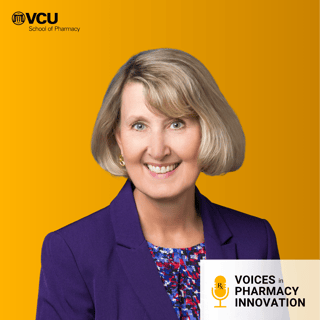
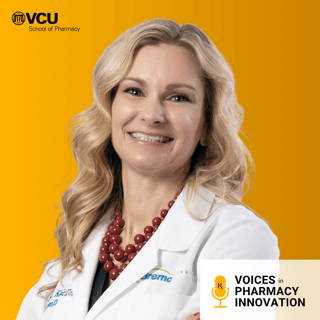
Speaker: Today we're joined by Dr. Sheila Stadler, Clinical Pharmacy Specialist, the Clinical Pharmacy Cardiac Risk Service at Kaiser Permanente of Colorado and Clinical Assistant Professor at the University of Colorado Skagg School of Pharmacy and Pharmaceutical Sciences.
Speaker: Dr. Stadler has over 20 years of experience with an integrated healthcare delivery system focusing on cardiovascular risk reduction. Kaiser Permanente has really been a leader in developing clinical pharmacy services to address uncontrolled cardiovascular risk factors, and today we'll explore how she and her team are making a difference.
Speaker: February is American Heart Month, a time to raise awareness of cardiovascular disease, the leading cause of death in both the United States and globally. Pharmacists are uniquely positioned to make a meaningful impact on the management of major cardiovascular risk factors, including hypertension and dyslipidemia.
Speaker: making Dr. Stadler's appearance on the podcast particularly timely. Welcome, Dr. Stadler.
Speaker: Before we jump into learning a bit more about the past, present, and future of the Kaiser Cardiovascular Risk Reduction Service, tell our listeners a little bit about your background.
Speaker: Thank you so much, Dr. Dixon. I'm really honored to be a guest on this podcast, especially to talk about cardiovascular disease during Heart Month. I know that this is a topic near to your heart as well.
Speaker: I attended pharmacy school at the University of Wyoming. So Josh Allen and I have something in common. We'll say go Pokes. And during my ah clinical rotations, I was really drawn to ambulatory care.
Speaker: um So I completed my residency training in Kalamazoo, Michigan. And this program was really unique at the time. It had four different components, one that focused on ambulatory care clinical services, and that was at the Kalamazoo Center for Medical Studies.
Speaker: I had an academia focus as well through Ferris State University and their College of Pharmacy. I also was exposed to some managed care concepts, and this was with Blue Care Network. And then finally, there was an industry component with Pfizer. um So at that time, it was with one of the medical science liaisons learning about outcomes research and how that was performed.
Speaker: but Initially, I thought that I was headed for a career in academia. and I ran into one of my former ah faculty members from Wyoming, Dr. Sherry Herner, at the fall ACCP meeting in Albuquerque that year.
Speaker: She had left her faculty position at Wyoming to join Kaiser Permanente as a clinical pharmacy specialist in primary care. she really kind of changed my thought about what I was looking for for my professional career.
Speaker: and There was really strong leadership at the time at Kaiser Permanente Colorado, Dennis Helling, Kat Nelson. They were really trying to grow our clinical pharmacy program. There were ample opportunities to have a really advanced pharmacy practice, but also get those other things I was thinking about with academia, teaching, precepting, research.
Speaker: So i did i end up pursuing that opportunity. And I was really thrilled when I got the offer from Ket Nelson to join the cardiac risk service. And I've been there for 20 years.
Speaker: Wow, that's terrific. And I think the ambulatory Kool-Aid, once you drink it, it's just sort of what you do, right? It's your passion. So I think that's a good segue. And again, what we really want to get at today is learning a bit more about Kaiser's cardiovascular risk reduction service. I can remember years ago, really being inspired by some of the work that you all published.
Speaker: kind of highlighting the impact really well before these types of pharmacist-led interventions were ah really being adopted by health systems and health entities outside of an integrated health system, such as Kaiser Permanente or in the Veterans Affairs system. So tell us a little bit about how Kaiser's program came to be.
Speaker: Yeah, absolutely. Really, it's around quality measures, Dave. So thinking back in 1998 is when there was a pilot. At that time, there was a quality measure for patients that had a coronary event and post-MI. And it was really about measuring cholesterol, so getting a measurement in the year, and then also for LDL goal um goal control or goal attainment.
Speaker: And as an organization, Kaiser Colorado, back in 1998, we were not doing well at all. I think our baseline screening rate, so just checking the cholesterol in the year after that coronary event, we were only at like 55%, right? So, I mean, pretty abysmal thinking about that. you can't You can't treat what you don't know. So I think that that's really interesting. So a pilot was initiated with clinical pharmacy. It included about 1,700 patients.
Speaker: In just 18 months, because I think pharmacists are so systematic and process-driven and and you know detail-oriented, they were able to track those patients, send reminders, get them in for their blood work, and then once they were in, also treat them to target.
Speaker: But our screening rate improved to over 97% within months, to just amazing you know and showing that. We were leading the nation in that quality measure by 2001, and one and it just kind of snowballed. you know You and I both know lipid management is just one piece of cardiovascular risk factor management. So over time, this clinical pharmacy cardiac risk service, we have our collaborative drug therapy management agreement, or CDTM agreement.
Speaker: It expanded to include hypertension, smoking cessation, diabetes management. So it's been a process nearing on 30 years, ah really. It's been a telepharmacy model since its inception, you know which is I think is a little bit different. I think now, post-pandemic, a lot of people are very comfortable with that, but we've been doing that kind of the whole time.
Speaker: I heard you mention some of our initial publications, Dave, and it's it's true. Yeah, Carrie Olson was our lead author on our initial outcomes paper um that was published back in 2007 in pharmacotherapy, and it demonstrated a 89% reduction in all-cause mortality. So that was huge, right? Showing that. yeah And then, of course, tying the dollars is so important. So we followed that up with an economic analysis in 2009, showing a reduction in total health care expenditures.
Speaker: So again, trying to speak the language to what some organizations need. So I think that that's kind of some of that background on the history of the cardiac risk service for you. Yeah, that's awesome. And we will definitely include links to those publications in the show notes so listeners can check those out. And it's hard to believe that that was 20 years ago. i know. 20 years ago to me seems like the 90s, but it is not.
Speaker: And, you know, it's funny you mention just making sure that patients get their LDL checked, which even today in 2026 continues to be struggle for some practices and in some areas, ah given some of the misinterpretation of the 2013 cholesterol guidelines that seems to kind of perpetuate. So I imagine yeah that's still something that you all are continuing to to work on and make sure that the LDL is checked because you can't manage something that you don't measure. Exactly. Exactly.
Speaker: So thinking about, you know, transitioning to what the cardiovascular risk reduction service looks like today, ah maybe give us a ah sense of, you know, what does it look like in practice today in 2026?
Speaker: So I think that's a great question, you know thinking about the changes that we've had over the years. We always want to try to touch more people. And so I think that there's a few things that we've really done. i think leveraging technology has been key, as well as other staff members, including pharmacy technicians. I think those have been some big changes that we have adopted over the years.
Speaker: With technology, i think that anytime you're trying to manage a large population, but That's a ah key component. And so you have to have those those resources available. um I am fortunate, as you mentioned earlier, to work in an integrated delivery system. So our data is plentiful. You know, that's a ah definitely a ah bonus to working at Kaiser Permanente.
Speaker: And I think it's important to work with informatics to build accurate and reliable disease registries and reports so you can take action, right? So initially we were enrolling patients that had a hard coronary event. So it was post-MI, you know, after coronary revascularization with PCI or CABG.
Speaker: Over time, we've been trying to get our fingers on other parts of that ASCVD population, so non-cardioembolic ischemic stroke, peripheral arterial disease, as well as other high-risk patients, um perhaps you know patients with elevated coronary artery calcium scores, for instance. Again, data and technology is really helpful to identify you know that population so you can you know, go after them and help them.
Speaker: um So I think that that initial disease registry is really important. The other piece is like ah some sort of program tracker where you can document when the patient was enrolled in your service, kind of mark the clock, okay, we're under our control now.
Speaker: And then you can track your outcomes, right? So that's important for publishing research or for justifying your services or trying to hire more people. So I think that those are really key pieces there with that technology.
Speaker: um You know, I think it's also helpful, you know, at that so we talked about population level, but also that technology for the individual pharmacist is really important because today I'm able to, you know, I have a panel of patients assigned to me. I can generate a report for a risk factor that I want to look at. So perhaps I want a list of my patients that their last blood pressure was above 130 over 80. I can generate that report.
Speaker: I could start by sending them a message through you know our secure messaging system with a questionnaire. They could respond with their most recent home blood pressure reading. If they're not checking at home or they don't have a monitor, I could offer enrollment. We actually have a remote...
Speaker: Blood pressure monitoring program at Kaiser where there's a Bluetooth enabled blood pressure monitor. We can mail to their house, you know, make sure they understand correct technique, all these important things. Wow. They can upload their readings. I could track that way.
Speaker: If they're not into technology, which some people aren't. I can make sure that we plug them in to get a no-copayment nurse visit blood pressure check in the clinic so we can still make sure we're following up, trying to meet patients where they are to get their risk factors controlled. So I think that that's one example of how we can use kind of technology from a population level and then drilling down to the individual patient in front of you on what do they need and how can I help assist, you know, getting them to goal. Yeah, that's phenomenal. I really like the systematic approach that you all take because
Speaker: There is just simply not enough frontline clinicians, you know, seeing patients in clinic or waiting for those patients to come to clinic ah in order to receive care. And you're really focusing on the patients who need the help the most, right? And working with the rest of the team to help get that patient's risk factors controlled. But Still, at the end of the day, you're you're personalizing that approach. And I think that that's the the piece that's really important. And ultimately, from a population health level, it's it's the way that we're going to have to do things moving forward if we're going to have a large impact in trying to bend that curve to you know reduce cardiovascular disease deaths in the future. And we can have all these great therapies. They're available to us now. But right if we can't get them to the patient, then they're not really going to be all that useful.
Speaker: Right, exactly. And you mentioned like with some of the resources too. So I think on technology was one big part. The other was really starting to leverage some of the other team members. So for us, we had pharmacy technicians with us from the get-go, which was kind of crazy. These clinical pharmacy technicians, you know, to help us out. And initially it was more, I would say, administrative tasks such as doing those lab reminders for us, you know, keeping track of our you know tracking database and would send out reminder letters. They would call, you know, they would do those things to make sure, you know, people would come in. I think as time marched on, but we really had to evaluate the tasks um that the clinical pharmacists were performing. And did they need that skill set of a clinical pharmacist or could somebody else do that? Right. And so, you know, one of those things was,
Speaker: like normal labs, like they're at goal or normal, you know, do I really need to do that? Do I need to call the patient? You know, or is that something that could be offloaded to to a technician or somebody else to complete that? so Again, part of it was doing that evaluation on what what who who needs to be doing the work, you know, as well, just so we can make sure that, you know, when that work is offloaded, then that would allow us to have more time to focus on the patients, ah touching more patients that need those meaningful clinical intervention from a clinical pharmacist to get that that touch.
Speaker: Yeah, I think that's a great point, that quality assurance piece, right? And making sure that we're not just doing the the same thing, expecting that it's going to work forever, because as we know, things change. There's new technology. and There's new opportunities to bring in other team members. So i think that's really great that you've integrated pharmacy technicians and what you all do.
Speaker: So we've talked a lot about the service, past, present. We've talked about a lot of the success. But what lessons have you learned ah from the challenges? I'm sure that there have been some challenges along the way or barriers that you have had to overcome. So if you could share maybe one or two of those and and how you overcame them.
Speaker: Yeah. Yeah. Change is hard. You know, I'll admit, i think that, you know, change is hard, especially when you've been doing something like this for over 20 years. And so I i personally, i at i get the beginning, I had a little bit of, you know, concern with letting go of things and not having my fingers on every patient that was in my panel and having that. total control. You know, that made me sad. Like if ah I'd been working with a patient so hard over the years and we finally got to goal that I wasn't the one to to call and say we did it, you know? So I think some of those, it made me a little bit sad, but I will say on the flip side, I have a lot of fulfillment and knowing all of the things in my in-basket today. So whether it's lab results or consult on a complex lipid patient or referral from a cardiologist,
Speaker: following up on somebody's continuous glucose monitor, like everything I'm doing really does take more of that complex level thinking and and critical thinking. And I get a lot of fulfillment out of that, knowing that I'm working to my highest scope.
Speaker: I'm doing everything I can, you know, to help our patients and I'm bringing value to the system. Another challenge is we're doing something now called repatriation. So when a patient's risk factors are well controlled. So, I mean, their lipids are optimal, their blood pressure is great, you know, their A1C is controlled, they're not smoking, they're on all of the right evidence-based medications we want them to be on.
Speaker: We do what's called repatriation. So, we kind of give give them back gently, you know, to to their primary care doctor saying, okay, they're tuned up, they're good to go but let me know so but life happens right so and we all know that these are chronic long-term diseases and just because they look perfect today they may not be in three months so then you know three to six months something falls off you know their a1c goes up whatever they can be referred back to us but there is a little bit of that that churn i guess and so i think that's a challenge um you know as well but
Speaker: In those months they were tuned up, I was able to work with how many other people to get them on the right track. So I think it's trying to find that balance of what's the right length of touch or, again, trying to use technology to notify us if the lab is elevated so we can get them back quickly. sure So I think those are all just some challenges. you know And, again, back to the point of trying to touch as many people as we can to get them to their targets and using resources you know efficiently or effectively.
Speaker: Yeah. So let's zoom out a little bit as it's important for us on this podcast that our listeners take away some actionable steps. So if others wanted to replicate your work, what would they need to know? Or what do you think would be aspects of the cardiovascular risk reduction service that would be easier to to replicate you know outside of an integrated healthcare system?
Speaker: Yeah, that's great. You know, I think John Rasmussen was my very first manager at Kaiser, and he would always say the secret sauce for the cardiac risk service was people, process, and technology.
Speaker: And so if you kind of break those down, you know, I think that... For the people, you know that collaborative climate in your institution you know is key. And so having a physician champion, getting buy-in from your key stakeholders, um you know whether it's you know through the cardiologist, primary care, nurses, registered dieticians, informatics, you know you have to have that team around you, the people. i think for the the processes, you know again, we talked about some of the things that we need, you know are that evidence-based treatment plans. You know, and clinical pharmacists are great at developing these. If you have your a collaborative drug therapy management agreement or a CPA, whatever you have in your state or institution, making sure your processes are clear, defined on on what you are going to do to get these people to target.
Speaker: And then that technology piece. So but you have your registry built, you can track your outcomes, your interventions. All of those things I think are going to feed back because really you're going to need to talk the language ah of whoever is right hiring you or paying you to do this, right? And so I think for the health system, they care about quality measures, right? and We kind of talked talked about this earlier. That was our initiation back in 1998. Well, it's still very powerful today. For Kaiser Permanente Colorado, our recent STARS rating that were released in October for
Speaker: Medicare for Kaiser Colorado, we were at 4.5 stars as an organization, which is fantastic. But if you look closely at the measures that the pharmacy team was involved in, we really knocked it out of the park. So it was five star for statin use and cardiovascular disease, five star for statin use and diabetes, five star controlling blood pressure.
Speaker: Five star for statin adherence and RAS adherence. So those are the outcomes I think that the organization expects. They're investing in you. you know They want to see the results. And so I think that that is really important is moving that mark or but what they care about. you know And it may be different for different institutions. But again, for us, I think that's speaking the language to them. I love that. And if I got this correct, people, process, and technology, right?
Speaker: Correct. Yes. That is a fantastic summary, and I couldn't agree more. And kind of on a related note, and as you mentioned quality and a number of the measures, I'm i'm just curious you know what your thoughts are. Do you see the quality measures potentially expanding to include the use of, say, SOT2 inhibitors or GLP-1-based therapies as potential quality measures down the road?
Speaker: I do. I think you and I have been in this game for a while. And sometimes it it takes a while to move those, to create those measures, test them, you know, get them into live action. So I think that those will be at some point in our careers, you know, on on the on those dashboards. i I wouldn't say tomorrow, but I think we will see them. exactly yeah Yeah, I agree. I think that that day is is coming.
Speaker: All right. So we're going to move on to our kind of last section here with some some quick fire questions. so obviously you've had a terrific career and and thanks again for sharing your story. And I imagine kind of along the way you've found different resources that have influenced your thinking about innovation and pharmacy practice. So what resources would you say have influenced you?
Speaker: Yeah, I think that really networking, honestly, with other pharmacists outside the walls of my institution has really been the most influential in my thinking about innovation and trying new things.
Speaker: I think it's really important to be involved with your state pharmacy society. So here locally, we have the Colorado Pharmacist Society, very active in you know advancing legislation you know for our state to really advance pharmacy practice. I think that's important.
Speaker: And then also involvement with national pharmacy organizations, as well as those multidisciplinary societies in your area of practice. So for me, You know, and been involved with ACCP and the various PRN groups, as well as like the National Lipid Association and American College of Cardiology.
Speaker: All of those get your brain thinking, you know especially when you're able to attend an in-person meeting. You know, it's those discussions before and after sessions. What are you doing at your institution? I think that's where you really learn from each other and can make those connections.
Speaker: I think that's great. Other people, right? Other people, you know? And then now I'm going to add your podcast but because now I can learn about innovation in pharmacy through the a year from other people too. So this will be a great resource too.
Speaker: Awesome. What's one small change pharmacists could make today that would have a big impact tomorrow to help those at high risk for cardiovascular disease? I feel like I might know what you're going to say here, but go ahead Oh boy. Yeah, this is this is a good one. I think for me, it's actually...
Speaker: putting a stop to clinical inertia. um yeah So, you know, so I think it's tough, right? Today, you know, in our society, you know, a patient comes in to see their primary care physician for an acute issue or competing priorities, you know, in that limited timeframe that they have, the 20 minutes or whatever, they may not be able to address all those risk factors. And so again, I think having that team based approach where you can leverage your clinical pharmacist or other members of the health team to make sure that we are moving on these marks, you know, make sure that we have collaborative practice agreements in place, whatever we need to do to to move that blood pressure, move those lipids to get to target. I think that's something that we can do as a profession to really help advance care for for our patients.
Speaker: Couldn't agree more. And that's exactly what I was thinking. It is just so critical and and such an important role for pharmacists. We are very good at following protocols, understanding the guidelines, but more importantly, understanding the medications, how to use them. And I think a lot of that inertia, especially as there's so much new going on in cardiology and and cardio kidney metabolic disease and all the therapies coming to market, I think for a lot of providers, it can be overwhelming.
Speaker: And so it just creates a great opportunity for pharmacy. So what advice would you give students or early career pharmacists who want to work in your field? Boy, you know, i I can honestly say, and you said this earlier, when you get drawn to ambulatory care, you know, you just, you fall in love. And i I will say that working in cardiovascular risk reduction has been so rewarding. You're able to build trust and relationships with patients, you know, to work towards those surrogate goals, right? we We know these markers on if I can get their LDL to a certain level, if I can keep their blood pressure controlled, if I can control their blood sugar, we we can move those markers. But ultimately what we're doing to keep this in mind all the time, our goal is to reduce cardiovascular events, keeping them out of the hospital, keeping them alive with a good quality of life. And so I just find the work so rewarding. and I would say
Speaker: and it's changing, right? We have good evidence. It's one of those areas that we have strong evidence. But there's always the gray, which makes it exciting and interesting, right? Getting on the fringes of our evidence where you get to really think critically about the patient in front of you on what evidence really applies to them and how can I serve them best.
Speaker: Love it. What's something that you're looking forward to in the next six to 12 months that could be personally or professionally? Yeah. Yeah.
Speaker: Well, you know, I'm a lipid nerd at heart, right? So I guess I would say that I'm anxiously awaiting the publication of our new cholesterol guidelines. The spring, they're coming. And so that's always an exciting time. We get together. We have a ah good little group of lipid nerds here, you know, and we get together and discuss them, you know, as an organization. What changes we need to make? You know, do we need to change some decision support support tools within our electronic medical record, again, to prompt people to do the right thing? do we need to update ah prior auth criteria for certain medications? So it's a fun time to geek out with lipids, I guess.
Speaker: I am equally excited about that, as you um truly know. ah So yeah, I'm sure that we'll touch base when they come out. We can compare Definitely. Well, Sheila, thank you so much for joining us today and sharing your work and your outstanding insights. Please let our listeners know where they can connect with you to learn more about your work.
Speaker: Yeah, absolutely. you know i'm I'm on LinkedIn. You can reach me there. My email address is Sheila. It's S-H-E-I-L-A dot L dot Stadler at KP.org. I welcome conversation. you know As Dave knows, i really like to to discuss this this information.
Speaker: Terrific. Well, want to thank our listeners for tuning in to this episode of Voices in Pharmacy Innovation. If you enjoyed today's episode, please subscribe, share it with a colleague, and join us next time as we continue to spotlight the innovations that are shaping the future of pharmacy practice and healthcare.
Speaker: Thank you for listening to today's episode. You can listen on Apple Podcasts, Spotify, or by visiting our website linked in the show notes. If you have any questions or comments, you can contact us through our email cppi at vcu.edu.
Speaker: We appreciate your engagement and look forward to having you join us next month.