Transcript
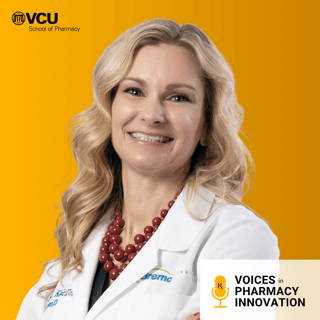
Speaker: Welcome to Voices in Pharmacy Innovation, the podcast where we spotlight bold ideas and groundbreaking practices that are transforming pharmacy practice and healthcare care delivery. I'm Dave Dixon, professor and chair at the Virginia Commonwealth University School of Pharmacy and core faculty member of the Center for Pharmacy Practice Innovation.
Speaker: In each episode, we'll sit down with pharmacists, healthcare care leaders, and change makers who are rethinking how pharmacy can improve patient care and push the boundaries of what's possible in our profession.
Speaker: Together, we'll share stories, explore new models of practice, and amplify the voices driving pharmacy innovation forward.
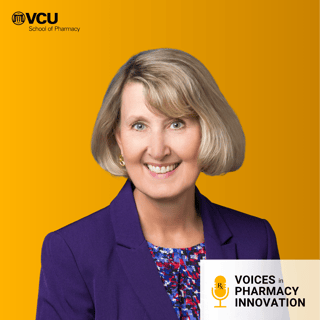
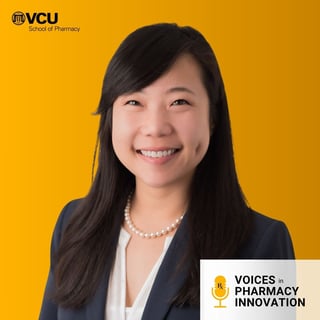
Speaker: Today, we're joined by Dr. Marie Smith, who is the Henry A. Palmer Endowed Professor of Community Pharmacy Practice and Assistant Dean for Practice and Public Policy Partnerships at the University of Connecticut School of Pharmacy.
Speaker: She's also an affiliate faculty member of our Center for Pharmacy Practice Innovation, Dr. Smith has been a national leader in advancing roles for pharmacists in community-based settings. She has worked with multiple state-level and national healthcare care reform policymakers and stakeholders to address healthcare delivery issues involving medication management programs, patient safety, performance measures, health information technology, and the integration of clinical pharmacists into advanced primary care practices.
Speaker: Over the past several years, our profession has made significant progress by successfully advocating for legislation that expands pharmacists' scope of practice and creates pathways for reimbursement for the services we provide.
Speaker: Of course, there is still important work ahead, and I know Marie will have valuable insights into how we move forward. I'm excited to have her on the podcast today, so welcome, Marie.
Speaker: Thank you so much, Dave. Glad to be here. Yeah, I think you are just an excellent person to have on to talk about this topic because I know that you've really spent your career working on these issues and and being just an immense leader in this space. But before we kind of get into the nitty-gritty, give our listeners a ah little sense of your background and how you got into the profession and and what got you inspired to do the work that you do.
Speaker: ah Sure. My career actually, or let me go back and I guess say that my interest started as um just a young child. I remember our family having such respect for a local community pharmacist that it really captured my attention even at a very early age. In um high school, I worked in a local hospital, did some volunteer work. And my pharmacy career, I think I would say, started as a student, a pharmacy student, when I was an intern at the local community hospital.
Speaker: And then upon getting my bachelor's degree in pharmacy at UConn, I completed a hospital pharmacy residency at Thomas Jefferson Hospital in Philadelphia. And from there, found my way to where you are at VCU in Richmond to get my PharmD degree. And it was really there at at um VCU, or as we called it in those days, Medical College of Virginia, right ah where I was inspired by two faculty members, Tom Reinders and Jim McKinney, who were ambulatory care practitioners. And I really found that that direct patient care, working in a team environment, in a clinic setting, was um so rewarding.
Speaker: And it led me to my first few positions, which were in academia at the University of Tennessee. I came back to MCV as faculty. i was at Rutgers and Eastern Virginia Medical School, where my roles were primarily that of a clinician, practitioner, and educator.
Speaker: And then from there, I sort of switched gears and went into national association work. I was at ASHP for a number of years in several positions in the professional practice and publication departments.
Speaker: And then in 2000, which your listeners might recall was sort of the birth of the internet, I had this unique opportunity to join Aventus, which was a newly formed merged company, pharma company.
Speaker: as a VP of eHealth and Strategy to help them enter, I should say explore, how the internet was going to impact things like e-prescribing, e-clinical trials, e-marketing, and and the you know what effect it was going to have on the business enterprise overall, which was a fascinating position.
Speaker: However, it got me away from clinical work and and teaching and that sort of thing in pharmacy practice. So in 2006, I returned to academia at UConn as department head of pharmacy practice first, and then more recently have stepped into just a faculty role where my teaching and research focus has been on integrating pharmacists or expanding roles of pharmacists in either primary care or community practice settings.
Speaker: It was just an incredible story, and I love that it dates all the way back to your early days as a child and interacting with your local community pharmacist. i have a pretty similar story myself ah in that regard. And sounds like across your experiences, your your favorite experience was obviously being here at VCU, right?
Speaker: Of course, of course. All right. So let's jump in. And I'd like to start with you know your work that you've done in the primary care space.
Speaker: But if you could kind of set the table for us, you know what progress do you feel like we've made with integrating pharmacists into primary care settings? A lot of times we talk a lot about the barriers and ongoing struggle to get where we want to really be at the end of the day, but at the same time, we have made a lot of progress. So let's start off with that.
Speaker: Yeah, that's good. I'd like to just remind the listeners that we really have made a lot of progress. However, it's been pretty isolated. So I think of it as being um very significant progress for training purposes in academic settings. So if you think about integrating pharmacists on care teams and family medicine residency programs, or the certainly the Veterans Health System has Veterans Administration Health System, has had a longstanding program with primary care pharmacists. Certainly large health systems, outpatient clinics within those systems, you see of pharmacists integrated, and also in some
Speaker: Federally qualified health centers or what we'd call safety net or free clinics, those models exist there. But I think we have to remember that only about 10% maybe a little bit less than that of primary care practices in total have integrated pharmacists. So the opportunity for us is enormous.
Speaker: I think we still have a lot of work to do to make other healthcare professionals aware of our clinical training and our expertise and how it can benefit their patients and their practices, especially as we see more and more practices taking on risk in value-based payment arrangements. Certainly, there's a big upside for them to have pharmacists and and as team members in those models.
Speaker: And also, I think we need to think more creatively about how community pharmacists can be an integral part of that primary care ecosystem. You know, pharmacists are highly trained. They're very accessible, convenient.
Speaker: And they provide a lot of opportunity for working with patients for med optimization, monitoring, management between primary care provider visits. So I think those are some of the things that that um places where we've made some progress, but we still have a lot of opportunity to go.
Speaker: Yeah, I think that's a great summary. And I always think about it, you know, it's sort of feast or famine. There are health systems or groups or even sometimes within a state or some small geographic area where you might have a notable number of pharmacists, you know, in clinic settings doing really great work, but then you don't have to go too far to realize that that's just not the norm. And then you may have systems where they really have no idea what a pharmacist would do in a clinic setting because of that lack of understanding of the training ah that you alluded to.
Speaker: So obviously you have been integral in a lot of that progress and they continue to do a lot of work in this space. So tell us a little bit about what you're currently working on.
Speaker: So um maybe before we do that, i'll I'll talk a little bit about some of the projects that we've done and how we've kind of used that to move on to where we are today. Sure. um we Early on, we did some, probably in the 2010
Speaker: timeframe. We were fortunate to work with a commissioner of our Medicaid program here, and we were able to do a CMS-funded Medicaid transformation grant. And in that model, we used a shared network of pharmacists who saw Medicaid patients in their primary care providers' offices. They did not use CPAs, but um they sent recommendations for optimizing med regimens to the PCP for implementation. And some of the findings we you know saw there were that they were able to identify and resolve about 80% of all the medication-related problems after only four patient pharmacist encounters.
Speaker: And we also, in those, because we had access to claims data through Medicaid, we were able to use a total cost of care model to assess what was the cost impact of pharmacists provided intensive medication so optimization services that that I described.
Speaker: And what we found was an estimated annual savings of about $1,595 per patient, approximately a three-to-one ROI for those embedded pharmacist services.
Speaker: And using the actual claims data, we were able to see cost reductions for 12 months pre and post in several areas but in these newer cost total cost-of-care models. So we had about a 23% reduction for drug costs, 42% for hospital, and 29% for emergency room costs when compared with the periods before seeing the pharmacist and after. So that's one example of a a demonstration project, and that that becomes the basis for even some of the work we do today.
Speaker: The other, um more of a feasibility study that we're involved with, ah was around the emergence of e-consult networks.
Speaker: And e-consult networks are still, I think, um you know, for primary care, you you find a lot of situations where a primary care provider wants to um get a kind of another opinion from a specialist of some kind. So e-consult networks have been popping up where they have cardiologists and dermatologists and pulmonologists who are available kind of on demand for that PCP.
Speaker: And we looked at this model by so asking a um chief medical officer who was involved at the time in doing this locally. I said, who's your pharmacotherapy specialist? And he goes, hmm, I don't think we really have one. And said, well, and they did not have pharmacists at that time ah in in their practices.
Speaker: And i said, well, let's try having a pharmacist. So at the time we had a ah primary care fellow that was working with me and that became the person who was their on-demand pharmacotherapy specialist. And what we saw there was one, it was very feasible. The contract we had was that the there would be a package kind of of quick information that the pharmacist would get. In addition to the question that they were asking, ah the primary care provider was asking, they got kind of a summary note of a last...
Speaker: encounter, met any kind of med list, labs that were needed, maybe a discharge summary, something like that. And the pharmacist would review that. It was is a professional-to-professional consult. There was no contact with patients. And they had the pharmacist had to respond within 48-hour window. However, most of the time it was within 12 hours.
Speaker: And we found that, one, it was very feasible to do that, and the um the medication questions came from both APRNs, nurse practitioners, and physicians who didn't have you know access to that embedded pharmacist. um There was a little bit of a difference. Sometimes the physicians had more complex questions. The APRNs might have had you know what we would consider more pharmacology or over Drug interactions or those kinds of questions. But it was another feasibility study. So, we you know, that work, I think, is something that we yet we still would like to expand as e-consult networks, you know, grow over time.
Speaker: um We've also done over the years some qualitative work. and um focus groups mostly with with PCPs to explore their perspectives on expanded roles for community pharmacists between PCP visits or using collaborative practice agreements with community pharmacists um and by doing some sort of scenarios, giving them scenarios and then asking some follow-up questions. And we haven't done this. We you know we started doing it and then we kind of got caught up in some of the other projects.
Speaker: But I think there may be, and I'm interested now looking back to say, you know, that was done pre-COVID. Now what about post-COVID? Right. Has there been a change in the, both for focus groups with the perception of how we could be utilized by primary care providers or even, know,
Speaker: you know, something around patients. We did some patient work in that same timeframe with focus groups of patients who were usually elderly, several medications, chronic diseases, and they had a hard time pre-COVID.
Speaker: imagining that their pharmacist could do anything more than just dispense. And I think now it'd be interesting to go back and kind of look at some of that work and ah and do it now, given the post-COVID experience, where we have seen the pharmacist and the public has seen pharmacists way beyond, you know, the traditional dispensing role.
Speaker: Sure. Thanks for reviewing that. And thanks for reviewing some of the work that you've done. And I do want to go back and and hear a bit more about what you're currently working on.
Speaker: And maybe that relates to one of our other questions around, you know, what barriers remain or need to be addressed for broader adoption of pharmacists and primary care settings to happen?
Speaker: So I think some of the lessons we've learned is as you've pointed out, um you know, you can do great research, but it doesn't mean that everyone's going to jump on board and implement your programs tomorrow, right? So what we had to do along the way, and we still kind of factor it now into our work as much as possible, is The whole area of implementation science. So we've learned that you many times can't go in with your ideas as a researcher, even you can kind of have them and hold them in the back of your mind as you're approaching these conversations with researchers.
Speaker: you know, leaders who can implement programs. But we we rather have taken the approach of let's meet the practices where they are, address whatever needs they have, even if we know that probably it's not going to be as successful, and um and use some sort of implementation science principles to kind of move the needle forward. And I can give you one example.
Speaker: We worked with them ah group that we've worked with and done research with and and had faculty members there. That was a fairly qualified health center, which is very progressive and very large within our state.
Speaker: And they had a thought of they wanted to have ah hire a full-time pharmacist. That was a first for them. And they wanted to use a population health model where the patient was, I mean, the pharmacist was not seeing patients directly, but rather was more of a consultation approach.
Speaker: pharmacists for their multiple sites across the state, and they would do some population health work kind of reviewing, you know, those groups whose metrics were kind of uncontrolled towards, you know, the middle to the end of the year, and they would give recommendations to PCPs.
Speaker: And so we started out with that, even though that wasn't, in our heart, it wasn't the most effective way to use a full-time pharmacist. But we gave gave kind of met them where they were and started in that process. What happened, though, that they recognized um is the more and more that that pharmacist was able to do the work that they wanted with the Population the Health Program, and I think they started with probably an uncontrolled diabetes or uncontrolled hypertensive patient population,
Speaker: They were generating, you know, hundreds and hundreds of recommendations and sending them on to PCPs. And after, it didn't take too long. I'd say after a couple of months, the PCPs were saying, we love your recommendations, but you're creating more work for us.
Speaker: Right. We have to, we, at night, we have to go in, read your notes, think about the recommendations, maybe go check a lab whatever. and um, By starting where they wanted to start, they kind of came around to where we thought they should be. They were large enough to have an embedded pharmacist using collaborative practice. Exactly. And so they that kind of, you know, by almost having a negative experience with that model that they thought was going to be best,
Speaker: They ended up coming around and and then looking at how a ah collaborative practice could actually save their physician's time, be more, help them in their productivity by opening up um appointments for them that they could bill for and that sort of thing. So implementation science would be, I guess, one thing that we've learned.
Speaker: And the other is um which is where we focus most of our time now, is this whole arena of payment for clinical pharmacist services. Such a barrier. And as you all know, even though you have maybe the authority in your state, either legislatively administratively, to bill for services, it doesn't mean that it happens, you know. um There needs to be much more um understanding of what it takes to implement those programs, even after you get that authority.
Speaker: um We happen to be one of the six states in the country who have no payment um by commercial or by our Medicaid program for any pharmacist services. So most of what we're working on now tends to be in that arena of payment and And how do you go about, you know, we're doing it through a legislative route for commercial and trying to educate our Medicaid folks about use of state plan amendments that don't require any legislation and can be done more administratively. So those are some of the the lessons that address some of the barriers, I think, that that we've seen.
Speaker: Yeah, I think you touched on an important one when it comes to the implementation science space, which ties in well to some of the struggles with once the switch is flipped, so to speak, and you can bill, then there's ongoing barriers to sort of navigate that process.
Speaker: Here in Virginia, the complexity of the process is a challenge for many practicing pharmacists, and it's great. You can bill through Medicaid, but there's a multitude of Medicaid providers. You have to register and sign up with each one individually, and so i agree that it's it's just such a...
Speaker: It requires such an ongoing effort. Even once the legislation kind of catches up to where we'd like for it to be, actually putting that into action just continues to be a challenge.
Speaker: So in terms of thinking about the profession and you've shared a lot of the work that you've done in the past, things that you're working on currently, I'd love to get a sense from you based on your experience in the profession and the work that you've done.
Speaker: How do you see the role of the pharmacist in primary care settings evolving in the future? Are we going to have an AI pharmacist in the clinic or, you know, what what does what does it look like 20 years from now?
Speaker: Sorry, my crystal ball is big enough to go 20 years out. Five to 10. Maybe five I could do, yeah. um Well, I think that, as I mentioned before, I think that even the public now is recognizing that um there's more that we could be doing. Physicians are starting to recognize individual, maybe not collectively in their large national groups. organizations, but ah individuals that when they've worked with a pharmacist closely, they are like, I want to have a pharmacist, you know, available to me, whether that's on demand or in my office all the time.
Speaker: I think that um if we look at the embedded model, so I'll talk about the different models. we look at the embedded model, where the pharmacist now is working as a member of the team in a practice on site with that practice,
Speaker: um I think we're going to see a lot more shared resource models. And by that, I mean, um a pharmacist may not be um justified to work in any one practice because it's just not large enough. But as we have large health systems acquiring practices within a geographic region, I know what we're seeing here in Connecticut is one full-time pharmacist embedded in the practices and shared within a 10 or so 15-minute radius, shared across two or three, sometimes up to four different offices, all within the same health system.
Speaker: which is really cost effective. They all are in the same system. um as long as i think the geography is the main thing, you know making sure that you have good support as you set up those practices um you know for scheduling so that when the pharmacist arrives, they've got a full schedule and and they're ready to go in each of those practices. So I think the shared resource model would be something that we can look forward to.
Speaker: um I think that um we need to rethink, too, what does a community pharmacy model look like? You know, I think as we um have shown the public and shown other health professionals as well as policymakers that We are trained to do a lot more. They saw us do so more in during COVID. Many states have now expanded practice acts and allow for um test and treat or hormonal contraceptive prescribing or those kinds of things. I think we're going to see the pharmacy um take on more of like this community, first line community resource. Yeah.
Speaker: So that i think the billing model is what's take what's holding back from maybe really getting that uptake very widespread. but But I think that's, it's close. And the other thing that I know we tested a while back in some of our research, but I think it's even more apropos today, is this idea of even if a community pharmacist wanted to do this, do they have to do it within their four walls? Can they contract with a local pharmacist?
Speaker: oh practice, if they're close to a practice or a group, could they contract and they're there you know they're community pharmacists, but on certain days they work as an embedded pharmacist so that they might do that on a small smaller scale.
Speaker: um And I think this idea of remote monitoring. where are Where are pharmacists in terms of their ability to do that remotely? And see the see the patients who need it um more frequently than going back every three to four months to their primary care offices. As we know, as pharmacists, you know, you have a new patient ah who is a just been put on a new medication regimen or their doses have changed or something like that, waiting three to four months to get another appointment is really kind of in some ways almost irresponsible in my mind because so much is going to happen. Everything from
Speaker: um them understanding, you know, and needing some educational support to actually, there's so many now um electronic devices where you could monitor with a digital scale or um a one c meter, A1C levels remotely or fasting blood glucose remotely or even um blood pressure readings.
Speaker: Um, So that so the the technology is there. I think we have to figure out what what can we do. And again, I think, you know, if these things were billable, I think we'd see more and more pharmacies taking taking those up in a community setting and and working on, because the community pharmacists, for the most part, they know their local community prank providers and primary care providers. So it's not a matter of not knowing who to contact. It's a matter of getting the system set up and and getting this billing arrangement done. So I think those are those are some things that I would hope that we would see in the next you know three to five years. and i ah The other thing that has happened very recently, as many of your listeners will know about,
Speaker: is the um large sum of money that the federal government is moving towards rural health. And in in rural areas, you know, the community pharmacy sometimes is going to be the main point of care or the closest point of care for many people. you know, they have access to one um maybe way before, you know, driving an hour, 45 minutes or longer. and Some of our Westerns, maybe more more... land, open land states. So I think the community pharmacists seem to be a good resource that we have been untapped until now, but maybe with this focus on rural health, the ability to do remote monitoring, and then hopefully we can get our billing systems in sync, that that could that could change the role there.
Speaker: Yeah, i couldn't agree more with the role of the community pharmacist, particularly in rural settings. And i think your point about technology is really important.
Speaker: There are definitely some entrepreneurial opportunities here. And I think if the payment and reimbursement aspect can come around, I think that could bring in more of those entrepreneurial opportunities. And I think right now that's the one of the big barriers to moving some of these initiatives forward.
Speaker: So let's transition to a few questions here as we close out the podcast. like to get your insight on some some tools and perspective for our listeners. So what resources have you found most influential in your own thinking about innovation and pharmacy practice?
Speaker: So I'll divide it up into maybe two areas. One is within our profession, within pharmacy, and then outside our profession. So the first place I would list as a resource is to look to the resources of your state pharmacy or national pharmacy organizations. So that's kind of a given within our profession. um And their programs, their conferences, you know, now they have discussion boards and forums, so you don't have to wait for an annual meeting. Their journals um look there.
Speaker: um Other types of, you know, web webinars or webcasts that they do. um Outside of our profession, though, I i like to spend a lot of time as a member of and um someone who reads the kind of health services research and health policy space. So um if you're interested in that, I would say Academy Health is the, in my mind, the national organization for health services researchers.
Speaker: they If you're interested in implementation science, they put on, I think, the best um implementation science conference every year. It's usually in December. Their annual meeting, I think, is usually in the June to July timeframe. But the conference, there's a they call it D&I Conference. It's called Dissemination Implementation Conference. Yeah. I didn't even know how to spell implementation science when I got into this, believe me.
Speaker: A colleague of mine who was more of a public health researcher said, you have you do you know about this D&I conference? And that's where I learned a lot. They they have... A lot for beginners. They have a day-long like pre-conference sometimes for implementation science, kind of 101. So those are some resources I've used. And then also, I guess, i was on the policymaker side, I've been involved in our legislative committee meetings.
Speaker: So processes here in our state and follow kind of online when they're in session, you know, don't don't kind of lose track of that. you You might do it yourself if there's something in particular you want to follow. But certainly your state pharmacy organizations and their lobbyists are going to be all over that. So you can gain you know something from them as well.
Speaker: Terrific. And I want to echo the plug for being involved in your state pharmacy association as well as the national associations. That's where the leverage is to to make a difference when it comes to policy changes that impact practice and ah move some of these initiatives forward. So I love that.
Speaker: What's one small change that pharmacists can make today that would have a big impact tomorrow to further advance the role of pharmacists in primary care settings? And maybe you've already answered that with advocacy, but is there anything else you'd like to add?
Speaker: um I guess advocacy certainly is a big part of that. But, you know, i it makes me think about, um you know, all health care is local. And it gets back to that, gee, you know, even though lot of data that we have research, we can bring to the table.
Speaker: Everybody wants to know how does it, you know, how what's going on in my state, you know. So um I would say one small change is really to work through. you don't have to do it individually. You can work through your state or your national level um pharmacy organizations for patients.
Speaker: Payment, if your state doesn't have payment or it's limited, very limited in scope, I'd say, you know, do that. um Get involved with that state pharmacy organization. um You might be able to do something like talk to your legislature, somebody who's simple, you know, have them visit your practice site.
Speaker: um it doesn't take a lot of prep, but that, you know, once they see what you really do and and it's not what they think is just filling um meds from a big bottle to a small bottle or something like that, and they see what else you're doing locally, working with health departments or something like that, write an op-ed for a local paper about an issue that's timely and in your state.
Speaker: um Might be ways for you to start at least getting involved as, as you know, one small change. Great. What advice would you give students or early career pharmacists who want to work in this field?
Speaker: So I do this every day, as you probably do. you know, you have the opportunity to work with students and and early career pharmacists. um I usually will tell them that, certainly for students, jump into and explore all the ambulatory care opportunities you can through your APPE rotations, if you've got elective courses, if you can arrange for shadowing experiences,
Speaker: um Residency programs now we see, I don't know the latest number, but there there were at one time over 100 community pharmacy residencies that we tend to think pharmacy residencies are just hospital-based, but they're wonderful community pharmacy programs.
Speaker: um I actually think that this ambulatory care arena, whether it's at the community level or patients, practices or clinics, I think that's going to be the greatest growth opportunity for future jobs. And so I would say that those are some examples of how students or early career pharmacists could get involved.
Speaker: Great. I couldn't agree more. So what's something that you're looking forward to in the next six to 12 months? That could be personally or professionally. Personally, warmer weather.
Speaker: agree. We have had much more snow here than than we have had, so we've gotten spoiled. But professionally in Connecticut, I'm spending pretty much all my time now focusing on the fact that we are one of only six states with no payment, no commercial health plans, no Medicaid payment for pharmacists, patient care services.
Speaker: Last year, I was appointed to the Connecticut Insurance Committee's work group to propose language for a bill. And this month, actually, our proposed bill for payment for for these pharmacist clinical services will be raised by our insurance committee. And we're looking forward to the...
Speaker: Opportunity to do public testimony. I teach a course called Follow the Money, which is an elective. So our students get a chance to to also do some oral um testimony at those hearings. So that's kind of what keeps me energized. that i think's I think we're closing in on on a big opportunity here with payment.
Speaker: That's fantastic. Thank you, Marie, so much for joining us and sharing your work and your perspectives and just for all the work that you've done to help move our profession forward.
Speaker: ah Please let our listeners know where they can connect with you to learn more about your work or stay up to date with what you're doing. Sure. Best way to reach out would be to just email me at marie.smith at uconn.edu and be happy to answer any specific questions or much of the work that we've talked about. um Our research work is published. If you can't find it through your local medical library or pharmacy school library, just jot me an email. I'll be happy to send something to you that'd be helpful.
Speaker: Great. Thank you so much. want to thank our listeners today as well for tuning in to this episode of Voices in Pharmacy Innovation. If you enjoyed today's episode, please subscribe, share it with a colleague, and join us next time as we continue to spotlight the innovations that are shaping the future of pharmacy practice and healthcare.
Speaker: Thank you for listening to today's episode. Voices in Pharmacy Innovation is published monthly. You can listen on Apple Podcasts, Spotify, or by visiting our website linked in the show notes.
Speaker: If you have any questions or comments, you can contact us through our email cppi.vcu.edu. We appreciate your engagement and look forward to having you join us next month.