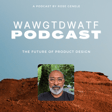
Introduction with Zaina Kayet
Zaina's Journey to Becoming a Health Futurist
00:00:21
Speaker
Today, our guest is Zaina Kayet, who is a health futurist. Zaina, thanks so much for being here. Excited to be here. I love the name of this podcast. Amazing. Thanks so much. Yes, it's it's pretty unique. um So to start off, can you introduce yourself and tell us a little bit about your background?
00:00:41
Speaker
So as you said, I'm a health futurist, a self-declared title. um It's not yet a a job you can go to school for, not yet. ah And I'm almost self an applied health futurist, which means um it's not just about pontificating and predicting and describing you know the future in my area of healthcare, but more around helping people, organizations, clinicians, governments, systems, who you name it.
00:01:07
Speaker
ah understand the ever unfolding future in healthcare care so that they can make much, much smarter, more intentional bets and choices today. So that's what I do.
Current Healthcare Trends
00:01:18
Speaker
That's amazing. And what sparked your interest in healthcare and future trends?
00:01:24
Speaker
Of course, as you know, all of us who have these meandering careers, ah we can we don't really know our origin story until there's a few decades behind it. So if I go back and piece together some signals, which is what we do in futurism, um you know I'd say probably the first clue was when I was a little kid,
00:01:41
Speaker
um ah My dad was born in the 30s in the Middle East, and every day he'd come home, he's a mechanic, and you know he'd take off his shirt, you know punished from a day of working under cars. And then as kids, we would like step on his back, like you know get all the kinks out. And every time we did that, I would be mortified because his whole back was like these gashes, these scars, his entire back. ah wow And he would proceed to remind us or tell us how when he was a baby or kid, when he had a fever, he had them all the time, ah his mom would take out the razor blades and slice his back. So the blood would come out because they believed in the 40s that the infectious agent, whatever is causing a kid sickness you know is in your blood and you know we regenerate our blood. So that's called bloodletting.
00:02:30
Speaker
And I was just like, as a kid, like your mom would cut your back with razor blade. And you know, when you're a kid and you see scars, so I think that was probably my first time being, wait a minute, like, how could humans think this way? And that was the dogma. Right. Okay, then I put that to bed. And then, you know, many years later, I was a little smarty pants, the daughter of Arabic immigrants, you know, and so, again, my dad i was like, you should be a doctor. I was like, okay.
00:02:58
Speaker
You know, because that's kind of a lot of what first generation, you know, want um because they came to, in my case, Canada for a better life for their kids. So I just started studying biology in undergrad, you know, to make really my parents happy.
00:03:13
Speaker
Uh, and I liked it, but I don't think it was my calling is just what I did. And so of course, as you know, when you study something and you're in it, then all of a sudden you love it because it's what you do. So, right so, but then I got interviews for med school, got into med school and then, um, realize I have no desire to heal anybody physically, emotionally. Like I can't stand blood. I can't stand the human body, you know, so I didn't go. And then of course I didn't know what to do. So I i did a PhD in, in the, in cell biology at the university of Toronto. um The point is if I piece that together with all my career choices since then, I love to solve
Transformation to Proactive Healthcare Models
00:03:49
Speaker
intractable problems. Wicked, hairy, that don't have linear solutions, that have a very big impact on humanity. And I'd say if I look at every fork in the road of my career, I'm just 50 now, you know the two areas I've been gravitating to have always ended up being healthcare.
00:04:08
Speaker
and climate disruption. And I had two options where I could have ditched healthcare and gone climate and it would take me, and I just stayed in healthcare. care So that's kind of why, my why, and then ah we'll get into it. But I kind of backed into futurism because I think that is the unfinished business that healthcare care has yet to confront as a methodology to save healthcare. care Very interesting.
00:04:35
Speaker
I want to you know kind of start us off at the beginning and and ask you about what significant trends or the most significant trends you're seeing in healthcare right now.
00:04:48
Speaker
So trends is one word. So if in in futurism, you know, there's kind of three languages of things that are causing whatever status quo to be very different. And I will say healthcare care in about a decade will be virtually unrecognizable from what it's been for, I'm going to say, 150 years. I mean, at least what it's been post-World War II, which is when kind of all of our systems of care got created.
00:05:12
Speaker
um ah So, you know, one word is signals. So signals is what we use as futurists is like early warning signs, like things, patterns we're seeing, it's not yet a trend. A trend is when the signals materialize.
00:05:27
Speaker
ah But you're looking for them because they will help you catch up sooner to the future. And you know what's going on in healthcare, unlike ever before, is these signals will manifest very, very quickly because they're underpinned now by software and technology. They're going to move that fast. Whereas signals in the past, for example, that I don't know, women might want to have a bit more say about what happens with their bodies. you know That has taken 75 years to manifest.
00:05:55
Speaker
And, of course, it's being set back right now because it's
Challenges in Adopting New Healthcare Models
00:05:58
Speaker
an on analog scale. it's It's transmitted, if you will, by human action and social movement, blah, blah, blah. yeah But these signals are on an exponential scale. so So that's one. And we can get into some of the signals that you you know keep me awake at night right now. Then there's the trends, which is the signals have come together and the ship is sailed.
00:06:19
Speaker
And they're they're kind of moving things in a certain direction. And then the last is forces. Forces are the reason the signals and the trends are happening in the first place, right? They're your kind of root drivers that are causing whatever to change. So I'll start with a couple of big forces. So if you think about, you know, healthcare the way again, it hasn't changed in 50, 150 years. Now there's these forces that haven't really ever come together at the same time.
00:06:47
Speaker
and at the same magnitude and pace really ever in the history of this industry. So one big one is patients, their families, the users of healthcare, and you know we've woken up, but some call it a revolution. yeah We expect a level of service, a level of outcome, a level of transparency, access, convenience, that was never contemplated. I mean, we've really designed all of healthcare care despite these people called patients.
00:07:14
Speaker
right So this is a very new concept for a very patriarchal patriarchal enterprise for 150 years. The second big force is ah we're out of money. There's no healthcare care system anywhere or organization that is able to meet demand with supply, whether that's cost ah budgets,
00:07:35
Speaker
or because demand is growing so fast because we're staying alive longer. We're accumulating complexity, ah inflation, all those things. But the business model is basically broken. So when your business model is broken, which means you cannot deliver what you told your customers you could deliver with a economics that works, you have two choices. You either go out of business yeah or you rebase the business
Innovative Healthcare Business Models
00:07:57
Speaker
model. And we're just at that point everywhere in the world.
00:08:00
Speaker
The third is we have technology to do something about the first two. And I'm talking software, very basic, not big fancy science-based technology. We never had these tools at our disposal. you know So those are your kind of healthcare system forces. And then you wrap around that, that healthcare is not an island, it's in a container.
00:08:20
Speaker
called society, there are macro forces of society that are amplifying the pressure to go to the future. ah Climate and health is is a major new area that is finally kind of top of the agenda that we are one of the biggest contributors to the burning of our planet and the burning of our planet is going to have a disproportionate impact on health care.
00:08:42
Speaker
right Whether that's mudslides, ah you know ah respiratory, ah heat, all these things. ah The second is the future of work. So work is going through a thing. I'm sure you talk about it a lot on your podcast. Well, healthcare is 75% labor. It is a human endeavor. It's one of the biggest labor intensive sectors in the world.
00:09:03
Speaker
And so if work itself is going through a change, then that by default, that's gonna trickle into healthcare. And then the last is ah equity denied populations. So COVID kind of raised a big spotlight on the massive disparities that equity denied groups have had and really amplified in healthcare. And whereas before we always said, oh, we need to make sure everything works for everybody, this is now becoming Like a moral contract, ah if you are going to be in the business of healthcare, which is a public good, it has to work for everybody yeah as a design feature, not as an after fact. So you add all those forces, I just listed six, um you know it's propelling healthcare to the future. And then you know within that, then are the trends or the shifts.
00:09:53
Speaker
you know What direction are things going as a result of all this you know these drivers? I just summarized them quickly into six. Healthcare care is moving from being reactive to proactive, if not predictive. So moving way, way more upstream instead of waiting for symptoms and treating sickness. It's shifting to creating health. That's a massive business model shift. Secondly, we now finally have data. We didn't before. We were quite opaque, black box and crude. So it'll move to being you know quite crude and analog to being intelligent, precise, um personalized, all those words ah in a way we've never seen. The third big shift is ah we've had a facility-based paradigm and a visit-based paradigm, so all the action goes down by you having a one-on-one consult that's time shared with a highly trained clinician, usually in a building.
00:10:48
Speaker
or getting care in a you know nursing home or a hospital, those constraints of time, distance, place, labor are gone. So it it shifts to what do we call care anywhere, you know much like you weren't even born. But back before, you know to get money, I had to go to a bank branch during very restricted hours.
00:11:07
Speaker
And, you know, us stupid civilians couldn't do that ourselves. So we had to talk to a human called a teller who had to safely distribute the money. um you know That would be unheard of today, right? You can access cash. but well We don't even use cash anymore, anywhere. That's what will happen to healthcare. care So that's a big deal because there's a lot of power and capital and producer interests locked up in facilities and visit-based paradigms. um The fourth big shift is um you know because we have to timeshare the people, the diagnostic tests, the capital, the beds, the clinics, we've had a very episodic and intermittent model. So you get a 15-minute visit every three months if you have diabetes. You get one checkup a year if you're a healthy ah mom or dad or or child.
Opportunities in the Evolving Healthcare Landscape
00:11:55
Speaker
and and all the action goes down in these visits and everything in between, which is actually when health is created or destroyed, we have no idea about. Well, that's going to go away. So that'll become continuous, much more team-based instead of you and I stitching it together across a bunch of care providers. So this is a big deal from an amazing experience for patients and just much more a smarter and faster catching of signals of or signs of things are in decline instead of waiting for that tumor to have grown to six centimeters, you know, a year later, say. And then the last two shifts to me are the and the first four I just talked about, you know, proactive, precise, care anywhere and continuous. They're underway and they're going to keep going. The last two to me is the unfinished business that is just starting. The shift from ah the provider, the clinician making all the shots,
00:12:50
Speaker
to the decision-making being a team and three new agents are on the scene that make decisions about your body and my body and everyone's body. Us as patients, so I call this people-powered healthcare, care so much more agency.
00:13:03
Speaker
efficacy choice for those who are able and those who want it. Some people don't want to call the shots on their own healthcare. They don't want to be the CEO of their own health. It's a minority, but we have a new agent that's a co-decision maker with a highly trained clinician. This was never contemplated.
00:13:22
Speaker
in 150 years of medicine, but two other agents that are very new to the scene, the crowd. We will get better information by going peer to peer, going out to the universe to give us ideas, whether that's on you know social media, um lots of communities forming of patients.
00:13:41
Speaker
and add that to our decision tree instead of just relying on the one clinician who only happened to see in their lifetime a few hundred people like you. You now have access to infinite people like you. And then the fourth new agent is going to be AI. We will all have a coworker.
00:13:58
Speaker
That will be side by side, just like we use a phone to help us get through our day every day, scheduling meetings, making phone calls. ah we have We'll have an AI agent helping us with every clinical decision. So that's kind of the fifth shift that's going to be.
00:14:15
Speaker
pretty earth shattering to our patriarchal models. And then finally, payment models. ah you know We've had to pay by the visit, by the bed, by the pill. So this kind of fee for service, pay for units, activities, inputs. Of course, that will incent volume of activities, inputs, units. ah When we have all the data and we agree on different goals of healthcare, care which is actually outcomes for patients, we will shift to paying for results.
00:14:44
Speaker
So imagine a world where your clinician or your clinic doesn't get paid every time you have a visit, but rather they get paid to keep you healthy.
00:14:56
Speaker
or to deliver outcomes that matter to you, not that matter to them. So this is a very big shift. That's a business model shift. i So I just said a lot, but that's what's going on. ah Yes. And I love that you said that because I wanted to tap a little bit more into, you know, what are some of these new business models, um, you know, as it relates to kind of those, those, those six trends that you've identified.
00:15:23
Speaker
I mean, the basic one that gets is starting to get implemented a lot more is we call it capitation. And it's just the idea of you know the difference between paying ah every time you use a service, which is pay paper use, versus subscription. So capitation says, you know I'm a clinician. I have 2,500 patients on my roster as a primary care clinician. I get a budget for each patient.
00:15:46
Speaker
i don't I don't make money every time I see the patient. i just get That's a capitation model. That's a version of this payment model innovation, but it's a minority, not a majority. That allows you to spread your risk. So maybe you know if you're going through a pretty serious stage of breast cancer, you're going to need a lot more touch points with your clinical team for a period of time. If you're generally healthy or next year when it's all clear, you're not going to have a lot of touch points.
00:16:12
Speaker
So you you have a mix of populations. So that's the basic. But where it's going is more of what we call pay for results, pay for performance, outcomes-based payment. The other common language used in health care is called value-based health care. So you're you're paying based on value, not on um inputs or activities. um So that looks like you you know the easy place that's already happening is with pharma. So imagine if you're the payer,
00:16:41
Speaker
You're sick and tired of being sick and tired of paying for very expensive medicines that in a clinical trial showed that they should produce this result, you know a 30% lift in whatever outcome or survival rate for cancer. But you know how clinical trials are done. They're in a very sterile, perfectly manicured environment, usually on white males with no other conditions. That is not the real world. and So you put these drugs in the real world and they don't perform the way, but you have to you're still paying for them. So more and more for uncertain um interventions, ah drugs, procedures, et cetera, ah payers are saying, I'm not paying you when we use your product or you do the service. I'm paying when I see the results.
00:17:27
Speaker
So that's, that's a big movement happening. And, you know, in the U S with Obamacare at a system level, that was called the, the ah accountable care organizations. They're being accountable for results, not a deliver services, you know, that gets paid no matter whether or not those services are effective. And so in this.
00:17:52
Speaker
in the I mean, in this, you know, ah future or in a version of this future, what impact do you think these developments will have on society as a, you know, on ah on a macro scale? So a good thing is everything I just described absolutely is here today. So it's not so future that ah like, oh, one day we're going to be there and then the day before we're not. It's, you know, it's kind of like I always say, you know,
00:18:17
Speaker
Somehow the day you turned 65, you
Empowering Individuals in Healthcare
00:18:19
Speaker
now have a completely different set of services you have access to and pension. yes The day before you were the same person. you know So all of this is here today. it's just It's in pockets or in the medical world, but we say it's not the standard of care. So whether that could be maybe one jurisdiction or healthcare system. So for example, Kaiser Permanente in the US, that shift I talked about to care anywhere, that is their their model, that they really unless you really need to come to them, you go to them. But otherwise, they're doing care anywhere. I think 85% of their care exchanges do not have the clinician and the patient in the same room at the same time.
00:18:58
Speaker
Whereas in Canada, 99.1% of our care exchanges do have that, yeah you know which means you've constrained it. so So all of this exists today. So I guess the future is when it's it's at scale, if you will. or it's it's you know And to me, scale, by the way, in healthcare, care if you think of the adoption curve, like a sigmoidal Rogers diffusion curve, it's like 15% or 16% up the curve is enough.
00:19:23
Speaker
to make a dent. So the impact as we emancipate from the past and embrace the you know the these shifts you know is four areas. One is obviously just health. right health Health is wealth. Health is the result. um That's just good for everybody. And if you look at all the trends, you know health is on the decline in a lot of dimensions of society. you know I think the US for the first time ever ah went backwards in life expectancy in the last few years. you know This is a it's a macro signal, but so so that's the obvious one. That's why we do this. That's our purpose is health.
00:20:01
Speaker
But there are second order effects that the second is fiscal sustainability. So health care, depending on where you're at, you know, in the U.S., it's 20 percent of GDP in most OECD countries. It's 12, 10 to 13 percent of GDP.
00:20:16
Speaker
In Canada, it's half of our taxes ah you know that we pay in each province or state. um So it consumes a lot of resources. Yes. And and I just told you those resources ah are not able to meet the demand. And so the answer to date has been add more.
00:20:37
Speaker
just don't get more budget, more well then there's a tapeworm, it'll never be enough. right And then you're gonna squeeze out other public goods that also need resources that actually are more important because they stop you from getting sick in the first place, education, poverty, climate. So so there you know there's ah getting healthcare care to be much more fiscally viable will actually free up capital that can then be used to other important public goods that right now we are siphoning from those other public goods. So I think that's huge for society. The third of the four impacts is our health workers restore joy and work in health care. We have a crisis right now of the health workforce. Reminder, the health workforce is the third biggest workforce in almost all economies. Sometimes the second, it's inelastic to market demand. It doesn't go up or down like
00:21:31
Speaker
retail jobs do, um and they're highly specialized, highly trained. You can't just replace a nurse who quits. It's a 15-year replacement cost. So they are not happy. Record rates of of joy of ah burnout, ah suicide, it's getting that extreme. And so making healthcare care work better will make it better for our workers, which I think will be huge, which then becomes a flywheel because happy healthcare workers lead to happy patients. And then the final one, which you know some countries or jurisdictions are trying to mobilize already is wealth creation. So ah a a modernized healthcare care system actually could be a wealth creator for
00:22:17
Speaker
a nation, for a state, for a province, for a city. So for example, you know if you're going to support, say, a startup economy and new tech companies in your area, wherever it is, by helping find good science and converting it into commercializable products, and you can do that in your own backyard, and that thing helps create the future of health for the whole world, all those revenues, jobs accrue to your jurisdiction. So as every city, province, state, country, emancipates from our industrial era where the job and wealth creation was from, frankly, taking stuff out of the ground, processing it and selling it. Now it's the knowledge economy. Well, life sciences and healthcare is one of those three big knowledge economy wealth creators that is a land grab right now. And so that's kind of a nice byproduct. So now your healthcare system is no longer a cost center.
00:23:15
Speaker
So wealth, it's ah it's a revenue center because you can actually generate wealth for your for your ecosystem. That is so interesting um and is a perfect segue into the next question. What opportunities do you see for both individuals and businesses in this landscape?
00:23:33
Speaker
Yeah, so I have a saying, every business is a healthcare business, whether you know it or not. So let's unpack that. so you know And this is now with my Deloitte hat on. So I'm a health futurist in residence one day a week um with Deloitte in Canada. And we have 600 professionals kind of helping create the future of health. And we have a point of view on the future of health globally, um which maybe we'll add to your for your listeners, because it's brilliant. um yeah So we kind of organize ourselves to respond to our clients who want have asked the exact same question that you've just asked into three buckets of ah you know where the opportunities are. One bucket are what we call the incumbents. That's the existing players who've locked up all the ah you know channels of access. They have all the clinicians. They've been around forever. Your hospitals, your health plans, government, blah, blah, blah. Your existing players like doctors, nurses, physiotherapists, pharmacists, blah, blah, blah.
00:24:28
Speaker
The second bucket is what we call the adjacent participants. So they are not the core, they've been on the periphery, pharmacies, health insurers, right lab companies, ah places like that. And then the third are what we call the new participants. These are the agents that are saying, hmm, I have capabilities ah that I think healthcare care really needs and I'm going to bring them and do something that no one's ever done before. This is your retailers.
Guidance for Healthcare Stakeholders
00:25:01
Speaker
in the US, ah Uber, Instacart, Google, Apple, Qualcomm, Amazon, all, no no say in healthcare before now they're becoming you know dominant dominant players and you think wow they had like the incumbents have been there for a hundred years they have all the clinicians all the patients all the knowledge and here's these new entrants and they're they're making debt so those are the three buckets each has opportunity for different reasons ah ah the ones I get the most excited about are the adjacent players because they're not vested in the past whereas the incumbents basically mostly try to protect the past not absolutely sure
00:25:44
Speaker
The adjacent players know enough. They have got credibility and trust, because they've been close to the place. you know they're like Let's say a retail pharmacy. um ah But they they they operate like a modern business. They know how to um you know reinvent themselves, be efficient with technology, et cetera. Whereas the incumbents, they're Luddites, mostly. like it is yes It's very analog. And then the new entrants, the odd one, will interest me. like you know um Like Apple, for example, getting into healthcare as a tech giant, you know, they might be the number one healthcare provider in the world at some point. Very interesting. But most fail, just so you know, it which is fine. That's what you expect, right? Like, you know, many have tried to get into healthcare, you know, burnt billions and got out, but some are sticking around. And so how can, ah do do you see there being an opportunity for
00:26:42
Speaker
um individuals in in this landscape as well? If you're an individual and you're a listener, ah you know there's three types of you that I think, ah you know and you might be all three of these, by the way. um So first of all, if you're an individual in the sector, you're a clinician, you're an administrator, you're a policymaker, maybe you're a finance person that works at a hospital, it doesn't matter. you know That whole ecosystem, and again, I just told you that makes up about 10% of the global workforce.
00:27:10
Speaker
um um They all are kind of going through a new set of competencies they need, not just to survive in the future of health, but to create the future of health, to be relevant. like you know You get called to healthcare, it's a mission, it's a purpose, yes not a it's not a job.
00:27:29
Speaker
you know um so So they're all going through a little bit of a retool you know of a new set of skills and competencies. And it doesn't mean the ones that they have today, like for example, if you're a nurse or you're a finance person or you're an architect that builds hospitals, it doesn't mean you lose those, but on top of those new competencies around policymaking and advocacy and social justice, around climate, around futurism. you know I do a lot of capacity building of healthcare players in Futurism, innovation, entrepreneurship, all these new things. The second layer is you and I, everyday citizens who finance our healthcare system, whether you pay out of pocket or not, you actually finance your healthcare. If you're absolutely you're an employee, you're paying that with your premiums. You just don't feel it because it gets taken off your paycheck right away.
00:28:20
Speaker
And if you're ah you know in a ah publicly insured system like in Canada and Netherlands, you're paying that with your taxes. I think we just quantified in Canada, the average Canadian is about $18,000 a person of our taxes, our financing healthcare. So let's not kid ourselves. It's not free.
00:28:38
Speaker
so And you're the beneficiary or the user of these services. so And then the other way you're the user is as an employee in places like the US where employers you know do most of the and health insurance. So either way, you know ah you know you've got a huge stake in this. So this whole shift of becoming the CEO of your health, we will be looking for more responsibility for your health from people, patients, citizens, employees, and you will have tools to take responsibility for your health. This is a very different role of people from before, which was like
00:29:15
Speaker
You know, I'm just a dumb civilian, I can't get involved. And so so lots of roles there and changes and this um ah ah power to demand more from your clinician, from your hospital, from your whatever, ah and the ability to access
Future Roles in Healthcare Delivery
00:29:33
Speaker
each other a lot better. um There's a big movement called, yeah the book is Rebel Health, it just came out, which is unpacking this shift to what we call peer-to-peer healthcare. care And then the third is as a business ah person, whether you're in a small enterprise, a large corporation, anyone who has a job.
00:29:51
Speaker
ah One, you're an employer, so ah healthy employees do amazing work. yes You have a stake in the health of your employees, and if you're going to wait for their healthcare providers to keep them healthy, you're going to have a big problem. So more and more employers are playing a much more active role in the health and welfare of their own employees, well beyond you know adjudicating claims for you know, drugs and massage like that's not the health of your employees. It's a very different relationship, particularly around mental health.
00:30:22
Speaker
ah and um ah And as a business owner in any or part of a business, ah the other you know role you have as an individual is there is massive opportunity in healthcare care for you to grow your business and get into new areas. And that's, remember I talked about that third bucket of um who's impacted by the future of health. So healthcare care needs capabilities.
00:30:47
Speaker
capital, skills, tech that the formal system just does not have and never will. And so there are just all these new opportunities, you know, you can get into, I'll just give you one example, dollar stores in the US, there's 14,000 of them.
00:31:03
Speaker
um They're kind of, you know, intend to be in areas but that are what we call health care deserts and food deserts. Areas that food companies will never go set up a grocery store because they can't make money off of it and health care providers won't go live there. So people like can't have access. so So here's this store that in some ways contributes to some of the problems because of the nature of the kind of food that they sell, but it's also very cheap.
00:31:29
Speaker
But they've got real estate, they've got parking lots, and they're in these. So they're um using those assets to actually get involved in closing the equity gaps in healthcare, care bringing mobile clinics to their parking lots. you know you know So those that's an example, but that's happening with libraries, churches, barber shops.
00:31:49
Speaker
you know, postal workers are becoming healthcare providers in the home. So all this kind of reinvention of current businesses that if, if you know, if you would have told me 10 years ago, Zaina, you know, the, the, the France postal service is going to be the number one healthcare care provider in France. I would have laughed you out the door. Absolutely. Guess what they just announced in, you know, June, you know, a massive play in healthcare.
00:32:12
Speaker
30 acquisitions in healthcare from the France Postal Service. So that's the big opportunity for any worker in any business. And is that, just to just unpack that a little more, and is that the delivery of ah medicines and and that sort of thing, or or how exactly is the postal service now providing healthcare?
00:32:34
Speaker
So there are a few postal services that are using their assets to um address the gaps and problems that, again, the incumbents have not been able to organize themselves around for a bunch of reasons. So one is definitely your hypothesis, so just logistics.
00:32:49
Speaker
By design as a crown agency, our postal services have to be able to reach every citizen. So they've got the infrastructure to get to everybody and access is a massive reason of poor outcomes for a bunch of reasons. So yes, they're using things like, you know, their delivery infrastructure, drone infrastructure. So for example, in Switzerland, the Swiss post was the first in the world.
00:33:14
Speaker
to use drones to move blood products and stuff between hospitals in an urban city. Because if you're waiting, or that organ, yeah you want to transplant the heart, but now that the truck is stuck in traffic and now the kid, you know, so, and that's been taken up now by others. So they kind of broke the seal. ah In um ah the UK, the postal service is using their logistics for a different reason. They're actually using their postal workers.
00:33:43
Speaker
So if you think about, you know um you know do you have a relationship with your postal worker? Do you even know who that is? No, I don't. But the population which needs most healthcare, the elderly, right they drive depending on the population, 50 to 70% of all healthcare care demand. And you know they're the fastest growing population in the West right now. One in five people in North America will be over 65 in the next year.
00:34:10
Speaker
um They do have a relationship with their postal worker because they've been delivering the post to their house and having a relationship every day. And mail still comes, but it's not much. So they're there anyway. They're trusted. And so they're now training the Jersey Post, for example, on one of the little islands off of the big island of England to do home care checks, to do antibiotics, IVs. It's seniors care, basically, in the home. France is doing that. I think somewhere in California is doing that.
00:34:39
Speaker
um So that's another role and then the last role is around and this is more what France is doing is digital health. So if you think about it, to run a logistics network and the intelligence of one little stamp somehow triggers a whole set of activity that gets you that letter in two days, it's pretty fascinating. Yes, it is. So there's a whole tech stack below that. So France is positioning itself not to do those other two things, but rather the digital backbone that can stitch together all these disparate parts. And that's what patients want. We want a seamless, when you go to Amazon,
00:35:15
Speaker
You don't know what's going on, but you know, I ordered this waste paper bin yeah and it got to my house in a day. The amount of the tech stack behind that, that's what healthcare care is desperate for and will never
Improving Rural Healthcare Access
00:35:29
Speaker
build itself. So that's the the play that France Post has taken. Wow. Wow. Fascinating. So how can we prepare, I mean, as individuals, how can we prepare for these changes that you've discussed?
00:35:43
Speaker
I mean, again, depending if you're one of those three I talked about, you know, you're in healthcare, care that's one level of prep. If you're a patient, a user, a citizen, a family member of somebody that needs healthcare care services, it's a different ah set of advice I have. And if you're within, you're a worker in a business that needs to take care of your employees,
00:36:01
Speaker
and or go after new business opportunity, I've got different advice. So just quickly, ah if you're ah in the healthcare sector, you know, in my view, you know, ask yourself, honestly, am I whatever I'm doing today, when I wake up, am I creating the future of health, or am I propagating the past and protecting the past? And not everybody can create the future all the time. This is what I do all day. Some people, their very job description is to protect the past and maintain status quo, but I encourage at least 10% of your time has got to be breaking up the old and creating the new. it's got to be Or else ah ah it will threaten the survival of healthcare. I'm not even joking.
00:36:44
Speaker
So that's one. Two, if you're a patient or a family member of somebody or an employee, particularly if you're a woman, if you're in a rural area, if you're elderly, or if you're from an equity denied racialized population in the US, black, Hispanic, natives in Canada, our indigenous people, our immigrants, um demand more. You have all the power now. You can have all the data.
00:37:12
Speaker
If you don't pull us to the future, we are not going to get there. This system will not reorganize itself because it has too many interests to protect from the past. So to me, that's like the puzzle that I'm waiting for some activated patients to pull us to the future.
00:37:27
Speaker
So hopefully that's you. You have the right to demand more. You do not need to paternalistically abide by what you're being told. Challenge, you you know use those other helpers in decision making, AI agents, the crowd, and be a partner.
00:37:44
Speaker
ah At a minimum, a partner on your healthcare care team, and for some of you, assume the CEO position of your healthcare. Become the CEO of your healthcare. Deloitte wrote a great paper called 235 million, or 335 million healthcare care CEOs. Whatever is the population of the US, we believe that we're gonna have 335 million healthcare care CEOs.
00:38:04
Speaker
It has to be that way. And then finally, if you're a worker in any type of a business that, you know from everything I said, you're like, wow, we do have an asset or a capability that might be able to do what healthcare needs done way better than the incumbents can, ah or you need growth. you know In the US, if healthcare care is 20% of GDP, one in every $5,
00:38:28
Speaker
You need to be in healthcare care if you want to grow, like yeah you're going to grow. So, you know, explore opportunities. Maybe you build something you're all from scratch. So for example, the founder of Spotify started a personalized medicine company.
00:38:43
Speaker
Because a lot of the skills it took to create sp Spotify are the same kind of data-based AI yeah business model skills to create a personalized medicine sin offering. Or you do what most businesses do and you partner. Maybe you're not going to take it all yourself because that's a lot of learning curve.
00:38:59
Speaker
But you know you bring something that someone else needs. So I'll just give one example of that. Best Buy in the US, what do they do well? Electronics, right? They they only do hardware, physical things. They've got a retail network, but they have the Geek Squad. The Geek Squad will help you in your home. Well, they've set up Best Buy Health. They don't have clinicians. They don't have patients. They don't run healthcare. care They don't get paid to do healthcare. But they will help a hospital set up a hospital at home.
00:39:27
Speaker
or a seniors care model at home, strain over each of those members to work with elderly. And now they're
Impact of Digitization on Healthcare Outcomes
00:39:34
Speaker
installing the healthcare gadgets in the home to monitor heart rate, blood pressure, oxygen, ah stop you from falling, whatever it is. So that's a case where the healthcare care system would never have those kind cap competencies. Best Buy does, you put the two together, there's Best Buy Health. And there's some great stories about what they've done with many big healthcare systems in the US at scale.
00:39:57
Speaker
Incredible, incredible. um What are you most optimistic about when it comes to the future? Honestly, because I get to see these examples of these futures already here today, it's not unknown. It's not uncertain. It's just not distributed. And so so and then I see the rate at which new things get adopted and used with results every day. Like my jaw drops daily.
00:40:23
Speaker
of stuff that i see rose so so i'm just excited that i think we're just in this mucky five-year period where we're finally going to digitize all the analog finally and then these benefits will start to accrue and we'll look back and be like wow on a podcast we talked about how we still do um fax faxing like wreck like what Unbelievable. You'll have a different conversation. And again, you were not born yet, but i you know it was not that long ago that the only way, you know when I was a student when ah you know in university, when I wanted to go out on the weekend, I had to plan my day by Friday at noon to get to the bank yep to take out the cash I think I need for this weekend.
00:41:05
Speaker
And if I didn't, I'm not going out. I have no money, right? So like we can't fathom that today. And that was not that long ago. So that's what I'm excited about is we're going to have a quick tipping point and then we're going to actually spend our energy not talking about how people in a rural area can't access emergency care or people are waiting 18 months for surgery or people, women.
00:41:29
Speaker
women get diagnosed four years later than men for breast cancer. Like, come on, for cancer. We're going to be talking about more important things. Like, how do we, you know, have an awesome life? How do we, um, risk, you know, uh, improve a social connectivity and those kinds of things? So, so that's what I'm ah optimistic about getting to that point.
00:41:50
Speaker
Something that just came to mind when you spoke about um access to care in rural areas, I think about um the opportunity to for the population to spread out a little bit more and perhaps not be so concentrated in these you know cities or so you know city centers and and that being a ah real opportunity and um and impact as well, kind of on that macro scale like we were talking about.
00:42:16
Speaker
Absolutely. So if you think about it, most um jurisdictions, whether you're a state, a province, or a whole country, to grow your economy, you need to grow your population. ye And ah you know the city is not as attractive anyway to a lot of people. It's expensive. It's inaccessible. And these other areas need humans there to you know get the lifeblood. So yes again, that constraint of distance, place, time, and labor is now lifted in the future of health. So sure, if you need 23-hour brain surgery, Rose, yes, you're going to have to come to the urban center. But if you need chemo for your leukemia, no chance you need to go to the urban center, right? Like, that's not the state today, by the way, but that's totally possible today and is happening in some jurisdictions.
00:43:08
Speaker
Like the Netherlands, I worked on that model. um Another example is dialysis. So there's a lot of obesity in North America, which leads to diabetes when then leads to kidney failure and needing to you know filter your blood every ah two days because your kidneys can't work. They're not doing that job for you. Well, that's largely still happening at hospitals and clinics where you have to drive, sit there for hours, yep four or five times a week. This could totally be done in the home now.
00:43:38
Speaker
And it's being done, but not as the majority. right right So yes, a hospital at home, nursing home at home, chemo at home, ah pharmacies. like You're not gonna need to go to a place to get your pills. yeah The first disintermediation, which is what Amazon's doing, is and and ah Mark Cuban's company Cost Plus, is just we mail it to you directly. That's been happening forever, but it will become the dominant model. The next is, guess what's gonna happen? And again, you're too young. There used to be this toy called the Easy Bake Oven.
00:44:11
Speaker
I know the easy bake, Evan. The new version came out after, but when I was a kid, it kind of democratized baking a cake, right? Like, you make it it's like, it's all anyway. So we now say, you know, we will all soon have And this is not here today, by the way, but it's being developed. An Easy Bake Oven like little box at our house, that's our 3D printer of our vitamins, of our meds. And maybe you know your blood pressure this morning is X, so therefore the dose of your blood pressure medication today.
00:44:42
Speaker
It needs to be this, not the fixed pill that, you know, ah or maybe, you know, you ate something yesterday that's affecting your gut microbiome, therefore you should do this or whatever, you know. So, think about all that disintermediation is happening. You know, you'll 3D print, you know, maybe your um your medical devices, your insulin at your house.
00:45:04
Speaker
That's being done on space stations. We're 3D printing our own insulin on the space station because there's no pharmacy on the moon. Fascinating. fascinating it It must be, like you mentioned, um um so interesting and and almost mind-blowing to do this type of work and be kind of you know at the at the forefront of these these changes. and revolution, so to speak, and in healthcare. care um Where can our listeners learn more about your work or stay up to date with with what you're doing and and what you have going on?
Conclusion and Resources for Future Healthcare
00:45:41
Speaker
A couple things, I mentioned a few, so you know maybe Rose will put them, I don't know if we can, in the as links. but Absolutely. so The Deloitte Future of Health kind of report or framework is, to me, the best story. It makes total sense. There's one for the world, there's one for Canada, one for Europe, one for Australia.
00:45:59
Speaker
ah great data. Second is um I co-authored a book called The Future of Aging. So I used to be like a chief innovation officer for a large seniors care company. So we wrote a book. So um given ah older adults make up one in five of our society now, um it's basically the future of everything. So that's a a fun book. That's on Amazon.
00:46:22
Speaker
Uh, and then, you know, just follow me on, on LinkedIn or, you know, if you Google, you could just, some of the talks and stuff I give or news articles or interviews with the press, Ted talks, whatever, they're all online. So if you want to go a little bit deeper, but, uh, always happy to have a conversation anywhere in the world. This, as you could see, this, uh, gives me a bit of a buzz.
00:46:42
Speaker
Absolutely. Absolutely. ah Well, Zana, thanks so much for for joining us today and to our listeners. Thank you for tuning into the What Are We Going to Do With All This Future podcast. I am your host, Rose Janelle, and I will see you next time as we continue to answer the question, What Are We Going to Do With All This Future? Thank you so much.