Transcript
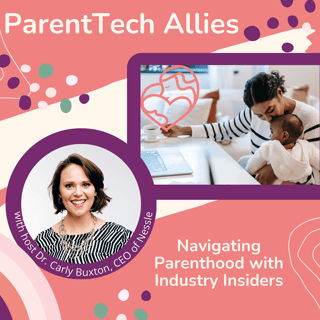
Speaker: Welcome to Parent Tech Allies, where we share insights from the movers and shakers shaping the field of parent support from fertility through the teen years.
Speaker: I'm your host, Carly Buxton.
Speaker: Let's get started.
Speaker: Today, I'm so pleased to welcome Irene Liu.
Speaker: She is the CEO and co-founder of CHEO, which offers Eastern food therapy and nutritional science for body, mind, and motherhood.
Speaker: Thank you so much for being here, Irene.
Speaker: Thanks for having me, Carly.
Speaker: I want to start out by, if you could just describe the problem that you are solving with CHEO.
Speaker: Tell us a little bit
Speaker: about that problem, how you found that it was a problem and why you decided to attack it.
Speaker: Yeah.
Speaker: Um, so I'll start off with my background, if that's okay.
Speaker: Cause I think that will explain how I found myself in this space.
Speaker: Um, my interest area has always been in nutrition, education and healthy food access.
Speaker: And so that was what I pursued in every which way before signing this company.
Speaker: I worked in private sector working
Speaker: much as i could on you know cpg companies understanding retail supply chain um but then also worked at a non-profit on the south side of chicago setting up mobile grocery routes um to solve for food deserts and so that was actually where i thought i was going to spend my career in food policy and you know improving healthy food access um but then during covid my aunt had a baby and during covet i think a lot of
Speaker: issues that were previously invisible became visible.
Speaker: Um, and so I happened to be home.
Speaker: I saw her go through her, you know, prenatal, her postpartum journey, how the stages were ever changing, how her symptoms were always changing.
Speaker: And she was always Googling on what to do about those symptoms.
Speaker: Um, when she went to her OB-GYN, there was really not really time or answers for how to help mitigate some of those symptoms.
Speaker: And like when you look at nutrition research online, it's really confusing.
Speaker: There's so much conflicting information.
Speaker: And so for me, coming from this nutrition background, I was like, this is crazy.
Speaker: Like, why isn't there a, you know, a source that makes navigating the nutrition more accessible?
Speaker: more helpful, more intuitive, but also that adapts to how your body is changing through these different changes and through these different symptoms.
Speaker: And my family's from Taiwan.
Speaker: And so in Taiwan and a lot of Eastern Asia, there's a whole practice around how you care for a woman during particularly postpartum, but also in the prenatal and fertility period and using more of a nutrition regimen for how they believe that your body is changing.
Speaker: through these different stages that I think hasn't been addressed as much in the U.S., especially in more preventive care.
Speaker: And so I thought, how do we make this more personalized for each woman's individual journey and more accessible over time so that, you know, it's not for only high income families that can afford a nutritionist and a, you know, personal chef to actually finish the last mile of it.
Speaker: Wow.
Speaker: So what did you ultimately launch?
Speaker: Tell us a little bit about the first iteration of CHEO, how similar is that to what we would see today?
Speaker: Yeah.
Speaker: So where we started, so I knew postpartum specifically was a period that women were feeling supported and where there was better options in Taiwan where my family's from.
Speaker: And so my co-founder is a nutritionist.
Speaker: focus on the fertility through postpartum phase, but also as a private postpartum chef previously for high income families.
Speaker: And we basically just took what she was doing and piloted ramping that up for 10 families in New York as a pilot just to get feedback on, you know, the meals on, you know, the different configurations, how it was impacting their body and their recovery afterwards.
Speaker: And I had originally thought that it was going to be a pilot and it was going to end in five weeks.
Speaker: And then I kind of think about it, make sure that it was kind of a problem that was big enough to pursue and really build into a business.
Speaker: Because I was also in graduate school actually during this time.
Speaker: So I saw two years of graduate school and.
Speaker: kind of miraculously what ended up happening is after our five week pilot, we kind of closed up shop for what we thought would be at least a month, if not longer to really work on R and D for the product for me to fundraise, to do it properly.
Speaker: And that December we became the first organic Google search result when you look for postpartum meals or pregnancy meals in New York.
Speaker: And this is just based off of this Shopify website that I had built.
Speaker: Uh,
Speaker: kind of plugging in my own words, not, you know, nothing professional.
Speaker: And so we got thousands of dollars in pre-orders from families in New York that December.
Speaker: And so my co-founder and I were like, oh my gosh, you know, like they're newly postpartum mothers.
Speaker: We can't just leave them in the dark.
Speaker: We can't ship it to them later.
Speaker: We have to figure this out now.
Speaker: And so by January of 2021, so literally like three weeks later, we had,
Speaker: found ourselves in a shared kitchen, hired some chefs that were out of work because of COVID, and our priority for the first year and a half was just ship the product.
Speaker: Because, you know, once that influx from the organic Google search came about, we also were featured in
Speaker: New York Times and Bon Appetit within our first quarter, which really showed the cultural momentum ahead of us, especially because my co-founder and I are both working on it still part time.
Speaker: And so we really didn't have time to think further other than ship the product for the first year and a half.
Speaker: But I think I was already starting to think, OK, what would make this
Speaker: company meaningful to build and we're not just solving this like, you know, smaller area of postpartum, but also
Speaker: Like where is the gap, especially for my background, um, you know, between income levels and, you know, how do we make this more inclusive?
Speaker: And so for us, like my big goals around accessibility around our product.
Speaker: And so finding kind of what the path is to get there.
Speaker: And, um, we have since now fundraise and are building out a digital platform all around personalized nutrition for the women's health journey.
Speaker: So I've heard you tell the story before about ranking on Google.
Speaker: And so I knew it, but I think about it all the time and I want to dig into it a little bit more because I would hate for people who listen to this to think, oh my gosh, you have to get lucky, you know?
Speaker: And I think that there's a way to hear that story and be like, ah, if only that would happen to my business, you know, it would be a huge success.
Speaker: But the truth is, I think that there was a lot of art behind, you know,
Speaker: what happened or at least being ready so that when you were the first Google result, you had a system in place to take pre-orders.
Speaker: I mean, could you tell us a little bit about, yes, the Google gods worked in your favor, but what kind of systems did you have in place to make that good luck turn into something that was a total launch pad for your business?
Speaker: Yeah, I think the things that we did well was I had set us up on Shopify already, so at least you could process payments.
Speaker: So that was important.
Speaker: And kind of we
Speaker: figure it out as we went.
Speaker: I will say like, you know, truthfully, it was lucky that we became the first organic Google search result, but it's been a lot of hard work since then building out our operations and being able to scale to serve more families versus, you know, serving 10 families is extremely different from 100 versus 1000, etc.
Speaker: And so for us, I think that every business looks different, but we
Speaker: we kind of struck a lucky chord initially, and then a lot of the hard gritty work came right after that.
Speaker: And so for, I think for us, we kind of discovered a white space.
Speaker: I think that was what the kind of search ranking showed us.
Speaker: But with that white space came more challenge around like actually building a company that
Speaker: both can scale efficiently because it is still a perishable food product, but then also understand that there's natural churn with our customers.
Speaker: And so how do you build that into a sustaining business, especially if you need investors to, you know, get to the next level, which I knew that we did.
Speaker: What has been your answer to that churn in this industry?
Speaker: Yeah.
Speaker: I mean, I think for us, that's why with postpartum, like one, we have to be
Speaker: Well, one, you have to h ave a really great product because like if you are getting them in the door and churning them before kind of like the full
Speaker: program for example like for us it's the six-week program um then you're just going to have a leaky bucket and so for us it was like making sure the product is really good and that's both from the actual delivery of the meals that they're consuming but then the full experience of like what does it feel like to um you know text with our chio concierge um what
Speaker: How does the language make you feel when you're signing up for a program and how do we build excitement around a time that can be quite anxious when there's a lot of conflicting information online?
Speaker: And so we've thought about that full experience is number one.
Speaker: And then two, being really kind of small tests around distribution channels.
Speaker: And so
Speaker: Even though we started as D2C, like, you know, with our organic Google search, I just personally believe that longer term, you need more sustaining distribution that, you know, comes in the form of working with birth practitioners.
Speaker: So our midwives, doulas, lactation consultants.
Speaker: et cetera, who are all really great advocates for us.
Speaker: And then also working with a number of women's health clinics.
Speaker: So, you know, OB-GYN clinics, fertility clinics, so that we are being really efficient about where we kind of get in front of our patients.
Speaker: Tell us a little bit about how you approach those conversations when you have something that you want to bring to, say, a fertility clinic.
Speaker: Like, what's the initial outreach look like?
Speaker: Is it on LinkedIn?
Speaker: Is it via email?
Speaker: How do you dive into those conversations, get them to trust you and be interested and then actually move to a contract type agreement?
Speaker: Yeah.
Speaker: Yeah.
Speaker: I think for us,
Speaker: And how I think about these types of like any type of partnership is how do you create surround sound?
Speaker: And so you want them to basically make the conversion easier.
Speaker: So for example, like I try to get a pathway from a customer or not even customer, a patient in this situation.
Speaker: And so for example, like we've gotten some referrals into fertility clinics from actual patients who have used us or, you know, our investors or whatever it is.
Speaker: Um, and so that's like one pathway, but then also that they have read about us in different press.
Speaker: And so we're very, um, kind of strategic about the story that we tell with press.
Speaker: Like it's not just a, you know, postpartum meal program.
Speaker: It's like, what, how do we want to support wholly the woman's health journey, um, and being seen as a thought leader in specifically nutrition for these different stages and symptoms.
Speaker: Um, and so it's both.
Speaker: both being able to see kind of top down and bottom up from these partnerships so that they understand our value and what we can bring that can be
Speaker: you know, synergistic with what they're doing.
Speaker: I often think companies expand in this space when they realize about the churn or when they, when they see related problems in this field, that they often expand to not just say like postpartum, but maybe all women's health or different challenges that people have that can be treated with changes in nutrition.
Speaker: Is that something that y'all are exploring as well?
Speaker: Yeah, I think we, um,
Speaker: are focused on being a woman's health specific nutrition company.
Speaker: But that means what are the different life stages for a woman that is distinct?
Speaker: And so, you know, fertility, prenatal, postpartum, eventually menopause.
Speaker: But I think about kind of doing those uniquely well first before, you know, thinking about other types of chronic diseases, which, you know, nutrition is helpful in all types of health.
Speaker: I want to ask a little bit more about you and your co-founder.
Speaker: So it's really interesting to me that you're both grounded in nutrition or food.
Speaker: And then it sounds like she had an experience as a nutritionist slash postpartum chef.
Speaker: So like very well aligned to the business that you built initially and are continuing to build.
Speaker: When I think of two people deeply rooted in the same thing, you know, I often think, oh gosh, how do they cover the other grounds of running a business?
Speaker: Could you talk a little bit about how either how you met each other or decided to take the leap of working together and then how you balance things when you have similar skillsets?
Speaker: Yeah.
Speaker: So to clarify, like I have an interest in nutrition and healthy food access.
Speaker: But that's not where my training is.
Speaker: So like I, you know, worked at Bain.
Speaker: I was a consultant before doing all types of strategy and operations for Fortune 500 companies, worked in nonprofit, also worked in city government.
Speaker: And so I come from much more.
Speaker: And also I have an MBA and a master's in public policy.
Speaker: So like I kind of span more of like the business side versus my co-founder is very much more of like the clinical nutrition expert.
Speaker: And so actually given that our roles are pretty clear, so I do, you know, all types of like the business strategy setting, like figuring out how to do structure strategic partnerships, figuring out like operations efficiency, et cetera, et cetera.
Speaker: And my co-founder obviously has helped a lot with that.
Speaker: especially when we were early and all hands are everywhere.
Speaker: Um, but her kind of focus areas more around, you know, the actual nutrition expertise, the product R and D, um, you know, creating more content, uh, with our strategic partners.
Speaker: Um, and so
Speaker: Does that answer your question?
Speaker: They are.
Speaker: Yeah.
Speaker: Yeah.
Speaker: But even so, I mean, like I knew you went to business school and I knew that like this emerged while you were still a student, but you cover so much ground when it comes to branding and like technology.
Speaker: Well, maybe have you filled out your team yet?
Speaker: Like who has been your first hire or who will be your first hire?
Speaker: Where are you seeing places where you think,
Speaker: gosh, I either don't have the bandwidth or I need to rely on somebody else's expertise here.
Speaker: Yeah.
Speaker: Yeah, we have filled out our team mostly.
Speaker: On the branding side, I think the benefit is that even though neither of us came from a branding background, we had a pretty strong sense of what we wanted the brand to stand for and how we wanted it to make people feel.
Speaker: And so because we had that already,
Speaker: Then we were able to work with, you know, some contractors who are really talented, but do the branding in a very scrappy way.
Speaker: And then in terms of, you know, the operation side or the technology side, I think, I think I, you know, have a large network from all of these different places that I've worked.
Speaker: And so, you know, the founder community is
Speaker: I think very generous.
Speaker: And so I've gotten a lot of referrals that way.
Speaker: So we do have a fractional CTO who's great and helps with our digital build.
Speaker: And we have a really talented team.
Speaker: It took some trials and errors on the operations side that help make sure everything is streamlined and the product is going out and we're making improvements as we go.
Speaker: And by product, I mean the physical product.
Speaker: And so I think all of those
Speaker: you know, we've filled out our team to help.
Speaker: It was very painful before we had the team because Jennifer and I were just like figuring things out as we went.
Speaker: I think typically, like as a consultant, I'm very used to, you know, figuring out who to talk to as quickly as possible, what matters, and then execute quickly.
Speaker: And so I think the benefit that we've had is that we're able to iterate and learn quickly and figure out what matters.
Speaker: Yeah.
Speaker: Tell me a little bit about your target user and how you see that changing in the future.
Speaker: I mean, I know you talked about how you don't want Chio to be something that's either a nice to have or something that only people who are paying out of pocket can afford.
Speaker: Tell us a little bit about how you're pursuing ways to expand your usership.
Speaker: Yeah.
Speaker: Our target customer currently oftentimes is a working professional.
Speaker: you know, start either, you know, a first time mother or a second time mother, uh, but probably someone who already, you know, believes that preventive health is important and probably, you know, exercises already, um, you know, believes in healthy eating might not always have the time to do it in the way that they'd like to.
Speaker: And so what we provide is basically, um,
Speaker: kind of helping relieve that burden of trying to figure it out all on their own and helping them feel better throughout their whole journey so that they can succeed in all the other ways that their lives are so full for.
Speaker: And I think that is who we serve today.
Speaker: And they've been really amazing advocates for us.
Speaker: And I think actually are so aligned with wanting us to be more accessible because they also
Speaker: recognize that we are an expensive product and they, you know, fortunately are able to afford it, but not everyone can.
Speaker: Um, and so going forward, I think how I think about excessive accessibility is working with, um,
Speaker: employers to, for example, add this as a benefit for new parents, um, or long, long-term pie in the sky dream, um, is, you know, having this as a medically tailored meal reimbursement from insurance, um, coverage, um, or medical nutritional group therapy reimbursement.
Speaker: And so those are the ones that longer term we're looking towards, but then it's more of a B2B, um,
Speaker: type of relationship.
Speaker: Cause I, I think I believe that like everyone would want this if they, if you can make the cost work.
Speaker: Yeah.
Speaker: I mean, my own take on that is that the medically tailored meal or insurance reimbursement is actually not as pie in the sky as you might originally think if you're just like listening to this and almost in my, in my own experience, you know, running the company that we run, it has been more fruitful
Speaker: to seek reimbursement and the medical angle than it has been to try to posit what we offer as an employer benefit.
Speaker: Interesting.
Speaker: Have you felt the same way or has conversation building with employer on the employer side been fruitful for you?
Speaker: Like, how do you feel about how benefits for employees in the business
Speaker: sort of a more niche space, how have you navigated that and how have you found success?
Speaker: Yeah.
Speaker: So I think on the employer side, it's something that literally everyone tells us all the time.
Speaker: Like it'd be amazing if my employer, and so it's both been a function of our own customers being like, I work at X company, like, you know, can we, you know, send it around to our HR team?
Speaker: I think the challenge actually on the employer side has been more that employers don't want to be managing like 500 small vendors.
Speaker: And so plugging into one of their benefits platforms that they are already using, which we're in conversation with a few of them, especially on the women's health side.
Speaker: So that's kind of how we see the employer track.
Speaker: And then for insurance, I think for us, it's been more that we need more efficacy data in order to prove, you know, for specific indications.
Speaker: So it's more of a, it's more of a not never, but we need to do some things to set the infrastructure first.
Speaker: Yeah, longer term.
Speaker: When it comes to accessibility, affordability, tell us a little bit about how you have determined your pricing.
Speaker: Yeah.
Speaker: So I think it's kind of all the ways of looking at competitive set from other more tailored types of nutrition programs that cover the breadth that we do.
Speaker: quality that we do as well and so that was kind of like one kind of data set that we looked at so like how do we compare across people like at our kind of level of nutrition program and then um then also looking at okay does this make sense from a cost perspective for us can we make the gross margin that we need to to make this business work you know
Speaker: with this price point.
Speaker: And then that's another input.
Speaker: And then I think the third input is like, what price point do customers expect to pay?
Speaker: So like what feels reasonable across all the different ways that they might be comparing us.
Speaker: For example, eating out is a proxy.
Speaker: Getting a lower price meal plan is a proxy.
Speaker: Or hiring a personal chef is a proxy.
Speaker: And so figuring out like where in that puzzle
Speaker: do we fit in that?
Speaker: And then being able to justify the pricing based on that as well.
Speaker: I can certainly vouch for the white space that you are filling.
Speaker: I mean, I think back to when I was pregnant with my second child, it was 2020 and I read,
Speaker: Hung Oh's book about 40 days, which is now my number one recommended book as a doula that I give or recommend to postpartum companies.
Speaker: And I searched in my own area and there was nothing.
Speaker: Maybe hiring a personal chef, but how do you look at expansion for the people like Carly who are in Richmond, Virginia?
Speaker: How are you thinking about that next phase so that everybody who wants to have access to your offerings can?
Speaker: Yeah, so there's accessibility in terms of price and then in terms of distribution.
Speaker: And so I think we talked about the price side, how we get there.
Speaker: In terms of distribution, we actually already ship nationwide.
Speaker: And how I think about expansion going forward is
Speaker: basically in specific areas where we have, you know, a high enough density of our community that we might then open up a local kitchen.
Speaker: So like one that we've considered is, you know, we have one of our operations is in New Jersey right now.
Speaker: We've kind of started the process to look into somewhere in Southern California as well, as well as potentially somewhere in the Midwest.
Speaker: Because I still believe that being able to have a local presence is really helpful and important and a way to give back to the community as well.
Speaker: Wow.
Speaker: Well, I love knowing that you're shipping nationwide.
Speaker: I think there are so many people who could benefit and get really excited about what you're offering to the world.
Speaker: So I think that's fantastic.
Speaker: And I'm looking forward to the growth that's ahead for you.
Speaker: I wanted to ask...
Speaker: now as we kind of close maybe what are you looking for what kind of collaborations are you looking for right now what what could our listeners do for you that might help you based on what you're thinking right now yeah I think for us we're always looking to connect with our practitioner community so you know
Speaker: anyone who supports the woman's health journey.
Speaker: So, you know, midwives, doulas, OB-GYNs, nutritionists, who can join our CHEO collective, which has a bunch of, you know, different ways to get involved, help with our product R&D, and, you know, obviously tell CHEO or tell their patients about CHEO.
Speaker: So that's one.
Speaker: And then two, we are looking
Speaker: to partner with more clinics with physical locations.
Speaker: So, you know, that's the OB-GYN clinics, that's the fertility clinics, even PT clinics.
Speaker: And so any, any referrals there, we would love to connect.
Speaker: Great.
Speaker: And how, how could someone find out more about the Chio Collective, for example?
Speaker: Yeah.
Speaker: So we have on our website, there's a link on the footer for our
Speaker: practitioner program, but then you can always email partnerships at we are CHEO.com.
Speaker: Okay, perfect.
Speaker: Anything that you'd like to conclude with in terms of founders who might be listening, we'd love to hear your advice when it comes to building a business in this industry.
Speaker: Yeah.
Speaker: I think for me, what's been really helpful is like just staying close to your customer.
Speaker: I think you hear
Speaker: so much noise especially when you're fundraising about you know this is too niche like how are you going to expand it's going to be too expensive etc etc and i think for us anytime things have gone hard we always like go back to being like okay like what does the customer need like they are the most important and centering your decisions around that not around all the noise that you're hearing
Speaker: It's a great way to end.
Speaker: Thank you so much, Irene, for joining us today.
Speaker: I'll be sure to drop the link to your website, wearechio.com, so that people can look you up, learn more about the business, and keep spreading the word.
Speaker: Thank you so much.
Speaker: Thanks, Carly.
Speaker: And thank you for joining us on Parent Tech Allies, brought to you by Nestle.
Speaker: Take the parenting quiz at nestle.com and get matched with the expert company, nonprofit, or resource that you could use most right now in your parenting journey.
Speaker: It's free, so give it a try at nestle.com.
Speaker: And thank you so much for listening.