Transcript
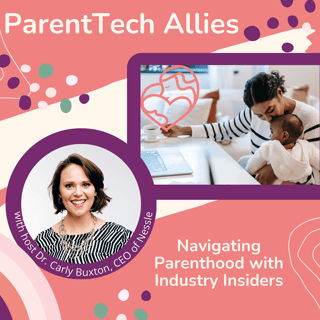
Speaker: Welcome to Parent Tech Allies, where we share insights from the movers and shakers shaping the field of parent support from fertility through the teen years.
Speaker: I'm your host, Carly Buxton.
Speaker: Let's get started.
Speaker: Arzu Zarafshan is the driving force behind Call Emi, a marketplace platform that seamlessly connects busy families with on-demand, safe, vetted help.
Speaker: She's a CEO, a change maker who advocates for gender equality and female leadership in business, and is the proud mom to an 11-year-old son.
Speaker: She lives in Golden, Colorado, and that is where Call Emi is headquartered.
Speaker: Welcome to my dear friend, Arzu.
Speaker: Thank you.
Speaker: So good to be here, Carly.
Speaker: Thank you for inviting me.
Speaker: It's so nice to see you.
Speaker: So for listeners who have not heard of our two companies working together before, we initially met at the AWS Impact Accelerator for Women's Founders and have been following along on one another's journeys for over a year now.
Speaker: And it's been exciting for me to watch everything unfold for Call Emmy.
Speaker: And I think it might be interesting to start with
Speaker: How do you describe Call EMI?
Speaker: In your own words, what is Call EMI?
Speaker: We are a care connecting platform that parents trust.
Speaker: There are two components to what I just said.
Speaker: So first, we're not the service provider ourselves.
Speaker: We have
Speaker: you know, over 36,000 service providers on our platform.
Speaker: But really what distinguishes us from the rest of the platforms out there is that a we are on demand, meaning that parents can book the service they need on their own term.
Speaker: Uh, not the other way around.
Speaker: So everything we do revolves around giving back time to busy families.
Speaker: And so if you need help 8 AM tomorrow morning, if you need help 9 PM, you know, tonight, you should be able to get that help.
Speaker: So we're on demand.
Speaker: And then the second is the trust factor, uh, trust really.
Speaker: And I know, you know, this Carly trust is the highest valued currency that a parent has.
Speaker: And that is the most important element to us.
Speaker: And so every provider on our platform has been qualified, vetted, background checked, psychometrically analyzed, skill checked.
Speaker: In many cases, they have been interviewed.
Speaker: So trust is there.
Speaker: Wow.
Speaker: And when you think of calling me today, how different is it from when you first had this idea of I'm going to build a business?
Speaker: Like how has it transitioned from that moment when you said there is a business here?
Speaker: You know, the vision really hasn't changed all that much.
Speaker: But the path to get there has had a lot of ebbs and flows, as I know you know that.
Speaker: You know, when I first started, I really didn't know what I didn't know.
Speaker: And I would say that's still to a very large extent true for all entrepreneurs.
Speaker: I mean, there's a lot that we have figured out, but there's still a lot that we don't know, and we don't even know that we don't know them.
Speaker: I think, you know, and you look at that,
Speaker: you know, you ask yourself, is this a good thing or a bad thing?
Speaker: You can look at it in either ways, right?
Speaker: Is it a good thing?
Speaker: I think the naivete was helpful, you know, that I went in it with just a blank canvas and, you know, I really didn't come in with any preconceived notions.
Speaker: But then again, you know,
Speaker: It would have been helpful if I knew a little more about this journey.
Speaker: And I'm a second time founder.
Speaker: I mean, I had started another, not started, I joined as a co-founder for another early stage startup a few years ago.
Speaker: But this is so different.
Speaker: This is very different as a founder, as someone that really creates the vision.
Speaker: Um, so to, to get back to the question, you know, how has it changed?
Speaker: How has it evolved?
Speaker: The vision is, is still the same as I first started it.
Speaker: Uh, but the path to get there just, you know, it couldn't have been more different than what I thought.
Speaker: Um, I love the origin story of call Emmy.
Speaker: So share with our, with our listeners who's Emmy and why is your business called that?
Speaker: Yeah.
Speaker: You know, so as a busy mom, you know, with big jobs, big budgets and corporate, you know, after I had my child, I knew I needed to get help.
Speaker: And the process of getting help was excruciatingly difficult.
Speaker: So like all of us, I subscribe to, you know, all of these other platforms paid my monthly dues and got connected with a bunch of, you know, providers and it was time consuming.
Speaker: It was frustrating, time consuming because I had to go through all of these profiles and connect with these providers.
Speaker: 90% of the time they wouldn't even answer.
Speaker: Um, you know, the 10% of the time that they would answer half of that, they would ghost me later.
Speaker: Um, and you know, and then I had to like take on the background check process and, you know, as a, as a consumer, you really don't, when you're background checking someone, you really don't know what you're doing.
Speaker: You don't, and you shouldn't have to, that's not your job.
Speaker: Right.
Speaker: Um, so I paid thousands of dollars for background checks.
Speaker: Even with that, we hired and fired at least 12 people.
Speaker: And yeah, and finally,
Speaker: I was able to connect with Emi and she came into my life and everything started working.
Speaker: And really the biggest thing with Emi, I mean, she's a wonderful human being, really an amazing mom, but it was the trust.
Speaker: She was my right hand.
Speaker: She was my lifeline and everything started working and things just worked and it was good.
Speaker: A few years after, EMI moved on.
Speaker: And at that time, I decided that I don't want to go through this process again.
Speaker: And I wanted to solve the problem for every busy mom, busy family.
Speaker: I think I knew that you were a second time founder.
Speaker: I am.
Speaker: Yeah.
Speaker: Why would you take this punishment on again?
Speaker: I feel like I am never doing this again.
Speaker: Did you, were you shocked?
Speaker: Did you know you wanted to go into a new business?
Speaker: How different is this from your first journey?
Speaker: Give me that perspective.
Speaker: Yeah.
Speaker: I, um, after the first experience, which was me and two other women, and it really was not a good experience.
Speaker: Um,
Speaker: And it was founder dynamics.
Speaker: That was the reason the business failed.
Speaker: After that, I really did try to go back to just a regular job.
Speaker: I did all the things.
Speaker: And, you know, how many times I've lost count.
Speaker: It was crazy.
Speaker: you know, I can, it was double digits, not, not high double digits, but probably 10 or 15 times where I got to the final, final stage.
Speaker: And, um, the word from the hiring manager or the executive was okay, great.
Speaker: We like you.
Speaker: We're gonna, uh, present you with an offer next week.
Speaker: And the offer never came.
Speaker: Wow.
Speaker: Yeah.
Speaker: And
Speaker: And I'm just the kind of a person that I like to take things in my own hands.
Speaker: I don't like to, you know, give my destiny to others.
Speaker: I want to control it.
Speaker: And so meanwhile, while this was happening, the whole idea that I told you about, you know, I, you know, my life, I mean, had moved on.
Speaker: I didn't have a job.
Speaker: My life just was in disarray.
Speaker: This idea wouldn't leave me alone.
Speaker: just wouldn't leave me alone.
Speaker: And it's very interesting.
Speaker: Like, you know, everything you look reminds you, you see reminds you of, Hey, you should be, you should be going and solving this problem.
Speaker: I mean, there are so many signs for me.
Speaker: And so I finally took the plunge.
Speaker: You know, I think about the mission that you have and the problem that you're solving, and I feel like it probably could have taken so many different forms.
Speaker: Like it could have been a content business where you're talking about solving this problem.
Speaker: It could have been you in an agency, like in your area, connecting people.
Speaker: How did you decide to build what is a tech platform and that that was gonna be the medium through which you solved this problem?
Speaker: You know, that was one of the things that, again, I stumbled into.
Speaker: I didn't know what I didn't know.
Speaker: You know, the idea that I first had was, oh, we have an app and it's going to be as easy as getting an Uber.
Speaker: That idea had been there from day one.
Speaker: And, you know, I created a, you know, I paid someone to create an MVP, et cetera.
Speaker: But really, like thinking about that, and I shared with you about care connecting platform versus us.
Speaker: me owning a company that provides the care itself.
Speaker: The first six months, it was kind of a mix of both.
Speaker: And, and I remember talking to my husband and my husband was like, our, so your brand is confused.
Speaker: It's not, are you a service provider or are you a technology platform?
Speaker: Which one are you?
Speaker: And, you know, me being so people focused, I'm like, no, no, no.
Speaker: I want to help people.
Speaker: I want to help people, et cetera.
Speaker: But little by little, I realized that just won't scale.
Speaker: It just won't scale.
Speaker: And then the other thing that, um,
Speaker: you know, we, and I know you're like this, Carly, when someone says you can't, then I'm like, I'll show you.
Speaker: I was talking to a, an investor early days, and I was explaining to her what we were doing.
Speaker: This is
Speaker: during the confusion phase that and she was like, Well, you're not really a technology company or a tech enabled platform.
Speaker: And why don't you just do that?
Speaker: And you can, you know, you can make good money and it'll be, you know, less.
Speaker: And I really got pissed off that why she's telling me what to do.
Speaker: And, um,
Speaker: And I said to her, hey, this won't, but it won't scale.
Speaker: She's like, oh, sure, it will scale.
Speaker: You know, I mean, there's this bicycle company.
Speaker: Anyways, and I'm like, no, that's not what I want to do.
Speaker: And now, you know, two years later, I look back, Carly, and I'm so glad I didn't do that.
Speaker: The platform does what it needs to do.
Speaker: And yeah, we get involved about 20% of the time, maybe 10% of the time, but 90% of the time, the technology sends the job to the caregivers and the caregivers take it or don't take it.
Speaker: And then the customer and the caregivers connect and the money flows and it's
Speaker: It's doing what it needs to do.
Speaker: And so what that does, it frees me up to think about what's next for this business.
Speaker: Yeah.
Speaker: So, yeah.
Speaker: Talk to me a little bit about your tech in the early days.
Speaker: Did you do that standard format of like,
Speaker: building an MVP that was actually you connecting people behind the scenes?
Speaker: Or did you just go straight to developers and say, this is my vision?
Speaker: And how did you choose the people you worked with?
Speaker: And share a little bit about that tech side and building the platform itself early days.
Speaker: Yeah.
Speaker: So in the very, very early days, I connected with somebody here
Speaker: locally in Denver.
Speaker: And I told him, this is what I want to do.
Speaker: I want you to build me this app.
Speaker: And, and he did.
Speaker: So it was a very, very rudimentary app.
Speaker: It was basically a thing that you would, you know, you would interface with and it would receive your order.
Speaker: So you click these buttons.
Speaker: And then, you know, those buttons that were pushed, whether it's childcare, cleaning, et cetera, et cetera.
Speaker: Those buttons would get collected, would send me an alert that, Hey, Carly wants childcare tomorrow.
Speaker: And then once I, once I would get that alert, then I get on the phone and start calling people.
Speaker: And the background check was like, oh, how do I do background checks?
Speaker: Oh, you know, I mean, I have to like figure this stuff out as we go along.
Speaker: But I learned a lot.
Speaker: First of all, we were revenue positive day one.
Speaker: So not a lot of revenue, but revenue nonetheless.
Speaker: And I learned that there was a market here and there was a need here.
Speaker: Um, and who the customers are, you know?
Speaker: Um, and then I learned about the inefficiencies of the platform.
Speaker: Like this isn't gonna work, you know, um, with my technology, you know, the first guy that built the platform, um, you know, he, he built it then, um, I, there was a diff another developer that I knew from before, um,
Speaker: And, you know, her and I just connected and she put the idea in my mind that maybe she could be my CTO.
Speaker: And I was, and she was a great developer, by the way, she was a really, really good developer.
Speaker: And I'm like, sure, be my CTO.
Speaker: That's awesome.
Speaker: You know?
Speaker: Um, and then we started working together and this is another thing, Cardi, like the naivete, right.
Speaker: And you would think as a second time founder, I know better.
Speaker: Anyway, Sherpy, my CTO, here, 15% of the company, that's yours, 15%, one five, that's a lot.
Speaker: And so a few months down the road, she was like, well, I need to get paid.
Speaker: And I'm like, but no, I don't have money.
Speaker: And so she's like, well, then I need to move on.
Speaker: and get a job.
Speaker: I'm like, okay, sure.
Speaker: And so she moved on.
Speaker: And so we were without CTO for a big portion of the time.
Speaker: And that was tough.
Speaker: That was really, really tough for us to not have a technical arm.
Speaker: Then, you know, later on my friend and I, Liz Polizzi, she had a technology platform and she just wanted to be done.
Speaker: You know, she, she wanted, she's a lawyer.
Speaker: She wanted to just go and practice law again.
Speaker: Um, and so we heard, and she wanted to be out of her venture.
Speaker: So I basically, my company purchased the technology assets from Liz and then we hired a developer team.
Speaker: to integrate those technology assets with our technology assets, with our brand.
Speaker: And anyways, and then now we have the right CTO.
Speaker: So everything worked out.
Speaker: We,
Speaker: I mean, the period that we didn't have a technical arm, that was really tough.
Speaker: So if I were to go back, I would take that more seriously and get more serious about finding the right technical resource for it, for the company.
Speaker: And then relative to the acquisition of the assets, we...
Speaker: We pushed that out in my opinion, we pushed that out too early.
Speaker: Like we got the assets, we hired the developer team, they integrated our technology, they brought it to where it needed to be.
Speaker: And then, you know, I wanted it to be out.
Speaker: I wanted it to be out in the market and Liz too, Liz wanted it to be out in the market because she wanted it to be done.
Speaker: And so we pushed it out.
Speaker: in my view too early.
Speaker: And for that reason, the lots, a lot of customers and a lot of credibility.
Speaker: And these customers weren't really thinking that, Hey, this is a beta.
Speaker: We always, that's another thing.
Speaker: I don't know.
Speaker: I mean, I go back and forth.
Speaker: We always portrayed the image of a big company.
Speaker: You know, we never, um, said, Hey, we're a startup.
Speaker: We're a small bit.
Speaker: I don't even like the word, the phrase small business, you know,
Speaker: We never did that.
Speaker: So we always came across as a pretty highly capable, highly capable, credible tech company.
Speaker: That was the expectation that we'd set.
Speaker: And then we pushed out our new app with countless bugs.
Speaker: And so we lost a lot of credibility.
Speaker: So if I were to do that again, I would
Speaker: Yeah, I still believe in, you know, meeting people's expectations and not really apologizing for, you know, I mean, apologizing for not meeting it, but not making excuses that, oh, well, sorry, we're not meeting your expectations because we're small.
Speaker: I don't like that.
Speaker: So I still like that.
Speaker: The fact that we, you know, we we have very high standards, but, um,
Speaker: I probably would have slowed down the launch.
Speaker: Yeah.
Speaker: You know, I, I connect so much with what you're saying, because I think a lot of founders are like us and that they just want to move.
Speaker: Like we just want to push the project forward.
Speaker: And so,
Speaker: okay, you're a developer and you're in my path, like, yes, let's do this together.
Speaker: And it's so easy for us to keep going and almost take things that feel like they were meant to be just because they're right in front of us right now.
Speaker: And I don't know if there's any way to change that about like somebody in the CEO seat, because
Speaker: We also need that vibrancy and that drive to keep going, keep going, keep going.
Speaker: And it's kind of only in hindsight that we're able to say, I wish I had been a bit slower, but it's interesting for me to hear.
Speaker: Tell me a little bit about that day one.
Speaker: Revenue positive from day one is a massive deal.
Speaker: Tell us about your first customer or that first day or that first week.
Speaker: Yeah.
Speaker: So my first customer was...
Speaker: and I'm going to name her because she's awesome.
Speaker: She's a friend and she also is an investor.
Speaker: By the way, Carly, you are an investor.
Speaker: So thank you so much for your vote of confidence.
Speaker: Her name is Nicole and Nicole, you know, I mean, she knew that I just launched a business that week, but even that that Dementory app that I had,
Speaker: was not ready, you know?
Speaker: And so, and I didn't know pricing.
Speaker: I didn't even know how to like charge people, you know, how to get money.
Speaker: Anyways, so Nicole called me and said, Arzu, I need a cleaner tomorrow morning.
Speaker: And I said, my app isn't ready, Nicole.
Speaker: And she's like, I don't give a shit about your app.
Speaker: I need to clean it tomorrow morning.
Speaker: And I'm like, oh, OK, let me see what I'll do.
Speaker: And so that day, I had to dig in, like, oh, she needs a cleaner.
Speaker: How do I even price this thing?
Speaker: Because I had cleaning on my app, but there was nothing behind it.
Speaker: And so we were able to find her a cleaner background check her background check the cleaner really, really quickly and get Nicole set up for payment.
Speaker: And we collected $250 the next day.
Speaker: So that was our revenue day one.
Speaker: Yes, yes.
Speaker: And it's very special.
Speaker: It goes to tell you, like, just the vote of confidence and the support of the community.
Speaker: That's just so important, you know.
Speaker: So, yeah.
Speaker: And then how did growth go for you beyond that or beyond the people you knew?
Speaker: Were you used to strategically focused in key markets or how did you...
Speaker: think strategically about the way that you would grow.
Speaker: Yeah, we've always been very focused about building a market and going one, not one market at a time, but not exploding everywhere.
Speaker: So we strategically focus in the Denver metro area.
Speaker: In the early days, I did a bunch of just experimentation.
Speaker: So I did a Facebook campaign, which actually was surprisingly successful.
Speaker: I mean, meaning that I got 100 leads for $125 spend.
Speaker: I'm not kidding you.
Speaker: And wow, what would you do?
Speaker: Tell us about the campaign.
Speaker: It was stupid, Carly.
Speaker: It was stupid.
Speaker: And I don't know how in the world that happened.
Speaker: I mean, it was from my own account.
Speaker: I didn't even have a business account, Facebook business account.
Speaker: It was, you know, like they say, boost post, you know, and please, they will tell you any performance marketer will tell you.
Speaker: Don't do that because it will not perform.
Speaker: That's what I did.
Speaker: I created a little, you know, call Emmy post, you know, what was it called?
Speaker: It was called a carousel.
Speaker: and like a bunch of images and some copy and got hyper focused on the demographics, like which the geographies I wanted to go after.
Speaker: zip codes, et cetera, and $125 spend.
Speaker: And I got a hundred emails from that.
Speaker: Wow.
Speaker: Yes.
Speaker: And then this very interesting because those hundred emails, I mean, I had about 5% conversions.
Speaker: So about 5% of them, five of them became customers.
Speaker: One of those customers,
Speaker: became like a top five customer.
Speaker: I mean, she, not to this day because she moved away, but like up until two years ago, she was spending about $1,500 a month with us.
Speaker: Wow.
Speaker: Yeah.
Speaker: Yeah.
Speaker: And so now here's what happened after that.
Speaker: And then I started working like with
Speaker: professional marketers and are like, well, you need a business account and you shouldn't do boosts.
Speaker: You should do ad spend, whatever it was, and do A, B comparisons.
Speaker: We did that.
Speaker: We've done that as well.
Speaker: Never had that performance that I had the first day.
Speaker: Wow.
Speaker: Sometimes you just got to trust your instincts.
Speaker: I know.
Speaker: I know.
Speaker: Amazing.
Speaker: And how about the focus of, I know the colony can fill lots of different gaps.
Speaker: So did you, I mean, with the cleaning and the childcare and various things, did you,
Speaker: decide to do it all at once?
Speaker: Did you decide, decide to lean in heavy on one over the other?
Speaker: How did you balance all of that?
Speaker: Because you're focusing in one market, which I can understand might make that a little bit tighter of a focus for you, but you still had all these different skillsets.
Speaker: Correct.
Speaker: So how'd you focus that?
Speaker: Yeah.
Speaker: So the, uh, the first focus was cleaning.
Speaker: And the reason behind that was I could get cleaners.
Speaker: I knew how to get cleaners.
Speaker: And so I knew how to build the supply.
Speaker: So I wanted to build the demand.
Speaker: Then when I realized how to get childcare, then we kind of pushed childcare out there.
Speaker: And the rest of the offerings, I thought myself as a busy mom, what is it that I need?
Speaker: I know you will resonate with this.
Speaker: I need someone to come do my laundry every week and put the laundry away.
Speaker: I need someone to help me clean the house.
Speaker: For a while, we are not doing that anymore, but for a while we were doing personal chef, where a personal chef would go to someone's house, cook meals for a week,
Speaker: you know, store them, heating instructions, shop, all that stuff.
Speaker: And that was actually pretty popular.
Speaker: We didn't, we're not doing it anymore because it's just, it's hard to find the supply for personal chefs.
Speaker: It's very hard.
Speaker: Yeah, that sounds really nice.
Speaker: How do you, how do you go about finding supply, especially beyond your own city?
Speaker: Because I know that you're now in
Speaker: nationwide.
Speaker: So how do you find the suppliers?
Speaker: We are nationwide, but I do want to say that, um, again, our biggest market is Denver.
Speaker: We've developed Denver as a market, but we haven't developed any other market outside of Denver.
Speaker: So if we do get demand, it's just organic, but the supplies, um, the best channel is indeed.com indeed.com.
Speaker: Okay.
Speaker: The best channel.
Speaker: And we stumbled into it.
Speaker: How do you, and what sort of thing do you post and you probably get a ton of inbound and how do you, how do you dive through that?
Speaker: Yeah.
Speaker: So, um, Indeed does a good job of filtering a lot of the applicants and, you know, in our kind of instructions and job posting, we tell applicants to come to app.callme.com and apply.
Speaker: And that's what they do.
Speaker: And then from there, our technology takes care of it, right?
Speaker: There's an onboarding process that is technology enabled.
Speaker: But yeah, I mean, we get a lot of quality, very quality candidates through LinkedIn.com.
Speaker: And so for the other markets, which you haven't focused on and you said it's organic, it does that mean that really anybody can say, I have a need, I live in this area.
Speaker: And then you and your team will do what it takes to find the personnel.
Speaker: Yeah, we have, I mean, we've tried indeed in other,
Speaker: areas as well, and it's been successful.
Speaker: So we know that that's the channel to go nationwide.
Speaker: Um, we do the 36,000, um, uh, providers that I told you, by the way of the 36,000 providers, only 7,000 of them are qualified.
Speaker: Just keep that in mind.
Speaker: Um, yeah, so, uh, but the 7,000, um, are not all Denver based 2000 of them are Denver based.
Speaker: but the rest of them are all over the nation.
Speaker: And so if there's demand out there and their supply somewhere and the, you know, the demand says, I want this service by this time and the demand, the supply can fulfill it.
Speaker: That's what happens.
Speaker: I mean, we get, we, we are getting demand from Texas, you know, and,
Speaker: I didn't create demand in Texas and I didn't create, I didn't even create the supply in Texas.
Speaker: It just shows up.
Speaker: So it's good.
Speaker: It's good.
Speaker: How are people hearing about you?
Speaker: How, how are you marketing today?
Speaker: Yeah, that's a great question.
Speaker: Um, so what, what I haven't talked to you about is the major pivot because the Facebook, um, the paid ads, uh,
Speaker: route is expensive.
Speaker: It works, but it's expensive.
Speaker: You don't need a lot of marketing dollars to throw at this.
Speaker: And it's just tough to come up with that cash.
Speaker: And so what we're doing is we're integrating our platform with event sites.
Speaker: And this would be like, I mean, at some point it would be Eventbrite, but
Speaker: Right now we have a contract with Ticket Sauce, which is like you buy your concert ticket and then you book your childcare right there and then as well, you know, with new integration.
Speaker: So we have that partnership established.
Speaker: We're talking to Access.
Speaker: We're talking to...
Speaker: restaurant reservation systems.
Speaker: So you book your dinner and you book your childcare.
Speaker: So that's a new customer acquisition strategy that we're going after.
Speaker: How do you get in touch with the decision makers at those companies?
Speaker: A lot of hustle.
Speaker: Yeah.
Speaker: Cold emails, that sort of thing.
Speaker: I've done cold emails.
Speaker: I've called their personal.
Speaker: In the case of Access, I called the chief innovation officer's personal cell phone.
Speaker: And I talked to him.
Speaker: That's hustle.
Speaker: Okay.
Speaker: I mean, I've been told don't ever call me again.
Speaker: I've had that.
Speaker: That's fine.
Speaker: It's not personal.
Speaker: They don't know me, you know?
Speaker: But yeah, a lot of hustle.
Speaker: And so now with Ticket Sauce, that will give us a lot of credibility.
Speaker: to go and call on other people.
Speaker: So, yeah.
Speaker: So much can fall into place when you get that first one.
Speaker: I feel that.
Speaker: I wanted to ask about fundraising.
Speaker: And, you know, you did crowdfunding.
Speaker: I participated in the round.
Speaker: We've thought about it ourselves at Nestle.
Speaker: I imagine a lot of founders have.
Speaker: What's your take on it?
Speaker: How did you make that decision and how did it go for you?
Speaker: Yeah, you know,
Speaker: I, um, we needed to bring in cash.
Speaker: I mean, it was decision out of necessity really.
Speaker: And, um, it was a lot of work.
Speaker: Um, and the more work you put in, the more outcome you get.
Speaker: So it's not like you put in the work and it doesn't go anywhere.
Speaker: which is not what we can say about the other side of fundraising when you try to get institutional funding.
Speaker: It is so much work and, you know.
Speaker: Anyways, in the case of equity crowdfunding, yes, it does pay out a few bit.
Speaker: Like, we closed the round at $50,000.
Speaker: If I had put in 2x amount, we would have gotten 2x amount.
Speaker: If I had 2x amount of work, we would have gotten 2x.
Speaker: But it is a lot of work.
Speaker: And yes, I would do it again.
Speaker: I totally do it again.
Speaker: What's your advice to somebody who's getting ready?
Speaker: What platform should they use?
Speaker: How do they make a successful campaign?
Speaker: Yeah, we used WeFunder and it was a good platform.
Speaker: Great support on the other side.
Speaker: So I have nothing but great things to say about them.
Speaker: But, you know, 99% of the money came from our friends and family.
Speaker: not from investors that I don't know.
Speaker: So the founders that are getting ready to do this, I would say that, you know, just prep your network, mind your network and reach out and update.
Speaker: And, you know, the people that believe in you, they will come through.
Speaker: It's just what happened to me.
Speaker: Yeah.
Speaker: Yeah.
Speaker: And I would do it again.
Speaker: Totally.
Speaker: Well, yeah, I think it gives such a wonderful opportunity for people who believe in you who may not have thousands of dollars to invest, to put something behind your project.
Speaker: So I, I think that it's, and also what I've been told is that it kind of creates a network of people who are
Speaker: primed to use your product and share the message of it and be evangelists in a way because they have a piece, they have a stake in the company now.
Speaker: So I think that makes a lot of sense for companies like ours who are focused on individual consumers.
Speaker: I know we're at the end of our time.
Speaker: Is there any sort of last thought that you would like to share to the people listening today who might be either at the start of their founder journey or
Speaker: maybe well into it and thinking about your company and ways to collaborate with you.
Speaker: What sort of thoughts do you have that you'd like to have people walk away thinking, oh, that's calling me and that's how I can either learn from them, use them or work with them?
Speaker: Yeah.
Speaker: So thank you for asking me that, Carly.
Speaker: For the founders that are at the beginning of their journey, and this is consistent, my advice to you is just don't overthink it.
Speaker: If you want to do it, do it.
Speaker: you know, and if you don't want to do it, then don't do it and move on.
Speaker: But, you know, get out of this.
Speaker: Oh, should I, should I not just don't overthink it?
Speaker: Get in there.
Speaker: You'll learn a lot.
Speaker: Again, there's so much that you don't know.
Speaker: And the only way to know is to do it.
Speaker: But for the ones that are further down the road and want to partner, we welcome all kinds of partnerships.
Speaker: Um, we have, we, we have done, um,
Speaker: you know, brand partnerships where we promote someone else's product, someone else's, either it's a physical product or a service.
Speaker: We would love to work with employers to, you know, get employers to provide the service or to create a path to call ME for their employees.
Speaker: And it's not gonna cost the employers
Speaker: anything to do that.
Speaker: So we'd love to work with them on that.
Speaker: And then whatever else, I mean, the possibilities are endless and we're very open to all kinds of partnership ideas.
Speaker: And I know you've been doing a lot of conferences, right?
Speaker: Like you, how does that work?
Speaker: If someone's doing an event, how do they... That's a great question.
Speaker: That's also another part of our big pivot that is really exploding is
Speaker: on-site childcare for events and conferences.
Speaker: We have Colorado Bar Association that comes to us for their annual conference.
Speaker: We have American Academy of Forensic Scientists that have a big conference in Denver.
Speaker: And so how that works is if that's something interesting to you, we know how to do that.
Speaker: Um, come to us and say, talk to us about your conference and, um, we can manage it soup to nuts for the childcare area, or we can tell you, th is is how you go on our app and book the series that you want for your conference.
Speaker: Uh, either way it works.
Speaker: Um, we'd love to do that too.
Speaker: That sounds cool.
Speaker: Well, we've been talking about doing some, some pop-ups here and there, um, in a few of our key cities for Nestle.
Speaker: I'd love to rely on you all for that.
Speaker: It's good to know that one thing off the list of things you have to play in.
Speaker: Absolutely.
Speaker: Yes.
Speaker: We would love that.
Speaker: Yes.
Speaker: Well, thank you so much for sharing your story and I'll make sure that in the show notes, people have all the different ways to connect with you and with Call Emmy.
Speaker: And I think we can learn a lot from the journey that you've been on and take a lot of inspiration from the work that you're doing.
Speaker: Thank you.
Speaker: Thank you for giving me the opportunity.
Speaker: It was wonderful.
Speaker: And thank you for joining us on Parent Tech Allies, brought to you by Nestle.
Speaker: Take the parenting quiz at nestle.com and get matched with the expert, company, nonprofit, or resource that you could use most right now in your parenting journey.
Speaker: It's free, so give it a try at nestle.com.
Speaker: And thank you so much for listening.