Transcript
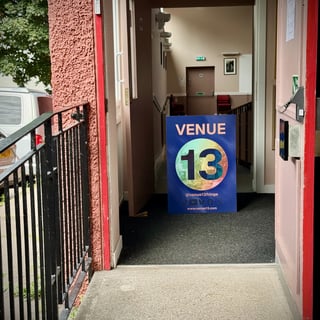
Speaker: Hello and welcome to the very first episode of Podcast 13. I'm Vanesa Kelly. And I'm Ian Garrett. We're your hosts and the co-directors of Venue 13 Fringe Limited, which focuses on bringing you amazing shows at the heart of the Edinburgh Festival Fringe.
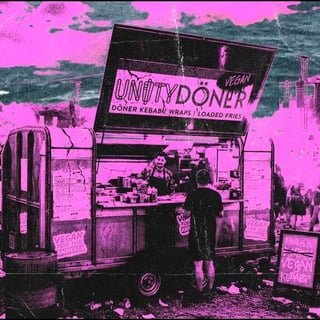
Speaker: That's right, Ian, Venue 13 has just wrapped a spectacular August of programming at the Edinburgh Fringe. Venue 13 became a thriving community hub. Its program included workshops, tastings, pilates classes and Market 13, which was a collaboration with Edinburgh's top vegan businesses.
Speaker: This made Venue 13 the first fully-digoned fringe venue, earning praise from the Gagnury, from local influences, and delighted audiences. The venue also produced AI Campfire, one of the first fringe shows to use generative AI, blending live performance with AI-generated Scottish folklore.
Speaker: The show was recommended by Edinburgh Fringe Reviews, earned three stars from the Scotsman, and was celebrated for its inventive mix of technology and myth. Now, as part of the Climate Change Theatre Action 2025, the venue presented different climate plays every day from this year's anthology, and now completing the full set of 50 with the last plays released in today's episode.
Speaker: Yes, in this episode, we're sharing the final plays from the CCTA for 2025. That means that together with all of you who joined us live in Edinburgh, we'll have completed the full set, 50 plays in total.
Speaker: Podcast 13 launches today as the natural next step. It begins by completing the CCTA project and will continue weekly with play readings, interviews, debates on theater and sustainability, and updates on Venue 13's programming, keeping the spirit of August alive all year round.
Speaker: Ian, for people who don't know you yet, tell us a bit more about why you care so deeply about this intersection between theater, sustainability, access and technology, and why Podcast 13 feels like the next step for Venue 13.
Speaker: ah Well, so my background is in performance design and sustainability. I spent the last couple of decades building organizations that look at how culture can be a driver for climate action. I co-founded the Center for Sustainable Practice in the Arts in 2008, and I'm a producer for Toaster Lab, a collective exploring mixed reality and live performance, especially focused making work which reveals underrepresented stories and those that are lit related to climate issues.
Speaker: also teach ecological design for performance at York University in Toronto. For me, Podcast 13 is about continuing the conversation we've started here at The Fringe by presenting accessible shows about climate action in new hybrid ways, so and then also exploring what sustainability in the arts really means.
Speaker: That includes talking to playwrights and producers about how they're making work responsibly, sharing tools and knowledge, and connecting audiences to the ideas shaping a more sustainable, accessible, and hybrid creative sector.
Speaker: Vanesa, your own journey to this point is fascinating. You're a long-term vegan who went from pharmacology to major hydrogen vehicle launches, to co-directing a theater venue and writing and co-producing your first show.
Speaker: Why was creating a podcast about art and climate action important to you? um that That's true, Ian, when you put it like that. My career path has taken me from the lab to large-scale corporate events to also create creative production.
Speaker: um Working in ah hydrogen technology in green tech, and that was a sector that really opened my eyes to how innovation policy and culture ah generally intersect and how new ideas, um like from startups, for example, are presented globally and whether they are accepted. and It depends on how they are presented.
Speaker: And I wanted to bring that same system, that same energy ah into the arts. With Veri13, my goal has been to create a wraparound platform that supports artists and audiences by having those meaningful conversations about the climate emergency and access to the art and inventive way of rethinking how we present work.
Speaker: Now, this podcast is an extension of that. It's a space where we can go deeper. share weekly um sort of like the play readings from past ECTI anthologies, and also invite some guests, some guest readers and playwrights to talk about why these stories matter and why these topics matter.
Speaker: That's right. And we're not going to stop at the play readings. No, we are not. You can also expect interviews, debates about theatre, art, sustainability and climate action, emerging technologies, plus news about upcoming workshops, news about vegan food pop-ups that may happen in Edinburgh or in Scotland in general, or even in the UK, and of course, more programming for Venue 13.
Speaker: So today's episode is both a finale and a beginning, a chance to complete our 2025 CCTA journey and to launch Podcast 13 as a platform for a climate, hybrid, and accessible storytelling.
Speaker: Exactly. So let's dive in. Here are the final plays from CCTA 2025. And thank you, special guest on the other side of the headphones. Thank you for joining us as we start this new chapter together.
Speaker: And stick around after the readings for a little chat in which we reflect in our past fringe.
Speaker: And now we'll bring to you the final three plays from the CCTA 2025 at the New 13. We spent the entire month of August presenting all 50 of the plays across 20 different events with dozens of partners.
Speaker: These three were recorded by students from York University, which is in Toronto, which is where I teach, And they were at the Fringe's part of the class, but came over to help us get these last three plays recorded.
Speaker: The final plays we're going to hear are Scary Scary by Clay Bainter, Undertow by Keith Barker, and We're Running Out of Chairs by Kirby Vicente. Here they are. First up, we're going to hear Scary Scary by Clay Bainter.
Speaker: You'll hear it read by Alex Saint-Dong and Emily Swartz.
Speaker: Scarecrow? Scarecrow. Scarecrow! Go away. Please. I don't want to be here either, but get up.
Speaker: Something is coming and you have to be scary. Please.
Speaker: You of anyone should know, Little Crow. I'm always scary. Now go away, I say. I won't. I know. You're the scariest I know.
Speaker: But we... I need you to be scary. yeah I'm tired, Crow. Leave me alone. No. i can't leave. Not until you get up.
Speaker: Not need. There's a monster. birds... The birds are all gone. Come back in the spring. don't understand. The birds are all gone.
Speaker: I said that. I have always scared them away. not this time. They're gone. Gone. No, crow. I scare away the little birdies, like you crows.
Speaker: Those gulls. Pigeons. The buzzards. The whooping crane. The punateel. The blackbirds. The takahee. Starlings and finches.
Speaker: The black-capped vario. The ivory-billed woodpecker. Geese. Curlew. The kookapo. The herons. California condor. Ravens. And then they come back in the spring.
Speaker: I know, I know, I know. Listen to me. Everything gone. I can't breathe. They come and they go. They come and they go. That's the game we play.
Speaker: Those are the seasons. It has devoured the seasons. I can't breathe. I can't breathe. What has devoured what are you talking about? Slow crow, slow down.
Speaker: The seasons. One by one. Winter? with its front teeth through cobalt ice. It'll return. Summer will shine again and you will see.
Speaker: Still steaming, it swallowed it up. You're just confused. Everything returns. See, it neither season can exist without spring and fall to usher them in.
Speaker: Scooped up, the pip of spring and the rot of autumn, greedily. It can't be. Nothing can do that.
Speaker: Yes, it can, Scarecrow. The game has gone grave. You have to be scary again. It's a monster. The stories of monsters are often worse than the monsters themselves.
Speaker: I can't breathe. I can't breathe. You have to be scary. What is that you're carrying? coin? What's a coin?
Speaker: don't know. They keep up appearing. Every time the monster takes something, these are left behind. Give it here.
Speaker: Could it possibly be food? It's hivorous. It must be a seed, then. It's lifeless. Maybe it's a form of protection. Soulless.
Speaker: You say this monster leaves these in its wake? Everywhere. It just continues to take anything and everything without stopping. You need to scare it away.
Speaker: it must have a weakness. We could blind the monster. Tell me about the eyes, Crow. Does it blink or bat? Stare, glance, or gaze at the state of things?
Speaker: Eyes are massive and swirling, staring down from the center of dark, dangerous clouds, its tears terrorizing everything in its path. Well, then, we'll have to bind it up.
Speaker: Tell me about its hands. Does it cradle or caress? Does it stroke, tap, pet or play?
Speaker: It doesn't play, Scarecrow. Its hands are bent metal machines that have left great deep gashes in the earth.
Speaker: Massive bloody sockets were great redwoods on studs. We could reason with it Does this monster speak, Crow?
Speaker: Call? Cry?
Speaker: Does it ask? Does it question or tell? Does it sing? Does it say? What are its sounds? You're not listening to me.
Speaker: There is no reason. The sounds the monster makes are a-or-bring my dank droning engines. pops cracks of the earth breaking open and spitting blood.
Speaker: Its sound is the dead silence of stopped rivers streams. It's the choking quiet of animals that have no more breath, with which to chirp, tweet, cook, bark, growl, hiss, snarl, or scream.
Speaker: No, it does not speak, Scarecrow. Because it does not have to.
Speaker: Then it really is a monster. sir That's what I've been telling you. i cannot help you. I'm sorry. What do you mean you cannot help?
Speaker: You have to help. You have to scare it away. Who do you think I am, Crow? You are scary, scary.
Speaker: You've always scared away the birds, but the birds are gone. You are frightful and intense. The spine-chilling galley-bagger, terrifying and hair-raising mites.
Speaker: You are here to make things right. To scare away what needs to be scared away. Crow, I'm the curator of a cycle. I chase you off and you come back.
Speaker: You always return. I am here to maintain a balance, to even this field, to protect. But the birds are gone. The sun grew hotter and hotter and hotter.
Speaker: It was suffocating, stifling, and we couldn't breathe. You have to do something. They couldn't breathe. I couldn't breathe. Do something. can't breathe. I can't breathe. can't breathe. I can't breathe. Slow, Crow.
Speaker: Slow. Slow crow, slow, slow crow, slow, slow crow, slow.
Speaker: Why aren't you afraid of me?
Speaker: i was afraid of you. You knew where we belonged. The fear you stirred in us kept us moving, growing. it kept us alive.
Speaker: The fear was bound by my love for you, for all of you. It fueled our cycle, your journey, and most importantly, ensured your return.
Speaker: The value of the fields and the vitality of the crops. Even my existence was made meaningful because of your return. And if they're oh all gone, if the birds are really gone, then our cycle is over.
Speaker: i can't breathe. I can't breathe, Scarecrow. The birds are all gone. You are so scary. You are so scary. ah I ah can't breathe. You are, you are, the birds are all gone.
Speaker: Slow, Crow. Slow. Rest. Rest, Crow. Rest.
Speaker: If our cycle is complete, then you are, you you are
Speaker: i am obsolete.
Speaker: For our next selection, have Undertow by Keith Barker. This is read by Harshani Anjalfali and Catherine McKenzie.
Speaker: Mom sent you out to apologize? No. It's okay if she did. Not everything is about you, idiot. I came out here to get some fresh air. Uh-huh. Dude, your house is way too small to be hosting this many people. You say that every year.
Speaker: And yet, here we are. You're just bitter you had to spend 200 bucks on gas to get here. Why do you have to be like that? I wasn't the one yelling at the dinner table. You started it. Then don't ask me what I think about your truck.
Speaker: I was talking about the color, not your opinion on tailpipe emissions. How many trees do you think you'll have to plant to offset the CO2? You asked that question to all your lawyer buddies who drive SUVs to work.
Speaker: I try to lead by example. i ride my bike. So you don't. I say to them what I say to you. Little changes go a long way. Well, here's a little change I'd like to see. Stop telling everyone you're vegan.
Speaker: Every second word out of your mouth is vegan this or vegan that. Yes, we know because you never shut up about it. It's embarrassing. Auntie Bev asked me what being a vegan means and Razzie wanted to know if I still eat cheese. So I had to explain to them again.
Speaker: You don't eat Dude, how many times? I don't keep track of what you eat. Actually, I found a really nice fermented cashew cheese you need to try. Stop. Those words don't make any sense to me.
Speaker: Plant-based alternatives are the way of the future. Yeah, a sad future. Hey, I love a good cheese, but I hate factory farming and the impact it has on the environment, so I gave it up.
Speaker: You fly for work. Isn't that bad for the planet? I choose my airlines carefully, and fly far less than I ever did. Wow. You have an answer for everything. Dude, I think about these things all the time. There's not a day that goes bad.
Speaker: Stop talking. Please. I came out here to get away from people.
Speaker: Okay, I'm just going to say one more thing and then I'll drop it. There are seven billion people on this planet and if everyone looked at their choices, considered their footprint, and understand that small actions make a difference... Why can't you just be normal? Mo is talking about the environment, not normal.
Speaker: I have neither the time nor the crayons to explain it to you. You have one-year-old and another baby on the way. So? You know what? Forget it No.
Speaker: I'd like you to finish. You're getting mad. It's too late for that. Spit it out. Here's what I don't understand. Even if you don't believe in climate change or you think it's a hoax, why not do the little things scientists are asking us to do in case you're wrong?
Speaker: What if they're wrong? Not the point. Small actions will make the world a better place regardless. Don't you want to make better choices for your kids? You don't know the first thing about my You refuse to own a recycling bin. Not true. You don't have one in your house. It's more complicated than that.
Speaker: What about that composter I bought you a year ago? It's still sitting in your garage. Well, yeah, but you roll your eyes at the mention of renewable energy. Because it pisses me off. And you talk about being a meat eater like it's a badge of honor with your guns and your hunting right. No, no, no.
Speaker: And when the world is shifting to electric vehicles, you go out and buy the biggest truck you can find. I need it. The only reason you ride your bike to the office is because it's 20 minutes from your condo.
Speaker: I need my truck on job sites because I keep all of my tools in it. I may not be perfect, but at least I don't go around lecturing people about things I don't understand. No, you just scream terrible things at them at the dinner table in front of their family.
Speaker: You're right. I shouldn't have yelled at you like that.
Speaker: And I shouldn't have made fun of you for your truck. I like the grape. It's a good choice. Thanks. It's electric.
Speaker: What? Why didn't you Because I'm exhausted. The baby isn't sleeping, so we're not sleeping. I was excited to show it to you, but then you started lecturing me and it pisses me off. You're so stubborn.
Speaker: Okay there, judgy pants. I wasn't judging you. And just so you know, I'm proud to be a hunter because I like to know where my meat come from. I don't want to buy something on white styrofoam full of hormones that's been fed GMO corn its whole life.
Speaker: What about tofu? Hey, if it was in the forest and I could shoot it, then sure. But again, you're buying something factory farm made with potential GMO soy. And who knows what else.
Speaker: Air? And the reason I don't own recycling bin is because the town won't extend curbside pickups outside a city limits. And the only recycling depot is over 45 minutes away.
Speaker: Maybe I can help? What, on your bike? Whoa. And yes, it's true, I haven't set up the composter yet. But that's because when the baby arrived, our lives descended into chaos.
Speaker: Right. And the only reason I roll my eyes at renewable energy is because it's way too expensive. I wanted to get solar panels for the shop, but I can't afford it. I'm sorry.
Speaker: i was judging you on things I didn't know about. You were. But I was too. I'm the worst. Listen, I'm only going to say this once.
Speaker: You repeat this and I will murder you in your sleep. I read the articles you sent. I looked at the websites you told me to look at and I even listened to the stupid podcasts you sent me.
Speaker: This stuff can be annoying. Like, really annoying. But I kinda like it too. You do? I just wish you'd acknowledge that these things are more complicated than black and white sometimes.
Speaker: I know. i will. I promise. Okay. You're really going to like that cashew cheese. Red Tupperware. You tried it? and It is good. Told ya.
Speaker: Yeah, yeah, of course you did. Let's get back in there. I gotta to tell mom I fixed this. I knew she sent you out here.
Speaker: And closing out the CCTA 2025 at Venue 13, we go to We're Running Out of Chairs by Kirby Vicente. This is read Y. lou
Speaker: One of the healthiest and most sustainable ways to help save the environment is to walk. Walking produces less noise, pollution, and emissions that can be harmful for the environment.
Speaker: Yada yada, you can Google the results of walking. So, let's play a game of musical chairs. This way, we are strengthening our limbs and relying less on harmful emissions, minimizing our carbon footprints by adding more environment-friendly footprints.
Speaker: Even if the world is burning, we are helping it by burning calories.
Speaker: But if the road aren't made for walking, shouldn't we commute more? Maybe be ride a bike?
Speaker: I don't know. In our place, bikers often get endangered by angry mobs of car drivers. I mean, seriously, we are taking one-fourth of the road and you have almost two-thirds of it.
Speaker: Bikes scare me. Maybe it's fine to take a seat and start commuting, yes?
Speaker: That's also sustainable, by the way.
Speaker: Yesterday, i was rushing to do my errands. So I took a motorcycle taxi. That's still commuting. Anyways, I passed by the garbage truck that went to our house that morning and saw I dump all the trash into this mountain of garbage.
Speaker: And let me tell you how that was just a waste of my time, carefully doing my triple Rs. Segregating my trash and all that.
Speaker: I should sit on this side. So, I took my time and really sat on the side.
Speaker: I remember enjoying a juicy bite of this McDonald burger and I was watching some YouTube video on the oldest burger ever. That one still looked the same since it was bought in 1998.
Speaker: I'm scared the fact that this burger can possibly outlive me. You guys want to sit and enjoy this one?
Speaker: That was some philosophical burger talk.
Speaker: Since fast food is cheaper, i tend to eat more of it these days. Every day, it gets more expensive, you know? The healthiest choice burns up my wallet so fast.
Speaker: So, we go cheap.
Speaker: And cheap often come in small packages. Small packages eventually and up as mountain of garbage. But they last. Just like that very old burger I mentioned.
Speaker: But what about us? Will there come a time when the microplastics in our body will outlive us? That's possible. Science says that infants born in the late 90s up to the 20s are born pre-polluted.
Speaker: Sit.
Speaker: That means they are as old as us.
Speaker: Remember that cheap small package? When it doesn't end up as trash, it finds a place in our body. The world is big enough to hold all our garbage, but when it starts piling up, eventually it will find a space inside us.
Speaker: You can't outrun what's inside you, right?
Speaker: You can sit and talk about action plans.
Speaker: I believe in the impact of individual action.
Speaker: But I believe that we should look at the big picture. about the stuff beyond our control.
Speaker: Let me ask a question. When you lose in this game, is it your fault because you weren't fast enough? Or is it because there's less chairs to begin with?
Speaker: This game of musical chairs can only be played when there's not enough chairs. What you can only control is your ability to get a seat. You cannot control the amount of chairs or when the music stops.
Speaker: So you're stuck in a game where the chairs are running out and you need to take a seat. Like our time and our place on this planet, the chairs are running out.
Speaker: It's only a matter of time until one chair left. But how did the chair come to life? Obviously, there's a chair factory in charge of producing it.
Speaker: That means that by logic, there's still a lot of chairs. So, are we really running out of chairs? This is a story made up by Chair Factory so that we can keep playing their game.
Speaker: That's it's our fault that the chairs are running out because we're not taking action. But they have control over the chairs. The game won't work if everyone has their chairs.
Speaker: That's exactly what they fear.
Speaker: Survival isn't supposed to be a game. Everyone deserves to have a place on this planet.
Speaker: Individual action could only do so much. As long as the chair factory continues to play the game of musical chairs, we'll eventually run out of it. But it's not too late.
Speaker: The music will continue to play. The world moves on again. And we can create a world where there's chairs for everyone to sit in. A world where everyone wins.
Speaker: Okay. Well, that's a relief. We set out to get all of the CCTA plans read at Venue 13 this year, and we did it. Now, when we started with the relaunch of Venue 13, I had thought that using the CCTA plays and bringing on partners would be an easy way and to bring in the first year of programming.
Speaker: I was surprised and perhaps I shouldn't have been that coordinating a couple dozen partners all doing different shows was a lot more work than I thought it would be. But I'm glad that we got there. Starting up is always full of surprises. Vanesa, what was one of the biggest surprises for you this August?
Speaker: I was actually surprised by the number of people who came to the launch of ai Campfire. At some point, we started having conversations at the end of the show and sitting with the audiences for a few minutes to discuss what they thought, you know, what they thought was really interesting.
Speaker: um A lot of people weren't really familiar with the stories which were featured about the Kelthys and the Selkies or so much Scottish folk were at all. um And even those that knew the stories felt that they were reintroduced to the stories for the way that we told them in a contemporary way and in a contemporary setting.
Speaker: Yeah, that was something that I hadn't suspected would happen either. And I think that it actually became a bit of a highlight for me. Are there any other highlights or standout moments that you wanted to share before we sign off?
Speaker: um I think it was, you know, it's important to say that it was the number of people who asked us if we will be back next year or what we were doing next. You know, it was kind of like that they were seeking that continuity because they enjoy themselves so much in the space that we've created.
Speaker: There was a great community feeling where people felt welcome and comfortable. And that was always the goal, you know, but having people to actually come and ask, saying that they wanted us to come back and to provide this type of place at the Fringe, felt like they were really, that we have really accomplished something important.
Speaker: Yeah, fringe. it's um It's never a dull moment. I think that's actually what keeps me coming back. It's always different. And I don't know if I'm really ever going to figure it out. So that brings us to the end of our first episode of podcast 13. We've closed a loop on climate change theater action 2025 for venue 13. It will continue through the autumn through a global array of events that you can find at climate change theater action.com.
Speaker: It's also opened the door to a new way of staying connected beyond August. And we'd love to hear from you. but What was the highlight your 2025 festival? What surprised you the most about the launch of Venue 13 this year?
Speaker: Share your thoughts with us on social media or drop us a message you through the Venue 13 website. Make sure to subscribe so you don't miss our future episodes. Coming up, we'll be talking with playwrights, producers and artists about sustainability, accessibility and creativity at the Fringe and beyond.
Speaker: Thanks again for listening and thanks for helping us carry the energy off the fringe into the rest of the year. so that's us signing up for now. This is Ian. And I'm Vanesa. See you next time on Podcast 13.