Transcript
Speaker: It's really interesting that on all the Facebook groups, people are like so toxic and they're like real gatekeepy, like foreigners stay out. And i don't know, it's never been local. Occasionally, Jay and I will come in there as like keyboard warriors and shut them up really quick. We felt the same. People are so freaking nice if you try to communicate with them.
Speaker: Welcome back to the Buying a House in Japan podcast. Today, i am solo once again, but I got another co-host with me here. Welcome back to the podcast, Kisan. Konichi, happy to be here. This is our third time having you on. For first-time listeners here, Eric was our first Akiyamart Direct customer, kind of our guinea pig. He didn't know it at the time.
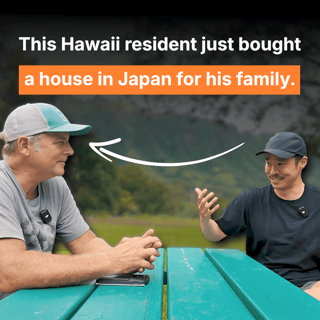
Speaker: Eric has since bought a place in Niigata, and he is going to be working with us, more formally doing consults, but also Eric has such a cool background and story. Eric, welcome again to the show. Do you mind giving, did I miss anything in that intro? Yeah, no, I don't think so. High level, I lived in Japan for 20 years, all the way from Aomori Okinawa and wanted to try something different. So we picked Niigata right in the middle.
Speaker: Were you born in Japan? Or like how many years did you spend in Japan? I was actually born in Germany. And then shortly thereafter, spent like my first, like when I was three to five, I think, or three to six, I went to kindergarten in Okinawa, Japanese kindergarten.
Speaker: And then I moved to Aomori Prefecture where I went all the way and I got a job on the base, on the military base and was a private contractor for the military in Japan.
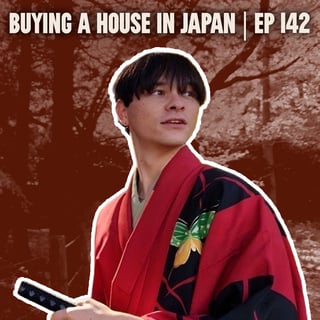
Speaker: You got to send me that photo. I think you sent me a photo of your kindergarten photo. You're like the only one, dude. Will that be the will it be the picture for the podcast? hour For sure. that We're making that. Okay. I grew up similar to you where I went to Japanese school as a kid, but my Japanese sucks. What's your Japanese level? Can you speak? Dude, it's embarrassing. I don't like telling people that I've been there that long because they are with you'm I've got trophies for Soroban.
Speaker: Oh, my two, dude. We're scrows. Yeah, dude. I got them sitting right next to them. I got three trophies. Like the huge one with a hand and the beads. No, I've got like a chick holding a trophy with the wings. Oh, shoot. We got to have a Sotoban competition, bro. Yes. I love math and numbers, but I'm really bad when it comes to language.
Speaker: But I do my Duolingo every day. Okay. So you spent a lot of time in Japan here. That's great to hear. And then you came back and where do you live now more or less permanently? And what do you do? Transitioning to... Tera Domari in Niigata Prefecture.
Speaker: But in the States, we're working on downsizing and selling off cars and hopefully the house within a year. Big moves. Yeah. And I'm working now on business manager visa and the LLC and things like that in Japan so that I'm legitimately in Japan for extended amount of times legally.
Speaker: Yeah, we're really excited to bring Eric on board too because he has a different lens. Joe, he's a software engineer. I do some real estate stuff. And Eric, is a contractor done yeah tell us about your experience there been a general contractor since 2018 in minnesota gosh i've been in building materials probably 10 years previous to that and again my mindset is just one of like always wanting to build things in general whether it's a house or woodworking or cars so i just enjoy seeing things come together with my hands and then going oh my gosh i did that and it's cool because japan homes allow you a little bit cheaper playground to experiment with renovations and going, oh my gosh, I did that.
Speaker: Question people are probably going to ask, are you like looking to leave the US permanently and relocate? And if so, why? I think a lot of it stems from because I did spend so many of my formidable years there. I wanted to just be back home is how I feel it is when I'm there. You know how like you might have different circadian rhythms based on your sleep patterns and things like that. It seems like whenever I'm in Japan, ah get good dreams and good night's sleep, which sounds so hippie-ish of me, but it's genuinely like really comforting to just sleep when I'm in Japan. Interesting. Yeah, that's one small little bit.
Speaker: Every time i'm there on vacation, I'm like, oh my goodness, my sleep patterns are really good. And I'm not, I'm in a hotel. So it feels like home. And then it also feels like I don't want to beat up on our current scenario. Do it. I don't feel like the government really has our best interest. We are just a number on a balance sheet for taxes. Whereas in Japan, I'm paying $200.
Speaker: And gosh, I want to pay more in property taxes because I feel like you pay 200 bucks, you feel like you get 2000 back value. And so you're happy. to pay your tax bill. Whereas here you're questioning, what did I buy?
Speaker: Absolutely. So are you going to sell your house here? So my plan right now is hopefully over winter to locate Japan and then have a friend rent my house who is a real estate agent here in Minnesota, allowing them to sell their condo, rent my house for really cheap, and then allow them to rebuy at their leisure.
Speaker: And then as soon as they rebuy, they'll sell my place. And I'm getting like my mortgage amount in rent from them. So if for whatever reason chaos ensues, I have a fallback. I still have the house, but I would probably keep it around for about a year where I'm renting it out. I have a fallback for a year and then I sell and invest 100% in Japan.
Speaker: Okay, that's the plan, man. That's crazy. You're going all in, but also I hear you. I feel very comfortable in Japan, feel very safe. That being said, Japan's government has its own deep problems, but I hear you like, it feels like we're being boiled alive in the US.
Speaker: Yeah, and you're right. Japan has definitely their struggles and it just feels like they're a smaller boat that's quicker to make changes and react for their society.
Speaker: And they lead with a society first mindset rather than a corporation first mindset. And you are relocating with your wife, Beth. How did you convince her? How did she react? We find that a lot of our customers are usually the dude being like, hey, I want to move to Japan and feels like the wife is being convinced or dragged. But what was Beth's situation? That's a great question. So we went on number of vacations. I took her where I grew up and stuff like that on our very first trip. And we did a road trip from Tokyo up to Aomori, which is already a different trip for somebody to go on their first time in Japan. Very different, actually. Yeah. I rented a GTR. I had that dream in mind. so we cruised the coastal road there and back.
Speaker: And for me, one of the biggest pieces to winning her over was showing her a good time in the food department. Okay, smart. She is homegrown, Minnesotan, through and through, towny, like small town Minnesota. i don't think she'd ever left the country prior to going to Japan. That's a shock.
Speaker: Yeah. No Mexico, no Canada, just right to Japan. And when she was in my hometown and I took her to a number of restaurants that I grew up with and she saw how safe and accommodating and how orderly everybody is. Some people look at it as a very rigid society because you have to stand on one side of the escalator. Whereas other people might look at that as, wow, I love how OCD compliant... everything is right and then i took obviously a few trips and she understands it's where i grew up so there's a little bit easier i think in convincing food though is the big one i hear you so i'm bringing my fiance in june and and there's like this new bakery that open up next to our spot in bepu that's so good and my fiance loves bread so that's my strategy next japan trip
Speaker: Yeah, just find what they need or want and then basically overwhelm them with good things of that aspect. Exactly. One of our FAQs are people always ask about driving.
Speaker: Do I need a license? How are the roads? Eric, you're a big car guy. Give us a high level. What's it like driving in Japan? What do i need as a U.S. license order to drive around there? high level international driver's license from AAA. Go to your local AAA office, pay them 60 bucks tops. If you're not a member and you need a picture, they'll issue it for one year from the time that you want it to start.
Speaker: So you can get it month or two or three or whatever in advance, and then you're good. If you have that, you can drive rentals and everything else. I think you've mentioned on a previous podcast, when you get a rental, if you're going to long distance, definitely get an ETC card with your rental. like Request that for the toll roads.
Speaker: Is it scary? We also got another question. I'm not used to driving on the other side of the road. I feel like you get used to pretty fast, but from your perspective, any tips for someone who's afraid of driving on the other side of the road?
Speaker: I grew up that way. So it's natural. That's true. However, Beth did not. And this last trip, we bought her a vehicle. We got her a almost new Suzuki Jimny and highlighter yellow. I think it's called, gosh, I forget the name. It's like rapid yellow or something like that. Rapid. but It's not. Don't quote me. It's really cool. It's like a mini G wagon, but Suzuki G wagon. yeah And she drove it just fine.
Speaker: Like she loves to having a smaller car when she's there. She likes sitting up high. So a small K SUV is great for her. The only thing is your wipers and your blinkers are reversed. And when you usually get back here, that takes some getting used to.
Speaker: And then it's the parking lot driving is usually where you get messed up because you don't have other cars on the road telling you where you need to be or reminding you like subconsciously. So I would just say is take a little bit more extra time when entering and exiting parking lots.
Speaker: All right, Eric, let's talk about your house. Give us the quick specs here. How much did it cost? How big is it? What was the condition when you bought it? It's 3,000 square feet or I think converted, I think that's 300 square meters. Okay. which is the same size as my house in the US. So for reference, I love to draw upon it as like tax references and insurance numbers and stuff. But that 3000 square foot home with a pond and beautiful garden in the front yard, two car garage and quite a large garden in the back that I'm working to have like a bubble shed
Speaker: put back in there or a pole house as they call it for gardening and ah secondary shed for tools all that was 26 000 us at the time that was turnkey yeah and did you buy remote i did everything through your process take yeah and i never once sat foot in that prefecture until i received my keys from yoshisan in tokyo I hopped on the train. I did a lot of due diligence. One of them, having lived there a number of years, that's my first due diligence.
Speaker: Number two, I had a number of meetings with Nick over at Japan Remotely. Quick plug for Nick. And he worked with me on my lifestyle and what I know about what I like about Japan and wanted to achieve. He suggested that prefecture to me. And I can't thank him enough, honestly, for matching me. He was like a match. Oh, He suggested you that prefecture? Yeah, because I originally was up north near my hometown more.
Speaker: And the property that I originally wanted was really nice at solar panels, cabin, mountain view, everything. And when Yoshisan called on it, they were like, hey, you need to put in some sort of plumbing sewage line through your neighbor's yard within a year after you move in. And I was like, i don't want to do that. So I pivoted and I had another meeting with Nick and he was like, Hey, have you thought about down here?
Speaker: You can still have snow. You can still have really great value for your money, quick access for business and be closer to people. Everything matched up. I'm 20 minutes from a racetrack. I know I said that in your other podcast, but I can't emphasize enough being an hour from snowboarding and 20 minutes from a racetrack. And in the wintertime,
Speaker: I can technically do both because the racetrack is on the coast. And if the snow melts, you can run. It's a weird climate where I can get a foot of snow, but my neighbor has palm trees.
Speaker: I personally think that it is like the absolute Mecca of climate, tropic yet winter. That's interesting. i Yeah, we've talked a lot. I didn't know Nick guided you towards Niigata, but that's awesome. Niigata is definitely like a hot spot amongst our customers. And it seems like you made the right choice, right? Yeah, I would say a lot of people definitely are migrating towards Miyoko and getting closer to those snow resorts.
Speaker: And I'm a big advocate for telling him, step away step a little bit like 30 45 an hour away so what if you have a commute if you don't have a powder day then you can go do other stuff and if you have a powder day then drive an hour and get to the resorts we just talked to matt guy who lives in mioco a little while back and he just said the same thing he's just he bought another house he's like i bought it a little further away from the slope just because there's so much less snow i'd rather be 20 minutes away by car versus shoveling snow first thing in the morning to get out of my house and then the chaos of
Speaker: You're in now a resort town. So everything slowly creeps up in price. You're just another tourist if somebody sees you. Whereas where I'm at, I'm the only foreigner. So they're like, oh, hey, it's Eric. My home center knows me really well. Joey's got that same thing going. I feel like Mbepu. He's the token.
Speaker: Like i blend in as the Japanese dude next to him. My suggestion to listeners is if you're thinking about these really hot spots, resellability or re-rentability or something like that, think about your lifestyle and your enjoyment first and have that other piece be a secondary because that will come in time when other people start to realize that it's better being close to really good food and other attractions. I have a blacksmith dojo 20 minutes from my house where you can go and do metalworking. I think it's pretty cool.
Speaker: Hell yeah. All right. So you're a contractor. You bought this remotely. You're doing some due diligence. like What are you doing? Just looking at the photos, zooming in on videos? like Tell me a little bit about that process for you. I love to stare at pictures or go through video.
Speaker: And guess you could say, imagine the renovation in my head. Much if I'm banging beads on the Soroban, right? You're doing it all up in the upstairs. Hell yeah. I'm the same, bro. Yeah. So I'm doing that when I'm renovating. I'm just basically using my mind to imagine what I want to transform the house to look like. So I did a lot of that just from pictures. Once I got serious about making an offer on place, or I did make an offer on the place, I probably looked those pictures every day, if not every other day. a really fun thing. I do the same thing where you start imagining like, okay, I'm going to redo that and put tiles like this is where this goes. And you start getting emotionally connected very quickly to a listing. Part of it's in disbelief. It's very surreal.
Speaker: I talked to a couple other buyers through previous consults that have property in other countries. They tell me how they have had that same feeling when they purchased their property in say Italy or Greece, but you don't believe it's real until... you move in and then even then you're like this is really happening every time i show up to my door like when i go visit i still have to like pinch myself and go oh my goodness they let me buy this i'm so grateful that japan let me here yep go man and you've done like a couple trips right Yeah, I've done trips where it's 10 days, two weeks, three weeks. And then lastly, I just finished with a seven week trip. I go back and forth a lot to Honko stamp a lot of the contracts or oversee a lot of the little things. They want you to be there in person for a lot of this stuff in Japan. We can iron out a lot of the details via email. And then when you get there, they're like, hey, stamp this. I'm like, all alright right, cool.
Speaker: And we're in the middle of one of our really exciting renovations is we have three main living rooms when you walk in. One TV room, one like sitting area, really big sitting area with coffee table. And then the third off the kitchen is a horigotatsu room with a yakiniku style grill insert into the table. That's yeah awesome, dude. I saw your table and I was like, how do I one up them?
Speaker: Oh, damn. I'm just kidding. Such a good idea. so you're going to be cooking while sitting down kind of thing? Yeah, yeah. It's like if you were to go to a Yakiniku restaurant, I'm bringing the Yakiniku restaurant to you. So if you're staying there, you can go get groceries and have that experience. And my feeling was like an Airbnb vibe or a long-term stay vibe. They often have a jacuzzi or a sauna or some like creature benefit that you're like, this makes it not just a home. It's a home with it's something cool. It kind of you yeah, yeah. And mine is that.
Speaker: That is my trophy, if you will, on the house is a Yakiniku table. you have like a good meat spot nearby or a butcher? Lately, I've only been going to the grocery store, but trust me, which I will be getting a butcher. And there are a few in the area. I'm friends with three different Yakiniku restaurants in the area.
Speaker: ah So the business is going to dry up, unfortunately. no I'm just kidding. I'll still go out because it's a different vibe when you're out, obviously. Yeah, you got to get the Nama beer and whatever. I think it'll be a pretty chill. We don't want to go out tonight. It's raining. I've got meat in the fridge type of deal.
Speaker: Do you have ranged hood over it? Or like how are you pulling that out? So it's propane, but it has a vented pull down by the grill. So the grill exhausts the air down and then out underneath the table.
Speaker: And then the fan will actually be outside my house. So you won't have to hear it on the inside. And that fan on the outside of the house pulls enough downdraft So you don't have to have an overhead range or any of that noise and craziness in the beautiful room.
Speaker: Do those work? That sounds too good to be true. I tested it because one of the Yakiniku spots, actually two of them near my house, both it. And my propane guy, shout out to Takahashi-san. Gosh, I want him to adopt me like an uncle or something because he's awesome. I told him.
Speaker: Hey, I'm friends with Fujiwara-san at Yakiniku Fu, which is a Korean barbecue place in Sanjo-subame. And he's like, oh, that's my propane client. So he did some homework on the exact unit that they use at that restaurant so we could duplicate in-home.
Speaker: And my gas company, Takahashi-san, told me beforehand, hey, I've never done this before, but I'm willing to try. of course, said... you found a gem there. I've never done it before either, but I'm willing and I trust you to the end of the earth that you're going to be able to pull this off, buddy. so It's really unique. like We've had mixed reviews with Sato-san, but like when you find a Japanese artisan dude who's like, I've never done this before, but I'm excited to try, I feel like that happens frequently because they're so used to doing the same thing or and they get like really excited about the idea.
Speaker: You know what the biggest thing was i think that I used to win him over was I began renovating that room. It was a tatami room. I got the tatamis removed. We were reframing. Jay and I were reframing that entire floor. We had some termite damage. I paid for all that wood in that room for $600 to reframe it. That's an eight tatami room.
Speaker: Biggest thing that won him over is when he showed up, when I had it empty, he showed up a week later and it was almost completely framed. Impressed. Yeah. He's like, oh, Erickson moves fast. He's serious.
Speaker: He said, traditionally, we're used to people thinking about things for a long time or planning for a long time, but you just act. Yeah, that's like a deep, actually, cultural learning for myself too, where it's like, I guess in America, it's a little bit more talk. You're like, oh, hey, can I get a quote? I mean, you know best as a contractor here. yo Oh, fishing for a quote. and But like the when we are very serious, it'd be like, okay, let's do it. Here's the money.
Speaker: And like you move fast and you are quick on paying people, at least in Japan or quick on deciding that like it goes a long way, right? Yes. I would say that's probably, yeah, one of the biggest things. The apprehensiveness from a different culture is they don't know how your timeline is or how you expect them to be. So if you take that little bit of assertiveness, just a little bit, they respond to that quite positively. And they're like, oh, okay, this guy's getting after it. I don't want to disappoint because there's that shame aspect in Japan, right? Where they're like, oh,
Speaker: Better get it done, bud. Yeah. We don't want to be less than a foreigner, right? Let's so let's channel that. That's funny. Yeah. I think that they they step up when they see that somebody else is stepping up. I think one of our favorite things is going to the home center or like the Home Depot equivalent in Japan there.
Speaker: How would you compare just quality, price, experience, yeah Home Depot versus your average home center in Japan? so what does that look like? Shout out to Musashi Home Center. That's my home center that I gravitate towards. Jay would say Kometi.
Speaker: And then there's Sundays all over the place too, right? But Musashi, you will not be disappointed. The wood, the lumber. is so straight, so strong, so beautiful to work with. The tools, some of them might be a little bit on the higher side if you get them there instead of Amazon, but I love using the, i don't know what it's called actually, I feel little bit of shame.
Speaker: They have a long saw. like a handsaw, but it's like with a long handle and then a shorter saw portion for cutting the wood so you can like Jenga puzzle the wood and lock it together. And I wanted to stay with that traditional carpentry style.
Speaker: So I'm very impressed with the offering. My Musashi even has a vet and pet center. They even had an owl for sale when I was there. Wow. That's funny. Yeah. so All right. So Eric, you are buying a second house with your in-laws. Is that right?
Speaker: Yeah. It's my um sister and brother-in-law. Yeah. It's two minutes up the road. I think that one was listed at about 16,000, but it has a lot more garage space. So I told my sister, i was like, Hey, I've got a house for you. i'm going to use your garage space.
Speaker: So I think my sister's excited to come stay and check out the area because even for her, they had never been to that area as well. And I've really, I've definitely talked it up quite high.
Speaker: People probably say people in Japan are really nice, right? I think people in rural Japan, Sea of Japan side or level 12. Okay. If everybody else is like a 10. S plus.
Speaker: Yeah, there's six out of five stars, as Take would say. And so that's, I think, a really makes it easier to transition if you're already like welcome with open arms of nice people. And it's really interesting that on all the Facebook groups, people are like so toxic and they're like real gatekeepy, like foreigners stay out. And i don't know, it's never been local. we've We felt the same in rural Japan. People are so freaking nice if you try to communicate with them.
Speaker: I don't know where that energy comes from either. So is it somebody that's already there? And then they're like, oh, you're going to make us look bad. And I'm like, if even if I was there, I understand that some foreigners are different or bad or whatever, right? They will make mistakes, but that is never the majority. i don't know. Yeah. If you look at those Facebook groups, people are so mean. like People will be like, hey, I'm interested in buying a house. And they're like telling a little bit about themselves and they just get shut down immediately. People were like Occasionally, Jay and I will come in there as like keyboard warriors and shut them up really quick. Okay, good job. keep We can't do all of them. Yeah, good luck. Okay.
Speaker: How many consultations have you done with us or like for us or with us? Oh, buckets. I don't know. Maybe close to 100. don't know. 50 to 100. don't know. It feels like a lot.
Speaker: For anyone listening here, it started out me and Joey just doing a whole bunch of consults. We got like a little bit overwhelmed with them that we looped in Eric here. Eric has been an absolute champion. He's going to be help running the show here. Eric, how has the consult experience been? What are some FAQs or misconceptions? Return on investment is probably the biggest one. Not like misconceptions. It's just the like, hey, what about if I want to make money on this? And I tell everybody, go in with adventure, lifestyle, mindset, vibes, like something else other than money. Money can be number two or three, but start with adventure.
Speaker: I'll say it again. i think I've said it on previous podcast, but life is a book, right? You write your chapters. Right. make it so you'd want to read your own book. And this is an awesome chapter that you can add to your book when you buy a property and look at it that way. Look at it as an adventure to buy this property and be open-minded to the process.
Speaker: Good. Yeah. We a hundred thousand percent agree with you here. I do not want my chapter to be like, Hey, Taki bought a house in Japan that got a 6.5 ROI. Yeah, like numbers. like you We both love numbers and we don't want our existence to be reduced to that. yeah yeah Getting ahead of future consults, what are some things you want people to know before they chat with you? Or what's helpful to start thinking about if you're very early on in thinking about buying an Akia or getting into this space?
Speaker: There's two ways that I approach a lot of consults. And the reason I approach this two different ways is because there's a really big deciding factor on where they're going to land after the consult. And what I mean by that is if they're going to work with an agent or if they need to do more homework, right? And that big division at Fork is location.
Speaker: Have they set out a location that they are determined to be within or parameters that they want to be within? Mine was climate-based business, proximity to car culture, things like that helped me decide And working with Nick helped me decide on where I wanted to be.
Speaker: So when I'm talking to somebody and they say, I've been to Tokyo and Osaka, so I think I'm going to buy a place in Tokyo or Osaka. And I'm like, there's nothing wrong with that. But I do urge them to go, hey let's take a road trip next time.
Speaker: All right. from Tokyo to Osaka and make it an extended road trip. Don't go and beeline it, but stop at every single place along the way and see if something else grabs you like Nagoya, still a big city.
Speaker: Amazing. Has everything to offer that I think both those two cities has to offer, but probably ah way better purchase price on same size property with land. We absolutely stand by that too. If someone knows where they want to buy or like what they want to do in Japan. So for us, buying Mbepu is like, oh, we're in the onsen capital of the world. Nothing can go wrong with this location if we have a good onsen frequently. So for you, it's been the snow and the racing. that's I think that has made the decision a lot easier. There's 9 million abandoned homes in Japan is what we say, right? and There's no shortage of homes. You just need to find where, right? Yeah, 9, 10 million.
Speaker: And if you can't find one, it's on you. That's what always It's not on the agent or the homes because you just need to define what you're looking for, or what you want or what size. And if you have too many parameters, then be open to being outside of that area. Like if you're really set on Kyoto, ask yourself why.
Speaker: and if it's because you go there on vacation in that spot and you really like it, then go, okay, when you go there for the food scene, do you think there's bad food everywhere else in Japan? Cause there's not, there's not man. It's crazy.
Speaker: And people that don't know their area that they want to be in. I still enjoy those consults. I really love those consults because I try and guide them and give that same advice that Nick gave me.
Speaker: The only difference is I haven't lived in a million different places in Japan. So I give that advice knowing about Japan, but I'm mainly telling you like, Hey, you should try this. You should try that.
Speaker: So that way you're prepared for your next trip. For our listeners, we have one-on-one consultations. If you go to our site, click any listing and click buy this property, it will lead to a site where you can either book time with me and Joey or Eric or also one of our webinars.
Speaker: One of the purposes of our consultations is not only to educate, but we also want to make sure you're set up for success here. So if you're coming into this blindly or recklessly, we, again, we want to make sure that it's going to be good for you. It's going to be good for us. It's going to be good for Japan to some degree as well. Eric, you've done a lot of consoles at this point. Who do you turn away or like not recommend? and Any common strings among those people? Yeah, when I get asked, like you usually it's like within the first three questions, and it is, what ah what should I expect from ah ROI?
Speaker: Or can I see a profit from this? I'm like... oh man, I resist glazing over my eyes. But at the same, I just try and move it back to, is there another goal here? Because if that's the only thing, you might be disappointed. And in turn, when you're disappointed, you might be disappointed in us and we don't want to mislead you or anything like that. We're trying to lead with all this information as being like truly as helpful as possible. How much have you and Joey made from renting properties, right? God. Hey, it's a good note.
Speaker: It's turning around. We got a finger turning around. But up until maybe a month ago, we made like negative dollars, very negative dollars. so I rented out my place to a like ah a friend of a friend and they just wanted to borrow my car.
Speaker: They didn't really want to stay at my place. I'm like, I'm basically just renting my car. If that gives you any notion of what the return is, you're better off literally just starting a business that's not a rental company that helps society in the systems work.
Speaker: Yeah, it's really interesting that people get so wrapped in like having the investment make sense. And sometimes investing in Japan just doesn't make sense, but it's for them like the adventure, the book chapter that you mentioned, right?
Speaker: Yeah. Well, and the other thing is, what is it like the gold rush, right? San Francisco, you get rich mining gold or selling the shovels, right? And if you look at everybody that's buying an Airbnb as the person that's trying to get rich off mining the gold, then think about who's got the shovel.
Speaker: Right. That's the person that has like a rental car business that helps all the people or ah cell phone business that when you get there, you're able to get a cell phone without a bank account. Shout out mobile.
Speaker: So that's a good segue, actually, Eric. So you have bought a place, you're moving to Japan, figuring that out. You mentioned you're making a company. Tell us a little bit about what you're trying to do there. yeah It's a work in progress, but we're excited to just have you build it.
Speaker: Yeah. Myself and Jay-san and Yoshi-san are all trying to create a car buying service for foreigners that are buying a house. They're going to experience a what I believe is a phenomenal process through a Kia Mart direct program.
Speaker: And then when they get on the ground, they're going to be like, I would really like to get around and get a car. And the rental fees add up, right? like You're avoiding rental fees, buying a house will now avoid another rental fee by buying a car. I've gone through it twice myself now and also helped Jay with his a little bit.
Speaker: He's still in the middle of his. And that's saying something cause it's over like a process of six months for him. So we can speak and attest to how difficult it is to get a car in Japan, getting it registered,
Speaker: doing the Shaken every two years and getting the road worthiness test and getting your ETC registered and then also finding insurance for a foreigner in Japan.
Speaker: So we help with all of that unofficially right now because I'm working through establishing my Goto Kaisha and business manager visa. But the company I'm working with is should be complete with everything probably before winter time it's definitely harder to buy a car in japan register it than buy a house right yep and we charge less to buy the car than two flights so i made two flights to purchase my car and i was like okay well then that's really reasonable if i remove the cost of two flights and i go hey we help with all this the way Oh, man. Just like thinking about our car buying process is tough. I guess to the listener here, do you need to buy a house first?
Speaker: Then you can buy a car or can can I buy a car first? So you need a house. And when you get a house, before you contact myself, my team, we tell you, you're going to probably get your utility bills managed by somebody or put in somebody else's name.
Speaker: So before you do that, get one of them Easiest one is usually your water bill in your name delivered to your house. So that way you can turn on your mail as well. But that first bill that's in your name, we use that. We need that and your house to establish all the other paperwork and register that car to that house.
Speaker: Also, it's very critical that you have parking space. for your car at that house. There's some workarounds if you don't have parking space, like renting out a spot and things like that.
Speaker: But because we're in the early stages, we're trying to do the little bit easier purchases where people already have space and stuff like that. Can that be a digital scan mail or does that need to be the hard copy of the utility bill?
Speaker: I needed the hard copy when I went to my notary. However, we at Japan Unlocked right are trying to formulate a system that uses a power of attorney much like the agents at akia mart direct to act and purchase the car on your behalf and go to the office and the notary on your behalf we're not sure if we can do it yet that is one of the big things that we're trying to a accomplish
Speaker: When we have that figured out, I'm going to pop bottles. yeah Let's go. I think each prefecture, each city does it differently, which is challenging. I know in Beppu, we had a Gyosei Shoshi, which is like an administrative screw. I don't know what the difference is at this point, but somehow quarterbacked it with our electric utility bill and got us a car.
Speaker: And then i don't even remember. We had our buddy Ken help us in Tokyo, which it was also another ordeal. It felt like so. lot of friction. And I'm really glad you're there. You're selling the Honda Life with the Nuggets prop. Yes, sir. for The Honda Life is actually my friend's car. So we moved to Beppu and my friend just like added me on LinkedIn one day and i found out she lived in Beppu and she was moving to Kyoto. She said, I don't need the car anymore. And we're like, that's crazy.
Speaker: Sick. Yeah. Okay. so that's where the Honda Life came from. Yeah, and we have that Estima van that is probably just more practical. So yeah, we're going to be selling that K car. But next up, man, we need a four-wheel drive for Myoko. So keep an eye out for us.
Speaker: There's a Forester I saw. Yeah, I'm trying to scoop a Forester for you guys on the cheap. We'll keep an eye open. Customer zero. Okay. Eric, are you taking folks yet? I know you you're figuring it out right now.
Speaker: I'm working with two... that I did consults with and they purchased homes already and they live in my prefecture and I gave them fair warning. Hey, you live near me You've gone through the consult.
Speaker: I helped you through the buying process a little bit. They worked with Yoshi-san. So there was a little bit more ease to help them through this process without it being five prefectures over with somebody I've never met and with unknown expectations.
Speaker: There's a parallel here with contractors where it's just like everything, it seems like it's figureoutable if you just like keep trying in Japan. And it's not it's not easy, but it seems like you guys are making some pretty good progress at least, right? Yeah, I would, for me, I think a lot of it stems from my own business in the United States. I started out as a salaryman, if you will. And i started my own company and I realized whatever they do the first time, it's always the first time.
Speaker: That sounds kind of weird, but basically the first time somebody built a home, like if I was a contractor and I built a new home tomorrow, how do you practice for that? Or how do you can go to school and learn everything, but the first time you do it is truly the first time you're learning, right? So then if you just take that can-do attitude towards a lot of these things, you're just like, ah, yeah, it can be done.
Speaker: It can't be impossible, can it? Get it done. Hell yeah, dude. I think that's why we get along with you. We we all have a very, okay, let's figure this out. It's doable. We're here for the experience. So if you're listening to this and you want to buy a car, you purchase a house with us or with someone else, hit up Eric. Sorry, Eric, I'm just going to throw people at you here.
Speaker: probably gonna have too many to handle. it's good It's good. Nobody's really tackling the space. I think it's really... There is a lot of logistics to it. Like you said, you have to register in that prefecture, which means somebody has to go to that prefecture. If it's us or the client, they have to go there.
Speaker: The long-term vision though is if we can merge this with our home purchasing process and just be like, hey, we can help you buy a home and a car, it just makes things so much easier because you're getting the utility bill, you're dealing with the same people. And if you're buying Nokia, there's like a nine out of 10 chance you need a car. right so The combo effect is huge. Like when you guys told me, but you guys just recently released the podcast on the Nagasaki property. And I was like, dude, whoever gets that, I'm like, I'm tempted to buy it because I know it's such a good, i wish I could go back in time and go, hey guys, can I I just get that one because that's a really, they're saving on the Akia Mart direct fee, but then they're also saving on all the car stuff too.
Speaker: So yeah, it's huge. There's a future problem, but we do believe we can do it. So actually time of recording, we released about yesterday. This time we have 35 people that have applied to purchase this property. You're up to 35? 35, dude.
Speaker: thirty five dude That's exciting. That's very exciting. Shout out to you. Thanks for jumping. you Context Eric helped us design this. We were like trying to figure out like, do we do a homepage? You actually suggested the homepage takeover.
Speaker: And that's why we have the big Nagasaki house on homepage now. Are you able to track where you're getting lot of, I guess they have to go there to write to apply. It seems a lot of people. I was trying to be aware of Joey not wanting to hack his website to pieces to accommodate this. You did good job. You actually helped launch our Akiamart masthead project. So if we go to another one, then you can change that header out. And I think that is the easiest way to look into the future for this project. We're moving more towards selling. So big reason Eric stepping in is he's going to be helping folks more so in the buying process. We're figuring that out.
Speaker: Probably in June, we'll do a little offsite, really hammer out the details while Joey and I figure out like, how do we sell properties? So it's all connected. But if you're getting this podcast again, you're most likely scheduled to speak with Eric. Eric, final question for you here. If you were to go back in time and do this all over again, or actually, if you were to send a message to your pre-purchased Akia, Eric, what would you tell him?
Speaker: Before I answer that, I will say one thing that you mentioned before that I really like is your first property is probably not going to be an A and it it might be a B. But with that in mind, if I could go back and understand that I'm not going to get an A, I didn't think about it that way actually going in. So I was looking for an A, but my A requires renovation. so i was looking for Maybe for other people's it might be a B. What would I tell my pre-purchase self? It's going to move quick.
Speaker: Be more proactive on your other pieces of the puzzle. What I mean by that is like your cell phone and your bank account, like getting the wire and stuff like that ready. I know I was one of the first or the first, I was the guinea pig to this project. So I didn't know to have TransferWise set up and things like that. So I think if I go back to my previous self, I'd be like, hey, put this money aside, put it in this account, get your wire ready, get your cell phone going, get your Amazon account or whatever. Yeah. And get that stuff situated. So you're ready to, right after you buy, go there.
Speaker: I didn't go to my property right after I purchased. I waited a couple of months because of my busy season in business. And I'd say be ready to go right away because it's exciting. All right, man, Eric. It's been great chatting with you. We appreciate all your help. Eric has officially joined our team. You're going to be doing consults with folks. We're going to be working on a lot of cool stuff. Yeah. Thanks for having me, Take. And I'll see you in June.
Speaker: And for anybody listening, I look forward to talking with you on a consult. California Offsite. If you're listening to this, we're going to be in the Bay Area. Early mid-June. We're actually going to do a presentation or two, so more to come. But Eric, we'll catch you on the flip side.
Speaker: Later.