Transcript
Rich: Welcome to episode 546 of the Grit to Greatness Endurance Podcast. We're your hosts, coaches Rich Soros and April Spilde, and we are on a mission to help endurance athletes train smarter, race stronger, and build the grit it takes to achieve greatness.
April: Yes, and today's episode is all about run mechanics, getting that greatness with a special twist. We are joined by one of the most respected minds in endurance sports coach Bobby McGee.
April: Bobby has coached Olympic medalists and world champions across running and triathlon and is known for his ability to simplify complex mechanics into cues athletes can actually use.
Rich: And he's also been known to coach grit to greatness athletes, our endurance athletes, at our camp last year. And in this conversation, we are diving into how everyday runners and triathletes can improve efficiency, reduce injury risk, and ultimately run faster with less wasted energy. And if you love what you hear today, you're going to love to have the chance to work with Bobby in person at our run camp coming up here on June 27th.
April: Yes. So instead of us just, oh, thank you, coach Bobby.
Bobby: Thank you so much.
Rich: I'm going to go ahead and get it.
Bobby: No worries.
April: It's great to have you. And we're so excited to jump in. I'm already jumping the gun.
April: So instead of us just talking about mechanics, we wanted to bring in someone who has worked with the best in the world and also knows how to make those simple and actionable. I can share with you coach Bobby last year, when we did our run clinic, like you, I mean, just in a few short conversations,
April: You completely transformed how I carry myself on my run. So I know just from personal experience that your coaching style and the wisdom you have and how you can help people and reach people is truly transformative. So I'm so glad you're here.
Bobby: Thank you. Thank you so much for having me. I look forward to it. And and it's nice to have a bit of continuity, right? And, you know, if you get invited back, that means you're doing something right, right?
Bobby: You know, I think...
Bobby: When it comes to running mechanics, people don't understand where it sits in in the running conversation, right? So it's interesting when you look at all the research that the big thing when you're working with anything mechanical is is there's an improvement in performance, there's a decrease in injuries, but there's no improvement in the physiological markers of training, right? So there's no improvement in VO2 max. There's no improvement in lactate threshold, right? in terms of those numbers.
Bobby: Okay. And then people start to conflate the difference between running economy and running efficiency. Right. And I think it's important to realize that you can improve your economy physiologically and you can improve your economy mechanically.
Bobby: And so when when people start to make that distinction, then it becomes a little easier to grasp why it becomes so important, right? So nobody finishes an Ironman and says, I hurt my heart, right? I hurt my knee or I hurt my ankle or I hurt my hip, but they never hurt their heart. They never hurt their lungs. They never hurt their oxygen delivery system, right?
Bobby: And when people get to a point where they're thinking, maybe this sport is not for me, it's because of something mechanical. right? It's not because they don't feel they have the aerobic capacity. And then the longer the races are, the more mechanics become important.
Bobby: The older the athlete is, the more mechanics become important, right? Because you've got a smaller margin for errors. So a good answer to that is it's like, it's more important than the actual physiological training, right? And you just have to look at simple things like we were talking before we started the show about you know, off-road triathlon, right?
Bobby: And if you look at somebody doing a sprint distance triathlon, right, their heart rate is through the roof when they finish that triathlon. But when they finish the Ironman, their heart rate is 20, 25, 30 beats lower,
Bobby: right And their limiter in the marathon or in the half marathon in the 70.3 has not been their physiology. Their limit has been their muscle endurance and the way they move through space and how mechanically efficient they are.
Bobby: And then you'll see, oh, you start looking at people that do countless of these 70.3s and Ironman. And you look at when they run and they, something about their run that just looks a little bit more manageable and a little bit more smooth. And if I could run like that person, I could do as many races as they do.
Bobby: And that's that's where the answer comes about.
Rich: Yeah, that that conversation about economy and efficiency, I think is, i agree that that it really is a place to be explored. And you know what I'm kind of curious about, Bobby, related to that is, you know what in your perspective are like one or two things that triathletes or runners do that is commonly inefficient?
Bobby: Yeah, I think it's a good place to start in in a in a conversation like that. Just to say why triathletes tend to struggle more, right? And we'll get to that probably later. But it's the nature of the movement on the bike and the nature of the movement in the water that is so contrary to the nature of the movement of of running.
Bobby: Right. So the common things are that that running is it's kind of like a primal activity. You don't really want to mess with it.
Bobby: Right. People say, I need to change my run form, but you will never get to change your run form effectively.
April: Mm-hmm.
Bobby: it's it's about the little bits and pieces, whether that's strength or mobility or coordination or the running is skill itself. you know and You'll often see somebody swims well, they become a good biker.
Bobby: Somebody's a good biker, they they manage to get by in the swim if they are not lifetime swimmers. But the run is always slower, right? So I'd say the two things are probably, probably make it three, but the But the one is is how they put themselves down.
Rich: Yeah.
Bobby: So reducing the braking when they put themselves down. So most people, everybody that runs, even the best runners in the world, they have a braking moment, right?
Bobby: If you use a stride device or something like that, they call it impact loading rate. And you want to lengthen that impact loading rate and you want to reduce the the spike, right? Because that's what does a lot of damage, right?
Bobby: And mostly that's represented with runners and when you look at their shin angle. If their shin angle is leaning back, their impact loading rate is likely higher.
Bobby: So that's the first one. And then the other one is on the other end of the scale, right? And that's their leg spring stiffness. right? And their leg spring stiffness is trainable, but it's also their inherent springiness, whether that's limited by their mass or by their tissue type or by their joint health.
Bobby: But leg spring stiffness ultimately adds up to that. And if you take those two ends, the one is when you hit the ground is impact loading rate. And the one when you leave the ground is how well are you returning elastic energy Those are the two places where people make a lot of errors. And so the third one that I have to handle is that you can have high leg spring stiffness, but still not be running efficiently, right? And that would be governed around your posture or or what I probably call your connectedness, right?
Bobby: So those three things, impact loading rate, posture, and leg spring stiffness are the place places where we can gain the most and where I quickly quickest see where people are lacking.
April: Bobby, I'm taking notes. Oh my gosh. with that, if an athlete could only focus on one aspect of their run, their run mechanics are for the biggest performance gain, what would you prioritize?
Bobby: In terms of run mechanics.
April: Yes.
Bobby: If they could only focus on one aspect. Ooh, that's a challenging question, right? I would call it individualized because if I've given three things, right, and I say to you, it's your impact loading rate, it's your braking that we need to work on, then that would be that athlete's primary.
April: Mm-hmm.
Bobby: Then the other one I would say, it's your posture, it's your posture that's holding you back, right? And that's almost the easiest one to see. All right. And then to other people, they muscling the run. And so they,
Bobby: they're not getting full access to their leg spring stiffness. They might have okay leg spring stiffness, but they're not getting access to it. Their coordination is wrong, their skill is skill is wrong, or they are disconnected. And we'll talk about that a little bit later. that So again, the beauty of using something like a stride device, which is by far the most superior of a device out there, is you can see how much of the energy that they are producing all right, is not going to forward propulsion.
Bobby: It's going towards keeping them balanced or keeping them in line or keeping or dealing with them vertically oscillating, right? You can start now to pick those things up. So the nice thing about it is people like me can now be held accountable.
Bobby: Are all these things that you give me to do, Bobby, working? Well, let's look at the numbers before I work with you and let's look at the numbers after I work with you and you'll notice that the numbers are noticeably important. And so that's what people want to find out. What is my low hanging fruit from a mechanical standpoint?
Rich: You know, Bobby, taking those two examples, you know, posture, body alignment, and the where the we' the athlete, where the runner is putting their feet under their body in terms of the braking, seems like the posture is pretty easy, you know, more trainable. you know, the proprioception of, you know, standing tall, leaning, whatever, seems to be easier to train than where to put your feet under you.
Rich: You know, what, in your opinion, how how are those two things trained best?
Bobby: Yeah, it's it's a good question and I probably disagree with you.
Rich: Okay.
Bobby: I think it's the opposite way around. So with posture, the problem is range of motion, strength and power.
Bobby: Right, so if you don't have the prerequisite amount of those three and you have brilliant proprioception, you can paint pictures with your feet, right? but you don't have those that you don't have you you just can't get into that position. It was a discovery that they made a number of years ago in golf, a company, I think it was Titleist. Well, they found out that golf instruction is at a very high level, but the problem is is that 90% of golfers cannot physically get into the positions they need to get into to utilize their power.
Bobby: And so with a sport like running that has a certain amount of range of motion requirement, not a huge amount, But that very much, especially in the life of the triathlete, the things that you do take you away from that. So posture is kind of hard. And when you look at impact loading rate, right, it's actually just from the knee down.
Bobby: So it's your shin angle. But there's another one that you were referring to is where you're putting your foot down relative to your center of mass. And so theoretically, we want to think that we are putting our foot down right underneath us.
Bobby: But if we were, we would be poleaxing. We would fall down. If you put your foot down under your center of mass while you were running, you are going down hard.
April: Mm-hmm.
Bobby: All right. So it's, again, a relative thing. How far away is the point that you contacting the ground relative to your center of mass, which is about four fingers down, four fingers back from your navel.
Bobby: But that's different to your shin angle or your shank angle, right? So you could you could be be putting your foot down, putting on the brakes, but you're taking tiny steps and you're actually quite close to your center of mass.
Bobby: Right. But you're you're still reaching as opposed to pushing. Right. And that's that's a big point. And to me, very quickly, and this is without cameras and without high speed, you know, photography, you cannot see if a person is gathering the ground.
Bobby: All right, but with slow motion, just with a regular phone, you can now see if a person's coming into the ground and they are moving forward when they hit the ground. That's the biggest problem with impact loading rate.
Bobby: Even more of a problem than the shin angle, because heel strikers will have a bit more of a shin angle than, say, midfoot strikers. but they can get away with it because their heel is closer to their center of mass than their forefoot is. So if I'm landing here, I'm still generating momentum, right?
Bobby: But if I'm landing here and my shin angle's back, I'm just slamming on the brakes. And then when people start to learn this, they think, oh, I must push backwards, which is also wrong because that's going to cause another whole bunch of injuries and not be mechanically efficient, right?
April: Mm-hmm.
Bobby: So this gathering is a downward movement, right? Because if you think your knees out here when you push your foot down, Your foot is moving backwards, but your action is pushing downwards, but the foot is moving backwards. I call that the gather.
Bobby: And if you if you don't gather, a lot of things go wrong. If you add, let's say your speed is 10 minute miles, right? And when you push your foot forward, right, it's going at six or seven miles an hour. So you add that six or seven miles an hour to your pace that you're moving through the air,
Bobby: Right now you're hitting the ground hard. And so we know the more elite the runner is, the harder they're hitting the ground, but they're hitting the ground downward. They're not hitting the ground going forward.
Rich: Yeah.
Bobby: So downward enacts the leg spring stiffness, loads that connective tissue. And those are the things where you will you need either tons and tons of experience and good video angles or or good eyes, just naturally understanding, okay, that's what's happened.
Bobby: because that's why running is so hard to coach, right? From a changing your form, there is no model, right? Because the levers are different, the stride length is different, the cardiovascular ability is different, all of those things are different.
Bobby: And so each one is a little subtle cue that they particularly need for themselves. And there aren't a a bazillion variations, right? there's There's a small amount of variations, right? If I have short legs and you have long legs,
Bobby: you know, there's two different approaches to approach the short leg and the long leg, but, but you know, you, it is very individualized and it has to be learned organically through queuing and drills. It can't be taught like a swim stroke or pedal mechanics or, or, you know, aero position on the bike. It's, it's, it's a different constraints based approach that you require.
Rich: Yeah, it seems like it takes drills and it takes drills and the changes in strength and mobility to get to the form that you need, as opposed to like swim mechanics where you're like, no, just put your arm here.
Bobby: Yes, exactly. e
Rich: Right. Yeah.
Bobby: And then your arm isn't there, but look at the video.
Rich: Yeah.
Bobby: Oh, I can see it's not there.
Rich: Right.
Bobby: to put it yeah But if you tell somebody in running, put your arm here, put your foot here, instant injury.
Rich: Yeah.
Rich: Yeah, right.
Bobby: Instant injury.
Rich: Mm.
April: I was going through kind of my own here with thinking about how coaching through cues and everybody's, when you think about bodies, there's so much body diversity. I'm sure that plays a huge role in how you coach.
April: How do you get someone out of their head, Coach Bobby, when you're going through their there's their stride and where they can improve, but they just are not capturing it? How do you how do you work through that?
Bobby: it's It's a brilliant question and a lovely, lovely question because that's why I still do what I do after 46 years, right? Is that it's it's not individualized in terms of the message, but it's very individualized in terms of the person's story about their running gate. What is their story about how they run?
Bobby: And if they think they run in an ugly fashion and they have an aesthetic thing and they have a subjective take on their running and they also have a subjective take on what they should do, it becomes a little harder, right?
Bobby: So there has to be that moment where you get them to the truth. And the truth is normally way, way softer than what they're telling themselves, right?
Bobby: So the minute somebody says, i'm I'm a slow runner, I know I have a problem, right? But if they say to me, when I run easy, this is my pace. And when I run hard, this is my pace. That's an objective individual.
Bobby: But the minute they say ugly and the minute they say bad and the minute they say wrong, then you just got a bit more work to do. Right. And so it's what is their story about them and running?
Bobby: And in triathlon, that's exacerbated. Right. Somebody comes from college swimming or somebody comes from biking or something like that. And they immediately get run up against the fact that running does take much longer to develop than the other two, even if you are a runner coming to triathlon.
Bobby: And the second thing is, is that the cost of making a mistake is much more dire than the cost of making a mistake in the pool or on the bike, other than falling off your bike, right?
Bobby: Right. And so, you know, and your on your bike, you go out and work a little bit hard. You might get a little bit of rabdo or a little dehydrated or your quads might go dead on you for for a couple of days, right? But if if you blow it in running and you tear something or you hurt the tendon or you hurt a ligament, it's a different ball of, you ball of wax, right? That's not 48 hours off. It's six weeks off in in some cases.
Bobby: So, you know, get get behind the story is how you get them out of their head, right? Because there's always those two parts. What happened?
Bobby: All right, I ran a really hilly race or i ran i ran on a really hot day or i ran on a very uneven trail or i ran a race with a lot of downhills in it. Okay, that's what happened.
Bobby: What happens objectively when you run that kind of races, X, Y, Z, and whatever, and they go, oh, yeah, those things happened to me. But what you're making it mean is you suck in the heat or you suck on hilly courses or you suck in the sand.
Bobby: That's the story.
April: Mm-hmm.
Bobby: And so you have to dismantle the story and say, well, let's go back to what happened. And then let's see if if you understand what happened, if you're still giving it the same meaning and that diffuses the story. And now it opens up the field to start working.
Bobby: You know, like everybody's incredibly well planned, right?
Rich: That's gold.
Bobby: In a race and they're sticking to their pace and they're sticking to their nutrition plan and everything like that. The minute something goes wrong, that's kind of the end of the race. There's no more plan.
Bobby: It's over, right? And if you look at the pros, there's always a plan. I'll do this. Then I'll do that. Then I'll do this. Christian Blumenfeld. I'll just have a good old vomit and then on we go again.
Bobby: But there's always something to do. Whereas amateurs think it's over.
April: Hmm. Hmm. Can I share one more thing with you, Bobby? And I would love to get your take on this because I'm sure you've probably run into this working with female athletes specifically, but I'm sure with people who have body image issues.
April: Sometimes I can pick myself apart just because of the way my body jiggles or shouts. shows up when I'm running, right?
Bobby: Yeah. yeah
April: I don't feel that way when I'm swimming or when I'm biking, but when I'm running and I see the way, and I'm just being very, very vulnerable here, but I feel like that gets in people's heads too.
Bobby: Yeah.
April: And how would you work with someone who is not necessarily confident in the way their body looks when they're running and that can throw them off?
Bobby: Yeah. yeah So I do a lot of work When I videotape athletes, and again, it's you you're absolutely right, and your vulnerability makes a lot available to our listeners and our viewers, is that the average 35-year-old female should have about 24% body fat, right? And the average male
Bobby: has about thirteen or fourteen percent body fat right
April: Yeah.
Bobby: And a lot of that fat is subcutaneous, right? And when you bike, you are using contract contracting. Your muscles are concentrically shortening, right? So they're tightening everything up.
April: yeah
Bobby: right? And the same in the water, you very much supported in the water, but when you're running, it's eccentric and it's based on when you hit the ground, everything's decelerating downwards, the force you're applying and gravity.
April: yes
Bobby: And I spend a lot of time when I'm looking at video of a runner running going, will this runner be able to handle looking at this video?
Bobby: Okay. So I think about that a lot. And so I might might talk to that runner's coach and saying, we can learn this, that, and the other from from from these videos. And we're gonna implement these things. We'll explain them to the athlete. We'll show them how to do the exercises and so on, but we might not share the video.
Bobby: And it's not because the athlete doesn't know, but it's because the athlete knows we looking at it.
April: Yes.
Bobby: They are then, their story is they gonna think I'm something. You see what I mean? But after an entire career, I've now so much less.
Bobby: And it's the relationship between athlete and coach and the work that the athlete has done. The coach has done with the athlete on their relationship with himself. it's I call it the the friend rule, right?
Bobby: What would you say to your best friend when you saw that video of your best friend? You would know exactly what to say. Well, say that to yourself.
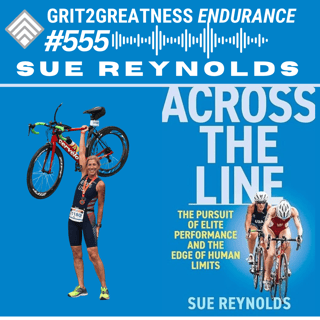
Bobby: Right. And so you've got to find you've got to find the way to get to what's going on there. All right. A very dear friend of mine, Sue Reynolds, has just written her second book.
Bobby: And you guys all know about that book. And, you know, there's a lady who has been morbidly obese, has lost all of that weight, has been very open about it, and has created a connection with the community that is priceless because of her vulnerability, right?
Bobby: So could you imagine that you as a coach, you would go up to an athlete that's struggling with that and you take your own thigh, right? And you pull your shorts up and you compress the the tissue and you show them why it looks like a tangerine and why it must look like that and that that's completely normal.
Bobby: It already diffuses that because they see your comfort with that, right?
April: Yeah.
Bobby: So it's it's a question of how do we get the job done but not lose the soul?
Rich: I love that, Bobby. And April, thank you for asking that. I think that that actually is something that is probably on a lot of people's mind. And actually, I love your sensitivity, Bobby, to that vulnerability and the judicious use of the video or not as a result of that. Hey, listen.
Rich: I know our listeners can tell that we have got the the the run guru here, and we're going have run guru at our camp. we have We have a few more questions for you, Bobby, but in the interest of time, we're going to save some of them for our camp because we know that you have an appointment.
Bobby: Okay.
Rich: What we would love to do is if you could just hang out with us just for a few minutes because we've had some shout-outs for some of our athletes, and then we're going to close us out with an ad read, and then we are done, and we are going to see you on Saturday the 27th.
Bobby: Okay.
Rich: so work?
Bobby: Perfect. Looking very much forward to it.
Rich: All right.
Bobby: Thank you so much.
Rich: All right, stay here with us. We're going to wrap this up, okay? Folks, we really want to see you at our running camp. We've got a link here in the show notes. There's an Eventbrite link here in the show notes. want you to come out and meet bob Bobby. And honestly, you're going to learn a lot more. You're going to learn some drills. You're going to learn. You're going to get a lot of feedback. It's a very good constructive and interactive tool. session that we're going to have out there at East, the East Community Center out there in Boulder. So looking forward to having you out there. I'm going to give a quick shout out to our show sponsor, Vespa Power. Vespa Power Endurance helps you tap into steady clean energy so that you can stay strong, focused, and in the zone longer.
Rich: Vespa is not a fuel, but a metabolic catalyst that shifts your body to use more fat and less sugar as your fuel source. Vespa comes in a number of products and you can get them all at the link here in the show notes.
Rich: the code The discount code for 15% off of anything in your cart is already a part of that link, but if you need the code, the code is G2GVespa15.
April: All right. and we've got a few different announcements. We've got some big efforts here. We want to say good luck to Marce Cronhay racing the Maraville Triathlon in Maraville, Alberta. I'm sure I, mispronounced that, but Hey, we are wishing you best of luck. Marce set in the foothills, just Southwest of Calgary. This is a beautiful and challenging local favorite.
April: Also on the same day, we want to wish good luck to Michael Murphy competing at Jerry Baker velodrome in Redmond, Washington. This is a fast paced, high intensity track cycling event just outside of Seattle.
Rich: And I'm going to give Coach April, you're racing Lori off-road, of course, so we're really excited about that. So good luck.
April: Thank you. Thank you. And I'm going to use Bobby's coaching wisdom to help me with my run. This run is straight up a mountain, Bobby. It's like, I call it like a billy goat run.
April: So I'm definitely but thinking about the things that we talked about today to help get me up there, get me down safe and sound.
Bobby: hands Hands on knees is okay and it's great way to do it.
Rich: for And folks, thanks for spending time with us today on the Grit to Greatness Endurance podcast and getting to getting to know bobby Bobby McGee a little bit better here.
Rich: And we sure are excited that we are going to get to spend some time with him next week. If you've enjoyed this episode, please follow us and leave us a rating on Apple Podcasts and YouTube. This helps us reach more athletes like you. Stay gritty, train smart, and keep chasing greatness. We will see you next week.