Transcript
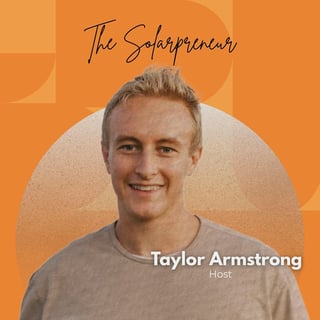
Speaker: Welcome to the Solarpreneur Podcast, where we teach you to take your solar business to the next level. My name is Taylor Armstrong. went from $50 in my bank account and struggling for groceries to closing 150 deals in the year and cracking the code on why sales reps fail.
Speaker: I teach you avoid the mistakes I made and bring in the top solar dogs of the industry to let you in on the secrets of generating more leads, falling up like a pro, and closing more deals.
Speaker: What is a solopreneur you might ask? solopreneur is a new breed of solopro that is willing to do whatever it takes to achieve mastery and you are about to become one. All right, what's up, everybody? We are back with another great podcast. Got an amazing guest coming on today, and we're switching it up a little bit because this guy, he has been a vet of the alarms. um As we've listened to with a lot of guests, almost every top producer in solar has come from alarms.
Speaker: So I'm excited to talk to someone that has been just crushing alarms for years and years and years, and that's still doing it. So um let's give a warm welcome to Mr. Trent Wood. and Thanks for coming on the podcast with us, my man.
Speaker: Hey, glad to be here. Appreciate it. Yeah. He's a senior manager over at Vivint. How many years you've been running with alarms now, Trent? Oh man, since before doorbell cameras existed. If that puts it into perspective. 17 years is how long I've been in the door-to-door space. i actually did phone sales with Apex ah before Vivint changed their name to Vivint. So I did phone sales for two years and then heard the door-to-door guys were making way more commission than the phone sales guys selling the same product. So that's when I made the jump to knocking on doors and selling face to face versus over the phone.
Speaker: So yeah, it's been a minute. Okay, forever. Yeah, glad to see ah there's still some alarm guys out there because, you know, we talked to a lot of like regionals and stuff like that and from solar and almost every one of them came over from alarms. Yeah.
Speaker: So I'm like, there's got to be some high-level people still doing alarms. just Yeah, there's a few of us. I mean, yeah, I was one of the few guys that that survived the the solar transfer. So, um no, it's been good. And yeah, a lot of guys have come from alarms and gone over to solar and crushed it.
Speaker: It's been awesome see. Were you ever, you know, tempted with that? Did you ever come and check out solar or were you just kind of laser focused in alarms? Never really was. Yeah, no. We had. reason you No. So when Vivint Solar first started, i was actually doing the GM program that Vivint introduced think back in 2017. They wanted us to leave Utah, decentralize, stop doing the summer program, work year round.
Speaker: And that's about that same time that Vivint Solar started and they wanted us to do some cross selling. So they had some of the home security guys team up with some of the Vivint Solar guys and try to help do some cross sales um where the alarm guys would sell the alarm and then pitch solar. And then we'd we'd go teach the solar guys how to sell solar and then pitch the alarm and kind of tack it on at the end. But yeah,
Speaker: It ended up being a little more complicated, I think, for the customer. And so it didn't quite mesh as well as we wanted it to. So never really stuck. But yeah, I've been exposed to the solar world. And we did solar as well for a couple of years. And we've integrated it in a couple different markets I've worked in. And um dude, sales is sales, man. If you can provide value to the client and you can help solve a problem, dude, you can make...
Speaker: great money doing anything. Yeah. hundred percent. Yeah. i always thought it was interesting because I had some buddies that were doing, you know, the Vivint solar where they would just pretty much only go to Vivint, Vivint, uh, alarm customer, like smart home customers. yeah And then just, it was basically kind of like a soft way, just checking up on their system and then just s slipping in. Oh, by the way, if you guys looked in the solar type thing and, um, It seemed like a smart idea because it's like you've almost got a warm prospect right there that someone already has your service.
Speaker: Right. and So sounded like it was going well, but ah they they are they still doing solar too or do they stop they stopp doing that all the way? I think in in some markets, I think they are. Yeah, we've got some third-party businesses that we're working through and some markets, but...
Speaker: Yeah. and Okay. Well, cool, man. Well, before we get into it, wanted to hear, you know, um most of the guys on this podcast, obviously, more connected in the solar space, but um I'm sure a lot of guys listening to this might not know ah you, maybe haven't seen you if they're not following, like, alarm security type stuff. So you want to give us a little background, like how you got into to door to door and just kind of your journey. I know it's been a long one, so maybe like a Reader's Digest version here.
Speaker: Yeah, yeah, we'll sum it up. um Otherwise, we'll the the batteries in the computer will die we we do the whole story. but Yeah. So i I actually worked at Chili's. I was a busboy back in college and initially wanted to be a dentist because I knew i at a young age, I knew I wanted to be successful. I saw some of my friends that their parents had the nice cars, they had the nice houses. you know We all had the buddies where they were, you could tell that the families were well off. And I was like, dude, I want to have a i want have a lifestyle like with my family. So
Speaker: I didn't come from a ton of money, right? So um I just knew I wanted to be successful. So I always kind of had my ear open to different opportunities. Initially, I wanted to be a dentist. That was kind of the direction I wanted to go because I knew dentists made great money. So as I kind of graduated high school, that was kind of the the field I was going to go into.
Speaker: And then one of the butt my buddies that works at Chili's introduced me to Vivint sales, where you got paid for your work instead of getting paid hourly. And he was doing really good over there. And and I was like, dude, get me an interview.
Speaker: Let's go. Got on with the company. Yeah. Once I realized i I could get paid more for working harder, that was the last time I ever clocked into a job and has been commission-based ever since. So, and that was back in 2007 when I first started getting on the phones.
Speaker: with Apex. Wow. Okay. So you started in in phones and then how long did you do that before you transitioned into door-to-door? Yeah, two years, two years on the phones. And then some door-to-door guys, when summer was over, they'd come in and sell on the phones after the summer season was done. They were complaining about the commission structure with the phone sales.
Speaker: And they're like, dude, we get paid three times as much as as we're getting paid in here. And we're actually with the customer in their living room, doing a presentation, building trust, building rapport, closing the deal same day um on the phones that people just hanging up on, you know, and they're getting paid way less money. So i was like, dude, seems like it'd be a lot easier to sell in person and the commission's higher. was like, let's, let's freaking go. So then I jumped on it and My first summer, I worked my butt off. I saw my manager was making six figures in four months.
Speaker: And that's kind of what attracted me to the door-to-door space is I finally saw an opportunity where I didn't have to go to dental school for 12 years yeah to to make six figures. right So as soon as I saw there was another avenue to get to that same you know financial freedom and that that level, I tackled it. But first I did make sure that it was legit.
Speaker: I went and shadowed Adam Nelson over at Vivint. He was my manager, my rookie season. I said, dude, I need to see you do this first before I commit. Cause I was making pretty good money selling on the phone. So I was making really good money for my age.
Speaker: um So he took me out on the doors for an afternoon in Salt Lake city. and think we knocked for three or four hours. He closed three deals and I was like, okay, let's go. And that was like a month before summer started. So then I went out my rookie season right after that. That's awesome. Yeah. So did you feel like being on the the phone, you know, going from like phone telemarketing to door to door, was that like a huge difference, like a huge adjustment for you? Do you feel like that experience kind of made it pretty smooth? It's just like, oh, just doing essentially the same thing on the door now.
Speaker: Or how did that transition go? It actually helped me out a ton because on the phones, you had to learn how to keep control the conversation because people just hang up on it. If if the conversation wasn't interesting or wasn't captivating, you weren't building value.
Speaker: um We learned what words were better to use versus other words like agreement versus contract. So we learned all the vocabulary. And so because I was able to get all that stuff dialed in, once I applied that to the doors, it actually... gave me an advantage for sure. And so my rookie season, my whole goal was to get right into leadership because that was that was kind of the end goal. I didn't just want to go sell and be a sales rep.
Speaker: My whole reason for going out there my rookie season is I wanted to get into management and run teams because I saw that's where the money was. And I also saw that's where the most fulfillment would be is growing and mentoring and training.
Speaker: So my rookie season, I just did everything I was supposed to do. if If my manager said, hey, look, if you want to get to where I'm at, you got to do x y and Z. I did X, Y, and Z with perfection.
Speaker: Never took a break. Never went to a gas station during knocking hours. Never got picked up. never I worked all the hours every single day all summer. And because of that, I ended up being one of the top rookies in Vivint that year. I sold 175 accounts as a rookie, which back then was like $90,000 in commission.
Speaker: And that's what kind of started my path into Vivint. But whenever Whenever I talk to the new guys, I say, look, if if you want to have a high level of success doing sales, you have to have a high level of discipline. yeah And not only have a high level of discipline, and you have to freaking want it. If you don't want it, then it's going to be too hard. right right the The bigger the why, the easier the how. If you have a massive why on why you're out there pounding the pavement, knocking on doors, if you've got a super big why, then when you're out there doing it, it's not going to seem as hard. Yeah, so true. Yeah, I always tell my guys that's, you know, for me, door to door got almost got easier once I got married, started having kids, because all of sudden, it's like, you know, I got people to sustain. Now I've got like people literally counting on me to go make sales today.
Speaker: and so it's little more pressure. yeah It's way easier to stop sitting in the car and doing all that. 100%. Yeah, yeah. But no, that's that's awesome, man. So um just so our solar guys can hear, because I'm sure you've heard, Trent, solar is notorious for guys, you know, going out knocking an hour or two and just sitting in ah sitting in a house after that. and and They say that people people go over to solar because they want to they want they want to knock less because typically it's less knocking than other industries. But just so guys can hear, what's alarm schedule? What's that like for in the summer? you guys start like afternoon, go all day? Or what's a typical alarm summer schedule look like?
Speaker: Yeah, no. Yeah, great question. We we definitely can relate. everybody's Everybody's trying to do less and get paid more and it usually doesn't work like this, right? Yeah. So we are, we're on our first door by 1.30, 2 o'clock at the latest.
Speaker: um And then we're working till 30 minutes after dark. And that's all summer, Monday through Friday. Saturdays are full days. So we're trying to be on the doors by 9.30, 10 o'clock on Saturdays and going all day till 30 minutes after dark. So it's a grind. Yeah, for sure. Yeah. And, um, you know, sometimes I wish I could send my guys back to like either pest control or alarms. Cause I came from pest control and and you know, somewhere things you're starting in the morning and then yeah take a little break.
Speaker: But some of these guys that have only done solar, it's like, sometimes it's like pulling teeth to get them to go out for five, six hours at a time. Like guys, you realize that this is any other industry you go to alarms or pest control guys would be like, are you kidding me You're complaining about going out and knocking for five, six hours when and caroling but yeah I know even the pest guys go out even earlier from what I know with a little with a little lunch break. so yeah yeah it You can't avoid the work. At the end of the day, if you want to get the results, the work's got to be there. yeah there's there's no There's no cheat code.
Speaker: Can't avoid it. Yeah, definitely. Yeah. And I no know like we're doing a year round thing um in San Diego for us. So there's that aspect of it. and You know, I get it. Like guys, we're we're to knock that schedule year round that. I don't know.
Speaker: i don't know if people are doing that. like like youre can survive Yeah. Yeah. So you got to keep it sustainable. I think it's cool that you guys can turn it on for this forum for the four months, four or five months, and then make like insane money and then, you know, have seasons to outside of the summer. What does it look like? Do you, uh, you have like set, I don't know kind of timelines for recruiting? I know you guys are big on recruiting in the off season, but what is your typical like off seasons and stuff like that look like? Yeah. So we'll recruit the other seven, eight months. We'll do one, one blitz a month for about a week, or we'll take all the guys to a state, get an Airbnb, pack everybody in, train the new guys, and then have the vets come out and get some deals as well.
Speaker: So yeah, we're usually selling for one week and then the other three weeks we're recruiting um and building the squad, getting ready for the next summer. Okay. Yeah. Yeah, it's awesome. So yeah, tell me about when you first started ah leadership, were you in leadership that right after your first summer of door knocking?
Speaker: Did you go straight to leadership after that? Yeah. So my co-manager, Corey Torgeson, he was getting ready to go to law school. So he had knocked doors for Viment for a couple of years, saved enough money to go ah pay for law school debt-free, which was pretty cool to see.
Speaker: so I kind of filled his spot. So me and Adam Nelson ran teams together right after that first year. We co-managed teams for four or five years together right after that. So I jumped right into recruiting, growing, growing,
Speaker: Getting right into leadership right after my rookie season, which essentially was my was my game plan from day one. Definitely came with some hiccups here and there. ah about About year six or seven into my career, actually ended up starting back at zero. So lost my entire group. And what happened was, is it was at the time that Vivint went to the GM program, or they gave us an option to, again, do this year-round program where we stopped doing summer's I was recently married, had our first kid.
Speaker: And so the summers were kind of you know starting to kind of wear on us a little bit because again, this was year seven into the career. So I moved to Austin, Texas. So we left Utah, we sold our house, took a huge leap of faith to say, hey, look, let's go down here for a couple of years, relocate, work year round, grow with the local real estate you know agents and networking and and all that. And um Yeah, it was really hard to have guys knock year round. So my hat's off to you guys that are doing that in solar, you guys that run the year round program.
Speaker: I couldn't figure it out. So whatever whatever you guys are doing, it's working. I couldn't do that. I couldn't get my group to do that and end up losing a lot of my guys because... I think probably like what you mentioned, I was trying to do a summer schedule year round, right? It was hard to find guys that were willing to put that much work in. So anyway, after about two years of doing that, I'd essentially lost everybody. So I had to make the jump back into summer. And I think most guys probably would have quit at that point because I'd been in the industry for seven years and and had built up two very solid teams and just slowly it just started to fizzle out, started losing guys. It was hard. Retention was tough.
Speaker: But instead of quitting, going somewhere else, I just buckled back down, got back on the recruiting game and changed up my avenue of recruiting, kind of my way of recruiting because I needed to kind of fast start my recruiting because I had some ground to make up.
Speaker: But about year seven, I started back at zero and had to rebuild. That's crazy. Well, we can relate in solar because I'm sure you've heard a little bit, you know, solar is there's been a lot of ups and downs and changing government incentives. Been some pretty massive companies that have gone out of business. Been easy for a lot of guys to just lose faith and jump to other industries, you know, go back to corporate, whatever. And so, yeah, I love hearing that you stuck it out and um seems like it's paying off now. So what do you think was a what do you think was like the driving force to keep you in it and when I'm sure you're feeling those feelings of of Quentin? Yeah, I mean, at the end of the day, I just understood that the opportunity was still there. The opportunity wasn't wasn't wasn't there because of
Speaker: The company that wasn't, no, I didn't lose my group because of the company or because of anything else that was going on. It's just, it's just the way that the cookie crumbled. You know what I took a risk to change programs.
Speaker: um And, you know, that's on me. You know, sometimes you take risk and you and you're going to hit it jackpot. Sometimes you're going to fall on your face. And that's just how life goes. You're not always going to have success the whole way up the ladder. Like you're going to have, you know, show me one person that's had a ah steady climb of success through their whole entire career and it just doesn't exist. okay And I think a lot of times what we see is as soon as somebody is having a good run for a couple of years and they have this down year where they lose some reps, like you said, policy changes with solar.
Speaker: um they feel like the sale is getting too hard now. And then all of a sudden they down year and they jump ship. They go somewhere else. Well, guess what? Same thing is going to happen at that next opportunity. They're going to be going good for a year or two and you're going to have a down year.
Speaker: And so if guys jump ship or quit or change every time there's a down year, they're never going to reach the top pinnacle of success. You got to be able to understand that's part of the process.
Speaker: um Life isn't always just going to be, you know, straight up to success every time. So, Yeah. What kept me going is just understanding that the opportunity was still there. op Opportunity was still great. I had just made the ah decision that didn't turn out how I thought it would. And that was on me, but I i took the the lessons from it, moved on and kept pushing and got back on the recruiting grind and started to rebuild. That's cool. Love that. And yeah, it's, I think sometimes it sells people. and don't love you, but we, we get so used to, you know, maybe not having the same risks as like an entrepreneur or something. Cause we don't, we can go out and
Speaker: make sales and we have all the upside with like very little downside, right? Because it's like, we're going to make our commission no matter how the company's doing, I guess, unless they stop paying or something crazy like that. But, um you know, I've been reading Elon Musk's book and it's just crazy how like any huge entrepreneur, where they had so many downs that sometimes we don't know about.
Speaker: So anyone that's considering quitting or just complaining, oh, this is too hard. um i think, you know, maybe they should go read some books like that and just hear how many like downs these incredible entrepreneurs had. Because I think that's what makes them great is they went through so many downs and they knew how to like come out back on top. Goes to show in any industry, most of the guys that are great had to go through a ton of, you know, maybe rock bottoms, whatever you want to call it. And it's made them that much more resilient.
Speaker: So I'm sure you've seen that help as I'm sure there's times where you're still struggling and think back on that. But yeah, now I guess present, how many, I know you're leading a ah team, managing bunch of guys. what What does it look like now? Are you still running summer programs or what was, what kind of came of all that? Yeah.
Speaker: Yeah. And I'll still, I still go out. I just finished summer 17. yeah.
Speaker: I've been there for a while, but yeah, I've got three, essentially three teams that that go out. We had a team in ah Tampa, Florida this year, a team in Abilene, Texas, and then I ran a team in Savannah, Georgia. So yeah, group did good. Obviously there's all, again, there's always up years and down years in every industry. And like you said, it's those down years where the growth is. When you hit that down year and you grow from from those experiences, and You come out on the other side. That's what allows you to get a little higher than the last peak, right? You get that down here, you grow, you grit, you develop, you take the lessons from it. And then that helps you come up even higher on the other side. So yeah, dude, it's been, it's been awesome. yeah
Speaker: Something I've seen in alarms, well, solar, I think just naturally a lot of people can see solar as more like a career thing. Like, you know I've been doing solar 10 years and there's a lot more year round programs. So I think it's seen as more of a career thing. You know, I've noticed like pest control alarms, lot of college kids, they're seeing it just kind of like the summer job.
Speaker: to make good money, pay off school, stuff like that. Are you guys trying to, as you're recruiting, is it still like mostly college kids or I don't know, are you trying to get people to see like a long-term thing with alarms or yeah, I don't know. What, what do you see in that? How do you like recruit with all these college kids and maybe try to get them to see it more as a career?
Speaker: Yeah, no, it definitely is. ah you know The demographic is is definitely like college age, right? It's these kids that can travel in the summer. They don't have a lot of commitment back at home. you know having ah Having a father, you know a married man with three or four kids to come out during the summer, there's a few more challenges with that.
Speaker: So the demographic is definitely the younger kids. I feel like anybody in their 20s, going and doing a summer program is the best possible thing that they could do for their personal growth. Just life in general, life lessons, go out there and grind for four months. the best thing anybody in their twenties could possibly do. But yeah, we, as far as recruiting goes. Yeah. And in the longterm, you know, we have, again, we have so many guys, like you mentioned that have come from Vivint or come from alarms and have gone on to be great CEOs and and run their own companies and businesses. And so,
Speaker: We talk about that with our guys as we recruit and we say, look, when you go through a program like this that forges you and changes you into the type of person that you need to be to hit those levels of success that you want to hit is the best thing you could possibly go through. It's going to be the hardest thing you ever do, but by far the most rewarding if you can stick it out. We help people see the long-term vision. And I think Vivint's probably one of the only ones as far as the alarms go other than ADT and Brinks that have been around and kind of, you know, tested, you know, stood the test of time. We had Pinnacle back in the day. We had, geez, there were so many alarm companies, you know, 15 years ago that just don't exist anymore. So, um you know, hats off to these companies that are very innovative. I think with the solar industry too, the the the solar industries that are still around are the ones that weren't overpaying in commission.
Speaker: right? Because so they didn't go bankrupt. Everybody was chasing red lines, right? When guys chased red lines, they're like, dude, this solar company is going to pay me so much more per kilowatt. And then all of a sudden, ah a year later, they've gone BK and nobody's getting paid anymore. And so we had the same thing happen with alarms, you know, 15 years ago, we had all these alarm companies coming in and oh we're going to pay you this much more commission up front.
Speaker: And Vivint stuck to their ground and said, hey, that does not make sense financially. We want to make sure you still have a place to work in five or 10 years from now. And so because of that, um we were able to survive the the ups and downs of the market, um the economy, and they ended up being the last one standing. And then everybody that had left, guess where they ended up going?
Speaker: Right back to Vivint. So it's been a yeah it's cool to see It's cool to see companies that understand that and they're not willing to sacrifice the short term for and and risk the long term play. Yeah, love that. And it's funny because solar is almost going through the exact same thing right now. There's so many smaller companies that are going out of business and there's kind of like a big consolidation happening.
Speaker: And so you see all these smaller teams that are now working for like the Sunruns, Legacy Power Company, just kind of what has happened. and so Yeah, that's what happens. Yeah.
Speaker: So you guys can definitely learn some lessons from that. Yeah. the The highest paying isn't always ah always the best. Got to look at more factors than that. So, yeah. um But that's cool. some Yeah. Another thing. So you you said you got three kids. Trent, is that right?
Speaker: How many kids? have four kids now. we yeah Four kids now. So I'm impressed, man. Because it like you said, the summer grind, it's, um you know, especially if you're traveling all over the place, that'd be tough with a family. Are you still ah in the summer? Are you traveling to all the different markets and gone pretty much all summer? Yeah.
Speaker: i'll check on I'll check on the teams. i've got I've got some incredible leaders that work with me. They're very self-sustaining. So they they essentially can run it. And they don't they don't need much help from me. I'm there when they need me. But yeah, the family doesn't come out anymore. So my kids are in school now. So they don't come out. They used to come out and do the summer program with me. And the wife would you know, hang out in the swimming pool at the apartments with the kids and stuff. But now that they're in school, I just go out. They'll come out and visit a couple times in the summer. I'll fly home and visit here and there. So the four months goes by pretty quick, but there's always a sacrifice with that. And any, any entrepreneur or business owner,
Speaker: You know, they'll tell you there's always there's always going to be a sacrifice if if you want to get it done. um You know, you can't be it's going to be really hard to find massive levels of success and then also be a stay at home dad at the same time. yeah Right.
Speaker: There's going to be some sacrifice. There's going to be some some seasons where you've got to be willing to put in the work. You got to be willing to to make those sacrifices. And sometimes you got to be away for a while.
Speaker: and and do what you got to do as a father and a man and provide and build what you got to build. And um yeah I think what's interesting now that I'm a, I'm a father and I think our kids learn more from us by watching what we do versus what we tell them verbally.
Speaker: right? they they are The lessons they're getting from you as a father is 100% your example. And if you're working hard and they see that and they see you're out there providing, that's going to resonate with them. Now, I'm not saying be a distant be a distant husband and ah a detached father. That's not what I'm saying at all.
Speaker: you can You can do both. There is a there is a balance where You can be hardworking, you can be grinding, you can travel, you can be away. And at the same time, you can make sure that the kids feel like they're understood, feel like they're getting attention from from dad, and you can still fulfill the husband role and the father role and within the home. Yeah, no, I agree. Yeah, it's funny. I got a six-year-old. I got three kids old as six. And, you know, he sees me like go to the gym, stuff like that, and have like a protein shake after.
Speaker: he comes up to me. He's like, hey, if i do if I go do a workout, can I have a protein shake too? Because I wasn't. So I'm like, no, I'm not letting you have protein powder. Stuff is expensive. like where your freeer whatever i like right my Yeah. like, well, if you want to do a workout, then sure. You can have, you can have a protein shake.
Speaker: So he'll go do his pull-ups and pushups and stuff like that. And, um, it's, it's true. They go, they just watch what you're doing. And a hundred percent, I think it's more about what they see you do than, than, uh, what you're telling them. And that goes, that goes with, with management too, right? With sales. Yeah. Yeah. But i want to talk about ah recruiting for a minute because I know you guys are off season, you're recruiting, you're go hitting these college campuses. That's something solar.
Speaker: It's just different for us year round recruiting. And it's always been, i would say, one of the challenges for me is just being able recruit consistently. And so maybe you can share like a different perspective for guys in solar.
Speaker: um What's, I don't know how if recruiting has changed quite a bit for you guys. I know back in the day for me, it's like you had all the and like campus fairs and stuff and you had pest control alarms coming and doing like the lunch meetings. Is it still the same stuff or how's recruiting changed for you guys or what's been working with a on the recruiting trail for you?
Speaker: Yeah, recruiting is interesting. There's so many different avenues and different vehicles to recruit and get attention. um um I've taken a little bit of a different approach and I felt like I had to do this when I had to reset and go back at zero. i in In my head, I was like, look, I can either go out there and headhunt one person at a time or...
Speaker: I can throw the net out there and try to get a whole school of fish at one time. And so what I started doing is i started reaching out to influencers on social media because my, my social media is very lacking. I've been growing it for a couple of years, but, In my mind, I'm like, I need to find somebody to work with me that already has a lot of outreach and and already has a lot of influence. And so the first, I guess, influencer that I recruited, it was actually, I was in Austin, Texas watching MTV, a reality TV show.
Speaker: um It was called Stranded with a Million Dollars. One of the kids on there, he's in his twenty s He ended up winning the show. He won a bunch of money. and I just, i was like, dude, I'm just to take a stab at this. I'm just going to DM this guy that I just saw on MTV.
Speaker: And I sent him a DM. i was like, dude, saw you on the show. Super cool. You won. You know, where do you do for work? Are are you working out? The show's over. And believe it or not, he responded back to me. i was like, dude, I just watched this kid on TV and he just responded to my DM. Anyway, ended up recruiting that guy. So he worked with me for four or five years.
Speaker: We used his social media presence to recruit a handful of guys that are still working with me today. Wow. you know, and that was seven, eight years ago. and so, and then since I saw that have decent level of success, that was, that kind of started my strategies. I'd reach out to guys that already had like 50 to a hundred thousand followers on Instagram.
Speaker: And I would just pitch them the idea of, of recruiting and growing and, Some of them would come sell with me and others would just, you know, be a plug, you know, be an outlet to recruit. And I'd, you I'd throw some money on the side, but that kind of opened up my, my net, right. Instead of just casting out one line, I was now casting out a lot of different lines to get some bigger fish and and get people. Cause with recruiting, I mean, you can, you can do the indeed ads. You can do that stuff.
Speaker: You are going to find your more, nine to five corporate people in there. And I don't know, a lot of times with door to door and commission only, it's a certain breed of individual that that is attracted to that, right? And so I feel like sometimes, you know, if we go to the right places, if we look in the right spots, you will find those individuals that that do have that that drive and that vision to do something bigger than just clock in to a nine to five job. They've got enough self-confidence they can bet on themselves. They want an opportunity where they can apply themselves and get rewarded for it. But those types of guys usually always already have a job. And so
Speaker: If you're looking in places where people are unemployed, you're probably not going to find the most top tier individuals. You're going to have to recruit people that are already wanted by other people. You're going to have recruit people that already have a really good job because those are your top tier, high talented individuals that you want to grow with. So, um,
Speaker: Yeah. Making sure that you are in the right avenues with recruiting, I think is a, uh, is a huge thing. That's awesome. Yeah. It's, that's a cool strategy. I always thought, uh, maybe it's just my own limiting belief, but I'm like influencers and yeah, it's like, what, how can I structure it that they would even respond? And in my head, I'm just like, I'm sure they get like DMs all the time. People wanting to do things for them.
Speaker: um But yeah, do you find a lot of them respond or do you have like, I don't know, some secret message that you send that these guys? I mean, it's just like the doors, right? Like, it's just like the doors. You got to go knock enough doors and you'll you'll find a deal.
Speaker: It's the same thing. If you send enough DMs, eventually someone's going to respond back and be be intrigued or be open to what you got to say. So yeah, I've got a little i got a little script that I use and i've that I've built out that gets a decent decent number of responses. but Okay.
Speaker: Um, yeah, just getting, getting that, just thinking outside the box too. Right. So we've done, we've tried everything. I, the social media stuff's good. And, um, you know a lot of people, you've heard people say, don't, don't chase attract. Right. And so you want to be somebody that people come to you and,
Speaker: The only way people are going to come to you is if they know who you are and how are they going to know how who you are? Well, you got to, you got to have a social media presence. That is your business card in today's world. You know?
Speaker: So if you struggle with posting on social media, trust me, I do. That's not my favorite thing to do is put a camera in front of my face and start talking. And you know, everybody's, everybody fears judgment. Everybody fears, you know, what are people going to think? And if I'm out here, you know, the camera in front of my face talking to the camera,
Speaker: One thing that helps, and this might be ah this might be a nugget for some people on here that want to get your social media going, but you've been like you've been too hesitant to post or you feel awkward, you feel weird, you feel like you're going to be judged. um I think I heard this on, ah I can't remember where I heard it. Anyway, I heard it somewhere online. Some some guy said, in 200 years, nobody's going to remember who you are. Yeah.
Speaker: Somebody else is going to live in your house that you were in. Your car is going to be scrap metal in a rust, you know, in ah in a junkyard somewhere that you drove. So nobody's going to even remember who you were 200 years from now. You're just going to be a tombstone.
Speaker: And so go do whatever the freak you want to do. and Like who, who cares? Who cares? Go do what you got to do. Post what you want to post, say what you want to say.
Speaker: don't hold back because in 200 years you're just going to be dust in the ground and in a tombstone on the earth right so um having that mindset just kind of helps me sometimes when i get a little self-conscious and don't want to post whatever it's like dude who cares yeah do what you got to do yeah well and i always think too it's like especially if you're just starting out most people aren't watching you anyways when you're starting out so even if you suck it's like you got nothing to lose because nothing And you think yeah you think everybody's watching you, but really nobody cares. And it's like by the time you get good enough or consistent enough to the point where people are watching you, you're probably way better than when you started. So like probably worth watching at that point. 100%.
Speaker: one i'm sorry Yeah, but yeah, no, you've I've I mean, yeah, you you've got a decent following. Just looking at your page, I can tell you've put work into your social media presence and all that and um looks clean, got some good reels and everything. So do you find that you're getting pretty good just from building that brand? Do you feel like you get a decent amount of recruits like reaching out to you and and things like that? Just having grown the brand?
Speaker: Yeah, I think it helped. I mean, I think it helped. Like I said, it's more of a business card. It's like, hey, you know, when people see your Instagram page, you want it to highlight little bit about who you are as a person, right? So, you know, have everybody's little different. I feel like, you know, I've got my family on there. I've got the sales guys. I've got regular life stuff. And so people kind of get get a taste of who you are as a person. And if if they like that and they like who you are and what you represent and what you're doing,
Speaker: um yeah they're gonna reach out and be like hey how do i how do i get to do what you're doing how do i get to be where you're at yeah you know and um yeah there's definitely got to be consistent that's probably one of the hardest things with social media is you got to be posting a lot um definitely helps when you can get to where you have a team that does that for you um right versus because it takes a lot of time and a lot of energy and Yeah, for sure. And, you know, in solar, like that's one of the things i'm so I've struggled with is I'll be consistent on social media if for you're a little bit.
Speaker: But then it's like all of the week where I'm slammed and appointments and meetings, whatever. And then all of a sudden I won't be consistent for like two weeks just trying to catch up on other stuff.
Speaker: And I think that's one of the things that's um been for me where I've struggled to grow on like Instagram and stuff. Just, yeah, the consistency. and I do the podcast, but social media, that's definitely ah something i am I am trying to improve.
Speaker: But ah yeah, how do you you mentioned a team. So do you have a team now that helps out with like Instagram and i don't know, following like a schedule and doing things like that? Yeah. Yeah. I had to, cause same thing. I was so busy with family and recruiting and selling. It's like, dude, how I don't have time to sit here make a video and edit it and make it look good and create a thumbnail and all my, it's just like, it is a lot.
Speaker: So yeah, I ended up biting the bullet and paying for a team to help do all that stuff. And, you know, they'll, they put it on the calendar. And so there's, you know, and it posts automatically every day and, they're We actually would do, know, we can, I'll post the, my, the group I use is great. So we can, we can post them if anybody wants to reach out to them, but they will do, we can shoot a month's worth of a video in one day. nice And so we'll do one, we'll do one whole day, six, seven, eight hours of shooting.
Speaker: um And then everything's ready to post for an entire month. Right. And so it takes a little bit of work, but that's, that that's a lot easier than trying to create content every day. yeah Right. And so having a team to help do that and do some batch, batch content is a huge help.
Speaker: And having a team that knows how to do that, they've got everything lined up and ready to go. And yeah, it's going to cost some money, but again, it's, it's your business card. It's, it's, i feel like the, the ah ROI,
Speaker: on your social media pages is well worth the investment. So some of you already know that I run my own door door sales team here in San Diego. And as we are gearing up for the summer, I realized if we do the same thing we always did, we're going to get the same results. But if I want to increase my deal flow, I need to do something different to get an advantage.
Speaker: Then we discovered an app called Solar Scout, but it's not a door knocking app. It's a data platform that shows us who is likely to go solar in our market. It shows us who has previously applied for solar but later canceled the deal, who has moved in recently, and even how much electricity the homes are using in a given neighborhood.
Speaker: It's been working for a lot of teams across the country and now I'm on board too. I'm going to be one of the first two SolarScout in San Diego so I decided to partner up. But I told them, hey, I'm going to talk about SolarScout on my show, can give my listeners a great deal. And they did.
Speaker: So go to solarscout.app forward slash Taylor and book a demo with them and you'll get 10% off your first month when you sign up. That's solarscout.app forward slash Taylor.
Speaker: Okay, back to the show. Yeah, not for sure. Yeah, that's one of those things. And um I'm sure it's, you know, it's like one of those things you kind of got to think of it, think of it as a long term play. Like you're not going to get a bunch of recruits tomorrow calling just because you posted consistent for one week. But I'm sure it's consistent. Like how long you've been doing the social media thing now? How long have you been using those guys and batching the content and their everything?
Speaker: I think about six months now, as far as the the group I've been using before I was just trying to do it on my own. And same thing, I'd be good for a week and then not good for a week or two then good for the same same thing. And with the algorithm, the algorithm doesn't like that. And so you've got to got have a video going up every day at least. So yeah, once I started doing that, it you know it definitely helped out. and And again, it's attention, right? Attention is currency. And so if you've got eyeballs on you and you've got, you're being exposed to people every day when somebody's thinking about a job, they're like, oh, remember I see this Taylor guy every day posting about sales and solar or whatever.
Speaker: And when, when that one moment comes up where he's looking for a new job or looking for a different opportunity, you're the first person to think of because they've just, maybe they've just seen your stories every day and they just, they see you, you're, it's that exposure. So attention is currency in these days. And, um,
Speaker: which ah it's hard for some people that don't like attention. I'm definitely more of an introvert. Yeah. I've always been more of an introvert. I'm not really a guy that's likes to be the center of attention. Yeah. And so it was really hard for me to like really start kind of posting. He's like, dude, this is not my wheelhouse. I do not like this, but, um I knew it was necessary. And that the same thing with sales. Like, dude, I don't, when I first started, i was like, I do not want to knock on random people's doors. Yeah.
Speaker: This is not what I want to do. This is very uncomfortable. i don't like how they treat me. i don't like how they view me as a person. I'm a good dude. These people are treating me like garbage. But I knew i had to do that if I wanted to get what I wanted to get. If I wanted to hit the the goals I wanted and I wanted to make the money I wanted to make, I knew that was just going to be part of the sacrifice. i had to force myself to do it.
Speaker: So social media has kind of been the same way, but just like anything, the more you do it, the more comfortable you get. And it starts to become one of your strengths versus your weaknesses. Yeah, no, I'm i'm the same brother. Yeah, it's like that's why I first got into sales because hated talking to people was always an introvert. And I'm like, yeah you know, I feel like if I actually want to be successful, I got to learn how to do these things. because It's where the money's at.
Speaker: And, um, yeah, I feel like there's something to be said about usually the thing you're afraid to do or a thing that that's hard for you. if you try to do it, then, um, yeah, I've seen that that's where I grow the most is doing those things. And like you said, a lot of times it becomes your strength.
Speaker: That's kind of why I started this podcast too. Cause same thing. It's it's like, I'm like, yeah, like I got to, I got to start putting my name out there and, you know, girl presence and everything. So love a huge lesson for people.
Speaker: um But yeah, so before we start um kind of wrapping up here, I want to ask just as far as like retention goes, um you know, it's easy for guys to get this like shiny object syndrome, want to go try out different things.
Speaker: Even in solar, like our biggest thing is solar. Most of the money comes after the install. And so a lot of guys, it's like they're having to wait on installs and sometimes they get impatient with that. So they want to go to these different industries where it's a quicker payout.
Speaker: And I'm sure in alarms, I'm sure you see similar things. I'm sure you've asked guys then maybe go to solar, fiber, other things like that. So for you, how do you, uh, what's been some things that have worked to like retain your guys and keep them coming back from, and it seems like that almost be harder where you not only have to like get them for the summer, but now to retain them for the next summer where it's like ah us doing a year round program, we can kind of, you know, keep a pulse on them the entire time. So I'm curious what, anything you do that's, uh, to like maintain the culture and give yourself a higher chance at retaining these guys to come back for future summers.
Speaker: Yeah, i it's a very good question. I think there's probably a lot of leaders that um don't realize once they get into leadership, um it's a lot harder than just being a sales rep, right? Because now you're not focused just on your personal sales.
Speaker: Now you're focused on other people's sales and other people's success. And so I think with my guys, I've, I've always tried to just serve my people and I'm not, I'm not perfect by any means. I've, I've got probably more weaknesses as far as leadership goes and than most people. But, uh, I try to serve the guys that I work with.
Speaker: Um, I try to stay humble and I feel like most really good leaders that it's, it's okay for them to ask their guys, Hey, what can I do better as a leader?
Speaker: um how can i How can I serve you guys this week? What can I do to help you guys out? And I think a lot of managers sometimes struggle with that. And what I've noticed is when it comes to leadership, humility is probably one of the most important attributes you can have if you're going to have influence and lead people.
Speaker: um But the the caveat to that is most really good sales reps, it's kind of their ego and their confidence that got them to be top sales reps. Right? Yeah. And so sometimes that ego and that confidence kind of carries over onto the leadership side.
Speaker: um And it ends up kind of biting them in the butt where they need to have the confidence, have the ego to go create a high level of production on a personal standpoint, but then being a humble enough leader to say, Hey, I'm not perfect.
Speaker: And how can i how can I serve you? How can I have an attitude of service towards my people? And all the guys that i work with that I'm, that have been with me for multiple years, we're, we're best friends. All the guys that I work with, like,
Speaker: we don't just work together. Like we hang out together, we take trips together. And I think that's kind of goes um in the whole door to door space, right? You kind of become a, we're together so much. You kind of become a ah friend group that works together, um which is one of the reasons I love the space, but Yeah, I think the reason that I'm able to retain a lot of my guys is is just the friendships that we have and the trust. Yeah, that's huge. So you guys do a lot of things outside of the summer. I'm sure got like, i don't know, team trips and things like that. But do you have like regular meetups you do to kind of, I don't know, maintain that and keep keep the relationship going and everything.
Speaker: Yeah, we're always spending time together in the off season. a lot of guys, lot of guys moved to Dallas or Utah and that's where both of our hubs are. So okay the guys are still hanging out together, even in the off season, they're still doing stuff together and um doing the sales trips, meeting up at the office, doing some recruiting. And so it's still as much as we like to say, it's like work for the summer and have a bunch of free time. Like if you're in leadership,
Speaker: it's a year round position, you know, cause you're making, you're making professional money. So you gotta be, you gotta be willing to put in a professional schedule if you're going to make professional money, if you're going to be in management. Yeah. one hundred percent. And so take me back, you know, for your guys that are managing the teams in the summers and out there with them,
Speaker: um Do you have anything that you feel like is really effective to to like help the teams? i don't know if it's like daily check-ins. I'm sure you guys are running on daily correlations. But what's some like i don't know kind of like basic leadership things that you have your managers under you doing and you yourself do? Any any advice you give for like people that are trying to like you know better lead their teams, better manage their teams?
Speaker: Yeah. I mean, from, from what I've learned, just being at Vivint and being around the top guys like Casey Baugh and Jeff Mendez and some of these guys that that were at Vivint when I was there learning from them. And, um, what I, what stood out to me is just, if you want to have an effective team, um, you have to have good systems.
Speaker: Um, you have to have a system in place every day. Like this is, here's the daily schedule. We live to it. We die by it. And you have to hold people accountable to the schedule. um So if you're going to have successful teams, there's got to be there's got be that level of accountability where there is some a schedule and there's systems in place.
Speaker: um And then also, too, having those one-on-one interviews is is huge. I could definitely do better at this, but you should be meeting one-on-one with your people. at the very minimum every month, probably every two weeks if possible, depending on the size of the team, where you just sit down and you give your sales rep 20, 30 minutes of one-on-one time and figure out exactly where they're struggling, what what they need help with. And again, like we talked about earlier, asking them what you can do better as a leader to help serve them and help them hit their goals.
Speaker: um Those one-on-ones I think are crucial cause there's been guys where maybe they, maybe they were thinking about quitting or they were thinking about going and doing something else. And if I wouldn't have sat down and had that one-on-one conversation with them beforehand, um then they might've done that. But it it was something super easy.
Speaker: Some myth, some misunderstanding that happened in the office with another sales rep or, whatever. And I'm able to get ahead of it as a leader and help mend the relationship or fix the problem and, and kind of give them that boost of energy and that confidence to keep going and and continue to reach their goals. And so I think one-on-one interviews are huge. that Those have been a huge part of our, our culture and our group. And yeah,
Speaker: And also making sure you're running a ah team of systems. Yeah, that's so good. Yeah, one-on-ones, it's definitely helped my guys Because a lot of times when people are struggling, um in my experience, um probably more often than not, the reason they're struggling, a lot of times it's something in their life or something completely like separate from cells. And we can dig into that. And I've been able help my guys a lot, just in those one-on-ones where it's little bit harder if you're just calling them to like diagnose it and figure out what's really going on. Yeah.
Speaker: Definitely. yeah yeah And if you are a leader, if you are a leader, do not text anything that is difficult to talk about. Or if you need to do a one-on-one with the guy or or something needs to be addressed that might be a hot topic or there's going to be some emotion involved, you have to have the guts to do it face-to-face.
Speaker: not as comfortable at all. Everybody wants to text, yeah even even a phone call. if you're If you are within ah ah a plane flight away, sometimes you got to fly in and have a conversation face-to-face versus phone call or text. And I promise you, your people will love you for that. And it'll have way more impact than a text message or a phone call or even a Zoom call.
Speaker: Is that one-on-one face-to-face real life conversation. If you want to be a highly effective leader, you've got to be willing to have the hard conversations face-to-face and it's uncomfortable, but it's the best thing you can do for yourself and for your people. Wow. Yeah. That's a nugget. I love that.
Speaker: Yeah. let's That's fire right there. i always tell my guys, you know, if they want to save a customer from canceling, they got to do it face to face. think it's like the same principle. You need to help out a rep or something. Yeah. it's You got to have the tough conversations and got to be willing to get all uncomfortable at times. And yeah, it's something i struggle with, but that's, that's really, really good advice right there. And I've told, I've told my guys too, if because some guys just want to be, some guys are having a hard time emotionally, especially in sales. They might be going through something that's a little more personal, a little little more difficult.
Speaker: And anybody can have six minute conversation with their sales rep. And so I've told my guys, I say, look, if you want to talk to me and you just need like, you need an ear to listen and you just need kind of a, just like a quick little one-on-one and it's something that's kind of personal or something you're going through or you're struggling. If you tell me, Hey, can I have a six minute conversation with you?
Speaker: I know, I know what that conversation means. Yeah. And so i've I've told my guys, dude, if you say, if you ask me if you can have a six minute convo with me, I know, I know what that conversation needs to be about. I know where I need to be mentally and emotionally to be there in that conversation to help you.
Speaker: um And so be, be open enough with your people where they would feel comfortable having a six, a six minute conversation with you. Right. And, Don't be a cold leader where they're afraid to talk to you about stuff like that. If you can be a person that they trust and that they feel like genuinely cares about them and their interests and their success. And um that's a skillset that I think is is be very good for most leaders to develop is being able to have those just quick little six minute, I'm here to hear you out.
Speaker: Whatever you got to tell me, let it off your chest and let's get back to work. And I think even just a quick little six minute conversation can be huge. Yeah, so good. Yeah, I'm actually in a leadership mastermind right now with a guy named Jens Bunnell. don't know if you know him, but um yeah, we were literally talking about that this week, just about you know being like vulnerable with your reps, other people.
Speaker: And um yeah I was saying the same thing. it's It's hard for me at times kind of be open up. I'm not like a natural person that likes to be like vulnerable and dig into hard conversations and stuff like that. But, ah you know, I've seen reps leave. i've I've personally had reps leave on my team where i can see that maybe they didn't feel comfortable, like opening it up to me. And so they've gone to other leaders on my team and, you know, joined other teams, like wanted to go work with other people just because they felt like they couldn't open up to me and I wasn't able to help them with, you know, personal stuff or things like that have been going on. So it's been lessons I've had to learn like, hey, I need to um get to know these guys on a personal level and not just like call and check in when I need something. It's like actually seeing how they're doing, being vulnerable with them and trying to have them feel like they can come to me when there's there's issues and when they need help with specific things like that. Yeah, love that, man.
Speaker: But um hopefully any leader listening to this can think about that and think about um how to connect with people on your team better. And before we start wrapping up, Trent, we're coming up on an hour, but I wanted to ask, speaking of social media and everything, if guys, before I forget, if guys want to reach out to you connect with you more and um look more at what you're doing. i don't know if you want to drop social media or best best way to get in touch with you if guys want to be in touch more.
Speaker: Yeah. Just hit me up on Instagram. It's Trent D Wood. Yeah. Give me a follow, send me a DM and I'm here to help out whatever industry you're in. I'm here to provide value if I can. Okay. Thank you so much, man. And then, yeah, last, last question, unless you had anything else you wanted to add, Trent's, um, I, I always like to end on, If someone's listening is struggling or maybe hasn't hit their potential, maybe share with us what are some ah traits of like the top sales reps that you see or what are some differentiating differentiating factors do you think that have led to success, most successful guys on your teams and and ah in your industry? What are they doing different?
Speaker: The number one reason people, especially new reps, quit sales is because they let the emotion of the job overcome their goals. And so the the number one reason that you can take the emotion out of the job is keep your ratios.
Speaker: Turn it into a numbers game and understand that if you keep working, keep putting in keep putting up numbers, eventually you're going to find the success that you want. The only time that you fail is when you quit.
Speaker: So take the emotion out, track your ratios, and everything else work out. Love that. So good. That is a yeah huge factor. And um it's funny even being doing this 10 years, it's funny how easy it is to forget that. Like I'll go out sometimes and think, man, I'm getting destroyed today. And then I'll look out and I've only had like three conversations or something.
Speaker: I'm like, oh, okay, maybe maybe it's not as bad. There were just three rough conversations. Yeah. It's a lot worse than it really is. Exactly. So that's huge right there. But ah Trent, thank you so much for coming on. Congrats on your success and congrats for sticking it out, man. We'll be doing this for a while, but me and you, we're going to be sitting on our rocking chairs one day talking about how we're the oldest guys still doing door to door, but...
Speaker: but Hey, I'll be going to door to door in an electric wheelchair if I have to. Yeah. okay But I love it, brother. Well, well guys, anyone listening this, go us shoot Trent to follow. He's dropping fire content on a weekly basis. So I thank you so much for joining the podcast with us today, Trent. And we look forward to seeing what you do next.
Speaker: Thanks, Tyler. Thanks for having me Appreciate it. Hey, Solarpreneurs, quick question. What if you could surround yourself with the industry's top performing sales pros, marketers, and CEOs and learn from their experience and wisdom in less than 20 minutes a day?
Speaker: For the last three years, I've been placed in the fortunate position to interview dozens of elite level solar professionals and learn exactly what they do behind closed doors to build their solar careers to an all-star level. That's why I want to make a truly special announcement about the new learning community exclusively for solar professionals to learn, compete, and win with top performers in the industry. And it's called Solciety.
Speaker: This learning community was designed from the ground up to level the playing field and give Solar Pros access to proven mentors who want to give back to this community and help you or your team to be held accountable by the industry's brightest minds for, are you ready for it, less than $3.45
Speaker: Currently, SoulCity is open, launched, and ready to be enrolled. So go to SoulCity.co to learn more and join the learning experience now. This is exclusively for solopreneur listeners, so be sure to go to SoulCity.co and join. We'll see you on the inside.