Transcript
Speaker: Welcome to All In Adams, the official podcast Adams County Government, where we're all in for our residents, our employees, and our community. So whether you live here, work here, or you just want to know more about what makes Adams County a great place to be, thanks for tuning in. We're all in, Adams.
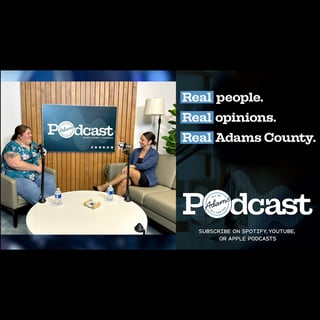
Speaker: Welcome back to the All in Adams podcast. My name is Delia Sanchez, and I am the Communications and Engagement Specialist for the Community Economic Development Department. Every day across our county, business owners and local organizations make big decisions, expanding a team, investing in new equipment, training a staff, or upgrading a commercial space.
Speaker: But many don't realize that where they operate and how they invest could qualify them for significant estate tax credits. Today we are demystifying Colorado's Enterprise Zone program, breaking down how it works and how local businesses and nonprofits can actually benefit.
Speaker: Joining me in the studio today is Ethan Rose, Economic Development Research Coordinator right here at CET. Ethan, welcome to the show. Thanks, Delia. Really glad to be here to help demystify the enterprise zone and make sure every business that's able to take advantage of it can.
Speaker: Yes, and i'm I'm happy that you mentioned that because I want to kick things off um in plain language so everybody can really understand what exactly is Colorado's Enterprise Zone program and why should Adams County business owners and community organizations care Great question. I'll see if I can do the plain language. It's a Colorado state economic development tool.
Speaker: So what it allows businesses to do is tie activities. They may currently be doing hiring, investing in equipment, training their employees.
Speaker: they can potentially earn state income tax credits for performing those activities if they're located within a zone. So it's a great way of reducing costs of business and keeping a lot of our areas economically competitive.
Speaker: Awesome. So saying that, is this a free grant or does a business have to complete a specific qualifying activities to see those savings? Great question too. Yes, it is not a grant. It is not free money. We should clarify it is also not a refund. It is a credit.
Speaker: So what that means, and there is a specific process. So one, I'll do the the high level. One, you need to be located and within the zone. That's an easy thing a business can check. um The state website has an interactive map that would allow you to do that. They can find a link to that in the show notes.
Speaker: ah Second, they need to pre-certify. This is roughly a 10-minute process. That sounds like a whole step they got to do, but trust me, it's not complicated. ah But what it would allow them to do is start the clock. So once you pre-certify, any activities you do going forward are eligible for those credits.
Speaker: And then third, at the end of your tax year or after you've performed certain qualifying activities, again, standard business things, hiring, investing in equipment, training your employees, all stuff we want see.
Speaker: ah You can get rewarded for that. You come back after your tax year, you file a certification for that. We review it. We issue the certificate. You file that with your taxes.
Speaker: And again, to highlight, it's a credit. So if you have a state income tax liability, you would be able to apply those credits against that liability. And before we keep moving forward um with this interview, I think it's very important to clarify that you are giving any tax advice to community members. Is that something that you would like to say about that?
Speaker: ah Yes, just to highlight and hopefully the many conversations I get to have with our businesses after this to help them through the process. Anything I say at the local level is not tax advice. I'm not a tax professional.
Speaker: Our role here at the county is administering it locally so that the program can be taken advantage of by many local businesses in areas where they really need it.
Speaker: We help guide you through the process and can help ensure that you're able to get those credits if you do everything correctly. But I cannot give you tax advice. I can't tell you the exact amount that you may earn or get back.
Speaker: We'll do the best we can to ensure that you can earn these credits. But again, not tax advice. No tax advice. Let's make that clear. So how does administration break down between the state level and our local CED team here in Adams County?
Speaker: Great question. This is really one of those programs that's a wonderful example of coordination between the state and local level. So again, it's for state income tax credits.
Speaker: So it's a state level program. There's 16 enterprise zones across the state. So very widely used, ah but they allow local administrators. Adams County Economic Development is the local administrator for Adams County.
Speaker: to run the program, promote it, help local businesses through, help define areas that should be included, and run potential other community projects and things with nonprofits within the area.
Speaker: Great. um I would like to move now into more like ah location and boundaries around the the county. Does the enterprise zone cover all of Adams County or just some specific areas?
Speaker: No, it does not cover all of Adams County. So the way the boundaries are set is every 10 years by a state statute, they review areas for some state criteria that measure economic distress.
Speaker: Areas that are then eligible are then applied for through a pretty large process. We engaged with every local municipality, ah lots of different community members just this last year.
Speaker: it was at the 10-year clock, so boundaries were just recently reset at the beginning of 2026. While not all of Adams County is covered, I can say it's approximately 67% to 68% of the geographic area of the county is covered.
Speaker: There's a really good chance that if you're a business operating in the county, you you are in an eligible area, ah but none, the entire county is not covered. So it's very important that people really look at their zip code in one of the maps, available maps that we have in our website then.
Speaker: ah Yes, it's going to be by the specific address or business location. And you're going to want to use the official state interactive map, or of course, reach out to us in Adams County Community and Economic Development to confirm that you're within a zone.
Speaker: It doesn't conform to standard boundaries. So while every city within the county has some enterprise zone in it, not every area within every city is covered.
Speaker: but Again, you really want to go to the official state interactive map. Again, they can find that link in the show notes or reach out to us at Adams County Economic Development.
Speaker: We'll get them the 100% confirmation whether they're in or not. And that's that's really critical. And I would say that's really the first checkbox if anyone that's watching takes away from this is, one, get to the map, make sure you're in the zone.
Speaker: Perfect. So once a business confirms its location ah is in an enterprise zone, what key investments area should it look at? There's a number. I've mentioned some things earlier, but before I jump into that, I do want to mention in terms of process, one thing we recommend is after you confirm on the map that you're located within the zone, you want to do the state process of applying for your pre-certification. Again, this is roughly a 10-ish minute process, so it's very straightforward, but you want to do that. We say first, even if you're not fully they sure how you might use the program or what activities you think you might do,
Speaker: Because the pre-certification starts the clock on eligible activities. So for example, you do it January 1st, you have from January 1st to the end of the year to have an eligible activity that could qualify.
Speaker: If you're say really busy, like a business might be, we understand that. But if you end up waiting until say July, your clock on eligible activities starts in July to the end of the year. So anything you did earlier in the year wouldn't be eligible to qualify for credits. So one thing i want to hammer home first is,
Speaker: You know, you're in the zone, make sure you pre-certify. Then after that, your clock starts running so you can look at a number of credits. There are six primary ones. We tend to talk about them in in different groups, say people-based credits. So that would be if you're hiring new employees, if you're training your employees, or if you're providing employee-sponsored health insurance for your employees. Now there are specific and more detailed limitations and nuance to all of those. So please reach out to us and we can help guide you through those.
Speaker: But then there's also sort of business related activities they might want to look at. ah One would be called the investment tax credit. That's the most widely used in the program.
Speaker: um So pretty much everyone should be looking at that, but it's essentially any of your business personal property potentially qualifies for that. And then there's a little more specialized one, depending on your business, the activities you're doing.
Speaker: If you're doing heavy into research and experimental type activities, there's a specific credit that you can get for the expenditures you're doing into sort of that research and experimentation.
Speaker: And then finally we would say sort of place based credits. And the biggest one there is really the vacant building rehabilitation credit as a bit more specialized.
Speaker: But if you were rehabbing a building that had been vacant or, you know, generally just fixing ones up, you could potentially get a credit for those activities.
Speaker: Perfect. Thank you so much for that, Ethan. And something that i would like to tell our audience is here at CEP, we have staff members that are bilingual. They will be able to provide information to you, not only in English, but also in Spanish. So feel free to come to our front desk if you have any questions.
Speaker: We'll be able to answer them either in English or in the Spanish. But um I know that this is a very important topic. And you guys have a new website, correct? And they can find also this information in the new website is chooseadams.org?
Speaker: That's correct. Say it again. Chooseadams.org. Perfect. Thank you, then. Now, ah workforce is top of mind for everyone right now.
Speaker: What credits exist for hiring new employees, is staff training, or offering employer-sponsored healthcare? You were talking a little bit about it ah like a few minutes ago. Would you like to expand on that? Yeah, I can try to go into a little more detail on each of those. So to get a little more specific, generally we want to encourage more jobs and more hiring in the area. So there's the unsurprisingly named new credit or new employee credit.
Speaker: I would highlight one of the nuances of that is it's really on net new employees. So this is designed to give a credit for businesses that are hiring above and beyond their highest number of employees in prior years.
Speaker: That doesn't necessarily apply to um sort of the churn that may happen on labor market. So if you're just rehiring employees, may not qualify. But again, we're here to help you kind of evaluate that and check it out. So please reach out to us on that.
Speaker: Related to training, again, unsurprisingly named credit, the job training credit. ah This applies to expenditures related to any sort of workforce training structured or qualified program.
Speaker: So this isn't just an onboarding or on the job training, but it's it's a qualified structured program that would add skills to your employees is probably the best way to put it.
Speaker: And then third, and you mentioned, and then unsurprisingly named again, employee sponsored health insurance credit. So this one I'll spend a little bit more on because um As an aside, right, the enterprise zone has been around since 1986. So it's about 40 years, right?
Speaker: Much like people that maybe be hit 40 years old, you kind of reevaluate things and make changes to your life or whatever. That actually happened in the most recent legislature. So starting in 2027 going forward, some of the credits requirements have been modified.
Speaker: The employee-sponsored health insurance is one of those. So one of the things they did was it capped it. So if you have 50 or more employees, ah you would no longer be eligible for it.
Speaker: But this is a really great opportunity for a lot smaller businesses that maybe want to offer this to their employees. Now i have a chance to do that. The state also then expanded it. So it used to be only the first two years that you were operating within the enterprise zone.
Speaker: But that's now been expanded to the first two years or any two years of the first 10 years you're in the zone. there's potentially, even if you've been in operation for three years, smaller business, you didn't know about this, you think it'd be a great benefit to offer your employees.
Speaker: ah You now may have the opportunity to get that. Again, there's a lot of nuance into all these credits. We're here to help guide you through that. So if this sounds like something interesting, We, you know, again, encourage you, please reach out to us and we'll help get you the right requirements, the right information you need to take advantage of it.
Speaker: Perfect. And I know there are so many technical words and it can be kind of like a ah for some people, even for me, and I work with you at CED, can be sometimes a little bit hard to understand it. And before we move into a practical scenario, um I would like to talk about how do capital investment work, um like purchasing qualifying equipment, expanding R&D, or rehabilitating a vacant commercial building?
Speaker: Yeah, great. So, um, I'll kind of do the high level again too, cause again, everything has nuance. Uh, I would say for the investment tax credit, uh, is probably again, the most flexible and it's the most widely used, uh, across our zone and across more or less the state. So it's really,
Speaker: Just about any business personal property. i know you mentioned a lot of technical terms. I mean, it's technically Section 38 property of the Colorado Revised Statutes. So I'm sure everyone's going to immediately know what that means.
Speaker: But realistically, any kind of equipment, ah even furniture, you know, the furniture, fixtures, things like that even potentially could qualify as well.
Speaker: Uh, that's probably going to be the biggest opportunity immediately for most businesses. Cause everyone's always investing in their, their own equipment and and things they need that just get worn out over time. so I would definitely say, look at that one.
Speaker: Um. The other ones you talked about, research and experimental activities. Again, this gets a little more specialized, so it depends on the type of business activities that you're doing. But if you're investing heavily into that research or experimental activities, you're Again, I guess I would say reach out to us. We can help you see it. It's a little nuanced in that it's the increase in your expenditures on that over time.
Speaker: So it's not an immediate thing you could claim, but we can help you you figure out so you can get that. Get the credit on it for what you're spending your research and experimental money on because we do want you to get rewarded for you investing in innovation, things like that.
Speaker: And then finally, just again, I'll touch on the vacant ah building rehabilitation credit. Again, this one's kind of nuanced. So the building has to be 20 years old, at least.
Speaker: um It needs to have been unoccupied for at least 135 days out of the last 180 days. You can see it starts to get a little tricky, like right away once you start looking at it.
Speaker: ah But if it's, if someone owns a building or you're looking at an older building, because maybe that's more cost effective for you to move in and fix up, ah definitely reach out to us and we can make sure you're checking all the boxes on that to potentially take advantage of it.
Speaker: Perfect. So let's move into the ah practical scenario right now. I think like this will help not only ah our viewers right now, but also myself to really understand this um program.
Speaker: So let's walk through a real-world example. um Say an Adams County ah manufacturer in an eligible zone plans to hire 20 net new workers.
Speaker: ah train them, of course, invest half million dollars in equipment and provide health coverage. Where do they start and what facts must be verified before promising any dollar figure in tax savings?
Speaker: Well, to start with, again, I'll hammer the point home. Check the map, make sure you're in the zone. Second, recertify before any of those activities would occur. And then third, reach out to us to sort of look at them. So right off the scenario, what you said, net new employees, if they're hiring them, we'd want to help them verify that it truly is that net employee growth.
Speaker: ah For the investment tax credit, um we said $500,000 invested in equipment. Again, it's very broad, so most of that may qualify, but there may be some nuance and things that maybe wouldn't qualify, so we'd want to help look at that. The employee-sponsored health insurance, again, the the nuance of there is when is the business been in operation?
Speaker: When are you planning to start the employee-sponsored plan? We'd want to look at to help you sequence the timing on that credit. And then for the job training, I'd really be just looking at and making sure it's a structured and qualified program.
Speaker: But I can get a little into the details on it. For job training, it's not necessarily, um it it doesn't have to be a program that happens on site at your business. You can send your employees out for that structured training. Okay. And then even some of the training materials and things like that might qualify for that expenditure or that credit. So it's not necessarily like we only paid this one instructor and then, you know, that's all that qualifies. You know, there could be other things in terms of training materials that ah you could claim.
Speaker: Perfect. in um And can you walk us through the roadmap from a square one to tax time? What is the press certification and why is doing it before spending money or hiring so essential?
Speaker: Yeah. Again, to keep the sequence simple, one, check the map. Make sure you're already in the zone. Always check them first. always want to do that. Yes. Second is pre-certify. Pre-certification is a requirement by the state.
Speaker: Again, it's a relatively simple process. You're going to put in your business address. You're going to sign a little form or checkbox that you're attesting to that you know the program and you believe you will intend to use it.
Speaker: um Again, I want to just highlight it's critical on the timing on that because any activity you perform prior or without a pre-certification will not qualify for credit.
Speaker: So you really need to have that in place first. And then that is really what opens the door for you start doing activities and qualify. But right now is really a great time to get into that because ah the state allows up to 90 days prior to the beginning of your next tax year to go in and do that pre-certification.
Speaker: So that window is open and available for all businesses in Adams County right now. So if you see you're in the zone, I'd say immediately just go in and and pre-certify. And then right when January 1st, 2027 starts, you you check that box you're covered for that entire tax year.
Speaker: so it's very important to ah start keeping records and talk to your CPA or tax advisor. Yes, we we'd always encourage you, please talk to a a qualified tax advisor for your particular situation and to review the particulars of the credits. Good record keeping is, of course, just...
Speaker: useful across business operations, but in this case as well. ah You'd want to have that in case after the tax year of the Department of Revenue had any questions, you want to have the documentation to back that up.
Speaker: And this program isn't just for private business, ah correct? um It also includes contribution projects. And how do this work and how can donors earn tax credits by giving to local community initiatives?
Speaker: Yeah, great point. So there's two major parts of the program. What we've been talking about has really been the business tax credit side, which is great. Hope everyone uses it. But there's a separate component to it more for community development.
Speaker: And that allows um local governments or nonprofits to set up what's called a contribution project. um So what that would allow them to do, a nonprofit it would allow them to raise funds a little bit better because individuals that then donate to that nonprofit could earn a state tax credit for their income tax.
Speaker: Perfect. There is a larger application process and it's kind of separate, but always happy to work with anyone that has additional questions on that as well. And go to chooseadams.org,
Speaker: correct? Yep, that's one of the best ways or reach out to me or the economic development department. Perfect. um I just would like to start wrapping things up, but um what something that um sometimes people um get confused or what is the number one misconception or mistake ah you see businesses make when trying to navigate the enterprise zone program?
Speaker: Again, it's thinking that just because they're in the zone, they're covered and they don't have to do anything else. So again, as as we mentioned a number of times, it's ah it's kind of a multi-step process. Again, you need to be in the zone, pre-certify, pre-certify, pre-certify to make sure you're ah covering as much time possible to be eligible. And then do your standard business activities because most of them could earn you a credit.
Speaker: Perfect. So if listeners just remember just two or three things um from today's podcast, I would say number one is check them up.
Speaker: Make sure that you are in the zone. And number two is to contact you or your team. ah Correct? Yes. And then I'd, of course, add pre-certified to that as well.
Speaker: Perfect. Awesome. Ethan, thank you so much for your time today. I know this won't be the last time ah you're going to be here in the all adams All in Adams podcast. And I appreciate you explaining the Enterprise Zone project to our listeners. And I would like to say this in Spanish. um Para todas aquellas personas que no hablan inglés.
Speaker: Ethan, thank you so much. Please say thank you to Ethan Rose for explaining such a complex but interesting and great program. centralro the goviero de aams county sisterianaljua preundta the namemo staff kialatantules com westpanol hilo polemos attend their connc kiir preundtausa stgan you ah thank you so much please say thank you to ethan rose for explaining such a complex but interesting and great program um the enterprise zone.
Speaker: Thank you so much. This is Delia Sanchez, communications and is an engagement specialist for Adams County. Thank you. That's a wrap for this episode of All In Adams.
Speaker: Thank you for joining us as we explore the people, programs, and the policies that make Adams County a great place to live, work, and thrive. If you enjoyed the show, be sure to subscribe and share with your friends, neighbors, and colleagues.
Speaker: Have a topic you'd like us to cover? Let us know. We're all in for bringing you the stories that matter most. Until next time, take care of each other and stay connected with us on Facebook, Instagram, Nextdoor, and X. We're all in, Adams, and we're all in for you.