Transcript
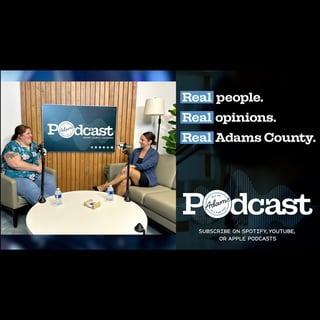
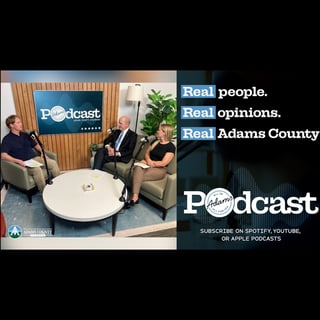
Speaker: Welcome to All In Adams, the official podcast of Adams County Government, where we're all in for our residents, our employees, and our community. So whether you live here, work here, you just want to know more about what makes Adams County a great place to be, thanks for tuning in. We're all in, Adams. Hello again and welcome to another episode of All in Adams. My name is Brian Durth with the Communications Department here at Adams County. And today I have with me ah two people who are working on the sustainability initiatives for the county. I have Amanda Perkins with the Community and Economic Development Department. And I have Arielle Gerstein with the Facilities and Fleet Management Department. And and thank you both for being here today.
Speaker: um The first question, we'll just start out basic. Just kind of tell me what your roles are with the county and what you're what you're doing to help out with the sustainability initiatives. Yeah, I'm Amanda Perkins and I'm the climate policy and implementation specialist and I work in environmental programs.
Speaker: I'm working on a few different climate related grants and different projects and initiatives that reduce greenhouse gas emissions throughout the county. Nero? Yeah. Hi, I'm Arielle Gerstein. I'm the Sustainability Program Administrator ah located in FFM for the county. I also work with Amanda closely on ah grants for climate grants.
Speaker: ah Also, pretty much with our government operations, I focus on renewable energy and fleet electrification and EV charging infrastructure. well Thank you again for being here. And there's a lot, you guys you guys are doing a lot right now. Sustainability is one of the one of the more, ah the the biggest pushes we have as a county right now. get what Why are sustainability and why now?
Speaker: Yeah, so that's a great question. um so i think we've been doing sustainability for quite a while at Adams County. But one thing specifically that we're going to focus on talking about today with energy efficiency.
Speaker: So we have a sustainability plan at the county. We've been doing implementation with it since 2021. The first thing we really wanted to do in the energy efficiency space is focus on our buildings.
Speaker: And we feel like we're, I mean, there's still always work to do, but we feel like we're at a good place with that initiative. So now Amanda and I have developed the community energy action plan, which focuses on residents and businesses. And one of the main reasons we wanted to do that is because, you know, utility costs continue to increase and we want to work with residents to make their properties as energy efficient as possible and their bills as low as possible.
Speaker: And Ariel, starting with with residents, um what what kind of programs do you have that can help our Adams County residents with maybe lower their electric bills or become more green or whatever is their goal is?
Speaker: Yeah, so there's actually a lot of programs um that the utilities offer, um as well as there's some state and city programs. But ah i think our first recommendation would be to get an energy audit.
Speaker: um These audits really establish a baseline for where you're at, like, energy-wise in your home, what improvements you can make, and will give it kind of like the biggest impact in terms of cost, cost savings.
Speaker: So that's what we would first recommend. And you can get an energy audit at very low cost. um It's about a one to two hour appointment and an assessor comes in and looks at, you know, your insulation and if there's any leaks and your lighting and all of these kinds of things and makes recommendations.
Speaker: um So that's where we would start. And then we have the utilities also have rebates that ah sometimes with these recommendations you can use to help pay for some of these upgrades that you want to make.
Speaker: And until someone can you know someone who's listening can get ah you know ah ah an audit done, um where is a lot of the energy in everyone's home? where is that yeah What is the most energy yeah the biggest energy hog of your house? where where Yeah, and they that's a great question. It's definitely heating and cooling. So if you think of HVAC, it makes sense. where running it almost all the time, whether it's really hot or really cold out.
Speaker: um This really depends on if there's good, if your home is like well insulated or the air sealant is good. um It just depends on those factors.
Speaker: Some other kind of big energy hogs would be water heating. So if you think of like your dishwasher, your washing machine, things like that, that take a lot of water.
Speaker: ah The other ones would be lighting. So of course, we always want to recommend l LED lighting. um They're way more energy efficient and last for a super long time.
Speaker: and then the last one is just appliances in general. So the older your appliances are, the less likely that they're energy efficient. The newer ones are way more energy efficient. and of course, we know this is a big investment too um change out an appliance, but that can make a big difference with your utility bills.
Speaker: and And we have some tips on our website and you you mentioned the utilities. where Where are some of other resources that homeowners and and renters can go to to to get figure out ways to conserve energy? Yeah.
Speaker: Yeah, so you can go directly to um our local utilities in the county, which would include Excel Energy, United Power, um as well as as Core. ah They have you know energy tips and rebates directly on their websites. We have compiled on our website kind of like a one-place, one-stop shop where you can look at those, um and they assume will be linked in the video when you watch those you can find those resources easily. You can also look at the state website. ah Colorado Energy Office has a ton of great resources um on this, heat pump rebates, things like that. And of course, just your local city or if you're in a different county listening to this, a lot of counties have information on their websites as well. Right, right.
Speaker: And Amanda, I'll turn to you next um for the other half of of the group of people that can try to sustain energy is ah is our businesses. And ah what what can businesses do um anywhere from a small business to to even a larger to larger ones Yeah, there's really a range of benefits for small businesses, large businesses who want to do this work.
Speaker: um Probably as a the first thing that stands out is going to be i cost savings. So ah when you're making energy efficiencies, you're seeing that on the bottom line, especially with small businesses. They're Margins are often razor thin. So even a slight energy reduction can really be noticed on the bottom line.
Speaker: And in addition to cost savings, i improvements in energy efficiency can also just lead to more healthy and comfortable buildings, which is great for both the employees as well as the customers.
Speaker: right good And, you Ariel talked about like some in-home appliances and everything that you can, that that kind of are the biggest energy eaters for for homes. What are some of the biggest ah culprits for businesses? I mean, many of the similar things, actually. things.
Speaker: kind of low hanging fruit that businesses can look at would be switching to LED d lighting. im Also, you know, installing a smart thermostat if they don't have one ah already. and then another low cost improvement would be just checking for any leaky doors or windows.
Speaker: And then if you're talking about bigger improvements, there's some great opportunities in, again, the heating and cooling systems. And then improving insulation is another big one. And then, of course, replacing any older equipment with newer, more energy efficient models. But really the key is to look at where most of the energy is going and then just to focus there.
Speaker: so a lot of the same same yeah subjects that work for homeowners also work for businesses. And, um you know, Ariel mentioned some of the ah the resources for homeowners. um Can you mention some of the the business, the this places businesses can go to get help? Yeah, there are actually a lot of resources available for businesses.
Speaker: One great opportunity is the Colorado Green Business Network, which is really a support system for businesses. And they offer mentoring, technical assistance, and also coaching. recognition for businesses who are looking to become more energy efficient and sustainable.
Speaker: and then another great option would be, again, energy assessments. Just like with homes, energy assessments are often offered through the gas or electric utility provider.
Speaker: So the business would just reach out to their provider to see if the assessments are available. They're often at a different and different ranges of price as well as level of detail. And those assessments will help a business to see where they're using the most energy and then also which improvements will lead to the greatest return on investment for them. Yeah,
Speaker: And Ariel, just to go back to you for a moment, um we just kind of had a celebration a couple of a couple weeks ago um about ah putting solar panels onto the the Riverdale Animal Shelter, which the county owns and operates. So kind of the philosophy of like, we're telling you that you should be more but energy efficient. So the county is going to lead by example. Can you just kind of talk a little bit about how that came about and what other plans you have for future buildings and and solar panels and other energy efficiencies for the county? Yeah, definitely. We put together a lot of different projects and we do kind of low hanging fruit. So we'll do LED light replacement or things like that.
Speaker: So then we'll see savings over time and we can use that those savings to fund additional projects. um So within that program of projects, that ah the animal shelter solar is part of that that suite of projects. We are also planning to, for solar specifically, do um solar canopies. So in our parking lot, not on the roof, that would you know you could drive in and your car would stay cool. At the Human Services Center, um at that building.
Speaker: And then we are doing geothermal projects. essentially like HVAC. So to for heat pumps, not at utility scale or anything, but still really exciting um at our Weymire Dome for parks and at CASP, um the air and spaceport out there.
Speaker: And we are looking at one look other location, our sheriff's substation. a very nice grant for actually multiple grants for all of these. So we're really excited to use that. And then, of course, we have just like general LED lighting replacements that we continue to do um as funding allows because we're always yeah looking to be somewhere where the public can look and show that we're not just preaching this. We are doing what we're saying. And in addition to that, that we're putting taxpayer money to good use. Yeah, great.
Speaker: And so look keeping all those projects in mind, looking down the road five years, say it's the year 2031, what does success look like ah with the sustainability program and all the initiatives you you two are working on?
Speaker: Well, I'd say for this in particular with energy efficiency, I would say that success would look like more people are aware of and taking advantage of all of the available resources.
Speaker: And that energy efficiency just becomes kind of a routine consideration and second nature for everyone, whether they're in their home or business. Is there anything else that we haven't talked about yet that you want to talk about for as far as ah your your efforts in sustainability? I mean, we're doing a lot in all the kind of sectors of sustainability, and we're just trying to get ah residents and businesses more involved. But just to put another plug in for the resources, ah please check out the Adams County Energy Resources webpages to learn more about these programs that we discussed today.
Speaker: That really sounds like Adams County is kind of at the forefront in the state of Colorado for some of these. And it's a lot thanks to the two the effort to the two of you and the and the teams that are working around you. So thank you for all you do. And ah again, thank you for watching All In Adams. Again, my name is Brian Durth and tune in next time for our next episode.
Speaker: That's a wrap for this episode of All In Adams. Thank you for joining us as we explore the people, programs, and the policies that make Adams County a great place to live, work, and thrive.
Speaker: If you enjoyed the show, be sure to subscribe and share with your friends, neighbors, and colleagues. Have a topic you'd like us to cover? Let us know. We're All In for bringing you the stories that matter most.
Speaker: Until next time, take care of each other and stay connected with us on Facebook, Instagram, Nextdoor, and X. We're all in, Adams, and we're all in for you.