Transcript
Speaker: Welcome to All In Adams, the official podcast of Adams County Government, where we're all in for our residents, our employees, and our community. So whether you live here, work here, or you just want to know more about what makes Adams County a great place to be, thanks for tuning in. We're all in, Adams.
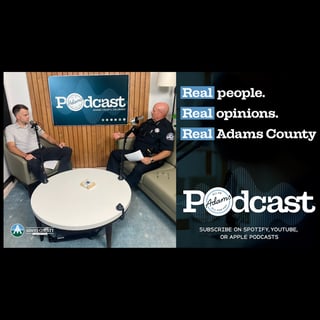
Speaker: Hello, all, and welcome to another episode of All In Adams. My name is Michael Ruddick with the Adams County Health Department. ah Recently, the Adams County Health Department marked International Overdose Awareness Day, and we just started Suicide Prevention Month here in September.
Speaker: And we've done that by honoring the lives that we've lost, acknowledging the experiences of those who are impacted by suicide and overdose and confronting the stigma um that we see in those today still.
Speaker: um And it's it's a massive issue in Adams County 2025 alone. um We lives to suicide and lives to overdose.
Speaker: Our guests today are people who know um all about um loss and how to deal with loss um for suicide and overdose. um We're really honored to be joined by our guest today, Jeremiah Lindeman, who's a member of our Adams County Health Department Board of Health, and ah Gordon Coombs, Director of 988 Colorado. Thank you both so much for being here.
Speaker: ah Jeremiah, if we could start um start with you ah by talking about the human side of overdose awareness and loss. um Your brother was lost to an opioid overdose. Can you tell us a little bit about him and and what he was like?
Speaker: Yeah. JT was my brother. Unfortunately, he passed away quite ah quite a few years ago as the epidemic was really kind of starting and people are starting to you know hear more about overdoses in the news. But Yeah, my JT, my brother JT in many ways opposite of me. I'm a little reserved. He would just light up the room with when he and it would enter it, make everyone smile, had a huge smile on his face. It was very outgoing. he After he passed, had several friends that would tell us that he was his best friend. So he was kind of the best friend to many people. Talented about everything, you know whether it was sports growing up or sports.
Speaker: would pick up music just naturally, uh, you know, guitar and drums. yeah, just a very dynamic personality and, you know, great, great picking up other people. Yeah. That's awesome. Sounds like he was a a friend to many. Wish we could have met him.
Speaker: um When we talk about overdose, um I think too often probably we throw out numbers and statistics that are kind of hard to wrap our brain around. Why is it important to remember the people behind those statistics?
Speaker: Yeah, I think people started hearing about overdoses, you know, probably over a dozen years ago in the news and maybe get a little bit of attention. But anymore, it's just you see these graphs or charts and you just kind of become numb to them, right? It's on the news a lot. And it's it's easy to kind just kind of dismiss that and Even as you just mentioned, 185, you think about Adams County, you just start thinking about a little bit more. Adams County is not that big of a place to have that many overdoses. You just have to kind of think about like, well, that means that there's family behind those numbers as well. So yeah I think it's really important to think about the the the connection behind the statistics because we're throwing numbers all the time in the news and you know there's a lot of you know bad stuff in the news in general these days. Yeah.
Speaker: Yeah, that's that's great. And I think we remember people and stories and feelings much more than we do know. You've created a way to remember your brother and people in the community whose lives have been lost to overdose.
Speaker: Can you tell us a little bit about that project and what you hope people take away um from it? Sure, yeah. In my day job, i work with mapping and software technology, and i got to meet people several years ago that were in similar shoes, and one ah a mom said that we need to find a way to celebrate these people, and that's really kind of how this got started. is um It's really essentially a map that has now thousands of people on it where people families can fill out a form and upload a picture, and you basically see this interactive map of
Speaker: where people have been lost to overdose and and now includes recovery stories as well. ah But really, the whole idea was to break stigma. you know There's a lot stigma associated with addiction and and overdoses and to show that there's real people behind that.
Speaker: um There's also, you know with that stigma, there's a lot of concept um conceptions that this just isn't in my neighborhood, which is totally false. you know or That map shows every state is represented you know with thousands of people.
Speaker: So you zoom in and you start to see, you know, the connections behind those numbers that are real people. And, know, even though there's thousands of people on this map now, it's really just about what happens once a week in our country. So it was really the intention was to break stigma and just create awareness and to honor the people, you know, like myself and other people that have lost someone, you know, fear of, you know, forgetting people oftentimes are lost very young.
Speaker: Yeah. Making sure their stories don't end there. That's great. And where can people find that map? ah So it's now hosted by the National Safety Council. They're a safety org. They do lot of work from, you know, just construction safety to wearing seatbelts. But they they started seeing opioids in the workplace. So, you know, they are doing that. They they do things like give workplaces naloxone and ah general edification. But Memorial.nsc for national safety council.org is the kind of a quick way to get there and you can see, see the map.
Speaker: Perfect. and I'm sure we can link that into the video. um What do you wish more people understood about addiction? Yeah. So what what I wish more people would understand, i think what's the intention of the map was, was probably the biggest one, just that it it really is everywhere.
Speaker: I mean, the reality is I'd say there's probably a 95% chance that anyone is coming upon addiction, whether they know it or not. Their coworkers, you know the the parents at their kids' sporting events, their neighbors, it's a very hidden disease. So it hides itself, and you might not know it, but the likelihood is you probably have someone in your circles that is facing addiction right now.
Speaker: I guess the other thing I would just mention is, you know, just getting back to that people aspect is, you know, oftentimes conversations is how your day is going. Um, when someone finds out there's addiction, ha off a lot of times that's can turn into a confrontation. Like how how in the world could you do this? You know, like, you know, you find the in-between, you know, like you can go deeper than how's the day going. Like, Hey, I'm i'm concerned about you. You know, we can have that conversation with people. And, you know, I think that's probably the big thing too.
Speaker: Yeah. That's great. and And that story reminds us that, again, behind every statistic is a person and a life experience and a story that's a lot more complicated than the issues that they're dealing with at that time.
Speaker: um And the work that you've done certainly demonstrates that. It also raises a really important question, which is what can we do when somebody is struggling before they reach that crisis inflection point? How can we move kind of upstream?
Speaker: which I think is is brings us really naturally to 988. And so Gordon, what is 988? And for someone who's heard of 988 but isn't exactly sure what it is, what happens when you call or text 988?
Speaker: Yeah. So 988 is part of the national network, our suicide and crisis lifeline. ah But in Colorado, we are 988 Colorado Mental Health Line. So um we are part of the national, but we are um really trying brand ourselves for more of a mental health line to handle all situations that and that people could come across.
Speaker: When somebody calls 988, they are first connected to that national line. There's what's called an IVR. It's just ah a way of saying a voice will come on and prompt the caller if they want to use a specialized line like the veterans line or a Spanish speaking line.
Speaker: But ultimately, they can get connected to our Colorado local ah contact line, our contact center, at which point they will be connected to a crisis specialist, who trained crisis specialist, who can really just start to work through whatever the challenge is that the individual is is going through. we...
Speaker: we handle all types of different behavioral health challenges and it from depression, anxiety, substance use disorder, all types of behavioral health challenges.
Speaker: Yeah. Yeah. And that's great. And I think a lot of people probably do think of, or some people think of 988 as a service only for if, if someone is struggling with an acute risk of suicidality.
Speaker: Um, but you've talked about how someone can also reach out if they're feeling, um, depressed or anxious, or maybe they're struggling with substance use, or maybe they're concerned about somebody that's struggling with any of those things. Can you elaborate on that a little bit? Yeah, absolutely. It is truly ah ah a service that can connect an individual with with follow-up service from in mental health, um but help deal with the challenge that's in front of an individual. um Mental health is um one of those things that that we don't in society like to talk about.
Speaker: and There's a lot of stigma involved. As you had mentioned, when it comes to substance use disorder and suicide allergy, what we hope with 988 is people feel they can call it, get connected and get help early on and and prevent getting to a crisis stage or getting to the point where they feel like hope is lost.
Speaker: And I think you kind of float into my next question pretty naturally. But if we take a step back and we talk about substance use and mental health and how those intersect, um they can contribute you know significantly to a person's risk of suicide. Can you talk about how mental health and substance use do inter intersect in that way? Yeah, I think it's one, I think it's important to say that there's there's a distinction. People that that overdose are not suicidal and not looking to take their own life necessarily, but there is a mental health intersection there.
Speaker: ah Oftentimes people that that are dealing with a substance use disorder i may have a co co-occurring behavioral health challenge that they're dealing with. um And on the on the ah flip side of that is people that are in crisis or having you know severe depression or or things of that nature may not have a substance use disorder. Really what what we're trying to do is open open that resource up to anybody who can who needs help.
Speaker: ah needs counseling, needs some therapeutic intervention and get them connected to the right place um and deal with the moment that they've, they're reaching out for help.
Speaker: Yeah, that's great. And there's no cost. There's no cost. It's 24 hours a day, seven, seven days a week, 365 days a year. It's confidential and it's free. That's great.
Speaker: Like the post office. Yeah. Um, let's say i'm worried about a friend or a family member or a colleague, something like that. Maybe they've started using substances. Maybe they're pulling away. They're becoming isolated or they just don't seem like themselves. What can I do to kind of look out for them?
Speaker: I think curiosity about that friend or family, coworker. um Like you had said, Jeremiah, asking, you know, how are things going? Digging a little deeper.
Speaker: um But also knowing 988 is a resource. Most of our our contacts are people seeking their own support. But we do get a ah significant number of people that are calling for somebody else.
Speaker: And sometimes it's just the, having somebody to say, Hey, I've got a friend, I'm worried about him. How do I deal with it? Our crisis specialists can help walk through that, that for the, uh, friend, family, uh, you know, coworker that is dealing with that in another individual.
Speaker: That's incredible. Yeah. Um, getting that foot in the door and having an expert to be able to reach out to is important. um And I think some people maybe think, you know, I'm not sure if this situation is serious enough to warrant, you know, calling somebody like an expert at 988.
Speaker: When should people reach out? Are there any or any thresholds to kind of make that first call? There are no thresholds. I think that would that's the big one is you don't have to wait until you're in crisis. and that In fact, that's a lot of our branding is mental health as opposed to crisis and suicide. We want people to call early. If things just aren't right and you you need connection and you need to help talk through it, reach out to 988.
Speaker: It's available. It's already there. You might as well use it and not wait until things get to a crisis point.
Speaker: If someone's struggling, say their emotional health, again, they're they're feeling isolated, substance use, um what does kind of an authentic support look like where we don't, as Jeremiah talked about, we don't make them feel the stigma that can come around sometimes, behavioral or mental health issues? um Yeah. how do we How do we lend that hand without somebody feeling judged or ashamed for what they're going through?
Speaker: You know, i think I think it starts with just the care for one another, right? And just the human side of that. I think the other piece of the piece of it is you as an individual, you don't have to have all the answers. oftentimes when somebody reaches out and says, hey, and confides in somebody, and our human nature is to want to fix everything and to immediately fix the problem.
Speaker: What I would say is know that 988 is a resource. So you as a friend or family or colleague, you don't have to have all the answers. You just have to know where where to point them, ah where to direct them.
Speaker: And like I said, 988, it's an easy number to remember and and lean into that resource and then kind of really find how do I how do i support you in this journey? Yep.
Speaker: Yeah, that's excellent. and You're always going to have rather erred on the side of reaching out proactively to a resource like 988 than to not have. yeah Jeremiah, when you think about your brother and, and as you mentioned, the the far too many others that have been lost during this extended crisis, um what do you hope the community does or how they view this crisis? How do you hope we act as a community differently?
Speaker: Well, a couple of things. I mean, one was the whole idea of just breaking down stigma and realize that there's real people behind all this and just awareness. So there's still some awareness that has to be done, but just in your question itself, I like that word community. I think sometimes our life just moves too fast, but when you think about community, it's about caring for each other and you know thinking about each other. And I think we just need to you know think about that a little bit more as you we live our lives and how we interact with the people that we care about. Yeah.
Speaker: And Gordon, if you could leave our listeners with one message, I'm sure you have many messages you'd like to leave them with, but if it was just one about suicide prevention, overdose, or the importance of reaching out and getting that ball rolling, what would you want them to remember?
Speaker: I think the first, the the biggest one is... reach out when you when you think you might need support. um 988 being available, having access to it.
Speaker: um Don't wait till the crisis moment keep creeps in and you're feeling you know um hemmed in like there is no hope. um The sooner you reach out, the sooner you can kind of find those pathways to to hope and seeing that the future is better, um the better off you're going to be.
Speaker: I really appreciate you leaving us with those two thoughts. I think those are those are kind of a great place to end at. 988 is for more than a single type of crisis. People can contact 988, you know, not when you get to that breaking point, as Gordon talked about, ah but when you're experiencing emotional distress or others around you are experiencing ah isolation, loneliness, behavioral issues that you don't know how to handle yourself.
Speaker: You don't have to wait until things are their worst. It's okay to reach out when you're concerned, when you're overwhelmed, um or you simply don't know what to do. Support starts, as Jeremiah talked about, I think really well, with connection, with community.
Speaker: Listening without judgment, checking in, staying connected, and helping someone find support can make a huge difference in their life and in yours as well. Help's available. You can call, chat, or text 988. It's free. It's confidential.
Speaker: Prices support 24 hours a day, seven days per week. Thank you so much to Jeremiah and Gordon for joining us today. Thank you all for listening to All In Adams. That's a wrap for this episode of All In Adams.
Speaker: Thank you for joining us as we explore the people, programs, and the policies that make Adams County a great place to live, work, and thrive. If you enjoyed the show, be sure to subscribe and share with your friends, neighbors, and colleagues. Have a topic you'd like us to cover? Let us know.
Speaker: We're All In for bringing you the stories that matter most. Until next time, take care of each other and stay connected with us on Facebook, Instagram, Nextdoor, and x We're all in, Adams, and we're all in for you.