Transcript
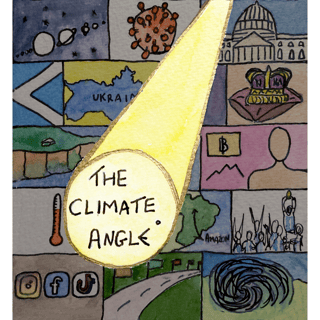
Speaker: Hello, I'm Shemayne Watson and welcome to the second episode of The Climate Angle.
Speaker: This is a podcast where we examine headline and not headline news from the UK and around the world and ask the oftenest question, what's the climate angle?
Speaker: All too often the news we are exposed to neglects to address the climate crisis or consider the role or impact of climate change on a problem or situation.
Speaker: We often find that consideration of the climate crisis in news stories most readily, frequently and or easily comes when the stories themselves are about a climate disaster.
Speaker: Each episode, I and a couple of guests will be examining a topical story, event or situation and discussing the climate angle because there always is one.
Speaker: This episode will be discussing the language of climate change.
Speaker: Have you heard different competing and often confusing terms to talk about the climate crisis?
Speaker: I've already used a few myself.
Speaker: From climate change and the climate crisis to global warming and natural disasters, the language we use around this subject varies depending on who is speaking, who they're speaking to and the purpose of the conversation.
Speaker: Here to help us wade through the complexity of language are two experts who happen to also be my good friends and former colleagues, my tea and burrito buddies.
Speaker: The first is Kayla Kroestover.
Speaker: A born and bred Coloradoan, Kayla is an English literature and language specialist with degrees from Colorado State University in the US.
Speaker: She's also a teacher who specializes in project-based learning with a huge passion and talent for theater.
Speaker: Welcome to The Climate Angle, Kayla.
Speaker: So excited to have you on.
Speaker: Hi Shemime, thanks for having me, it's so good to see you.
Speaker: Awesome to see you again.
Speaker: Awesome to see you, yes it is.
Speaker: My second guest today is Sam Gleason.
Speaker: Originally from Kansas, Sam was a Colorado transplant for a long time before this year heading back to his hometown of Lawrence.
Speaker: He's a brilliant science expert and teacher who is passionate about the outdoors, loves KU basketball and is one of the best people I've ever worked with.
Speaker: Welcome Sam.
Speaker: No, thank you.
Speaker: I'm glad to be here.
Speaker: And that's just a glowing introduction.
Speaker: I hope I can live up to it.
Speaker: Glowing and accurate for both of you.
Speaker: I also do have to say, Sam and Kayla both have their own podcast.
Speaker: It's called A Buffy Fan and Sam.
Speaker: Do you want to tell us a little bit about what it is?
Speaker: Yes, of course.
Speaker: It's, I think, equally as important as climate change is watching a late 90s Monster of the Week show and making fun of it for all of its... Everything from the poor special effects to the fact that these teenagers are apparently completely unbothered by any sort of trauma.
Speaker: I would say that's pretty accurate.
Speaker: I have watched sporadic Buffy episodes.
Speaker: I've never watched consecutive episodes, I don't think.
Speaker: I'm wondering if there would be maybe be a really cool opportunity for like a crossover podcast episode where like, what's the climate angle on Buffy the Vampire Slayer?
Speaker: Sometimes I notice the weather that's happening in the episode.
Speaker: And so I do comment on like, but I know because my friend Sam has taught me before that climate and weather
Speaker: are different things.
Speaker: So thank you, Sam, for teaching me that lesson long, long ago.
Speaker: Yeah.
Speaker: It's also always sunny in Sunnydale.
Speaker: It's not always sunny.
Speaker: It was raining in an episode and I was like, look at all this moisture.
Speaker: I was like, yeah, but you were probably more concerned about what I was doing to Buffy's hair.
Speaker: Hey, she wasn't appropriately dressed.
Speaker: Climate on a hell mouth is complicated and I feel like I know enough about the occult to really talk about the impacts of how demonic possessions and things like that are affected by climate change.
Speaker: Maybe with more episodes.
Speaker: I'm still new.
Speaker: You could also look at it from the perspective of like, who do we think maybe in Republican politics could be possessed based on their kind of climate perspective?
Speaker: Oh, that's coming.
Speaker: That's coming.
Speaker: Right?
Speaker: It's definitely in their interest to screw the planet over.
Speaker: So that seems like something the devil would do.
Speaker: Put that in your predictions, Sam.
Speaker: Yeah.
Speaker: I'll keep that.
Speaker: I'll keep that in mind for prediction time.
Speaker: Okay.
Speaker: So let's get onto our first kind of area.
Speaker: I want to ask about your perspectives on how the way we use language can influence our understanding of concepts.
Speaker: So you both come from very different disciplinary backgrounds.
Speaker: but I imagine there's some overlap between the arts and science.
Speaker: So what does using specific kinds of language do to us as knowers?
Speaker: I mean, specifically what I'm thinking about is maybe not from my discipline point of view, but from a student point of view, I feel we used climate crisis, we've used global warming,
Speaker: only recently do we really use climate change.
Speaker: And I still don't think that's been clearly defined or I just don't think that there's much to it.
Speaker: The buzzword is so there that the earlier terminology, I think, still sticks with us.
Speaker: And I think it's so problematic that it keeps us from doing anything about it.
Speaker: right?
Speaker: It's a crisis.
Speaker: It's a global warming.
Speaker: It's something that the planet is doing.
Speaker: How can I even approach this?
Speaker: So I think from like a young student, even in my own time, you know, as a young person, it was so, the language that we use around this was, it was so, such a barrier and such a wall that I can't even touch this problem.
Speaker: So where, where do I start and should, and how can I care if it's
Speaker: And I see this in my students too, is like, maybe we're shifting a little bit because our discourse around it is changing, but I think the early terms that we used to discuss this were so doomsday-ish that it has hindered a lot of progress and momentum towards addressing it.
Speaker: Yeah, I think the, just the changing language has been
Speaker: has been tough.
Speaker: When I first started learning about climate change, the term was global warming.
Speaker: And from a scientific perspective, that term is accurate.
Speaker: It is a warming of the earth.
Speaker: And so when I first started hearing people talk about climate change, I was honestly kind of annoyed that we were having to use this different term.
Speaker: But kind of came to grips with that when it was like, well, but people hear global warming and then they expect it just to be hotter.
Speaker: And then when it snows, it's like, oh, well, this is not a thing because it's not hot.
Speaker: It was hotter yesterday.
Speaker: Now it's not.
Speaker: And it comes from this misunderstanding, obviously, because it is the average global temperature that's going up.
Speaker: That is the thing that matters.
Speaker: But trying to get it from like a communication standpoint, that term of climate change is functionally better.
Speaker: But we've also seen, you know, now we have problems with that of people saying like, oh, yeah, the climate changes all the time, which is, again, the problem with like scientific language is like,
Speaker: Yeah, it's true.
Speaker: It's the like my favorite Big Lebowski quote.
Speaker: It's like, you're not wrong, Walter.
Speaker: It's an asshole.
Speaker: Like you're not wrong.
Speaker: Like the climate does change all the time.
Speaker: But like that doesn't make what we are experiencing right now.
Speaker: OK, that does not make what we are experiencing right now sustainable for human existence as we know it.
Speaker: So I think that's how that language has evolved.
Speaker: And now you start seeing more of the climate crisis, which I think is good.
Speaker: But in the same breath, the climate crisis implies that this is impacting me in a dramatic way right now.
Speaker: and there are people around the world who are feeling that unfortunately many people who have the most power are not i i still can drive my car um no problem i don't have to deal with um turning on the tap and water not being there i don't have to worry about um getting cold and i'm not gonna have the heat turn on my house those are things that i'm not yet experiencing
Speaker: So, and when we say a climate crisis, like, and the change, the rate of which these things are changing on a normal level is happening in the blink of an eye.
Speaker: But in our personal experience, it's, it is tantricly slow, which makes it hard for any action to take place.
Speaker: I think so much of it has to deal with exactly what you're saying, Sam.
Speaker: Like it's from a scientific point of view, if you are in that discipline and you're talking about, you know, you know the language and you can put it in your perspective because that's what you study.
Speaker: I think from a humanistic point of view, we need to feel like something is being taken away from us.
Speaker: You know, we have that identity in ourselves and that idea that, oh, I'm going to hurt because of this or my family is going to suffer from this.
Speaker: Because I know so many efforts have been tried, especially by kids.
Speaker: They want so desperately to make some changes, but unless they feel that discomfort a little bit.
Speaker: I don't know if you want to talk, Shemayim, later about my fast fashion venture, but which was inspired by you.
Speaker: You know, you make kids do service or you make people do service where they're actually getting into the experience and then you're then then you have conversations about it.
Speaker: So I think the broad topics that we've isolated climate change into really has no effect until it becomes.
Speaker: Like immediately impactful on you.
Speaker: And yes, and brought into a community to share.
Speaker: that's discussed, right?
Speaker: I think, yeah.
Speaker: And I think though that one of the problems we're seeing particularly in Europe at the moment, because obviously you're both in the US, the impact of the war in Ukraine on the discourse around energy usage over the winter, people are...
Speaker: there's a kind of low level underlying panic around how many people are going to die this winter because they can't afford to eat their homes.
Speaker: And people in the UK, they're talking about people having to just use public libraries to stay warm or to stay on the bus for a day to stay warm.
Speaker: But that discourse isn't around
Speaker: climate change, there's no kind of, this is going to happen to us in the next 10 years, and it's going to be the same.
Speaker: But this is only about Russia invasion, invading Ukraine.
Speaker: It's not about that there's no climate angle to this conversation.
Speaker: It's all about the immediacy of war.
Speaker: It's not what's the long term language we need to use.
Speaker: I find that so fascinating because it's an immediate enemy.
Speaker: It's something that is a habit and a pattern and that humans can, we can conceptualize, right?
Speaker: When we think about the awe of climate and weather and Sam, you could probably speak more to this.
Speaker: I know you have like kind of some passion around this, but
Speaker: When there's something that you can't explain particularly clearly for yourself, that's such a complex idea that we have no enemy to face.
Speaker: We have no one to be mad at.
Speaker: We have no one, there's no urgency for that change because it's just like, well...
Speaker: I think it's even worse than that sometimes because the people that are to blame are us.
Speaker: It's our actions that have caused this.
Speaker: It's one thing to... I think the war in Ukraine is a great counter example because you can say, oh, Russia is doing this invasion.
Speaker: It is them.
Speaker: It is their fault.
Speaker: That is the bad thing.
Speaker: It's so clear.
Speaker: It's so black and white.
Speaker: Whereas...
Speaker: looking at carbon dioxide emissions, it's like, okay, so who's the bad guy?
Speaker: And it's like, well, we are, all of us collectively through action or inaction or all combinations of that, that can be really, really hard.
Speaker: And so, yeah, I mean, it's just...
Speaker: the like i don't think i don't know kayla if you've like had much of this but like we are insulated from the like immediate threat of not having heat over the winter um in in this country we have we don't we don't rely on russian pipelines to to heat our homes but
Speaker: I see this more with the big thing right now that I see most people complaining about very loudly is gas prices and all of that.
Speaker: And like my dad just the other day got into a shouting match with a guy at a gas station because the guy was loudly complaining that it was Biden's fault that we had high gas prices.
Speaker: And it's like, dude, that's not...
Speaker: It's so derivative of what the issue actually is.
Speaker: That is the exact parallel, right?
Speaker: Yeah.
Speaker: With the war in Ukraine and the politicizing of resources.
Speaker: It's the same story.
Speaker: I think also one of the problems with the language that we use is...
Speaker: because of the general functioning of global economies and global governance is centered around capitalism.
Speaker: There seems to be a reluctance for world leaders to actually say, this is the problem.
Speaker: Capitalism is the problem, overconsumption, overusage.
Speaker: And I don't know if you guys were following this, but before Theresa May, it's not Theresa May, so many Tory prime ministers about to step down.
Speaker: before Liz Truss stepped down this week, she was calling kind of anyone who was against her
Speaker: economic policy, the anti growth coalition.
Speaker: And so growth, growth is the be all and end all the purpose of, of any country is to continue to grow.
Speaker: And no one asked the question at what cost or why?
Speaker: Right?
Speaker: Like, there's a great kind of anti capitalist movement called D growth going around at the moment, like actually, why, why aren't we questioning this assumption that we need to grow all the time?
Speaker: What's the what's the problem with?
Speaker: you know, appreciating A, what we already have and B, not taking more than we need and not taking more than we actually can because it's gonna be fatal.
Speaker: It's a fatal, fatalistic way of behaving.
Speaker: I think in the United States, the word that comes to my mind is conservative.
Speaker: It has such a deep connotation with a right-wing person
Speaker: politics, but that we don't really look at the root of the word, what it means to conserve.
Speaker: And I, and that there's something really powerful in that language of like, why am I, why am I not conserving these, these parts of even my, you know, my energy or, you know, my food, or, you know, we, we think of it more as like,
Speaker: I conserve my beliefs and my values instead of like really looking at it as resource.
Speaker: I like that.
Speaker: I like the idea of reclaiming the word conservative to take it back to its original linguistic definition.
Speaker: That sounds very appealing and also upsetting to right-wing politicians.
Speaker: Right.
Speaker: Probably not gonna make that headline on Fox News.
Speaker: Taking back the conservative name with confirmation.
Speaker: So also because we've all taught at the same school in Colorado, one of the words that always seemed to come up at least a few times every single day was empathy, which seems like such an essential word to have to hand when we think about the climate crisis or when we think about
Speaker: our shared relationships with each other and the planet.
Speaker: And Kayla, you're talking about communities.
Speaker: Why do you think it's so difficult for us to empathize with people who are outside of these kind of structured communities that we've created?
Speaker: People like Sam said, people are experiencing now the effects of the climate crisis, but we're not empathizing with them.
Speaker: We're not fully appreciating or understanding
Speaker: what it's like for them to be in that situation.
Speaker: And we won't generally until we experience it ourselves.
Speaker: What are your thoughts on that?
Speaker: I have a lot of thoughts on that.
Speaker: And yeah, Sammy, jump in anytime you, cause I know you have experienced this too, but honestly, when I think about how we're going to save the world, it starts with ourselves.
Speaker: You know, it starts with that self-love.
Speaker: It starts with that work that you're going to do.
Speaker: And so the reason why, I mean, the pandemic literally closed us off from everyone.
Speaker: We have so many walls.
Speaker: We have so many insecurities.
Speaker: We are trained to tune it out.
Speaker: So until you can have community and safe spaces to be your true authentic self,
Speaker: can your heart truly open to the experiences of others?
Speaker: So my belief is that it starts with your own self-worth first.
Speaker: You could read all the things that you want, but if you just read it and just like, it doesn't, so many people are like burdened by it that they just get run down and they get tired, right?
Speaker: So I think even
Speaker: situations like this, right?
Speaker: We have a small community.
Speaker: We have a small little talking circle right here, even though we're in different parts.
Speaker: So yeah, that's my thought is I think we can use empathy as a buzzword, but to truly understand what it means to feel that you have to do your work on you.
Speaker: Yeah, I mean, I think that's, yeah, the talking to
Speaker: getting to do the job that we get to do, like getting to talk to young people, the number of them that are scared and the number of them that are really angry is, I think, justifiable.
Speaker: And I wish that more of them, and I don't know if this comes from empathy or where we can get this
Speaker: get them thinking in this way but i wish they could use that in a more like being angry and hopeful is a really powerful place to start from if you're angry and pessimistic that's not going to end well but trying to breed some hope into into into young people into students
Speaker: is a real challenge.
Speaker: I mean, we are still working in systems that are, and even Kayla still being at Compass, which gives you the ability to be about as flexible as I think you could possibly be in an educational space.
Speaker: we still have this, this issue of like preparing kids for a world that they are fully aware is not going to exist.
Speaker: And that's, I think really, really hard.
Speaker: And so, you know, not to be on the tangent of changing education, but changing language, changing how we talk about things and educating everybody to be more clear with what our goals are and how
Speaker: And then taking some of that and the empathy needs to be extended out to people who are going to be hurt by the changes that need to be made.
Speaker: I think that's one thing that is often overlooked in calls for action on climate is the people who their lifestyle is going to be
Speaker: at best significantly altered, if not outright destroyed.
Speaker: And are you just to clarify, Sam, when you say that you mean, so, for example, an extreme case might be like the dairy industry versus rather than like the Kardashians who would have to stop flying all over the place.
Speaker: Yeah, no, fuck them.
Speaker: I don't care.
Speaker: Yeah.
Speaker: And I mean, the extreme example, like this is, you know, one of the biggest tragedies around Trump getting elected.
Speaker: And there were a lot.
Speaker: I remember hearing about these, the coal miners in Kentucky that all like supported him like crazy because he promised to bring back coal mining.
Speaker: And when he got in the office and did nothing about that, it's like, well, yeah, of course, like that industry, A, has broken down because the coal is gone.
Speaker: And we also recognize that we're not going to, you can't put more in the ground and it is not the best thing, even if you could.
Speaker: And so all these people were left like with the rug fully pulled out from underneath them.
Speaker: You also have people's way of life, like moving back here to Kansas and being from here, like seeing people who their life is agriculture and their life is food production and that's
Speaker: Not having a genuine conversation about and not giving them the support they need to survive in a changing world is inappropriate for political people to be like still saying they support farmers when you are not giving them the resources that they need to re-educate themselves and their lifestyle of how they're going to continue doing the amazing work that they do to feed the planet.
Speaker: when that planet is changing from underneath their feet.
Speaker: Yeah, for sure.
Speaker: It's actually the kind of...
Speaker: honesty and ability to communicate effectively with everyone is a good segue into the next question, which is you're both living and teaching in two very different states.
Speaker: Obviously, Sam has lived in Colorado, but I'd like you to focus on Kansas.
Speaker: So with that in mind, are there any restrictions or any kind of rules around the language you can use when you're when you're a teacher in those states, particularly around this subject?
Speaker: I mean, I know, just knowing, I know Kayla doesn't have any restrictions, really.
Speaker: You might have some parent pushback here and there, but I also, like, I will... Yeah.
Speaker: And I will say that, you know, Kansas is weird.
Speaker: And I will maybe take a moment to defend it a bit.
Speaker: That
Speaker: historically, it's been a more progressive place than people gave it credit for.
Speaker: And on occasion, we can rise to the occasion.
Speaker: And overall, there is a lot of people who have been put, had hard times put on them in pretty, pretty major ways.
Speaker: The population
Speaker: growth in Western Kansas has been negative for a number of years now.
Speaker: Job prospects are dwindling.
Speaker: Commercial agriculture has dramatically changed the landscape from what it was of families and smaller groups managing pockets of farms all over the place to, you know, one dude and
Speaker: thousands of acres and a GPS powered combine has really changed the landscape of the state.
Speaker: More people moving into cities, trying to figure out how does that work.
Speaker: All of that makes Kansas a very complicated place and a place that has a lot of
Speaker: weird political views and a lot of people that are very conservative in the traditional American Republican sense of those things.
Speaker: So anyways, that's maybe the preface for that.
Speaker: In terms of language that we are allowed to use, I haven't heard too much about
Speaker: language around climate that we are restricted on.
Speaker: Most of the language that we've been prevented to use as teachers, not me personally, not in my district, not in my school, and not in my city because I live in a little blue bubble in Kansas.
Speaker: But statewide, there are definitely districts where critical race theory is not allowed to be used.
Speaker: That's happening to us here, too.
Speaker: Yeah.
Speaker: When I was in high school, that was the time where the biology textbooks had either the evolution sections of the textbook were fully skipped over or you had to put the disclaimer sticker of this is just one view of evolution.
Speaker: So the language around some of those things has been restricted.
Speaker: But
Speaker: As of right now, like there doesn't seem to be any like clear like you will not say anything about climate change.
Speaker: And I wonder if some of that is because.
Speaker: Even the most conservative people in this state see the harm that is being done to.
Speaker: our state's biggest industry and the the projected forecast of what summers in kansas are going to look like in 40 50 years um and they're not great and the fact that like a quarter of the water that is put onto crops in this state comes out of a aquifer that is
Speaker: being depleted at a increasing rate and that there is no replenishing of that aquifer when that water is gone it's gone and yeah i think that's the dust bowl was not that long ago and the only thing that has prevented another one from happening is the ogalala aquifer and that aquifer is drying up
Speaker: So it's a complex place, I will say.
Speaker: And I haven't experienced restrictions on my language as a teacher at this point.
Speaker: That I feel like we might be in opposite places, Sam, because yours is like, you know, known to be very conservative, but like has this underlying...
Speaker: progressive, like people are stuff is kind of stirring.
Speaker: I live in a place where it's, it says it's progressive.
Speaker: It's a college town named what top five places to live in America, like five years running, right?
Speaker: And so I think, I think
Speaker: what we're finding and experiencing, and again, I definitely see in parents is this like, hear no evil, speak no evil, see no evil.
Speaker: Don't disrupt our pleasant bill.
Speaker: Don't disrupt our... And we were built, the college was an agricultural college.
Speaker: So there's still a little bit of hesitancy to ruffle the waters or to make children unhappy.
Speaker: Or to, you know, well, they have enough anxiety.
Speaker: Your children are unhappy.
Speaker: But do you know what I mean?
Speaker: Like, that's, I don't know.
Speaker: That's, it seems like we look one way on the outside, but I think that there's a pretty shaky foundation that people are scared to lose.
Speaker: Yeah.
Speaker: And so they, it's not that you can't talk about it, but if,
Speaker: I agree with you, like the critical race theory, we had a dad come in and don't teach my kid that.
Speaker: And we just like walked out.
Speaker: I almost wonder if the like, this is maybe reductive, but I feel like there's less in where I am at now, there's less talking about it and more sort of
Speaker: quietly just using different language, trying to do something about it.
Speaker: And the language of, hey, we're going to do this to mitigate changes due to climate change.
Speaker: Instead of saying that, saying, hey, we want to preserve irrigation water.
Speaker: That's the goal.
Speaker: And man, you get a bunch of farmers that are like, yeah, let's do it.
Speaker: It's going to cost how much?
Speaker: Okay, fine.
Speaker: That means my kids are still going to be able to run this farm.
Speaker: Let's do it.
Speaker: It's like in Parks and Rec where you guys have both seen that, right?
Speaker: Mm-hmm.
Speaker: So when Leslie Knope has to pitch putting fluoride in the water and there's immediate pushback, oh, what are they doing?
Speaker: They're poisoning us, this is so bad.
Speaker: And then she kind of flips the narrative and turns it into like a, everyone will love what we're adding to this water.
Speaker: This is what you'll get out of it and takes all the science out of it and just turns it into a kind of almost superficial, like this is what you can expect to experience and you can win points the more you clean your teeth, that kind of thing.
Speaker: Just how do you appeal to people?
Speaker: I guess take the fear of something the complex out of it, because it is an incredibly complex systemic problem.
Speaker: And people divided into their kind of smaller disciplines or areas or industries.
Speaker: immediately think, well, hang on, how am I going to be able to adapt to this?
Speaker: What do I need to do?
Speaker: How am I going to be supported?
Speaker: And so I guess if you flip it into, hey, this is how we're going to support you.
Speaker: You don't have to worry about what the problem is.
Speaker: Then I can see how that could be much more appealing.
Speaker: I did want to you both brought up critical race theory and I don't want to get really off topic, but that is I think that's a really good example of climate change, the systems around climate change and it being intersectional because there's 100 percent an angle on critical race theory that that.
Speaker: people in minority groups, people have been disenfranchised for centuries, will experience climate change so much worse than, than more privileged people in society who have that kind of inherited privilege and wealth over generations.
Speaker: I mean, the most obvious example I can think of would be the impact of Hurricane Katrina in New Orleans, and how communities over there are still suffering the effects.
Speaker: So I think,
Speaker: there are not being able to, I guess you could talk about that in the context of climate change, but you, I suppose you would have to be careful about whether or not you called it part of critical race theory.
Speaker: Well, you know, just that othering that that's, that's another reason why when we hear about other people and their suffering, it's like, well, they, they have it different than us.
Speaker: That, that that's not my experience.
Speaker: And even though that's not, you know, you're not being trying to discriminate, you're still,
Speaker: there's still conditioned othering in people.
Speaker: So the empathy, like, right, it's all connected.
Speaker: So the empathy doesn't get there because those people aren't you and they're not like you.
Speaker: So you're absolutely right, Shemai.
Speaker: The fact that we can't talk about that relates that we can't fully talk about anything serious.
Speaker: Yeah.
Speaker: We're just going to go paint rainbows.
Speaker: We're going to take all of the bad stuff out of our history books because they're too triggering for the children.
Speaker: Jeez.
Speaker: It was all great.
Speaker: I mean, yeah.
Speaker: Taking a leaf out of Germany's book here is probably a wise move.
Speaker: Like we're not going to shy away from our history.
Speaker: We'll tell you everything that we've done to the point where, I mean, definitely off topic now, but some people,
Speaker: in conversations people have been bringing up the idea that people have kind of like holocaust fatigue like we talk about this all the time why are we always talking about this because it's so important that's why we're not going to stop talking about this right um so kind of i want i want to talk to you guys maybe more on a personal level because obviously you've talked a lot about your experiences as as professionals and coming from your
Speaker: your disciplinary side.
Speaker: Kayla, you have a family and Sam, you're married and you've got family living around you in Kansas.
Speaker: What, when you think about climate change, what kind of language are you thinking in?
Speaker: Are you thinking of crisis, catastrophe, change, global warming when you talk to your kids, Kayla, when you, when you communicate with your family, is it, what kind of language are you thinking in or using?
Speaker: I think I take more of a,
Speaker: an immersive approach, especially since I have young, young children.
Speaker: I think it's more of like, let's, let's go into these places.
Speaker: I mean, it is, it is kind of challenging because we did, we just drove cross country this summer.
Speaker: Right.
Speaker: We came and saw Sam in Kansas and we used our car.
Speaker: And so that, and we were filling up our gas and we were just talking about gas prices, like on that whole road trip.
Speaker: and just driving through the agricultural landscape.
Speaker: So, I mean, there's tons, you know, my kids were like, look at all this farmland.
Speaker: Wow.
Speaker: You know, like, so I think it's more of a,
Speaker: I'm gonna say this wrong guys, cause I always say this word wrong, but experiential, did I say it right?
Speaker: Experiential.
Speaker: Thank you.
Speaker: It's like a baccalaureate.
Speaker: I'm a mystic expert here.
Speaker: Experiential.
Speaker: Hey man, I'm just a redneck from Colorado.
Speaker: We're going to bring kids out to the farm.
Speaker: We're having an experiential experience.
Speaker: All y'all today.
Speaker: I'm not kidding.
Speaker: Guys, I think that is because of my, like, I think I have a little accent.
Speaker: Like, my tongue doesn't do the right thing.
Speaker: Okay.
Speaker: I don't talk to my children.
Speaker: I say the wrong words and then, you know.
Speaker: But, you know, they need to know and they need to be in it.
Speaker: I don't think talking about it with them right now is, and, and not talking about it, but fricking just living it.
Speaker: Right.
Speaker: Very minimalist.
Speaker: We talk a lot about, we get all of our clothing secondhand and they know why, right?
Speaker: We don't get birthday presents and we know, we know why.
Speaker: We have a fight over, it comes back to consumerism is really what I think.
Speaker: And your footprint and your impact in the world.
Speaker: So it's not necessarily language, but there always is a conversation of why our behavior is the way it is.
Speaker: Right?
Speaker: We don't buy, we don't have new cars.
Speaker: We don't, we have fuel efficient cars.
Speaker: We have, we don't water our lawn.
Speaker: Why does our lawn look the worst out of everyone in the neighborhood?
Speaker: Mom?
Speaker: Yeah.
Speaker: tell you you know like let me talk to you about you know let's go to the reservoir and talk about what a reservoir is and how fortunate and lucky you are so so the conversation is more in these like isolated pockets based on our lifestyles and how they contrast or how they align with with their peers and that is the most that is the most important thing to them right now is how they show up and how they look to others
Speaker: And that they have the language to back themselves up for the way that they are living or being raised.
Speaker: For sure.
Speaker: I don't.
Speaker: My niece is four.
Speaker: So haven't had too many climate change conversations with her.
Speaker: Mostly we talk about Encanto and unicorns and unicorns.
Speaker: playing tag.
Speaker: We'd play a lot of tag.
Speaker: So yeah, that's mostly what I'd talk about.
Speaker: But so moving back closer to my family has been interesting and
Speaker: just the ability to like support each other and share resources in a way that when we were out in Colorado, it was, we had lots of friends obviously, but the not having that family structure made it so that there was a lot more that you were doing on your own.
Speaker: I, and it's like, you know, some, some of it's small things like sharing dinner or sharing rides to places.
Speaker: And it,
Speaker: I think just being more embedded in a community that, you know, I, a community that I grew up in and so feel, I think, more comfortable in has been, has been nice being able to like, you know, know people who are at the farmer's market and being able to talk to people there and being able to, we just got a, my brother and I, we had a friend of his,
Speaker: raises pigs and we got a pig and I have like, instead of both of us having to have a big chest freezer to keep all this meat preserved, we have one and he's coming over any minute now actually to come grab some sausage.
Speaker: He doesn't want to have to have a big chest freezer because it uses a bunch of energy and it's all this stuff.
Speaker: So I don't know.
Speaker: And it comes down to like those little things like certainly add up and
Speaker: are nice, but I try not to get too bogged down in those.
Speaker: And when I talk to students about those, you know, I talking about in biology class, I talk every year about trophic levels
Speaker: all the the loss of energy as you eat up the food chain and how it would be best for the world if everybody was vegan that would be that'd be great and they always uh they always ask me like well are you vegan and i go no yeah and they go well why not i was like well there's a lot of reasons one i like cooking meat i like eating meat it tastes good and i also selfishly can
Speaker: because my wife and I have this made a conscious choice not to have children.
Speaker: I can excuse myself and be like, my carbon footprint dies with me.
Speaker: So sorry.
Speaker: And that's maybe selfish or mean or whatever.
Speaker: I don't know, but it's, it's a, there's all kinds of things that we, that we tell ourselves.
Speaker: And I think getting bogged down in day to day details,
Speaker: undermines the bigger issues of infrastructure of designing cities in a way that are friendly to not having to have a car.
Speaker: That's a big thing that I wish Lawrence was better about.
Speaker: I rode the bus to
Speaker: school a few times and then I stopped because there was a spot where it was like the bus was an hour late to get me home and I just sat at the bus stop and I was like I can't do this like I can't wait yeah I could obviously like that is a position of privilege of me saying that is that but those are the kinds of things that like small little inconveniences for people
Speaker: change their behavior in a way that is pretty remarkable.
Speaker: My excuse is like, I always have to bring so much crap to teach.
Speaker: Like, I don't know, like, I didn't have to have so much crap.
Speaker: It'd be so easy.
Speaker: You know, I'm carrying like, it's so pathetic, but you know, I'm just carrying around books and papers and my lunch.
Speaker: And I know it's like such a bad thing, but you know, like,
Speaker: Oh yeah.
Speaker: Just like thinking about like restructuring, like what if we had a gourmet kitchen where food got like I didn't have to bring food or we didn't have to have like weighted down things or we could have a copy of things at our house and a copy of it.
Speaker: Like what makes it easier for people to travel publicly?
Speaker: And that takes such a change of habit.
Speaker: So when we have bike week, I'm the worst educator ever.
Speaker: I am so disoriented and so like all over the place because I don't have my my stuff.
Speaker: You need a trailer on your bike that you can just carry all of your stuff.
Speaker: Oh my goodness.
Speaker: You would love this.
Speaker: In the Netherlands, like every other bike is, well, first of all, Dutch bikes are really like chonky and heavy.
Speaker: And obviously everyone's riding a bike, but half of them have these huge kind of,
Speaker: I don't know, like pods in front of them where they put their children.
Speaker: So there are these huge like buckets that your kids are sitting in sometimes with a cover over the top in case it's raining.
Speaker: You would absolutely benefit from one of those.
Speaker: But isn't that terrifying with all the giant Ford F-150s on the road?
Speaker: That's such a good point too, Sam.
Speaker: I have to cross so many busy streets, like three lanes, like straights with this stupid joke.
Speaker: I mean, that was a joke, having been in Amsterdam and like the cars are smaller and probably easier to move around.
Speaker: I know that's a joke, but I felt bad for myself.
Speaker: Yeah, no, I...
Speaker: I feel sometimes intimidated in my, in my Impreza when I drive to work.
Speaker: So I, it's not, it is again, it's those small things that really make a difference.
Speaker: For sure.
Speaker: Oh, go ahead.
Speaker: Sorry.
Speaker: Go on Kayla.
Speaker: Well, just in the same, in the same vein, like the things that we're building in the infrastructure and the construction and all the things that are being built that are not public transportation that are not helping us get around, it's making it harder to,
Speaker: I couldn't cross three streets.
Speaker: I had one street I could cross all summer to get to a main artery of a street.
Speaker: And that's on my bike.
Speaker: So all of the bike lanes were being blocked off by, and that's all summer long.
Speaker: I was also, I was thinking, I don't know if you guys do this.
Speaker: During this conversation, I've just realized how often I think about climate change, which may be,
Speaker: I'm now realizing contributes somewhat to my climate anxiety.
Speaker: But I was thinking about
Speaker: So I went to the market earlier and there's a cheese monger and I was thinking, well, the Dutch eats so much dairy.
Speaker: What are the kind of subsidies you have to put in place if you wanted to support the dairy industry, if you were gonna tax people for eating more cheese.
Speaker: And then I went on my run and I was thinking, geez, LA is just like, it's in California, which is one of the biggest economies in the world and prides itself from being so climate change focused and environmentally friendly.
Speaker: But LA,
Speaker: is just this hot mess of petrol and garbage and it would be such a perfect place for really, really good structural infrastructure to help people get around.
Speaker: Like imagine an LA with fantastic public transport.
Speaker: It would change so many lives.
Speaker: And I'm just thinking, like that's just kind of running through my head 50% of the time, those kind of ideas.
Speaker: But how do we kind of, I don't know, marry these, these states and these communities that are forward thinking and at the same time are putting in policies that are not putting in policies that would actually move them forward.
Speaker: Like I think California has is planning to ban gas cars within 10 years.
Speaker: How are they gonna support people if they don't have a functioning public transport network in LA?
Speaker: It's just, it was mind blowing.
Speaker: So I fully appreciate the necessity of really, really good public transport networks.
Speaker: Like Fort Collins has that great
Speaker: What's the line called?
Speaker: The Max.
Speaker: Yeah, the Max.
Speaker: That's great.
Speaker: But it also only goes from north to south and you can't go across and then it only goes so far.
Speaker: Yeah.
Speaker: Yeah.
Speaker: So, I don't know.
Speaker: It's great if you live near a Max stop.
Speaker: Yeah.
Speaker: Yeah.
Speaker: If you don't, then it's next to you.
Speaker: Yeah.
Speaker: Drive your car to the Max stop.
Speaker: Well, I mean, we...
Speaker: I mean, it's those little things, but I was pretty shocked when there was no more bags, like grocery bags don't exist in Colorado anymore.
Speaker: So, I mean, those are some big things.
Speaker: And I like those things because it puts that pressure on people.
Speaker: Like, oh my God, how am I going to, you know, and you see people like struggling out with their like groceries, but that's that tiny bit of like, I'm uncomfortable.
Speaker: Yeah.
Speaker: That makes you like, oh, but I made it.
Speaker: I brought my groceries to my car and I wasn't destroyed by it.
Speaker: I made it.
Speaker: I would love to see, talking about language, I would love to see, and this is maybe a more American-centric perspective, but I'd love to see more of the language around climate change be
Speaker: supportive of like American, and I know this is gross, I apologize, but like American grit and American like determination and American resiliency and all of that seems to like be such a afterthought of like everything, everything is, well, this is going to suck for right now.
Speaker: And like, it is a small thing, but the grocery bags in Fort Collins,
Speaker: I remember when that happened, like people griped about it for like a week and then adapted and not just, not just us as Americans, humans are good at adapting.
Speaker: And if they get other structures and they're, especially if there's a change in the structures and a place to support them, then you can use that language of, um,
Speaker: of adaptability, of determination, of resiliency, all those things.
Speaker: And I think maybe that's where I'd like to see the language change and give some of that hope to it.
Speaker: Instead of talking about the climate crisis, talk about people being
Speaker: climate resistant and people being climate, climate adaptable and all of like something else that is not just like so doom and gloom about like, Oh, this is, this is all going to be awful.
Speaker: And when we think about that too, you know, and I, I, again, I haven't had a chance to talk to my niece about, about this, but when, when she's, when she gets older and starts to ask questions and we do talk about these things, I hope to impart on her that like,
Speaker: while it needs immediate action, it's not going to have like super immediate effects either for good or for bad.
Speaker: And so like, we're going to be in a good problem solver, we're going to help each other out, we're going to be an adaptable and, and we, the collective, we can be okay, but we have to make a conscious choice to actually be okay.
Speaker: And like, I mean, everything that we've just talked about, Sam, that landed so nicely.
Speaker: Yeah.
Speaker: Climate resilience.
Speaker: Is that what you said?
Speaker: Yeah.
Speaker: Something like that.
Speaker: We can listen back.
Speaker: The name of this episode is... No, just kidding.
Speaker: Something like that.
Speaker: Just kidding.
Speaker: Also just, you know, just the things that we teach children.
Speaker: I mean, I'm proud of the little school that we worked at guys and watching kids be able to give feedback and then watching adults not be able to take feedback.
Speaker: Yeah.
Speaker: You know, that's all part of it too.
Speaker: Like, Hey, we're not shaming you, you know?
Speaker: And I feel like that's what people are feeling.
Speaker: And I think they feel just such deep shame around their habits that are contributing to climate change.
Speaker: But shame begets shame, so I'm just gonna keep doing it and there's no way to get out of this hole.
Speaker: But instead if I like, or I'm gonna be trolled or someone's going to comment or my identity is gonna be based on my actions or I'm gonna be left wing or right wing and I'm just gonna be so black and white by the things that I do.
Speaker: And there's so much shame around that, that I think that's part of the people not taking action or doing anything seriously.
Speaker: But when you can have people that can be like, Hey, I noticed that you, uh, you know, you, you're having a hard time doing this.
Speaker: Right.
Speaker: What if we chose to do this and what if I helped, you know?
Speaker: So, so teaching, right.
Speaker: I mean, we're, as educators, we know how good that is, but just adults, just we weren't taught that.
Speaker: Feedback was bad.
Speaker: Feedback meant it meant I was wrong.
Speaker: Feedback meant I did something, something that was going to make me not accept it.
Speaker: Yeah, for sure.
Speaker: We have to change that language.
Speaker: I think that is a perfect segue Kayla into the next section of the podcast, which is climate reflections.
Speaker: So this is a part of the podcast, which is for self-reflection or raising awareness.
Speaker: Um, and I'd like to focus on reflection again, just thinking about your own climate impact or the way that you maybe have had
Speaker: or ways that you have been aware or maybe not been aware of how you may have impacted the climate or
Speaker: things that you did recently that were slightly more unsustainable.
Speaker: So for example, the last two days I'd been in Leiden and I was staying in a hotel and I'm always, since this summer when I went, I traveled around Scotland for a couple of weeks, in some of the places I was staying, they had specific notices out saying, please, if you want us to change your towels, put them in the shower and if you don't leave them where they are, because we're trying to save water.
Speaker: So I was very conscious yesterday that they didn't have a sign like that in the hotel.
Speaker: And I was just thinking, geez, if everyone stays in a hotel just for one night, they're washing, what was it?
Speaker: Six towels every single day for each room.
Speaker: That is a crazy climate footprint.
Speaker: Yeah.
Speaker: And I was like, I'm actively contributing to that by only staying here for one night.
Speaker: I got the train down, but still.
Speaker: Yeah.
Speaker: I was, yeah.
Speaker: So climate reflections on your part?
Speaker: Sammy, you got one?
Speaker: Mine is always buying brand new clothes.
Speaker: I always feel so bad.
Speaker: And, um, in my defense, it was local.
Speaker: She does do like fair trade and, but you know, it's, it, it was, it was something spanking brand new.
Speaker: It was a gorgeous brand new sweater that just made me feel real good.
Speaker: Um,
Speaker: But I just think about that and I think about just all the fabric and the clothes that are being produced.
Speaker: And I try so hard to find, you know, there's this beautiful new consignment store in town that like, just like such unique, like statement pieces that I really, really enjoy.
Speaker: But I've been buying just some fresh new threads and that hits me a little bit.
Speaker: Oh.
Speaker: I'm, my sister is really, really good at, at finding things in charity shops and thrift stores.
Speaker: She's insanely good at identifying really nice clothes in there.
Speaker: And I'm just terrible.
Speaker: We went to a few yesterday and it was just like, I don't even know where to begin in this place.
Speaker: Um, do you want to talk at all about the venture that you had on upcycling and fashion?
Speaker: Oh, I think Sam kind of hit on it a little bit with the water discussion, like let's do this, make farming.
Speaker: I think it's when we can actually distill some actionable practices that people care about.
Speaker: I'm talking to teenagers about fashion.
Speaker: That's something they care about, right?
Speaker: There was a little bit of climate discussion there.
Speaker: And obviously they were impacted by...
Speaker: by what their buying of clothes do, but now that they have a name, they have an action, they have something that they care about that they can put full focus towards, it doesn't seem so grand.
Speaker: It seems
Speaker: that they can contain it and that that can be something that's in their mind that, oh, I know about this.
Speaker: And so that my small habit, I will change this small habit.
Speaker: So I think we need to start discussing these in more topical areas and topical areas of interest for people that they can start to practice that empathy.
Speaker: For sure.
Speaker: Sam?
Speaker: Mine, I think I...
Speaker: I think personally, other than sort of normal or fairly typical American things, I probably drive my car more than I should.
Speaker: Although the place where we bought a house in town, we usually, if we're going to go have a drink with friends or go out to dinner or something, the nice thing is we are really, we're within walking distance of downtown.
Speaker: So that's been really nice to be able to like do that and like,
Speaker: I walk to my gym now, which had always kind of I thought was hilarious to like, drive a car to then go work out somewhere.
Speaker: It was always like,
Speaker: a wild prospect.
Speaker: So I, the one that I think of a lot is just with food.
Speaker: I definitely do eat my fair share of meat and I recognize the impact that that has.
Speaker: But we went to a, there's a new sushi restaurant in Lawrence that is really good.
Speaker: And it was,
Speaker: Just really just nice to have like this, this beautiful meal and this fish that was, that was there.
Speaker: And it was a real contrast because this restaurant is right by the river.
Speaker: And it's a river that is pretty polluted.
Speaker: Swimming in it is a,
Speaker: highly discouraged and you can't eat any of the fish that you pull out of it or you shouldn't.
Speaker: People definitely do, but it's usually people that are very low income that are trying to get some food and it's, you know, full of literally everything that's come downstream through all this agricultural land and it's eutrophication is like super high and all this stuff.
Speaker: So eating is,
Speaker: super white tuna that is fatty and delicious and was flown in on a plane to then be like brought in on a truck and prepare it in this little tiny thing that I'm privileged enough to be able to eat is the contrast between that and catfish that are even struggling to exist in this river is
Speaker: a powerful contrast I will say yeah but if you're in if you're in Lawrence Tokyo Sushi is great so you should check it out they're BYOB so be aware I feel like this podcast is too young and fresh and has not enough listeners to point out that we are not sponsored by them hey maybe
Speaker: Maybe one day.
Speaker: If you're listening and are interested in changing your climate impact, then please sponsor us.
Speaker: A podcast run by a woman out of Amsterdam sponsored by a sushi restaurant in the middle of America.
Speaker: Building communities.
Speaker: Do we have a sponsor yet for our podcast, Kayla?
Speaker: Do we have a sponsor yet?
Speaker: Yeah.
Speaker: Have you worked on that yet?
Speaker: That's your job.
Speaker: You know what?
Speaker: I mean, we're just going to have fake sponsors and we're going to show up at Comic-Con and just look real important.
Speaker: I don't know if I want to pay for a Comic-Con ticket.
Speaker: Which network broadcast Buffy?
Speaker: We have our, oh, which network?
Speaker: Yeah.
Speaker: The WB?
Speaker: Oh, the WB back in the day.
Speaker: And then it got too sexy, so it went to Fox.
Speaker: Oh, so you could just, you know, reach out to them and be like, here are a couple of episodes.
Speaker: What do you think?
Speaker: I think Sarah Michelle Gellar might find.
Speaker: Oh yeah, fair, actually.
Speaker: She's back on the screen.
Speaker: So thank you so much, Kayla and Sam, for your time, your invaluable insights and perspectives and for your honesty and openness in reflecting upon your own climate impactful actions.
Speaker: I've really, really loved having you guys on here.
Speaker: It's been awesome speaking to you both.
Speaker: It's like tea time.
Speaker: Never left.
Speaker: It was like tea time.
Speaker: Yeah.
Speaker: And thanks to you, listener, if you tuned in to this episode of The Climate Angle.
Speaker: If you have comments, readings, or feedback about this episode, then do get in touch via our Twitter at The Climate Angle.
Speaker: And make sure you listen to our next episode.
Speaker: And don't forget to check out a Buffy fan and Sam on Spotify.
Speaker: We're almost done with season one.
Speaker: It's a great time to catch up.
Speaker: Woohoo!
Speaker: What do we want?
Speaker: Donut economic.
Speaker: When do we want it?
Speaker: Yesterday.
Speaker: It's better for your sustainability.
Speaker: Will that affect my shop mobility?
Speaker: It will need some implementation.
Speaker: That might ruin my reputation.
Speaker: Well, we don't want that sort of deviation.