Transcript
Speaker: You're listening to the Archaeology Podcast Network.
Speaker: You're listening to the Rock Art Podcast. Join us every week for fascinating tales of rock art, adventure, and archaeology. Find our contact info in the show notes and send us your suggestions.
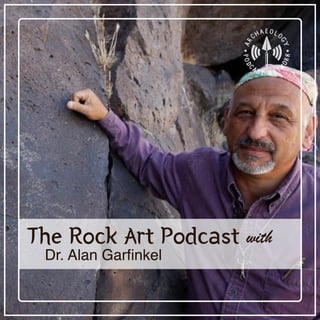
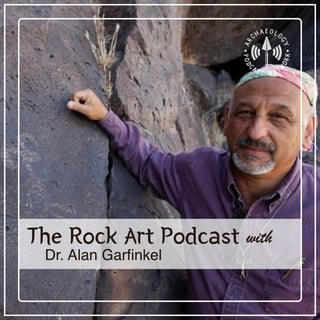
Speaker: Well, welcome everybody. This is episode 138 of your Rock Art Podcast with your host, Dr. Alan Garfinkel. And we are blessed and honored to have Steven Alvarez, part of the glitterati of rock art.
Speaker: He works as a photographer for National Geographic and is involved with many remarkable areas and elements of rock art.
Speaker: And we really yeah have a special program for you today. Stephen, it's ah it's an honor and a pleasure to have you. Well, Alan, thank you for having me. glad to be on.
Speaker: Yes. Have you done many podcasts? I've done a few. I've done a few. i At different times of my life, especially through the work at Geographic, have done every possible form of media, from TV to podcasts podcast to to VR things. So, yeah.
Speaker: Fantastic. So, Steve, the kickoff question always is, how did you ever get involved in in the study of rock art, the study of indigenous people, working with Nat Geo, and all the other wonderful entanglements that you've had over the course of your life?
Speaker: Well, big question there. Thank you. So, photography and rock art and National Geographic are are very entangled for me. So, in college, I studied religion because I liked looking at how societies organize themselves.
Speaker: And religion at the time seemed the best way to do that. But I always knew I was going to be a photographer. i i I'm relatively inarticulate. especially when it comes to writing.
Speaker: But as a young man, someone put a camera in my hand and I realized that visually I could say anything in the world I wanted to. And I got out of college, not much work in comparative religion. So I started working as a photographer. I started assisting other photographers and and doing journalism because I knew I needed someone else to kind of pave my way through the world. And that was a good way at the time, you know, 30 plus years ago to be able to explore the world. But the things i was always drawn to were were archaeology and adventure.
Speaker: And that led me to National Geographic pretty quickly. In 1995, they had a story that was about high-altitude archaeology in Peru, and they needed someone who could climb a 21,000-foot mountain and take pictures of artifacts and that a fairly small group of people with that skill set.
Speaker: They later told me that they realized the assignment was very dangerous, the photographer could easily die, and they didn't want to hire someone that they knew well, so they hired me. Yeah. ah what What a story, Stephen. well That's a nice invitation, isn't it?
Speaker: Well, that's not what they said at the time. At the time, they were like, oh, no, we need you to do it because you're such a great photographer. And later, the director of photography was like, okay, truth be told.
Speaker: I thought the photographer could die and I didn't want to hire someone you know that I knew well because I'd have to look at their kids at the funeral. didn't know you, so I hired you. i and you know The story went well. I did lose vision in one eye from a high altitude edema.
Speaker: Oh, my word. Oh, it it was it was fraught. And the thing is, Alan, I wanted to work for National Geographic so badly. I remember I was in my tent at 19,000 feet on Mount Empato at dig site.
Speaker: And my left eye had gone dark and I i was laying in my tent, just kind of running my hand back and forth across my um my field of vision going, yeah, i'm definitely blind in my left eye.
Speaker: ah ah But I shoot out of my right eye. so yeah know What could possibly go wrong? And I thought, listen, if I if i tell anyone about this, they'll make me go down off the mountain. I'll never work for National Geographic again.
Speaker: And what we're doing is objectively cool. We were excavating mummies at 20,000 feet. And so I i stuck with it. And the blood clot in my eye cleared up and my vision did finally mostly come back. Praise God. Yeah.
Speaker: And it it was only later that the the filmmaker I was working with, who has a lot of high altitude experience, goes, you know, that's the sign of a cerebral edema and they kill people. my word. Yeah. Yeah. but That was fine. you know i ah The story was on Inca sacrifices and mummies and offerings at very high altitude. And it was extremely successful. And so i i but once you have one good story at Geographic, the next one gets easier and easier and easier. And so I embarked on this long series of stories that were about...
Speaker: physical exploration. So I have a fascination with the underworld, with caves. And National Geographic let me explore those things. So budgets were big at the time. So if you needed to take a three-month expedition into the Cheeky Bowl Forest,
Speaker: So you could make six pictures that, you know, they would let you do it. and Oh, my word. But working in in the Maya world, hu yeah, you know, wed we would be in the jungle and it's primary forest, but everywhere you're walking across sock bays.
Speaker: ah You're walking through mo towns, and every time you go underground, there are sacrificial offerings in the caves. So I love the idea that we could explore things, but you know usually someone's been there before, and the caves really act as a as a time capsule.
Speaker: And as my career progressed, i I did a lot of exploration across the world. But that idea that someone has always been there before you became much, much more important to me.
Speaker: And, you know, again, geographic was a great place for a visual communicator like me because they would really let you explore stories. I mean, well, I mean, they would give you more than enough rope to hang yourself every time.
Speaker: And I went into Lascaux on vacation. i mean, kind of against my will. my My wife and I had been living in Paris working on this while I worked on a story about under Paris.
Speaker: And at the end of it, she all I wanted to do was like go to the south of France and drink wine and watch my kids play in the surf. And so we decided to drive from Paris down to Buritz.
Speaker: and And April was like, okay, we're going to stop in Lascaux and we're going to go to the cave. And I was like, I do not want to go and see a bunch of bad caveman art. I've just been underground for...
Speaker: you know, every day for three months. I just want to go see the sunshine. shine And she's like, no, we're going to go. So we went. And, you know, Lascaux, you don't even go to the cave. You go into a reproduction. Right. And the light, you know, you walk walk in with a bunch of tourists and the lights are off.
Speaker: And the lights come on. And Alan, even the... Even the reproductions were just so moving and staggering and overwhelming. And and i I, you know, had the realization that a lot of people have had that that human beings, you know, our our brains really haven't progressed. You know, I i was looking at these reproductions of 14,000-year-old images and And I knew that if we shared a language, we would have, you know, the people who made those images were at least as creative as me, but or not much more so.
Speaker: And at least as sophisticated, if not much more so. It made me start to think about art. And so you know, why did we become artists? Because we're biologic entities. And...
Speaker: And we don't really do anything without but a good biologic reason. You know, we don't have any behavior for a number of generations. And that it helps move our genes to the next level. So what does art do for us?
Speaker: And I took that idea back to geographic and they were like, yeah, let's do a story on the first artists. And um so I went from from France. Well, from France, we started in Africa with Chris Henselwood. And, you know, Chris has done such great work in Lombus and along the coast. And so we started there with the first places we make paint 100,000 years ago and then went up through the great cave paintings of Europe.
Speaker: In doing that story, I talked my way into Chauvet, which was really hard. and took It took years. But the the French Ministry of Culture finally let me in and and they said, okay, we're going to give you as much time as we gave Werner Herzog to shoot his film. And I'm like, oh, yay, this is fantastic. And then they said six hours.
Speaker: And I was like, oh, no, this is terrible. But it it was three trips and two hours each. And I show up there with my assistant and and the writer on the story.
Speaker: And the curator is going to take us in. And he goes, listen, I'm going to, or the assistant curator. And he just says, listen, I'm going to give you some advice. And this is advice I give everyone. um You've got six hours. You've got three trips.
Speaker: It's not that big a cave. And that's enough time to do what you need to do. Don't try to do anything this first trip. Just go in and look. And, you know, I'm... Like no one's going to tell me what to do. It's like, I'm, experience you know, I'm, I'm experienced. Nothing's going to overwhelm me. By this time I'd i've been through a bunch of paleolithic caves in Spain. And, and i you know, you go through the, open the submarine door and crawl inside and seal it behind you and go through the the narrow passage and down into the cave
Speaker: And it was so overwhelming. I mean, i i just, i remember staring at the wall with just tears in my eyes because i've it it changed me.
Speaker: yeah i say, you know, i I went into that cave as a National Geographic photographer, but I kind of came out as somebody else. Right. Because, you know, here is an artist speaking across 36,000 years of time.
Speaker: And it's a gulf of time that you just can't imagine. And we don't share anything. We don't share language. We don't share culture. We don't share economies. They hunted mammoths for yeah living. Yes. And everything separates us.
Speaker: And they couldn't begin to conceive of our world. And yet those images still work. They still speak on this very fundamental level. And i just, you know, clearly more connects us as human beings and separates us.
Speaker: Absolutely. And so when I left that cave, i kind of geared back on my National Geographic magazine work and I started a foundation called the Ancient Art Archive. And what we do is we preserve the and share, mostly share.
Speaker: humanity's oldest stories because those oldest stories help connect us all they help emphasize our shared humanity gotcha and we use photography and video and a lot of vr and 3d modeling to do it to to grant help grant people access to places that they wouldn't normally get to to be able to see things they wouldn't normally be able to see and That's sort of my journey into rock art. I've i've always had a fascination with it, even as is a young man.
Speaker: ah remember looking at marks on rocks and just being fascinated by the people who might have gone there before. And after college, I had a ah teacher named Linda Connor from San Francisco who sent me a postcard once of the great gallery of horseshoe Canyon. And she said, you, you really ought to go here.
Speaker: And I got the postcard and three days later, I was driving to Utah. You got the bug, Steven. Let's, let's, let's leave it there and we'll pick it up on the next segment.
Speaker: See in the flip flop gang. Welcome back, gang. This is the second segment of your episode 138 with Stephen Alvarez, part of the Glitterati of the Rock Art Arena.
Speaker: Stephen, you're going to talk to me a bit about the Rock Art Archive, the Ancient Art Archive. Yeah, i must I clearly started a ah foundation before saying the words out loud, but it's kind of a mouthful. But what we do,
Speaker: is we we record, share humanity's oldest stories. ah We use 3D modeling, VR, primarily photography to do that recording.
Speaker: And in North America, and heading into 2026, 250 years of the United States, we thought it would be a really good time to look at the first 20,000 years of of history of the continent. And one way to do that is by looking at the stories that are out there on the landscape.
Speaker: And so what we've done is we've we identified i half dozen rock art sites across the country that are large scale, that would have taken a community to come together and make, but that are also publicly owned and managed for public visitation.
Speaker: And we are developing deeper stories about that place. So the first place we worked was Devil's Step Hollow in Tennessee, where there is a cave site that Mississippian people were going into and making images.
Speaker: Then we worked in the Rochester Creek panel in Utah, which is in Emory County, Utah. And it's a fabulous site above above the confluence of Muddy Creek and Rochester Canyon.
Speaker: And we're about to go to Panther Cave in Texas to three d model one of the great artworks of North America. um hundred plus feet of painted cave right on the Rio Grande in Texas.
Speaker: yeah But everywhere, we're really trying to work with descendant communities to really curate a story about the place that's through their eyes, through the eyes of the Native Americans who have a connection to the place. And we're not ever really trying to look at what but it meant back in the day.
Speaker: ah The interesting thing to me and to the archive, and especially contemplating 250 years of America is, well, what does it mean to Native Americans now to have these stories out on on the landscape?
Speaker: And the other thing that we're working on for 2026 is a book of North american or American rock art. And so, Alan, I got a question for you. If I'm putting together a book of visually fantastic, spectacular artwork in North America, what has to be in that book? What can that book not live without?
Speaker: Well, I think that both the Chumash rock art, the ah poly incredible polychrome rock art in Ventura, Santa Barbara, and San Luis Obispo counties done by the ancestors of the Chumash would certainly be a number one.
Speaker: But also I'm, you know, sort of subjective and that I spent the last 50 years trying to understand and appreciate Koso rock art, which is a little tiny area about 10 miles by 10 miles that purportedly has some of the greatest profusion of rock art images in the entire Western Hemisphere.
Speaker: And, you know, one of the things that fascinates me about rock art in general, and especially in North America, especially in in the United States, is It's like the past is talking to us.
Speaker: Yes. it And understand what they're saying is really hard because I think in a lot of cases, we don't have the language for it.
Speaker: You know, we we just maybe I oftentimes when I'm looking at at a complex panel that I don't have the right operating system running on my wetware to really understand what's going on.
Speaker: But but you know that something is. Right. That sounds like it echoes the documentary film we did on Talking Stone. with see um and the Emmy Oscar award winning cinematographer, Paul Goldsmith.
Speaker: And that was released to, you know, to television and they on on cable. And that was one of the key takeaways at the end of our hour long series.
Speaker: documentary on COSO is that looking at it from many, many different perspectives, Native American perspectives, hunters, psychologists, but you know, scientists, you name it, that this this particular material is is captivating.
Speaker: Everyone who sees it is touched in the heart and what wants to study it or appreciate it or contextualize it and understand better what the purpose, function, meaning is for this imagery.
Speaker: And I think at times it's possible to to deconstruct and better understand and through working hypotheses or through connections with the descendant communities We can tell.
Speaker: we We know and can tell and can hear from those voices that are hundreds or thousands of years old. Yeah. One of the things I think about actually a lot is people come to what we call North America 20,000 ago, more or less. And flourish here. Right.
Speaker: in in they flourish here I mean, absolutely flourish here for 20,000 years and develop all kinds of ideas about economies and relationships and God and the natural world.
Speaker: And they do it without influence from you know Asia or or Europe. And so you know you don't have the the big...
Speaker: traditions that that influence Western culture, Christianity, Islam, Buddhism, Hinduism, you know, none of those are here. And, you know, because of the way disease works, most of those societies are are greatly reduced by the time there there's meaningful contact with Europeans. So we don't have that kind of fair exchange of ideas.
Speaker: And the closest we can get to talking to those cultures cultures as they existed before contact, is by looking at their artwork. But also, Stephen, we can get close to them and understand them if you have a deep and abiding understanding of comparative forage or religion, or study it all over the world.
Speaker: yeah And once you understand forage or preliterate religion, you'll find that there are instances or connections or themes and symbols that are tremendously cross-cultural and that speak to the nature and function and meaning of those images.
Speaker: um And this is the first time I've i've really done this to anybody. So you're the first one, but you've definitely yeah got my got that cerebellum going in terms of the the issues we're trying to tackle.
Speaker: Yeah. I know that Carolyn Boyd, has said exactly the same thing that I've said, and in her White Shaman volume, she took on the entire study of rock art and deconstructed that a panel of Pecos rock art and argues that she was able to read it like a codex and provided the translation.
Speaker: Yeah. Well, Carolyn, she's brilliant. Right. And that won the 2016 Society for American Archaeology Best New Book in Archaeology. And i I can't wait to see what she continues to do with Panther Cave because it's, right you know, i and I know she's been working.
Speaker: intensively on that yes and we're i hope to see her next month when we're down ah doing our work at panther cave it's yet when you look at the rock art in north america you get a glimpse into a world that is very unlike the world that i was raised to believe existed here you know i'm i'm 60 years old and grew up being told things that just weren't true about the continent I live on. you know i I live in Tennessee. I'm from here. And smart, well-meaning people told me that there really weren't Native Americans in the place I live.
Speaker: And yet I'd go out into the woods and I would see lithic deposits that were feet thick and think, well, you know, who left these? And then once we had a different way to look at For rock art in the Southeast, you know beginning to use things like D-Stretch on phones, we discovered that there's rock art everywhere here.
Speaker: yeah And that's not the world I was raised with. Right. You're exactly right in the sense that I think, I don't know if it's throughout the continent, but probably in many parts of the United States, there's Contemporary people have ignored or feel that ah the native people, the preliterate people, the the first ones who were there, either don't exist or were so marginalized that they're not part of contemporary history.
Speaker: North American culture. And so I certainly saw that and that's what led me to sort of work on a volume on the Kauaiosu.
Speaker: That was the Kauaiosu Handbook, i mean won the Governor's Award for that volume. And one of the whole purposes was that even anthropologists and archaeologists said that this this particular culture no longer exists.
Speaker: It's gone. But there was a thousand people that expressed, no, I'm here. And we don't live in teepees or houses you know any any longer.
Speaker: We're not really that into fashioning flakestone knives. But... We have traditions, we have ceremonies, we have rituals, we have religion. And in fact, we're continuing that and want to have a place for us in contemporary culture.
Speaker: And we are still here. And that was the biggest takeaway from doing that kind of work. Now, one of the one of the things that happened, Stephen, was by spending four years with the native people,
Speaker: They introduced me or reminded me about the oral traditions, the sacred narratives. that Some people call it the mythology, which I don't like. It's the sacred narrative or the you know the story, the creation stories.
Speaker: yeah and And when they shared those, they were the key to understanding the rock art. They were analogous and provided analogies and models and information that so connected the relatively distant time spans we're dealing with, with a singular ah explanation, better understanding and appreciation of what was being communicated.
Speaker: Go ahead. Yeah, agree. Those relationships with contemporary Native Americans are really, they're at the heart of what we're doing.
Speaker: They're, yeah, i'm very good at technology. I'm a very good photographer. at The archive, we have three d modeling wired. But we're not the ones who ought to be telling the story.
Speaker: Right. Because the people whose story it is are still here. Right. And that's been the really, truly enriching part of of working out on the archive in North America in the last couple of years is building those relationships with contemporary Native Americans, with contemporary Native American artists, spiritual leaders, and asking them what's important for me to know.
Speaker: And that's... yeah gets at the heart of what I'm trying to do is is just to to get people to understand it. And then you can take the Native Americans who are here, that their cultures are complex.
Speaker: And then when we do our education material, because we produce a lot of education yeah outreach, we can go into communicate communities where the rock art is and let people have a deeper appreciation of the place that they live.
Speaker: And that's that's what we're all after. It's just that deeper understanding of of where we are. And it always infuriates me that that Americans in general think that if you want to have something that's old, want to see something old, want to have a deep culture, you have to go to Europe to do it. and i know it's It's all around us. We just have to look for it and ask the right questions.
Speaker: yeah We have 20,000 years of culture right here. and I think many people are so... So filled with there ah you know the the ideologies that have sort of immersed America that they've missed the alternate realities of indigenous people, which are now becoming more and more prominent in the scientific community.
Speaker: And with that, we'll take a break. See in the flip-flop. Well, here we are, the Rock Art Podcast, episode 138, with your host, Dr. Alan Garfinkel, and our illustrious guest, Stephen Alvarez.
Speaker: We but were just about to talk about, i call it Native American perspectivism. What do you have to say about that, colleague? Well, that... it it You know, I'm a middle-aged, middle-class white guy from Tennessee.
Speaker: Yes. And I'm good at a lot of things. And I don't have a Native American perspective. I i just don't. I'm empathetic. But there are, ah you know, as we say, you don't know what you don't know. So when we set out to build so the participants in the Ancient Art Archive, we...
Speaker: tried to fix that. So my executive director and i began recruiting people. ah Joe Watkins was one of the first people we got on board. Joe's a yeah immediate past president of the Society of American Archaeology. He's Choctaw.
Speaker: um He ran the indigenous engagement at the Department of the Interior. And Joe's really good at and helping us always consider that.
Speaker: And then we've brought in artists, ah Dustin Mader from the Chickasaw Nation. but But what specifically, tangibly, can you communicate to our viewers that makes the Native American perspective, the Native American theology so different from a literate Western industrial conceptualization of the world.
Speaker: Right. So I always think about it this way, you know, back to that 20,000 years. It's not just 20,000 years of human flourishing here, but it's also 20,000 years of co-evolution with the landscape.
Speaker: Right. Native Americans managed the landscape heavily, constantly. Nothing gets me kind of more worked up than people talking about the American wilderness because it doesn't really exist.
Speaker: When Europeans got here, there weren't a lot of Native Americans because of the way disease works. But the landscape was still managed by them. And, you know, we walk into, or Europeans walk into a well-tended garden after the people are gone.
Speaker: And that's just a different world and a different way to look at things. And so bringing Native Americans into the conversation, whether from a spiritual perspective or a scientific perspective and or or an artistic perspective, or all of those is what's super important to understanding what the images are, not necessarily what they mean, but but you know their primary function for being there is, it's you know we call it rock art.
Speaker: And some people object to that term because it seems to be reductive. Right. ah But coming at it as a visual communicator, I know there is nothing more important to human beings than art.
Speaker: Art is part of our survival strategy. yeah If we didn't start making art, start making paint, start making images 100,000 years wouldn't exist now. Right. we wouldn't exist now And those images on the landscape, those images that are still left out there are vital. They were vital to the people who made them, and they're vital to us now.
Speaker: But the reason they're vital is they're alive. They're sentient. When Native people look at the landscape, look at the land, look at the flora, look at the fauna, look at the mountains and the waters, these elements are not inanimate.
Speaker: They're all animate and alive. They have, what would you call it? They have agency. They have agency. Yes. And oftentimes, you know the images oftentimes are put there, sometimes they're put there to record an event, which is our very Western perspective.
Speaker: Sometimes they're put there to do something. Right. Sometimes the act of making the images is the most important thing. Alan, one of the things I've begun to to think about and to to document when I go out to document rock art is not only, well, what does the image look like?
Speaker: But what is what are the images looking at? Right. What's in their field of view? And that's something that I didn't arrive at. how does you And how do the images speak?
Speaker: How do they speak? you rock The rocks speak to the natives and they mark them because... There is voice. There is power. There is a connection.
Speaker: When you see those images on rocks, often... They are portals. They're windows into the supernatural world.
Speaker: And the supernatural world is connected by those images and they are considered alive and they can talk and we can listen, <unk> etc.
Speaker: And we we should talk and we should treat them but like they're alive. Right. And and i know yeah and i i know you like that terminology, visual prayer, which is, and and when we walk into these hallowed grounds,
Speaker: You know, some people find them funny and difficult to understand and laugh and but pray. But Native people, when they go there, are are overwhelmed. They are are are just, you know, brings them to tears or it gives them an overwhelming sense of the drama and the perspective and the the time span and the ancestors are there.
Speaker: and And there are some images that Native people... don't want to be in front of or don't want to be in front of often or need to be prepared to be in front of. Right. And those beliefs are as real as mine. And that reality is as real as my reality. Right. Right.
Speaker: One of the the things that we can do when we begin to visualize these for a general audience is start to bring that perspective alive. And so one of the things that James Colley, who is ah is does a lot of our VR interpretation for us, he is Northwest Shoshone and and a VFX expert.
Speaker: One of the things we're thinking about trying to do with Panther Cave is to show the perspective from the artwork's point of view. What does it see? What's its point of view?
Speaker: What is the permeability of the rock? What is that like? To try to get this idea across that these are living, sentient things. Yes. Yes. Thank you. yeah That's excellent.
Speaker: And the role of animals, the role of the animals animals. players in this whole canopy or this whole drama is is very, very different to Native people in terms of the way they they view these creatures as beings, comparable beings, and and at the same level and Yeah.
Speaker: interactive and become pardon parcel of who they are and what they are and they tend to be part sometimes helpers or helpmates or guardians or other tuelary spirits if you will yeah and sometimes they' are just animals So just animals. Yes. You know, rock it it's a huge spectrum. Like if if we think about how why we make images. Right. I have images that I have shot for advertising that are the size of buildings.
Speaker: They're to sell camera phones. I have images of my wife and my kids that aren't for anyone to see but me. i And making those images was very, very, very important. and Native Americans, pre-literate people, have the same range of image making in their repertoire, too. I'm thinking about some places in Cedar Mesa that were house sites where there are images that are clearly family portraits.
Speaker: Yes. Inside the house. And they're charming and they're beautiful and they really... bring alive the vibrancy of the people who live inside that labyrinth of canyons that is so inaccessible to us now.
Speaker: And with only a little bit more rain supported thousands of of people. Right. And the artwork, it it brings those lives alive to me and in it makes me feel connect the people.
Speaker: And it it reveals, it's, Oftentimes, their concerns as being just the same as mine. Exactly the same. And but one of the things that I've heard, again, another turn of the phrase, these images are are icons of personal immortality. Oh, my God. What a great phrase. I'm writing that down.
Speaker: And when you look at these pictures, you can see that the yearnings and the passions and the the prayers of these people are the same as us. To live, to reside, to have the the environment be ah susceptible to and enable them to sustain themselves, to have children, to stay alive, to be vibrant, to be, you know, all those things are there.
Speaker: if you If you just look and think about them long enough and sort of embed yourself and in a deep enough study that you can grasp these yearnings, the pan-human yearnings. Go ahead.
Speaker: So, of the things we do at the archive, and and we're we're very much a publicly facing organization. We don't do a lot of research. We do some, but but not much.
Speaker: And what we really do is try to explain to the general public why they should care about these things. Gotcha. Why should we preserve them? Why should we spend the resources to preserve them?
Speaker: And... One of the the primary things that we do is educational outreach. So we have yes education activities that we build around different rock art sites. and We built one around Devil Step Hollow in Tennessee. And so 3D modeled the cave. And there's this wonderful figure inside the cave called the Falcon Warrior. And he's a Mississippian god.
Speaker: and And he's a human-falcon hybrid. Inside the cave, he's... holding two two ceremonial objects. One of them is a severed human head and the other is a mace.
Speaker: And I mean, he's just, he's an awesome, awesome, awesome figure. so yeah And we've got a wonderful Chickasaw artist, Dustin Mader, who's our art director, who explains all this and in the VR fly-through we do. And then there's this activity that we bring into schools. Yeah.
Speaker: and And one of the things I really love to do is to bring this bring activities like this into schools near the Rockhart site. So Devil Step Hollow, no one knows about it, right? And we were working in the poorest county in Tennessee, Grundy County. and And did our whole thing, did the VR fly through. at the end of it, the kids make their own artwork and you know they they use icons to tell stories like the Native Americans were doing. And what we're trying to do is to get contemporary children
Speaker: to see ancient people as a fully human, as as having those all those concerns that we have. And artwork is a good way to do that because the kids grasp telling stories with art immediately, absolutely immediately. Even if they don't read well, they get this part of it.
Speaker: And so afterwards, after we had done all this, taking them through the thing, you know, make make a cave out of out of crepe paper, have them make artwork in it have them draw things, have them tell stories that are important to them. We interviewed them and we were interviewing this one little girl from Grundy County, Tennessee. And in we said, well, is there anything you really wanted? What did you learn ah doing this activity?
Speaker: And she said, well, I didn't even know that there were Indians here. Didn't even know there are Native Americans here. And I didn't know that they had superheroes way back then. Talk about the Falcon Warrior. And if that's not getting a contemporary human being to see people in the past as being just like us, I don't know what is.
Speaker: That's an awesome, awesome thing to sort of, you know, epiphany. I love it. And, you know, we can use... respectfully, we can use these stories to help people see each other as human beings.
Speaker: And that's all we're trying to That's all we're trying to do. Well, with that, I think that's a great sign off. And i I love this particular interaction. It was quite different than what I'm used to.
Speaker: ahead. go ahead It's been so much fun. and i'm I'm going to come bother you in California. God bless you. See you. See you. All right.
Speaker: See on the flip flop gang.
Speaker: Thanks for listening to the rock art podcast with Dr. Alan Garfinkel and Chris Webster. Find show notes and contact information at www.arcpodnet.com forward slash rock art.
Speaker: Thanks for listening. And thanks for sharing this podcast with your family and friends.
Speaker: The Archaeology Podcast Network is 10 years old this year. Our executive producer is Ashley Airy. Our social media coordinator is Matilda Sebrecht. And our chief editor is Rachel Roden. The Archaeology Podcast Network was co-founded by Chris Webster and Tristan Boyle in 2014 and is part of Cultural Media and Dig Tech LLC. This has been a presentation of the Archaeology Podcast Network.
Speaker: Visit us on the web for show notes and other podcasts at www.archpodnet.com. Contact us at chris at archaeologypodcastnetwork.com.