Transcript
Speaker: Yeah, it's going to be.
Speaker: That's the name of my next podcast.
Speaker: Oh, OK.
Speaker: I thought it was going to be unnecessary and over the top.
Speaker: I mean, that'll be in the description.
Speaker: That'll be half the reviews.
Speaker: Three stars.
Speaker: Unnecessary.
Speaker: Unnecessary.
Speaker: That's what the doctor said when I was born.
Speaker: Unnecessary.
Speaker: Over the top.
Speaker: Hey.
Speaker: You know what else the doctor said when you were born?
Speaker: What's that?
Speaker: Hey there, everybody.
Speaker: Welcome to Pixel It.
Speaker: My name is Kevin.
Speaker: With me, as always, is Phil.
Speaker: And today we have a special guest, Evelyn, from the YouTube channel.
Speaker: I am Error.
Speaker: Evelyn, thanks for coming on the pod to discuss this book, this short book.
Speaker: Yeah, Mind and Revolt.
Speaker: Yeah, it's a good book.
Speaker: Oh, no, wait, no, it's a good channel.
Speaker: Sorry, whoops.
Speaker: It's not even really a book.
Speaker: No, yes.
Speaker: Hi.
Speaker: Evelyn's here and I mean, I think we can all say that the book is definitely a thing.
Speaker: A thing.
Speaker: Somebody wrote it.
Speaker: Somebody wrote it.
Speaker: You can buy it for $2.99 on Amazon.
Speaker: It's $2.99, 30 pages, and you'll never get those 30 pages back.
Speaker: No, you'll never get that lunch break back.
Speaker: Maybe you could ask Amazon for a refund.
Speaker: Yeah, I don't think it would be too.
Speaker: Yeah, we could probably.
Speaker: I don't want to be petty.
Speaker: It's three dollars.
Speaker: Yeah.
Speaker: So Evelyn, tell us a little bit about your YouTube channel.
Speaker: I'm so I mean, I have a YouTube channel.
Speaker: I'm like, Oh, God, what was my YouTube channel?
Speaker: Quick, go to my channel.
Speaker: So I read to channel called I Amir and on my channel, I talk about video games for the most part.
Speaker: Lots of different kinds of ways of talking about games, but mostly I try to marry the personal with kind of the more academic.
Speaker: I'm getting my PhD in English, specifically media studies, specifically games.
Speaker: I'm writing my dissertation right now.
Speaker: So, you know, I'm very enmeshed in like, you know, the more heady theoretical side of things, but I like to try to ground that in the experience of actually playing games and stuff rather than like,
Speaker: I don't know, just going off and citing a bunch of sources and making myself look smart.
Speaker: Usually I feel like I look kind of dumb in my videos, but that's kind of the point.
Speaker: But so, you know, I think I'm most proud of my giant.
Speaker: I make very big videos sometimes.
Speaker: They're like two plus hours long.
Speaker: I think that those are very good.
Speaker: And I'd recommend watching the latest one on Super Mario 64.
Speaker: Super Mario 64, the best game ever.
Speaker: That's not what it's proven.
Speaker: The best game I ever played is the title.
Speaker: The best game I ever played is the title.
Speaker: Very different.
Speaker: Very different.
Speaker: There is a distinct thing.
Speaker: I want to say I remember an original title was something like the best game I ever played when I was six years old.
Speaker: Yes, which is what I say in the introduction and what part one is about.
Speaker: It's asking why was it the best game I ever played when I was six?
Speaker: And I somehow spent an hour talking about that and it's so emotional it can make you cry.
Speaker: I could go for a good cry.
Speaker: I need to sit down and watch that.
Speaker: Yeah, Phil.
Speaker: So I can feel it.
Speaker: Do you know who Joe Fielder is?
Speaker: I do know who Joe.
Speaker: Why would you ask?
Speaker: That's such a random and very specific question, Kevin.
Speaker: Why would I ask you, the one who does the author research, to tell me who Joe Fielder is?
Speaker: Oh, we're doing a podcast.
Speaker: Right.
Speaker: Got it.
Speaker: Got it.
Speaker: Yes.
Speaker: Joe Fielder.
Speaker: Joe Fielder.
Speaker: Slash Ken Levine.
Speaker: Yes.
Speaker: Yeah.
Speaker: Now, yeah, this was, this was written by Joe Fielder with Ken Levine, which I think to me means probably that Ken Levine gave him an outline or a Bible and said, you know, here's, here's all the shit.
Speaker: And, and, you know, don't cross this line.
Speaker: Make it read good.
Speaker: Yeah.
Speaker: Yeah.
Speaker: Color inside the lines, please.
Speaker: And, uh,
Speaker: And he would be in the perfect position to do that because Joe Fielder is not a traditional writer.
Speaker: Joe Fielder is a narrative designer.
Speaker: Joe Fielder is a writer of video games and has been for quite a while.
Speaker: Started in 2004 with Electronic Arts, doing some Medal of Honor games, moved into Irrational Games in 2009, was involved in Bioshock Infinite, and all of the DLC that came with it, Burial of the Sea and Industrial Revolution.
Speaker: and has since moved into other projects like Ghosts of Tsushima, Deathloop, Drake Hollow, The Flame in the Flood, which is nuts because I love that game, and is now currently a senior narrative designer for Obsidian, which, you know, I'm not a guy who attaches his...
Speaker: You know, you know, I don't I don't attach to wagons very easily if I'm going to just skewer that metaphor simply because, you know, it's it's too many people.
Speaker: It's too many things coming out.
Speaker: You know, I have wistful feelings for Sierra games and stuff like that.
Speaker: But if too many, too many wagons filled with milkshake ducks.
Speaker: Right, right, exactly.
Speaker: Just Milkshake Duck aplenty in those wagons.
Speaker: Exactly.
Speaker: Best to avoid.
Speaker: If there was a single game studio, however, that has time after time impressed me and made me feel good down in my gutty wits, I would have to say it's Obsidian.
Speaker: So that's pretty cool.
Speaker: So this is one of like two bookish pursuits he's done.
Speaker: And hold on, the other one was not even a –
Speaker: He's done very little in the way of book books.
Speaker: Yeah, he did.
Speaker: He was one of the writers for a Star Trek graphic novel collection.
Speaker: Okay.
Speaker: So this 30-page short story might be the longest story that he has had, you know...
Speaker: Longest bit of prose that he's written.
Speaker: Prose, sure.
Speaker: Yeah.
Speaker: Although, although it's not written necessarily in prose.
Speaker: Well, and that's just it.
Speaker: As, as we are going to find out, it does not, um, it does read mostly like, uh, the, the different logs and that kind of thing taken from, uh, Bioshock, the Bioshock franchise in general.
Speaker: So, um,
Speaker: He's definitely within his wheelhouse.
Speaker: Let's just say that.
Speaker: Yeah.
Speaker: This feels like, you know, Skyrim, you pick up a book and there happens to be words in it.
Speaker: This is a lot more closer to that than, you know, I don't know, Bioshock Infinite, the novel.
Speaker: Right, yeah.
Speaker: Yeah.
Speaker: Yeah.
Speaker: And I think, I think we, there you, we actually did talk about like the reading all of the Skyrim stories for an episode of the pod.
Speaker: If, if, if we, if we get to a point where this is like our job job, like, yeah, I could see us doing a long standing project where we just pick another one of the books from Skyrim or Morrowind or oblivion or something.
Speaker: And just like,
Speaker: all right, we're reading that one today.
Speaker: What happens there?
Speaker: So we've gone through everything that the Elder Scrolls has touched.
Speaker: And by that time, we'll be dead.
Speaker: So, you know, we will we will all be in the ground.
Speaker: So Bioshock Infinite, for those of you who are coming into this completely cold episode,
Speaker: It was the third game in the Bioshock series.
Speaker: It was released in 2013.
Speaker: The writer and director of the game is Ken Levine, who's also credited in the byline for this book.
Speaker: And it's set in the past relative to the other two Bioshock games in a world called Columbia, which floats around
Speaker: up in the sky it has seceded from the union and it has placed the founding fathers onto this religious pedestal um it's a interesting game in that there was it i mean gameplay wise it's it's fun it i think along the lines of the other bioshock games my personal opinion i it
Speaker: It handles, and we'll find out more in the book, it handles race issues with all the tact of a mallet.
Speaker: Yes.
Speaker: And that was kind of the most controversial thing about the game is that it's both sidesism in the third act kind of marred what was otherwise a rather touching portrait, like a father-daughter kind of reunion story that should have been the focus kind of if the other things weren't so badly mishandled.
Speaker: Yeah, it's frustrating because this is the first game that made me cry.
Speaker: I had never wept through the storyline of a game.
Speaker: And I stand by why, because as you said, it's a very touching experience, but there are things that are handled in a, let's say, less than perfect manner.
Speaker: It's a game which bites off probably more than it can chew.
Speaker: Yes.
Speaker: It's so concerned with being big and being bigger than the last Bioshock, in a sense.
Speaker: I mean, literally, it's Bioshock Infinite, right?
Speaker: I mean, what's a bigger synonym for big than infinite?
Speaker: It's right there in the name, yeah.
Speaker: And sometimes I think, yeah, it doesn't quite handle those.
Speaker: But...
Speaker: It does.
Speaker: It is a you know, it's a good game.
Speaker: It's a good story.
Speaker: It's you know, it's well made.
Speaker: Even if, you know, looking back, Ken Levine, not the most savory character.
Speaker: Sure.
Speaker: But what can you do?
Speaker: Yeah, Ken Levine is basically, if you look up centrist in the dictionary, you're getting a picture of Ken Levine.
Speaker: He's kind of that kind of shit heel, I would say.
Speaker: See, I didn't know that.
Speaker: I mean, I guess I could have guessed.
Speaker: Yeah.
Speaker: It's not just centrism, right?
Speaker: There's all that stuff that came out last year about how he ran Irrational Games and how it was really bad for the people who worked under him.
Speaker: Oh, yeah.
Speaker: Oh, wow.
Speaker: Endless crunch culture and things like that.
Speaker: But we don't need to necessarily dive into that today, even though his name is on the byline.
Speaker: Yeah.
Speaker: Yeah.
Speaker: Yeah.
Speaker: Mr. Fielder here.
Speaker: Right.
Speaker: So let's let's just jump right into it.
Speaker: So the foreword is written by.
Speaker: Here's the thing.
Speaker: I don't remember.
Speaker: Go for it.
Speaker: I think the context of the book or the short story is important.
Speaker: And this was why I was most excited when you told me what we were talking about today.
Speaker: So this was a pre-release book, right?
Speaker: It came out a month and a half before the game and it was meant to like, right?
Speaker: Tease out like, Ooh, who are some of the characters that you might be interested in in Bioshock Infinite?
Speaker: and like you know blah blah blah now why that intrigued me was because bioshock infinite had my favorite pre-release like hype run-up of any video game ever because they had these wonderful like 70s style documentary skits or not really skits but like little features that were like about uh what's the name it's not comstocks land uh not called rapture right but
Speaker: Columbia.
Speaker: Columbia.
Speaker: Columbia.
Speaker: Yeah.
Speaker: About Columbia.
Speaker: And like, you know, it's like narrated in this like folk faux like PBS style documentary.
Speaker: That's awesome.
Speaker: And there's like all this like like found footage archive like and all this stuff like and who is this bird that protects the you know, like one of the bosses of the game, you know, and it had like and so I love that.
Speaker: Like I will I would like in 2013, I rewatch those videos like a bunch.
Speaker: I got really excited and the game was nothing like them.
Speaker: But like, I was like, oh, this is going to be like a mystery.
Speaker: And I'll be like, I thought, I actually thought up until like a week before, because I usually don't, I try to avoid trailers and stuff.
Speaker: You can see why I get.
Speaker: Yeah, no, I don't blame you.
Speaker: But I thought the game would be set in like the 70s and you're going to this place that was built in like the 1890s.
Speaker: And that hasn't been touched, but that's not the actual it's like what 1910s, I think, is the actual setting of the time setting of the game.
Speaker: But but I just think that is very fun.
Speaker: It's fun for me.
Speaker: I went back and I watched all those old videos this morning to get myself in the mindset.
Speaker: It's very fun doing that.
Speaker: And then they like approaching this as like another way of like how they're trying to communicate.
Speaker: Sure.
Speaker: Bioshock Infinite's about without actually telling you anything about the game.
Speaker: Right.
Speaker: Like not telling you about the main characters, not talking about the main plot or anything, but just kind of like trying to set the stage for the player.
Speaker: And I think that if we view it through that lens, I think that this is actually kind of a successful
Speaker: little story.
Speaker: Yeah.
Speaker: I think that's actually an important lens to kind of view it through is the context in which it was released.
Speaker: Because I think that can provide us with a different direction on
Speaker: uh kind of how we're feeling about it uh so the the book starts with a fake forward started we're in the book it's not an actual forward um yeah that threw me too i was like i was like a forward to a short story i know it's like i nearly skipped it because a lot of times i'm like what i don't care what the fucking author said and moving on and then it's like oh no this is the book yeah okay yeah
Speaker: So it's written by Dr. Pettifog and Dr. Pettifog is kind of saying, here's what you're to expect in the following pages.
Speaker: Please don't judge Dr. Pinchot too harshly based on what you see in the following pages.
Speaker: So that kind of sets the.
Speaker: Which I really liked.
Speaker: I really liked it because especially by the time you get to the end of it, because of course, you know, for me, naturally, my thought is like, don't judge him too harshly because he's a fucked up, you know, eugenicist style kind of like scientist or something like that.
Speaker: And it's like, no, don't judge him too harshly that he treated this black anarchist with, with dignity and some level of respect.
Speaker: I got a kick out of that.
Speaker: I thought that was pretty funny.
Speaker: So we start out with some journal entries, setting the stage for Dr. Pinchot's motivations.
Speaker: He wants to do a case study on Daisy Fitzroy.
Speaker: He has layered in here is a lot of like...
Speaker: the, you know, wording like the Sodom below where, you know, these like super judgmental like tones that are very thematic of the rest of the Columbia people that we kind of run into in the game where it's like- It's a very propagandist kind of tone.
Speaker: They believe Columbia is above all and then they're also racist on top of that.
Speaker: They've just got a lot going for them, don't they?
Speaker: They've got a lot of- They've got evangelism, they've got racism, they've got a flying city.
Speaker: You know who would really love Columbia is this guy, Dr. Jordan Peterson.
Speaker: He would be a fan of hierarchies.
Speaker: Hierarchies, baby.
Speaker: Fucking lobsters.
Speaker: Then he'd go on Joe Rogan and just start crying about, you know-
Speaker: And you think, oh, it's the relationship with Elizabeth that's got him going.
Speaker: He's like, they were able to do whatever they wanted to the brown people.
Speaker: It was beautiful.
Speaker: That monster tried to take it away from them.
Speaker: They were in the sky.
Speaker: So in the next journal entry, um, uh, Dr. Pinchot goes to the police department, uh, to check on Daisy Fitz, uh, Daisy Fitzroy.
Speaker: Um,
Speaker: And finds out that she has is being treated poorly and gives those those officers what for and removes her gag and all that stuff.
Speaker: And she thanks him.
Speaker: And it kind of like sets the stage a little bit for the the personality of Dr. Pinchot is like, you know, he's a piece of shit eugenicist, but he's not as bad as the other piece.
Speaker: Hitler was a vegetarian and loved his dogs.
Speaker: Yeah.
Speaker: Yeah, Pinshow is presented as somebody who isn't just somebody who
Speaker: pushes this propaganda for their own personal gain, but rather is somebody who's bought in.
Speaker: True believer.
Speaker: And because they've bought in, they've also bought into what we might call the good tenets of the religion that they have.
Speaker: So it's like, we can't treat a prisoner like this.
Speaker: This isn't how we're supposed to do it.
Speaker: And so that's why he's upset.
Speaker: Because it doesn't fit his vision of what Columbia is supposed to be.
Speaker: Right.
Speaker: Right.
Speaker: He's like, you can't treat this racial slur like that.
Speaker: We're better than those racial slurs.
Speaker: It reminds me a little bit of when I was listening to the Behind the Bastards episode on Christopher Columbus.
Speaker: And how they couldn't take, they weren't allowed to take slaves if they were Christian.
Speaker: So he was like converting people to Christianity.
Speaker: So he had an excuse not to take them as slaves.
Speaker: But if they refused, then he would have no choice but to take them as slaves.
Speaker: He's like, well, you know, I gave them the option.
Speaker: I gave them the option.
Speaker: That's, Dr. Pinchot is...
Speaker: Yeah.
Speaker: Yeah.
Speaker: So we get.
Speaker: Yeah.
Speaker: We get the.
Speaker: Now we're into the interview with Dr. Pinchot and Daisy Fitzroy.
Speaker: And he gives a full background of Daisy Fitzroy in this section.
Speaker: You know, she's an anarchist.
Speaker: She's murdered or been involved in the planning of murders.
Speaker: She's tried to, mixed in amongst all these crimes is like trying to form a union.
Speaker: Yeah.
Speaker: Right there after murder.
Speaker: How dare you?
Speaker: I know.
Speaker: I had a moment when I was reading this that I was going through it.
Speaker: And I kept reading and I stopped and went, wait.
Speaker: And I went back and it's like, is it so normalized?
Speaker: That like at this point, if someone on TV right now were to be like, this person's a murderer and a communist and tried to unionize.
Speaker: They'd be like, yeah, that's what you sound like.
Speaker: That's how you talk.
Speaker: It's so normalized that it's just right over my head.
Speaker: I was like, this isn't satire anymore.
Speaker: This is just how people talk.
Speaker: On one hand, yeah, the way he describes her is, it's like a little over the top, right?
Speaker: He's like using a lot of different phrases.
Speaker: Like the name of the name, and like it kind of,
Speaker: At first, you can kind of use like kind of bad writing, like in the sense of like painting it as like you got the authoritarian side on the right.
Speaker: And you got the other side, which is both the socialist, the like because it's called the people's voice.
Speaker: Right.
Speaker: The newspaper.
Speaker: But they're also anarchists.
Speaker: But they also want to unionize.
Speaker: You know, I mean, like it's like all these different layers like of.
Speaker: But then you're thinking, well, this is also from Pinchot's perspective.
Speaker: And that's kind of what fascists do.
Speaker: They just lay, you know, there's like whatever the bad thing is, they're all of the thing.
Speaker: Yeah, they're all of that.
Speaker: Yeah, exactly.
Speaker: They're 100% of the thing and nothing else.
Speaker: Exactly.
Speaker: Exactly.
Speaker: So there's the manifesto, the people's voice, and the manifesto, the people's voice is for the group Vox Populi, which means the people's voice in Latin.
Speaker: Which...
Speaker: Which I don't know, which to me is kind of, I don't know, there was something about, and I never thought about it because it's been a long time since I played the game, but naming your, you know, lefty group Vox Populi didn't sit right with me because generally the people who use the Vox Populi kind of thing tend to be on the other side of things, but that just might be my own anecdotal perspective.
Speaker: Yeah.
Speaker: Musky has been using it to every time one of his stupid polls finishes.
Speaker: He says something like Vox Populi, Vox Dei.
Speaker: And it's the voice of the people is the voice of God.
Speaker: And I'd be like, shut the fuck up, Elon.
Speaker: Just shut up.
Speaker: We're into this this interview between Dr. Pinchot and Daisy Fitzroy, and there's a little bit of a back and forth where Pinchot is basically trying to prod her to to talk.
Speaker: He's he's saying, God, did did did the lady did Lady Comstock whip you?
Speaker: Subjects refusing to speak.
Speaker: And he's really asking these pointed questions just to try to get a reaction from her.
Speaker: And she does not answer until he says, I merely seek to understand.
Speaker: It's like, of all the things to break your silence, you went with the most innocuous thing.
Speaker: Like, I can't take it anymore.
Speaker: Yeah.
Speaker: Okay, yeah.
Speaker: That's where I'm going to talk, I guess.
Speaker: Not when I'm being provoked, but yeah, just an innocuous observation.
Speaker: Yeah, they have a little bit of a back and forth, and Pinchot just drops the nice racism right in there.
Speaker: I find you quite astute and surprisingly articulate.
Speaker: Can I touch your hair?
Speaker: If he had said that, that would have been like, nope, not going to.
Speaker: Too real.
Speaker: Yeah, yeah.
Speaker: So...
Speaker: Daisy Fitzroy is basically like, you're all the same.
Speaker: You know, she's she's just saying, I don't I don't care.
Speaker: You're you're one of the you're just one of the people that you're all the same as the other founders.
Speaker: And she also kind of strikes a deal with him where if he provides information about himself to her, she will provide more information to him.
Speaker: And so they continue on with their conversation.
Speaker: And she she's like she's kind of refusing his little she's refusing the scraps that he gives her.
Speaker: She wants something meaty.
Speaker: You know, she wants to really get inside of his head.
Speaker: At one point, there is a line where I was like, I don't know if you can write that, Joe.
Speaker: I don't know if you should have written that in there.
Speaker: Hold on.
Speaker: Do you know which one I'm thinking of?
Speaker: Hold on.
Speaker: Real quick.
Speaker: I'm going to write it here on my notepad.
Speaker: Yeah.
Speaker: And we're going to see.
Speaker: We're going to see.
Speaker: Yeah, let me pull it up.
Speaker: Let me... I've got to do the search function.
Speaker: Hold on.
Speaker: All right.
Speaker: Yeah, it happens on page 21.
Speaker: They've gone through the interviews a few times.
Speaker: Seems to me I just traded one Massa for another.
Speaker: Oh yeah.
Speaker: Yep, there it is.
Speaker: There it is.
Speaker: Yep.
Speaker: Yep.
Speaker: That's the word.
Speaker: Joe, you're Joe and Ken.
Speaker: Come on.
Speaker: Bubba.
Speaker: I'm not sure you're the two white dudes that are allowed to do, to- I don't think you're the ones.
Speaker: I don't think you're the chosen ones.
Speaker: On this one.
Speaker: And the issue in part with the way that they try to like invoke the dialect of, you know, or the vernacular, you might say, is that it's incredibly inconsistent.
Speaker: Like, yes, it would probably be worse if they really like went for it.
Speaker: But instead, really Jar Jar Binks it up.
Speaker: Yeah, they really Jar Jar Binks it up.
Speaker: But instead, it's like,
Speaker: Once, like every couple sentences, there'll be like an apostrophe to like, you know, denote like some colloquial, you know, speech or just throwing out a word like that.
Speaker: But like that's not in a sentence where the character sounds like they're talking in the deep south.
Speaker: It sounds pretty much the same as Dr. Pinchot.
Speaker: Like they have very similar voices.
Speaker: That's not a sign of good writing, by the way.
Speaker: Exactly.
Speaker: And I did.
Speaker: I thought the same thing.
Speaker: And I went ahead and listened to some.
Speaker: I found some clips of different moments in the game where we get recordings of her character.
Speaker: And it's also very inconsistent.
Speaker: The patois changes based on.
Speaker: The recording.
Speaker: So it's I mean, so at least it's consistent in its inconsistency question mark.
Speaker: Yeah.
Speaker: As soon as I as soon as I hit that line, I was like, oh, all right.
Speaker: And then right after that, we get the fun.
Speaker: I think, Phil, this was your least favorite part was the word association segment.
Speaker: Oh, I hate this part.
Speaker: That's some lazy writing.
Speaker: Like, you know, like you couldn't.
Speaker: That's two pages.
Speaker: Yeah, exactly.
Speaker: Of word association, some of the most painful, obvious, like metaphoric, like what's father leech, you know, shit like that.
Speaker: And you're like, okay, that's not, all right, fine.
Speaker: It's a little on the nose.
Speaker: It's a little on the nose, let's just say.
Speaker: So.
Speaker: Yeah.
Speaker: Basically, to summarize it for the people who aren't staring at the book.
Speaker: I'll play Daisy and someone else just play Dr. Pinchot.
Speaker: We can do this whole thing.
Speaker: Yeah, hold on.
Speaker: Hold on.
Speaker: I'll pull it up.
Speaker: Who wants to be?
Speaker: You want to be?
Speaker: I'll be Daisy.
Speaker: You'll be Daisy?
Speaker: Hold on.
Speaker: Let me pull it up.
Speaker: Go for it.
Speaker: All right.
Speaker: Hold on.
Speaker: I got to I got to find it.
Speaker: I should have.
Speaker: I should have been prepared.
Speaker: I should have been prepared, guys.
Speaker: I should have been prepared.
Speaker: All right.
Speaker: Hold on.
Speaker: I found it afterward.
Speaker: No, this is not that long of a book.
Speaker: It's on page 22.
Speaker: Page 22.
Speaker: Thank you.
Speaker: OK, OK, OK.
Speaker: I'm ready.
Speaker: You start.
Speaker: OK.
Speaker: Oh, wait, sorry.
Speaker: With order.
Speaker: Yeah, yeah, yeah.
Speaker: Order.
Speaker: Bedlam.
Speaker: Fire.
Speaker: Cleansing.
Speaker: Employer.
Speaker: Exploiter.
Speaker: Profit.
Speaker: Fraud.
Speaker: Common.
Speaker: Good.
Speaker: Fear.
Speaker: Nothing.
Speaker: Order.
Speaker: Liar.
Speaker: Murder.
Speaker: Justice.
Speaker: Father figure.
Speaker: Leech.
Speaker: This is my favorite one for the record.
Speaker: Extermination.
Speaker: Fornication.
Speaker: It's like he's writing lyrics for Rent.
Speaker: Faith.
Speaker: Fatulence.
Speaker: Fatulence.
Speaker: They both start with ass.
Speaker: Extermination, fornication.
Speaker: That was the first ever dramatic reading on Pixel.
Speaker: And thank you, Evelyn, for joining us on that one.
Speaker: That was good.
Speaker: Thank you.
Speaker: Glad to be part of it.
Speaker: I think that was great.
Speaker: And yeah, I think father figure Leech, you're like, come on, that's two words.
Speaker: Doctor, come on.
Speaker: Come on, Doc.
Speaker: It's just such a lazy writing.
Speaker: I don't know if trope is the right word, but exercise, if you will, like to learn about somebody.
Speaker: It's like, let's do their Myers-Briggs score next.
Speaker: What the fuck?
Speaker: Yeah, well, and then the next thing we're gonna get is the discussion of the IQ test.
Speaker: Oh, yeah.
Speaker: Oh, yeah.
Speaker: I just, I wanted Dr. Pinchot to come out and be like, hey, have you ever taken an Enneagram before?
Speaker: I was like, all right, well, we're gonna assess you for what color you are in work environments.
Speaker: I'm a red.
Speaker: That explains everything.
Speaker: Come here, we're gonna measure your skull.
Speaker: Jesus.
Speaker: Oh, boy.
Speaker: Yeah.
Speaker: So they get into the IQ test, which.
Speaker: OK, so let me back up here and say I had a history teacher in middle school who was like 80 years old, who literally said that like the speech that Dr. Pinchot gives about gives about like the the the breakdown of brackets like scale.
Speaker: That's what this history teacher said in class.
Speaker: And he's like, well, you know, it's not me.
Speaker: I'm not saying it.
Speaker: And this is how he sounded.
Speaker: It's the science.
Speaker: This is what the science has told us about intelligence.
Speaker: So...
Speaker: Jordan Peterson loves this stuff.
Speaker: Jordan Peterson is on the record as saying people with an IQ under 80 cannot do anything.
Speaker: There cannot possibly be a productive member of society.
Speaker: Yeah.
Speaker: So.
Speaker: Which in this framing excludes, in the Petersonian level, this would exclude the Irish, Esquimaux, Nubians, Malay, Moors, Turks, Persians, most mongoloids, and some you may be surprised to believe, white criminals.
Speaker: Well,
Speaker: I think we can all agree on the Irish part.
Speaker: I know, I know we don't, we don't say that out loud, but maybe we should.
Speaker: And it's just, you two isn't that good of a band and we've just got to move on with our lives.
Speaker: Good old fashioned anti-Irish racism.
Speaker: Evelyn, basically this is an audition for you to replace me when I'm inevitably shouted off this podcast.
Speaker: Sounds good.
Speaker: So the whole thing is he's saying this while looking pale because he's about to deliver her the news that she has scored off the charts.
Speaker: She's smarter than Dr. Pinchot.
Speaker: She's smart as a white man.
Speaker: Madness.
Speaker: Yeah.
Speaker: And, and that's, that's his, that's his issue.
Speaker: And then, uh, she's like, well, maybe you can help us, uh, with the upcoming, uh, escape because they're going to cut my, the whole, uh, in the background, there's a threat of lobotomizing, uh, Daisy.
Speaker: So Daisy's people are going to come and try to get her out.
Speaker: She wants Pinchot to help them.
Speaker: Uh, and, uh,
Speaker: He then begins thinking, maybe I should, because she has a beautiful mind.
Speaker: Yeah, that's where he starts.
Speaker: He's like, but her IQ is so high.
Speaker: That's where his world starts to crumble, by the way.
Speaker: Yeah.
Speaker: Okay.
Speaker: Yeah, he believes so much in pseudoscience.
Speaker: That one tiny brick removed from that castle and his entire worldview fell apart.
Speaker: Yeah.
Speaker: Yeah.
Speaker: Yeah.
Speaker: I think if I were to critique this more on the level of, is this a convincing and moving narrative?
Speaker: I think this is where it starts to fall apart for me.
Speaker: I think you have an interesting conceit here of the racist phrenologist doctor saying,
Speaker: engages with, you know, like a, what we might call like a black separatist leader or something like that.
Speaker: And that's an interesting, like way to frame your kind of little story.
Speaker: And I think that it's also, you know, it's, it's interesting to even go in that direction of like, you know, this character is going to learn that their worldview is flawed, but the, this short story doesn't really earn a pin show changing his complete world.
Speaker: He turns on a fucking dime.
Speaker: Yeah.
Speaker: I get the impression that if she had pointed him towards the fun story in a Happy Meal, he would have come back and been like, Ronald McDonald is the risen Christ!
Speaker: This guy was waiting to jump ship.
Speaker: He just needed an excuse.
Speaker: This is pitiful.
Speaker: It all happens off camera, by the way.
Speaker: It's all off camera.
Speaker: All off camera.
Speaker: It's the long night of the soul for Dr. Pinchot happening between journal entries.
Speaker: Right.
Speaker: Clarence got his wings somewhere between page 27 to 28.
Speaker: Basically, it's like the first five minutes of It's a Beautiful Life.
Speaker: And then like the last five minutes.
Speaker: Right.
Speaker: It's like he writes in a journal entry, he's going to kill himself.
Speaker: And then the next thing you see is a journal entry of like, whoa, oh my gosh.
Speaker: The next day the journal entry says, nevermind, LOL.
Speaker: Mr. Potter.
Speaker: Oh.
Speaker: A lot of Jimmy Stewart impressions tonight.
Speaker: A lot of Jimmy Stewart tonight.
Speaker: I don't know where it's coming.
Speaker: It's the holiday season.
Speaker: It's the holiday season.
Speaker: It is.
Speaker: So, but yeah, so it's just like, like, you know, Pinchot changes his mind, you know, about her.
Speaker: And he's like, you know, I can't really help you escape, but I won't also not help you escape.
Speaker: Essentially, you know, he helps out a little at the end.
Speaker: He's like, here, take my stuff.
Speaker: But, you know, he does that.
Speaker: And then we get the twist.
Speaker: The twist is she kills him.
Speaker: Yeah, that's the twist.
Speaker: And she's like, he's no different than any of the other ones.
Speaker: And off away she goes.
Speaker: And here's the trouble.
Speaker: Like, you can tell that this was meant to be framed in kind of like that centrist, like, they're the same, like, kind of thing.
Speaker: But for me, I was just like, oh, she's right.
Speaker: I totally was just like, yeah, she did the right thing.
Speaker: He turned on a dime.
Speaker: He'd turn on her again.
Speaker: Yes.
Speaker: Dude had no foundation.
Speaker: Yeah.
Speaker: One come to daddy from Comstock and he's, you know, he's coming back like a little lap dog.
Speaker: That's it.
Speaker: Yeah.
Speaker: Yeah, no, she did the right thing.
Speaker: But you can tell they were trying to be like, see, extremism is always bad.
Speaker: Like, these are the same.
Speaker: Like, yeah, no, no, she did the right thing.
Speaker: And then it's mirrored later in the game.
Speaker: It's mirrored with like, oh, once once the Vox Populi got the guns.
Speaker: Whoa.
Speaker: Yeah.
Speaker: Yeah.
Speaker: People are dying.
Speaker: You didn't want that either, did you?
Speaker: And I'm like, what?
Speaker: That's what revolution is.
Speaker: That's what revolution is.
Speaker: It makes me think I was watching a documentary.
Speaker: I think the HBO documentary they did on the January 6th insurrection and everything.
Speaker: And they got to the part where
Speaker: You know, one of theirs got killed by, you know, one of the security people there and they're all freaking out.
Speaker: And I was just screaming at like the television, like an angry dad being like, you idiots.
Speaker: That's what this is.
Speaker: You fucking panty waste.
Speaker: Just losing my mind.
Speaker: You bunch of sissies.
Speaker: That's revolution.
Speaker: Losing my mind.
Speaker: Yeah.
Speaker: So yeah, this.
Speaker: Yeah, if you're going to do a revolution, you've got to have a backbone.
Speaker: And clearly Daisy has that, and she shouldn't be judged for it.
Speaker: The other thing I just realized is that this book, short story, has the same kind of narrative thrust as Ex Machina.
Speaker: So he falls in love with the... So the guy falls in love with the robot.
Speaker: Oh, yeah, yeah.
Speaker: Ex Machina.
Speaker: I was like thinking... Not Deus Ex.
Speaker: Oh, yeah, sorry.
Speaker: I was sitting here thinking like, oh, the Greek conceit of God coming down.
Speaker: That's exactly where I'm going.
Speaker: No, no, no.
Speaker: Okay, okay.
Speaker: The movie Ex Machina.
Speaker: The movie about the AI robot who... The robot and he falls in love and... Yeah.
Speaker: Ex Machina spoilers.
Speaker: But yeah, it's...
Speaker: It's a kind of a similar vibe.
Speaker: Um, and then the book ends with an afterward, um, from Dr. Dr. P. Pedophag, MD, head of cognitive betterment, um, that they learned a lot from Pinchot.
Speaker: Uh, he, Pinchot did not live to see his work truly help free men from sin.
Speaker: So rest weary dreamers, sleep well, for we all better off for your efforts.
Speaker: Um,
Speaker: Yeah, that's that's it.
Speaker: That's the end of the book.
Speaker: That's that's the story.
Speaker: That's the end of the short story.
Speaker: Yeah.
Speaker: So how are we feeling like outside?
Speaker: Let's let's set aside the context of it for a second as a as a hype piece for what what do we feel about that?
Speaker: What just happened?
Speaker: You're our guest.
Speaker: Why don't you start?
Speaker: Oh, sure.
Speaker: Yeah, just let's put the onus on you.
Speaker: All right.
Speaker: So what I would say is that...
Speaker: This is trying to tell a rather simple narrative in my estimation, right?
Speaker: Which is like, person gets kidnapped, you know, they're interviewed, interrogated by somebody and the person they're interviewing and such interrogating ends up kind of converting them or changing their mind about some things, which is like not, you know, not how you think an interrogation or interview should go.
Speaker: I think there's, you can find other examples of this kind of thing in media.
Speaker: You know, I think a easy, simple example, transphobic.
Speaker: as it may be silence of the lambs, uh, Clarice and Hannibal were like, you know, it's like as much as, you know, in their, in their interactions, as much as she's learning about Hannibal, Hannibal's learning about her and like changing how she's viewing these things and thus, and that moves the pot forward.
Speaker: Now, this is a condensed version where like, there's not that external threats happening or anything like that.
Speaker: Um, but when, um,
Speaker: Push comes to shove.
Speaker: Everything here is, you know, ham fist is one way to put it.
Speaker: Everything's just so lightly touched upon.
Speaker: Like, what does Vox Populi actually believe in?
Speaker: Doesn't matter.
Speaker: What matters is she's a revolutionary.
Speaker: What does Dr. Pinchot believe in?
Speaker: Doesn't really matter because he's going to just drop it.
Speaker: Right.
Speaker: Even though he seems like so committed to it at the beginning of the narrative.
Speaker: And so the the narrative stakes are never firmly planted.
Speaker: And neither are the theoretical ones.
Speaker: So what's left is this very airy thing that kind of just gives you a brief glimpse at how someone might be radicalized to become a fascist and how maybe you might dispel that worldview.
Speaker: But it all rings a little bit hollow because like...
Speaker: Phil has been saying, you know, this is a very centrist pull, gravitational pull.
Speaker: That kind of is pulling both these characters together, in a sense, or pulling criticisms of them together.
Speaker: And so what ends up happening is by the time we get to the end of the story, it's just meaningless.
Speaker: It's like these aren't real characters anymore.
Speaker: who we can try to relate to.
Speaker: So there's no emotional connection and there isn't real philosophy that's being debated.
Speaker: So there's nothing intellectual to grab onto.
Speaker: Yeah.
Speaker: No, I couldn't agree more.
Speaker: And I shouldn't have asked you to go first because that was way smarter than anything Kevin and I are going to say.
Speaker: I fucked up and I apologize.
Speaker: I was trying to be polite.
Speaker: And, you know, I totally agree.
Speaker: And to add on to that, I think that, yeah, there's
Speaker: You take away so many of the handholds that the story could have, things about race, things about fascism, things about anarchy, any number of things.
Speaker: You take away the heavier handholds for something this kind of, yeah, like you said, light, ethereal, ethereal.
Speaker: And all that's left to take from it, as I said before, is that both sides are bad.
Speaker: She's a bad, she did a bad thing, though.
Speaker: You liked her, though.
Speaker: But then she did the bad thing.
Speaker: And don't you feel foolish at the end because you supported the dragon lady and she turned into Dragon Hitler at the end.
Speaker: And it's all...
Speaker: It's that.
Speaker: Phil is still really upset about Game of Thrones.
Speaker: Storytellers are the real kings.
Speaker: Fuck you.
Speaker: And no, it's it.
Speaker: But yeah.
Speaker: And so all you're left with is this kind of.
Speaker: I don't know.
Speaker: It feels very pat on the back.
Speaker: It feels like.
Speaker: Yeah, there's.
Speaker: Don't you think that I came up with a good point?
Speaker: Yeah, it's very.
Speaker: It's almost like pat on the back, but also like finger waggy.
Speaker: Like, oh, hey, now where you thought she was the good guy and she wasn't.
Speaker: In this fictional world that I made up.
Speaker: In this fictional world that I made up.
Speaker: Yeah.
Speaker: And we talked about that in the Bioshock Rapture book that we read, which, Evelyn, is probably one of the best books we've read on this show.
Speaker: It really was exceptional as far as –
Speaker: you know, a video game adaptation can be.
Speaker: But one of the things that it did, and this is because of the source material, was it would get into, you would get the other side isms and they would bring in stuff from the, the main antagonist in Bioshock two, who was just not as effective and not as interesting because that person doesn't really exist.
Speaker: Right.
Speaker: You know, you're just kind of creating this straw man other guy.
Speaker: And it's like, well, I don't know, like a religious fanatic communist isn't really a thing we're all that worried about right now.
Speaker: Yeah, yeah.
Speaker: It's like Andrew Ryan was like, oh, yeah, the the the ANCAP libertarian businessman.
Speaker: We know thousands of them.
Speaker: Yes, oh yeah.
Speaker: One owns Twitter.
Speaker: They've taken over our country.
Speaker: Like, yeah, we know them.
Speaker: But like this religious fanatic communist who, I'm not familiar with a real easy parallel.
Speaker: Yeah, the template is missing.
Speaker: Yeah, that's not really there.
Speaker: And so it doesn't work as a narrative theme of, you know, well, it all is like, no, what they are both fighting for are in no way equal.
Speaker: way equal.
Speaker: Yeah.
Speaker: So yeah, I, they just get so hung up on, on a lot of, on that kind of theme and it just doesn't work.
Speaker: It doesn't work.
Speaker: Yeah.
Speaker: I mean, I think one of the things that's kind of strong about the original Bioshock in terms of it's like kind of narrative construction or like ideological construction rather is that Andrew Ryan is, you know, he's like this hyper libertarian.
Speaker: And then I can't remember the name of like the gangster guy, you know, the one who's like leading you on the whole time.
Speaker: What's his name?
Speaker: Mafia, bro.
Speaker: But mafia, bro.
Speaker: He's not like he's, you know, if it was after Bioshock, you know, Ken Levine would have done.
Speaker: He would have made, you know, the mafia guy be like, I'm a authoritarian communist.
Speaker: You know what I mean?
Speaker: I mean, like the opposite side of the, you know, whatever the political country.
Speaker: Frank Fontaine.
Speaker: Frank Fontaine.
Speaker: But no, Frank Fontaine is essentially just a different shade of libertarian.
Speaker: You know what I mean?
Speaker: Yeah, yeah, yeah.
Speaker: And I think that makes the story more compelling and interesting because you're actually you're dealing more in the nuances of like, what does it mean to hold these beliefs?
Speaker: Whereas when we get to Bioshock Infinite, because they're so far apart, the beliefs of the two sides.
Speaker: And of course, there's never two sides in any political disagreement.
Speaker: It's always multifaceted.
Speaker: But by the time we get to Bioshock Infinite, they're painted so broadly, it's hard to find any nuance.
Speaker: And thus, the narrative stakes become strained as a result.
Speaker: Yes.
Speaker: Yes.
Speaker: I totally, and we even talked about that with Bioshock Rapture.
Speaker: There were some really wonderful moments when Andrew Ryan and Frank Fontaine are at odds, and Frank Fontaine's kind of having fun with it.
Speaker: He sees it as great sport.
Speaker: Andrew Ryan is furious because he's being beaten at his own game, and it undermines his moral philosophy, and he starts breaking his own rules to win because what's most important is it happens.
Speaker: And that's fascinating stuff.
Speaker: It made for really compelling narrative, really interesting philosophical discussion.
Speaker: And then, but yeah, and they kind of ruined it by feeling the need to overstep it into a place that there's no parallel for it.
Speaker: It doesn't really work.
Speaker: Yeah.
Speaker: And Frank Fontaine and Andrew Ryan was like, well, everything is allowed except for murder.
Speaker: And and like these ideological pamphlets, they they're not allowed in in Rapture.
Speaker: And Frank Fontaine.
Speaker: is just the next step of everything is loud.
Speaker: Like nothing is forbidden.
Speaker: And that it was like that next step was just enough to under, to just undercut Andrew Ryan's philosophy.
Speaker: And I thought that was, that was fascinating stuff.
Speaker: So yeah, I, I agree.
Speaker: Bioshock is just a ripe,
Speaker: With good, I wouldn't even say ideas.
Speaker: It's almost like the precursor to an idea.
Speaker: It's like these nuggets of inspiration are buried all over the Bioshock franchises.
Speaker: And it's like, ah, these could have really grown up into something new.
Speaker: amazing and mind-blowing um and in some ways bioshock the the games themselves the design of the games is is going to be felt you know forever but uh narratively thematically and ideologically it's just as time passes it's just like oh yeah it wasn't
Speaker: totally there, was it?
Speaker: Right.
Speaker: Yeah.
Speaker: And, you know, we can applaud a little bit for maybe the attempt, right?
Speaker: Yeah.
Speaker: It's trying to do more than Call of Duty was in 2013.
Speaker: Right.
Speaker: Yeah.
Speaker: And for have to pay respects for a big triple A game that also needs to be action, action, action, you know, pushing the envelope envelope envelope in one way, shape or the other.
Speaker: you know, for, for that context, sure.
Speaker: It's doing some interesting things, but even within the realm of video games, we've got way more nuanced depictions of these things that, that Bioshock is trying to do.
Speaker: And so it's not like Bioshock is like the first or something like that.
Speaker: It's just the big one.
Speaker: Yes.
Speaker: It's the big one.
Speaker: Yeah.
Speaker: Yeah.
Speaker: And that's a really good point.
Speaker: I mean, like, yeah, it's, it's kind of like trying to address, um,
Speaker: objectivism and greed and the human spirit in an Avengers movie.
Speaker: You could probably, you could probably do it, but that's a, that's not what those are for.
Speaker: And, and, and therefore be, if you get even a little bit into introduction to, to philosophy in it, then you've done a good job.
Speaker: It's like everyone going to like, well, the matrix is just philosophy one-on-one.
Speaker: It's like, yeah, but it's kind of impressive that they got that much in there.
Speaker: Like that's, that's, that's not bad.
Speaker: Yeah, no, I mean, they, it, it is the higher, I feel like the higher the budget and the, the higher, the concept of the work, the harder it can be to kind of get into these really nuanced things.
Speaker: things, you really have to hammer it at the broadest level.
Speaker: So but yeah, so that's that's Bioshock Mind and Revolt or as the this is a book that has two titles.
Speaker: It's Bioshock Infinite Mind and Revolt.
Speaker: And then I got to click all the way back to the front page now.
Speaker: There we go.
Speaker: The book within a book title is The Psychology of Dissent Interviews with the Anarchist Daisy Fitzroy by Dr. Francis Pinchot.
Speaker: Wow.
Speaker: Okay.
Speaker: Yeah.
Speaker: Right on.
Speaker: Yeah.
Speaker: We're Shakespeare-ing this.
Speaker: We're doing the play within the play.
Speaker: Yeah.
Speaker: Hell yeah.
Speaker: That sounds like the textbook I'm sure it was meant to be.
Speaker: Okay.
Speaker: Rosencrantz and Guildenstern are centrists.
Speaker: All right.
Speaker: All right.
Speaker: So we talked about the book.
Speaker: I think I have an important question for the two of you and Evelyn.
Speaker: I'll start with you since you're the guest.
Speaker: What are you playing?
Speaker: What do you mean?
Speaker: What are you playing games?
Speaker: What games are you playing?
Speaker: I. Oh, yeah.
Speaker: Let's see.
Speaker: I haven't played a new game since July.
Speaker: Oh, I, you know, I mostly play games for videos.
Speaker: I play Tetris.
Speaker: I play Tetris as an obsession, you know, just like I, you know, like I listened to an episode of your podcast today, the eco one while playing Tetris, like, you know, so Tetris and Minesweeper.
Speaker: Oh, yeah, yeah.
Speaker: Well, wait until, you know, when does this video go up?
Speaker: Or when the video of this podcast.
Speaker: Sorry.
Speaker: This episode will be... This is going to go up like the 21st of December.
Speaker: Okay, so it'll be after.
Speaker: So in the past, as when you're hearing this, but in the future from when we were speaking, I'm actually working on my next video.
Speaker: I just recorded.
Speaker: That's why I was late.
Speaker: I was...
Speaker: quickly recording the audio.
Speaker: It's a short, it's like a 12 minute video, but it's, what's the title?
Speaker: The title is Minesweeper is Literally Causing Me Health Issues.
Speaker: Oh, I'm looking forward to this one.
Speaker: The thumbnail is Why Can't I Quit You?
Speaker: And then it's, you know, Dick Dillon Hall backdropped against the Minesweeper thing.
Speaker: Oh,
Speaker: And it's about how I get severe wrist pain playing Mindsweeper all the time, but I can't quit.
Speaker: I'm too addicted to the game.
Speaker: And so the video ends with a link to my public Mindsweeper profile, and I'm saying, this is a tomb now, tombstone now.
Speaker: I'm never going to play Mindsweeper again.
Speaker: And I mean it.
Speaker: I'm never going to play Mindsweeper again.
Speaker: I'm like, this is the end of my relationship with this video.
Speaker: And so that's what I've been doing.
Speaker: I don't know if that's what I've been playing, but...
Speaker: I love the level of reset.
Speaker: I was like, that's what I've been doing, fucker.
Speaker: Like, ruining my life.
Speaker: Ruining my life.
Speaker: Oh, gosh.
Speaker: Oh, that's wonderful.
Speaker: Phil, what are you playing?
Speaker: Oh, nothing.
Speaker: It's been the same.
Speaker: I can't stop playing against the storm.
Speaker: I hate someone to help me.
Speaker: You're still playing against the storm.
Speaker: I'm still playing against the storm.
Speaker: So Phil, once Phil, Evelyn, once Phil finds a city builder that he likes, it's really lights out, game over.
Speaker: That's it.
Speaker: It's a roguelike city builder.
Speaker: It's a roguelike.
Speaker: It's so good.
Speaker: It's not even out of early access, and it's already so tight and so smart.
Speaker: And the world is interesting.
Speaker: Like, oh, here's something that happened.
Speaker: Because you can play, like, so far, I think there are more.
Speaker: But, like, so far, there are, like, four races you've got that you can choose from.
Speaker: You've got the humans.
Speaker: You've got beavers, lizards, and harpies.
Speaker: And the beavers, lizards, and harpies look pretty much like what you'd expect.
Speaker: Like, they're bipedal lizard, you know, bipedal beaver, and women with wings.
Speaker: And I was like...
Speaker: And I started to realize, I didn't realize who were the humans in the thing.
Speaker: And in the world, it's always raining.
Speaker: It's constantly raining.
Speaker: And I think that's one of, I really think that's one of the reasons I like this game as much as I do.
Speaker: Because I have a real weakness for white noise.
Speaker: And so I like, I'll just sit there and it's kind of a stressful city builder, but I still, because the rain sounds, I'll just be like,
Speaker: we got this, we're under control.
Speaker: I'm going to make this work.
Speaker: And it's like, I just bought a new smokehouse, wrecking jerky.
Speaker: And it's that.
Speaker: And I realized, I didn't know who the humans were.
Speaker: And then I, and I had to like really start paying attention.
Speaker: And I realized there's a person, there's like a, you know, a little sprite of a, of a person who,
Speaker: They wear, it looks like they have a great big shell on their back.
Speaker: And I figured that was probably a lizard thing or a beaver thing.
Speaker: I don't know.
Speaker: And I got in close.
Speaker: It's humans.
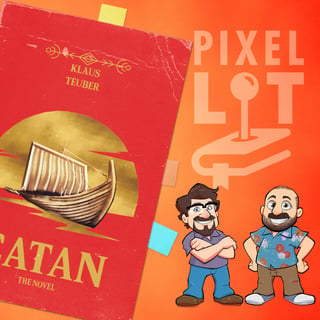
Speaker: The humans, as part of their culture, wear these little straw kind of boats on their back that keep the rain off of them.
Speaker: And it's just this thing that they made whole cloth for this game.
Speaker: And they never mention it.
Speaker: And it's so neat.
Speaker: I'm fucking sick of it.
Speaker: I can't play this game anymore.
Speaker: I'm enjoying it so much.
Speaker: I really like it.
Speaker: Casey explosion ruined my life.
Speaker: Cause she was the one who was just like, you got up.
Speaker: This is weird.
Speaker: You got to play this game.
Speaker: And Casey and I usually play the same kinds of games.
Speaker: So it was like a good, I was like, that's usually a good fit.
Speaker: Let's try this city builder out.
Speaker: And she ruined my life.
Speaker: Yeah.
Speaker: Ruined your life.
Speaker: Ruined my life.
Speaker: Kevin, what are you playing?
Speaker: Speaking of, I'm still playing Marvel Snap.
Speaker: And I'm just, you know, friends of the pod.
Speaker: Harry from Video Games Are Bad and Willow from Quest and Refuge and Jesse Gratia and I have like a thread going on in Discord.
Speaker: Yeah.
Speaker: Where we are just talking about what we did in Marvel Snap that day.
Speaker: And Marvel Snap, it's a card game.
Speaker: It's kind of, I mean, it's kind of like Hearthstone.
Speaker: I'm not saying it's like Hearthstone.
Speaker: Hearthstone, yeah.
Speaker: Who designed it?
Speaker: Ben Brode?
Speaker: Ben Brode, yeah.
Speaker: Same, same.
Speaker: Oh, I didn't know that.
Speaker: That's cool.
Speaker: Yep, same designer as Hearthstone.
Speaker: That makes a lot of sense.
Speaker: You know, I was addicted to Hearthstone.
Speaker: That's another game I had to quit quit.
Speaker: And so that was the Minesweeper of Evelyn circa 2019, 2020.
Speaker: I was a legend ranked.
Speaker: I was very good at Hearthstone.
Speaker: I was like, damn, all right, yeah.
Speaker: But I had to quit because it was taking him too much time.
Speaker: Yeah, I have a feeling that eventually I'll get there with Marvel Snap.
Speaker: But it's just so much fun.
Speaker: I just love it.
Speaker: The matches are short.
Speaker: There's only six rounds.
Speaker: They only take a few minutes, three minutes.
Speaker: Phil, you've been playing Marvel Snap, too.
Speaker: I've been playing.
Speaker: And for me, it really appeals to – because the whole reason I started was not because of the game design or anything like that.
Speaker: It was because it's very heavily influenced by the trading cards that you got in the 90s, Marvel trading cards.
Speaker: Like it has that same feel.
Speaker: That's how you get the collection.
Speaker: And I was obsessed with that.
Speaker: Me too.
Speaker: Multiple times in my life, I've gotten hammered drunk and gone on eBay and bought entire sets of old cards that I had as a child.
Speaker: So I could put them in their sleeves in the notebook and every now and then just go, ooh, Gambit, you look so good.
Speaker: Like that's my life now.
Speaker: And then and then I was like, oh, this is actually a pretty good, non exploitative cell phone game.
Speaker: And yeah.
Speaker: Yeah.
Speaker: I mean, it has microtransactions as any other free to play.
Speaker: But in terms of the amount of exploitation that that could be there.
Speaker: It's relatively minor compared to a lot of games.
Speaker: It is practical.
Speaker: Yeah.
Speaker: Compared to the way most of these things, compared to the way people expect these kinds of games to be, it is basically non-existent.
Speaker: So yeah, that's insane.
Speaker: It's ridiculous.
Speaker: Yeah, there's definitely still MTX in there, but it's so easy to avoid in this case.
Speaker: And everything, the way they do it is like you can't really buy cards.
Speaker: No.
Speaker: They could have been like, oh yeah, 99 cents for a card that you really like.
Speaker: And be like, no, they don't.
Speaker: You can't buy them.
Speaker: You got to kind of luck into the cards.
Speaker: Yeah.
Speaker: Kevin and I were talking about this the other day.
Speaker: We're like, I need this card and I need that card.
Speaker: And the only thing we can do is wait.
Speaker: Yeah.
Speaker: You can buy.
Speaker: So, yeah, the way it works is you can buy gold like any other MTX system that has two currencies.
Speaker: And then you can buy packs or something or...
Speaker: No, you can buy credits.
Speaker: You can use the credits if you have the upgrade boosters for a card.
Speaker: Yeah, this sounds like microtensation bullshit.
Speaker: Anyways, go ahead.
Speaker: Keep going.
Speaker: If you have the credits, you can upgrade a card.
Speaker: And then if you upgrade the card, you might actually go up the collection ranking.
Speaker: The only thing is they don't let you buy credits for
Speaker: that often.
Speaker: So if you buy credits, they block you from buying them for like 12 hours.
Speaker: So it's not like you can you can't just like keep spending.
Speaker: It's like you bought it.
Speaker: Get away.
Speaker: There's like it's there's like an internal cap on the value of spending money within the game, unlike other games where it would just be like, yeah, unlimited by the whole thing.
Speaker: Yeah.
Speaker: That's nice.
Speaker: So, yeah.
Speaker: I wonder if that's a little bit of like Disney, you know, putting their thumb on the scale, you know, and being like, we don't want our thing to be like this microtransaction hell, which will cause controversy for us.
Speaker: We just want you to be thinking about Marvel 24-7.
Speaker: Yeah.
Speaker: Yeah.
Speaker: And it does that job very well.
Speaker: Yes, it does.
Speaker: The cool thing is it's very much in the vein of the comic books versus the movies in terms of the appearance of the characters.
Speaker: So it does have that old collector's card feel to it.
Speaker: Yeah, big time.
Speaker: That's enough about Marvel Snap.
Speaker: The other thing I'm playing is blood for bullet time.
Speaker: Man, yeah.
Speaker: Blood.
Speaker: Blood.
Speaker: Yeah.
Speaker: It's, I was really enjoying it.
Speaker: And this, the episode of bullet time that we're going to talk about it in is, I think coming out next year or some point.
Speaker: Those are recorded so far in advance.
Speaker: I mean, when did we, we recorded.
Speaker: Yeah, you guys top loaded the shit out of that stuff.
Speaker: It's great.
Speaker: Because like I'm in the episode that came out today and we recorded that in like October.
Speaker: It's like December 1st.
Speaker: Yeah.
Speaker: Yeah.
Speaker: Yeah, yeah, we really built up.
Speaker: But yeah, we're recording this weekend.
Speaker: And yeah, it'll be an interesting conversation.
Speaker: I don't think James is too fond of the game.
Speaker: And I was enjoying it, but I found that it's kind of worn out its welcome as the more I've played it.
Speaker: There's only so much that you can really enjoy from the 90s edgelord game design school.
Speaker: We could have just stopped at 90s.
Speaker: We all know what you meant.
Speaker: Yeah.
Speaker: Yeah.
Speaker: Yeah.
Speaker: But...
Speaker: That'll do it for tonight's episode.
Speaker: Evelyn, thank you so much for joining us.
Speaker: Do you have anything you want to plug before we close it out?
Speaker: No.
Speaker: Check out my channel, I guess.
Speaker: I am Aaron.
Speaker: I like put my microphone on mute.
Speaker: So I was like, let's make sure Evelyn get like all the quiet times to get this, get this.
Speaker: No.
Speaker: Just this silent burst of laughter from Phil on the camera.
Speaker: Yes, please go check out I Am Error, Evelyn's channel on YouTube.
Speaker: Subscribe and watch her videos.
Speaker: They're tremendous.
Speaker: They're nice and they're beefy.
Speaker: They really get into the meat of the work.
Speaker: So go check it out.
Speaker: The most recent video as of this recording is about Super Mario 64.
Speaker: And, you know, it's it's it's good stuff for us, though.
Speaker: Please follow us on Twitter at Pixlet Pod.
Speaker: I know with the caveat pending Twitter's existence.
Speaker: Also on Instagram at Pixlet Pod and go to our website, Pixlet Pod dot com, where we post every episode with a downloadable transcript for the episode.
Speaker: that you can check out.
Speaker: We have links to our Discord and our Steam Curator page, and I'll probably be putting the link up for our Goodreads page shortly because we're on that now.
Speaker: I'm getting our reviews in there.
Speaker: Yeah, I was trying to get the reviews in as fast as I can, and it's requiring a re-examination of some of these books, which I am not thrilled about.
Speaker: Yeah.
Speaker: Dead Space Martyr?
Speaker: You up to Dead Space Martyr yet?
Speaker: Yes.
Speaker: The last one I did was Ninja Gaiden.
Speaker: And I wrote, as far as the Worlds of Power books are concerned, this might be one of the best ones we've read.
Speaker: Does that make it good?
Speaker: Eh.
Speaker: And that includes links to the episode.
Speaker: That's what you have to look forward to on the Pixelit Podcast Goodreads page.
Speaker: So, you know what?
Speaker: Go check it out.
Speaker: Anyway, that'll do it for tonight's episode.
Speaker: Have a good night, everybody.
Speaker: Bye.
Speaker: Good night.