Transcript
Speaker: Confederation is the Civil War. Like the South never forgot the Civil War. There's people in Newfoundland never forgot the Confederation Battle. Everybody had an opinion. I mean, some people actually argued about it and thought about it. And there were people who left home in a rage and slammed the doors. I presume they reconciled with their families afterwards. But it was really emotional.
Speaker: In 1948, the people in the British colony of Newfoundland faced a choice. They could become an independent country within the British Commonwealth, or they could vote to join Canada in Confederation. I do not believe for a moment that this good ship of state isn't at all leaking, and I am not prepared to send out an SOS for a Canadian rescue tug.
Speaker: The Anti -Confederates are not going to get away with it. No, not even, not even. If every millionaire, half -millionaire and quarter -millionaire in the country rallies to the call of the Anti -Confederates. What in particular? The attractive fate which will be held out to lure our country into the Canadian most rats.
Speaker: How did the Second World War lead directly to the referendum on Confederation? Who was in favor? Who was against? And did Newfoundlanders make the right decision? This is the second episode in our Stories Behind the History special series on why and how Newfoundland joined Canada.
Speaker: Welcome to Stories Behind the History. I'm Kate Jamit, Senior Editor of Canada's History Magazine. In this podcast, I speak with leading historians and witnesses to history to discover the people and events that shaped our nation.
Speaker: The year 2024 marks the 75th anniversary of Newfoundland joining Canada. For this special series of episodes, I travelled to St. John's, Newfoundland to interview former Premier Clyde Wells, best -selling author Bernice Morgan, artist Kathleen Knowling and former federal MP Richard Cashin about their memories of pre -confederation Newfoundland and to ask them if they think Newfoundlanders made the right choice when they joined Canada.
Speaker: You've gone to request that you remain seated with your seat belts securely fastened until the captain has turned off that seat belt sign and it is safe to stand on your feet. On behalf of the quarter team, we thank you for playing with us. We wish you a wonderful evening here at Snowy St. John's.
Speaker: In our last episode, we found out how Newfoundland amassed an unmanageable debt which led to its legislature being dissolved and a commission of government being appointed by Britain in 1933. The commission of government was incredibly unpopular with the people of Newfoundland and it was only supposed to be temporary. Elected government was supposed to be restored as soon as Newfoundland regained financial stability.
Speaker: That financial stability came as a result of the Second World War in Europe. Bernice Morgan remembers the war as a time of prosperity. We had come through the depression which had hit Newfoundland as it did all poor people and of course in the depression the poor get poorer than the rich get sometimes richer. But a lot of people had left the out ports and coming to St. John's
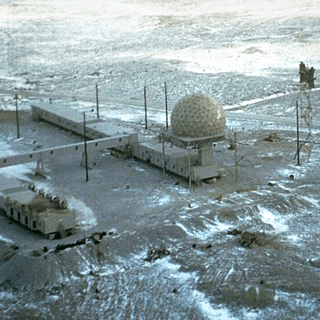
Speaker: So St. John's was kind of booming. During the war, of course, we had American bases, Stephenville's, Argentia, Gander, and St. John's. Huge influence of work and money. Wait a minute. Why were there American bases in Newfoundland, a British colony? Let's back up and look at the events of the war in Europe.
Speaker: After enacting Austria in 1938, the Nazis invade Poland in September 1939. This prompts France and England to declare war against Germany. At that point, Newfoundland automatically enters the war as part of the British Empire. Gander and other Newfoundland airports become important for ferrying military aircraft to Britain, and St. John's becomes a critical naval port for convoys across the Atlantic.
Speaker: In 1940, Denmark, Norway, Belgium, the Netherlands, and France all fall to the Nazis. Britain, backed by its empire, is left alone in Europe to defend itself against an anticipated German invasion.
Speaker: Clyde Wells, who was a young boy in Newfoundland during the war and who served as premier of the province from 1989 to 1996, explained to me how Newfoundland became a bulwark in the defense of North America. Well, at the beginning of the war, nobody knew where Hitler was going. He had taken complete control.
Speaker: control of Europe, and Britain was trying to fend them off from making an assault on the United Kingdom.
Speaker: Americans would be very much aware that if he conquered the United Kingdom, as Americans expected, he would do. And if he did that, the next step would be across the North Atlantic. And if there was going to be an assault on Canada and the United States, the stage head would have to be Newfoundland and the Labrador coast that was part of Newfoundland, so that the Americans were very concerned
Speaker: about that, as were the Canadians. The Canadian government had an Army unit at Botwood. The Canadians also had Air Force units at Torbay in St. John's, and the Americans wanted to establish units.
Speaker: for the defense of North America at its easternmost point. And they made a deal with Britain who wanted warships. Some 50 warships were transferred from the United States to the United Kingdom in exchange for leases.
Speaker: at Harmonfield, Fort Pepperill, and Argentia in Newfoundland, and the Americans also made arrangements to share with Canadians at Goose Bay in Labrador, and at Tor Bay here in St. John's.
Speaker: And so the Americans then, the two big bases that the Americans built, the big one was at Stephenville, was a U .S. Air Force base, and Argentia was a naval air station.
Speaker: Kathleen Knowling, whose family owned the heirs department store in St. John's, told me the war was a boom time for her family. The war changed things. One thing, the American basis meant that a lot of local people, as a matter of fact, anybody who could hold a hammer, any man who could hold a hammer, got a job. And it made the local economy quite prosperous.
Speaker: And that's when we stopped having maids because the maids got much better jobs down at the base, you know, as waitresses or whatever. Now, I'll tell you something. My family did very, very well during the war. Because of the bases there, the Americans came here. They'd never seen decent China before. You know, they'd never seen porcelain or anything of that sort. They'd never seen fabric like that. You know, the really good linen,
Speaker: good cotton, good quality stuff. And they bought and they bought and they bought. And of course, because we were overseas, we got stuff from the United Kingdom as much as they could sell us. And so we did very well.
Speaker: As this influx of money allowed Newfoundland to pay off its debt, people began to agitate for an end to the despised commission of government. One of the most vocal was a former member of the Newfoundland legislature named Peter Cashin. His nephew, Richard Cashin, told me the story. During the war, what started the movement to change things was my uncle.
Speaker: who had a radio broadcast, The Voice of Liberty, on VONF, which was the government radio station. But he was quite, anyway, they canceled him. Why? Because they didn't want anybody disturbing the status quo. But there was a private radio station here, and they carried it. And he was demanding a return to responsible government.
Speaker: because Britain had promised the agreement. So after the war, the government of Britain, through the Commission of Government, called a national convention to determine the future of Newfoundland. The national convention consisted of 45 men elected from 38 districts. One of them was Peter Cashin. Another one was Bernice Morgan's uncle, Ted Vincent.
Speaker: We had the National Convention, where people came from all over Newfoundland to the Colonial Building to sit around and argue it in person. My mother's brother, Ted Vincent, was appointed from Bonavista North to come in, and he was for Confederation. So he could drop by our house sometime and try to argue with my father, but he had all the facts at his disposal sitting in Colonial Building and listening to the rest of them.
Speaker: The Convention began deliberations in September 1946. Its task was to make recommendations to the British government about different possible forms of government in Newfoundland. These options would then be put on a ballot and the people of Newfoundland would vote on them in a referendum. Among the delegates to the National Convention, the most ardent advocate of Confederation with Canada was Joseph Smallwood. Here's a clip from a speech he gave at the Convention.
Speaker: In it, he speaks about the working people of Newfoundland, whom he calls the toilers, and the sufferings they underwent during the Great Depression. I was never so close to our toilers as during those years of the dole, and always, as long as I lived, I will remember those friends of mine, those toilers, who were stricken down by very, very, those children who felt the pinch of hunger. I saw the heartbreak
Speaker: in the eyes of patient mothers who had not enough to give their little one. I saw the baffled, sullen rage of fishermen whose greatest toil and endurance could not provide their families with enough to eat or wear. I attended meetings of the unemployed here in St. John's, for who was I to refuse their invitation to go and speak to them? I saw them in their despairing hundreds lounging around the street corners, waiting for the jobs that never turned up.
Speaker: I saw them line up in front of the Dole offices. I helped to gather old second -hand clothes to distribute amongst the naked. I saw those things, sir, closely, intimately, personally, not for a day or a month or a year, but for year after year, practically, to the very outbreak of the late war. I saw them, and I swore a note to myself that never would I be a party. No, not as long as I lived.
Speaker: Never would I be a party to allowing such things to come back to our people again. I would never be a party to any form of government that would make us run that danger again, and that's why I became a Confederate.
Speaker: Like Peter Cashin, Smallwood was a radio announcer. Bernice Morgan remembers hearing his voice on the radio when she was a child. She told me that his on -air persona was called the Barrel Man. In nautical terms, the Barrel Man was the sailor who was stationed high up in the crow's nest and could see everything for miles around.
Speaker: Of course, Smallwood was the master of radio. He was born to be on radio. He had been the barrel man on radio for years. He had a radio program. People phoning in from the out ports and he would tell their stories and at the end of the broadcast there would be messages. Mrs. Smith is through with her operation and will be picked up and will be home on the 9th. There's a ship tied up in St. John's that she's ready to go.
Speaker: should be out. These things at the end like commercials that they weren't paid for but they were and he was the man who at this kind of connection Smallwood did with all these little communities long before he went into politics.
Speaker: Two months into the debates of the National Convention, Smallwood put forward a motion to send a delegation to Ottawa to discuss possible terms of union with Canada. The Convention decided to send one delegation to Ottawa and another one to London, England. Smallwood went to Ottawa while Cassian went to London. But behind the scenes, the leaders in Ottawa and London had already decided that their preferred option was for Newfoundland to join Canada.
Speaker: The British, who were just recovering from the war, made it clear that if Newfoundland became an independent Dominion, it couldn't expect economic assistance from the mother country if the wartime boom turned to bust. Cashin returned to Newfoundland and raged. Here's part of a speech he gave in the National Convention. Now what does all this mean? In the first place it means that the British government has endorsed Canada's action.
Speaker: that she has encouraged Canada to give us a big hand. And if she has done this, it also means that the British government is prepared to see us go into Canada, that she want us to go into Canada. For myself, I see in it just a further confirmation of something which I have long expected. I say to you that there is in operation at the present time a conspiracy to sell, and I use the word sell advisedly.
Speaker: this country to the Dominion of Canada. Watch in particular the attractive fate which will be held out to lure our country into the Canadian most rack. Listen to the flowery sail stock which will be offered you, telling Newton Landers there are lost people that our only hope, our only salvation lies in following a new Moses into the Promised Land across the Cabot Strait. After more deliberations, the National Convention finally voted
Speaker: on what options should be presented to Newfoundlanders in the referendum. The delegates agreed on two options. One, the continuation of the Commission of Government, or two, independence and the return to responsible government. Smallwood moved to include a third option, Confederation with Canada, on the ballot. When the motion was put to a vote in the National Convention, here's what happened.
Speaker: Will all who are in favor of the motion please rise? Will all members who are against the motion please rise? What is the result? 28. Are you clear the motion lost?
Speaker: Hold on. If the motion was defeated, how did Confederation end up on the ballot? Well, that's the problem with being a colony. The British government overruled the National Convention and insisted on including Union with Canada in the referendum. Here's Richard Cashin's take. Britain wanted to get rid of us as simple as that. Britain wanted to get rid of Newfoundland? Yes, of course. Because they thought it was a liability?
Speaker: They didn't want the responsibility for it. Now that it was decided what three options would be presented to the voters of Newfoundland, it was up to each side to hit the hustings and try to convince people how to vote. From then on, a great debate engulfed every corner of Newfoundland.
Speaker: I was around 10, I think. So I remember a lot of it because people were very emotional about it. I remember being in bed upstairs. We had a two -story house, and in those old houses there were a lot of heating bins. And I could hear a small wooden cash -in.
Speaker: The voices, not precisely what they were saying, but the ramble of voices night after night after night on the radio. My parents downstairs listening to them in the kitchen. Anyway, everybody had an opinion. I mean, we were way down on the emotional scale.
Speaker: Some people actually argued about it and thought about it, and there were people who left home in a rage and slammed the doors. I presume they reconciled with their families afterwards, but it was really emotional, and it was fed by a huge amount of propaganda. St. John's was an anti -Confederate
Speaker: Headquarters. Partly because we could see that of course when Canadian businesses came in, the local businesses would be put at risk. Follow the money. That's where your history is. That's where your history is.
Speaker: Follow the money Kathleen Knowling told me, and this is what I found out. Newfoundland merchants and manufacturers benefited from an import tax that shielded them from competition. But the tax made goods more expensive for citizens. If Newfoundland unified with Canada, there would be no more import tax on Canadian goods. If you went to Bergio, Bjorn, Portabas, they were naturally Confederates. Why?
Speaker: Well, because they had interchanged with Nova Scotia, you could go to Nova Scotia, you could get real butter for less money than we paid for margarine. So there was a natural, on the south coast of Newfoundland, a natural affinity to Nova Scotia.
Speaker: In addition, by joining Canada, Newfoundlanders would have access to the federal baby bonus program. Introduced after the Second World War, the baby bonus paid families a certain amount of money per child per month. As well, seniors living in poverty could collect a federal pension. These were points that bolstered Joey Smallwood's arguments in favour of Confederation, especially in the poorer outport communities. When he went across the island
Speaker: to various places. And he did a lot, a lot of traveling with trucks on the railway, you know. He worked very hard. And he was, you know, he was an exciting auditor. And because he repeated things three or four times, people couldn't really understand. And watch the money. You see, there was the baby bonus. There was the old age pension. Now that didn't really exist any extent here.
Speaker: One thing that really surprised me when I started reading a little bit about the Confederation debates in Newfoundland was the extent to which there were divisions along religious lines. And I was very surprised because I thought, well, what did Confederation have to do with religion? What's the connection there? So I thought I would ask you about that too. Yeah, well, this is really what I figured out. The Roman Catholic Archbishop
Speaker: had no inclination to be subordinate to Canadian archbishops. He liked being independent. So they leaned towards being anti -Confederate. And, of course, the majority of, I think, the population of St. John's, well, probably was Irish, Roman Catholic. I asked the same question to Richard Cashin.
Speaker: Did the Catholic Church have a position on whether Newfoundland should join Canada or not? It depended on which diocese you were in. Okay, can you explain that? Well, the Archbishop, the Archbishop of St. John's, a note from Montaigne, Jansen's, Jansen is de -conservative, was very much against Confederation. Bishop O 'Reilly, in Cornerbrook, an Irishman himself, was very pro -Confederate.
Speaker: And the Bishop of St. John's, did he sort of preach to other Catholics that all good Catholics should vote against? Yes, he did. And that was one of the causes that led to a confederation. He wrote a letter to all the Catholics in his diocese, which would have been the largest Catholic diocese. Well, he won't tell him to vote for responsible government. And you know what that prompted?
Speaker: No. The Grandmaster of the Arling's Lodge wrote another letter. I mean, any self -respecting orange man would damn well be pissed off.
Speaker: at the Catholic Church. So because the Catholic bishop wrote that letter and told all the Catholics to be anti -confederation, it caused the orange men to tell all the Protestants to be pro -confederations. Well, they were generally in both cases
Speaker: The Protestants were generally more confederate anyway, and the Catholics in this area. But that was not universal West Coast. Now, as I said, the bishop on the West Coast was actually for confederation. Back and forth the arguments went. One group of people even started a new political party that advocated economic union with the United States.
Speaker: Finally, the referendum day arrived on June 3, 1948. When the votes were tallied, it was 14 .3 % in favour of keeping the Commission of Government, 41 .1 % in favour of Confederation,
Speaker: and 44 .6 % in favour of independence with responsible government. Responsible government was the winner, but it hadn't gained a majority approval. So a second referendum was set for July 22nd, with the Commission of Government Option dropped from the ballot.
Speaker: When the votes were counted, it was close, but the decision of Newfoundlanders was clear. 47 .7 % in favour of responsible government and 52 .3 % in favour of Confederation with Canada. Here's Clyde Wells. I don't have great memories of that, but I remember in our household there was great joy and pleasure at the second vote because it was pro -Confederation.
Speaker: Kathleen Noelling's family didn't feel the same way. A lot of people were absolutely disgusted. And some people put, if they had a flagstaff, they put the flag at half -mast. After we joined the confederation, some people pulled the blinds down in the morning. Oh yeah, yeah.
Speaker: On March 31, 1949, Newfoundland became the 10th province of Canada, and the following day on April 1, Joseph Smallwood was sworn in as the first premier of the province of Newfoundland. In the third and final episode of this series, I'll speak with my guests about the consequences of Confederation, whether Newfoundland made the right decision, and if a Newfoundland independence movement will ever rise again. Be sure to join me
Speaker: The Stories Behind the History podcast is produced by Canada's History Society. With special thanks for this episode to Richard Cashin, Kathleen Noling, Bernice Morgan, Clyde Wells, and Patricia and Jerry O 'Brien. If you enjoyed this episode, please subscribe to the podcast and leave us a rating or a review. It helps other listeners to find us.
Speaker: If you'd like to read more stories about Canadian history, why not subscribe to Canada's History magazine? Our beautifully illustrated glossy magazine will be delivered to your home six times a year, chock full of interesting stories written by Canada's top historians and journalists. To subscribe to the magazine, go to Canada's History dot ca slash subscribe.
Speaker: Our theme music is the Red River Jig performed by Alex Kustorok from his album May T Fiddling for Dancing. I'm Kate Chaimit. Thanks for joining me.