Transcript
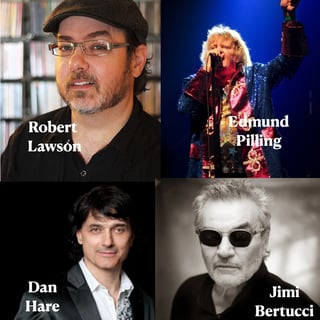
Speaker: Hi, it's Dan here for Dusty Disks Radio. This is the podcast liner notes revealing chats with Canada's retro music makers. Today, I'm really honored to have as my special guest, the legendary studio engineer, producer Mike Fraser. We'll be talking about his life and the music business and traveling and working on major albums and much more as we get a perspective about the Canadian music scene from someone who's been there for many decades. Mike has been the audio engineer for some iconic classic rock albums, including
Speaker: Aerosmith and ACDC and the cult and many more. So I'm thrilled that he's here today to share some of his experiences with us. So thanks for joining me today, Mike. How are you? Hey, Dan, how are you? Yeah, no, it's a pleasure to be here with you. Good. Well, great. Well, we talked before we came on about our mutual friends and connections and stuff. So it's finally nice to be able to talk to you and just to have a sit down. Yeah, exactly. This is great. Thanks.
Speaker: So you're one of those guys that just kind of sort of fell into the music business you just did we grew up at a time course sixties and seventies is a pretty exciting time for music and playing in a band or being involved in music business was one of the coolest things in the world to do at that time so you kinda.
Speaker: were caught up in that as well. Yeah, exactly. Well, when I was in high school, we had a little kind of garage band and I learned pretty quick that I wasn't going to make any money playing guitar. And then when I quit school, I went into a company with my dad. We had heavy equipment, you know, logging and bulldozers and stuff. Yeah.
Speaker: And I got tired of, you know, we'd shut her down through the winter just, you know, on the West coast here. It's just muddy, messy winter. So we shut down during the winter. I got bored of that. And I thought, well, I gotta do something with my life. And I like music, but.
Speaker: uh, not good at playing it. And I thought, Oh, I'm going to check in and sort of see if I get a job at a studio. So I called a few places and, uh, called little mountain sound. And, uh, they weren't hiring, but they were looking, they said, we need a janitor. And I said, Oh, okay. I'm in. That's my foot in the door. So that's kind of how I got my start.
Speaker: Well, it's cool because that's kind of indicative of the music business in general. You got to try to say yes a lot. Exactly. Default to saying yes. If there's a reason to say no, you say no, but default to saying yes. And of course, as a musician, I mean, I know lots of guys that did the five finger fumble.
Speaker: right on the guitar and then get into something else but so you're literally one of those guys that that that began at the beginning and just worked your way up which is very cool I mean that that speaks well of you and I loved hearing those stories because
Speaker: That's the passion that you're interested, you're willing to do what it takes. I mean, obviously you have to have the aptitude and the ability and the personality, I think, for it as well, which you obviously had. You got to prove yourself, right? I mean, you can't just mail it in.
Speaker: Well, I find though, you know, I was quite lucky at an early age to stumble onto something that I loved and was able to get a job in that field. So I find, you know, when you love something, it's you're not going to work every day, you know, so you really apply yourself then you're not sitting there watching the clock. I was at lunchtime. Yeah. Oh, can I leave now? Right. You know, uh, you just wanted to be there and you know,
Speaker: being there and hanging out with some really great people at Little Mountain Sound had a lot of learning opportunities because back, you know, I started in 1978, I believe, and there wasn't really any audio schools around. I know there was a full sale, but you'd have to go down to
Speaker: Florida, you know, it was a lot of money, right? There might've been one in LA as well, but there wasn't really many audio schools. Like nowadays they're everywhere. So, you know, it's quite easy to jump in and get some training, but you know, I had to start like on the ground floor and in between flipping the mints in the toilets. I learned how to set up microphones and what microphones to use on what. So I had a really great hands -on training, you know,
Speaker: But you worked with some of the best guys. I mean, by the time you got there, Bruce Fairburn was established, right? He had done, I guess, Prism, and he was on his way to be doing Loverboy and some other bands. So you were kind of involved. So you were learning from the best guys, like Bob Clearmountain, I guess, and eventually Bob Rock and that. Yeah, exactly. Who was the most important guy to you when you were first coming up? Well, in the early days, there was an engineer there by the name of Roger Monk, because Little Mountain at the time
Speaker: was basically just a jingle house they just record commercials and the doors would shut at five or six o 'clock so i do my janitor and help roger on all the jingle sessions from say nine am to the five pm and then after few months of that bob rock was just
Speaker: an assistant engineer and newly becoming an engineer. So he started doing, after hours, the Vancouver punk bands, all the punk bands in Vancouver. So I said, hey, do you want me to hang out and help you? And he said, sure. So we kind of became a team. So shortly after that, Bruce Fairburn came in with a Prism record. So he had Bob Rock engineer it. So it was basically one of the first Prism things Bruce had done.
Speaker: record that Bob had engineered on his own, and my first record. So the three of us kind of became a team. So then, you know, we'd do the lover boy stuff and all sorts of projects together, the three of us. And, you know, Bruce and Bob had such a
Speaker: great career, I just managed to latch on to that, you know, so I'm quite lucky. Well, you were obviously in the room and hunched over the console with them and learning and paying attention, right? I mean, that's what I say. You have to have the aptitude and the affinity for it, but also the personality. How much does the personality play into it? Because I've found in the studio like that, that the engineer is generally a calming influence. The producers can be a little jumpy at times, but the engineers are calming, right? You got that personality.
Speaker: Well, I think it's a huge part of being in the studio. And I think some of these audio schools should teach a course in psychology as well because so many times you've got so many different personalities and people come in and it's a high pressure thing. You think, oh, playing music is fun. Well, when the red light goes on, people tend to sort of freeze or they try too hard to make everything perfect and they kind of lose
Speaker: The vibes of trying to catch a great vibe on a record is really tough because when they're playing live, they've got the live audience to feed off of. And it's great, but in the studio, it's really just a couple of guys in the control room looking at you and saying, pretend there's 60 ,000 people screaming at you. It's hard. So you've really got to know how to manipulate them into being comfortable and giving their best. So there's a large part of that is psychology.
Speaker: Yeah, you make a great point because it is an artificial environment in a sense because it's not the party atmosphere. We did a studio gig one time and the guy tried to recreate that. He hired a couple of dancing girls and they had the buffet in there and stuff and they were having a few drinks and they're interviewing us. But I said, we haven't even recorded anything yet.
Speaker: The guy's got a microphone. How's the sessions going? I'm like, we haven't even actually recorded it. But he was trying to create that atmosphere in the studio, which of course ended up not really working because the engineers trying to herd the cats as it is, trying to get everybody on the same page and laid out some tracks. You got a three -ring circus going on in there and the dancing girls are getting interviewed by the video guy.
Speaker: Yeah, well, like you said, Dan, making a record is actually is work, you know, and play it a couple of times and you're done and hey, with the big party, you know, it's you played the same song over and over and over for hours on end. So anybody that's not involved in that process gets bored after the first hour. Like, don't you guys know another song? Yeah, that's that's right. Yeah, that's quite clinical, you know.
Speaker: Yeah. Well, and you've done the long days too. Like, like some guys get tired of doing the 14 hour days and stuff, but I'm sure you've done lots of those. Oh yeah. 14 hours. I used to sleep the late before. Yeah, exactly. No, it's, it's true. But I don't know if you, if you have that idea of the law of diminishing returns, but at some point when you're fatigued and your ears are tired and you know when to call it.
Speaker: Well, yeah, you know, in the early days, we all would do those, you know, 14, 18, 20 hour days. And you eventually, you know, especially as budgets got smaller and you're trying to get more done in a shorter period of time, you've kind of realized, you know what, if we stop now, we'll come in tomorrow and get this part in half an hour instead of trying to spend three hours getting this part because we're tired and, and hard to focus, you know.
Speaker: So you learn pretty quick that, hey, let's just knock it on the head early, get a good night's sleep, come in first thing in the morning and bang. Yeah, fair enough.
Speaker: a fresh outlook, you know, you tend to get more work done, you know. Yeah. And then looking at your credits, you've done a lot of harder rock albums, but then you've done a wide range of stuff too. I guess it's like in your business, you basically have to do jingles, I don't know, movie soundtracks, like up and coming artists, and then whatever genre, right? You don't really pick and choose that, or do you pick one over the other?
Speaker: You don't really pick and choose though, you know once you your name kind of gets established, you know They get to know he is. Oh, he's the rock guy So I get a lot of that and then a lot of the heavy heavy stuff as well But you know peppers in there, you know, I can do anything and I love any kind of music so, you know was lucky enough to do some country stuff and Nora Jones track and you know
Speaker: For me it's really fun changing genres because it keeps it interesting for me too. It's not just this thing. Oh, loud drums. Okay. Over distorted guitars, you know, sound, you know, that sort of gets boring after a while. Like you want some variation to it, you know, so.
Speaker: Yeah, I hear what you're saying. And also that the time that we grew up, like my dad always used to bug me about listening to acid rock and stuff. And I said, dad, we listened to Kat Stevens. We listened to James Taylor. We listened to Led Zeppelin. We listened to Black Sabbath. I don't care whatever it is. Like we had a really great upbringing as far as the kind of music we listened to in the broad range of music.
Speaker: Yeah, yeah, exactly. Well, it's funny, like I was saying thing, you know, my dad used to say, Oh, how can you stand listening to that screeching, you know, but they're, they're used to the Bing Crosby's in the crooners, you know? Yeah. And I caught myself a few times with my kids, you know, saying, what's that racket you guys are listening to?
Speaker: It's kind of funny how generational, you know, but it's nice to be able, like you said, it's a, it's a bit of a breath of fresh air. Okay. Now we're doing the wispy vocals and the, you know, the, the smoother drums that aren't, you know, like a gun, a bomb going off every time you hit the snare drum, right? Yeah.
Speaker: Well, that's cool. So then the difference between an engineer and a producer and a mixer, you've done all of that, but I mean, not all engineers are producers and not all producers are engineers and many are both. But you've worn, like when I look at your list of credits, you've worn a lot of different hats.
Speaker: Yeah, through the years, depending on what it is, right? Yeah, exactly. Yeah. And I'm willing to do anything, you know, like just because I produce records doesn't mean I can't sort of step backwards and just be the engineer on it. You know, I just love doing whatever I can do to help the project and get it done. I'm there.
Speaker: Yeah, fair enough. And, and I've, I've often said, you know, I don't need to be the boss, but somebody needs to be the, I mean, you need a producer or somebody that's sort of bringing everything together and going, here's what we're kind of trying to do here. Yeah. Yeah. And I'm okay with that. Whatever you just go, whatever. But then when you're the producer, a little more pressure, I guess on you, right? Exactly. And, you know, through my career, I've tried to always kind of look at it like, uh,
Speaker: When we're doing a record, it's kind of a team effort. So even if I'm producing it, I will let co -produce it with the band because it's their record, you know, they don't need me to tell them what I want them to sound like necessarily. They're coming to me with some great songs, hopefully. And okay. And together, how do we work as a team to, to get this done? You know, a cheap, cheaply, quickly, but in quality, you know, so you're balancing that. And I think a team effort makes it work.
Speaker: Well, I mean, I'm sure the bands appreciate that because I've heard lots of stories of, you know, some bands got assigned a producer from the record company. Some, some producers are really salty or there's a nose to nose with a couple of guys in the band and that sort of thing. Right. You've, you've tended to avoid that those scenes. Well, you know, and then there's some great producers out there that that's what they do. You know, uh, they've got such a great vision, uh, just off the top of my head, like Matt Lang.
Speaker: You know, he's got a sound and, you know, sometimes some of his stuff all sounds similar, even if it's a different artist, but you can't deny he makes a great record. So, you know, there's some guys that can do that. I wasn't that kind of guy. I just like, you know, helping the band achieve what their roles are. And again, when you look at some of that, you know, you look at the wrecking crew or something where, where the producer goes in there with the studio guys and the albums, you know, three quarters done by the time the band shows up. Yeah.
Speaker: Yeah. You know, those kinds of situations don't make the band very happy. Yeah. And don't make the band feel fulfilled. Unless they have a hit record, then they're really happy. Except they didn't write the songs and they didn't get any points off the... Well, there's that too. But no, I know what you're saying. So you were fortunate in the sense that the timing of what you did is good, right? But I mean, you couldn't do what you did then today.
Speaker: No, I don't, you know, I'm again, I'm quite thankful that I did it in the time. It's a lot tougher, you know, there's so many people doing it today. Yeah, I'd sort of argue that some of the music isn't as good today, only because, you know, they're still writing good songs and all that. But, you know, it's more done on computers now, you know, they've got auto tune, they can edit the drums to make them sound like a machine and
Speaker: You know, and everything's just getting too perfect. And the magic in music is kind of being lost a bit. And magic comes with mistakes, sometimes a little out of tuneness or whatever. But if the feel and the groove and everything was great, that's to me what made a great record. It didn't have to be. Right.
Speaker: Hang on time and sound like this. And, you know, and although it doesn't make singers sound real to me. Yeah, it's great. It's in tune, but it doesn't sound real. You know, so. Right. Well, I just read an article and it escapes me who wrote it, but he had the saying in there. He said that the music then was perfectly imperfect. And I thought it was such a great way to say it because that's right. You know, there's there's some some fuzziness in there, the odd time and whatever, but it's perfectly imperfect because you got the magic.
Speaker: Yeah, exactly. Well, you know, we're trying to capture performance, right? And, and with that, you like you capture magic magic, you can't capture like you can't, you know, make you can't make magic, you can capture it, you know, so right nowadays, you know, a lot of recording gets done on a thing called Pro Tools, which is, you know, a digital format, which is, which is fine. I mean, I prefer the analog on the tape, but you know, that's just so expensive.
Speaker: But, you know, guys will be sitting there and they'll look at all the waveforms and say, oh yeah, that doesn't look right. Okay. I went off that screen and listened to it. Yeah. Does it sound right? Great. Yeah. No, it sounds great, but it doesn't look right. So I just want to go in there and fix that one little bit. It's like, well, no, it sounds great. So it's tough sometimes.
Speaker: I'm guilty of that myself. I mean, you get drawn into that because you, you think, well, I have a chance to, to, to, to fix all the things that you wouldn't be able to in the past, right? Like you'd have to just live with it, but now I can fix it now, but yeah, but you're, now you're a mad scientist. Yeah. Yeah. Right. But I will say though, you know, now that, um, you know, most of the stuff is done in Pro Tools and stuff and every once in a while a battle commands, Hey, we want to do it all in analog. Okay, great. So you get out the,
Speaker: Tape machines and you buy a couple rolls of tape and get it going. There's a lot of work to record in it. And you realize, Oh, right. This is why pro tools was invented to make this so much easier. So I don't have to, uh, you know, I can help the band create instead of trying to make sure it gets on tape properly. You know, so do you still do tape recording at all?
Speaker: Now and again, yeah. It's an expensive venture. A real tape is probably $300 to $400 and you can fit 15 minutes of music. That's usually three passes of the song. What's the ratio? You go through a lot of tape and it's not easy to go in and fix a little part of something. You better be able to punch in and punch out and hopefully not erase something.
Speaker: Yeah. Yeah.
Speaker: No, fair enough. Yeah. I mean, but that's actually Rolf Haneman shared that story with me about Magic Man and they accidentally erased part of the kick drum and they had to actually do it, redo it in the studio. But you know what he had, he had the red light on and he didn't notice and you, you know, you may have done it yourself. I mean, lots of guys did, right? Just like, oops.
Speaker: Yeah. So that's, yeah, that's interesting. And so you went to the, you've been at the warehouse and the armory and the little mountain and most of the big studios around the city. Which one's your, your sort of home base or your favorite? Well, I usually work out of, uh, the armory or, um, the warehouse is sort of my two main ones. You know, I'm mostly a mix engineer. Um, I record sometimes and I produce sometimes, but most of my work
Speaker: Oh God, for the last 15 or more years has been mixing, so that's the final page. I like mixing on the bank consoles. A lot of guys nowadays mixing the box, which is inside the computer.
Speaker: with all the little plugins and all that. I guess I'm just too old school. I prefer the, the large console and that. So that's the warehouse in the army at the big boards. Uh, there's another studio called hypersonic. Uh, they're actually in the old little mountain and studio B. So they're in the old building that used to be little mountain. Uh, they've got a great vibe there, but it's a smaller board. So for me, it's a little harder to mix.
Speaker: You know, some projects, um, like with Pro Tools, you've sort of got unlimited tracks. So a lot of next projects I get, you know, they've got 70 or 80 tracks of, uh, right music, you know, and Mike's on a guitar and 30 bites in the ground and that kind of thing. So, um, you know, when I'm on a smaller board, then you've got to sort of pre -mix it in the computer and it just, it sort of takes my vibe out. So I need a larger to get it going.
Speaker: I was going to end this one more question about the digital analog thing because I wouldn't think like out of 50 projects you would do, how many would be on tape? Probably very few at these days. Yeah, these days very few, maybe two. But people often say it's warmer and then I think Bruce Fairburn before he passed away, I think it was in 99 that he passed away, but he was at a seminar one time and they asked him what
Speaker: what do you prefer digital or analog and i think he answered he couldn't tell the difference so his analogy would be if you turn your back if i if i played ten recordings for you. And one was digital one was analog and you turn your back could you tell me ten out of ten times which one was analog which one was digital.
Speaker: Right. Yeah. Fair enough. Here's, here's how I sort of liken it. Like, uh, you have a, like a, a film camera, like, you know, you've got your film and you take a picture or, or say you shoot a movie on film. Then you shoot the same thing on a digital camera and you look at the two pictures. You're always going to, well, I would always pick the analog one because it's got warmer, deeper colors. You know, the, the digital makes a great,
Speaker: copy of it, but if you go to manipulate it, it's harder to manipulate, you know? Okay. Yeah. But nowadays the reality is, is digital, right? When you get the tracks for a mix or something, their digital tracks, right? That's because it's easier to manipulate. And that's where, you know, like most people listen on MP3s now. Well, it's a, it's actually a horrible format, but what it's done is made, um, you know, everybody can have their playlist as many songs as they want because it takes up very little space.
Speaker: it's easy to carry around you know like i'm quite happy to get rid of all my cds for sure because it's got this case of carrying around just those couple songs so it's made it easy and that's why it's the main format now but it doesn't sound better you know if you sat in a bead you know between say vinyl and then a cd and an mp3 you'd hear a giant difference
Speaker: Yeah yeah yeah no fair enough that's what neil young was on about with this pono thing yeah stuff it just annoyed him that they did sound was degraded so badly and nobody seemed to care yeah. So but the interesting thing about what so when you when you do work in pro tools i use sonar i've used a couple different ones but um.
Speaker: lot of guys play to click so you can have that the tracks are all lined up so if you get a mix to do but they didn't play to a click you can't cut and paste as easily right because because the timing is not perfect so a lot of guys got into quantizing it really sounds mechanical right that's right yeah there's a famous video of running with the devil by van halen if you've ever seen it but they
Speaker: the guy quantizes it and he shows the difference how it loses its groove and it loses its magic when you quantize that song because the song just kind of breathes on its own and it's beautiful and it's perfectly imperfect but when you quantize it so a lot of stuff you would get now most of it would be
Speaker: I don't know if it would be quantized digitally but at least it would be to a click so you can cut and paste on the bars. Right. Well there's a way of doing it when you're editing and I'll do drum takes and sometimes I'll edit drums to fix some of that stuff. So there's a way of editing that you're not doing it to, we call putting it on the grid so it's not everything's exactly the same but you can edit it so that
Speaker: say the drums sped up in a section and you wanted to replace it with slower drums, well everything's going to be changed, but you could add little bits out so the drums don't speed up as much as they do, but they still speed up a bit. So you can retain some of that, it just takes a little more work.
Speaker: People sometimes just get lazy and just want to quantize it, let the computer handle it for you, and then it's not there. It's perfect. See, look, it's all on the beat. So are you an advocate? Well, yeah. I mean, you talk about getting that magic, which is typically from live performance. Someone like Ian Thomas said when they did the boom booms or whatever, they like to do everything live off the floor. They just played like a band would play.
Speaker: Nowadays, when you record, how many projects do you do that use a click? I mean, almost everybody uses a click, right? Yeah, I try not to. What I'll do a lot of times is like when we find the tempo, we want the song to be in. I'll play the click track at that tempo and they'll play like maybe the first chorus like that. Then we'll stop the tape, stop the click.
Speaker: and have the band count off right away and then play from their memory of that tempo and let them be. So when the band's rehearsed enough, then they can do that. So then the tempos are going to be pretty close that you can edit between different takes. The band's good enough. The band's got to be pretty good to do that though.
Speaker: Well, but there are songs again, you talking about the past, you know, there's Motown songs. We can hear the chorus speeds up, pulls back in the verse, right? Well, that's easy. Easy. That was kind of their, their thing. They never played to a click and you notice it.
Speaker: the verse will be a temple and then when they come into the the chorus the chorus has a little slight speed up and that's what gives you that excitement and then when they go back down to the verse they pull it back a bit so it feels like it relaxes a bit and then it builds up and it gets a little faster and there's the chorus and then it relaxes back and that's
Speaker: to me the performance. So when you play strictly to a click, you can't do that. And I know there's some songs where we've tried to say program the click so that it would do those speed up and slow downs, but it's got to speed up or slow down prior to where you want it. And it screws people up because now they're trying to
Speaker: change the click instead of just, yeah. No, that's exactly right. You're a slave to the click at that point. It's determining what you're doing rather than just playing like you want to play. Yeah, exactly. So, so for example, one time we had a Latin percussionist come in and he was ahead of everything, but he said in Latin percussion, we play ahead of everything because it creates excitement. Interesting. So the kick can be going at a hundred beats or 120, whatever. And he's out ahead of it all the time. And we said, well, you're kind of ahead of it. He goes, well, that's the way we play.
Speaker: Yeah. I thought, okay. So you've traveled a bit too, right? You've gone out of town and done other studios. Like I asked you about the Vancouver ones, which you're all very familiar with, but you've gone out of town and gone to LA and England and stuff too. How was that? Is that intimidating? Or you just have to kind of figure out what their rig is and get used to it? I loved it. And you know,
Speaker: Once you've worked on a few different boards for recording, I like recording on a Neve console. API is a good console. And then when I'm mixing, I pretty much always mix on what we call an SSL solid state logic. So when you're going around the world, you check out the studio. A, you want to make sure that the rooms are going to work for the drums that you're trying to get. You have big roomy drums or a small room. So you check that out.
Speaker: but you also check out what gear they have and if they have one of these consoles, oh yeah, we'll do it there. So you walk into a room with an SSL, you could be anywhere in the world or you could be at home. They're all exactly the same, you know exactly where you're at, you know, like say if you rent a car,
Speaker: and you get the Ford Escort every time. Well, every time you get behind the Ford Escort, you know exactly where nothing is and you know, it's comfortable. So yeah, it's not like I'm always working on these weird, uh, fangled boards or whatever, and you got to get used to it, you know? Um, so I love traveling and, you know,
Speaker: Fair enough, but what you said earlier about the psychology, too, right? You're going to a different location. You're going to a different studio. Some of the things are similar, but you got different personalities. And you got to manage expectations, time crunch. You've got a lot of factors you got to put together. So I just wondered how that felt. Well, for me, especially going to England or Europe or something, it's the jet lag. That really kicks your ass.
Speaker: managed to, you know, catch up an hour per day. So sometimes it takes you a week to kind of get on the, on the band schedule. Cause you don't say they're from England and they're eight hours ahead of us. That's the hardest part. But, you know, as far as personalities and all that, you know, all musicians are the same, whether they're
Speaker: from a small band or a big rock star band. Personalities are basically all the same. Everybody's there because they love music and we're all there to create this great music. So we're all on common ground almost right away, you know? Yeah, yeah, fair enough.
Speaker: Yeah, I mean, there's obviously been some horror stories, but especially back in the day when guys would come in drinking or drugging or acting like a rock star in the studio and you're like, trying to record some serious music here, guys. Yeah. Go to the bar after. That's right. Well, funny enough, I find
Speaker: It's the newly famous band so if they're coming in to do their second record, their first record did really well. They're sometimes the worst. They've got the biggest chip on their shoulder because they've got this new fame. They act more like the rock stars.
Speaker: Uh, you know, the older guys that have done it for years have been there, done that. And I understand, look, you're not doing anybody favors, especially if you're, you're being a rock star to the guy that's trying to help you. Yeah. Yeah. Yeah. That's right. Yeah. I've said that before to sound guys, I'm not going to go rock star on you, but don't go rock star on me. Okay.
Speaker: We'll just be friends and everything will be cool. Well, because I think Motley Crue had a bad reputation for that when they were in their height of their fame in the 80s, they were all kind of nuts. And then they became more humble afterwards is what I've been told. And then some of that was that era.
Speaker: Uh, a lot of those bands, you know, they were like, uh, part of their shtick was they were the bad boys and they had these rest reputations. So they sort of had to play up to that reputation. Even if personally, uh, they're nice guys. Nope. They still gotta act like they're the bad boys, but not around you or me or, you know, just in public or their public persona, I guess. Yeah. So then you got involved with ACDC. I think that they, well, they came to Vancouver, I guess. And you.
Speaker: you guys had rerecorded some of their stuff. Is that the way it worked? Yeah, well, we were in the middle. I think they had a lot of the record done already with, uh, with their older brother, George. Uh, I think they did in a studio in Ireland or something. And, um, I don't know exactly what happened, but there was a, an illness in the family or a death or something. So George couldn't finish the record. So they, at that time, you know, Bruce Fairburn was, you know,
Speaker: had a lot of great records out there so their management said hey well why don't you check out this Bruce Fairburn so they came to Vancouver and so most of the record was done all they really needed to do was Brian had to sing on it and Angus had some solos to do so
Speaker: We jumped in and, uh, and some of the first songs, um, uh, they had done it in the wrong key for Brian. He couldn't, uh, it wasn't in his range, you know? So then, okay. So to change the key, we had to rerecord the guitar and bass. And, uh, I think Mal and Angus liked the sound out so much better. We ended up rerecording all the bass and guitars for the record. The drums were done.
Speaker: Oh, cool. We recorded all the other instruments and then sang Brian and, and a lot. So we ended up redoing a lot of the records, except for the drum. That speaks well of you guys. Yeah. Well, I think that's, that's why, uh, the guys, you know, lucky enough to do, I think six records with those guys now, because, because I understand their sound. I'm not trying to change it. I give them what they.
Speaker: they want and fairly quickly or whatever. So that leaves them, they're comfortable, they don't have to worry about that, they can just worry about what they're playing and how they work. Isn't that quote from Angus? Remember somebody said to him one time, you guys have made 12 albums that sound exactly the same? He said, no, we've made 13 albums that sound exactly the same. That's right.
Speaker: I thought it was pretty funny, but I think they like Vancouver as well, right? They like the city and the vibe and... Yeah, and then, you know, that's why in sort of that 80s thing, you know, we had every rock band from around the world descended on Vancouver and it was just a crazy, awesome, great time. But part of that is Vancouver is a, you know, beautiful, really nice city. There's lots to do, but there's not so much that the band would get
Speaker: you know, lost like, you know, New York's open 20 hours so you get where they had an all nighter and they're still going, you know, the bands couldn't get into too much trouble. So they'd be able to get into the studio the next morning and get the records done. So they love that. Plus, they love the weather, you know, they came and did a late spring summer record, you know,
Speaker: You can't beat the weather in Vancouver for that. Well, we did a corporate event at the Four Seasons one time and we were in the workout room there. We could have sworn Angus was in there. I don't know if he used to stay at the Four Seasons, but he was working in the workout room. We didn't approach him or anything. We didn't say hi to him, but I'm sure it was him. There's such down to earth guys. I remember
Speaker: It was probably that first time they came to Vancouver, and there was a club called Club Soda. So we used to always head down there, for sure Thursday, Friday, Saturday night kind of thing. So we go down there. Well, I remember the manager at the club would, well, set up the velvet ropes and, oh, this is for the band only and all that. I remember Mal and Angus came in and said, oh, what's this? And they said, oh, this is just to keep everybody away from you. They said, no, we don't want that.
Speaker: And so they got rid of the ropes, you know, and everybody's all the patrons are there pushing on the ropes, trying to get to the best. They got rid of the ropes and everybody comes rushing up to the band. But then five minutes later, they realized, hey, you know, you can talk like normal people. It all calmed down. So it's, you know, you put the ropes up and it's almost like you create this.
Speaker: You know, I need to get in there to see the band. Well, you know, they're just normal, normal guys, you know, jeans and shirts. And they didn't think they're big rock stars, you know, so that's. Yeah. Good point. Good point. Because we're all just people, you know, they had some success, they had some good albums and you became friends with those guys, I would assume. Yeah. Yeah. Yeah.
Speaker: Yeah, and so they had an outside producer when they came in, but I say some of the later ones, you co -produced some of those as well, right? Yeah, I did co -produce one of the records with them. You know what you're looking for, like you said earlier, and you just get what you're looking for, and everyone's got input. I mean, the engineer always has input anyways. I've always listened to what the engineer has to say.
Speaker: Yeah, exactly. Yup. Yup. You're in there putting in your two cents worth. For sure. And you don't step on the producer's toes. You let him do his job, but then he say, Hey, I got an idea to get this guitar part. Why don't we try? Yeah, that's a great idea. So I know I'm one of the ACDC records. They gave me a co -production credit, which was very cool. I said them, but you know, I was the engineer.
Speaker: Yeah, no, fair enough. But I mean, when you're in the room and you got experience and you got a good set of ears, I'm listening to what you have to say for sure. Yeah, yeah. I mean, I don't know if anybody would, right? But then the other thing is, you know, I was trying to compare it. You mentioned Mutt Lang earlier. I mean, he was completely obsessed, like an obsessive sort of David Foster type of guy, right? It's just
Speaker: So what was the difference there? Like when they did Back in Black with Mutt Lang, did they ever reflect on that experience and whether it was good or bad or tense? Well, the only thing they would reflect is, you know, Mutt was a real stickler for tuning the drums. So Mutt would go out there and tune them himself and he'd spend sometimes days tuning the snare drum and tuning this. And then when he'd finally be ready, he'd say, okay, come on, let's, you know,
Speaker: run it down, let's record something so the band would sit there. And then he could, through the microphone, he could hear Phil with his drum key, you know, tightening up the drum. He goes, don't you dare touch that drum. There's a bit of that, but I know Mal did say, you know, Mutt was great, but he says, you know, everybody thinks that Mutt kind of co -wrote the record and, you know, created the record. He says, no, that record was them. Just Mutt helped capture it, you know, so.
Speaker: Well, I was wondering about that because some people like, for example, with the Def Leppard stuff and that some people say it sounded too perfect. Like he was one of the first guys that really, I guess Steely Dan did that too, but it's just so perfect and so layered and almost, it sounds too good in a sense. I don't want to say that because he's been so great, but it's not a criticism, it's just an observation. Yeah.
Speaker: Yeah. I've seen, you know, I've never worked with my, uh, I met him a couple of times and really nice guy, but I've heard that he's just so intense and, you know, he'll spend those 17 hours, but he actually hears what he wants to hear. You know, like he keeps at it. Like for me, I would lose my concentration. I wouldn't be able to tell after 17 hours, but.
Speaker: Matt knows what he wants and he doesn't let go until he gets it, you know, so I think well in great action You can't argue with success. I mean back in black sounds Fantastic. Well, and then he's done it in all different genres, you know Shania train and the cars and Brian Adams and you know different genres So it's not just sort of the rock thing. It's like, you know, he's very talented
Speaker: why so so my question then pertaining to you is when when they come to vancouver it's it's it's a bit more relaxed you still want your the atmosphere you want that you want the product i guess yeah but you want to do it in a way that's a little more comfortable and you can just kind of play like the down and dirty rock and roll band that you are yep that's right you know i think one of my
Speaker: good attributes too is because I started working on jingles which you know you had to record it quite quick you only had one day to record on the part it's only 30 sec or 60 seconds or whatever but you had to record a full song sing it this and that that's it down all within you know an eight -hour day so you had to be kind of quick
Speaker: at it. And interesting, that's Bob Clearmountain start was on jingles, too. So he very similar. So what one of my attributes is, is, you know, when they come in, and we're setting, getting up sounds in the studio, I can do it really fast. So we're not spending days on trying to get a drum sound like I'm writing an hour or two and okay,
Speaker: So now the band can just come in and play and it sounds good. You know, it's not hard work to get it sounding good most of the time anyways. So I think, you know, bands like working with me for that reason, you know, spend days on it.
Speaker: Well, that's right. And that brings you back to someone like Matt Lang would spend two or three days working on the kick drum sound, right? And you're like, okay, looking at your watch, going in, you get to play here. And then on the other side of it, bands like Van Halen are notorious for, you know, we want the raw energy. No click, no nothing. We're just going to play. We're going to have fun. That's what we do. You capture it, you record it, however you record it, but that's what we're doing. Yeah, exactly.
Speaker: You can't argue with that because it sounds super cool. The studio too is is it isn't really a fun place to hang out. So somebody spending hours or days on on trying to get a.
Speaker: drum sound or a guitar sound or, or searching for a sound and you're sitting there, you know, watching TV or playing a video game or whatever you're doing, you know, after eight hours of doing nothing, you're exhausted. And then they finally, okay, we're ready. Go play with fire, you know, straight hours all day. I just want to go home. I'm tired, you know? So, you know, you don't want people hanging around for any length of time because it's, it's
Speaker: mind numbing, boring. Yeah, fair enough. Yeah. Yeah. Good point. You get caught up in the technical part of it and it really sucks the life out of the magic part of it. It does. Yeah, it does. And then you did permanent vacation too, which is curious to me because like Aerosmith really did sort of turn the page because they were a down and dirty rock and roll band. That's how they cut their teeth, right? I mean, when they come up in the 70s, we all
Speaker: When I first heard Dream On, I thought, this is the coolest. Then Back in the Saddle and all that stuff, Toys in the Attic, those are great albums. That was our childhood, our youth. Then you get in there and it's more polished, more 80s, more smooth, not quite as raunchy. What was your view of that?
Speaker: Well, I love that. I mean, I remember I started that record. Bob Rock was engineering it and I was assistant on it. And we were about a week into recording it. And Bob was in a band called The Payolas at that time. And they were booked on a tour. And so Bob came to Bruce says, hey, Bruce, he says, sorry, I got to leave for six weeks. We got this tour popped up.
Speaker: And Bruce, okay, well, that's cool. He says, uh, we'll just have Mike record the rest of it. So I've got elevated to engineer on that. But I remember the first day, uh, we were setting up and Bob and I were there and I think it was a Saturday night that they were going to start and Bob and I were a little bit bummed cause it's like, Oh, we have to start on a Saturday night. You know, it could have been out somewhere. And anyways, we're sitting there in the control room when Steven and Joe walked in and they walked in with their full length duster coats and
Speaker: You can see them walk by the control room window and stuff. When I look at each other and man, he says, here we are on a Saturday night recording Aerosmith. How freaking cool is this? Yeah, absolutely. I really like the two records I did with them, Vacation and Pump because it was a little more polished. Bruce put horns on it. I would have never imagined in a million years horns on an Aerosmith song.
Speaker: from our 70s stuff that we grew up on. But I thought it was a great progression. It modernized them a bit, but they didn't lose their swagger. Yeah, fair point. And their harmonies were more polished. They were more layered in the later stuff, which is nice. It worked for them. And I guess it's just a progression. Like if you look at a David Bowie or something, people progress in their careers, right? That's right. And I just looked at it like the natural progression, and it certainly hit big.
Speaker: Everybody loved it. I would have loved to see Aerosmith, especially after the two or three of the new records, go backwards and go back to their more roots and do another Toys in the Attic type record.
Speaker: But they're not teenagers anymore and to have older guys trying to act like you're a teenager to me doesn't work. You've got to play what's honestly in your heart at that moment. And I know some bands hate the fact that sometimes their favorite band
Speaker: You know drifts away from what the fans love and the thing but you know what that drug induced rebel rock that they were playing was never gonna come back anyways it would have wrecked their lives.
Speaker: You know, all our music was about, you know, living on the street and being poor and all that. And then all of a sudden they hit and they're mega millionaires. You can't write about being poor and on the street anymore and be honest about it. So, you kind of have to move on a bit.
Speaker: Well, no, that's good. And you got to reinvent yourself a little bit, right? Especially after they, it was really obviously got clean. I think that their record deal was contingent upon that. That was a, that was a part of the deal, right? Was they had to stay clean, which is better for them life -wise. I mean, you know, it's nice to make great records, but you want to live. Yeah, I believe when we did the permit vacation, I believe they were, well, I want to say six weeks, but I think they're six months straight at that point. So they were newly cleaned up. And I remember Steven saying,
Speaker: He says, man, he says, this is great. He says, this is the first time I've done a record that I know what's going on the record. He says back in the old days, you know, it'd be so out of it. He says, sometimes they'd throw a bunch of pillows on the floor and have me lie down with headphones on. And then they'd position a mic over top of me and say, when you hear music in the headphones, sing. Yeah. And he says, well, I knew what the record was going to be like until we'd get a copy of it after it was all said and done. And he says, yeah, so he was like,
Speaker: Well, both of them were like kids in a candy store. There were clear minds and it was, uh, it was great. That's good to hear. Cause I know when we were in high school, some friends of mine went to the Aerosmith concert in Vancouver. That would be in the late seventies and said, they said it was terrible. They were so wasted. They couldn't play. Yeah. You know what? I was at that show and yeah. And ACDC opened up for them. And I remember, and sometimes you'd get there a little late and you'd miss the opening band, but we were there in time and said, well, ACDC and back then ACDC meant, you know,
Speaker: Yeah. You know, hey, go this way or the other way. We want to say, oh, we're here. Let's go see it. So they blew us away. So we're like, Oh man, what a great show. Oh, this is going to be awesome. And Aerosmith came out and they were terrible because they're just so out of it. And I think we left after four songs. Like you couldn't even tell what the song was. So after that, I thought.
Speaker: I got to find out more about these ACDC guys who went down the record store and started buying up some of the old stuff. And it wasn't until years later, I was trying to work out what tour that would have been. And it would have been the highway to hell tour. So I've actually seen Bon Scott play live, but it was cool. I didn't realize it at the time, you know? Yeah. Well, it's cool that you were at that concert because I had a few other friends that were there and they were all excited about seeing Aerosmith and
Speaker: And how bizarre that, you know, then I end up working with both those bands. Yeah. Isn't that funny? And not too long after, like within 10 years or less. Yeah. That's super cool. Yeah. So you worked with a bunch of other bands too, like Metallica and Poison and The Cult and Satriani and Zack Brown and Chicken Foot. You did that. Anybody else in there who stood out to you?
Speaker: I've managed to work with pretty much all of my sort of high school idols, you know, mixing a while back for Deep Purple. Nice. I did a big, huge concert, live concert thing with a
Speaker: Another engineer producer guy named Chris Kinsey. He's worked at the Stones and all that so we did this big concert called Nebworth and So it was Paul McCartney Pink Floyd nice Phil Collins
Speaker: You know, it was on and on and on. So I got to work and record and mix all those guys. And it's like, holy smoliest. Yeah. And somebody pinched me. That's great. That's great. When you look back on, I mean, I guess a lot of guys have said to me too, like during the, at the time, you don't think about it that much because you have a job to do and you go there and you're the guy. Yeah. So you just step up and do your job, but then later you reflect back on it and go, well, wow.
Speaker: I just mixed an Aerosmith album or I just mixed a Van Halen album. When Van Halen came out, they're one of the bands that in the music business, they kicked the front door in and said, we're here. We're the greatest band in the world. I'm going to prove it to you right now. Those first two records was probably one of the reasons I wanted to get into
Speaker: to recorded music. Cause those first few records came out, just kicked me in the face. So awesome. Yeah. And it's weird how I was going to ask you about that too, how they panned the guitar to the left. And so it was Ted Templeman that did that, right? Yeah. Yeah. Does that seem odd to you now doing that?
Speaker: Not really because I think, again, how they did it is it was basically live records too. So they weren't going to double his guitar. So he was probably in one half of the room. And with all the leakage, they thought, okay, well, let's leave it panned over that way. In essence, we're at three points. It sounds great. You can't argue with success. It's still one of my favorite albums of all time.
Speaker: But the problem with some of that cool panning stuff, you know, like the Beatles did it and the drums are outside and this and that. The problem with that is when you're in a room and then you're closer to one speaker, not like...
Speaker: you're missing the other half of the song. So it doesn't really gel like it's might be fun to put on headphones and hear it. But when you say in your car, like I had a car speaker once blown. So I'd miss half the stuff that was on that side, you know? Well, plus, I think it was a function of the time. Like you would almost never do that now. Right. You'd spread it out a little bit more. So who else did you work with that was really that stood out like the exact wrong guys? Well, we had a
Speaker: Probably one of the most fun records I had was a guy named Dan Reed Network. Yeah. And man, it was a great record. It was sort of funk with some rock on it. They had Bill Graham, which is a big giant manager, was his manager. Bruce Fairburn was producing it. It was on a polygram or something, which at that time was a giant label. Like it had all the boxes ticked. It was going to be a huge record.
Speaker: And then it came out and the A &R guy moved on, promoted, and a new guy came in. So the guy sort of buried it a bit because he wanted to do the next record and have his name on it kind of thing. But what ended up happening was it was too, the record was too much rock for the funk guys and too much funk for the rock guys. So it never really caught on.
Speaker: Probably about six months, eight months after the record sort of did its thing and disappeared. Living Color came out and that was that funk rock sound. Great album. So the Dan Reed stuff was just a little bit before its time.
Speaker: To make a hit record, it's got to hit at the exact right time. You know, it's got to be great songs for sure. But the audience, the buying public has to be ready for it. Yeah. And it's got to be pushed to the right. I mean, when Call the Personality came out and Living Color and stuff, that was such a great album. But then they died too, right? I mean, they only did one album, I think, didn't they? I think, yeah. But they disappeared off the scene pretty quick. But man, they hit big when they came out. It was everywhere. Another fun record was
Speaker: did that one. And that was a lot of fun because man, John, a great player and we had a lot of fun doing that record. Yeah. And he was a genuine rock and roll guy too, right? He played some serious tunes. Excellent. No, that's great. And then I have to mention, because you have Blake Havard on your credits list and we worked with him because we were the host band at Merritt Mountain Fest for about 10 years.
Speaker: a bad call bloom burger so that John Sykes and I met john right when we worked on the white snake record use the
Speaker: Oh, right on. So we opened for every major band that came through there and we would play with the up and coming artists and we played with Blake and he was really good. I really liked his vibe. Yeah, yeah. He's a great guy, great writer too. Yeah, I think so. I must say because there was a bunch of them were just wannabes and kind of aspiring to something they were never going to achieve. And then I always thought Blake had something special. Yeah. So I'm on your list there. So, you know, I don't know why he's never really got the big break, you know, he's
Speaker: plugging away and doing it and he'll release a song every, I don't know, six months or so. Yeah, I see it for sure. Really good song and then he...
Speaker: The whole radio thing has changed so much. It's a tough world. Even for the established artists, it's still tough. And then with the studio time, the big budgets aren't there anymore. They used to be obviously. Bands could block off a studio for two weeks or a month and come in and do that. Those days are pretty much
Speaker: gone I would think now but I always considered the studio like sitting in a very expensive cab you know that with the meter running and stuff so that that's one of the things that always made me kind of tense was you got to get in and out as quick as you can or else you got to mortgage your house for sure for sure and that's you know when I'm producing a band I'm pretty insistent on doing a lot of pre -production so we go to their wherever they rehearse which is usually
Speaker: pretty cheap and just go, go, go until the band can play it great live. You know, that's what you're wanting to do. You're trying to capture the band live, you know, so until they can do that, there's no sense in going into the studio because when you're spending most of the day trying to get one song done, so it sounds decent, you know, you've blown a whole day of recording, like you want to be able to go in there and at least get three or four basic tracks done, you know, bass drums and guitars done in a day.
Speaker: Yeah, right. The old saying, you don't practice in the studio, but I mean, look at a band like Deep Purple and they did Machine Head, right? They go in there and write the songs and do the album. It's all one big package of stuff. Same with The Beatles. That was how you did it in the old days, because it was all the great gear and you're writing the songs and rehearsing it. But in the meantime, somebody's recording it and saying, oh, did you get that? And that's how they always got the magic. Because when you play it for the first time, sometimes you don't know what you're doing. Your fingers are just
Speaker: doing their thing and you're just interplaying with what the rest of the band's doing.
Speaker: Oh, what was it? What was that you were playing? That was great. Oh, we got that. Oh, great. You know, so there's, there's some magic to that too, but you know, just, uh, it just doesn't make sense money wise. Just, you know, like you said, yeah. Yeah. Well, and a lot of bands too, I've heard many times where they said, you know, we should have gone out and played these songs for a year and then come back and recorded them. We did it backwards. We went and recorded the songs and they sound pretty good. Then we go out and play them live and we make the adjustments and get the magic live. Yeah.
Speaker: Yeah. And then we listened to the recording and go, darn it. That's right. Well, so funny enough, though, Dan, that you say that that I think, you know, back in our day when we were kids and listening to music, that's what most of the records would do. The songs went off great live and the bands, OK, let's go in and record this, make a record. So they would do it that way around. And so many times, you know, in the newer days now, like you say, you know, you craft this record, everybody's really happy. The band goes out, plays it on the road for a year.
Speaker: And some of the songs changed because they would discover, oh, I like it better if you got rid of half of that soul, don't make it this long and let's do that.
Speaker: And just playing it live and getting the crowd's reaction to things kind of make it better. Yeah. Well, that's for sure. And, uh, like little river band, when they did their first album, which you had, uh, it's a long way there, they recorded most of that, that song's about seven and a half minutes long, but they'd been playing it so much. They just said, we just went in and played it. They added the strings and some of the harmonies later, all that stuff, all the singing and, or the playing and the guitar solo and everything was all live off the floor.
Speaker: Yeah. Yeah. But they'd been playing for years at that point. They were as polished as could be. Yeah. So, so you say more pre -production and then, um, maybe block booking like the legata is block off days or, or a week or something. It's cheap. So what you would do then, you know, then you go in to say like a warehouse of the Armory, a nice big room.
Speaker: You record all your basic track and then all the stuff that takes time is usually working out your solos, sometimes coming up with keyboard parts, definitely background vocals and figuring out harmonies and singing all takes time, a lot of time. So you can do that in a smaller, less expensive studio or even sometimes go back to your rehearsal place. You know, I've got gear that can kind of make a little remote.
Speaker: Now you can take your time at $100 a day as opposed to $800 a day or something. There's easier ways of having the luxury of spending some time, but not spending all the money. We did that about 15 years ago. We did the bed tracks at Mushroom when it was still open. It's gone now of course, but Colin Nairn was working in there and we went in there for three days and we did all our bed tracks for our album.
Speaker: And then we finished it at a smaller studio, but we got what we needed from the big room. It sounded beautiful, and Colin got a great drum sound, and it was good. And we didn't use Drum Replacer. Do you use Drum Replacer, or are you old school? No, I'm old school. So you just get through it. I'm old school. So you just get through it, too. I'm old school. So you just get through it, too. I'm old school. I just get through it, too. I'm old school. I just get through it, too. I'm old school. I just get through it, too. I just get through it, too. I just get through it, too. I just get through it, too. I just get through it, too. I just get through it, too. I just get through it, too. I just get through it, too. I just get through it, too. I just get through it, too. I just get through it, too. I just get
Speaker: Well, you know what the funny thing is, though, a lot of guys like they just have a crappy drum set in the studio and then they replace all the toms and the snare, as you well know. Yeah. A lot of guys do that now on records and a lot of the country records, even too, they got the big toms and everything, but they're not the played ones. Yeah. Yeah. To me, it sounds like that too. Yeah. Like I'll put samples on drums when I'm mixing, but I've got a nice library that I've built up over the years that
Speaker: I like placing samples, like say if I need a little bit more crack on the snare, the snare's a little bit too dull in the original recording. I'll get a sample that's got a little bit of that crack, but I hide it behind the real drum, so you don't even notice that there's samples on there. I like drums to sound real.
Speaker: Yeah, no fair enough and I hear that and I think that's a better way to go and then the combination of so if you mix stuff that was recorded at home and then when you get the job to mix it because a lot of guys I know have complained about you know they want me to mix this album but the stuff wasn't recorded the way that I would record it. I'm trying to mix something that I wouldn't have recorded that way.
Speaker: Yeah. Oh, for sure. You get a lot of varying degrees of good to not so good recordings, you know, and yeah, it's my job. But as a mixer, to me, my job is to just make the song shine. So if they if it's all shitty recording, I'll try and polish it up as much as I can. But I want
Speaker: the song to come out, I don't care. It's the best sounding drum track or whatever. It's like, okay, I'll make it sound as good as I can for what I got, but the song was gonna work. That's my goal anyways.
Speaker: and find the magical parts in the song and accentuate those and then downplay the stuff that's not. Yeah. Because you know, you can spend hours and days making this perfect drum sound and then you turn on the bass. Oh, now I've got to make a perfect bass and then perfect guitar sound and then you go to put them all together and it doesn't work.
Speaker: Right. Yeah, no, fair enough. So then you did Lee Aaron's work too, right? Like she just put out a new album. I talked to Lee, I saw her about a couple months ago, a friend of ours had passed away and she was at the memorial. So was hers a combination of recording at home and mixing or how was that? Well, I've done two records with her now.
Speaker: And the first one, they had it all recorded. I know she does a lot of it at home. I think John Webster recorded a bunch of like the drums and everything. I don't know if he did it at his home or they did it at the Armory or where they did it, but they did the basic tracking and then she would take it home and do all the singing.
Speaker: and keyboards and all that kind of stuff. So on the latest record, Elevate, we did the same thing. We recorded all the songs live in the studio with the whole band. And then she took it back to her place and sang and did her keyboards back at her place just because she wants to take her time doing it. Yeah, no, that's fair. I get that. She's a great producer. She produced the records and she knows what she wants. So rather than spending again,
Speaker: the big bucks in the studio, she can go and be comfortable at home.
Speaker: singing our pajamas if she wants to or whatever. You recorded the bed tracks at the warehouse? No, we did the bed tracks at the armory. Oh, the armory, okay. Because that was originally Bruce Fariburn's studio. That's right. A guy named Jim Vallis built the place. Jim was the co -writer with Brian Adams and all. Of course, yeah. I interviewed him a few weeks ago. Yeah, I talked to him. Yeah. Very cool. Who owns the armory now then?
Speaker: Bruce's family, Julie and his boys, they still - They kept it. Well, I was wondering about that because the studio business these days is, as you well know, a lot different than it used to be. A lot of the big projects are gone and people are opting for home studios. The jingle business is not what it used to be. A lot of guys are working at home even for movie soundtracks and stuff too. That's right.
Speaker: It's been lucky that, you know, Brian Adams owns it and, you know, he's pretty rich guy. So, you know, he's been able to keep that open. And then the armory, you know, what helps there is only, I think, I'm guessing that whether it's just a quarter or maybe it's a third of the building is the studio and there's other suites in there that are being rented out. So that probably helped them because, you know, there's obviously probably not a mortgage on the place. It would have been all paid off.
Speaker: right now
Speaker: Well, and you know, some of the old, like the old music gear too, like the old mixers, you can buy Neve strips and stuff too, right? So you know how they carve up those old mixers and sell a strip at a time. So if somebody buys a Neve strip and they take it home and they record their own vocals through a Neumann and a Neve strip and sounds pretty good, right? Yeah. But so how will the studio and the music business change in the future? What do you see?
Speaker: Well, I really think these large console, large format type boards and studios are going to disappear. They just can't sustain because it's such a large piece of real estate to hold all this stuff. And obviously, most studios need to be close to a downtown situation.
Speaker: I've been in some residential ones where you're out in the middle of nowhere and hey those are fun but then oh you broke a guitar string oh you know it's it's all gonna go into town and and then plus sometimes the bands just get bored like they want to go out for dinner one night or something if you're out yeah right nowhere you
Speaker: It's funny you should mention that because that's what Garth Richardson did. He moved up to the Sunshine Coast. For those listeners who don't know, Jack Richardson was one of the most famous Canadian producers of all time. His son Garth moved out to Vancouver and now he's moved up to the Sunshine Coast. He's got a studio, but he seems to be doing okay and surviving. Do you know Garth?
Speaker: Yeah. Oh yeah. Garth and I have worked together many times. Yeah. Yeah. Yeah. So he's, he's got a model that's working for him. Is that fair? Yep. Fair enough. And, but you know, he's a, he's a great producer as well. So, you know, he's getting, uh, you know, up and coming bands, new bands and they said, Oh, come out to my place. He says, you know, we could.
Speaker: I don't know what he charges, but I'm sure he gives him a killer rate to come and do the record in his studio. And so that keeps the budgets low and they can, they can get a great product done. Well, he's a world -class producer. Yeah. Right. I mean, he's, uh, I went to a seminar of his one time and you know, he was talking about all the albums he's produced. I think he said at the seminar, he's done over 200 CDs and about five of them he really likes.
Speaker: I had a good laugh about that one, but I mean, he's really picky. I mean, he's super anal about everything, right? Yeah, that's right. Yeah. And then he said, but again, you're talking about producers and stuff. He said one time they had a guitar player in the studio and they made him cry.
Speaker: I was like, Garth, you made him cry. Well, the guy couldn't play well. I don't know if I'd brag about that, but it was pretty funny listening. Well, sometimes you want to get an emotion on the record. If that goal will then make the guy cry and then it gets all emotional.
Speaker: Well i guess and again you know then there's the fire yeah exactly well that's that's the thing and the thing is if you want to produce a good record than whatever it takes if somebody has to punch in the face to do it well then okay that's right so.
Speaker: Yeah, and so you've got lots of stuff. You've mixed stuff that was recorded elsewhere and then vice versa. Sometimes guys have said, well, I just wanted a different set of ears. I know a friend of mine, they recorded an album in Vancouver and they spent a ton of money on it and the record company came in and said, oh, we don't like the mix. They sent it down to LA and it was like 50 grand or something to get it mixed. They just wanted a different set of ears to listen to it. Have you gone through that? I guess if I get mixing stuff, I guess that's what's...
Speaker: happened. I mean, I don't often get a record where the bank goes, Oh, somebody else has mixed it and, and we want you to fix it kind of thing. Um, you know, I know it's popped up a few times, but what usually ends up happening is they've already spent the money on the first guy and we've got no money left. But can you mix it? I'm like, well, no, because I don't own a studio. So, you know, the studio's on top of my rate and they go, Oh, well that's, we've already spent all our money. I'm like, well, sorry.
Speaker: I know in this particular case, the guy had the money, but I don't know. I mean, you hire a high end producer and stuff and the record company basically said we didn't like the mix. So they sent it down for a different set of ears at a bigger studio.
Speaker: The record company is the one that has to sell it for you. So they don't feel they have the product that they can sell properly. So that's kind of a tough call. Even if the band's happy with how it was, if the label goes, yeah, I don't hear a hit. I don't like the sound of it or whatever.
Speaker: It's kind of a tough call because they're the one that has to sell it. Yeah. And then the other thing I wanted to ask you about is the production sounds in the 80s. When you listen to 80s production, a lot of the bands, it sounds kind of odd now, but you guys got around that because Loverboy sounds great, even the Bon Jovi stuff and that. You never went overboard on the
Speaker: on the, I don't know, the reverse cymbals and the overreverb on the snare. Or even when you listen to like Big Generator or something by Yes, like Trevor Rabins sound and stuff. It sounds like you're hitting a garbage can lid when you hit the snare, like it's very odd. Well, I had to go back and listen to some of our mixes from back in the day. And it's quite comical to me because I can hear like, oh man, we put reverb on everything. You know, sometimes it was subtle, but everything had to have a
Speaker: Of course, the rebound after that was now all the records had to be bone dry and nothing. And that was really hard when your ears were tuned to having reverb on anything and you don't have any reverb or any sort of effect. You're like, oh my gosh, this is, I've got to work harder to try and balance it because the reverbs and the delays and all the effects act as a glue to glue things together. So now you don't have glue, but you still got to make it stick. You're like, I got to work harder now.
Speaker: its own plate and own effect box and all that stuff.
Speaker: Well, I guess, and then it got so carried away. I think it was, um, one of the guys I talked to was, uh, said that, um, in the eighties, if it was on the rack, it was on the track. You know, we had so many things that we had to try and all the engineers were like, Oh, we got to try this as a reverse symbol, man. It's going to be great. Reverse symbols sound weird. You know, they just sound odd. But I think a lot of the reverse stuff is gone away because we used to flip the tape and get reverse. It's, it's harder to do in Pro Tools.
Speaker: and get it in time or whatever. And then like again, on something like Big Generator, Yes is one of the biggest bands in the world, but the snare drum doesn't even sound like a snare drum. When you listen to it, it's like kind of head shaking. So, but then you go back to the 70s where you got that, you know, the super tramps and the Steely Dans and everything sounds so beautiful. And so you listened to it today and it sounds great. Yeah, exactly. So we kind of came full circle, I guess, and got back to that.
Speaker: Then a lot of people say, I hated the 80s, the hairband and the sound and the songs. But now you go back and you listen to it. If you take away the hairband, the hair spray stuff and all the reverb of the thing, some of those songs were great. I know modern country to me is more like 80s songs, but done in a country vibe and not with all the hair metal and all that. It's funny.
Speaker: Well, and bands like Whitesnake and stuff, you just can't deny how good they are.
Speaker: So how do you deal with the mastering? Because I know I've talked to lots of mastering guys and they kind of have a bit of conflict with the engineers and the producers because mastering these days with the hyper compression and the sibilance and like it really does when you do a mix and it's warm and beautiful and then the mastering guy sends it back and there's so much top end on it and it's hyper compressed of course and they almost degrade the sound. Like is there a tension there? Have you ever
Speaker: Well, yeah, and I've only got a few guys that I like using for mastering, you know, sometimes the NR guy or the bands, Oh no, we want to use so and so on. Okay. Well, I'm willing to try anybody, but a, I don't want it. I don't want them compressing the hell out of it. And, you know, I've got a couple of parameters. So I always insist that I, I get to, okay, the mastering and, you know, back. And if I'm not happy, I've seen that sometimes they'll.
Speaker: go over my, you know, uh, over my head or whatever and say, no, this is what we want. Okay. That's your record. I'm going to argue with you, but you know, uh, for me, I don't like it. So I'm pretty picky. Um, some of the guys I use sometimes they forget that it's for me and they'll send it back and, and, uh, yeah, no, it's too, too compressed and limited.
Speaker: Oh yeah. Sorry. Sorry. So they, they've got to work a little bit harder because a lot of times they'll do that compression to get it up to, you know, manufacturing levels, because we've sort of always been in this loudness war. Everybody wants their, a little bit louder than, well, we've gone past that now it's starting to come back down, but you still psychologically, you don't want to play somebody's song. And then your song comes on next. And it's like, Oh, I got to turn that up. You know,
Speaker: Well, and even when you're walking through Walmart, guys have said, well, when my song comes out, I want the sibilance really high. Yeah. I want lots of top end and I want it hyper compressed so it's as loud as it possibly can be on that. That's right.
Speaker: And I'm like, well, yeah, but you're not, I don't care about walking through Walmart. I want to hear good quality sound, like supertramp. You don't want to hear the good stuff. Yeah. Well, you don't want to hear it distorted because I can hear it distorted. Even when you turn it way down on your speakers, it's distorting the back end of your, whether it's your laptop or your phone or whatever. And you hear this distortion. I was like, no, I want to hear it clearer. You know, if I want to hear it distorted, I'm going to crank it to 12 in my system and let my system distort. But you know, that's quiet. I don't want to hear distortion.
Speaker: Well, and that's what I was wondering about because you spend all this time and you craft it and you make it sound beautiful and then you get it mastered and it really degrades what you did. Yeah. Yeah. It's gotta be kind of a, an issue, right? That's frustrating. Yeah. Yeah. It doesn't happen as much with me. Cause like I say, I try and retain some of the control over.
Speaker: over that stuff but you know what is frustrating too is you put all this time and effort into something and then it comes out on mp3 and have you listened to it on a earbud or a laptop and say yeah but listen to not real speakers you know I know it's a different thing now but
Speaker: So I brought up about the Neil Young thing and the Pono, right? But that didn't go anywhere. But he had a good point. The problem with Neil Young was that he thought he could change the industry. Yeah. And he was swimming upstream. Yeah. Something that wasn't going to happen, but he was correcting what he was saying. Well, you know what, you can get the flack, the FLAC recording, then that's pretty much lossless. But the problem is, is they've changed format so many times that the public just goes, that's enough.
Speaker: You know, we start out on say vinyl and then a cassette came out and eight track. And then, oh, now we've got the CD came out. Everybody had to rebuy all their stuff again. Now, MP3s don't rebuy it all again. People are tired of having to rebuy their music, you know? So, uh, you know, there's going to be another format comes out unless, you know,
Speaker: And how discerning is the, you know, when somebody's at the beach and they want to listen to Bon Jovi, like they don't really care. No, they're not having a discussion about MP3s as opposed to 24 32 bit wave files. Like they don't, they don't care. Like it's 16 anyways. The tension span isn't there anymore either. We don't sit in front of our stereo stereos with the album cover open and looking at the band pictures and listening to the music. Like we're at the beach or jogging or, you know, like it's just fair enough. Yeah.
Speaker: It's a different time. There used to be a more real buzz around that. For you, looking back, obviously, we're talking the last four decades or more now, looking back, it must be a bit surreal for you. Do you ever look back and just say, wow, I was part of all this? Yeah, I look back and go, wow, what a ride. I feel like I've lived
Speaker: you know, three or four different lifetimes because you see all these different styles come and go and ebb and flow and all that. And sometimes what goes around comes around again, like you wait long enough and, you know, walks back and they always, people say, Oh yeah, Rock's dad, Rock's dad. Oh, maybe right now, but it'll be back.
Speaker: Well, that was the big thing about Van Halen and stuff too, because people were talking about New Wave and everything else. Well, Van Halen was not New Wave. They showed that and then Guns N' Roses comes out and you're absolutely right there. And so of all the people you've run into over your life, who was most impressive to you? Quite often you meet people in the music business and you think you like their music, but you meet them as a person and you're kind of like,
Speaker: So, who have you been most impressed with? That's a good question because, again, I've been super lucky. Most of the bands I've worked with have all ended up being amazing people and a lot of them are still friends to this day, though we might not swap Christmas cards or phone calls. Whenever we see each other, it's always a big hug and, oh, how are you doing?
Speaker: You know, definitely the ACDC guys, again, are such great down -to -earth people that they were always a pleasure to work with. Very friendly and fair. But they all were, you know, all the Metallica guys were great. Aerosmith guys were great. You know, I don't know. That's a tough one because they all ended up being friends, you know.
Speaker: the the
Speaker: Well, that's nice to hear. I mean, that's, that's, that's the story you like to hear. It's not always the story, but I think especially as you get a little bit older age is your friend, not your enemy. I've always said, because you know, you mature. I don't know if it's true. I think it's, I think it's true.
Speaker: I wouldn't want to be 25 again. I know that I'm good. I lived at once. So is there anything that you would do differently if you could, if you could do it all again, or you just kind of took the ride as it was going along and you know, all your mistakes that you've obviously made along the way and, and that, and that, you know, I wouldn't change a thing.
Speaker: I really wouldn't. It's been a great ride. I've been extremely lucky. Though I know in a lot of cases, you make your own luck. When the opportunities arose, I was in a position to be able to jump on it. But yeah, it's been a great ride for sure.
Speaker: Well, and I was going to ask you about sacrifice too, because a lot of guys, you know, I read David Foster's book and stuff. I mean, he was a workaholic, right? He, everything was secondary to the projects he had going on and he had, you know, problems with his kids and many marriages and that sort of thing. And a lot of guys sacrificed, but it doesn't sound like you were quite in that deep and quite the workaholic. Did you balance your life? Well, definitely workaholic. Uh, you know, cause a lot of times it was, especially through the first, you know,
Speaker: 10 or 12 years or more.
Speaker: was 20 hour days, sometimes 22 hour days, you know, so it was a, it was a long haul. Uh, but my wife, um, she always wanted to marry like a truck driver. So somebody that wasn't really there. And so it worked out perfect. Uh, she'll stay at a home mom. So there you go. He raised our kids. Uh, I was there when I could be, um, and you know, financially supported the whole, the whole thing. And it just, it just kind of worked, you know, for sure. Uh, I wish I could have been, you know, the, the weekend dad and
Speaker: coach the baseball team and all this kind of stuff. But that wasn't for me. That wasn't in my cards. Well, that's right. And like I said earlier, you have to say yes a lot to survive in your business. You can't be mailing it in or saying no, because then you go away, right?
Speaker: But, you know, every day off I had or whatever, you know, I was out at every soccer game or everything. You know, I was involved in my kid's life when I could be so. Okay. Well, that's good to hear. That's good to hear. So that's working. This is what, this nice stuff. I remember when I was two, they started with the Napster thing and they were, you know, ripping the music. And I said, uh, and it was right around dinner time. I remember I come in and they were on the computer ripping these songs. Where'd you get the, Oh, Napster. Oh, that's great. You can get all these songs. So I was like, okay.
Speaker: And I took the dinner off the table and I said, that's it. No dinner tonight. Oh, wow. Well, that's taken money out of my pocket and now I can't afford dinner for you guys. So I gave them that perspective. Like, yeah, this is what you want. If you're stealing music, you steal the food off somebody's table, you know.
Speaker: Yeah, cool. And you were able to at least keep a relationship with your kids and didn't sacrifice that part of your life. Because a lot of guys, and you've seen it probably more than I have, for sure more than I have, but guys that train wrecked their life to be successful in music business. Yeah. Well, it's hard if you get caught up in it, especially if you see drinking and alcohol or the drugs or anything. If you get caught up in that, it's
Speaker: It'd be a hard lifestyle for sure. Well, I mean that the eighties was the Coke and stripper decade for a lot of guys, right? Yeah. I mean, that was there. That was doing anything when I'm working because then it affects your ears and somebody's got to be there driving the ship, you know, the bands to do whatever they want. Like to be honest, that's sometimes why it was 20 hours a day. Cause when they're all drinking or snorting, you know, they're not on it. So it takes longer to get their parts done. So fortunately bands have smartened up now, but, you know,
Speaker: But you had to be a diplomat, I guess, doing personalities and substance abuse and rock stars. That's their thing. If they needed to be a bit wasted to get out there and scream their lungs out, then by all means, get wasted. Let's do this. Yeah, do what you got to do. What do you got left to do? What's your bucket list? You got projects coming up and you're still active, right? You're still working lots?
Speaker: Yeah, it was interesting through COVID, everything pretty much shut down. It's barely limping along, at least for me, because nobody's making any money right now. The touring has just kind of started, but I know a lot of bands that have stopped their tour mid -tour just because they can't afford it with the price of gas.
Speaker: especially in Canada, trying to get across Canada, even the price of the airline, like everything's just so expensive. And, you know, you can't start charging, you know, fans 200 bucks a day. Fair enough. Yeah, I know they are. But you know, it's just not back yet. And I think it will be I think, this next year, 2023, it's gonna start coming back in some way. But, you know, another thing, again, that's kind of killing it.
Speaker: is the Spotify and everything. The bands are hard to get in any of that money. I know Spotify and the labels are making a killing.
Speaker: but it doesn't get back to the band, so when they don't have the money to spend to go into the studio, studios are gonna go away, I'm gonna go away, and everybody's doing it at home, and then everybody goes, why does the music sound so shitty nowadays? Why are there no professionals doing it anymore? To be honest. Yeah, that's right. I think that's right. There's way more. The interesting humor that goes, but music will always be here, so it'll just morph into another way of doing it, you know?
Speaker: Yeah, no, you make a good point because there's lots more music, but it's degraded. It's just not the quality that it was. Well, and it could be that it's degraded to my old years now. You know, it's time for the younger guys to take over and do their music. And, you know, I could be like my dad. That's like, you know, because it does change. And, you know, I'm quite glad that I've, you know, 45 years into it, I've had a great run and I'm quite glad to kind of
Speaker: Uh, be less busy now for sure. And then I'm glad about this end of my career, not just starting out. Yeah, fair enough. And the Spotify thing, I don't know if you saw when Peter Frampton went and testified before Congress and they were talking about how there's no regulation there. And he, he had, I think it was several million streams or something. He got a check for, it was, I don't know, don't quote me in the numbers with 1300 bucks or 1700 bucks or something. He goes, this is ridiculous. I, I had one of the top albums in the world ever.
Speaker: and they're playing my song millions of times and I'm getting peanuts, I'm getting table scraps basically. I'm the guy that put the songs together. It's a different world for sure. It is. I really appreciate you taking the time to do this and digging a little bit deeper and ask some questions that I've always wanted to ask you.
Speaker: Dan, it's been an absolute pleasure. You know, you had some great questions and it's been just like sitting down having a coffee or a beer with you and then just having a nice chat.
Speaker: Many thanks to Mike Fraser for being part of the Liner Notes podcast and sharing some insights from his incredible experiences in the music business. And more information is available at mikephrasermix .com. Check that out. Great website with lots of information. And he's also active on Facebook. Fraser Productions, Inc. Real easy to find. So we hope you enjoyed the podcast and invite you to subscribe to it and share it on social media so others can enjoy it as well. And until next time, I'm Dan.