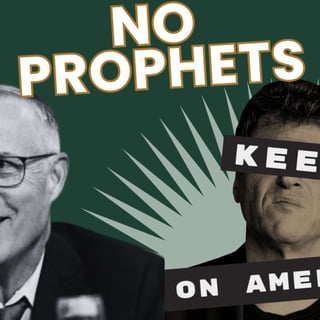
“There is the burden of being homeless and the burden of being judged for it.” — Saumya Roy on poverty in America
How does the world look at America in the MAGA age? This is our third conversation drawn from How We See It [https://www.thedial.world/how-we-see-it], a collection of essays about America from the excellent new publication The Dial [https://www.thedial.world/]. In the first, The Dial’s Paris-based editor Madeleine Schwartz [https://keenon.substack.com/p/the-united-states-of-oddity] offered a very French version about the oddities of Trump’s America. In the second, the Turkish novelist and commentator Kaya Genç [https://keenon.substack.com/p/from-istanbul-with-love] gave us his view from Istanbul. Today, we have a take on America from the Indian-born Saumya Roy [https://www.aljazeera.com/author/saumya-roy], Al Jazeera’s San Francisco correspondent and the author of Castaway Mountain [https://www.penguinrandomhouse.com/books/678938/castaway-mountain-by-saumya-roy/], a book about the wastepickers of her hometown Mumbai.
Saumya Roy’s inside-out America is the one glimpsed from the back of a San Francisco cab, whose Indian driver told her he’d walked here from Mumbai. In her Dial essay, Roy compares the poverty of her hometown, Mumbai — the subject of Castaway Mountain — with the homelessness outside that San Francisco cab. The comparison isn’t quite what you’d expect. Mumbai’s poverty is vaster and more dehumanizing — a hundred thousand street people against San Francisco’s eight thousand. But in Mumbai Roy finds a social kind of poverty, whereas in San Francisco it’s atomized and isolating. In the land of personal responsibility, she reports, there’s a double burden of being on the street: being homeless, and being judged for it. Some of the street people Roy meets even shower at a gym each Christmas so their families won’t know their predicament.
And yet Roy still recognizes the American dream. She reports that it often burns brighter in a Mumbai slum — where a young gig worker told her he wants to be “the Elon Musk of India” — than it does in America itself. That dream can be real, she says, just as it can be cracked. From the back of her San Francisco cab, Saumya Roy sees both Americas.
Five Takeaways
• “I Walked from Mumbai to the US.” A cab driver’s five-word answer contains the whole story. In the popular imagination, Indian America is the America of tech CEOs and startup founders; beneath it are millions — many undocumented — who chased the same dream, work small jobs, and were left behind by the wave. San Francisco, Roy observes, is a boom and bust town — dot-com, social media, now AI — and the American dream is a wave: catch it and you make an amazing life; miss it and you may end up sleeping in the subway car of the world’s richest city. The dream, she says, can be fulfilled — and the dream can be cracked.
• The Double Burden. Mumbai’s poverty is vaster and more dehumanizing than anything in America — children dying of tuberculosis in their teens, perhaps 100,000 people on the street against San Francisco’s eight thousand. But it is social: even at a distance you see cooking smells, cradles, families living together on the sidewalk. American homelessness struck Roy as profoundly isolated — everything owned in a shopping cart, riding the train aimlessly because no one is waiting anywhere. And the ideology of personal responsibility cuts both ways: if success is earned, failure must be deserved. Hence the double burden — being homeless, and being judged for it — and the people who shower at a gym each Christmas so their families won’t learn where they live.
• What Is Growth For? The AI boom is minting $250 million research sala


 39:48
39:48 49:37
49:37 41:56
41:56 46:52
46:52 44:59
44:59