Become a Creator today!Start creating today - Share your story with the world!
Start for free
00:00:00
00:00:01
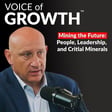
Stop Chasing Survival. Start Building Vision. image

Stop Chasing Survival. Start Building Vision.

S2 E8 · Voice of Growth - Mastering the Mind and Market
Avatar
6 Plays1 month ago

Mark Beres is the definition of a renaissance entrepreneur. With a background spanning military aviation, engineering, wine production, distilling, and restaurant ownership, he brings a rare perspective on what it actually takes to build a durable business.  

In this episode, Mark dismantles the romantic myths around entrepreneurship — especially in the wine industry — and replaces them with hard truths about capital risk, operational discipline, and long-term commitment.  

He explains why survival is not a vision, why mindset determines outcomes, and why most businesses fail not from lack of effort, but from lack of clarity. From going cashless in restaurants to implementing data-driven operating metrics, Mark shares the exact leadership decisions that allowed his company to pivot during a declining alcohol market and thrive.  

This conversation is about grit, vision, and building systems that outlast adversity. If you’re an entrepreneur facing uncertainty, this episode is both a reality check and a blueprint.


Recommended
Transcript

Introduction and Background

00:00:04
Speaker
The voice of growth, mastering the mind and market.
00:00:10
Speaker
You know, I grew up without means. My family was very poor. I see success where others see failure. I'm one of these men that just doesn't stay down in the dumps for too long.
00:00:27
Speaker
This limitless positive energy that drives me ahead.

Vision Beyond Wealth

00:00:31
Speaker
attack man like a like a rabid dog and if the vision sounds anything like survival or getting rich then i would then tell him go back to drawing board try again
00:00:48
Speaker
you're making me blush mark barris yeah are we on camera We're on camera. Holy moly, okay.

The Role of Podcasting

00:00:56
Speaker
Now- Manny Turanin. Yes, I really love doing this podcast for a lot of reasons. Okay. One of the biggest reasons for me, besides giving back and sharing stories to the world about entrepreneurs and all that, is that I get to sit and chat with good friends like yourself.
00:01:12
Speaker
I feel as though you and I were in business together and then after that kind of all, you know, eroded, we scattered to the wind. But I see you as not only ah a friend and a mentor, but but a business leader.
00:01:28
Speaker
um You're a visionary. You are one of the very few true renaissance men that I know in life.

Career Journey and Motivation

00:01:36
Speaker
You were in the Air Force. You were graduated from Naval Test Pilot School.
00:01:41
Speaker
You were a principal engineer at a ah at the Rocket Ranch here. You know, you do a lot. And you're making wine. You are a distiller, master distiller. And now you're jumping into the restaurant space.
00:01:54
Speaker
You're making me blush. So everybody wants to know what drives you, what gets you moving. So um I've thought about that. a lot over my life. Like, look what drives me. Like, where do i where do i get this energy to just go and go and go and go?
00:02:12
Speaker
And I've, you know, it's a, it's a great question. I'd like to ask myself that question and answer it definitively. But ever since I've been young, when I was a young kid,
00:02:24
Speaker
um you know, I grew up without

Underdog Spirit and Success Drive

00:02:27
Speaker
means. My family was very poor, but um but we weren't poor in spirit and mind. I mean, my my my mom and dad were drove me to always excel.
00:02:39
Speaker
And um from a very young age, I was held accountable for results. and My friends, though, you know, most of the people i always hung out with always had means. And I was always the kid that didn't, right? So I i always had a sort of a chip on my shoulder of of having to do more with less.
00:02:58
Speaker
And I always took great pride in like, you know, achieving results um against the odds. I always, you know, favored the underdog. i always rooted for the underdog. And I always pulled myself up by my bootstraps.
00:03:14
Speaker
And for some reason, i just have a drive within me to succeed. I get up in the morning and all I think about is

Problem-Solving and Optimism

00:03:22
Speaker
success. And when a problem presents itself, all I think about is how do I get around the problem or, you know, nullify it, fix it or whatever. it just It's just a compulsion I have.
00:03:34
Speaker
So, you know, whether it's the wine business or in the engineering world or distilling in the restaurant business, It's just a complex array of challenges. But I'm so trained to just through years and years and years of repetitive problem-solving discipline to just attack man like a like a rabid dog. It's just what drives me.
00:04:01
Speaker
Anyway, i and then I've just got ah i've got a boundless optimism. So... um I'm one of these men that just doesn't stay down in the dumps for too long. I have a boundless positive energy in me that just, it just sustains me. it just keeps me on the the top of that wave surfing, right?
00:04:25
Speaker
And, you know, a lot of friends I have that are, they don't have that positive disposition like I do. You know, they they they talk about that a lot, you know, and so I'm always driven to,
00:04:40
Speaker
um create positive energy wherever I go. And so even when things look bad or when the you know the eight balls against us or whatever it is, I just have this this limitless positive energy that drives me ahead. right I see success where others see failure.
00:04:58
Speaker
When there's a challenge in front of me All I see is success, you know? And if there's things in the way, those are just obstacles that I can overcome,

Starting a Distillery: Challenges and Optimism

00:05:11
Speaker
you know? If I need to start a distillery and it's gonna cost me and you know three or $4 million, dollars okay, that that just means I need to go find three or $4 million. dollars Doesn't mean I can't do it.
00:05:22
Speaker
I can go do it, provided that I could put the capital together. Putting the capital together, that that that's a challenge. Okay, how do we do that? Well, how do we form capital? and Okay, let's go form some capital.
00:05:34
Speaker
And the people around me are like, well, it just can't be done. I'm it can be done. We just simply have to go form some capital. Let's get to work. That's an example of of just...
00:05:45
Speaker
the constant drive to succeed, right? Anyway. No, I think that's great. I think maybe one of the reasons you and I kind of you know coalesce well is I have a very similar idea about the world. i I tend to see success through adversity all the time.
00:06:04
Speaker
um And I think that sometimes my my tank, I wouldn't say gets empty, but it begins to diminish. And then I wake up the next day and it kind of replenishes. And then when I meet somebody like you or I hang out with you, it's like ah like a turbo charge. because It gives me hope and um really a bit of of a push that there's other people that have that infectious, positive energy. And it's not like you're doing it falsely. I mean, I know you all. And this is real. This is your personality. And it's sewn into your DNA. So I really appreciate that. Well, it's so easy to...
00:06:40
Speaker
it's so easy to get down in the dumps. It's just so easy. it's Because life is not easy. Business is not easy. You know, just making your way through this world as an entrepreneur. I mean, there's nothing about it that's easy.
00:06:57
Speaker
I guarantee you it's not easy for Elon Musk. I guarantee you, if you were to sit down with the guy, he would probably relay this exact same sentiment to you, that there's nothing about what he does that's easy. It doesn't matter how many billions of dollars you have or how many accolades,
00:07:12
Speaker
you know he it's there's nothing easy about what he does every day and so the same mindset is there right it's that same thing and and if if if if adversity and challenges cripple you then you're it's going to be tough to succeed right that's why you hear people talk about you know success is a mindset right and cliche or not, it is true.

Mindset and Success

00:07:37
Speaker
It really is true. You tend to become what you think. You tend to go where your mind is is focused.
00:07:44
Speaker
And so focus and drive and attitude tend to create successful people. I've got an interesting analogy because you are a pilot. Used to be. Used to be. I'm reformed.
00:07:56
Speaker
You're reformed. Yeah. But one of the things I learned, i so I took a tour of the ah TPD has a the helicopter thing there. Yeah. And one of the things that the pilots said, so they they have the the pilot and then they have the person in the navigator seat that's operating the machine all that.
00:08:12
Speaker
And one of the things the pilot said that I found interesting is that he said, When you move your head in a direction, in another direction, you tend to want to take the helicopter in the same direction.
00:08:27
Speaker
So you got to be real careful not to be looking around too much. Otherwise, you're going taking it, you know, in these crazy directions. I think what you just said has some interesting dynamic there in that the mindset, you got to keep focused on that success because if you detract and you look at, you know, down in the dumps mentality, that's where you're going to go.
00:08:48
Speaker
That's right. ah yeah you know And in my view is is ah in our culture today, for whatever reason, I've got my opinion, there's a lot of anger and resentment at successful people, particularly wealthy people, right? And my view has always been I don't hate those people. i want i want to i want to learn from them. I want to know how they did it.
00:09:13
Speaker
How did you succeed? succeed What did you do? when you When you start talking to those people, what you find invariably is this mindset. It's a common thread, right? It's a common denominator. They all share this attitude, right?
00:09:26
Speaker
And, um, Anyway, I think it's critically important. Anybody that wants to succeed, whether it's in sports, in business, you know, in their family life, I mean, in, in you know, in in any number of things where success is an outcome, right?
00:09:49
Speaker
Their mindset and their attitude are critical. Without them, it's much more difficult to do. Yeah, that that's the center. The two pillars of this podcast are mastering the mind and market.
00:10:04
Speaker
You know, with the mind, you've got mindset, you've got grit, you've got all the internal battles that we face as entrepreneurs on a daily basis, sometimes hourly, sometimes by minute basis.
00:10:15
Speaker
And then you've got the whole market side, which is business trends, operations, HR, legal, all that malarkey, right?

Founding Flying Leap

00:10:23
Speaker
Let's take the the perspective and let's zone in on the day or the days that you decided to start flying leap.
00:10:34
Speaker
Give us some context of what was going through your head at the time and and why wine? So great question and I'll try and melt this down. I have an answer for you.
00:10:46
Speaker
um At the time that we started Flying Leap, i it was a different period of my life entirely. okay I was relatively new to Arizona and I didn't really have a network established here yet.
00:11:06
Speaker
I was not alone, but i I had a very small satellite around me. And so um i was basically kind of like a leaf in the wind. and i was But when I came here, it's just pure for you know purely chance that I left the military years before my peers left the military.
00:11:30
Speaker
And I left the military at a time when um defense contractors needed people. Okay. And they were, they needed, they needed engineers.
00:11:42
Speaker
contrast that with today where they just, you know, they don't. But back then they did. So I was trained in defense contracting as a test pilot. it's big You know, everybody thinks as a test pilot, you're flying all the time. You really don't. You you don't really fly that much. Most of your time is spent working with defense contractors on on ah programs.
00:12:05
Speaker
you're not You don't really fly that much as a test pilot. That's a little bit of a a thing that people don't really know. So I was already integrated with those folks. already knew their language.
00:12:16
Speaker
And i already, i was a shoe-in for it, right? And so when I came out here, but there was one problem, Manny, in 2006, 2007, 2008, particularly,
00:12:30
Speaker
it was the great recession Remember that? I do. And um and i don't know if you remember sequestration. Yes, I do. Sequestration was this deal where in the US Senate, a bipartisan group of equal numbers of senators got together and said, we're gonna iron out a budget.
00:12:48
Speaker
Most people don't realize our government doesn't operate on a budget. Scary thought. But they said, we're gonna produce a budget. And they said, we're going to make the consequences of not building a budget so draconian that all of us will give in to create this budget.
00:13:06
Speaker
If they didn't um come up with a budget, like there were going to be draconian cuts to the defense budget and there were going to be draconian cuts to social programs, yeah which were going to hurt people. So they said, okay, we have this motivation to do this. Well, guess what? They they weren't able to come up with a budget.
00:13:23
Speaker
so it went So these draconian measures took place. That was called sequestration. Sequestration dramatically impacted the country, um and especially defense contracting. When that happened, I immediately assumed that because I was low man on the totem pole, I would be laid off.
00:13:45
Speaker
And so I needed something else to do. But at the same time, I had a girlfriend that I liked. that like ah you know I met someone I really liked that i wanted to stay with. and I wanted to build a life with.
00:13:55
Speaker
So I didn't want to leave the area. And I didn't remember I don't have any family here. Didn't really have any roots. I didn't have a network here. So i was sort of a foreigner in Tucson, if you will. um Pardon me. So um I started to look around for something else to do that I could do concurrently with my engineering job.
00:14:14
Speaker
And I had a small pension coming out of the military. So I was like, okay, I can live on this. But needed to stay busy and productive. So I said, you know, wine for me wasn't new.
00:14:27
Speaker
Wine is something that has been a part of my life, my family's life forever, right? i didn't need a fake ID. I made wine. i mean, wine was a familiar world. there was new thing for it was it was not a new new thing for me um And the the wine world of wine production, beverage alcohol production, wineries, vineyards, farming, agriculture, this is all stuff that was familiar territory to me.
00:14:55
Speaker
um And so it wasn't like a novel Christopher Columbus sailing off in the unknown for me. It was a familiar it was a familiar industry for me. So I naturally thought of it. Okay.
00:15:06
Speaker
And um at the time, it seemed like a win-win because there weren't a lot of wineries here. I could grow grapes, sell the grapes Arizona wineries, and then generate a little bit of income from that with my military pension. Together, I could have a comfortable life here in Tucson yeah and make a life here because I really liked really like Tucson. i like i like Arizona. So that's why I did it. So I started to put together the plan again, assuming i would be laid off. I just assumed it was going to happen any day. i I had to have sort of something ready to go.
00:15:39
Speaker
And, um you know, and so I was, and there there were other components to it um that you might find interesting. You know, one of them was, I'll never forget. Another thing that drove me was that when I came out of the military and I went to Raytheon, I'd done, I'd really, I mean, i worked my ass off really. And after a full year of just busting my balls, I got like this pathetic raise.
00:16:04
Speaker
I'm like, you got to be kidding me. mean, I've done all these great things. I've worked my ass off. And this is all you get. And other people that I had worked with who hadn't done squat got substantially higher raises. I was like, this is bullshit.
00:16:20
Speaker
like like Like, what? and And the answer I got was, oh, no. they they They drew out this curve and said, oh, you know. Right. and and The bottom line was that I realized that you were not paid for performance at all. And I'm a pay for performance kind of guy. I mean, I'm just a you know, I'm a, I go after carrots, right? If there's a, if there's a carrot there, I want to go eat it.
00:16:42
Speaker
Right. And without that carrot, it's hard for me to get motivated. So I was like, okay, clearly this sort of a pay structure isn't for me. You know, I'd rather succeed or fail on my own merits. So that was just a natural way of my thinking.
00:16:56
Speaker
Along with the other things I discussed, I started laying down a business plan for a wine company Arizona and started out as a purely as a farming

Vineyard Development Challenges

00:17:06
Speaker
operation. We're just going to plant a vineyard. we We're going to grow grapes and sell them. And that was it. And I, Had no interest the time of making wine or growing the business at all. But that was the nexus. That was what started it. And that's how I got into it. And from there, the spark happened and, you know, and then planting of the vineyard.
00:17:25
Speaker
That single event of developing that first vineyard drove the entire business even up to the present time. Really? Yeah. It really did. and I learned, you know, my, i mean, I knew a lot about the, the wine business back then. i thought I did, but truly I, I didn't. Yeah. What would you tell, uh, just a quick little question here while we're on the topic. What would you tell that version of Mark Barris, right? As, as you were planting those first rows of grapes. Don't do it.
00:18:00
Speaker
Yeah, I'm serious. I'm very serious. Don't do it. um If I could rewind my life, I wouldn't do it again. No way.

Realities of the Wine Industry

00:18:08
Speaker
Why is that? Well, because the wine business is very difficult to succeed in. It's very difficult. And there is a myth out there. People look at the wine business and they think that these wineries are just rolling in money and that they're, you know, they're selling hundred dollar bottles of wine. And so they're, you know, they look at all these movie stars and pop culture icons that are wineries and they,
00:18:29
Speaker
you know And they get this false impression that this is a that this is a a a big money industry. Yeah, it's romantic. Yeah, it's romantic. It's beautiful. There's a regal nature to the product and all these things. The truth of the matter, none of that's correct. The wine business is very you know very few wineries make money. Very few.
00:18:51
Speaker
um most wineries that I know of operate on slim margins, um a lot of personal sacrifice. And, you know, the personal sacrifices that I've personally had to make are substantial.
00:19:06
Speaker
Now, i mean, I've come to a point now where the wine business is quite significant. And don't don't take that to mean I don't love the wine business. I absolutely love it. But it is a lifetime commitment.
00:19:18
Speaker
It is not an in and out thing. It requires a profound amount of personal effort and attention. You can never escape from it. The wine business is consuming.
00:19:30
Speaker
It is very difficult to break away from it. Once you get into the wine business, it's very difficult to get out of it. and um And so the exit strategy for most people is probably the biggest challenge there is.
00:19:45
Speaker
And then ah wine is a long-term product. And so You make it and then you invest all this capital in this product and then you really can't sell it for years, right? So you're you're always doing this Kentucky windage thing, which makes it very risky, right?
00:20:02
Speaker
um It's difficult to borrow money in the wine business. and So you need capital to grow and it's very difficult to do that. So money is very hard to come by. um The other thing about it is that... um How do I put it? um The risks are just overwhelming.
00:20:24
Speaker
the the The risks are overwhelming. And but the other thing about the wine business, it's very difficult to sustain the energy that's required.
00:20:36
Speaker
to keep going, right? Plus, another thing about the wine industry that makes it profoundly difficult is you can't scale a winery linearly. I can't go, well, you know what, Manny? Next year, I'm gonna sell another 2,400 cases of wine. Therefore, i am going to invent, you know, I am only gonna ah plant these many grapes or whatever. It doesn't work like that. You have to grow wine business in steps.
00:21:00
Speaker
So you do huge infusions of capital. Is that because you have to plant and you have to, you know, it takes some time to sort of filter you back? It's exactly right. And the the infrastructure to produce wine, wineries, are just unbelievably costly.
00:21:16
Speaker
So a tremendous amount of wealth and capital is sunk into property, plant, equipment. Oh, bet. And so you have all of this money and this capital, and then and then you've got to sell so much product to just basically meet the fixed overhead, right?
00:21:33
Speaker
It's very difficult to do. So the wine the wine business is a business that um you need to be very, very careful.

Business Management Insights

00:21:41
Speaker
And there's a lot of people that project...
00:21:45
Speaker
yeah you know, false. they they They don't candidly talk to people about this at all. Right, that's actually a really good segue. I know that a lot of the the big spirit companies are struggling right now because people aren't drinking as much, right? I mean, it's it's kind of a trend, if you will.
00:22:04
Speaker
Do you see that in your industry, in your particular niche? Oh yeah, oh yeah, yeah. Yeah, there's no doubt about it. So the the demand for beverage alcohol has plummeted. Right now, it hasn't gone away. OK. Now, remember, we own restaurants, too. And at our restaurants, you know, we're moving through a lot of beverage alcohol. So and wine. So there's there's still demand out there.
00:22:27
Speaker
It hasn't disappeared. OK. But the um but it doesn't take ah ah ah a capitulation of demand to really move the needle. Right.
00:22:39
Speaker
So yeah, we've seen, we've absolutely seen that. what And so what what drove you to to go to add on the restaurant side? So a couple of things.
00:22:49
Speaker
One was just good fortune. It was ah timing. We found two restaurants that the pet the owners wanted to sell and we knew them, they knew us, we were a good fit and it we already we already knew their business, you know, and It presented itself and we studied it for about a year, right? And then we said, okay, I mean, this will work. um What drove it for us was two things. Number one, ah realization that the that the wine business as is was going to take years to really regain a growth trajectory. So we're just going to have to languish along in a depressed market for years before we could regain a growth trajectory, right?
00:23:34
Speaker
So we had looked at doing more wine retail, but that was pointless as we saw it because you you're you're investing money and capital in a business that's flatlined, at least for the next three or four years. So not a good use of capital. But a restaurant, we looked at the numbers, we looked at the trajectory, and not all restaurants are created equal.
00:24:00
Speaker
And then, ah so we looked at these restaurants in particular, looked at their customer profile, their their menus. We looked at their numbers, their sales, and looked at their staff and looked at all these different things, their leases.
00:24:14
Speaker
And, you know, we we we made the decision that it was a that it was a smart move for us, you know. And so we put together a plan and we executed the plan. You know, we were right. We we actually...
00:24:27
Speaker
scored home run on the restaurants. Yeah. So that was a, that was a good move for us. In fact, today, really you think of this as a wine spirits company, but really wine and spirits is, you know, small amount of what we do. It's probably about 20% our,
00:24:41
Speaker
of our sales now is wine. Really? Yeah. Most of our sales is restaurants. Yeah. Well run, but restaurants are very difficult. They have their own challenges. Oh yeah, they do. Okay, Manny? And they're different. It's a whole different ball game over there. But restaurants can be successful.
00:24:56
Speaker
And i can't even tell you how many people I heard told me that just the restaurants all fail. That is not true. It's not true. At all. And it's just it is is even remotely true. And restaurants fail for different reasons than wineries fail.
00:25:10
Speaker
It's interesting to see the juxtaposition there of the two. And we've now operated the restaurants for almost a year or so. we were getting We're getting smart at it now. Yeah. And I think that, you know, my family came from restaurants. My grandmother had a restaurant for almost 40 years and she had a steakhouse. And so there's a whole different set of problems, like you said, but also opportunities.
00:25:32
Speaker
i think there's there's new things that are in existence. Then when my my grandmother had at her restaurant, I just heard this crazy thing about, you know, Chili's, right? They were slumping, their sales were plummeting.
00:25:45
Speaker
And this one random influencer posted one TikTok video of her eating cheesy mozzarella sticks and it reignited that, their sales.
00:26:01
Speaker
And it became sort of a very ah grassroots bonfire that re reignited their their business, which is kind of crazy. Well, the the I'll tell you straight up, man, man to

Restaurant Business Strategies

00:26:14
Speaker
man. I'll tell you right now, the restaurant business that your grandmother knew no longer exists. yeah and So we see this every day. And one of the things that benefited us is that we have not been in the restaurant business, that we're new to it. Because we're so new to it, we didn't bring all of this tribal knowledge of decades of restaurant restaurant operating metrics and norms. We came in basically from a winery where we had to execute with great efficiency and skill, stepped into the restaurant business.
00:26:46
Speaker
And what we found was a What I just told you that, the okay, we we had to sit down with people and go, what you know of is the restaurant business no longer exists. It doesn't work anymore. You cannot succeed with the restaurant world of four years ago.
00:27:03
Speaker
The way restaurants operated four years ago no longer works. You will go broke. And a lot of people, I'm telling you, Manny, they just haven't, it hasn't clicked. Okay. You got to do things differently, man. We're, and we're just on this stuff.
00:27:16
Speaker
And I could go through some of those with you if you're interested, like sure yeah some of the big things that we've done. Give me some examples. There's great examples. Number one, no more cash. Okay. Um,
00:27:28
Speaker
Restaurants, it depends on the restaurant, of course. um Okay. But we stopped accepting cash on January 1st, like three weeks ago. We stopped to great success. Okay. We looked and and and we remember, we never handled much cash right in the wine business at all. So handling cash was never an issue that we even focused on because there was so little of it that we had to deal with. It was easy.
00:27:52
Speaker
There were no risks. When we got into the restaurant business, Wake up call. I mean, I about shit my pants at cash. This whole concept of dealing with cash. I couldn't believe, A, how much cash we had to deal with.
00:28:07
Speaker
B, the risks of of using all this cash and the liabilities that it created. I couldn't believe it. I'm like, who? And i was like, Why are people accepting cash?
00:28:19
Speaker
You don't need to. I mean, today, most people are trained to use their phones. Most people use Apple Pay. They're custom using credit and debit cards, Chime, other things. mean, even people that traditionally couldn't get banked today can at least operate digitally. yeah So there's ah the amount of people that couldn't yeah access credit cards or debit cards or whatever today can.
00:28:40
Speaker
And people are trained. They're trained in this. We notice this. Plus your demographic is- is Right. Yeah. But ever since we we went cashless, man, 100% success. we just All the numbers that we're looking at just just went up.
00:28:51
Speaker
And it it was a win-win for everybody. The staff did better. We did better. And we got rid of that entire liability. I mean, like in a lot of restaurants, i don't know if they're watching what we're doing, but we studied it for about six months. And then we we moved. The other thing we did is we went to a tip sharing program And um the I don't think the general public really knows the tip, the calculus of tips, because it's extremely complicated. yeah I will tell you right now that that that the the calculus of tips is among the most complex things.
00:29:29
Speaker
and potentially ah areas of liability in the entire restaurant business. Most employer lawsuits, employee lawsuits over tips. So tips represent a massive, massive source of liability and risk for the business. okay Handling tips is very, very important. That has to be done absolutely correctly. right So we came into this and and what we found was generally appalling to us. It was and a matter of ethics, right? and And, As prices have escalated because of inflation, the amount of tips just go right with it. So the front of the house is getting ah quite a pay raise, leaving the back of the house really empty handed. okay
00:30:11
Speaker
And the disparity between back of the house was pay and front the house pay, that delta just got too big for us. from ah from a moral It became a moral hazard for us. yeah So we started a tip sharing program. The tip sharing program formalized it.
00:30:27
Speaker
ah We brought everybody in and we briefed them on how we're going to do it. We created a system that was fair to all. Our front house folks still got to keep a ah big percentage of their tips for that. And they were still incentivized to provide good service and stuff. um But it reduced that...
00:30:47
Speaker
gross disparity in in net pay between back and front of the house. Right, I think it it also wraps the entire house with a a certain kind of motivation as well. It does. but It also brings a it brings a yeah level of professionalism to the operation. And and i think I think the staff appreciates that.
00:31:08
Speaker
The other thing that we did is we implemented data-based operating ah metrics. So this is something we did normally naturally at the winery, and we brought that to the restaurant business. And um restaurants, I'm here to tell you, they operate on gates, and there's certain metrics, key metrics. I can go over them with you if you ever want to talk about them. But you have to define what your operating metric ranges are, and then you have to drive the business down into these into these ranges. And if you if you do not do that, the business will will fail ultimately. Because if you don't develop a disciplined way of managing the business so that it operates within specific ranges in terms of key performance metrics, if you don't do that, the business will eventually fail.
00:32:00
Speaker
Manny, it will fail. Okay? Okay. And it has to be something that is a very disciplined and a dogmatic approach. It has to be like a religion. Yeah. Okay.
00:32:12
Speaker
And the reason is is because it takes armies of people to run a restaurant. Everybody has their own self-interest in mind. Right. You have to take care of the customer first and always. Right.
00:32:24
Speaker
But you have to do this in a way that can keep the business down within these operating norms. okay Great example for you is the prime ratio for a restaurant, which is you add your your COGS ratio together with your labor ratio. And you need to keep that down around 55%, 55, maybe up to Okay.
00:32:47
Speaker
um You know, and when we came into this business, the prime ratio was like over 80%. I mean, we knew, we knew if we didn't yeah aggressively move this down, we knew the business would fail.
00:32:58
Speaker
If the prime ratio stays above 60%, the business will fail. Okay. So it was a wake up call. So we had to literally come in and, um, we, you know, we had to confront the existing culture that was there.
00:33:12
Speaker
Um, which is, you know, that's, that's a difficult restaurant culture. I get it Yeah. So we, had we had to confront the culture. But we had to you make a lot of staffing changes, of course, and then we had to basically drive the business down into these into these norms. We succeeded at it. It wasn't easy.
00:33:31
Speaker
But it was it was critical to position the business so that it could sustain itself. But you know ah on January 1st, we gave everybody pay raises. you know And um you know I tell them, like hey, look, the reason we can give you pay raises is because we have created a sustainable business model here.
00:33:52
Speaker
We're not robbing Peter to pay Paul. We're not draining the business's operating capital to give you pay raises. And think about that. We gave out pay raises to people when the minimum wage soared to $15.45 an hour.
00:34:05
Speaker
okay And I don't think, Manny, I'm not kidding. i don't i don't think I don't think the general public really understands how much raising the minimum wage damage, not damages, what's the word, but drives drives economics. Yeah, it does. be Because it creates wage compression, which I'm sure you're familiar with, right?
00:34:28
Speaker
And it creates a host of problems that the restaurant um has to bear. So there's the example for you. Okay. Anyway, these are some things yeah that we've had to confront. Well, I love the fact that, so we did a podcast with Adam Hartung, I don't know, two, three years ago when you were really deep in the wine and and you you had just ah created the distillery part of of your business.

Advice for Young Entrepreneurs

00:34:50
Speaker
And, you know, at the beginning of this podcast, you mentioned solving problems. Certainly you approached this this restaurant.
00:34:59
Speaker
acquisition as a giant problem with smaller problems to be dealt with. What are the most important elements of leadership that you would say to maybe a young entrepreneur, somebody who is is out there trying to cut their teeth in the world, based on your experience, recent and you know in the military, everything, based on your vast experience, what would you tell that young entrepreneur about business? Well, you must you must learn to develop a vision.
00:35:30
Speaker
You have to, this this is not negotiable. You must create a vision and you must be able to communicate that vision to other people. Communication, you know, i mean, reading and writing are, our young kids in school should be writing, writing, writing, writing. writing And, um you know, teachers should be very wary of allowing them to use AI to do their writing for them. Young people need, young visionaries particularly need to learn to Create a vision and then communicate that vision to other people.
00:36:03
Speaker
the but Period. And your vision can't be survival. And your vision can't be getting rich. So I would tell a young entrepreneur, what do you want to do? And then what is your vision?
00:36:18
Speaker
And if the vision sounds anything like survival or getting rich, then I would then tell them, go back to drawing board, try again. Because wealth...
00:36:28
Speaker
is a is a downstream derivative of vision, right? And vision is a sustainable, achievable end state. for you in the business, right? right And um be so that that's, in terms of leadership as a leader, my job is to create that vision and communicate it to other people and then to motivate them, right?
00:36:55
Speaker
And then to motivate them to help you execute the company's operations in a way that create and make the vision happen. You have to have vision. You got to look at where you're going. What do I want to do? Why am I here?
00:37:07
Speaker
Why am I getting up every day and working my ass off? What, I mean, what am I trying to do? sure Right. Once you have a vision, Manny, I can give you some great examples of vision.
00:37:19
Speaker
Um, it you know, I'm in business with my best friend. mean, you know that my best friend, Mark Mueller, we've been, uh, friends since we were teenagers. Right.
00:37:29
Speaker
And, um, Mark and I, are it's almost like we're Siamese twins sometimes. because it's um you know There's no competition between us when it comes to lifestyle, wealth, or any of that stuff.
00:37:42
Speaker
um He has my tax returns every year. I have his. There's no secrets. He knows where my money is. I know where his money is. there's no There's no jealousy there whatsoever, right?
00:37:53
Speaker
And sometimes, you know, if he's going through a hard time or having whatever, I mean, I'm there to carry the load, right? And sometimes even though I may be working more and working harder,
00:38:05
Speaker
but getting paid less, but it doesn't matter to me because I have a vision, right? And so I'm willing to sacrifice on my own end to help out my best friend because I have a vision of where I wanna go, right?
00:38:21
Speaker
And I'm not impatient and I've communicated that vision to him and others, right? and but But if I didn't have a vision, it would be very temporal. I would be very i would look inside.
00:38:33
Speaker
and it just wouldn't work. yeah And if my vision was survival, Manny, if your vision is survival, you're doomed. You're basically, you know, you're done. i mean, because if survival is all you're trying to do, then you're you're you're doomed. You really are. yeah and you know And you know what? Look, I'm not immune to that. i mean, sometimes I'm like, I just need to survive right now. mean, you know, the the business, things are going hard and difficult.
00:38:58
Speaker
But I know that if I get into the mindset of just trying to survive the day, I know that that is that is self-destructive ultimately. Right. 100%. Yeah. Then I have to communicate it. So communication is critical. You have to be able to draw it out, talk about it.
00:39:15
Speaker
Your vision should be something that is is discussed often. um And you should be very comfortable and it should be It should be relieving to talk about the vision with people. It should feel good to talk about the vision. Words like, this is where we're going. This is why we're doing this, right?
00:39:37
Speaker
And I've made a habit, a nugget of wisdom that I would throw out to entrepreneurs is um whenever you communicate either directives or visionary things to people, right,
00:39:49
Speaker
I always try to finish in writing usually with a paragraph or a sentence or two that explains why. You know, and you know, like like with our cashless system, when we announced to our entire company that we were going to stop accepting cash, I then followed up with it. This is why we're doing it.
00:40:08
Speaker
This is exactly what's going on. And this is where we're trying to drive the company, right? Um, with many, like right now we're really working with our menus at one of our restaurants and, um, that's working with menus, a lot of work. I didn't realize how much goes into a menu a lot. It's a lot of work. Primary thing in a restaurant, the menu. Right.
00:40:30
Speaker
But why are we making these changes to the men to the menu? Why are we doing these things? Because they're cool. You know, no, there's a vision. There's a vision there. This is where we're trying to take this restaurant. Okay?
00:40:43
Speaker
Anyway. Oh yeah, but that aligns exactly with the way I run my businesses. And so I say that my job as a CEO is threefold. Number one, set and execute the vision of the company.
00:40:57
Speaker
So that means I got to figure out from within. i mean, I have a different situation because I'm running somebody else's company. I don't own the company. You own the company, a little bit different. Nonetheless, set an executive vision.
00:41:07
Speaker
Number two, block and tackle. Well, my problems we might ah you know draw up, I block and tackle, whether it's a HR problem, legal problem, finance problem, whatever.
00:41:20
Speaker
And then the third thing is i I tried to raise my team members and encourage them and push them. Sometimes it's not necessarily ah standing on a pulpit and saying things. Sometimes it's more behind the scenes, but I think it's really important as we start to sort of wind down the the podcast here.
00:41:41
Speaker
if If you look at your ah mentors in in your business in historically or people that you admire, and if you had the if you could sit down at a meal with with somebody that actually from history, it doesn't to be business, somebody from history, somebody current now, whatever, who would you sit down with for that meal and why?

Admiration for Elon Musk

00:42:07
Speaker
There are many, but, um you know, I have a lot of respect for Elon Musk, quite frankly. And um and um and who is who is the guy who founded Patagonia? What's his name? he he's not i mean He's kind of new in my there's a book.
00:42:30
Speaker
um that's been recommended to me that I want to read that he wrote about something about surfing or please free free us and let us surf or something like want to read that. I haven't read the book yet, but I've heard a lot about it and some of the themes in the book. And I'm like, i want to read that.
00:42:43
Speaker
That guy sounds like an interesting guy to talk to. um But I like Elon Musk. I think, you know, I'm looking at him as the as the entrepreneur and the visionary, right? And um the drive and i've I'm fascinated by the way that he does it. The risks that he's taken are just amazing. And you know the way that he he didn't take no for an answer and and what sustained him through this stuff. And I look at Elon Musk, I'm like, that's like me. i mean, i I share a lot of his i share a lot of his um motivations. I do. He's not motivated by money.
00:43:24
Speaker
which Which is, you know, everybody that hates Elon Musk, the guy's got quite the ah group of haters out there, right? But they hate him. um they They always talk about his wealth and, um you know, and him being a big rich guy and all this stuff. But if you actually listen to him speak, which I do a lot, he doesn't talk about his wealth ever.
00:43:49
Speaker
his His wealth is really just a tool. of him i don't I don't think he, at least maybe all I know is what I watch and read listening to the guy. And I don't think he's motivated by wealth. No, he's not. And i don't think a lot of people understand that. So when they attack him for being a rich guy, it just bounces off of him because that's not what I don't think he cares about it.
00:44:10
Speaker
i I think he probably has people around him that manage his wealth for him. And he probably obviously, he has more money than he would ever need. He probably doesn't know how much wealth he has from day to day.
00:44:22
Speaker
I think the whole thing about his CEO bonus or whatever that was that he sued over, I don't think it was about the amount of money. I think it i think for him, it was the, what that said about him.
00:44:34
Speaker
you know i think he i think I don't think it was the amount of money that drove that for him. I think it was, it's you know it's kind of like Donald Trump in the 2020 election. I don't think people realize that what drives him to challenge that whole thing isn't the fact that he, like that, that you know, that it was rigged in his ah his opinion. It's that he doesn't want, I was i think in 2016, he doesn't want people to think that, you know, he didn't win, actually win. He says, I actually won this. I think that's what's important to him, right? So if you look at what's important to Elon Musk, those are the things that I focus in on. He's very focused on success.
00:45:15
Speaker
He's very driven. He brings people with him and he's got this incredible vision. Like I watched this great thing about like going to Mars, which to me just is nuts.
00:45:25
Speaker
Like Mars is a big dead planet. There's nothing there. Why would anybody want to live there? What's the point? But when you start looking at what he's talking about, you're like, oh, OK, I didn't realize that. But if you look at everything, and this is very interesting, Manny.
00:45:40
Speaker
I encourage you and your listeners to go go look at this. If you look at every technological thing that Elon Musk does, every component is a piece of what is needed to establish civilization on Mars. It's fascinating. Like, like boring company, the boring company, the batteries, the rockets, the cars, the robots, all, every one of these things are a piece of that guy's vision of creating, you know, basically establishing a human population on Mars. And you're like, you know, and in his opinion, that is ah an important thing for him to do in his lifetime.
00:46:20
Speaker
And, um, you know And you can hate him for that. You can think he's crazy for that. But you can't deny that the man has put in place a clear vision. and created the components needed to execute the vision. yeah right It's fascinating. I would love to sit down with them and talk about these things.
00:46:38
Speaker
oh he's got He's quite a visionary.

Conclusion and Reflections

00:46:41
Speaker
And you're right. He's very misunderstood. Yeah. And I don't hate people at all, period. i don't hate anybody. try not to.
00:46:48
Speaker
And i'm not you know I don't hold grudges against people I don't know simply because I may not agree with their Political opinions or whatever. i i it At this point my life, I don't care about that stuff. I just care about learning.
00:47:03
Speaker
I think everybody has something about them that's valuable and interesting that I can learn from. yeah and and I love all, serve all, and i I can learn from all. That's how I look at it. I love it.
00:47:15
Speaker
yeah Excellent. Well, thank you so much, Mark, for this conversation. I think definitely a lot of insights and motivation for those that are maybe on the on the on the line of whether or not they should start a business or how do they grow their business. I think it's a fascinating conversation. Yeah. What a great forum. Thanks for having me. thank you. Appreciate it. Cheers. right, brother.