Transcript
Speaker: Welcome to All In Adams, the official podcast Adams County Government, where we're all in for our residents, our employees, and our community. So whether you live here, work here, or you just want to know more about what makes Adams County a great place to be, thanks for tuning in. We're all in, Adams.
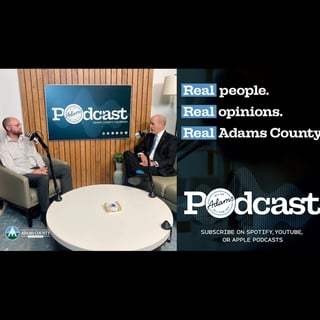
Speaker: Welcome to another episode of All In, Adams. ah My name is Brian Durth. I'm with the communications department here at Adams County, and I'm here today with Greg Dean, the oil and gas administrator in our community and economic development department. Nice to have you here with us today, Greg. Yeah, thanks for having me, Brian. First question that I think a lot of people want to know is how much oil and gas activity is there in the county and what benefit does that provide to the to Adams County?
Speaker: That's a great question. And Adams County is actually the second largest producer of oil in Colorado. Colorado is the fourth largest oil producing state. And so we're the second largest in colorado in Colorado behind Weld County, which is our neighbor to the north, of course. We produce about 13 million barrels of oil out of Adams County every year.
Speaker: For scale, that's ah nationwide. The U.S. produces 13 million barrels of crude oil a day. So we produce that much in an entire year. but We make up about a quarter of 1% of all the oil that's produced nationwide comes out of Adams County in Colorado.
Speaker: And why that's important is because as Adams County and Colorado continues to grow, the citizens here need a lot of energy, um especially electricity. And a lot of electricity in Colorado comes from natural gas. So so about 40% of all electricity produced in Colorado is powered by natural gas.
Speaker: um about 20% from coal and the other 30 to 40% from wind, solar and other renewables. So it plays a really important role on our energy use and our energy needs. um And that's why it's such a big business here in Adams County. and So there's a lot of oil and gas sites here in Adams County. And and how does the county monitor all of those different sites?
Speaker: Yeah, so Adams County has about 850 active wells in in our jurisdiction. So we have 25 multi-well facilities that contain 320 horizontal wells. So so those are the those are the newer um oil and gas facilities in Adams County. We started permitting those in 2016. And we've actually got 2,800 plugged wells as well.
Speaker: um And so we have a lot of oil and gas development going on in the county and we have ah a lot of permitting requirements. And what was your other question? Well, I guess you you mentioned plugged wells. Can you kind of explain and to the audience a little bit like what a plugged well is and how it compares to the other types of wells? like yeah Yeah. So there are there are two main kinds of abandoned wells. So that would be like a plugged well. So that's when an an oil and gas company is done producing the well. It's non-economic.
Speaker: ah And so they go in and they set a, a plug in the downhole portion of the wellbore and they fill it with concrete and then they cap it and bury it. So that's plugging. That's what we want operators to do when they're done producing oil and gas from their wells.
Speaker: And they also have orphaned wells. Orphaned wells are a little bit different. Sometimes people will call them... abandoned or or plugged. They're not exactly the same thing. And orphan wells, when an operator walks away from their wells. So usually through bankruptcy, an oil and gas company will go bankrupt and just walk away. And that then leaves the state to have to plug the wells instead of the operator. So there's a a very big distinction there. Obviously, orphan wells are a major problem. Adams County has over 300 orphan wells.
Speaker: and we're the second and We have the second most orphans in the state of Colorado. um And we want operators to plug them. We don't want them to orphan the wells. And so you have a team of inspectors who actually physically go out and and make sure everything is working the way you want it to. What are you looking for when you and your team go out to do the inspections? And and what are some of the things you've discovered while on site at these wells? Yeah, so the county has two full-time oil and gas inspectors.
Speaker: They both came from the oil and gas industry, so they both have a lot of experience in the oil and gas business. They have spent their entire professional careers out on oil and gas sites, so they know exactly what to look for.
Speaker: um We get out to every well in the county every year. So again, that's 900 inspections every year that the two the two inspectors go out and look at. They're looking at um the equipment, they're looking at signage, the access road, they're looking for spills or leaks.
Speaker: We have um some really high tech equipment that the inspectors use. We have ah what's called an OpGal gas imaging camera. That's a camera that's able to detect gas leaks that you can't see, or even sometimes hear. It detects really small gasoline gas leaks from wells.
Speaker: So we can point this camera at this equipment and see what's coming out of it. We also have ah a s SimTech gas sensor, which is another. it kind of looks like a Ghostbusters jetpack.
Speaker: And they're able to point that at a gas leak and it sucks in the gas and it can analyze what's in that gas. So we know exactly ah the quantity of gas that's coming out, what type of constituents are in that gas.
Speaker: And then it helps us when we're reporting this to an operator or to the state. We're able to quantify these gas leaks, and it actually helps the state get out to these sites and remediate them, or the operator can come out and stop the leak. And so because we're getting out to these wells every single year, um we're able to detect these small issues earlier. And in fact, our compliance rate in Adams County for active wells is over 90%.
Speaker: So conversely, the state gets out to every well every year and a half to two years. We're getting out there every single year. And our compliance rate is um significantly higher than the state. So um including some of our our largest operators, they're they're at 100% compliance because we're getting out to these sites proactively um every single year.
Speaker: So you're looking more at preventative rather than wait until something goes wrong. Yeah. Our goal is compliance. We want our wells to be, um the wells in our county to be safe, compliant, not causing a nuisance to the surrounding landowners, to the environment. to climate. Obviously leaking methane is a significant contributor to climate change. we want to make sure we're detecting these leaks early and getting them stopped.
Speaker: um And we're one of the only local governments in the state of Colorado that has this type of program. but That's great. Yeah. So, um, with going back to, um, when you do unfortunately find something wrong from time to time, uh, and you mentioned that like you also get the state involved, can you kind of walk us through what the, if, if one of your inspectors finds a leak or some other issue with a, well, what are the steps that you, you and your team then take to to remediate that and make it, make sure it comes back into compliance? Yeah, it's ah it's a good question.
Speaker: So we have discovered at least 80 leaks in the last few years from oil and gas wells and countless other instances of leaking crude oil or produced water from the equipment on an oil and gas location.
Speaker: So it really depends on whether the oil and gas site is modern, which means has like a permit from Adams County to operate, or if it's an older facility, which means they only have a state permit. So for a site that is in Adams County that has a permit from us to operate, we're able to call the operator and enforce on our regulations immediately. So we will call the operator up, tell them, hey, you've got 24 hours to get this fixed, and we're going to go out and re-inspect.
Speaker: um And then if they don't, then we start the enforcement process. And we have ah regulations in place that include fines and penalties if an operator does not get their wells in compliance, if they have a permit from Adams County.
Speaker: Thankfully, since 2021, we have not had to to go through the enforcement process because operators have been ah getting their sites repaired um within 24 hours, most most typically within 24 hours.
Speaker: And then for an older site or for an orphaned well that's mostly under the state's purview, because we have ah what's called an intergovernmental agreement with the state, our inspections carry the same weight as a state inspection does. So we report what we find to the state, and we are able to go through the state's enforcement process because of ah regulatory or legal reasons we can't enforce on all these older sites from like the 70s, and 80s.
Speaker: Um, we can't enforce county regulations on them, but we, because our inspectors carry the same state weight, they can enforce on state regulations. So we will report leaks or spills to the state and the operator. And again, we can set the same kind of timelines, 24 to 36 hours for a leak. If it's something more minor, like a trash or weeds on the site, we can set a ah longer timeline, like two weeks or 30 days, depending on the severity of the infraction.
Speaker: And if there's any sort of environmental impact or anything, um what what happens in those cases? Yeah, so thankfully it doesn't happen as frequently as people like to think. You know, we see a lot of ah television shows currently with ah big blowouts and explosions.
Speaker: ah Thankfully that has not happened largely in Adams County, not in the seven years that I've been here anyway. And So if we do find a leak or a spill like that, um we can report it. We report it to the state. We can report to the federal government, depending on where it is, if it's next to ah ah a waterway or a river.
Speaker: and then also the county has requirements for remediation, especially at these newer facilities. So we have reclamation requirements. So if they are going to clean up a spill, they have to bring in clean soil that has to be tested.
Speaker: the state ah county and state also have groundwater sampling requirements. So if there's a spill or a leak, oftentimes we'll have to resample the groundwater. We'll have to do soil sampling to determine once the cleanup is done that the all the contaminated material has been removed and that the soil is clean.
Speaker: The same thing with um water wells. So individual water wells will have to go back in and resample to make sure that nothing is leaked into anyone's water. Okay. um And you mentioned you've been here for seven years. um Do you know how long the county has been actively monitoring oil and gas sites?
Speaker: Yeah. so the county, so there was a piece of legislation that was adopted in 2019 that gave counties and cities the ability to regulate oil and gas at the local government level.
Speaker: And so the Adams County was the first jurisdiction in the state to enact our own regulations after that piece of legislation was adopted. And so we've been um inspecting and charging for inspection since 2019. That program really sped up in 2020. And then in 2021, we hired our second oil and gas inspector because we realized it was much more work than just one person. And because we were getting more and more wells permitted in Adams County, and we wanted to make sure we were having oversight over those facilities.
Speaker: And you mentioned kind of a new new wells, new permits. um Do you know how many wells per year Adams County permits and how do you decide whether a well does get a permit or whether it gets denied?
Speaker: Yeah. So, um, it varies, it depends. So in, we started permitting 2016, then to was a very big year. The County approved, um I want to say six or seven oil and gas facilities in those each of those years. And then since we amended our regulations again in 2022, Adams County has approved three additional permits um for another 50 to 60 wells. And we have three pending permits for an additional 50 or 60 wells.
Speaker: um We have some of the strictest and most protective oil and gas regulations in the state and because of that in the country. So we have very strict requirements for noise monitoring, air quality monitoring.
Speaker: We assess a traffic impact fee for the use of county roads for oil and gas development. um We regulate setbacks from ah residences and schools. We have a 2,000-foot setback.
Speaker: um from all homes and schools. So if an operator comes in today, they have to be ah at least 2,000 feet away. That's almost a quarter, almost a half a mile away from any residences or schools.
Speaker: and We also have some strict environmental protection regulations, that have to be set back at least 2,000 feet from rivers and lakes and wetlands to help protect and environmentally sensitive areas and wildlife habitats.
Speaker: And ultimately, it's the Board of County Commissioners that decide. So once an application has been submitted, ah staff reviews those applications. We evaluate the potential adverse impacts from the oil and gas development.
Speaker: Staff will then make the determination if we think it satisfies our regulations. And then we would make a recommendation to the Board of County Commissioners, at which time that goes to a public hearing.
Speaker: And the Board of County Commissioners can ask questions of staff and the applicant, and then they ultimately take a vote in a public forum um after public comment and all that is evaluated, whether the site is compatible to surrounding land uses, if it's protective of public health and safety, um or and if it's a ah good location for oil and gas to vote.
Speaker: And what's the usual timeframe between like the submittal of an application to the Board of County Commissioners giving it the, you know, let's go? Yeah, so these reviews are highly technical. So they're required to do ah a pre-application with us. That means it's a high-level internal staff meeting where we discuss um the potential conflicts that could arise from an application. Then they have to have a neighborhood meeting with the surrounding landowners within a mile to let them know that this project could be coming. And then they have to submit a highly technical packet. And I mentioned like the noise plans and the air quality plans and lighting plans. These applications are often a thousand pages. So it takes us...
Speaker: months to review this application. We have a lot of in-house expertise on various environmental topics, land use. ah It goes through a legal review at the county attorney's office.
Speaker: So these applications, before they're even ready for hearing, often take eight months to a year before they're even presented to the board. And if at any time during that evaluation, staff goes, hey, this doesn't meet our requirements. This is this is not protective of public health and safety.
Speaker: We would then make a recommendation to the applicant to withdraw their application. um And now the applicant says, hey, we want to roll the dice and go to the board of county commissioners. They certainly can do that. um But typically, if we get far enough down the road, down the process, we would let the applicant know that, hey, this is going to be ah an uphill battle for you to get this site approved.
Speaker: And when you were talking about the 2,000-foot setback and it being almost half a mile, um given the geography of Adams County, would that assume that the majority of our our wells are kind of in the eastern plains area instead of in the more densely packed western part of Adams County?
Speaker: So historically, it was the opposite. And so that's kind of what stemmed the ah change in regulations in 2019. A lot of the older oil and gas facilities in Adams County were west of 76 in the Todd Creek area, north of E470 along Highway 7. So in the densely residential area, it's also the fastest growing part of Adams County. So where all the new residential development's coming.
Speaker: um And so we we put that setback in to protect those residents. Now, all of our new permits are, to your point, out east. All the applications that the county has approved so far have been east of Highway 85 and I-76. In fact, most of them are east of Denver International Airport out in the eastern plains, um further away from residents, um further away from schools and things like that in the more sparsely populated parts of the county.
Speaker: Well, is there anything else that you want to talk about your job, the process that that we haven't gotten to yet that you want the listeners to know? Yeah, I just want the listeners to know that the county has some some very skilled people in-house. So I came from industry as well. Before I started with the county, I worked for oil and gas as a geologist for close to 10 years. Like I mentioned earlier, our inspectors both come from industry.
Speaker: our our My boss, the environmental programs manager, she comes from industry as well. So we have some of the most highly skilled staff members in-house here. It's really unheard of in Colorado to have this much in-house expertise. And so when we are evaluating these applications and when we are making a recommendation to our board of county commissioners, the residents um should feel comfortable that we've evaluated everything possible and that our recommendation is based on sound scientific and industry-driven facts.
Speaker: Well, I think I speak for everyone in the county. or Thank you for doing your, you and your team for doing due diligence, and making sure everything's environmentally safe up to code and that we have a, you know, a good plan in moving forward to, to, you know, make sure the oil and gas industry is regulated properly and, and is, and can be successful in their own right. So um thanks very much for taking the time to be here today, Greg. And that's another ah episode of All in Atoms. Thanks for tuning in and we'll see you next time.
Speaker: That's a wrap for this episode of All In Adams. Thank you for joining us as we explore the people, programs, and the policies that make Adams County a great place to live, work, and thrive.
Speaker: If you enjoyed the show, be sure to subscribe and share with your friends, neighbors, and colleagues. Have a topic you'd like us to cover? Let us know. We're All In for bringing you the stories that matter most.
Speaker: Until next time, take care of each other and stay connected with us on Facebook, Instagram, Nextdoor, and x We're all in, Adams, and we're all in for you.