Transcript
Speaker: Welcome to the Especially for Athletes podcast, where we explore essential principles that empower athletes to learn life's most valuable lessons through sports.
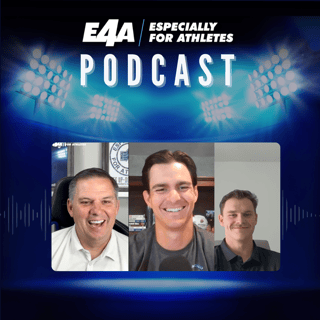
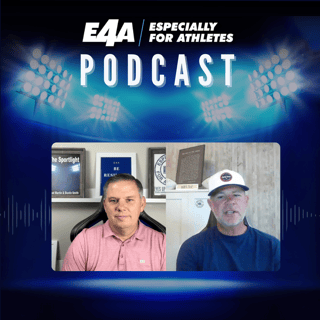
Speaker: Hello, everybody. Welcome to today's Especially for Athletes podcast. I'm Dustin Smith here with, as usual, ah my partner, Shad Martin. And our special guest today is one that has a little bit unique experience little bit of a uniqueness to it. it He's a guest who we think you're going to love to hear from, but he's also a very close, I don't know I call you a friend, Hunter. I mean, he's a friend, but he also kind of feels in some degree like a son.
Speaker: um and And Shad has also known our guest for a lot of years, going back to the early in high school, right, Shad, or sophomore year or something. You knew him a long time ago. I mean, Hunter Shad.
Speaker: Oh, I don't even know. He's just good friends with my daughter over at the house sometimes. I didn't know that. It was through your daughter. Okay, hon. I gotcha. It was from my best friend, Darren knew Emma more. And so then I think Darren is like, Hey, let's go over to Emma Martin's house. I'm like, Oh, Martin, don't even know who that is. And then I think I met Chad for the first time at his house. And so, and then I think it was literally that next year that you started coaching at Spanish and I met you and then we kind of made tune to connect. And I was like, Oh, yeah well, so yeah.
Speaker: Yeah. So I coached Hunter in football when I was the head coach at Spanish Fork High School. Hunter was my first group in 2020. He was actually my captain. And at the end of the year, he got an award that I give away to only one kid every year. And the qualifications for that award are, there's three different qualifications you have to have. One's football.
Speaker: um The other one is would I feel comfortable with him around my daughter's? and And actually, there's four. I guess there's an academic one to it. What are his grades like and things at the school? And then the fourth one is is it it it may sound a little bit harsh, but it's hey it's football. It's if if this other school sent one of their players out to midfield and I had to send one of mine out to midfield to fight.
Speaker: would who would I, who would I pick? And so if he picks, if he, if he fills all four of those, then he qualifies. And, and Hunter was, I coached him in 2020. It's now 2026. Obviously Hunter's had a heck of a lot of things go on in his life from 2020 to 2026. So Hunter, the reason we have you on here,
Speaker: um You know, on I mean, if we're being totally honest, it's because of your story. Right. in The last couple of years of your life, I came down and visited you in Arizona when you were on your mission just a couple months before you came back.
Speaker: um And then from that time until now, your life changed dramatically. Not long after you returned home. Take us through that story. You've been out of high school for three years. You're now back home. You'd you'd served an LDS mission in Arizona.
Speaker: You're doing, obviously, your name is Hunter. So no surprise to anybody. This dude loves to hunt. and He's a big time hunter. And that name you better be. and so tell us and then we'll we'll we'll hop in to start firing away some questions at you because your story is amazing.
Speaker: Yeah. Yeah. No, like you said, um i kind of like to start from the beginning because that, that really i guess puts a perspective um about me and and just completes my story. So from the beginning, um i my, my two passions were sports and hunting.
Speaker: Like we've kind of talked about already. I played football, baseball, and wrestling in high school. and I did those all throughout my childhood too growing up. And when I was about, um 14 years old, my parents and me and my whole family were living in Saratoga Springs. And at that time, i hadn't really hit puberty. I was kind of a pudge ball. I was um didn't have very many friends. like I was...
Speaker: I guess getting bullied at the time because of how big I was. And so I told my parents, I'm like, I hate it here. I'm like, I want to move. um this This place I know is not for me. i know it's not.
Speaker: And so they gave me the the opportunity to be able to pray and ask where we should go. And that night i prayed and I literally got the answer five minutes after and it was Spanish Fork and they were like, go pray about it again. i was like, all right. So when prayed about it again,
Speaker: Got the same answer and they told me to go pray about one more time and I did and got the same answer. So prayed about it three times and Spanish Fork came to my mind each time. And so that that summer we put our house up for sale in Saratoga Springs and moved down to Spanish Fork and I can honestly say that that was the the greatest change I think I could have made for myself. And I see now for my entire family, um, with my siblings that have gone to Spanish Fork high school, my sister went to Spanish Fork, she's a cheerleader. And then now my little brother, who's a sophomore Spanish Fork high school, who who plays this baseball, football and wrestling as well. And,
Speaker: um so i think it was a great change i made a lot more friends and i finally hit puberty and it was like things were finally clicking for me and so like i mentioned before played those three sports and they were great and about halfway through my senior year my bishop came to me and he was like hunter we, you know, are thinking about sort of mission and a mission is never a doubt in my mind. It was something that I always wanted to do. There was no question about it. Like growing up, my parents are very good about not forcing me. They always asked me the question, would you like to serve a mission? And my answer was always, yes, there was never, you know, a doubt my mind. So when the time came, my Bishop was like, Hey, what, uh, what do you want to do? Like, are we serving a mission? I was like, yeah, of course. And so got everything ready to go. And, um,
Speaker: Then I got called to the Arizona Scottsdale mission. And that mission was, was perfect for me at the time. I was pretty pissed off because I wanted to go somewhere third world country and, um, you know, get away from home, not just to stay away 10 hours away from home, but, um, the Lord knew where he put me in Arizona. and that was a very foundational moment for me. And I think missions are for everyone because, you know, if you grow up with the church or not, you know, you have to,
Speaker: get get a testimony of your own. And I grew up kind of living off my parents' testimony and they did a very good job of teaching me from a young age, all the things that learned, but I had to kind of know for myself, those things were true and that, you know, God was in Jesus Christ for my savior and all those things that you learn the mission field. And I did, I learned all those things. And that was a very foundational moment for me in those two years. You know, we we talk about missions as, so I've heard people say the mission is the best two years of your life. And I'm here to say that's completely false. It's the best two years for your life. Um, that prepared me for things that would come after. And so, like you mentioned, I got home from my mission of August of 2023 and I got right to work. And I think I came home on a Wednesday and I started working that following Monday. I knew I didn't like, I was like, I'm ready to go. I did not want to sit around and not want to wait around.
Speaker: and started working as a concrete laborer and did electrical work as well. um and it was great work for three months. I was working my butt off, did everything I could to start making money. And, um, life was, life was going like i got back into dating. I, you know, was hunting, doing all those things I did before that I hadn't done the previous two years. And, it was about a week before Thanksgiving. So on a November,
Speaker: remember that me my dad made this trip to head out to South Dakota, North Dakota border to go hunt pheasants out there as a trip we had planned for a year. And the week before i remember I was so stoked and were getting everything ready to go, making sure we had everything and checking, checking our boxes and making sure that we weren't leaving anything behind. And, um, me and my cousin decided to go hunting the day before left on this week long trip. And so me and my dad,
Speaker: Um, we're talking about it. And that night my mom was like, Hey, I'm the best feeling about it. I'm like, ah, it's fine. You know? Um, she's like, you're going on a week long hunting trip. I'm like, why, why are you going again? i'm like, I don't know. i haven't hunted for two years like this. I, you know, I, what's, what's another day.
Speaker: And so, um, decided to still go that day. um it was November 23rd is the the exact day that, that we went and it was a very successful morning. Um,
Speaker: It was a beautiful morning. If I could paint a picture for you, it was clear blue skies, not an ounce of wind. There was dew on the grass. You could see your breath so clear with how cold it was. It was picture-perfect morning. It wasn't like the greatest conditions for duck hunting, but it was beautiful. We didn't kill as many as we had hoped, but...
Speaker: great morning still. And so we wrapped up about eight 30, nine o'clock and we kind of seen these ducks fly on the corner from us. And I looked at my cousin, i like, Hey, let's, let's go check that out.
Speaker: You know, I mean, I feel like all the ducks are either flying around at us or around the corner from us. And so I think that's a place we can hunt next time. And so that's exactly what we did. And had the way, cause I saw where they went and he's about 10 yards behind me and I get to the crest of the hill. And as I get to the crest of the hill, a gunshot goes off and my left leg just completely gives out.
Speaker: um And in that moment, I knew exactly what had happened because we were the only two up there that day. It was it was pretty interesting that it was just only us two um because usually weeks prior, um there was people duck hunting all around us. And that day it was just us two. So I'm like, of course, the day that something like this happens, you know we don't have anyone to help.
Speaker: And I remember right where we were at, like I said, um i I didn't really mention this, but this place we were at, I grew up hunting my entire life. So I knew where we had service. I knew where we didn't.
Speaker: And I knew where service was is about hundred yards up the hill from us. And so I go to stand up and my leg is completely numb from the knee down. And i hobble a couple of feet and and I follow the ground again and I knew that I was in trouble because I couldn't feel anything. And I'm bleeding so bad at this time that I'm bleeding through my waders, which is about an inch of a inch thick.
Speaker: That's how bad I was bleeding at the time. And so um my cousin acted fast and he he ripped off my waders and tourniqueted me pretty pretty quick. Like I knew that God was on our side that day because it was it seemed like it was in record time. He grabbed a stick, ripped off his shirt and made a makeshift tourniquet that he learned how to do in Boy Scouts growing up.
Speaker: So his quick action, even though he made a mistake and it was a complete accident, his quick action ended up saving my life that day. Later on, the doctors told me 10 more minutes, I would have bled out and died. And so he saved my life that day. um And so, like I said, we're in a spa where we have no service.
Speaker: And I pull out my phone and I have one bar. After we tried calling three times on his phone, the police department call failed each time. And I have one bar on my phone. So then we call on my phone, call my mom and my mom answers. And I'm so backstory. I'm, I'm a terrible person sometimes. And before this, the last three months I had joked with her like, Oh, I fell off a cliff and broke my arm, chocker hunting, or my dog fell down the mountain. And you know, I can't find him. Like I joked with her about stuff like this. so when I told her what had happened, she was like, ha ha funny. Like when are you coming home?
Speaker: And I was like, mom, like, this is, this is serious. Um, you know, and my cousin like, was like, yeah. And like, this is, this is pretty serious. And like, we're, we're in trouble. And so she could tell by the tone of our voices that we were actually in trouble. And so she called my dad and my dad knew exactly where we were at. Cause I told him that morning and, uh, he called the police department up there and told them where we were at. And,
Speaker: and 30 minutes they got there. But was interesting that, that, that quote that you hear your life flashes before your eyes is very true. Cause that 30 minutes I was, i wasn't passed out, but it was almost like I was daydreaming of like a film reel in my head from the time that I could remember when I was youngest of all these good memories from sports to church, to family, friends, um, all those things were playing like a film reel in chronological order.
Speaker: The time I was youngest to present day, And it was very interesting. I kind of thought to myself, like, is this is this how you die? You know, because you hear that quote and you never you never really live it, but I live that quote for sure.
Speaker: And i I remember what kind of woke me up from this daydream was the sirens coming around the lake. I could hear them coming around the lake and and I knew that they were close. And at this time, it's it's been about 30 minutes. And so the adrenaline and everything just started to wear off and the pain really starts to set in. And I was in so much pain that i remember...
Speaker: It was like, dang, I want to pass out. Like, that's how much pain I was in where I was like, I just want to go to sleep and pass out. And I remember I laid my head down because I was face down on the ground because I had been shot in the back of the leg. And so I was laying on my stomach face down. i I laid my head down to close my eyes. And there was a thought that came to my head. It was it was a voice that was like, Hunter, if you close your eyes, this would be the last time that you that you do.
Speaker: and I was like, holy cow. And I knew that was from the spirit. And to this day, I don't know what happened if I would have closed my eyes or what the difference was between me falling asleep and me staying awake. But I listened to that and I did everything I could to stay awake and stay coherent to when the the first responders and EMTs got there. I was pretty coherent. and I told them what had happened and my cousin did the same thing and they ripped their the tourniquet off that he put on and put on an artificial tourniquet. And the next thing I knew i was being carried on a tarp by a guy's to life flight helicopter. And they were flying me to Utah Valley hospital.
Speaker: And as I was on the tarp, it just felt like I was in a dream. Like it felt, felt like one of those things that you dream about that wasn't real, but it was. And I was just like, this can't be real. Um, this really can't be happening, but it was. And so was just like, honey, father, I don't know what this is going to look like. Like, is is everything going to okay? Like, am I going to be okay?
Speaker: um I was stressing out pretty bad at this time. And like I said, still is in a ton of pain. And um he just said, Hunter, everything's going work out. It's going to be okay. That's the voice that came in my head again. I said, it's going to work out. It's going to be okay.
Speaker: And so I took that and I held onto that. And um next thing I know, about 15 minutes later, i'm I'm landing on the landing pad at Utah Valley Hospital. And right then, when I get on the landing pad and and and they're rolling me out of the helicopter, my parents are right there and I have, I hand them everything I had in my pockets, my phone and everything like that. And, um, cause they're getting ready to take me into emergency surgery. And the only thing they told me was Hunter, everything's gonna work out. It's going to be okay. And so that was like reconfirmation from what I heard from, from Henry father 15 minutes prior where i was like, Hey, it's, it's going to work out. I don't know how or in what way, but it's going to. And so
Speaker: Next thing I know, I'm going to emergency surgery. they're They're cutting everything off me, all my clothing I had on to take me in because what had happened is I had a compartment syndrome where my leg had swelled up so bad from all the pressure due to this gunshot that um if they had relieved this pressure, that it would cause way more problems and i than I had at the time. And so basically what they did is they slipped me open from my ankle all the way to my knee, just basically took a razor blade knife. They like they explained it and just slipped me open all the way. um thankfully I was, I was, uh, they sedated me before I went in, but, um, then a couple days later after that first surgery, emergency a surgery, they did the same thing on the outside. So inside, and outside of my leg, they completely sliced me open to relieve pressure from what was going on.
Speaker: and As the days went on, they couldn't really figure out. The only pulse I had in my left leg was from my groin to my foot. And so i couldn't move my foot still. It was the most frustrating thing in the entire world, sitting there in bed, you know, third, fourth, fifth day.
Speaker: Um, and the nurses would come in and the doctors would come in and they'd be like, Hey, move your foot. And my foot would just stay like this. They'd be like wiggly toes. And my mind, I was wiggling them, but I couldn't wiggle them because the nerve day was just so bad. And, you know, like I said, I just got off my mission. I biking 10 miles a day in 115 degree heat in Arizona three sport athlete, 20 years old, felt like I was Superman and i couldn't even move my left foot now, um, or move my toes or wiggle my toes. And so it was a pretty humbling, humbling experience for me, at that time. And so as the days went on, I, I got pretty sick to the point where
Speaker: They didn't really know why. and They couldn't see from the outside looking what was going on. So I went for another surgery and they were trying to figure out what was going on. And as I'm getting ready to put the anesthesia mask on to go into surgery, they just called it a debridement surgery, trying to figure out what was happening. But I'm putting the anesthesia mask on and the surgeon comes in. He's like, hey,
Speaker: we We might have to amputate your leg this this surgery. And mind you, week prior, I hadn't heard the word amputate, amputation, cut off, anything like that. And so this is like a slap in the face to me because um there was no talk of this at all.
Speaker: And I didn't really consider that an option. i I told myself, you know, like I have nerve damage and they're going to figure it out. And I'm going to have to go through a process of of getting feeling back in my foot and working through that. That was my, that was my initial thought.
Speaker: And so hearing this was really hard. um They did not amputate my leg that surgery, but I knew after he told me that, that that was a very big possibility. Like it almost sunk in. Like that was what, that was, what's going to happen.
Speaker: um And so. they go with the surgery and they figure out what was going on. Basically my leg was dying from the inside out due to all the damage I had to my nerves and all my muscle and tissue inside my leg.
Speaker: And as the days went on, my foot turned black and blue and all sorts of weird colors. And, uh, They just started to move on my leg. And so they told me, they're like, listen, you you're going to have to either amputate your foot or your leg, or you're going to die from infection because I was so extremely sick. Like I, for a week straight, i had 103 degree fever higher to the point of the end of the seven days where I started to have many seizures because my body was so high temperature.
Speaker: that I couldn't control my body heat. And so my body would just start to seize. And the only way that could get me to come down just to 100 degrees, which your body usually sits at about 96 to 97, was just coming down to 100 degrees was I had to put an ice pack behind my neck.
Speaker: on my head. They had an ice blanket down my back. I had to put them on inside of my groin, my chest, my armpits, like everywhere that they could, they stuffed an ice pack. And I had to sleep like that for about a week. Like I said, like it was 30 minutes of ice, 30 minutes off, 30 minutes of ice, 30 minutes off. They did that for that whole entire week until that, like at about day 13. And they decided to amputate my leg.
Speaker: And, Amputation went good, at least I thought. And then i come to find out after I come come to and I wake up that um they were like, hey, we have bad news. you still have muscle tissue and tissue that is dying behind your kneecap.
Speaker: And we're giving you about a 10 to 15% chance to keep your knee. And I was like, you gotta to be kidding me. Like we go from Nerve damage, you just have nerve damage. To, hey, we're amputating your leg. To, hey, going above your knee now.
Speaker: And... It was a really, ah like I said before, humbling experience because God had told me everything's going work out, it's going to be okay. And it was really hard for me to see that and in that moment, to trust that that was a real statement he had given me. And so um i just remember telling myself, you know, like everything that worked out is going to be okay.
Speaker: And I i held on to that. And so as the days went on, remember... It was like day 15. They told me after this, after this, after my amputation surgery, so for surgery, they said, Hey, um, listen with, with what is going on behind your kneecap, this is, this is on a Friday. They said, if it's not better by Monday, we're going to schedule you for Tuesday to go above the knee.
Speaker: And I was like, all right, sounds good, you know? And so Friday night, they told me that. So Saturday rolls around, nothing. Sunday rolls around, nothing. um And Monday morning comes around.
Speaker: And mind you, all these days prior, it was black and blue and brown and didn't look good at all. Like everything was basically dying and dead. And that Monday morning came around and my parents took turns in the hospital switching nights with me. So my dad was with me that morning and I remember I was laying there and it was 5.30 in the morning. The nurse comes in, wakes me up to check on it. And she starts unwrapping my my badges and um she bolts out a hospital room and she takes everything off she looks at it.
Speaker: And I'm like, this is very odd, very weird. And so she comes back in with another nurse and and a doctor and the nail take off out of the room and like bolt out of the room. And I'm i'm super confused. um Cause they, they kind of just look on their face where it was like they were dumbfounded. And so then another two nurses and two more doctors come in. And so at this time i have three or four doctors around my hospital bed and about four or five nurses. And they get one of those huge spotlights and they put it right above, right above me looking at my leg and,
Speaker: Um, from 12 hours prior, it was black and blue and brown to 12 hours later, it was red, pink, viable tissue. We did a full 180 in 12 hours. And, you know, there was a doctor there and he said, Hunter, I've, I've done surgeries and seen things like this for 20 years. And I have not seen a turnaround like this, um,
Speaker: heard of anything like this since I've been a doctor and I've started doing surgeries. And he's like, I know you're a faithful young man. And he's like, I'm sure you know who did this. And they all walked out of the room and, uh, they sent me home that day. Um, two, two weeks before Christmas, they sent me home with the wind back. And from that time on, I had, I went on to have, um,
Speaker: five more surgeries over the course of next two years because I had problems here and there. um But now I have ah it's called the osteointegration implant where they implant a metal rod into my bone below my knee to where I can walk now without having a socket. And it's been the best decision I've i've made throughout this whole process. um and I'm all the walk normal now.
Speaker: put on my jeans this morning and I started to tear up a little bit because I can't even tell sometimes that I, that I even have, uh, that I don't even have a left leg anymore. Um, when for two and a half years, you know, not that I don't care that people stare at me, but you know, um, it's hard hearing five-year-old little kids ask their mom at the store, Hey, what happened to his leg mom? She's like, Oh, I'm so sorry.
Speaker: You know, and that doesn't happen anymore. I'm more than happy to talk about it when I'm wearing shorts and tell them, you know, talk about gun safety or whatever. But ah those things don't don't happen anymore. So it's been a really cool experience for me, you know, especially since my brother has been playing ah high school football last year. I was on a scooter and crutches going to his games and now I get to walk around. and And ah it's been pretty amazing just to be able to do things like that and be able to hunt again this year.
Speaker: um for the first time and in a long time. So yeah, that's, there's a lot more in between from the time that I left the hospital till now. Yeah. There's a whole other three years of a lot of, lot of work, lot of surgeries, a lot of, lot of pain. I remember visiting the hospital and, and just,
Speaker: man, yeah i remember kissing you on the forehead. And I was like, how is this dude who's done everything right? Big, strong hunter, my guy, my captain, my dude, like sitting here.
Speaker: it didn't make sense to me and a lot of other people. We were like, no, not like, no, wait, no way, no way, no way. And then when you had it amputated and everything that went through then all the infection, all the stuff, are they going to go above the knee? Is the, is he going to find a prosthetic that'll work? And here you are now, you know you coached with me and in, in 2024, we, we coached together on the sidelines and I got a great picture of you and me on the sidelines up at Rice Eccles stadium, uh, standing out there to coach in that state championship game. And you're right next to me. And, and, uh,
Speaker: And so, man, it it's, it's, I see at the gym, you know, occasionally, and you're just, you look just awesome, man. You're, you're grinding still, you're, you're on podcast talking about being positive and optimism. And I mean, talk about a guy who has every reason. And I'm sure you may be, i mean, with this is a deeper conversation. You may still, you know, I don't know, maybe you're done asking that, but yeah I would still, cause you're better than me. Ask the why me question, but yeah.
Speaker: um Hunter, we yeah we only have about 10 minutes and I want to fire off and I sha have a couple of questions. We do a thing we like to occasionally or we rapid fire some questions at you and we try to get 30 second answers if possible so we can get a bunch of them in. And if you feel like you need more than 30, take another 30. But i want to I want to throw a couple out at you, okay? And and Chad, maybe we can just go back yeah and forth. So shad or a Hunter,
Speaker: What did you learn and how important is the word resiliency to you now in your life?
Speaker: Yeah, I think... For me, my i think it starts from from a young age. my My parents taught me that from a very young age. they They always said, you know, Rasmussen's don't quit. They don't, you know, you you finish it out. If you don't like it, finish it out. Don't just quit on the spot. um But I think I've had a work on that myself too, just just individually. But I think right now, what what resiliency means to me is just to take a step forward, right? If it's hard,
Speaker: Like that's, that's good. Like that's when you grow. And so for me, i think resiliency has been of the three things that I've truly come to, to an understanding of a lot more these last three years is just taking another step forward. And like I said, for two and a half years, I took legitimately, literally took one step forward at a time on crutches. I had to, um and it, and it took me way longer than, than a lot of people,
Speaker: would like or that I would have liked, but I got here. And so I think that's what resiliency is all about. Yeah. We had Mason Sawyer on our podcast. He lost his family in in a car accident.
Speaker: um Almost all of his family besides one son. And, going through that terrible experience, he said it was interesting to him how these simple lessons he learned playing sports yeah would come to his mind in those difficult moments. Did you have any things like that when you were at at the bottom where returning to those athletic lessons actually helped you endure this really difficult thing? 110%. look back to...
Speaker: i look back to All the times that I, and especially in football and and wrestling, I think were the most physically demanding for me. um Because when I played football, i my senior year, i I rarely came off the field. I think I was literally on every single thing except punt return and kickoff. I think those are only two things that I wasn't on. 100% your head coach's fault. You should have been on both of those teams too. Because he's a moron. He should have had you playing on every team.
Speaker: What were you thinking, dude? What were you thinking? And so i just remember, you know, the fourth quarter come around and my body was just, was cooked. um I would be so tired.
Speaker: But I remember um i I wrote, I would write quotes on my on my tape every game. And i remember a specific quote I wrote it against Salem um was just keep going.
Speaker: ah and And we ended up losing that game. and But I remember it was very, Like, man, I was cramping everywhere. And I remember, I think I drank three bottles of pickle juice, no joke. I still was cramping, but I just had to keep going.
Speaker: And that very next year in wrestling, I cut 35 pounds in a month, which you're not really allowed to do anymore, but I did. Cut 35 pounds in a month. I remember i was getting ready to weigh in for our first wrestling duel against Payson. I missed weigh-ins by 0.3 pounds.
Speaker: um where I cut 35 pounds and I had sat in ah and a tub full of vinegar and just sucking literally the life out of me to to make it. And I remember looking back at those times to myself, how how miserable were you? But how how much fun did you have in those moments, right? But it's like,
Speaker: I was pretty miserable in some of those moments where my body was hurting. And I look back at those and I'm like, if I could do this, I can do that. And there'd be times where I was at wrestling practice and I was, had to cut five pounds a week because in order for me to be able to sustainable and to, to keep muscle on for wrestling, I'd have to land on the mat every, you know, Wednesday when we had wrestling duels on Thursday and sweat five pounds of of water out and things like that, where it was not fun. but I was doing it for a purpose. i I look back and those moments for me, I was like, dang, you know, all of those moments truly prepared me for this moment when, you know, when I lost 55 pounds in the hospital due to losing my leg from everything like that. I came home weighing less than I had since I was in sixth grade. I weighed 187 pounds when I got home from the hospital where I was so weak, where I could barely make it up the stairs on my crutches. And that thought to my head, just keep going replayed over and over and over. And so
Speaker: You know, sports, sports help me out a ton more, more than a lot of people think. And I don't talk about it enough, but yeah. What does eyes up do the work? mean to you?
Speaker: I mean, you've heard that phrase since, ah I mean, you were probably a sophomore in high school when I first met you. And then we talked about it a lot while yeah you were a senior in high school. um When I was coaching you, what does eyes up, do the work mean to you? And you think about that phrase, eyes up. And then we we we always couple it with do the work because eyes up really nothing without do the work. the the The bottleneck happens between eyes up and do the work because most people don't want to do the work, right? So what what does that mean to you? because you're a perfect example of having to keep your eyes up and then having to do an extreme amount of work
Speaker: Right. Yeah. I think for me, you can't do work looking down. what Whatever that work looks like, you can't do it looking down or looking down in general. You have to be, to be looking forward, looking up. And, um, you know, I remember when you're, was one of your videos during that time, I was fresh out of the hospital. You were kind of talking about this Dustin, where you were talking about the eyes up, do the work and what it means. And, um, I just remember thinking myself, like,
Speaker: when When you look down, you it's really hard for you to progress looking down, right? Like you can't, I mean, a lot of people, and if you ever tried running, looking straight down at the ground, it's nearly impossible. Like looking straight down as far as you can, you really can't run or move forward very fast. You walk, right? So I think when you're looking up, you...
Speaker: in my eyes, I feel like you can progress so much faster and whatever you're doing. Right. Like, um, and so I think that goes right along resiliency and, and everything like that. And and that same category, because, um, when you're looking up, it doesn't matter what you're doing. If you're helping someone, if you're literally doing work for yourself, if you're looking out for other people that may need you, right. That I remember there was times in high school where,
Speaker: um You would talk about this when I was a senior in high school. remember specifically there was a kid who was new to school and he was a sophomore and he was sitting by himself at lunch. And I would i went over and sat with him a couple of times. They're invited to come to lunch with me ah at a buddy's house. And i remember he he thanked me. I saw him not too long and he thanked me for that moment, which is pretty cool. And so it's just stuff like that. If your eyes are down or you're looking at your phone or you're doing anything like that, your eyes are down, you can't see the work ahead, whatever that work looks like. So yeah that's great, Hunter. That's great. i
Speaker: Maybe that comment leads into this question. Yeah. um You've been through something so difficult. I mean, yeah November 2023. twenty second two thousand twenty three Yeah.
Speaker: your your life flips one way and a few hours later, it looks another, and you've been through surgeries. And I mean, so many things, I can't tell you the number of times I've got a text from Dustin, let me know what's going on. And we've prayed for you and, and ah included you and, and fasts and prayer and, and things, but you're, you're saying something here that, and I've seen what you're doing a little bit on social media and other things.
Speaker: A lot of kids are going through tough times. A lot of people go through tough times. How has keeping your eyes up and focusing on others and trying to bless other people, how does that help you through the very difficult time?
Speaker: that you're going through when you're able to break out and and turn arrows out instead of arrows in, and how does that help you through this difficult time? Because I think you've done a remarkable job at that. yeah So my question is, what impact has that had on you and why is that important for you to do?
Speaker: and Because it's obvious that it is. Yeah. um This is what I'll say. I mean, i I think it's important to take care of yourself first, not in a selfish way, but you have to be right for you to take care of other people and to look out for other people. So I think for, for me, um, there's a lot of work I had to do.
Speaker: individually before I felt like, you know, i I mean, there was times where I would look at myself in the mirror after I got home from the hospital, 55 pounds down, my face was sunk in. i had, my cheekbones were protruding. My hair was falling out and I didn't know who Hunter Rasmussen was.
Speaker: And I had to remind myself who I was and I had to figure some things out. But I feel like as soon I figured those things out, I had this idea of starting an Instagram account and to share my story and to share motivational quotes or spiritual things that I felt like would bless other people's lives. And as I've done that, as I focused on helping other people, whether or that's on a podcast or sharing a quote or opening a door for a lady at the store, at the gas station, whatever that is like,
Speaker: It makes you want to do it more. it's It's a domino effect. And then that person's like, wow, he helped me in it. And then it's a domino effect for them or they're going to do something nice for someone. And, um you know, I think.
Speaker: it's not selfish to take care of yourself, but it is selfish to take care of yourself 24 seven in a way where you're not looking out for other people. Right. Where it's like, it's, that's an awesome balance. Yeah. It's, it's, it's the, it's the me game, not we. And I think, you know, that's the same thing with sports. That's what, that's what sports taught me where if you're, if, you know, if you're playing right guard and it's all about me, me, me, and I'm, I'm trying to get the pancake block or whatever, and you're not doing your job, like the guy next to you,
Speaker: is like, bro, what are you doing? And it's, it's not a me thing. It's, or it's, it's not a we thing. It's a me thing. And so that's, what's helped me out too. That's what every sport, if it's a if it's a me thing in any sport, like you're not going to succeed. Right. Like, yeah.
Speaker: so i So that's a profound thought, right? that's Like you have to take time to take care of yourself. but not become so self-consumed right that you forget about everyone around you. and And there's a balance in that. And I love that you taught that balance instead just going in with what you maybe thought we wanted you to say yeah oh yeah or like that, to speak reality there and say, no, we need to take care of ou ourselves. We need to be right.
Speaker: And then look for other people as well. I love that balance. yeah It's hard hard hard to get to somebody else that needs help and you're in your car if your car has two flat tires. right You're not going to be very helpful to other people down the road if if your tires aren't working. You've got to make sure that you're exactly right, Hunter. and and ah you know We had a guest on a couple weeks ago. the The phrase reframing jumped into my mind as you were saying that. We had a guest on a couple weeks ago. We were talking about reframing.
Speaker: bad experiences in your life instead of looking at them as poor me. Why did this happen? ah This is so bad. This is awful. If you reframe it to, okay, well, but look at all these new, what did I learn from this? What are new opportunities are going to come from this? Where am I stronger now because of that? And what is, you know, what is life now giving me an opportunity to do that maybe I wouldn't have been able to do? And as so hard to do that when you're in the moment. And, you know, to to your point about running and looking down, if you're only looking down in that moment, you only see the now and you maybe forget that, right, look forward, look at all the stuff I'm going to do in the next several years because of this, or for the rest of my life, all the impact for good I can have if I if if i see the bigger picture in mind, right? And, and you know, in your case, but the the God's picture in your life, and what really, you know, he, he wants from you. And, and so here you are, of course you're taking care of yourself and, and but you're making time right now. You're making time. This isn't, this doesn't benefit Hunter Rasmussen coming on and talking with us today. And you have stuff to do and you're doing this cause you want to help other people.
Speaker: And you do bro. Like I'm telling you, I yeah love the crud out of you, pal. I've, I've, I, uh, it was hard watching you there in that hospital thank and, and, hearing from your dad, your dad was coaching with me and I get the updates. So I know it all, man. I know the trips to New York. I know your mom and dad back and forth. And then your dad would show up to practice like nothing was going on in his life and just coach. And I would look at him like, dude, how, how are you doing this? Like, I, I got it.
Speaker: Like I got kids with minor stuff going on in their life and I feel like I need to be home. And, but you're just, you've got to be here with your other boy and you got to be here, you know, doing your job and And that, but I, what I found out later is that your dad was, he does everything for everybody. He's always doing that. That's how he is. And you're that way. and You've learned that. and And from your mom as well, your mom's the sweetest lady in the world, but your, your family doesn't quit.
Speaker: You've learned that from your grandpa who I've met several times. You've learned that from your mom and dad. And, you know, that's why I think on a, maybe on a spiritual note, Hunter, I think that's why God knew he could give you this challenge.
Speaker: where other people wouldn't have been able to get through it. He knew you could get through it and use it for good and help the rest of us realize that some of our little health issues, we need to toughen it up a little bit because at least we've got both our legs, right? I mean, and it could be a heck of a lot worse when I'm complaining about something in my back.
Speaker: I'm going to put right here in my office, what would Hunter say to your moaning and whining about your back? going to put it right here in front of me where i can see it every day. he He'd say, get up. You can tap it on the way out. yeah yeah yeah Right there, I'll just tap it. What would Hunter say to you today? You can lift your arms up.
Speaker: Yeah, that's a problem. I'd have to get a ladder to touch it because it hurts my back to raise my arm up. No, man. Give me my step school. I need to hit the Hunter side. Yeah, I'll let Chad have the final word with you. and And Chad, you can wrap up the podcast. But Hunter, you know I love you. I'll always be here for you, buddy. And ah you're an inspiration to a lot of people. I hope you know that.
Speaker: Love you, pal. Thank you. Love you, Dustin. yeah One thing I love about this medium is the opportunity we have to talk freely about God and yeah and things like that. I know we can't do that everywhere and we're respectful of that, obviously, but I've been sitting here thinking, Dustin, and with what Hunter shared and what you just shared about Joseph of Egypt, you know, a great Bible account. And here his brothers sell him and he goes into a pit. And I can't imagine what it felt like to be in that pit.
Speaker: And then they get him out of the pit and then they sell him to Potiphar, you know, his own brothers sell him. And I can't imagine what that's like. And then he rises to the top of Potiphar's house. And then Potiphar's wife falsely accuses him and it lands him in prison.
Speaker: And I think if we read Joseph of Egypt's journal, it's probably not like right on track. Life's going exactly how I wanted, you know. um There were probably moments of doubt and frustration and wondering where God was. And I'm sure you've been through that. And ah other people who are listening to this maybe have been through similar things, no matter the degree. It doesn't have to be losing a leg.
Speaker: um It could be a lot of difficult things. But here's what I really believe when you handle things the right way. And when you stay with God, that, that,
Speaker: you know, those three Ps, we're all going to go through pits and Potiphar's and prisons, but that Pharaoh moment is coming, you know, when Joseph was in the exact right place to do the thing that God wanted him to do because he endured well, those other things, whether God causes those, he's just so wonderful to us that when we handle those difficulties, the raw, the, the right way, like you have, man, um,
Speaker: There's that feral moment where you realize, you know, I wouldn't be here being able to do what I'm doing right now if if God wouldn't allow those other things to happen in my life. And I could just see, Hunter, in your story and and the way you are and the way you you really care about the right things in life.
Speaker: that there's going to be moments where you're going to see, and you probably have already that, no, I understand that I wouldn't be able to do for others, or I wouldn't be able to make the impact that I'm having right now.
Speaker: If I wouldn't have been through those things that I went through. And so thank you for your example of of resilience and, uh, and just being a ah great human. And you were that way way before these difficulties came into your life as we've detailed. that Thank you. and And thank you for joining us. And thank you everyone for joining the, especially for athletes podcast, like Hunter and like Dustin's going to try to be like Hunter, keep your eyes up and do the work.
Speaker: Thank you for joining the Especially for Athletes podcast. To learn more about Especially for Athletes organization, get a copy of our book, The Sport Light, or to bring our program to your team, school, business, or organization, visit us at especiallyforathletes.org.