0 plays · Nov 18, 2026
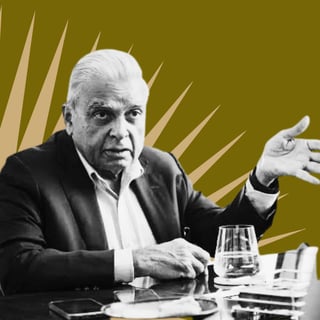
“It seems like we’re in kind of a farce moment. It’s just a little dangerous.” — Robert N. Watson
INTRO
Everyone seems to be reading the Shakespeare tea leaves these days to figure out the future of America. In the Wall Street Journal, Allysia Finley finds something rotten in the state of MAGA. Donald Trump is King Lear after the midterms, a fool for flattery, with JD Vance and Stephen Miller cast as his Iagos. In the Financial Times, Ed Luce predicts that the battle for Trump’s succession “could turn Shakespearean.” And then, in a twist even the Bard might have rejected as too crass, the president makes Miller his chief of staff.
So what would Shakespeare make of late-2020s America? Every generation, the UCLA scholar Robert N. Watson reminds us, imagines that Shakespeare was writing about it. That’s what makes Shakespeare great. Freud found himself in Hamlet. Marx in Timon of Athens. We now find Trump in all things Shakespeare. Especially his tragedies.
In his new book, Shakespeare’s Tragedies, Watson presents Shakespeare as a contemplative dissident. “To be or not to be,” Watson insists, isn’t about suicide. Hamlet is deciding whether to risk his life to fix a rotten state, a choice Watson says his UCLA students recognize all too well. And writing under the shadow of the censor, Shakespeare still smuggled in Lear’s rage at inequality and, in his own handwriting, a speech defending immigrants.
History, Marx said, repeats itself first as tragedy and then as farce. Watson sees Trump’s America as a farcical tragedy. Like Richard III, Donald Trump seems to believe that a little more ruthlessness will keep him on top. Maybe Trump should read Shakespeare in the same way that Shakespeare seems to have so comprehensively read Trump. Or, at least, Robert N. Watson’s Shakespeare’s Tragedies, a book so accessible that even Trump might enjoy it.
FURTHER READING
• Shakespeare’s Tragedies: What Makes Them Great (Stanford University Press, 2026), by Robert N. Watson.
• “Something Is Rotten in the State of MAGA”, by Allysia Finley, Wall Street Journal, November 9, 2026.
• Edward Luce on the battle for Trump’s succession, Financial Times, November 2026.
• The Comic Matrix of Shakespeare’s Tragedies (Princeton University Press, 1979), by Susan Snyder.
• Tyrant: Shakespeare on Politics (W. W. Norton, 2018), by Stephen Greenblatt.
• KEEN ON AMERICA episodes cited: Maggie O’Farrell on childhood, art, money and marriage in 16th-century Florence, Patrick Radden Keefe on London Falling, David Thomson on Hollywood and America, Tim Disney on his surreal remix of Disney, and Alan Judd on
41:59
45:380 plays · Nov 16, 2026
40:560 plays · Nov 15, 2026
40:44
46:33
44:26