Transcript
Speaker: Of course, extremely prolific. You've written so many books. Have you ever started in on a book and then realized this just isn't working? I had an idea one time for a story about the ladies' room at Stapleton Airport.
Speaker: This guy and his wife are on their way to their plane. She goes in and she doesn't come out. They go and get the security people, right? And they go inside they don't come out. So pretty soon you get the state militia, you get the FBI, you get the governor involved, you get the army, the rest of it. But I could never figure out what the hell was going on in there, so.
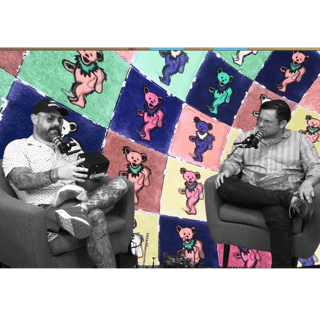
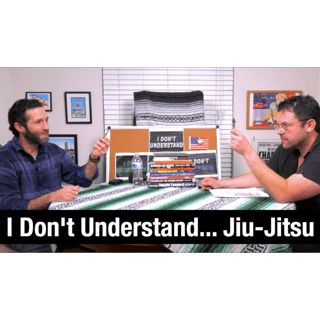
Speaker: Hi, welcome back to the I Don't Understand Show with me, Sam Kutman. It's so weird. There's so much in life I don't understand, but I'm very thankful to be afforded the opportunity to speak with some people who do.
Speaker: I'm pleased to welcome the Meg Award-winning Gardner, Edgar Arthur. Oh wait, no no, no, I'm sorry. this There's a mistake. There's been a mistake. I mean the Edgar Award-winning author, Meg Gardner.
Speaker: Meg graduated from Stanford Law, what like it's hard, and has taught writing at the University of California. Professor Gardner. Miss Gardner? Miss Professor? What? Miss G- How important is spelling when it comes to writing?
Speaker: Meg is known for the best-selling Evan Delaney series of books, which includes China Lake, Mission Canyon, and Jericho Point. But, much like Earth's very sun, Meg is known for Heat, too.
Speaker: Heat Part Two. Meg co-wrote Heat Part Two with director Michael Mann. Man, I feel like a Michael.
Speaker: Dun dun dun dun dun. Moving on, Meg has most recently put out her latest book, Shadowheart, of which the Kirkus Review says, move over Zodiac. Hey Zodiac, Kirkus said it, not me.
Speaker: The Unsub Unknown Subject series includes the Dark Corners of the Night and Into the Black Nowhere. Author extraordinaire, Meg Gardner. Hey. Got it one ticket sold anyway. Anything with an airport, huh? Stephen King, yeah one of my favorite authors, has been since the moment I picked up The Stand, which is still one of my favorite books. What do you love about Stephen King?
Speaker: He is America's Dickens. America's what? Dickens. Charles. Oh, Dickens. He's like Charles Dickens for... And what does Charles Dickens represent? I've read plenty of him, but... He ah was an amazing storyteller who...
Speaker: Has remained as an important figure in documenting life in 19th century Britain. And Stephen King is going to be the equivalent. Someone who talks who writes about people from all walks of life with incredible authenticity in a gripping way and in a very terrifying way that makes you want to pick up the next book as soon as you finish one. Your books are gripping and terrifying as well.
Speaker: Thank you. Mostly mysteries, some horror mystery, detective stuff. I would say not horror, really. I don't. I'm scared. so I love, well, that that's a different thing. That's a thrill. Oh, that's a, I'm thrilled. I'm thrilled. It's supposed to do what it says on in the title, which is thrill you, which is make you, you know, bite your nails, keep turning the page, hold your breath, wonder what's going to happen next. um So if it if it does that, I've done my job.
Speaker: What are some of the genres outside the ones you're known for that you love? I read a lot of science fiction, which is not supposed to take you away. It's not escapist as you think, but um even if it's set in a million years in the future in a galaxy far, far away, it's about us and in exciting and inventive ways. One Gotta Go edition, pen or pencil?
Speaker: Pencil. I've thought about this. You're a pen person. Yes. Pens and pencils are both like tools of my trade that I love to death. I could give you a favorite pencil. You're not anti-pencil. I'm not anti-pencil. Give me a Ticonderoga number two and we are rocking and rolling. Number two is the main pencil. Yes.
Speaker: If I had to have only one. You'd one. You know, eventually you use them both up, but but the pencil the pencil is literally gone at that point.
Speaker: the The pen, its form remains and you could use it for straw. you could use it, say if there was a zombie apocalypse, you could use it for weapon or as a medical tool. So you've got hang on to the pen. Okay, the pen is a weapon and also, yeah, okay.
Speaker: Thank you. Dog ear or bookmark? I'm done with this chapter going to bed. Dog ear or bookmark? I dog ear. It's more like rugged. Hey, look at this. It's all like, you know, that that means I read the book. It means even the book has been well loved, well used. I mean, if it if it was, no, if it was a first edition Stephen King, then I wouldn't dog ear. Would you like to start a public feud with any author?
Speaker: Because I would certainly love to egg one on. Galsworthy. To let. Book about the late 1800s and the cocaine epidemic of the great families. Oh, is that a pencil you're writing with Galsworthy? Not going to be very safe during a zombie apocalypse.
Speaker: You're stupid Galsworthy. Does listening to an audiobook count as reading the book? Yes. Thank you. Am I allowed to say I've read Blood Meridian even if I paid another man to read it to me? And he did the voices.
Speaker: Why not? I read Blood Marie. Yeah, read. It's scary. The judge dances at the end. Who knows what that was about? Visceral excitement and dread. Dread is a great emotion to try to. yeah I mean, and I apologize to to readers who hear that I love creating dread and fear and...
Speaker: only on the page. I try not to do that in real life. You've been known to put out a book every year, every other year. You're quite prolific. Do you sit down to write every day? Like how much are you like nine to five? Is there a schedule or are you just always coming up with ideas your head, writing stories everywhere you go? All of the above. All of the above. Yeah. But you sit down like 9 a.m. to 5 p.m. write.
Speaker: right Yeah, I'm in the extremely fortunate position of having publishing contracts. And believe me, there's nothing more motivating and inspiring than a deadline. Oh, sure. so i have found that to be both the case, but also sometimes not the case where I've passed up. it Where I couldn't agree with you more. I finish everything on my deadline. If anyone's watching this who will hire me in the future, I always finish things on the deadlines.
Speaker: Yeah, i mean, you probably write a lot. I mean, like Stephen King, he's probably writing all the time. You're thinking about it. Ideas are everywhere. They're in the air. They're, you know, they just seep in from everywhere. But if you're working on a big project, a novel, a screenplay, whatever, then you've you've got top you've got to put in the work. yeah So, yeah, i I write every day.
Speaker: And it depends on what stage of the process I'm in.
Speaker: Like brainstorming, research, the first draft, revising, editing, um cleaning it up. The real question is this. Was all this legal? Absolutely. if i'm If I'm just drafting a novel after I've got the story in my head, I try to do 2,000 words a day.
Speaker: Oh, so that's what I was gonna ask. Is it a chapter a day thing? Is it a word count a day thing? But that is your thing. do the word count a day. Whatever works. 2000. 2000. Do you ever get to like 1990 words and you just have to keep getting like, she walked and walked and walked and walked and walked. There's 2000. Absolutely. It's like using your Fitbit or your Apple Watch. She walked and walked and walked and walked and walked and walked. I'm like, okay. I guess she had to get to 2000. And she did it some more. No, your books are incredibly tight.
Speaker: feels like you're watching a movie. But that's the truth about all your books. I i could totally visualize, as an editor, I'm visualizing like the scenes, the cuttings. ah It's very involved and engrossing. And i that's just a compliment, really. Well, it is a compliment. That's that that's called editing.
Speaker: Do you text yourself ideas or do you have your ideas all sprawled around your house like with red yarn connective, like one of the detectives in your novel trying to solve a case? Of course. Is it the red yarn? Yeah, it is the red yarn. How important is red yarn to solving a case? Sometimes blue yarn works. Blue? They don't represent them the movies. No, they don't. It's a secret. Okay, so you got the red yarn everywhere. No, I don't. All pointing to one thing. I write notes everywhere on Post-its, on paper towels, on receipts from the grocery store, also on a computer and on legal pad. And you have a pen or pencil on you all the time.
Speaker: Do you have a favorite kind of pen? Great question. It's a Uniball fine point. Do you fuck with fountain pens? No, you might be like very suave and oh yeah dexterous, but for me, it's um it's like wrestling a squid. And yeah, that's that's what it looks like. wonderful but it's zoom in It's all over my hands, sir. How do you decide when a chapter is over? Is that a storytelling thing? Time for another scene? Or sometimes it could be in scene? Or is it just when you're tired of writing that chapter? Are you like, chapter nine, I've had enough of you now.
Speaker: Time for bed. Is it bedtime when chapter is over? No, you never want a chapter to end it like making people think it's bedtime. Oh, really? No, you have to. oh Oh, next page. I got to read. Precisely.
Speaker: if you Cliffhanger. Yes. Cliffhanger, Revelation, Secret. Something's got to change and you've got to make it as tight as possible because if you end a chapter or even a scene with your characters, you know, calmly getting a glass of warm milk and sliding under the covers and turning out the light, that's what your readers are going to do as well. So it should never feel like an ending at the end of a chapter. It should feel like, what is what is next? Exactly. oh Cool. Yeah, because I would write, and then they go to bed because chapter nine was long. and Thank you. That was a great answer. I'm going to drink water, and we're going to continue along. How long has it been going? does it say
Speaker: Are you a true crime aficionado? Like, people watch documentaries about murders? Or are you like, I like making stuff up. Like, I'm not going to sit around watching these actual horrors, or do you get inspired by them because they are the reality of life, the horrors?
Speaker: I do watch true crime, listen to true crime podcasts, read true crime books. of My unsub series, all the all the stories, all the books have been, i will not use the word inspired, but they've all been sparked by actual cases because those are those are the events that have um lingered in all our minds. So your first novel is China Lake.
Speaker: China Lake is my first published novel. What inspired you to make did that move to start writing China Lake or to go for it as a writer? a sense of panic that if I didn't do this thing I had dreamed of since I was small, which was right, that I would live my life and unfulfilled in some way. That I would give up this thing that felt like ah it was just intrinsic to what I wanted to be. So I knew I was going to have to try to do that. And while I was ah practicing law, while I was teaching at the university, while it was when I had three small, very small children at home, which that was that was me. Like when I have kids, I'll have all the time in the world to write a novel, which is you know like later you're you're getting the pudding out of your hair and you haven't gotten dressed in three days and you're like, I don't know what I That sounds like when I was writing, what it was like not getting dressed for days.
Speaker: And the pudding and the hair, don't lie, in front of Magnus seem cool. You know, I started writing short stories, you know, short magazine pieces, anything to just see if I could just write something that wasn't a legal brief or a memo for for grading papers for students. I thought, okay, this is going to be my one chance.
Speaker: You took I took it. I've got it. if I had better put up or shut up. So I wrote a novel, and that one is still in a trunk. Okay. Oh, like Harper Lee, the the hidden novel that nobody has heard. I've buried it deeper than hers so that they will not excavated. So the ancestors can't boost one day. They can't boost it. just, Kiss Finch was a racist also. Great. Terrific.
Speaker: At the time I thought, you know, this is this is the greatest novel ever written. It probably is. You're very kind. Well, it's true. I mean, I was a writer from some time and there is a thing, at least for me, where like at four in the morning you feel like you're writing the best thing of all time. They're gonna have to invent new awards to give me for this. This is the smartest. Why has nobody written this before? And then you wake up the next day and you read it and it seems like a baby wrote it. Like not just a baby, but like a bad baby.
Speaker: ah baby who sucks at writing. why Why does that happen? Why at four in the morning did I think I was going to win a new found award for this? There was probably something in there that was that was worthwhile that was just being drawn out of you in in the in the liminal space between if you pick up your pencil or that fountain pen was probably what just made it not turn out to be as clear and brilliant as it It was too smudged. It was smudged. know what, maybe I'm having too much fun with the fountain, Ben. Loading it, getting it all over me. You smudged it like ah like a baby. so
Speaker: There's an applesauce on those. So I had the first novel. My agent took it out and did not get positive responses, which shocked me. Because at the time I thought, who i thought that was this brilliant, witty, it was like a caper story with, ah you know, like a sting against the bad guys who had wronged someone and do that the the good guys were going to get back at him. And it had thousands of characters and, you know, just quips flying right, left and center. And eventually I realized it really didn't have a much more than that. yeah It needed a really strong story. And I realized that I needed to set the bar
Speaker: much higher than I had previously thought. And I needed to figure out how to, I needed to teach myself how to clear that bar. And then the book I wrote was China Lake. The wind was rattling through the trees and shadows jousted on his lawn under the sickly yellow glow of a sodium streetlight.
Speaker: There was a much stronger story, there was ah there was a stronger mystery, there was a bigger threat to, I mean, in China Lake, the the the heroine Evan Delaney is ah trying to keep her six-year-old nephew from being kidnapped into an apocalyptic cult. Very nasty, twisted.
Speaker: what What do you do when you're writing? and do Do you look around the world and say, I'm going to take some things that ah are happening in the real world and I'm going bookify them? um Or do you take just the classical archetypes of like books from the past? When you're creating your characters, say. Archetype, like like Bugs Bunny. Romeo and Julia, you need two or something. Are there rules as a writer that you start a structure with? Or do you go, hey, that guy I met the other day, he's a book.
Speaker: Everybody's a book. Everybody's a book. And whether they're all interesting books or a complete novel, you don't know. Yeah, you don't But...
Speaker: I try to create a character who's a human being. And if you do that and you make them as three-dimensional and full-bodied as possible, then inevitably some kind of echo of an archetype is going to come out because that's the way we think and react as as people. If you try to bookify a person, i i don't think that that's a really smart, not not just for legal reasons. Yeah, sure. But I think i think often then...
Speaker: His name is Donald Lump. ah that they think they That makes the character too small. You try to keep him to real life and you've got to let your characters really roam.
Speaker: I had a um great time reading the Evan Delaney saga. Oh, thank you. I loved it. It was so entertaining and fun to read. Could you clarify a thing or two for me? Evan's job.
Speaker: Evan's job is a good question. She was a writer sometimes, but she was also a detective cop lawyer. She's never been a cop. She doesn't run fast. She works as a contract lawyer. She was a sci-fi writer in the first book. And she is a is a journalist. and um But that was me kind of like, let me let me just seed this field with all kinds of ad hoc. Let's say she she was the lead of the gig economy.
Speaker: She invented it, the first true millennial. One of the novels I believe you based the serial killer off of Simon Cowell. Care to confirm or deny this? Deny, deny, deny. Okay, sure. Randy Jackson? Oh, I love this relationship between Evan and her boyfriend, Jesse Blackburn.
Speaker: Good. The dynamic where he's bound to a wheelchair, but also co-star of an action franchise. He was a world-class athlete, had every, seemed to have the world at his feet. And then he was run down in a hit and run.
Speaker: At the time I was thinking, you know, there's so many books, TVs, especially action movies where, you know, someone gets hit by a car. They get thrown off the roof of the Texas state capitol and they just kind of bounce.
Speaker: And I thought, that's not what happens. yeah And you live long enough, you know, people who've had tragedies in their lives and... violence hurts violence lingers physically mentally spiritually and so i wanted the story about people who had gone through such violence and had it stay in their lives in a way that could not just be brushed aside that it it wasn't the end of his life right
Speaker: Life goes on. And it it was good because he meets Devin Delaney. Exactly. He can meet Devin Delaney. And she's a she's well she's not a cop. ah she is a ah well she's She's great. She's a lot. We love her. It also adds to suspense, of course, because of this is situations where he's got, you know in an action film, you don't often see somebody who's bound to a wheelchair. And I thought, what a great thing because you don't see this too often. and Avatar, Jake Sully was ah in a wheelchair.
Speaker: Are you working on the new avatars? I'm not. Okay, we'll get into your your film business. what What are you doing? Your characters are often tormented by an unsolved mystery or a case. Is there any unsolved mystery or case that you're tormented by? That we could maybe solve here right now.
Speaker: This is the Zodiac speaking. You did mention Zodiac. Oh yeah? Yeah. Is there something I can call you that's a little less ominous? You want to solve that one? Sam.
Speaker: Sam. That one is one every couple years they tell us who the Zodiac was and then it's like maybe it wasn't him. Maybe it was. did it So I don't know. I think it was that guy from the movie.
Speaker: I'm not the Zodiac. Yeah, Fargo's husband. Oh yeah? I think it was Fargo's husband. Fargo's husband. that's Fargo was coming home to bed with the Zodiac killer. margo and We don't know. We don't know. so you so so you' set on that That's unsolved. your your Zodiac is an unsub. and so So Zodiac is an unsub. Yes. Unknown subject. Yeah.
Speaker: Ted Cruz, come in. So Zodiac is the lingering thread. Yeah. Yeah. So if anyone knows who Zodiac Killer is, please let us know so we can put that to bed. You know, we on this podcast actually solved or we disclosed evidence from the Houston Chronicle.
Speaker: He did the official announcement of who Jack the Ripper was. What is the Houston Chronicle's official opinion on who Jack the Ripper was? And he told us it was nobody. Didn't exist. So was a little anticlimactic. Really? And I disagreed with him. I disagreed with the official stance of my own podcast. I think it was somebody. It was multiple people who killed multiple women. He said it was like a bunch of people. And just the narrative was strung out of that. I think it was just one guy who was like a doctor at the time.
Speaker: Anyway. But the the official stance of our podcast, Jack the River, was nobody, I guess. What am I doing? I'm talking to an empty telephone. I don't understand.
Speaker: Red light, Max. Hold on, hold on. You cut it? Yeah. You cut the guts out of what I said!
Speaker: Who told you your incompetent little fingers have the requisite skills to edit me? It's enough to make the Pope weep. It keeps me sharp. On the edge. Who I gotta be.
Speaker: Mike. Mike? Mike! Try Mr. Wallace. Filmmaker Michael Mann has been telling stories of Detective Vincent Hanna and Master Thief Neil McCauley in some way or another for 50 years. In the 80s, movie LA Takedown.
Speaker: In the 90s, Heat. Heat 2 is a very rare thing. This is a book. It is a sequel to a movie. Now Meg, how does such a thing happen?
Speaker: In a wonderful way. Take me through this process. Okay. Heat, the classic film starring Al Pacino, Robert De Niro, Val Kilmer, Natalie Portman. But the movie takes place over the course of a few weeks. And, you know, it's a cat and mouse game between this master thief and the detective who's who's after him. And it's it's not predator and prey, it's really predator and predator. These two these two guys, Vincent Hanna, the cop, and Neil McCauley, the master thief.
Speaker: And when we're with Hanna, we want him and his team to take down this pretty this high you know like high stakes, you know high line robbery crew ah which is pretty violent and they'll pretty much do a lot of do anything to take down the score.
Speaker: ah When we're with Macaulay and his crew, we want them to get away with this big heist that they're pulling off like we always want to do in a caper movie or a story because because we we know them, we see them, we see their wants, their lives and we want the to see them succeed at this and then scatter to the winds and and do something different with their lives possibly we're hoping but it doesn't work out that way and of course macaulay and hannah meet and instead of having a gunfight hannah says let's have coffee and they develop a ah a wary rapport they're the only two people who really understand the lives that they're living but they know that if they come up against each other again ah either one of them will
Speaker: take the other out without without blinking. And so we're waiting for this confrontation, which, you know, does happen at the end of the movie. And Michael had thought for 20 years about expanding that story.
Speaker: He knew what happened. well He knew where these characters had come from. He had written character biographies for all the major characters. So he'd been sitting with these ideas for years and years. Right. And finally and he had given them to the actors so that that so that the hit the characters' histories would be able to inform their performances. so written pre-Heat. The character biographies were written for Heat.
Speaker: Gotcha. But just for the actors. Okay. So this is what we're expanding on. So then he gave those to me so I would know where the characters had come from so we could see where they had been. And then he wanted to do it as a prequel and a sequel. So with the all the characters pre-heat um and the and the ah the survivors of the of the movie. Of the events, of the all the shootings. In the, ah for the sequel sections. So it goes back and forth in time. yeah Michael knows exactly what he wants. You feel this confidence.
Speaker: And action! Action! He likes that relationship between this good guy and this bad guy. He likes you to think, you know, maybe the good guy is really not the good guy after all. The bad guy is not so bad.
Speaker: asked a thephic hy so it it us So it goes back and forth in time. Yes. I love that about it also. It's it's a time. I love things that do that because you get to see how people were through years, right?
Speaker: Yes. Yes. ah Very comparable to like The Godfather Part II where you're seeing these two stories coincide and how they both affect each other and how like one resolves the other. in the yin and yang.
Speaker: Well, that's the brilliance of his script for Heat. He wrote the script for Heat and he just went so deep into eat all of the characters. So, you know, ah what drives them? I mean, Hannah, the cop, he's a hunter.
Speaker: that's what That's what gets him up in the morning. That's archetype. Is that an archetype? I guess it could be. You're professors. Am i right? And Macaulay is a hunter in a way as well because he's he this is how he makes his living. Yes. Yeah. But that's that's the that's the ride. That's the elevated experience for him as well is succeeding. yeah What a rich field that like You have like, when but when you get that call though, like ah we're going into heat too, do you get nervous to continue? I mean, yeah, that's, is it, what's it, excitement versus nervous on that? Cause it's like, we're making the Godfather part four and you're helping. And it's like, okay. Well, excitement went out, but you know, Michael Mann is an icon. He's a legend. He's someone I had admired incredibly for all his work. So being asked to, to work with him on, uh,
Speaker: but creating something new for characters that he has been living with for so long and that are so important to to him and to the public, that's so that's a big responsibility. how What was that process like writing with him? as He's a director. He is a director, but I mean, he's you know he's got a degree in English. Did he try and start each chapter with the word action?
Speaker: No, of course not. You had to sit him down and Michael. Just out the story, work out the characters. In person? Y'all or you over the phone y'all are calling each all the time? were calling each other. i went out to LA and we sat across the desk. At that point, we'd had a ah rough draft of the the story. So we like literally just razzled that thing. So he had he had ideas for like ideas for all the major sections yeah of the story. And then we worked out, we talked and talked and talked and wrote an outline and worked it through. And then... I said, you know, I need to know if you're going to like my writing. Are we going to be able to work together? So I wrote the first few chapters and then sent it to him, hoping that he would say, okay, that's good. So he did. So we we went forward from there. And, you know, i wrote I wrote that and I wrote much of the first draft, but from all the work we had done. And at that point, we started just working together. How long does that take? I wrote this whole draft.
Speaker: For Heat 2, which is a pretty meaty, which is a pretty meaty book. Let's say from the time of our, we first spoke until publication was just over two years. We went through several drafts. I mean, we had each written and rewritten every single word singularly and together and ah revised it. and Was it different than your normal process?
Speaker: It showed me the the benefits of collaboration, which mean which is that once you realize you can really trust your writing partner. Yeah. that you're very much more open to suggestion yeah and to to their any kind of editorial notes they give you. Especially you're writing partners. like but Like Michael Mann, like, let's do, let's, can you clarify this and let's, so let's, let's change up this action scene. Okay. Mr. Mann. I made the last of the Mohicans. When you're writing like for the Vincent Hanna, are you writing like with Al Pacino's voice in mind?
Speaker: Are you like, hoo-ha. I, of course i've of course, I had Pacino's face and, you know, embodiment in my mind as i was as I was writing the book. But the it was the character.
Speaker: And, you know, Michael knew these characters and he's like, we've got to get the dialogue right. So it's not so important to make it sound like Al Pacino. No. i said this is this is who this is who This is who Hannah is. He's sarcastic. He's voluble. he This is how he behaves. he he When he goes off, he's not just losing it. He's usually doing that to a suspect or a confidential informant that he is trying to throw off their game by by being nuts, seemingly. I'm Donald Duck.
Speaker: Do a favorite Michael Mann movie? of Other than Heat? there's an heat Other than than Heat now. My favorite is Ferrari, I think. I love Ferrari. It was so good. the whole I didn't know what was going to happen in the whole movie. They're like, we're going to the MillaMilla. I was like, all right, go.
Speaker: then they go to the Millimilia you're like, they should not have gone to the Millimilia. That was a, that is insane. It's dramatic and it's, so it's all true.
Speaker: It's all, no, exactly. It's one of those movies where all well, this surely didn't happen. And then of course it all happened and it's terrifying. Anyway, i love I love that movie. Adam Driver and Penelope crus are just stunning in that movie. Sure. but You know what?
Speaker: I think he was so smart to to to work with somebody who is a brilliant writer and in this field who knew what to do because sometimes people who aren't from the book world will come to the book world and it's a different – I mean it is different. You can't just put all your ideas into a book and make it entertaining. That's what you do. this And I wasn't – had to – i i had to figure out how to translate what works so brilliantly for him on the screen onto the page. Your books have this where they're very detail-oriented, very procedural. Like, I feel like I'm embedded with the police. I feel like I'm on a ride-along. Do you go on like ride-alongs something? I tip for heat. I have gone on ride-alongs. I've gone on ride-alongs with the Austin police. And Michael and I went ride-along with the LPD. Are they scary or they like that Ice Cube movie where they're a little bit funny?
Speaker: What's that ice cube? Fuck. Wait, who's that? Ride a log, yeah. yeah ah Funny stuff can happen. um Yeah, but it's not that funny. It's not that silly. Meggardner.com to purchase books such as the Unsub series, the Evan Delaney series, the Joe Beckett series, and Heat 2. All sorts of books. Amazing books from the amazing writer Meg Gardner. Oh my God, thank you so much for doing this. Thank you for your insight. And and thank you for being an amazing writer.
Speaker: Thank you. I'm just glad to do it. ah This is now officially the end of the show. I don't ever know how to end it. So it fizzles out like this where i just thank you a bunch. Oh, actually we have gifts for you. Oh, this is how it ends.
Speaker: Oh, here we go. As a writer, I have a few gifts or this one gift for you. I thought this was a pen and a pencil. You know what? It isn't. For one, is hat. You get your I don't understand hat. Fantastic. But here's the thing. New for season two.
Speaker: We're not just giving people I don't understand hats. They also get I do understand hats. Very good. Two hats that no one will wear. So this is like going out to happy hour with husband? Exactly. we can swap? Yes. Or for the garbage can.
Speaker: We'll figure that out in the break. We'll come up with an ending for this. That's the fun thing about writing. You can actually surprise yourself because you're like, you don't know necessarily where it's going to go and you're sort of trying to solve the mystery as you're writing it as well, right? Or do you have a mystery already solved and you're sort of like doing it that way where you kind of I work out the story ahead of time because I know what happens when I fail to do that. What happens? that I end up way in the weeds up a creek, yeah no paddle, no boat, no no way back.
Speaker: And I'm just lost. so if i And that wastes time and effort that I don't want to to waste and having to put put a book away in a drawer somewhere because, you know, i got i got I wrote one one story where I'm like, something needs to happen here.
Speaker: You know, like, okay, we'll have the the heroes walk across the street. set of headlights will flash on, and then, you know, the engine will rev and race at them. I thought, that's really exciting.
Speaker: And that was the last paragraph I wrote because I had no idea. Why on earth were they revving the engine and racing at them? I mean, there was this headlight. who was in this car? Hey, thanks for watchin'.
Speaker: Thanks for having me But that interview was great.