Become a Creator today!Start creating today - Share your story with the world!
Start for free
00:00:00
00:00:01
Mike Bangasser - Best Technology image

Mike Bangasser - Best Technology

S1 E6 ยท Gritty Leadership
Avatar
30 Plays1 month ago

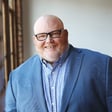
Mike Bangasser is the owner of Best Technology, a Minnesota-based company that designs and manufactures fully custom surface finishing equipment and chemicals for highly regulated industries like medical devices and aerospace. His background in mechanical engineering, including early career work at Boston Scientific designing laser processes for pacemakers and stents, gave him a front-row seat to how engineers actually want to buy: through research and trust, not through a salesperson showing up at their door. That insight became the foundation for how he would eventually reshape his father's small, regionally-focused business into a multi-million dollar, eight-figure operation with a global customer base.

When Mike took over the family business in the early 2010s, he made a bold bet on inbound marketing long before it was common in manufacturing. He committed to building one page of genuinely useful, evergreen technical content per week, not time-stamped blog posts, but timeless educational resources that engineers could actually use to solve problems on their own. The philosophy was simple but counterintuitive: give away the cart, and they'll come back to buy the horse. That content-first approach generated so many inbound leads that Mike needed to hire a salesperson within six months of launching. Today, Best Technology operates with a lean team of roughly a dozen employees, including offshore staff in Costa Rica, El Salvador, and the Philippines, and Mike is already adapting the same content strategy for the AI search era.

Beyond the business strategy, what stands out about Mike is the faith-driven culture he's built at Best Technology and the servant leadership philosophy that runs through everything he does. He hires intentionally, often through church communities and career transition groups, and sees his role as a leader less about driving profit and more about putting food on the table for his team. He also volunteers his time building homes in Mexico, an experience that keeps him grounded and motivated. For Mike, leadership isn't about control; it's about stewardship, of people, of resources, and of time, with the belief that how you spend your 24 hours reveals where your values truly lie.

Transcript
00:00:00
Speaker
Welcome to Gritty Leadership, the podcast where we celebrate the leaders who make and move America. We're diving into the untold stories of resilience, innovation, and perseverance of the leaders in the gritty industries that keep America running.
00:00:13
Speaker
I'm Brian Smith, and together with my co-host Angie Jones, we're on a mission to honor the leadership that's often overlooked but makes all the difference. So let's get into it, because real leadership gets its hands dirty.
00:00:25
Speaker
Hello and welcome to the Gritty Leadership Podcast. I'm Brian Smith here with my co-host. Angie Jones. Angie, great to see you. Likewise, Brian.
00:00:37
Speaker
It's been a great week. We were ah actually in person together, which was super fun. ah Yeah, that doesn't happen very often. No, no. I'm in Minnesota. You're in Iowa. So it's ah we were at the Fractional Leadership Conference together, which was really awesome to be with our people.
00:00:55
Speaker
um So it was good to see you. um Likewise. I agree. It was fun. We are super excited to be ah joined today with Mike Bangaster.
00:01:06
Speaker
ah Mike, welcome. Thank you. Great to be here. Let's just kind of get started, Mike. Just tell us about you. Tell us about what you do in the business and kind of start with your story.
00:01:17
Speaker
Absolutely. I don't know how far back we want to go. We can kind of just start from here and drift back if we want. But um I own a business called Best Technology. We sell custom surface finishing equipment primarily and chemicals primarily to the medical device, aerospace and other regulated industries.
00:01:34
Speaker
Background is in engineering, so it parlays well with with what we offer here at Best Technology. Awesome. ah so what do those, what do those products actually do? Yeah. So any, if you can envision in the, during the manufacturing process, any piece of metallic or frankly, polymer that is machined or altered during, uh, the process of manufacturing typically at least needs to be cleaned. But, uh, in med device aerospace typically needs to be etched, coated, um, some otherwise processed, uh, with surface preparation for, for one thing or another polished, et cetera. Um,
00:02:13
Speaker
And so we make the equipment to do that. Every system we make is fully custom. We really um um strategize in the regulated industries where customers will want a custom piece of equipment. They can't find an off-the-shelf piece of equipment that will optimally um operate the process repeatedly, produce quality parts, et cetera. With an off-the-shelf, they'll come to us and say, hey, I need to slightly modify this or I need a completely new ah type of system. Have you ever done this? No. Excellent. Let's try it type ah type thing. So there's nothing we won't try. we get into all kinds of different exotic chemicals that are used or not used currently in in processes.
00:02:56
Speaker
um So anywhere from something really simple that's tabletop up to the size of a school bus. So and everything in between. awesome So how did you find your way to this? How did how did this happen for you?
00:03:09
Speaker
Yeah, so backgrounds in mechanical engineering. I worked at Boston Scientific as a process design engineer in the beginning of my career. And um so I was designing laser processes, unlike the surface finishing, but I was designing laser processes for pacemakers, defibrillators, that type of thing, stent cutting. And um I just looked at the way younger, at least at that point in my career, younger engineers, ah the buying journey that they preferred versus manufacturing.
00:03:36
Speaker
more traditional buying process of previous generations and said, you know, I really would like um the salespeople to be available for me when I want to buy rather than for me to have to be available for the salesperson to sell to me and looked at it from that front and said, what if, you know, we look at how younger engineers want to buy? And it's typically through research at that point in the early 2000s, the internet was coming to be. um So a lot of research is done prior to engagement of a person, especially if you look at the stereotypical engineer that likes research, um engages with people they trust before they want to research first and find what they would see as trustworthy rather than a salesperson just showing up and and trying to take their word for it. So I looked at it that way and I said, what if we became thought leaders for everything surface finishing online and people trusted us based on sharing a wealth of information first that they frankly could completely take on their own and implement. Once they find that they could implement it, maybe a lot of them are too busy to implement and they'll want us to do that for them.
00:04:50
Speaker
So with that business model kind of shift of leads coming to us rather than us going to them on an outbound end, we can cover a lot more geographic territory by being in our offices here in Minnesota. We can service people worldwide, which ultimately at that point, the med device industry was shifting over to Ireland. um Now they've went or they went to Puerto Rico, Ireland. Now you're seeing a a big shift to Costa Rica as well. So we can service the geographic area anywhere in the world right for here from Minnesota.
00:05:21
Speaker
Awesome. So how did you make the jump from Boston Scientific to? Yeah, so there was a longer process with that of trying to look through the journey of an entrepreneur and it involved ah flipping houses, eBay business, day trading derivatives and futures. And ultimately looking at what God's gift to me ah was with engineering and saying, you you can try to be something different than you're not, Mike, but ultimately, number one, God has a plan. Number two, um you need to embrace the gifts that he gave you. And it was coming back to the engineering world. So my dad started the business in 1990s and was a one-man show in in ah the sense of regional door-to-door sales, a lot of windshield time. and looking how he was selling into colleagues that I had at Boston Scientific, again, looking at that business model and saying, number one, at that point, I was starting a young family. I didn't want to be behind the windshield all over the place, but also understanding that that different buying journey. um He kind of got to the point in the early 2000s where he was selling by answering his phone, but he wasn't really doing as much outbound and because he was kind of in that retirement stages. So as I struggled to figure out what's next for me when I left Boston and Scientific, after day trading, the downturn in the economy in 2008 to 2011-12, when the volatility kind of dried up, I'm like, okay, well, now again, what's next, Mike? And um I looked at what am I going to do Let's embrace the engineering end. and ultimately, I took the business that my dad had, which effectively was down to Very little in revenue at that point um and and such.
00:07:06
Speaker
Took the business model and applaud what I mentioned. And within six months, I was closing semiconductor deals on the West Coast that we never would have had had we not rebranded the way we did and and looked at that marketing strategy. And ever since then, we've just been very blessed with an abundance of leads all over the world.
00:07:25
Speaker
Um, and, uh, it's just really worked well, um, to be able to start hiring people instead of being a one man show, um, start hiring people within, uh, six months of me launching and starting to close those sales. I needed a salesperson. The, the leads were overwhelming, uh, versus before were really dependent on basically one trade show here in Minnesota.
00:07:47
Speaker
Um, at that point, that was all I had for the year to go work unless I was going to go cold call like my dad did. um That was what I had to work with. and And once we launched that, we ended up having so many leads inbound that I couldn't keep up with email, phone, et cetera. I needed another salesperson. So since then, we've just scaled from pretty small to a multimillion end and and um um crossing the eight figure mark. So.
00:08:16
Speaker
I'm curious, what is that what does the team look like now? Yeah, so um I hired my first ah first sales engineer that had extreme tech or extreme experience in the engineered component space for 25, 30 years. But he was used to similar to my dad, only this guy traveled nationwide. He was he was traveling over 200 to 250 year. And I said, I don't think you're going to, you're not going to travel anymore on this business model. And he's like, oh, this would be great until he started doing it And he's like, well, wait a minute. Like I'm not bringing donuts to anyone. I'm not taking people to lunch. How is this going to work?
00:08:55
Speaker
And it was a big eye opener, but ultimately the faith basis of our culture was formed there. I hired him from our church um through relationships at at our church.
00:09:07
Speaker
and looked at it and said, you know what, ultimately God has a plan for myself, for our business, et cetera, for this first employee. And he has to trust me as in the new employee has to trust me, but ultimately I has to have to trust God if he's led me to this person. And with that really was the forming the basis of that of that faith culture. And from that point on, We started hiring based on that and being very vocal and upfront and second hire was someone that had been in the industry for a long time as a bookkeeper in accounting. We needed help with an operations and she was looking for a faith driven business leader to make that transition to her next stage. She's still with us and so on and so forth. These all these faith based hires at various career transitions groups that I still volunteer at.
00:10:00
Speaker
um I've hired a web developer from another transition group, another church, none that I was affiliated with just happened to go to their group, found her, et cetera. And then in the last year, we've started hiring offshore. So it's been really fun to see Latin America, Filipinos embracing the faith culture and how attracted they are to that. um and integrating them in with the culture too. So we have about a dozen employees now.
00:10:27
Speaker
I keep things pretty pretty lean, um really try to use technology to maximize efficiency before we continue to hire more and more. um I'm very um interested in all the developments in all things tech and and software. So I'm often researching things well ahead of time, knowing that you know in 2012, the business model that I turned on, I could see that we needed to control the lead flow. I needed to see that we needed to figure out how we could be best at SEO. and um always be at least one to two leaps ahead of the competition in all things tech. So, um and that includes now hiring offshore, very few are doing what we're doing, but I look at as a strategic advantage because geographically as we continue to spread out, we have these employees now, Costa Rica, El Salvador, Philippines, et cetera.
00:11:19
Speaker
So it's been it's been fun that way. But now with the whole AI search end, that has just got me lit up and excited too. um Effectively reverse engineering SEO, we're doing the same thing with AI. And it's been really fun to see the response in AI. And of course it's evolving just like SEO did over the years. But to be able to show up in the search results and in AI based on a little bit different query patterns of a user in AI versus SEO search engine type stuff. so So i wanted to ask you about that because it sounds like you really built the business in the early days very much on inbound, very much on being thought leaders, producing a lot of content.
00:11:59
Speaker
And obviously, we all know that that environment has changed. But is inbound still your primary methodology? And what does that look like? Yeah, 100%. It's just looking at the buying pattern shifts still um and how people want to source their information. Ultimately, if we said you know back then we wanted to be thought leaders and share information, it's the same way now. People are just finding it in a slightly different way. Before, it was all web traffic, right? So now, ultimately, you could say, well, Google and and OpenAI and Perplexity, they all...
00:12:30
Speaker
are using our information to educate people on their own platform and they're not coming to ours. And I, lot of people are scared of that. They're like, well, wait a minute, they're stealing our information or intellectual property. And I said, well, you can either embrace technology or be afraid of it. Ultimately, um,
00:12:45
Speaker
Small companies need to embrace things, number one, and if they're afraid of it, the big behemoths are going to do what they're going to do anyways. And I said, okay, well, if we use if they we let them use our information to train their models, um ultimately, these people aren't going to be buying a piece of capital equipment on ah an AI platform, but they're certainly going to be engaging to learn. So let's teach them when they're ready to to move forward, they're going to go on a traditional search platform or look at the annotated search results in in OpenAI and other platforms and click through to us. So the reality that we looked at was, hey, our search track or our actual traffic on our website may drop, but that doesn't mean
00:13:25
Speaker
that the queries and interest in the in the processes and equipment is going to drop, the interest hopefully continues to grow. It's just going be seen in a different way. So now when we get traffic to our website, while it may be diminished, the actual buying journey is further down in the funnel.
00:13:41
Speaker
So when there's engagement, we have even more interested engagement at that point. It helps, frankly, filter out the information-seeking type in from the from the top of the funnel to be more engaged for our our applications engineers to really dig into these applications when people are ready. So it's been fun. There's always something that keeps you busy.
00:14:01
Speaker
Mike, I got to tell you, this is ah incredibly refreshing and exciting to talk to you because angie You know, you and I specializing in marketing for manufacturers. It's very rare that we talk to a manufacturer that understands the role of inbound marketing, how this works and sure yeah the way that buyers, you know, the research says anywhere 75 to 90% of the decision making process happens prior to ever talking to a sales rep. Yep. And the fact that you've understood this for so long is, is frankly pretty remarkable and pretty rare.
00:14:36
Speaker
in in our world. you know yeah The SaaS companies, the technology, they kind of have gotten this for a long time. In our world, yeah it's still a lot of like, we want to talk to you, we want to sell to you, we want to talk about us and our products.
00:14:50
Speaker
um And you know what's really interesting is there's new research out ah from a guy i really like who's the head researcher at a company called Sixth Sense. And he's taken it a step further where not only are they 75 to 90% of their way through their process, but ah over 80% of the time, they are going with the first vendor they call because they have already sort of mentally committed to their favorite one.
00:15:22
Speaker
yeah and yeah And the favorite vendor they're calling is the one they call first. yep And there's already been some alignment internally within their organization. And so, you know, the importance of that of that content that you're putting out there cannot be denied.
00:15:39
Speaker
yeah um I'd be interested to hear more about how are you becoming a thought leader? What kinds of content are you doing and and how has that evolved for you over the years?
00:15:50
Speaker
Yeah, it's it's evolved, definitely. But ultimately, if you look at your core audience and core customer, they're seeking information. They're not necessarily seeking our equipment or don't know that they're seeking their equipment. They're seeking information to solve a problem that they have. So if we look at ourselves from solution providers rather than, you know,
00:16:11
Speaker
benefits and features type end. If we look at ourselves as solution providers, what are they searching for and why? um And when you niche down the way we have, what ultimately do they not know that they need to know? And what's frankly the the informative level that these people are educated in on something that's as niche as this? so um putting ourselves in those shoes and and frankly, I really believe, and a lot of our competitors have disagreed, which is fine. um I really believed that giving away the cart
00:16:47
Speaker
And you could do everything that we sell completely on your own, really builds that rapport and they'll come back to buy the horse, right? And um so even if someone calls in and talks to applications engineers, we'll send them away if it doesn't fit with what they need for a solution, we'll send them to a competitor if that's the case. Because we know in the end, um they're going to be seeking information, maybe at a different job role, different process, who knows what that will fit and they'll remember that end. So...
00:17:15
Speaker
um The education part, I really feel like you say when they call a vendor, um who's providing the education versus who's trying to cram down their throat some kind of piece of equipment, solution, whatever, that may or may not fit with what they need. If we look at a long-term solution, there's a long-term customer there. So nothing is short-sighted on our end. We're always looking to provide what's the maximum value when we deliver our piece of equipment or chemical that they're like, wow, this was the people to work with and I have no regrets.
00:17:47
Speaker
So from start to finish, we're always asking our customer, what can we do differently? All of our vendors, we constantly query them and they're always like, no, you guys are doing right. I'm like, great, we can always improve. Let's let's hear it. I'm not the entrepreneur that's like, let's pat ourselves on the back for what we've done. It's like, what's next? How can we deliver better value to the customer in what they seek for information? And then all the way through the buying journey process.
00:18:12
Speaker
Has there been content? what What are some of the things you put out there that have like really performed for you or or surprised you how well it's performed? Yeah, you know, when I launched the website in 2012, I told myself, yes, you're really busy, but you need to build one page a week of really thoughtful content, um which was unheard of. they People were doing what they call blogs. But I don' i look at a blog to being like time-based and people put timestamps on when it was produced. you need to produce content that's timeless. Like if I wrote an article about passivation in 2012, have we improved that page in 12 years?
00:18:50
Speaker
Absolutely. But ultimately it's a timeless piece of article and unless technology evolves that we need to update with, um technology of the process involves that we need to educate further, ultimately it needs to be timeless. So um at that point you went from like maybe one, two word queries to start getting in. If you go look at the marketing end for what you guys do to a little more long tail searches to now it's conversational based in bots. um But ultimately they're looking for that education. So um we're starting to focus more on FAQ type stuff on our website based on that longer query patterns. But
00:19:28
Speaker
um a lot of what is or how do you do, cetera. And that doesn't, when you ask that, it's how do you do blank process? It has nothing to do with how do you do equipment or what equipment do I need to do? It's like overall, hey, I'm a med device engineer and I have to meet you know an ASTM spec for passivation, how do I do that? And of course the bots can come back and say, hey, you know you need to look at ASTM A967, here's the options that you have for chemicals to use. it doesn't Even that spec and it's the most popular one, doesn't mention anything about equipment, it doesn't say go to best technology or you need to use an XYZ thing the size of a bus or the size of a tabletop. It just says, here's what you need to do. so what if we pick up on where that ASTM spec comes in and ah educate them on the ASTM spec and how it applies in their process? And, oh, by the way, ah here's a piece of equipment that will work with your application. Yeah. It just never ceases to amaze. Like when I was a tenant, I did a webinar ah during the pandemic um when things were starting to open up again. we did a webinar on how to reopen a building that had been closed a long time. time and nothing to with floors had nothing to do with what our machines did we had like 400 people show up for that yeah you know and it was the biggest webinar we ever did and we brought in some really great experts and but that was a service we needed to give to our customers at that point yeah that's what they needed and um and I I think that there have you read the book the go-giver
00:21:02
Speaker
Yes. Yeah. I mean, you you seem to be living that, right? And yeah and I feel like there's a there's such a power in being generous and and being generous without keeping track and without keeping score. And I think that's so cool how you are lacing that in with your faith and the way you think about business. And it seems to be paying for you.
00:21:24
Speaker
Yeah, very blessed. I just look at truly the word servant leadership. It's two words. It's one word, right? Like, Servant, we need to serve from above, but we also need to serve in the educational sense.
00:21:36
Speaker
um And then once that person engages, then I look at it, it's serving from above because we can ultimately spread the word that way, but we can also spread a solution to our customer. um And on the leadership end, yeah, they need, they're looking for someone to lead them along in multiple things, but one being a process and understanding, but who knows where that person is in their faith journey too. So if we can service in that end, great. It's not like we're vocal about it, but if you look on our website, I'm certainly not shy about it either. We have what we call our company creed on our website and the first word God. So yeah,
00:22:12
Speaker
I just look at it like, hey, if we're asked to be disciples to all nations, let's get out there and do it. um And we just happen to do it in the sense of working in the manufacturing space um is is what we're chosen to do. So thought leadership ties in, I feel, with servant leadership in that way. 100%. And, you know, when I think about faith in business, I think there's the faith you're talking about, which is important. I think there's also the faith in the fact that Being generous and doing those sorts of things, just having faith that those things are effective and will work out for you without having data to prove it.
00:22:48
Speaker
You know, that there is a faith, there is an understanding and a belief in the fact that ah Being generous, doing the right thing, putting content and value out in the world, knowing that that will bring things back to you. There's an innate faith in that that's not any particular religion.
00:23:08
Speaker
it's just a It's just a faith in what is right and good and in in the universe, right? like yeah I think that's a really ah important way for us to think about business that a lot of people gloss over.
00:23:22
Speaker
Sure, sure. It's very true. It is a dog-eat-dog world out there if you look at it from a capitalistic end and in our society, but it's also gotten to our society to a very selfish end um of me first. And I look at it as me last in a lot of different ways, but as long as frankly the needs are served in the end, who cares about how you get to that point? Frankly, the journey is more than more important than the end point anyways. It's how you get there. um And I've just kind of approached it from that way. um Ultimately, it also leads as an entrepreneur to feeling like, number one, you're serving a better purpose, but not that you want to blame anything on anyone if something goes wrong, but you're like, when something does go wrong, you're like, hmm.
00:24:08
Speaker
Well, that's interesting. I wonder what the what the purpose is of that. Me learning that like there's a purpose for everything. So ultimately, when I run into a roadblock or people call them challenges, I call them opportunities. When I run into an opportunity, where's the opportunity for improvement there? There are some that are a lot harder lessons to learn than others. But if we're actually keeping our eyes open and ears open um to to listen and to see what's coming at you, there is something to be learned in everything including you know um people on the selfish end and the competitive end what are they trying to accomplish with efforts and um focus in that end if it's financially motivated great i'll go toe-to-toe with them i just look at it as an opportunity and who knows maybe they'll come around to something different that see how things are exhibited but if we try to put our best self forward In everything we do, I feel like, number one, in the end, we're here for a very finite time. So if we're looking for an infinite life, um why burn the bridge on a finite end when when the infinite end is ultimately... um
00:25:17
Speaker
what we're going to be able to cherish and and flourish in. But um yeah, just do the right thing. got I got two young kids in school and the mural that that they walk into, it's ah it's a Catholic grade school. And there's a book called Be the Nice Kid. And that's the mural that they see every day, Be the Nice Kid. And that's what I tell them. I'm like, yeah, you're going to school, you're going to learn everything else.
00:25:39
Speaker
But at this age, your your your morals are formed by being nice in what you do, understanding what the right way and path is. And my hope is at that point when they can start making more decisions on their end, they're using that moral compass than seeing the selfishness in the world um to that front and and realizing, hey, if dad's living this, then maybe I should look at this too. Kids are pretty influenced by the father figure in their life. And me showing, trying to show our kids that, but ultimately through the volunteering efforts that I have here and in other countries, um hopefully you can spread that word.
00:26:19
Speaker
Not saying my way is right. I don't know. Judgment will only tell that in the long run, right? But it feels like what's right for what I'm called to do. I want to back up to something you said earlier. You said when you niche down like we have done, and I think Brian would probably agree with me that a lot of times we get, as marketers, we get resistance to that niching down or people think about niching down and it really scares them. yeah so how did you get to the niche that you serve now? And was that intentional from the start or like, what did that journey look like? Yeah, it's a learning process ah for sure. Like,
00:26:56
Speaker
There's a saying that some entrepreneur group that I'm in called AFM, anything for money. When you start a business and you hang your shingle, you're like, you know what, if you want me to do a podcast right now, I'll do it. If you want me to go and hammer nails into something great, but oh, I'm supposed to sell equipment too. you'll do anything for money. And ultimately, even that just focusing on now the equipment is niching. But what I looked at is, hey, if you're a smaller company, and you're growing, where's the competitive landscape?
00:27:24
Speaker
And the competitive landscape of bigger companies is they have bigger revenue to drive, even if it's a huge marketplace, they still have to fulfill that pipeline and expectations of their shareholders in a revenue end. So can we focus in a segment frankly, that they don't care about. They're like, hey, that's just way too much work for us. We don't wanna deal with that. And um a lot of it's in the customization end, there's a lot more um labor and overhead that's put into customization. But in the end, if you look at what they're doing, they're looking at volume of revenue. And of course they're they're focused on margin, but if we're looking at a custom solution, people are willing to pay a custom price for that. And if we can narrow into something, hopefully your gross margin and should go up, um hopefully significantly. And we're not having to run into as much competitive landscape as you would in something that's highly sought after by multiple companies to drive the revenue stream. So um to be honest with you,
00:28:26
Speaker
When I started, especially with what my dad was selling, it was starting to become commoditized. It was starting to become supplied from overseas. And the med device aerospace industry really prides themselves on on made in the USA, controlling their supply chain risks in that front. So staying in that end was important. But how do you compete with overseas product with cheaper labor markets to produce this equipment and things? So we had to say, ah okay, how can we differentiate ourself? Okay, made in the USA is great, but that doesn't mean people are willing to pay for it. We have to provide other value. um So ultimately it was listening to our customers. They come to you and they say something and you scratch your head and get off the phone like, well,
00:29:07
Speaker
Why would I wanna do that? Like, he's asking me the weirdest thing. It's like, a phone rings a few weeks later and someone asks the same thing again. You're like, gosh, there's a lot of people that are asking for this. Why why would they be asking? And I look at it from the SEO end of, hey, people are asking me and they're finding us on something we don't do. what Why are they finding us? i'm like Oh, because their needs aren't served with the current marketplace. Let's do some research. So I, all of our marketing is, is in-house here, you get the marketing team doing some research and finding there's a big hole there that people are looking for. They're not finding a solution. Boom. Let's build out a whole thought leadership segment in that and see what the lead flow is. And ultimately that's how the business has grown a niche. It's like we get, I always kind of call in this example and I can't get into a lot of detail, but,
00:29:56
Speaker
a major airline came to us for some refurbishment of some of their airplanes. And I got off the phone and I was like, why are they doing this? Like, this seems silly, but I guess they're doing it. And I finally asked them as the project went further, i'm like, why did you come to us? And he's like, because no one else does it. I'm Okay, well, we'll do it for you It's actually pretty simple, um what you're asking. No one does this. and And that was like in a September, October timeframe, the project moved forward. And I told a marketing team late November, I'm like, hey, put out a piece on this. Let's see what happens.
00:30:31
Speaker
By December, the lead flow was starting to get to be 30% of our total lead flow just by that one piece we put out. And now it's probably a 30% revenue segment at the 40% revenue segment in our capital equipment sales for this particular application that was just completely unserved.
00:30:49
Speaker
So my content brain is on fire. What was this like? Was this like a blog, like ah an article type piece, a white paper? Like what was the form kind of I never call them white papers, never yeah blog. It's an informational piece of, you know, I'm trying to do i for this and but application. I'm trying to refurbish a part of an airplane and um how do you, this was a corrosion prevention type application and how do I prevent corrosion on these remanufactured parts that frankly are starting to show corrosion? um
00:31:23
Speaker
You know, anyone can say, hey, you can print you can prevent Ross with this, this and this, but it's that particular instance. um And it wasn't just refurbishing equipment. It was like, well, how do I build aircraft with this? How do I put stuff on aircraft carriers that isn't going to corrode from the saltwater spray, that type of thing. And it's understanding the applications rather than the equipment saying, oh, well, our equipment would be used in this application, but let's forget about the equipment.
00:31:49
Speaker
Let's look at the primary problem that's needing to be solved. so And then from that point, you put an article out there, you start watching traffic, and then you start massaging keywords. Keep it you know tailored to the human eyeball, as I say. But ultimately, you're also looking at what are the bots wanting to read to sort through on the SEO and to get into SERPs that are high ranking and in niche keywords.
00:32:15
Speaker
Yeah. A lot of our so again, Angie and I are in the space, right? A lot of our clients are engineers. lot of them think what we do is really fluffy. Mm hmm. And sort of, you know, marketing is fluffy and silly and not that scientific.
00:32:32
Speaker
yeah ah I feel like you understand that what we do is not so fluffy and awfully scientific. what what would yeah What kind of advice would you maybe give to some of those engineers out there to maybe rethink how they think about marketing and to maybe help convince them that it's not as fluffy as they think it is?
00:32:52
Speaker
Sure. So from an engineering perspective, as i call myself a recovering engineer, um but um from an engineer perspective, an entrepreneurial perspective, from the entrepreneur end, I'm like, well, I want to see the return on my investment.
00:33:07
Speaker
Right? So if I'm gonna go and spend X number of dollars on marketing, I wanna see a return on investment. One type of marketing I've always scratched my head with is brand marketing. Like how does Coca-Cola justify billions of dollars just in goofy ads that show their brand?
00:33:22
Speaker
I look at the advertising end or marketing end of like, how can we broadcast our message in a way that resonates and has a return on investment. And a lot of times for for an entrepreneur,
00:33:36
Speaker
it's hard to it's hard for marketing firms to say, here's truly your return on your investment. But I think if you put it into analytical terms, so um the marketing that we have is, ah the marketing's job is to service the sales team. So the sales team has nothing to do if you're not gonna get them leads.
00:33:54
Speaker
and don't give them garbage leads because they still have nothing to do. It's all about sales qualified leads. So our um our marketing team is incentivized on sales qualified leads. If you're not supplying to your customer sales qualified leads, there's no return on your investment. I don't care if it's one page, multiple pages, multiple AdWords, whatever you want to look at it, you need to supply a set number of goal. If you look at it from a funnel end, if we want to close five deals, you you maybe need to give them 25 sales qualified leads, which means that you need to have 25,000 web visitors. I don't know, just making up numbers and look at it from that funnel end from the bottom up and,
00:34:33
Speaker
um to justify it to someone that maybe doesn't um understand the the magic that goes on behind the scenes. It's showing them like here is here is ultimately what you're doing now and why it's working.
00:34:47
Speaker
I always try to look at why it's working. And here's the opportunity, not problem, but here's the opportunity that we see that's just untapped here. And um Very few, I'll be honest with you, very few marketing um companies will sign up for delivering sales qualified leads. Oh, we' we'll generate, you know, form fills for you or, hey, we can increase your traffic by 30% or we guarantee you in the top 10. I'm like, I don't care. You can guarantee me in the top 10 of search results that no one searches for.
00:35:14
Speaker
like guarantee me that you're gonna get in the search results, that's really neat, let's track that as a metric, but let's track sales qualified leads. So a lot of marketing firms won't sign up for that. the The ones that I've seen that will are the ones that trust in themselves that they can deliver the value in what isn't quantitative, but the engineer wants it quantitatively. Here's quantitatively your return on investment as your sales qualified leads. Now it's up to the sales team to figure out what to do with those. And now you have another funnel that starts and another return on investment with your sales team. But if we can delineate those two, you can start seeing which one's performing, which one isn't in in that point.
00:35:58
Speaker
that make sense? Oh, my God. You're just talking about my whole life. So I i love it. it's ah It is absolutely correct. And um you know I always say what I love about being a fractional ah CMO rather than an agency is that my job is to make you money, not find ways to spend your money Yeah. Right. Like, I don't care how many people come to your website if they're not turning into leads and buying and buying things, not only turning into leads, but actually turning into sales. Right. Like, it's got to turn into revenue. Otherwise, it's just silliness. Right.
00:36:33
Speaker
Yep. The other challenge, I think, though, is and and tell me if you think it's different. But I look at marketing as a marathon, not a sprint. Yes. Right. It's it. It's not always something, you know, in the old days, sometimes a sales manager come to me like, hey, we're not going to make our quarter. How can you help us?
00:36:51
Speaker
Yeah. Be like, I would say, like, well, call me six months ago, you know, um Because you have a different problem at that point. You have a sales problem, not a marketing problem. Well, right. i had a marketing problem six months ago that caused your sales problem. Exactly. And if I had a pocket full of leads in my back pocket, you know, I'm not like sitting on a bunch of leads I haven't given you.
00:37:12
Speaker
Yep. So it's, you know, I think that's always sort of a challenge to back to faith, right? Like we have to have a faith that like what we're doing today is going to produce results down the road.
00:37:23
Speaker
Absolutely. Again, going back to your engineering brain, how did you become comfortable with the fact that you would have to put effort in today and know that that would have to flow through the funnel and have results in the future?
00:37:36
Speaker
Like to to know that what you're doing today is not going to have results tomorrow. Yeah. So ultimately, if you backed up all the way to 2012 and, you know, there was no lead flow from from inbound end, that was the biggest trust and faith leap of, yeah, i have this nudge and this urge to think that people buy different. But, um,
00:37:59
Speaker
Ultimately, a lot of people are going to tell you it's impossible. you need to you need to think like we always have. And I've always said nothing changes if nothing changes. So um have faith in that. And if it proves to blow up and not work, then they were right. If you want to look at right and wrong, if it starts showing promise, then maybe you're on the right path. um So that's the biggest faith jump. But if people are already developed in their business,
00:38:24
Speaker
That something's working, fantastic. They have someone willing to pay them a buck to buy whatever widget service they're they're offering as a solution, great. um But understand that building that sales journey, however long or short that is, there's a journey in the marketing path then too. So we know when we produce content, if it's really unique, it may get picked up and eaten up real quick. But a lot of the SEO page improvement stuff that we work on daily, those are usually a few months out that you're going to start seeing results. And as a quantitative mindset, ah you need to remember that it's going to take some time. And the minute you try to attributing, hey, I think my little change here yesterday really paid off. Now, we already know from past history that it takes more time than that to show up. The biggest thing that I feel, if you look at it from a marketing firm perspective, is a reminding the customer that three months ago we made this change. We're starting to see some changes in your website patterns and traffic. Let's remember that we made that change. If you turn all kinds of dials of inputs and outputs, you can't really track the changes. So um if you look at it on a an entrepreneurial end, I want them turning all kinds of dials because I'm paying them to do stuff. But if they turn too many things, it's hard to track which worked. So it's calming it's calming the customer that we're only gonna change certain things because we wanna see the response output um in a few months and then turning everything and not knowing what you did. I'd also look at it from a marketing firm end, like some of the most powerful
00:39:57
Speaker
things I've seen in business, I hate to say but firing a customer, but telling them that they're not a fit for you. If you have a manufacturer come to you and they're trying to AFM it, they're trying to be all things, you know, anything for money, it's hard to market to that. If they're addressing that they have a niche, that would attract me as a marketing firm. Like I can i can market your niche. I can't market that you're a machine shop like every you know person around the block. what makes you, ah what's your true differentiator and how do we broadcast that message in differentiation? Then won't say a machine shop's commoditized, but they certainly have the same machines that everyone else has. They've got a a host, you know, five access, blah, blah, blah. Hey, we can run it better differently, you know, more skillset because we have the experience to it. And, you know, here's a showcase of proof that we can do that type of thing. That's 100% correct. Angie and I work with an industrial distributor, ah the distributor pipe valves and fittings for um industrial settings. And you you would think that's pretty commoditized, but the way they do it, their level of service, their level of human interaction, their they are so good
00:41:13
Speaker
yup and their And their commitment to their customers is so good that Angie and I have a ton to talk about. yeah yeah And very little of it is about pipes or valves.
00:41:24
Speaker
So they're super fun to work with because of that, right? So you're 100% correct. And a lot of times, the most important things are not the actual products. To your point earlier, it's the how more than the what. Yeah.
00:41:38
Speaker
yeah ah Mike, this has been so refreshing and amazing. Angie, anything else you want to ask Mike today? as um I guess I would just be curious, like the, you know, you mentioned servant leadership and just the the way I think you approach people. I'm curious if there was a mentor in your background, like someone that you had a good example of a leader, or how did you learn to approach leadership this way?
00:42:04
Speaker
Yeah, I think I'm a servant and I look at that first employee um and just looking at his path through his life. um And then once I met him in the situations he was in and has moved through that I've seen him move through and the trust that he has, it taught me that someone that's you know much older than me is went through these challenges and this is what he had to trust. And I looked at some of the trust and I'm like, man I don't think I could ever the control freak and the engineer would pop out. And um he's like, hey, this is too big for me to me to control. It's going to have to control itself from above um and looking at it from that end.
00:42:42
Speaker
And. The leadership part, you know, I moved up in some leadership roles at Boston Scientific, but I was only in the corporate world for like three and and three and a half years. I look at the leadership and in that case, too, of, OK, well, there's some things that we can't control. All we can control is.
00:42:59
Speaker
what we should lead, right? So we should lead people in what we believe and what we see. And ultimately, in the end, things will shake out. So on the leadership front, I combine that servant end of where did God put me in a position now to lead multiple people? And what path is it? um Ultimately, I look at it again, serving from above, but how are we putting food on the table for the employees? And then, oh, yeah, I guess it's a for profit business, and it does all right. But it's kind of in that order first. So particular mentor, it's more of an impact that various people have had. um
00:43:36
Speaker
in the ways that I see they're doing something completely different than what I'm doing, but how can it be applied? I also look at, I build homes down in in Mexico in the winter time.
00:43:46
Speaker
um And I look at that, I'm like, well, this isn't fair. These people don't have homes. Like, why do I have a home? You know, one one little boy came up to me and said, you have a car house. like, car house, what? is that a translation problem? He's like, no, you have a house for your cars.
00:44:01
Speaker
Yeah, a garage. And I'm like, wow, is that selfish, right? why did God give me the ability to not only house my family, but put my cars in a house?
00:44:14
Speaker
And so it energizes me when I come back here, like, well, this is the path that God's put me on. How can I generate and put some equality in what they're doing down there? um by giving back in that front. And that's where I look at the leadership end is what am i being a steward of in the financial end, in the ah leadership end, um in the human end that I can instill in someone else and put a smile on their face? Because in the end, human emotions is about the only thing you really, human emotions and health and time are about the only things you can't
00:44:47
Speaker
control and you can't put a price on. So, so many people try to solve the world financially, but ultimately what really makes us happy um all the way to the end of our finite life here on earth is, is, ah is our interactions with other people. That is a wonderful mic drop. I was going to can't think of a better way for us to wrap up. That's fantastic. Thank you, Mike.
00:45:10
Speaker
Oh, thank you. It's an honor just to be here and talk through things. I don't get to talk a lot about um the innards of the business and a lot of it's, just you know, there's, it's a, it's lugging it out. Business isn't easy. um But if if that's the path that, you know, I'm supposed to be on and the challenge I'm supposed to be on, um great. Cause I like the challenge part.
00:45:30
Speaker
um But certainly there's days that you want to hang things up and hang your head low. You got to pick it back up the next day and see where the next thing is opportunity is at. Mike, we are so grateful for you being on the podcast with us. ah This has been inspiring. Surprisingly, we don't usually talk a lot about marketing ah on this. That's not usually our focus. And so it's sort of a treat for us to get to have a little yeah busman's holiday to actually talk about what we do with you. So I'm really grateful for that. um
00:46:00
Speaker
But ah beyond that, I just... um I really think the world of you, the way you're approaching things and how you've built your business, I think it's just fantastic. And really, I'm grateful for your time. I know you're very busy. And I think this is going to be really helpful for our lesson listeners to just have your perspective on things. So thank you so much.
00:46:24
Speaker
ah One final thought. One of my buddies says whenever someone says they're busy, it's like they're active. And I often say, you know, nothing changes if nothing changes. Everyone has the same 24 hours in a day. How they choose to spend it shows where their values are.
00:46:39
Speaker
It's not that one person's busier than the next, you know. people are choosing to spend their time differently in different places. So I just look at and like, what did I do in my last 24? What did I do in my last 168? Where was it spent?
00:46:52
Speaker
Where do I regret spending it that I could have been more valuable to serve in other ways? So busy is is a and busy is a relative term. And I love when my buddy says, things are active. I'm like, he just wants to say busy, but he won't. But he's like, no, things are active right now. Then there's times where they're not so active. yeah But ultimately, where are we serving it? Where are spending it? Well, I am grateful you chose to spend it with us for the last hour. and I'm as well. was great. Great talking to you both.
00:47:18
Speaker
Awesome. Well, thank you so much. right Thanks, Mike. Thank you.