Transcript
Speaker: Welcome to the first ever, well, not the first ever recording, but the introduction for Death is a Photograph, Culture at the End of History. This is Chase Paduzniak with my co-host Sam. I'm going to get it right this time.
Speaker: Macalaga. That pretty the closest he ever got it. All right. Well, ah you know when you listen to the interviews pre-recorded that dot this season, you'll get to hear me grow in my attempts to pronounce it. learning curve.
Speaker: it's ah It's a learning curve, and i'm I'm approaching the asymptote, but I'm never going to get there, I guess, which is you know sad, but I've accepted a lot of sadness in my life, so you know what's another thing? This is just intended as an introduction as to what the podcast is about. It's going to contain interviews about films, books, TV shows,
Speaker: various cultural ephemera from the end of history. We've started out with mostly films. We've got directors, producers, scholars, children's book authors, slackers, novelists, podcasters, journalists,
Speaker: yeah Welshman, Scotsman, Americans, ah people who are you know beyond nationality, who are globalists. Even some women. Yeah. yes Women and people of color are represented because this is a woke podcast. This is a dark woke podcast.
Speaker: So if you don't like that, you know, get the hell out. So, but please don't, please subscribe at patreon.com slash just photopod. we We're deeply committed to Celtic DEI on this podcast. 75% of all Patreon funds go to an organization funding the redevelopment of Celtic Christianity for the peoples of Wales, Ireland, and Scotland.
Speaker: Oh, and Brittany, of course. Can't leave them out. Oh, it's Cornel. Yeah. I'm leaving the Cornish. If you're a Cornish listener and you were offended by what I just said, I just want to apologize straight away. You're going to hear a lot of apologies through the season. Sometimes I get away from myself.
Speaker: So this is the first time for you, but it's not my first time. Yeah, we we we we have. We've got a great slate of guests lined up for the next couple of months. We do. We think you'll really enjoy it. We're covering everything from what I would call academically oriented documentary to the sleaziest, cruddiest of punk filmmaking from the late 80s and 90s. We're nothing if not democratic here. Yeah.
Speaker: Yeah, this is a a Jacksonian podcast where where we're extending the franchise. We're making sure everybody's got it. So the way that we came to this podcast or the way that ah it initially came to me is I came upon a little documentary. You can find it on YouTube called Dirty Girls, Not What It Sounds Like.
Speaker: It's short, maybe 20, 30 minutes. It's a student film made about a group of middle school students in the mid-late about Basically punks, feminist punks. They're called the dirty girls within the school because they don't shower. They're crusty. a little smelly.
Speaker: But you can tell they're a little attractive to the boys who boys around. They don't know what to do with them. And I was watching it with my wife, Gabby, who you will also hear about. And I said to her, I bet you that to a person, They're all Kamala Harris voters now. And I went off, I went on Instagram.
Speaker: I found an interview with some of them from 2008, 2009, where they're kind of consummate hipsters, right? they've They've moved in that direction. They're watching mumblecore movies. They've got little sort stick and poke tattoos.
Speaker: But by 2025, when I first would have watched this movie, it would have been all Instagram posts sort of standing in a Patagonia vest on a Colorado hilltop proclaiming their support for Kamala Harris. And you have to understand that they're so subcultural in the movie that This doesn't make sense at first. ah Maybe it makes sense to us now retrospectively, but it got me thinking about, I guess, how it is that you see this phenomenon of these kind of left-leaning end-of-history folks who ended up being Beto O'Rourke voters telling us to- Pokemon, go to the polls. This kind of thing, carrying hot sauce in the bag, so and so forth.
Speaker: How did the punkish girl of the 90s, the sort of riot, the post-riot girl, grungy person on the outskirts, end up becoming a ah Harris voter? um I'm going to play devil's advocate here and say, what is the reason beyond them just growing up, right? Like what what is your take beyond them just getting older?
Speaker: Well, I think that the question is, what is the mechanism by which that is the path that they're getting older leads to, right? Because one of the things our first season is going to talk about is why Gen X ended up so right-wing, right? So these Xers of a particular mold ended up going one way, and a lot of the men ended up going another way.
Speaker: And I think part of what this podcast is about is tracing how it is that Gen X ah moved in the direction that they did as they got older. Because a lot of the issues did stay the same. I mean, they were feminists, the Dirty Girls.
Speaker: And a lot of the stuff they're interested now is a kind of liberal feminism. It's just that at the time in the 90s, it seemed so much more radical. How did their aesthetic change in the way that it did? How did they go from slackers to bevested in Patagonia and praising Mother Nature?
Speaker: I guess it appeared to us too, we talk about the end of history as if it's this thing that happened, as if it's a moment, you know, into the 90s with the fall of the Soviet Union that happened and passed. The 2008 crash happened, 9-11 happened, all of these things changed everything.
Speaker: But I think, you know, maybe some of our listeners out there will know this. If you read your Frederick Jameson, if you read your Slavoj Žižek, if you read your Mark Fisher, there's a degree to which not a whole lot has changed. You'll see our picture on Patreon is, of course, noted geopolitical analyst and Japanese-American Francis Fukuyama, whose book about the end of history is, I think, often misunderstood.
Speaker: It's taken to mean that, I don't know, we stopped counting dates or something, or that ah we We sort of realized that the historical period, that linear history was over, and we had to return to some kind of Spanglerian cyclical history of parasitic spiritual organisms.
Speaker: Yeah, I mean, it's really about a foreclosing of futurity, right? it ah It's about a foreclosing of the future. I mean, Fukuyama's point is it's a foreclosing of ideological development. But think what we're really interested in in is the foreclosing of aesthetic development in some ways, or all the interchange between the two.
Speaker: I think the two can go hand in hand. I mean, the way I look at it is that Fukuyama makes a point that liberal democracy has become essentially the horizon of our political imagination. And that even as things have continued to develop, that horizon has remained the same. Whether we're talking about Orban in Hungary, Erdogan in Turkey, there is still this need to play a certain kind of game.
Speaker: ah within certain boundaries. That doesn't mean that the international liberal system is going to look the same. It doesn't mean that you know the war between Russia and Ukraine didn't happen or that, I don't know, France actually did decide to send troops into Ukraine so that Macron could become the king of Europe or something, right? It doesn't mean that those possibilities aren't on the board. it just means that the sociopolitical imagination of our of our of our world and our society has remained rooted in this moment of ideological paralysis. And I think that's because generationally, we're still very much politically, and also in the halls of power, whether that's in Europe or America, but also in the film studios and music recording studios, we're still very much dominated by two generations, which are the boomers and Gen X. who were kind of the harbouringers of the end of history. And I think my contention would be, and I wonder if you agree, Chase, or the podcast contention is that the off sort of heralded ruptures or end of the end of history, as um some people like to call it.
Speaker: So for instance, 2008, 2016 of the election of Trump and Brexit, 2022 with the start of the Ukraine war, I could go on, that none of these really are the end of the end of history. They're more sort of dense in the carapace.
Speaker: of ideological foreclosure rather than proper ruptures. They're kind of glimpses of what could come to pass. um But we're still very much, in a lot of ways, stuck in the ninety s moment.
Speaker: And I think that's partly to do with the sort of dominance of Gen X and the Boomers. And we talk about the Boomers a lot. The Boomers are biggest generation. um i think one of the things Chase and I are interested in this season is sort of thinking about that slightly smaller, slightly more forgotten generation that comes straight after.
Speaker: Yeah. And in fact, the way this show is structured, we do sort of series and then seasons within those series. So the first series is on generations. We're starting the first season with Gen X. So that's what you're going to hear in the in what follows is going to be about Gen X. The reason we concentrated on them is not only because they're the generation that grows up in what we're talking about.
Speaker: We also talked about them because they're usually just understood as a sort of barnacle on the great belly of the boomer generation, which is, of course, not untrue. But it seemed to me that even growing up when I did in the early 2000s, everything was still figured in terms of that boomer moment.
Speaker: Woodstock, right? We had Woodstock, what is it, 93 and 99. Monterey Pop Festival, the emergence of a certain kind of new left that sort of splintered in the 70s and 80s that became whatever the left meant after that point and that sort of tried to rearrange itself in post-2016, that Gen X deserved a shake on its own terms, not just understood as a reaction to the boomer moment, but understood as something that was ah the sort of carrier for this end-of-history virus that may have been created by the decisions of boomers in silence, but that ultimately became its own thing.
Speaker: And they're they're too often not spoken about in that way. So we're starting with Gen X for that that reason. I think looking at Gen X is a kind of weird reverse mirror or like periscope to the sort of tendencies of Gen Z who are coming of age. Yeah. As this first season or series of podcasts comes out.
Speaker: Of course, Gen X are predominantly the ah the parents of Gen Z. Yeah. And there's a lot of like strange sort of double mirroring going on there. Like you mentioned that Gen X are predominantly, you know, like much more split along gender lines that you have these kind of Gen X post-feminist punks who become Kamala Harris voters.
Speaker: And lot the dudes from that generation are sort of hardcore libertarians or Trump voters. And you're seeing much the same sort of division in a Gen Z. So there's a kind of weird reflection going on there. And I think that sort delving into the Gen X archives sheds some light on today's political situation.
Speaker: Precisely. now I mean, the goal of the show is to sort of understand our own moment, right? That if we're stuck in the vortex of the end of history, if we're circling the drain of the abyss, the least we can do is attempt to understand the nature of that cyclone or that whirlpool.
Speaker: And um I think Gen X affords us a particularly interesting way to do it. I mean, we're going to talk about the archetype of the slacker. We're going to talk about the sort of Manosphere con man, for example, Tom Cruise in Magnolia, right? Which is a figure that has only grown in influence, but without this sort of boomer Gen X moment, you're you simply don't have it in the same way, right? There's no... Yeah, I mean, that so many films are so incredibly prescient. I mean, i was thinking of, them is it Street Kids?
Speaker: ah Streetwise. Streetwise. Streetwise, which we watch, which is, you know, depicts like very frank scenes of child prostitution with almost zero moralization from the director. And yet, you know, this kind of paranoia slash perhaps, know, very grounded paranoia in some cases, in other cases not, around these issues has also sort of exploded in the last 10, 20, 30 years. And it's only sort of politicized and concretized, you know, the last 10 years with things like QAnon or the grieving gangs in the UK.
Speaker: So yeah, they're like flashes of dynamics that are going to sort of grow and sort of periculate and a ferment in the are there in the 80s. I think it's very revealing. Yes, the the real ale of Gen X's cultural soup that you know you drink it at a nice warm temperature. You start sipping it and the dandy warhols just emerge. Which we should have watched that documentary. Maybe maybe ah you'll all get a later episode about... I i didn't know there was a dog I didn't know they were big enough to warrant the documentary. Oh, yeah. No, there's a documentary about them, and it's really something.
Speaker: And it does capture a lot about the moment that we're we're addressing here. But one of the sort of main reasons we wanted to do this is because people think generations, okay, well, you know, we people get divided into two camps, right?
Speaker: That's anti-materialist. That's dumb. know, you're doing Genesis. You're doing... ah Like astrology for postgraduate students. Yeah, get get out of here with that with that shit. Who cares? But on the other hand, you get people saying, no, I take this very seriously. I'm very interested in it.
Speaker: And I think one of the sort of axioms for the show, something that I can't demonstrate to you or that maybe in good um preface to the phenomenology of spirit fashion can only be demonstrated in the doing, right?
Speaker: is that a generation can be a material category. It doesn't have to be. But then when we talk about Gen X, we're talking about a group of people segmented by class, of course, segmented by all number of identity markers, but a group of people, nonetheless, who shared a set of common experiences, which remains true even for Gen Z, which is, of course, often talked about as deeply fractured and subcultural, which is true.
Speaker: But, of course, the internet, the engine for their kind of subjectivization, is a shared element in their material development, as is the Trump presidency, as is the ah nature of the UK economy right now. There's a theory about this. like Generations are almost like ah um human Kondryaf waves.
Speaker: There's a Soviet economist who came up with the term called Kondryaf, or Kondryaf, I'm pretty mangling in Russian. which is 50-year span of sort of technological development that sort of influences the economic base of society.
Speaker: you have like 1800 to 1850, 1850 to right? And like the industrial, like the sort of like tail end of the industrial revolution. It's like, spinning journey it's like the development of industrial manufacturing processes the second period 1850 to 1900 is the telegraph the airplane early motor cars that kind of thing and you if you think of a human lifespan as i suppose before our generation was maybe like what one chondriath wave and like half of another one and like if we're lucky and we don't smoke too many cigarettes we might be two chondriath waves
Speaker: I mean, like, yeah, you can kind of build like a generation on top of that, right? That like, if they're kind of innovations like all the technology, which affect the economy of 50 years apiece, your your life is probably going to be dominated by one of those waves.
Speaker: And I think it's interesting, like, Gen X missed what we call the tronc glorieurs in Europe and America, dating from the late to the early 1970s. Yeah. yeah early nineteen seventy s yeah Like, if you think the earliest Gen X that was born in, like, 1965, 1964, by the time they kind of come to something of political consciousness, they would have been 10 years old in 1975. They're starting to understand what's on TV, what's in the newspapers.
Speaker: You've got, like, stagflation. You've got, like... war in the middle East, you've got watergate watergate Watergate. Watergate. Watergate. You've got like massive union unrest in Western Europe.
Speaker: You've got the rise of OPEC. It's sort of like slow decline of European dominance. Yeah. A years later, you've got the Iranian Revolution. So there's like a real rupture of this kind of post-war world as Gen X coming to consciousness.
Speaker: So that's the first bridge end. And then as they reach their and kind of financial stability, when they're starting to make have families and stuff, we obviously have the end of history moment, at the fall of the Soviet Union, fall the Berlin Wall, the end of apartheid, etc., etc., etc., right?
Speaker: So there's one moment where the West sort of really stumbles in their early life. And then by the time they get to the kind of midlife, the West is kind of triumphant. And I think those two sort of bookends really like structure how Gen X understands history.
Speaker: Yeah, did a number on them. But I think it's a great point because, you know, these things are also polyvalent, right? So the different generational cohorts influence one another. And so as these material changes happen, you see the cohorts fragment or refract off of each other in various ways. So I think about something like a movie like Kids by Larry Clark, written by Harmony Corrine, which we talk about in this season, which is just about street kids, right? It's ah essentially very, very, very old or young Gen Xers, is very, very young millennials.
Speaker: And in that moment, we're terrified of them. The overall culture is like, what are these kids doing? You know, the movie comes to us as this transgressive object. We watch it in 2025 and it's kind of like, I don't know, is Harmony Corrine has a career now. seems fine like We're now in a position to be able to see how it is that these objects that have purpose in the moment that rose out of certain material and social conditions became something else and reveal something else about how these groups interacted with one another over time. So, you know, what becomes of the slacker?
Speaker: What sort of archetype does the slacker turn into? The idea of Gen X as a cynical generation, I think, is something we talk about a ton in this season because It turns out a lot of the cultural ephemera of Gen X are very, very deeply moralizing, even as they are deeply cynical.
Speaker: um they're They're not nihilist in the way that a lot of people assumed in the, you know, say the early 90s, mid 90s. There's something political about it, but not political in the organized way that we so often think about. I mean, you know, we talk with C. Derek Varn, who was at the WTO protest, for example, who talks about sort of watching things splinter before his own eyes as ah very, very um young Xers slash elder millennial.
Speaker: We hope that the season affords you an opportunity to see kind of the panoply, the the rainbow coalition, if you will, of Gen Xers. And then also how the hues, how the ah color gradient changes over time to produce the kind of Xers you know today. I mean, one of my favorite things early in the season was getting to talk about The Princess Bride, which is a fun kids, you know this movie that was important to a lot of Xers when they were relatively young.
Speaker: and also to millennials when they were young, that some exer parents showed their kids if they were very old exers and were having kids by the mid-80s. A movie that is charming and wonderful and all of these things, but that also has this wonderfully sort of, i guess, what you would now call like soy dialogue in an early form,
Speaker: that by the moment we're making this podcast has just become the idiom of the sort of Hollywood superhero system. when your When you're faced with it in 2025 is incredibly like annoying and corrosive and just tiring. And yet when you see it in a film from 1980, this incredibly refreshing and Yeah.
Speaker: Well, we talked to John Dolan. Yeah. It's just, we we talked to John Dolan from Radio War Nerd about it, and he yeah we were talking to Army of Darkness, the Sam Raimi movie, and he basically said as a younger boomer who came of age more or less with Gen X and sort of thought of them as more his cohort, um because he was sort of into punk culture and this kind of thing.
Speaker: you know, he said it was like, it was like a revelation. Like the idea that you could do this goofy Looney Tunes ass shit in the middle of this action movie. You could have this male fantasy that was both macho and cowardly at the same time.
Speaker: Was like, this is amazing. And now we have Deadpool. who you know is sort of the hollowed-out husk of, I think, that idea. it ah We also, I guess, provide a certain kind of genealogy of the of the cultural tropes. I mean, we don't really talk about them as tropes so much on the podcast, but the genealogy of these cultural aesthetics that developed over time, hollowed out and became essentially what amounts to cringe, but that have origins in this moment of something like resistance. and It helps you understand why if you go on Blue Sky now,
Speaker: The Dirty Girls girls are there and they're making, you know, they're doing things like call-out posts where they talk about the influencers on Blue Sky who still have X accounts and why no one should read them because they're still giving money to Elon Musk or whatever.
Speaker: Why they're doing that with like Soy Dialogue when in, you know, 1996 maybe they were, um I don't know, still talking about a free Tibet or something like that. It's, you know, or doing and doing so with... them yeah know the dandy Warhols on in the background and feeling really resistant to the ah the sort of predominant social forces.
Speaker: but the The season provides, I think, ruminations on and perhaps answers to some of those questions that'll help us move on to what is planned to be the next season after that, which is millennials. You're going to get mumblecore.
Speaker: You're going to explain to you, why were they wearing those glasses? Why were they so dirty? what What's going on with that song, the stomp, clap, hey thing? What about the weird like Palestinian scarves that weren't Palestinian scarves? Infinity scarf. Yes, I remember the infinity scarf. Yes.
Speaker: um They were apolitical or at least meant to be apolitical. Definitely not intended to talk about a free Palestine in the moment. but Do we have to disclose our own generational standing here?
Speaker: um Sure. I was born in 1993. That makes me a very young millennial. I sort of consider myself, and this is one of the reasons maybe the podcast made sense to me, someone who kind of missed the millennial moment, like when millennials were not culturally dominant as they are now with corporate Memphis and whatnot, but when millennials were culturally dominant in the sense of hipsterdom is coming to fruition, blah, blah, blah, I'm like slightly too young to have participated fully in that moment and really came to consciousness in the internet filth of the mid 2010s, the moment of of the new great awakening. you know was it the fifth or sixth great awakening by American standards?
Speaker: So i I feel myself kind of in between. And part of what I think is interesting about what we're doing here is we're we're attending to those, um those here's a here's a good word, those interstices, those moments in between the generations where you see this mutual influence, the froth rises up and the the sort of hoary ocean breeze comes past and you feel the chill of both Gen X, millennial, or in my case, millennial and Gen Z at the same time.
Speaker: I'm too old for TikTok, too young have truly known and what it means to go to like a Bon Iver concert in the moment of his dominance. So what about you, Sam? I think one of the things we want to do in this podcast is like think about the bridges, right? like So when boomers shift into Gen X, when the 1940s and 50s generation gives way to the 60s and 70s kids, and also on the other end, you know where Gen X suddenly sort of hits the millennial moment in the maybe late 2000s, early 2010s.
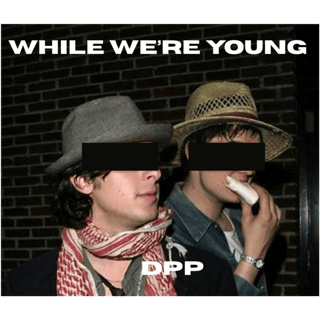
Speaker: So we will be, I think, thinking about some films that sort of take on that topic. I think very specifically The Big Lebowski, which is about sort of boomer protagonists encountering the the so-called nihilism of the Gen X generation. I think also perhaps Noah Baumbach's While We're Young, which is about Gen X sort of up and... Upper East, I'm going say Upper East Siders encountering lower East Side slash, it wouldn't have been Lower Side, it would have been Williamsburg, ah Millennials in around 2020, 2012.
Speaker: So those films I think should act as bridges for sort of these kind of epochal shit. Maybe epochal is a bit strong, but generation, we we'll stick with generation. Epochal is perhaps saying too much. um But I think I'm interested in those two because I'm also sort of in between generations. My dad was born in 1965, so the first year of Gen X, and is kind of a Gen X boomer across.
Speaker: And I was born in 1995, which is ah according to some marketing agencies, the first and last year. They were either Gen Z or Millennials.
Speaker: I think some cast off in 94, some cut off in like 97. So it's it's kind of blurry. But yeah, I'm kind of in between. and My father was always, is always, sorry, he's not dead yet. is Has always been a kind of weird blend of the the sort of boomer idealism crossed with the kind of Gen X anti-consumerism.
Speaker: And I always found that like fascinating growing up, that he would like in one moment be sort of, I don't know, playing like Nick Drake or Gosh Genesis or like King Crimson and being very boomer. And then in the next moment be sort of like discussing like you know retreating to the hills and making his own furniture.
Speaker: I don't know, how that corporations are evil um and how the Iraq were at Bush. I remember growing up with him being fucking Bush, which just feels very Gen X to me. Yeah.
Speaker: And yeah, I think equally sort of stuck between these two larger sort of movements in history. um And I think that's an interesting place to be. i I agree. And in fact, you know, my parents are both boomer boomers. i mean, my dad's 48, so he's the very beginning. And then my mom is 58. But, you know, to use parents as an example here, I mean, my mom was very much like a 70s kind of post hippie hippie, right? Like burning bras, but in an apolitical way or or what she would have thought of as an apolitical way.
Speaker: But certainly by the time she passed away, it was basically a proto-Trump voter, right? And so part of the reason this is so fascinating to me is because I'm interested in how it is that those changes happen and also how it is that the various elements produce those changes. So, you know, your dad wanting to build furniture is itself an outgrowth of a certain kind of post-Timothy Leary boomer kind of, like it's in the air, getting away from it all, you know, less political Kaczynski sort of thing. But also, at the same time, he's got that, but he's also got the kind of like GitHub, like not wearing shoes, like connecting to the earth, but also doing code, like hacker ethical hacking. Is your dad a barefoot guy? no not no
Speaker: No, he's like socially like cynical enough to know that like this is the thing, because like he's Gen X enough to be like, man, like you cant like you want to be able to do that, but like society, man. i I couldn't you know shout out to the guys podcast with Brian and Chris.
Speaker: They recently had an episode on barefoot guys. So I did have to find out. He's not practicing barefoot guy. But yeah, know like Zen and the art of motorcycle maintenance. or the I don't know. like Hell yeah.
Speaker: Straight into my veins. That is, that's what we're here to do, folks. We're here to find out what, why were they reading the book? What was going on What was that book about? don't, don't understand, but yeah, they loved it. They really do. Yeah. there're the We're going to read every single word of Infinite Jest. It's going to be an entire season, folks. Gen X part two, nothing but Infinite Jest.
Speaker: It's going to be 700 episodes. But you know what? You're going be able to tell your friends, I did it. I'm a toxic man. I read Infinite Jest, audiobook style, with the dulcet tones, half British, half American. What more could you want? A little diversity.
Speaker: you know Yeah, we should clarify that our podcast profile picture yeah is ah is a transatlantic you know expression of unity. Yeah. Of the desire to videotape people in bathrooms. ah that's That's what it's all about. You need to use add some context to that, Chase. It's a picture of um the premieres of the United States in the UK at the time, Tony Blair and and William Jefferson Clinton, along with noted um photographer, rock musician, all around sort of figure of the mid-20th century, Chuck Berry. So...
Speaker: In any case, we wanted to keep this relatively brief because the episodes are meaty, long, full of great guests. um And it's not just us blathering for the most part that we do like a blather here and there.
Speaker: So if you have enjoyed this, or you know even if you didn't enjoy it, you should still go to patreon.com. They can pay us to stop. Yes, you can pay us to stop. In fact, if you go to the top tier, thirty for $30, when I think about that, that's what? Two Starbucks coffees? That's like i one late night Amazon.
Speaker: I was a joke. It's probably it's probably like three. um I don't know. I don't drink at Starbucks. I'm sorry. I'm i'm anti-consumerist like that. You can go there. You can check out the tiers. You can pay us to stop at the top tier.
Speaker: um You can also get on on it for $5 a month. You're a slacker. You're not paying us enough, but you can get the Patreon-exclusive episodes. The first spate group will come out for free so that you can get acquainted with us.
Speaker: Hit the email. What a good look at me. I'm plugging. I'm a host. I'm telling you, you can contact us at death.com. photopod at gmail.com. That's where you can send in questions, concerns. We might read them on air.
Speaker: Send pictures to us. If you say, here's a picture of Tony Blair I found, we'd love to see it. If you're Jarvis Cockburn, get in touch with us. and these pictures of Tony Blair, Clinton, Silvio Bersconi, Angela Merkel, the whole lot we want them. Send them our way.
Speaker: We would love to see it. But can contact us there. And in fact, you can use it to put your picks in. That's right, folks. If you donate enough money, if you join us at the ah globalist tier or higher, you'll see the perks on Patreon.
Speaker: You're able to make some suggestions. And in fact, at a certain point, pick an episode for each month. Here is my request for you, ladies and gentlemen. Hold on. Let me just get a little... I'm asking you, ladies, gentlemen, non-binary pals, as is the Dark Woke podcast, and I'm required to say that by my sort of framework.
Speaker: If you could just like and subscribe if you're listening on Apple Podcasts, Spotify, it helps to get the word out. It helps to let us know that you care to let the world know that you care. And if you really care, if you really, really, really care,
Speaker: Subscribe on Patreon for additional content. Subscribe at a higher level to advise to be your own kind of scheming eunuch or to demand in the way of a sort of Sultan's favorite wife in the harem. good Please do so.
Speaker: It would mean the world to us. And last but not least, just want to thank you for listening because this program is brought to you, not at this point by listeners like you because we're totally unfunded and coming out of our own pockets, but soon, we hope, funded by listeners like you.
Speaker: So thank you very much. Bye-bye.