Become a Creator today!Start creating today - Share your story with the world!
Start for free
00:00:00
00:00:01

All in Adams -- Living with Diabetes (Diabetes Management Program)

71 Plays6 months ago
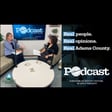
In honor of November as National Diabetes Awareness Month, we’re meeting with Maritza Orozco-Reyes from the Adams County Health Department (ACHD) to discuss ACHD’s free Diabetes management program, Living with Diabetes: Diabetes
Self-Management Education and Support.
Recommended


Transcript
Introduction
00:00:04
Speaker
Welcome to All In Adams, the official podcast of Adams County Government, where we're all in for our residents, our employees, and our community. So whether you live here, work here, or you just want to know more about what makes Adams County a great place to be, thanks for tuning in.
Focus on Diabetes Programs
00:00:21
Speaker
We're all in, Adams. Hi there, and thank you for joining us. I'm Julie Jackson, a communications supervisor here at Adams County. I'm here with Maritza Orozco-Reyes from the Adams County Health Department, um also known as ACHD, because we're government, we like acronyms.
00:00:37
Speaker
um And in honor of November as National Diabetes Awareness Month, we are dedicating two podcasts to two great programs that ACHD offers that focus on diabetes. So the first one was Journey to Wellness, um which was about prevention or is about prevention. We discussed that on last week's episode. So be sure to check that out.
Diabetes Management Support
00:00:57
Speaker
And the second program, the focus of today's podcast is diabetes management. um So Marissa, thank you again for joining us today. um It's a really important topic for us to you know talk about. So let's just go ahead and jump right in. Yeah.
00:01:11
Speaker
um Can you tell me a little bit more about living with diabetes? And I think it's called the longer version, diabetes self-management education and support program. ah Thank you, Julie. Thanks for having me here.
00:01:23
Speaker
Yeah, so I'm with the Diabetes Education Prevention Program. And the second program that we we're offering is Diabetes Self-Management and Empowerment and Support Group. It's just anybody who's living with diabetes or somebody who's a caretaker of somebody who has diabetes.
00:01:38
Speaker
And we really focus on those lifestyle changes in management. with primarily type one diabetes, we do see people type, or I'm sorry, type two diabetes, and we do see people with type one or gestational diabetes. Okay. Interesting. and Interesting that you say gestational because yeah the reason I'm taking the prevention course is because I had gestational diabetes. And so I know I'm at higher risk. So, um, and so why do you think it's really important to have this class?
00:02:08
Speaker
Quite a few reasons, right? The first one is to make sure that you are managing diabetes well. The second one is education changes over time. And third one is to have support.
00:02:20
Speaker
Support is going to be a big deal. Yeah. And um talking about that support, um and it the class provides support for ongoing daily management. Why is that so important for Adams County residents who are either caring for someone with diabetes or who have diabetes? Yeah.
00:02:36
Speaker
Well, I feel like a lot of times people can kind of lose track of their management, right? And especially when they don't have the support, they don't know where to go to. So here at Adams County, we do offer classes at no charge. Great, great for part of our grant funded.
00:02:54
Speaker
So that's really good. And they just have support when they need it. Right. And so lot of times this education is not being offered at by their provider.
00:03:06
Speaker
They don't have the time to spend an hour, two hours. And this is what it is. It's an eight hour course or eight hours of education on all those aspects of managing from nutrition, physical activity to monitoring and um medications.
Class Details and Personalization
00:03:24
Speaker
Okay. And um in terms of the class, like I know um diabetes has a lot to do with your A1C, right? So does um does the help, does the class kind of help you look at like your A1C number or like maybe how you can prevent like complications from diabetes? Does it look at those things too?
00:03:42
Speaker
Yes. So those eight hours of education, we talk about monitoring. Monitoring as far as your A1C, if you're doing it at home, if you're using something called the continuous glucose monitor, which is those apparatus, if you're seeing them on people's arms now, um that's becoming very popular. So yeah, we want to focus on the A1C because that's really the gold standard.
00:04:02
Speaker
If our A1C is within range, which typically for most people, it's going to be below 7%, that means you are reducing those long-term complications. Some of those long-term complications we're looking at could be ah kidney disease, ah retinopathy, nephropathy.
00:04:19
Speaker
And the reason is because i don't think a lot of people have made that connection that diabetes is ah cardiovascular disease. And so we kind of do a deep dive into exactly what the diabetes is or like what the disease is.
00:04:34
Speaker
Okay. And um some people might think, you know, it's this one eight hour class, right? So does that mean it's like a cookie cutter, one size fits all kind of class? Is it like that? Or is it kind of personalized a little bit more?
00:04:45
Speaker
So with Adams County, we do something, we something that's called a conversational map. Where, yes, it's going to be the same thing we're looking at on the screen, but the questions vary from all the participants. It's going to be more of a conversation, and that map kind of guides that conversation at certain points, but no.
00:05:04
Speaker
And once this those eight hours are done, you still have access to a dietitian like myself after the class. So we can meet one-on-one as well. Amazing. um And so for listeners who might be interested in signing up for the program, what can they expect to learn about if they participate?
00:05:22
Speaker
So like mentioned with the monitoring, the healthy eating, ah exercise, medications, which I feel like a lot of people don't know exactly how their medications work, what their secondary effects are and how to take them effectively.
00:05:39
Speaker
So we go into that. We also talk about those long-term complications and If we know what the complications are, there are things we can do to minimize that risk.
Class Timing and Format
00:05:49
Speaker
And so we talk about that as well.
00:05:51
Speaker
Okay. And when would you say is most helpful for people to sign up? Like, is it something after they're first diagnosed, once they've been living with it for a while? Or like, are there specific times that you recommend they take the class?
00:06:03
Speaker
Yeah, we definitely want to make sure that you're taking it when you're first diagnosed. Secondly, if there's like life changing event, another time you really want to take it is if you're not at goal.
00:06:15
Speaker
Yeah, those are times you want to take it. Okay. Okay. And how would you describe like what a typical class looks like? Like who leads it? Are they in person? Are they virtual? What does that look like?
00:06:26
Speaker
So typically ah somebody who's going to lead the class is going to be a certified diabetes care and education specialist, which I am, by the way, finally. um or And after that, you have to have another specialty. So dieticians, pharmacists, RNs, those are the people who would typically like lead these classes.
00:06:43
Speaker
And it's structured a little bit differently if you're doing it in person or virtually. In person, it's be about two hours. So we do an hour of a topic, take a little break, do a second hour.
00:06:55
Speaker
If we're doing it virtually, it's going to be about an hour for eight weeks. But it's still kind of the same content. Okay. Mm-hmm. And what do you see as maybe some of the most common barriers or misconceptions that people um have when they're when they come into this class?
00:07:11
Speaker
Oh, I think my favorite, and it's like, oh, I know that already, right? I know this. You probably did at some point. I you know, I believe you. However, it is science, things change. So you need to be up to date with that stuff.
00:07:26
Speaker
um So that's one of them. The other one, oh, it's going to be too expensive, right? But like I mentioned, Thanks to grant funding, we can offer these programs for free. Other times, it's time and commitment.
00:07:38
Speaker
We do offer these classes, once again, different times during the day, in person, virtually. And if maybe those eight hours aren't really, doesn't work for your schedule, we can meet one-on-one. Okay.
00:07:51
Speaker
Do you ever feel like people feel like there's maybe a stigma attached to having diabetes?
Addressing Misconceptions and Stigma
00:07:57
Speaker
And does that like affect their wanting to take the class at all? Yeah, I've had some people tell me, oh, I can't tell anybody that I have diabetes. They don't have that support.
00:08:06
Speaker
So you also get that support when you come to class because there's other people living with diabetes that come here. Awesome. Good to know you're not alone, right? Yeah. Yes. Awesome. And for anyone who might be wondering how they can sign up, what should they do?
00:08:20
Speaker
One, definitely go onto our website, um sign up for different classes there. You can reach us through a phone or email. Awesome. And just want to jump in real quick, share the website that you mentioned.
00:08:32
Speaker
um It's adamscountyhealthdepartment.org. We'll put that direct link in the show notes to that class to the class specifically, but you can find those classes by selecting programs and services and then clicking on stay informed under diabetes and heart health.
00:08:46
Speaker
um I believe the the phone number and the email will also be on that page. So that is the best way to get in touch. Right. Yeah. And if you have any questions there on our website, you have a button that says contact us, write your question. We'll reach out to you.
00:08:58
Speaker
Amazing. Um, and one other thing, kind of just thinking of timing, considering that this episode is dropping right before Thanksgiving. Um, you know, it really has me wondering, do you have any tips, um, as we head into the holiday season, particularly for healthy eating?
Healthy Eating Tips for Holidays
00:09:12
Speaker
Yeah, absolutely. So my biggest tip is make sure that you make half of your plate and vegetables. Okay. High fiber foods are going to be amazing for your blood sugars.
00:09:24
Speaker
Secondly is to actually the way you eat your foods, make sure you're eating your fiber first, your protein, and then your carbohydrates. Make sure you're balancing out your meals and please do not skip your meals during the day to, you know, to make sure that your evening email ah meal is your biggest meal.
00:09:43
Speaker
Don't skip meals. Okay. Good to know. A lot of people think that might seem counterintuitive, but it's not. Awesome. Well, before we sign off, um is there anything else that you think is important for our residents to know?
Empowerment and Education
00:09:56
Speaker
Yeah. Our classes are offered in English and Spanish.
00:10:00
Speaker
So that's very important. Mm-hmm. Awesome. And I think one other thing that we had talked or talked about a little bit is it's really about empowerment and not judgment, right? Yes.
00:10:12
Speaker
That's another good key thing to remember. Yeah. A little tip that I got from another dietician very, very long ago is I don't judge, I educate.
00:10:23
Speaker
Yeah. Right. And the more, you know, the better decisions you can make in managing diabetes. It's not about being perfect, but about doing the best you can most of the time. Awesome.
00:10:34
Speaker
Well, Maritza, thank you again for coming on the podcast and sharing all about the diabetes self-management education and support or the DSMES class.
Podcast Conclusion
00:10:43
Speaker
Again, we like those acronyms. um It's really been a pleasure chatting with you today. And I just really hope that this has been helpful for our residents who are living with or caring for someone who has diabetes. so As I mentioned earlier, the link to learn more about the DSMES class will be available in the show notes, and you can find more information at adamscountyhealthdepartment.org.
00:11:03
Speaker
So thank you all for tuning in. I'm Julie Jackson, Communications Supervisor at Adams County, and we'll see you next week. Thank you. Thank you. That's a wrap for this episode of All in Adams. Thank you for joining us as we explore the people, programs, and the policies that make Adams County a great place to live, work, and thrive.
00:11:22
Speaker
If you enjoyed the show, be sure to subscribe and share with your friends, neighbors, and colleagues. Have a topic you'd like us to cover? Let us know. We're all in for bringing you the stories that matter most.
00:11:33
Speaker
Until next time, take care of each other and stay connected with us on Facebook, Instagram, Nextdoor, and X. We're all in, Adams, and we're all in for you.