Transcript
Speaker: hip hop is rooted in foraging. Right? Right. It's sampling. We call it sampling. Right. But foraging is how we learn. Yeah. You what saying? Sampling is same shit. It's how we learn. Right. and And so what I say about hip hop is hip hop is the most authentic expression of our modern human experience.
Speaker: All of the elements are directly correlated to our earliest forms of communication and creative expression. Right. Right. Like hieroglyphics is graffiti. Exactly. You what saying? Yeah. The DJ is when they were playing drums.
Speaker: You We used to dance, to tell our stories and movement. yeah Right? In a certain what garb we wear. That's the b-boys and the b-girls. And then once we started to have actual language, the orators came out, whether the tribal leaders, the shaman, the medicine men, or the griots. Right.
Speaker: right and and so those are the mcs and what were they all sharing knowledge yourself knowledge yourself for sure right who we this is who we are this is where we're from this is what we do this is why we're flying in the modern times right and think about every crew did that yeah you what saying so we might have had you know the dude who's a dancer you might have to do this mc you might have had the dj
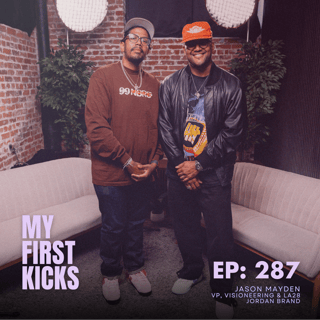
Speaker: What's good, everyone? Welcome back to my first kicks, the podcast where I use sneakers as a through line to get to know the guest in front of me. This week, I am joined by the man, the myth, the legend, Hawaii Mike.
Speaker: That's good. And I don't say this lightly, but like I remember going tell you, I remember hearing about you on the forums back in the day and just your extensive collection. And and just because like, you know, we were supposed to do this last year and and I lost the I lost the message because my DMs got of got them into a mess and that's all my bad. But we know you and we met.
Speaker: Shout out to to Mikey, the camp out. But like he introduced me to you at Ren Arts and we were like, you know, we're to make this happen. i was like, oh, my God, I can't believe I'm talking to Hawaii Mike. Like you invited me to to your spot. ah how Fly private social. Fly private social. But youre you had an Instagram account, Chef for Hire. Chef for Hire, yes. yeah That's the cannabis brand. Yes.
Speaker: And so it all coincided with each other. And I was just like, yeah, I got to have you on the podcast. It would be dope. um And then i I lost the DM. and i And then my world has been And he ghosted me. No, I didn't go see you, but it's a big time. It's a big my bad. And I was just like, when you hit up when you hear me up, I was like, I look back at the last message. I was like, oh, crap, my bad. yeah I saw them. I always say everything happens, you know, as it's supposed to. No, yeah, man. You've been like real quick, because like, you know, what has been very like dope was, you know, the the Knicks won a championship. And in that championship, there was an ad that ran where ah that they were like,
Speaker: Somebody, the person, shout out, I forgot his name, my bad, but he's wearing the DJ Clark Kent Knicks high. Yep. Yeah. Oh, and they what they did that in that commercial yeah spot. Yeah, yeah. And then everybody started posting that. Yeah. And because of that, there's a video of you copying it. And that video started picking up of like, Because you were the person, you know, in the video, I think it was like a news or something like that. It was like a it was like ah ah a social clip that was past the being started posting around. It was you yeah buying the shoe and being like, you know, I got to have these. um But like that was just crazy to see that. Well part of is because I managed Clark Kent. We were partners and also managed him kind of did a lot of the sneaker stuff with him. So yeah RIP Clark. rp i was That was my brother. That's all Clark to the kids. And yeah so it was fun watching that pop up again and and then paying homage to him. I thought that was really dope. And, um yeah, but I was just, I think that was just the release party for the. Yeah, was the release party. Yeah. I mean, they yeah yeah. mean, you've been in some legendary rooms, man. It's just, it's crazy, you know. ah So it's a very huge honor to have you on here. But to hit you with the first question I ask. The question that I ask everybody each week, and that question is, what's your first kicks? It's that first pair sneakers you absolutely needed to have.
Speaker: The first pair that I absolutely needed to have was top tens. Yeah. Adidas top tens. Yeah, Adidas top tens. Ewing days? I had, nah, before that, I think. ah Because I was, I'm from San Francisco originally.
Speaker: And I was in Hawaii from 78 77 to or when i moved back with my father. yeah and in between that time like hip-hop that culture started coming up and you know like i became a b-boy when i got back and it was like but it was also in between like you know basketball and b-boying and it was just the top 10s were the first yeah but my like first first where i was like i really was the jordan fire three yeah i'm saying like i worked at athlete's foot at the time And this is, I swear ya is the only sneaker I ever ever stole.
Speaker: um I swear, it's the only one. I promise. um And ah yeah, I worked at Athlete's Foot and, you know, did the old, do and I'll take the garbage out, throw them in the garbage. No way, you did. Yeah. Because they didn't have cameras back then. Right, yeah. know what I'm saying? So this is 88. So was like, you go back, went back after everybody closed down, went to the garbage, got my sneakers. That's crazy. Got it fired shortly after. They found out? I don't remember what happened. think snitched on me. Oh, man. don't remember what happened. But yeah, I didn't have that job much longer. as Jumping in real quick to remind y'all to like, subscribe, and leave a comment on this video if you've been enjoying this conversation with Hawaii Mike. And of course, if you're listening to this on Apple or Spotify, hit that five stars on those platforms and then leave a review if you're on Apple or leave a comment if you're on Spotify. And of course...
Speaker: Help out the podcast by signing up for the Patreon. Patreon.com slash MyFirstKicks. I have only one tier. It's a $5 tier. With that, you get extra content. You get extra you know community members around you i'm gonna still keep building that up hopefully you know involve sub stack into that but if you want to help the podcast out patreon.com slash my first kicks trying to build something dope but for now let's jump back into the episode that's crazy it's
Speaker: I mean, I used to hear about this all the time, but like even even out here when we had Nike Town, people was doing some of the most wildest things. and Oh yeah. I mean, I worked at Paragon when I moved out here. And bro, Paragon, bro, it was animals working at Paragon. Bro, like, I mean, you might as well have been lowlifes working at Paragon. Yeah, yeah. Because it's low key. Uh-huh.
Speaker: Pun intended. Yo, the amount of polo that they had in Paragon yeah was crazy. Like, I was taking socks and polo and golf anoraks and all kinds of shit, bro. It was beautiful, man. That is crazy. I mean, you talked about, i mean your name's Hawaii Mike. So I was very curious, like, how how was it how was it growing up over there?
Speaker: And like, did you bring hip hop with you there? No, I was young. I was 78. So, you know what I'm saying? I was like five until I think I moved back home right when I turned 10. Yeah. um And i was surfing. It was like, that's where I got, s so that's where i started surfing. That's where i started cooking. um That's where I first heard Rapper's Delight, but I didn't really get into it until I got back to the States. yeah Like, well, mainland. And my father's a musician. yeah So he bought me like Herbie Hancock rock it. He bought me Malcolm McLaren. and You know, it had Buffalo Gals on it. um
Speaker: So he was super supportive of it. He still has those albums like now at his crib. That's awesome. Like I just saw them. And so it was then, and I became a B-boy. We started getting paid and doing all that shit. My father was in a band called Viva Brazil. And so they started, they helped start Carnival in San Francisco. So I think they just celebrated its 45th anniversary. And so either the first or the second year that they started, I have some pictures of me B-boying on stage with them. My father, I'm like, they're playing a batucada, and I'm like, B-boying. Should we talk about this? Nah, I don't think so. You know I'm half Brazilian? Oh, nah. I did not know that. My mother's from Brazil. Oh, snap. Yeah, my mother's born in Rio. So when you said that, I was like, yeah, I know that band. Yeah, my mom would play in house. Oh, for real? Yeah, yeah. Oh, yeah. My father's like on the cover of the Viva Brazil. Like, he's holding the tambourine, spinning on his finger. That's bald dude. Oh, wow. That's your dad? That's my dad. That's crazy. going have to tell my mom one again. You're like one the first people that actually knows the band. Except for DJ Spinna knew also. Oh, okay. Yeah, DJ Spinna knew also. He was like, what? That's your dad? I was like, oh, shit, dog.
Speaker: But um I never actually thought about it and you know I ended up in the music business after. You know what I mean? I always say, man, I've never known, I still don't know what I want to do. I just do what's put in front of me, what I'm kind of called to do, where wherever the energy kind of pulls me. And I've been blessed to live, like I think, like about six or seven lifetimes. Hey, man, I mean, that's beautiful. it's it's Look, one, I'm in shock. You you might be the only other half-Brazilian.
Speaker: i don't know, if what's the other side? but Well, Filipino and Palestinian. Wow, okay. Free Palestine. Yeah, but always. Always. And that is, well, one, you Everybody talks about my mix. I'm half Bengali, half Brazilian. Yours is the crazy as you yeah craziest mix, man. i yeah Mine, is mine i will say this. i am racially, well, I'm not racial, ethnically ambiguous. yeah yeah Nobody's ever been able to guess it It really depends on what room I'm in as far as what people think I am. yeah you say yeah Most people thought I was mixed as a kid, like growing up in San Francisco. When I got here, I'd be anything from Puerto Rican to Russian to like
Speaker: never would I was. Never. Like my nickname growing up was Pino because nobody believed I Filipino. And i'm from San Francisco and Daly City is like the port of the Philippines in the United States. Which is crazy. and And then like, I don't, I don't even know. Like, so then going back to San Francisco, like, in and then finding hip hop or hip hop finding you actually, like, growing up in that what was that like i mean san francisco was dope back then like it's it's not like oh my god like i know everybody says it's so cliche saying their city their city isn't what it used to be yeah but bro the tech bros and technology and silicon valley killed our city for sure like just it's just gutted it yeah currently right now it's one of the most expensive places to live
Speaker: and nobody's from there. yeah It's like you go to this city and it's all transplants. Like here's a lot of transplants. You can still feel the heartbeat. There's still a pulse yeah of New York. yeah people People move here and then they try to become New Yorkers. yeah If you go to San Francisco, i feel like it's more just you're there to work. You're only you're only there to work. yep And it's like Yeah, Silicon Valley type of, yeah, I haven't been there, but I've just watched a lot. I'm very of very observant. it was yeah It was super diverse. The only thing we didn't really have representation of was like the Caribbean. You know what I'm saying?
Speaker: Everywhere else though, like South America, Philippines, Asia, all over Asia. Yeah. you know in Bro, it was just like everything. It's a melting pot. like We got some of the most incredible Mexican food. and I mean, the the Mission Street burritos. Oh, yeah.
Speaker: Bar none. I've always wanted to try that. Our Chinese food oh yeah goes dumb. Is that the... Because Mission... The largest chinese Chinatown. But like Mission... Because I think that's the first time i ever heard the Mission name was like Mission Chinese food.
Speaker: Oh, Mission Chinese comes from there. But yeah, but that was way later. know what I'm saying? But the Mission District is still like, that's like the bloodline. would say like Mission is our Broadway. Right. know what I'm saying? Like we have a Broadway. Yeah, yeah. But how Broadway runs all of Manhattan, that's Mission. Ah, okay. Yeah, I didn't really understand that until now. Mission goes all the way through Daly City, all the way to the water in San Francisco.
Speaker: You what So, like, how does hip-hop and sneakers really start, you know? Because I, to be honest, when I started getting on the forums and really tapping in with, like, the SB culture, a lot of the people I met were from San Francisco. you know Oh, for real? Or Filipinos. yeah So, like, yeah for a hot minute, you know, i was very, like, critical about, like,
Speaker: Oh yeah, like you know sneaker culture really thrives within the Filipino culture at one point. you know so like And even now, because I play basketball with a lot of Filipinos, and they were like, yeah, I had a big SB phase. like Everybody had like this huge you know ah phase of with sneakers, especially you know Filipinos. So like how how did you find your way into that?
Speaker: um was just natural, bro. Like, style was just something that was inherently in me. Even from surfing. Like, surfing, if you look at people surfing, yeah everybody got a certain style when they get on the wave. know saying? And so that was just kind of something that was there. You know, my parents being musicians, me learning how to play the drums.
Speaker: You know, watching capoeira. So that, for me, is like translating to b-boy. You know what I'm saying? Like, the drum rhythms of the African and Brazilian drums. Like, it was just...
Speaker: innate almost for me right and then ah the competitive nature you know i'm saying i wasn't tall enough to play ball so i could i could battle you though yeah yeah you know we could rock steady we could yeah we could battle and then that turned into just dancing and then again style has always been just kind of part of that. was like almost the same thing for me. And so, you know, fat laces on sneakers, used to, you know, take the hole punchers, make the holes bigger. How could we get five different laces and have them wrapped under and like, you know what I'm saying? So like, yo, so I'm spinning on my head, you see all these different colors and like, That was, that was the whole shit. We had, you know, the custom vests, you know, with my name Kid Nice on the side. You know I'm saying? So was like all of that, it just kept translating. And then as the culture kind of started just to grow and there was more like inputs, there was more you could take out of it and, you know, and add to it. And that's the thing is like hip hop is rooted in foraging.
Speaker: Right. Right. It's sampling. We call it sampling. Right. But foraging is how we learn. Yeah. You what I'm saying? Sampling is same shit. It's how we learn. Right. And so what I say about hip hop is hip hop is the most authentic expression of our modern human experience. All of the elements are directly correlated to our earliest forms of communication and creative expression. Right.
Speaker: Right. Like hieroglyphics is graffiti. Exactly. Exactly. You what I'm saying? Yeah. The DJ is when they were playing drums. You know what saying? We used to dance to tell our stories and movement. Yeah. Right? And a certain garb we wear. That's the B-boys and the B-girls. And then once we started to have actual language, the orators came out, whether the tribal leaders, the shaman, the medicine men, or the griots. Right. And so those are the MCs. And what were they all sharing?
Speaker: Knowledge of self. Knowledge of self, for sure. Right? who we This is who we are. This is where we're from. This is what we do. and This is why we're fly in the modern times. right And think about Every crew did that. yeah You know saying? So we might have had you know the dude who's a dancer. You might have the dude who's an MC. You might have had the DJ. And that's the thing. Our DJ culture was crazy. know what I'm saying? Shout out to Q-Bert and Mixmaster Mike and Apollo and you know and Shortcut and obviously my man Alex Aquino.
Speaker: that was a big you know thing and because they started to get known yeah you know saying so those are my homies and so then we're moving around to different places and then you know there's a whole crew that comes out of that we're all the dancers so it's like it just it was like just a natural progression bro it's like and that's crazy You know, I mean, yeah, that's your the the birth of hip hop and, you know, you've been around for, you know, seeing a lot of versions of it, you know, so it's just like that early stages like we don't wear the I mean, we talked before we got on on the on the mics here, but we talked about just like, you know,
Speaker: creativit creativity comes out of you know necessity or like or wanting to get your message across, like that that thing of trying to change your circumstances around you. It really is interesting to hear it from a different state side because like you know I know what New York's representation of that is we've got the Bronx, we've got we've got you know the first hip-hop show now up there, and ah and everybody else you know kind of bringing that to the everyday, to the streets, or when you'd go to the street and you'd hear people play music and everybody's around there, we're all having these big conversations. It's kind of like
Speaker: It's like the early stages ah of really building community was actually so pivotal, you know? So it's like seeing that and hearing that is like so dope to see that it reached all the way to the West Coast without, you know, without any TVs, no real, like you can't get, you know, the radio stations in New York City, you know, and they weren't even playing that stuff. But I will say,
Speaker: I don't remember how the fuck this happened. yeah We used to get Video Music Box. yeah There was a way for us to watch Video Music Box. That's crazy. right Shout out Ralph McDaniels. Shout out number two on the podcast. ralph is Ralph is probably one of the most important people behind the scenes yeah of the culture of hip hop.
Speaker: you gotta remember, consistent from what our, I think it was 81 or 82, when he started recording, something around there, but he was even before that, because he's older than us. But to do it that consistent consistently, he has, and he I know he's archiving this stuff right now, but he he has probably one of the illest archives. of just everybody in their purest form because the way people and i always tell people this man the way we have conversations with people we know is way different than how we have conversations with people that are just interviewing right yeah know what i'm saying and ralph had that yeah everybody knew him yeah and everybody wanted to be there first because they all started watching it and seeing their people and they were like yo that's So, yo, shout out to Ralph. He's, he's I know they thought around the goat, goat status. He deserves more flowers than I can give him. I think like, yeah, I mean, I remember finding Video Music Box and being like, does everybody know about this? like you know like is it's It's something that definitely needs to be spoken about more, especially within the zeitgeist of hip hop. Because without Video Music Box, we wouldn't get MTV. We wouldn't get like a lot of this. You wouldn't have your own TV raps. Yeah, exactly. Because that's exactly what Fab Five Freddy did. Exactly. would be like, yo, raing I could do that. Yeah, yeah we should do that for MTV. It's gotta be dope.
Speaker: um The other thing I'll say, though, about the Bay in New York is... it's almost like a little New York. Right. i mean, we've got two bridges. know what saying? Like we got, you know, Oakland could be Brooklyn, you know, San Francisco could be Manhattan, you know, Marine, you know, so there's like, there's this kind of vibe like that. Um, and how we got down as far as like, just the, the diversity ethnically, like it is really dope and everybody kind of got along. Yeah. Yeah.
Speaker: When we stop getting the along, like, that's the thing that I'm trying to get people to understand is, like, it's not us that hate each other. It's they hate seeing us together. Yeah, always. Because there's strength in numbers. So all they want to do is divide us. There's no reason. Like, how can we be at each other by ethnicity when we're the global diaspora, representation of the global diaspora? Right, yeah. In a melting pot. Mm-hmm.
Speaker: in a young ass country called America. right None of our traditions are from here. So we should be like, oh shit, we're all in the same boat together. wow yeah And then it's like, oh, we're one. Now let's celebrate our differences. Yo, where are you from? And this and that. yeah you're How do we mix all of this together instead of being like, no, this is mine. and I created this, this. It's like, bro, that's only to divide us. You're helping their agenda. That's one thing about living out here and being like, I mean, from New York and having the experience of having so many cultures really collide. And you get to like go down one block. You get to have a condominium food, go down to another block. You get to have, you know, Filipino food, go down another block. You get Russian food. Like you get to experience these different cultures without it being like, actually like, yo, you need to. It's more like, do you want to, you want to travel around? Like, You know, i think ah the the way that, you know, I wrote about this literally today about just how, um you know, sneaker culture has evolved into this thing where now brands are really trying to, you know, make us pay for it now.
Speaker: Like, it's this thing that, like, it you can't, like, people are trying to, brands are trying to create community and culture around themselves without it being like, yo, the people need to make this and then we need to buy into that, right? And so...
Speaker: When i think about it, I think about it how I grew up in Queens and being able to, you know, basically visit the world within 15 blocks. Like, you know, you'll say ah when I had Ari on, we talked about it, like just the the idea of just like, you know, being worldly and and the idea of like going to Roosevelt Avenue, you can just walk down the whole entire Roosevelt Avenue. And you can visit every single, you know, Western Hemisphere type of, ah you know, ah country and or even just visit the whole entire globe. And I think that's like that's unique, but it's also unique to cities. It's not unique to middle America. It's not unique to, you know, so someplace that's like nothing but the sticks. But I do think and I implore people that whenever they go and visit a city is to also check out those cultural hotspots because,
Speaker: that's the only place you can you can actually experience culture without having to get your passport stamped. And like, I think culture is like the biggest thing that we need to continuously pass around because as soon as it stops being passed around or shared, that's when it dies. And it's like, there's no person that's going to be like, yo, you remember that? Like, it's like, You don't want to hear that. I don't want to, I don't want to, you know, at the end of like, you know, yeah God forbid, but like, you know, my deathbed, I'll be on this podcast and I made my last podcast whatever. And I'm like, yo, I didn't add to sneaker culture. I didn't, I didn't, I didn't keep it alive, you know? And so that's like probably would be like one of my biggest regrets, but because
Speaker: I put so much effort into making this a thing and trying to make people you know understand that this is all about the people that sit in front of me and how we talk about this and how we've experienced it so that we can always share that the culture aspect, because that's what that's what this needs. That that conversation needs that. I mean, the thing is, we we are the driving force, because culture is what moves things. Culture is what is the magnet that brings people in, right?
Speaker: And within that magnet, especially when talk about hip-hop, it's authenticity, yeah right? The problem with this country is there's no authenticity to it. Everything is contrived, yeah right? Everything is made up.
Speaker: Rape, pillaged, stolen, erased, yeah right? there's What's American? That, what I just said is American, right? There's no American food. Like, what's American food?
Speaker: I can't tell you. I mean, hamburgers from Hamburg, Germany. Exactly. So fries, yeah same shit. French fries. Right? Yeah. What pizza? Like, what the fuck are you going to say? What's American food?
Speaker: Like, we don't have it. Yeah. What's American music? Yeah. Right. American music, any genre of music you say is rooted in black culture. Yeah. Period.
Speaker: Period. period yeah Like there's ah blue. I mean, a country is white people using a West African instrument singing the blues. Yeah. They call it country. Yeah. Exactly. That's it. Right. yeah And so we have to get to a point where we can understand these things and build off of that because everything that we're buying into is contrived. Yeah.
Speaker: you say everything we naturally are is usually pretty authentic yeah but we're so far away from that right now that we don't even understand like you to bring it back to senior culture yeah bro look at nike restructuring what they just spent 800 million to restructure why yeah because they've been chasing they've let the tail wag the dog for how long they've been chasing our dollar it's Jumping in once again to remind y'all, I have shirts, I have merch. Support the podcast by repping the podcast, by copping one of these shirts that you'll see right here in and the bottom left, I think, or bottom right. at the side Probably bottom right. um
Speaker: hook Hit me up, info at myfirstkicks.com or shoot me a DM at myfirstkickspod and we can talk about it. If you want to meet up in the city, in New York City, I will meet up with you. $40 in person. We can have a conversation, talk a little bit. Or hit me up on the DMs and the email and tell me where you live at and we will figure out the shipping. So it's be it will be $40 plus shipping. If you want to support and rep the podcast,
Speaker: Let me know. Hit me up. If you saw me ComplexCon, I was wearing a shirt. Hit your boy up. But for now, let's jump back into the episode. And so i always tell people Nike has become a material swap and color up company. When I first started dealing with Nike, when I was at the Source Magazine, when I was a style editor, yeah they were performance, innovation, and technology. Those were their pillars. Right, yeah. Right? I literally just posted on somebody's site or Instagram, there's not really a style of sneaker after the Presto that was made that I really rock. Mm-hmm.
Speaker: That's 26 years ago. No, yeah, yeah. Right? Yeah. They've been living, I've been wearing the same sneakers since I was a kid. Mm-hmm. That's wild. Yeah. Right.
Speaker: Where is innovation? Yeah. Right. So everything is contrived. They're chasing us. We have the opportunity now to do this. We have to remember we forgot where we came from. We forgot what it took. Now we're at the point where we have all the resources, all the information. Right. We need to take that experience, turn that to wisdom, create some understanding so we can build forward together. Because at this point,
Speaker: if we have the creativity, we have the authenticity, and we have the influence, plus we have the access now to do any type of manufacturing, get to money or whatever we need to do this shit for ourselves. yeah But I don't mean one person. right I mean as a community. As a community, for sure. collective. yeah right Because the thing is, and I think that's where we keep going wrong is,
Speaker: if we keep going by ourselves, just get cherry picked. Right. If we start going together, we have some negotiating power. We got some strength to stand on. Right. And the thing is they'll go, well, they don't do that. That's the fuck they do. That's the whole, that's why there's all this consolidation happening. How many sneaker companies are there right now? How's there only a handful of sneaker companies right now? Right. Yeah. Right. Yeah. Or even like the small, like the small big ones or whatever you want to call them. But like, That's like, like the, the, the idea of like, you see who's getting this the storefronts or, or who's actually like moving stuff. It's always when you look at, you know, people of color starting a sneaker company, you know, it's always like this one person is designing this, doing this and doing like, the The amount of, and this is why I always bring up the the to to this, to the people that's listening to this and watching this is like, there are more jobs within just designing a shoe.
Speaker: Like you have to be able, like you need the team. And in order to to have the team, you have to have the people that are able to do those skills around you in order to help us do this as one big thing. But it's like, i don't know. I don't know. i don't know how to continuously try to you know promote that um or even in a bigger scale or something like that. But it's just like, you know, it does need to be spoken about. does need to be like share the wealth, share the knowledge. And that's the only way that these jobs will will actually become a thing within something that's outside of a big box brand.
Speaker: And I think that that awareness needs to be spread because. So many people want to do things by themselves because it's cheaper. You're going to do it cheaper because it's like, I need to save as much money as possible. ego I mean, they want they want to own everything. And a hundred percent of zero is still fucking zero zero for sure. So we, we, forget again, we forgot where we came from. When we started, especially talk hip hop, it was all crews. Yeah. Yeah.
Speaker: Where the crews at right now. Nah, yeah, I mean. We don't have the tribe mentality, yeah right? So it's easy to keep knocking us down. It's easy to knock one person out.
Speaker: Try knocking 10 people out. You know what I'm saying? It's a lot more difficult. you might get through two or three, yeah but then all So that's what we got to get to again. Again, we have to remember where we came from. We don't remember the struggle. We don't remember all that shit. We got into, oh, I want to have more than you.
Speaker: that was never what it is. We wanted to be fresher than you. It wasn't about how much more we had. was just every day could be fresher than you. You know what I'm saying? It wasn't about, let me show you this or show you that. now because I have X amount of pairs or, you know, Clark used to buy 10 pairs of one joint. Now I'm going to go buy, do that. It was never about, that's what he does. Why you doing that? He does it. Right.
Speaker: And that's when the whole me too and everything else, right? I was just fucking around like Timo. Timo, if you put the M in the front and the T where the M is, it's me too. Yeah. Right? And that's exactly what they do. They me too, everybody else is shit. They're just like, oh, that person, this is selling? Let's make a cheaper version of that. I'm very big on psychology. If y'all haven't read, I mean, watch the ah the documentary, The Century of the Self. do You know that one? No, I don't haven't seen that one. So Edward Bernays is, is is um he's the one who supposedly like helped put public relations, really put it to the forefront. Public relations and marketing. Right.
Speaker: He was the nephew of Sigmund Freud and used psychology, basically our fear of missing out, FOMO. Okay. Yeah. On public relations and marketing. Yeah. So if you look at now, why do people buy things? Because they feel like, like oh, we won't be able to get I'm going to miss out. Oh my God. Right. Yeah. And that's what everybody moves on is scarcity. Mm hmm.
Speaker: There's no scarcity. It's all in your fucking mind, bro. Like, yeah, they can put out 12 sneakers. You don't get them. Okay, cool. I didn't get those. Now what? yeah Now the next one. okay But psychologically, we hold on to that because most people will not let things go. They're to hold on to it keep suffering. Oh, I didn't get it. I suck. I'm whack. I don't have as many as my homie does. Oh, I'm not as fresh everybody. I'm not as fresh everybody. And it just keeps going down. I even said the sneakers app...
Speaker: actually became a weapon against Nike. Mm-hmm. Right? Because psychologically, people, especially millennials and younger, yeah they've been told their whole life they're winners. Mm-hmm.
Speaker: This app keeps telling me I'm a fucking loser. Yeah. Every time I go on it. After a while, I don't want that anymore. Yeah. I don't want to have that experience anymore. Yeah. You know what I'm saying? And they're not thinking of this psychologically. But all of this shopping, dressing, how we talk, how we look, it's all psychological now.
Speaker: And now that there's social media, everybody can be seen it's magnified way more. yeah You just have to be somebody. You know what saying? Like before the mobile phones and camera phones and all that, you just have to be somebody for anybody to know you. right Like literally, you have to be somebody in the streets, in the club, wherever your world was,
Speaker: Now, I could be in my bedroom and mother gives no me. Yeah. Which is wild. It's crazy. Right? So anybody that's good at understanding the algorithm and consistency, hooks, and all these other things can do it right from there. Yeah, from the crib. can you get outside and do this? Can you really, and that's the thing. So everybody's individualized. like um Remember that movie, Surrogates? Yeah.
Speaker: That's where we're at right now. yeah we're We're like one inch away from surrogates. Right? Because it's basically, that's what we're doing is creating this ideal um identity of ourselves. yeah Right? This avatar or whatever that to buy in on. But we're at home sloppy as hell, not doing shit. That's where we're at mentally. yeah You know what I'm Like scared, anxious, worried, like all this other stuff, but as long as I look good, i'm okay. Yeah. I mean, we like, everybody tries to treat their IG as like a highlight reel, right?
Speaker: So if people buy into the highlights, they'd be like, yo, there's nothing wrong with this person ever. Right? And it's just like, that's not the case for anybody. Everybody goes through struggles and you have to really, you have to really like,
Speaker: it's That's where the question becomes, do you want people do you want people to be in on that as well? like And if that's okay with you, that means you're there in terms of like like as a support system. Because you now you just changed the relationship. right Now you're like, yo, you could get you get to see my downfalls. You get to see when I'm going through great stuff. But...
Speaker: at the end of the day, you're part of my family now. Because that's no that's that's stuff that's always been reserved for family. yeahp right So it's like, yeah, you lose that you lose that mystique of like, oh, this person is doing all the cool shit every single day. Or he's post he's saving, this person is saving their stuff that they went on vacation two months ago, but then they don't show that you know they defaulted on their loans or something like that, you know or that they just lost their job. No, everything's great.
Speaker: But How do you know somebody struggling if they don't say it And I tell this, that I told this to a ton of people all the time. I'm like, how, like people need to know your intention, right? Like if they don't know that you're looking for something or that you need something or that, and you only just show them what you want to show them.
Speaker: then when it's time for for these people to step up for you, they'll just think everything's fine, right? And you have to speak for yourself. You have to, you know, advocate for yourself. You have to get these, let people in because if we're all just all these walled off gardens, everybody thinks everything, every garden is growing flourishing, you know? Well, I think also we we are living outside of ourselves right now as a society.
Speaker: And what I've learned over my life and my 50 plus years of moving around this planet is life isn't out there. It's in here. Yeah. Right. You got to go in to really thrive out here. And like we're not doing that. So like what you were kind of alluding to there is intention.
Speaker: Most people ask what? I ask why. Yeah why i always ask why Why yeah like why are you doing this yeah Why do you want all those sneakers yeah Why yeah Just to to look good for other people That's why you want them Uh huh you're not a real head. You're doing that for somebody else. Do it for yourself. You gotta do it for yourself first. And then if everything spills out and you're still flying, like that, now you're doing something. But everything is so hollow right now from the sneaker industry to the fashion place. Oh, I want Chrome Hearts. Why, bro? Because every rapper is wearing it because that. You was wearing True Religions a minute ago and them shit's just horrible. those shits was never good. Like, you was never looking good. All you rappers wearing, you looked crazy wearing bootcut jeans. You know what I'm saying? Like, fuck out here. Like, no. So it's like, we don't do for self anymore, think that's really missing. And, you know, it's tough because
Speaker: If you don't know who you are, it's hard to really stand on the ground. Right. And we were not grounded. We're in the clouds. Yeah. know what Yeah. So are we truly living life? Are we chasing likes?
Speaker: You what I'm Yeah. Like, am I, am I looking for some stranger to hit a like and a comment and this or that? Like, nah, like, or am I just doing this to be seen? No. Yeah. I mean, it's all about purpose. Like what's your purpose. Right. And, you know, I mean, I wanted to, I was just curious about this too, because it's just like, you know, early days of collecting yeah and moving out here. And i mean, finding yourself in, you know, rolling with the crew, they the the list, you know? So it's just like, well, how did you even find yourself in that situation? i mean, yeah.
Speaker: it was just something that was always me. Like we had, there's a couple of stores like we had in San Francisco, like Harputs if you wanted, Adidas was always a spot. Copeland's like was like a local sports store, but always had a sinker. Like they were one of the stores where they had Jordans, like two for 80. The ones. You know what I'm saying? Back when they wasn't selling.
Speaker: That part of sneaker, was always in me. Like when I used wear hats a lot, had hat walled and, you know, I had the purple nineties when they first came out. And so it was just, it was just there. And when I moved to New York, was like, shit, it's everywhere. Like this amazing. I mean, literally the first day I got here,
Speaker: we We drove, got to Broadway. i went i was going getting out of the car to go to VIM. This chick runs up on me. She's like, yo, aren't you from Cali? I'm like, the hell this is crazy. I literally just drove 3,000 miles. yeah Just got here. yeah Woman happens to end up becoming my wife. wow right I didn't see her a year and a half later, whatever.
Speaker: But then I went in. The joints I bought was the ah the pumps, the Reebok pumps, the D-Round joints. Oh, yeah. right so soon as i got here so it was just something that was innately in me like that's literally how became the style editor at the source was they were just like oh you you dress you wear you'll probably do this shit you know i mean so i came i came up with sneaker column yeah we said i used to have artists um rate sneakers uh-huh and so i remember that yes right so did that in source sports and then we brought that to the source uh-huh And then I forgot how, but I just, it just happened. And so for me, it was, again, like all of these things are supposed to happen as they should just by me naturally being who I am. Yeah.
Speaker: I never wrote anything a day in my life. Like, and I became an editor and I went on to do LTD and do my own magazine. I was just going to bring up LTD. You know what I'm saying? So again, this isn't, this isn't contrived, right? This is me literally living my life and having multiple choice of opportunities in front of me because of who I am. Naturally, these things arise and I go, okay, I'm going to choose to do this now. That's why when people ask me, what do you do? I'm like,
Speaker: i whatever the fuck i want at this moment i guess right yeah if you ask me why i do it it's because i have a certain love for style and um flavor whether that be through actual clothing or food yeah right right because like no whole it's a whole other side of me right i can chef so there's like is is its i don't know i just It's like embodying just your natural purpose in life. And my purpose has always been to hold space for others so they feel safe to be their authentic self. yeah Right? How did you, my bad, because have to jump in and ask you this, but like, where'd you learn that from?
Speaker: um Doing that self work, man. Like I learned knowledge itself from hip hop. yeah That's how i was introduced to knowledge itself. Whether it be from MCs like Karras One or Rakim or King Sun or Poor Righteous Teachers and then becoming part of Zulu Nation. and you know we we had to understand that. So doing you know ah daily mathematics, doing ah ju the 12 Jewels, I still say those every day just as reminders yeah because like i'm not a religious person i'm not a super i'm very much a philosophy but i'm i don't follow any one right yeah right there's truth in all but there's none of them are 100 true to me yeah right because man's touched it so we've messed everything up yeah um but there's certain philosophies that are like nah these kind of you know saying these kind of stick and so like 2017 should be years next year yeah
Speaker: I stopped drinking alcohol out the blue. And few months later, right before my birthday, I was just in search of. And I found breath. And breathing is the first thing you do when you're born and the last thing you do before you die. Right? And so that first breath in gives me life.
Speaker: That's my first lesson. My last lesson I'll ever have is how to breathe out. yeah In between that is life. How am I going to live? So I always tell people I'm an intern of life. That's what I do. Right? Wherever that says I do today, cool. yeah Right? I'm sitting here an interview with you. I got another... I'm about to interview somebody else right after I leave here. You know what saying? I got other interviews tomorrow. So it's like, you know, I've done ah radio promotions. I've done road management, you know, for Mobb Deep. i've done marketing for the source. I've been the style editor at the source. I've created my own magazine, LTD. I've created Inc. Magazine. Like, I've had an ad agency. I've had a management company. I've had...
Speaker: all these things but there's always these interwoven you know um things that are tied in and it's usually hip-hop it's usually some type of style fashion something it's usually food um or cannabis yeah like it's all that that's literally how i know everybody yeah in my world that's sick man i mean i love that i think the just the way that everything coincides with each other right but i mean i mean you talk about how like music is such a big part of your life like that that is it's interesting because of how much music is also mine like music is definitely one of like my first loves and without music i won't find sneakers or you know, without music, I won't find graffiti or like, you know, all these like, I mean, I love the, I'm always talking about the five elements of hip hop. And so to me, like seeing that you, cause like when you always hear, I mean, this is no slight to anybody in the music industry, but every time I have had conversations, everybody's always like music industry sucks and this and that. And like, which I totally understand. And I guess, you know, but I always believe that, you know, just people are, people, jaded people are jaded people. Like, you know, it's hard to break people, like if they've experienced something, it's hard to break them out of it, right? And so, to me, the music industry or the music in general has always been
Speaker: this basically like this through line for me to find such amazing things of art music and and you know uh i always call it like i pull on threads like yep one once i find like for instance like one of my favorite rappers of all time asap rock i found as asap rock i got one of his uh his albums that he's wearing the tweeds in them and i'm like what is that? And then that leads me to SBs. ye And that's one of my grails. And then, you know, finding out he's a he was a big sneakerhead at the time and stuff like that. Like, I'm always like, this in search, as you said, in search of. I'm always in search of. And so, you know, to bring this into more of like the future right now, because, you know, you have your your your show, i don't know, show, podcast? What is it called? Hip-hop is a fad is... So hip-hop is a fad is an oral history of the people behind hip-hop in the 90s.
Speaker: The goal for it is to actually make it a living, breathing archive. yeah right So in the style of like the Griots. Our stories through entertainment. um and Because we don't have it. no yeah like if you look at what Look at what's happening for the OGs right now.
Speaker: the quote unquote founders of the culture, right? Everybody's arguing about who was there, who wasn't there. It's only FBA, Caribbean wasn't there, but Kool Herc was one of the founders, but he's from like, bro, none of it makes sense. yeah yeah So it's all divide and conquer, right? It's all that divide and rule stuff.
Speaker: um And so for me, i came in the 90s. And i also look at the 90s as one of the illest transition periods of our time. Yeah. Because it was the end of the 20th century. So in the beginning of the 21st, Generation X, we're the last of analog and the first of digital. So we're the translation generation. Yeah. Right. We are the ones that know what this world was like before they really started to control how we think. Mm-hmm.
Speaker: and everything kind of became contrived right a digital representation of something before it yeah um if you think about the things that that happened i mean hip-hop we was on cassettes still listening to mixtapes i got i got i literally have mixtapes from 97 98 actual cassettes yeah i digitized those yo know but i'm just saying but they're actual cassettes napster came out in 99 yeah Right. In 1990, we were still recording off of the radio mix shows because there was no Hot 97. Right.
Speaker: Right. K-Day, yes, but that's an AM station. There was only in l LA. It wasn't until 94 that these formats started to change. i think Hot 97 November or December of 93. Right. And that's like, that was broadcasted world. No, no, not that it's national. Yeah. But they were like the first to start this trend. Yeah. Of other stations in other regions. Oh, okay. Yeah. Starting to adopt. Right. So my point is more that it's only been 30 something years. And now we look at hip hop is like, oh, it's dead. It's this, it's dead. It's, it's, it's because it's become ubiquitous with culture and society in general, globally.
Speaker: Right. so we kind of take it for granted. Yeah. But by doing that, we're relinquishing the power. And right now we're selling away our most valuable thing, which is influence and creativity for pennies on the dollar yeah to people who don't care about us.
Speaker: Right. And so that's why I think we're at this inflection point where we have a huge opportunity. but we have to do it together. It's something we've never... In the beginning, we did it together, but we didn't understand the opportunities that were on the table. We didn't understand how far... like Nobody had Breaking B in the Olympics on their bingo card. Nobody had a Virgil or Pharrell at Louis Vuitton. Nobody had drug dealers sitting front row at every Louis Vuitton show. now yeah Nobody had...
Speaker: drug dealers drug rappers rapping at the Louvre on behalf of Louis Vuitton right yeah right yeah and while I want to clap for that and say that's dope what does that really say if they'll compromise all of their ethos to use our influence to sell their products why the fuck don't we just do that for ourselves yeah I mean, i couldn't answer. I can't answer that for them either. Well, you don't know why? Because ego yeah right yeah gets in the way and there's not enough of us talking about it because we don't remember. We forgot where we came from. It's true. i mean, you brought up a really valid point about like,
Speaker: you know, the crews, right? Like, ah and I guess I'm so, I always say I'm like, I'm so hip hop sometimes. Like me, I'm always like looking for that. Like, yo, I'm trying to build this crew. I'm trying to build this crew. And just like, you know, I always just, in in current terms, network like you know this network of people that like creatives together that work together to make something happen and so um it's it's interesting you say that because like yeah i mean in that sense like pharrell's crew is the clips and you know like that um but bringing him in and doing and i'm very harsh on pharrell because of his stance on within like just like him talking to people of color and how he's like so detached from the current state of how things are, um that like it does make sense. it's I mean, it does make sense that he brought in the clips to kind of sell. Like he's selling black culture because he's already selling black culture. So it's like, you know, if you put if you put that out in terms of just like, yo, know this is easy to buy, it's easy to buy. Like I don't i don't think it's an actual
Speaker: ah representation of the current state of how things are going but i do think people can see that as like that's what i should be doing because that's the at the at that current point of it it would be like that's the highest you can get so so that's my point right so how much higher can we get in fashion than louis vuitton that's it yeah that's right that's kind of the pinnacle yeah right so then where else is there for us to go We just twiddling our thumbs, man.
Speaker: Back in, yeah right? yeah If we go back to self, if we go back to the root of who we are, we can start to look around and go, wait a second. We actually have the power right now, the resources, the creativity.
Speaker: Why do we do this for ourselves? Right? So I'm calling, I'm actually wearing public school sneakers right now. I know, yeah. Everybody needs to get behind public school and make public school the hottest. The hottest thing. Shit.
Speaker: Right. Because what we don't have is anything that's ours for longevity. Right. Yeah. Right. Because we've been taught to work to get it to a certain point and then sell. Exit. You'll be good. Yeah.
Speaker: Okay. But what about the rest of my community? What about the rest of my people? Are they going to be good? Right. Because then what happens, like we were saying before, they only reach to be the star. Mm hmm. not the person who helps make sure that star's light stays on and they're able to do what they need to do. right And so for me, that's why it's important to tell our stories of the people behind the scenes. right So you have all these um universities and institutions.
Speaker: They all have these archives of hip-hop. Where are our stories at? No. Yeah. How, where are the stories of how all of that stuff got made? Cause maybe that will inspire other people to help do that moving in the future. Yeah. Instead of just being the rapper. Yeah. Instead of just being the label owner. Yeah. Instead of just being the manager that everybody knows.
Speaker: You know what saying? in And so, and while I'm doing this, what you're going start to see, because going back to hip- hop being a sampling and foraging, know, as hip hop grew, it didn't create, it just kept sampling everything that it liked. So that's why skateboarding is so attached to hip hop now. That's fashion, through whatever you want to call it, urban or street wear, whatever they labeled it, we didn't label it that. They threw those labels on They threw all of this on us and then we stay inside of the box. We weren't in these boxes anymore. Again, we forgot where we came from. But to be honest, I think that's more of like, oh, we're being accepted, right? So it's just like, if they're like, hey, they named us, they know about us. That's our problem. Why do we need to be accepted? And at the same time, we'll go, fuck them, whoa, they're trying to oppress us. No, you're oppressing yourself. That's why everybody's mad at Kanye. Kanye wasn't talking about slavery back then. He's talking about now. Mm-hmm. He's talking about people are mental slaves to their oppressive system. Yeah.
Speaker: And just stuck to it. It's like, get out of that. You know what I'm saying? But he probably wasn't the right messenger at the right time. I mean, you know, think, I think that was probably like the most extreme example of it. But I mean, I get what you're saying. But it's tough because again, with these types of conversations, they hurt. Because you got to look in the mirror and you got to be accountable. Most people don't want to look in the mirror. They don't want to be accountable. You what I'm saying? So they're going to go, like we said before, the facade, and they're going to project whatever they want to project through social media, whether they're hurting inside, bleeding inside, dying, scared, alone, whatever. You know what saying? So again, we have to remember, and my goal is to make it a living, breathing archive that stays alive,
Speaker: And then who are the next ones to steward the 2000s? Who are the next ones to do the 2010s? Because through these stories already, like we're already hitting streetwear by just naturally. because right yeah So I talked to my man, Albie, who worked at Tommy Boy. Albie's one of the people who told me to move to New York when I was just selling the weed to them in Cali. And he's the one...
Speaker: and he's the one He's also a part of the and NYC Stussy tribe, right? And so when Tommy Boy asked him to make jackets, he called his friend Sean. That's crazy. You what Yeah. And that's how that Tommy Boy with the Sean Stussy hands came about, right? Yeah.
Speaker: When I was talking to my man, Brett Wright, who worked at The Source, he's like, bro, we had a relationship with Union. We used to go to Union and pull clothes from Union to do our fashion spreads. Right, yeah. Right? Yeah.
Speaker: So all of these things are intertwined. know what I'm saying? They're not separate of one another. So these stories are all going to start popping up naturally through me telling the story of hip hop. Right? And that's what I want people to understand is there's nothing that we can't do If we put our minds to it and go at it from an authentic standpoint, it's when we start to try to fit into their worlds that we start to get messed up. Yeah. Right. And it's our desire to want to be them. Like one of the things that makes me the most nauseous, bro, is watching this fanatics white party every year. Oh, yeah, yeah, yeah. It's insane. Like I'm I feel like everybody who goes there should just put blackface on it.
Speaker: it's Because that's basically what y'all doing without it. yeah You know I'm Like Jay, I mean, Puff used to have his white parties and all that shit. It it felt like I know all this Puff stuff. Y'all wasn't there. I get it. I wasn't, no, I wasn't at those parties. i But if y'all, it was a, it was a, it was a movement. Yeah. Right. It was honor so authentic, organic, natural. In the beginnings, it started to get crazy afterwards.
Speaker: No doubt. But looking at the Fanatics joint, it's just like, I don't get it. Like, it just do you not look in the mirror and see how y'all look? yeah You know? But I don't know. So so I just, again, if hip hop is a fad, it's to help us remember where we came from so that together we can figure out how we move forward.
Speaker: You saying? Yeah. all we don't have right now is ownership. We've hit the penthouse in every industry that ever wanted to touch us or we ever wanted to be in. There's nowhere for us to go. no Yeah. You know I'm saying? Like, where do we go except creating our own? And I mean, that's why I have this podcast too. Right. It's just like, I mean, you're, you what you were saying is exactly like the reason why i started this podcast as well, where it's just like, I wanted more people to understand that there's more to the sneakers than there is. You know, we've got stories, we've got, you know, actual positions that you can actually try to get. And, you know, the end product, which is like the song, which is like topping the billboard charts. It's just a a timeless sneaker. It's the same thing. It's like you can be part of that and you can also make your own. And I think that like.
Speaker: you know, having ownership. And the like you said, like, you know, what's owning something that's worth zero, what's owning zero. yeah I totally agree with that. um But it's also just like, you don't know what you got, right? You don't know what you got. You have a great, if you have a great idea and you've been you know put it in the back pocket because you're like nobody's gonna buy into it it's like but do you buy into it you have to and it all starts with you because as soon as it starts with you people will see that you're ambitious and they will want to be a part of that and i think you know that's what grassroots hip-hop movements were always bought from like it's like brought from it's always just like one person really believed like yo we can make a change real quick we have i've got a message everybody needs to hear my message Oh, you know so you know how to play drums? Oh, let's put that together. Let's put that. Let's do this. minute Let's mix that. Then you have ah a whole big collaboration on one project and everybody is proud of that thing. And they wear it on their their sleeves of like, yo, I was part of that. i did that. Now it's like the the constant battling like- Actually, would have been, we did that. We did that. Right? yeah I was a part of what we did. yeah Right? Now it's, I did that. Yeah, i was just going to say. You know saying? And that's the issue is like, everybody's moving with this ego first thing. What's homie's name? The Cortese-
Speaker: Oh, Corey. What's his name? I forget his name. i don't know why I forgot his name. ah I forgot his name. But anyway, he yeah he to me, he's hip hop. Yeah, yeah, yeah. 100%. 100%. that's that that's the movements we need. He's coming from over there doing that. He's got a whole movement. It's moving over here. Like, that's what we need. Mm-hmm.
Speaker: How do everybody pause, get behind him, lift that up? Which I mean, i which I do see, you know, shout out Barr. Yeah. You know, like he actually, the thing is, and I think what, that's why I always big up Cortese too.
Speaker: Damn, it's killing me that forgot his name, but it's Cortese it is. ah ah But I, what I love about that, and this is what I love about like what I'm doing as well is like, he's, he's able to reach back and still honor the people that have paved the way. yeah Right. Like,
Speaker: hate I hate seeing it where it's like... And I mean, I just had this conversation with my boy Izzy. We was at Clientele and King Fade, sure, King Fade was there. So we had this big conversation um and I had to tell him because this was...
Speaker: For the universe to put him in front of me, I had to tell him what I was saying literally the day before to Scotty at Lambs. Like, I was like, you know what I love that's been so dope to see is that these new up-and-coming artists that have been airbrushing are telling people about Shirt King Fade. Like, it doesn't just be like, I'm the start point. Like, they are like, no, you need to check out Fade. Or they'll be like, yo, Fade, come do something with me. yeah Or they're like, you know, like, oh, I got the opportunity to make something. Shout out to Omi from STFU. But he like, he's like, I got to the opportunity to do ah ACG boot.
Speaker: Let me let me do something one of one for fade. And it's like that's what I'm loving to see is more of this like. yo i gotta we gotta show people that have paved the way before us you know like there is they've gone through so many hardships to make our our path easier to to travel and i think too many people forget that that's a thing And too many people forget that like, you know, all the things that you were able to do as well, like even even, you know, even thinking about just like how many people like all the lines you made or even skip the lines or the pairs you were able to get or, you know, like that comes with a lot of legwork and people will think about it and be like, oh, he was just in the right place at the right point. Like you didn't. There's so much to get there. but people know't get I think people forget about relationships. Yeah.
Speaker: Right. Relationships are the key to so much. Like when I was doing LTD. um The whole, LTD everybody thinks is just limited, right? But it's live, translate, define. Right? Because we live authentically, we translate creatively, and we define culture. You know what saying? Just by being who we are.
Speaker: And what we didn't have at that moment, like I'm all about filling the voids, and again, holding space so our people feel safe. Yeah. a lot of my people that were designers didn't feel safe or didn't like the way their products were represented on models or in advertisements and other shit like that. I was like, and a lot of the product looked dope. We didn't buy products is on a model. yeah We bought the products that looked dope and we were attracted to it, right?
Speaker: And so i was like, well, how can we represent that side of it? How can we just showcase the products? And so all of our ads were shot by us and it's just product, right? um How do we continue to um just like,
Speaker: make sure um damn i just lost my train of thought don't even i didn't even smoke today maybe i should have smoked you're saying uh ltd and no it was just about like it was just about the authenticity of just kind of like again filling those voids because we we don't do that anymore everybody's trying to stay on that same yeah they're Trying to just Match the algorithm Yeah You know what saying And there's not like Alright well what's missing You know what saying Or what's this And then the other part going to say is And it's nobody's fault From the younger generations The internet Didn't allow Our generation To be your OGs Yeah yeah
Speaker: Right. You just posted about that recently. Yeah. Like the Internet's your OG. Yeah. Like and that's fine. It's great. But for us, the Internet's something completely different because we lived in the analog world. the Internet to us is like, bro, this is amazing. i don't have to go to the library physically. Yeah. Like, so I think everybody should have to go to the library and do research. Right? Through books, through fucking, go through your files, all these other, index cards and figure out where this is. to golf You should learn how to do everything analog. yeah yeah So you can actually appreciate what digital and technology does for us.
Speaker: Because it's amazing for us to be like, I've got to remember all of this. Now kids don't even use their brains to remember and retain information. No, yeah, 100%. I can always just like go here. Or even worse is chat GPT it. Or music, yeah right? We don't value music anymore. Mm-hmm.
Speaker: Because we don't physically go and buy it. Right. You know what I'm saying? So it was a completely different relationship. I've been talking about this a lot. Intimacy. Intimacy is missing from culture right now. 100%. It's missing from our lives. And I don't mean having sex. I mean intimacy. Yeah. Intimate connections. Yeah. To things. Right. Whether that's our people or things that we purchase.
Speaker: we used to have to decide if three albums came out on one day. Which one is coming home with you? Yeah. Cause I might not have $45 to buy them on. Yeah. And, and then we don't even have like, I mean, this is like, this is dating me, but going to Virgin Megastore and doing, listening to each one. All of that. All of that. You don't get none of that. None none of that, bro. yeah Now it's a retro cool nostalgia thing because they're selling vinyl and I can go and listen to vinyl and, and that's great. I want people to do that. But again, it's like,
Speaker: There was something to be said about like, you know, being on tour Mobb Deep or or this going to the Source of Van tours and every city we went to, I'd be like, I'm going to be going for a couple hours and go to all the sneaker stores. Yeah. Right.
Speaker: This is how I know if you're ahead or not. I don't, I don't, bro, if you call brand new sneakers dead stock, I don't fuck with you. Nah, get out of here. yeah That's crazy. That's crazy.
Speaker: Bro, like, why should y'all change the definition of the shit? Nah. You know what I'm saying? Yeah. We used to go to the store and be like, yo, can I see your dead stock? Let me go to your basement. Go to the basement. Let me go to your basement and see your dead stock. Dead stock literally means stock that is dead that they cannot sell, whether it just didn't sell or it was damaged. Mm-hmm.
Speaker: That's what dead stock means. If you say dead stock is brand new, you don't care about sneakers. I will say I did have to unlearn that. Yeah. I mean, but again, you're younger. So, but but my point is you don't really care. You're in it for what it does for you.
Speaker: You're not in it for why, know what I'm saying? You don't love this. Nah. Yeah. You know what saying? Yeah. You, you love getting the recognition for it. Right. You love when people go, Oh, where'd you get those?
Speaker: You what That's what you love. I could give a fuck if anybody ever stopped me on the street and said shit about my sneakers. I'm still wearing what I'm going wear. No, yeah. You know what I'm saying? I'm putting it on because of the way it made me feel. Me feel. yeah has I could care less about what you do, You what I'm saying? So it's like just those little like nuances. Or even like like the sneakers app. It's just so... Everything is just like...
Speaker: I mean, it's all, to me, i always say it's just slot machine mechanics. Like, it's all, you either get a reward or denial. You either put in all your money and you lose your money. but about that training you. Yeah, it is. It's literally training you. Training habits. Right? Training habits. It's the maze and the fucking cheese at the end and all this shit.
Speaker: But we're not thinking about any of this, No. I mean, the only thing we can do is call it out and not fall for it ourselves and let the people around know, you know, this is the way we're thinking, this is the way we're seeing it. And like, if you don't see it that way, then that's Like I've been calling this out for years, you know? it's just like- But also don't to be the mad dude. Like I'm not the mad dude at all. Right? It's all good. I'm not mad. I'm actually the dude that would love to connect with the younger generations. and be the OG, even though it sounds so strange me saying that, because still in my head think I'm like a teenager. You know what saying? Like, I never think like, when people come to me like, OG, I'm like, who you talking to? I'm like, who? can see you being like, I can still do a baby freeze. What is wrong you? Yeah, you know what saying? Look at my face. What you mean, OG? Like, but then I forget people know my name for so long. Yeah, man. Or you can Google my name and you can find shit from years ago, and just like...
Speaker: Man, you know, so but for anybody out there, don't be afraid to tap in please. Like, please don't be afraid to tap in with the people you're interested in. And if you know if you're one of those people on IG or TikTok that's doing the nostalgia stuff, you know, tap in with the people you're trying to cover, please. Ask them things. Stop relying on chat GPT. Stop relying on chat GPT. Stop relying just on the internet or stop relying on other people's interviews talking about other people. You know what I'm saying? Like, get to the people. We're out here. If we're still alive, most of us are happy.
Speaker: to talk about these things and answer these questions. Yeah. Because we don't want wrong misinformation out there. Oh, yeah. How do you spread, you know, correct? How do you keep breathing into culture is by continuously hearing where it actually comes from. Yeah. You know? But we're towards the end of the podcast. I got one last question to ask you. want you think back to As You Were Stealing. Those fire fire red threes. Now you're you.
Speaker: You're older. You behind your younger self. What would you tell your younger self as he opens that box?
Speaker: Was it worth it? ah Like, um, seem like, yes. Yeah. mean So it meaning actually, or Meaning for me, was it worth it? Like, what did you really get out of know what saying? And for me, the lesson for me was that, you know, work harder to attain the things that you want because you shouldn't have to look over your shoulder to be worried about, you know, anything that you do have. You know what Like, it's always been kind of that for me. It's like...
Speaker: I don't want to ever look at my shoulder. don't feel bad. And I don't want that negative karma coming back to me at the wrong time just because, you know, I really wanted something because desire leads to suffering. Yes.
Speaker: saying? Yeah. And we shouldn't have to suffer on, especially over material things. Facts. know what I'm saying? There's like a lot of other things that we could be upset about or mad about, but it's like, you know, so again, like just, you know, think back. What those lessons you can bring forward with you? Let everybody know where find you. You can find me all over. HWMK is my personal and then Hip Hop is a fad. Make sure y'all tap in with that because that's the one I think that it's going to really help us bring people together, man. I'm like 40 interviews and I haven't released one yet. I know. I've seen the clips. I was like, you got my OG on there. Who's that? Dante. Okay. Yeah. So, I mean, again, but it's like I want to get it to a point where there's eyes on it. So, I don't want it to just fall into the ether. Yeah, yeah. And then two, I'm trying to, again, remind us the reason hop became successful is because we all pushed it forward. Yeah, yeah. You I'm saying? We all helped lift up by doing our own thing. So, now we got to do that with each other. yeah for sure uh and then yeah so then that's that um i'm gonna talk about me uh follow me who is awesome on social media follow the podcast my first kicks pod hit me up info at myfirstkicks.com if you got my first kick story i would love to read it to a guest um and then i'm kick it myself do the outro peace i hope you enjoyed this week's episode with hawaii mike man
Speaker: What a legend to be able to, you know, just have a ton of conversation with him before this podcast because shout out to the camp out. He introduced me to Hawaii Mike a couple years ago at Ren Arts. We got to talk in. He's he's still doing Chef for Hire, his cannabis based ah culinary adventure.
Speaker: And you know I was like, yo, know I knew about you from your sneaker collection and and being ah within you know the DJ Clark Kent camp and stuff like that. So I knew he was an absolute legend. And for him to give me his time you know a couple of years ago and for us making this happen and now, it's been really dope. I mean, he's been been able to see so much within the hip hop and sneaker and streetwear space and you know from coming from the west coast all the way to moving out here and just kind of being especially cause what i took away from this episode was like just how much he just wanted to give and create and so
Speaker: I implore you to check out his page, his new page, Hip Hop is a Fad. He's really just trying to change different and add a different perspective to what we currently see as hip hop or what is part of hip hop. And a lot of these things,
Speaker: We need a lot of documentation because as we're doing, you know, and and creating and and making a name for ourselves within these spaces, not a lot of people are documenting it as you go.
Speaker: You know, shout out to Salehi, who, you know, he he taught about, he he was very conscious about documenting everything that he did in ah in a in a just an archive aspect and Archiving is something that is, i believe is is an art form. You know you really got to want to look at what you've done and document it, even if it's in a place of like, yo, I want to get better.
Speaker: Or even if it's a place of like, yo, know this was a moment that should be I guess immortalized in ah in a sense. And I think that it's important. I think you know recently or in previous conversations I've had where People are looking at me as like so a sort of archivist when it comes to this podcast because I'm mainly looking for people's stories as they have come up within whatever they're coming up with. I can't i can't specifically talk about the sneaker industry, music industry. Like I've spoken and and continue to will speak to several different kinds of people. And so
Speaker: When it comes to this, when it comes to my love for just conversations and learning about people, it always stems from this idea that when I first started the podcast, I was like, let's put this on wax. Like, um nothing... Whenever I think about...
Speaker: music it's always for me it's like this is the standstill point of like a moment's life or whatever they were going through they they were like i need to make other people or let other people hear what what i'm going through and so when i created the podcast and wanting to just kind of immortalize some of these conversations i was always under the just under the banner of I'm archiving this. Like I want this to live up forever. I want this to live beyond me if possible. Um, and I hope, you know, people that are ah continuously checking it out and, you know, working their way through the catalog is also getting that sense of like, yo, this, these are, i don't need to be listening to this when it's, ah when it actually comes out, I can go back and then catch up. And so,
Speaker: We live in a binge binge world, so I'm hoping you know somebody down the road is currently you know listening to eight episodes a day or or ten episodes throughout the week and binging through all the episodes and trying to catch up.
Speaker: And they get here. And once they get here, going to tell you right now, thank you. Because shout out to you for putting in that time to really want to hear the progression of this podcast. Because it it was not...
Speaker: it's not ah It's not a straight line. It's not a straight line. And so I appreciate every one of y'all for for checking out the podcast. Real quick, I definitely want to talk about ComplexCon because I was at ComplexCon this past weekend recording this ah this very early in the week.
Speaker: before this drops because I have to go to Dallas for a wedding. My best friend is getting wedded, getting married, and getting wedded, getting married. um ah You know, one of my childhood best friends, like I grew up with him when he, when I was in fourth grade, I think it was, it might've been third or fourth grade and he's getting married. So yeah,
Speaker: I'm not into wedding, but a real quick story is I remember he was really in love with the Lightning Fours back in the day.
Speaker: And I remember him calling me to come over just to see that he got them. And ever since then, i hate when people i hate when people do that to me. Like, I don't want to see you get a pair of shoes that I definitely wanted or, like, I definitely didn't have the money for. Like,
Speaker: Ever since then. Ever since then. I was like, man, never again. i'm not You got new shoes? Good for you. Good for you. Good for you. um But it's been a crazy ride. ComplexCon. Let's talk about ComplexCon real quick. ComplexCon was fun, man.
Speaker: My overall thoughts on ComplexCon. A lot of people will... have their think pieces and thought pieces because of the clips of fighting and you know lucky gain sliced but i had i didn't see any of that didn't see what i saw was people really trying to get these exclusive drops I saw people waiting in line being enamored. Some of their favorite ah you know superstars, celebrities. um you know People were really there to talk and have conversations. you know
Speaker: i will say it was very massive. This year it was very massive. And ah and you know you have to take that with the fact that it was the 10-year anniversary. Of course they have to go big. And so putting out...
Speaker: putting out this type of convention in a and ah basically in two different convention centers, like it felt like.
Speaker: It's a big undertaking. And you know there's going to be stuff that falls through the cracks. ah Design aspects is more... The layout and stuff like that, that's more... on the the brands themselves, you know? And so while in some aspects I may have felt a little bit underwhelmed in terms of just like, I'm always looking for new creatives. um I did walk away more appreciative of how many of my friends were able to display their stuff and sell through their product and get you know more people excited about what they're doing you know jtips had his thing you know young cory had his thing gavin from supervision had his thing like you know tala the rafa did their thing and i think that we take
Speaker: We take these like moments, these tentpole events kind of for granted. um When it comes to something as big as that, I do wish that more people were thoughtful about why they should be there or what they're going to do there. do there um Because it's the one moment where everybody looks forward to and goes, yo, this is where all my worlds collide and i get to do I get to do every single thing that basically a Comic-Con fan gets to do, except with the stuff that I love, like with the sneakers, the streetwear, the fashion, the streamers, the conversations. Like, these are all things that I grew up going to specifically for comic like comic stuff. And so to see it evolve into something like this, you know,
Speaker: is It's like stuff the stuff that I could dream of, right? And so when it comes to that and seeing people talk about, oh, they had all these kids there, like, yeah, because this is one of the few moments where you can see why a kid is liking an NBA young boy or a Playboy Cardi or you know a Ken Carson. They could see why and have a conversation with why with with a kid that loves the opium stuff. like
Speaker: The whole thing about being dismissive and, you know, not having these moments where you can be the OG and talk to these people, it's <unk> right there in front of your face. And I feel like, you know, more people need to take the ownership on.
Speaker: They are not able to have the conversation and be like, yo, I want to hear why you like wearing all black and some pointy hat, has some pointy hat. ah horns on a hat. Like, tell me why this thing connects with you so that I could understand it and not be resentful of where this, the culture or our culture is being turned into or embraced by. And that can also be a question of like,
Speaker: Maybe that's not what this came from. Maybe this is a whole new thing. And that's okay to be accepted of. And the the full commentary that has been going on about ComplexCon and what it's doing. and and I think it's all moot, especially when it's coming from people that have not been there and or only been to one and they think that they're all the same. um
Speaker: But... I enjoyed my time. I realized I've tweeted about this. I realized everybody that I really wanted to know, I end up knowing.
Speaker: Like, I put in so much time into this. I put in so much time into this podcast and putting the name out there and getting guests and doing as best as I can in order to, you know, preserve the archive or tell people stories or get these conversations that,
Speaker: I've reached this level of like, damn, I really am able to talk to people that that intrigue me whenever i like whenever I show up at an event and they're there and be like, yo, and then they're asking me when they're going to do the podcast. like That's what this grind is about.
Speaker: But What I'm very excited about is the next crop of people that get my attention. The next crop of people that talk to me, the, the, these younger cats that are trying things. Um, I just think it's really important to support something such like a complex con or, you know, where ah you were the new iteration of sneaker con or any of these things that.
Speaker: Mushes and speaks to us because once they're gone, We won't have them again. We need to prove that these things are actual concepts that businesses will buy into so that we can have tentpole moment to go to and and show why it's important to the culture so that we can keep bridging the gap and keep building culture.
Speaker: But that's my end my end rant. That's my end rant. I hope people enjoy this. I hope people enjoy this conversation because it's on brand to what me and Mike were talking about in this. you know ah We were talking about how we can make something for us and... um we need to really buy into the community that's around us and not just try to sell to the community, not try to make a community just to sell something to them. I will never do that. You know, I've always, you know, appreciate everybody's support. I appreciate everyone tapping in, whether you're on the Patreon or where you're on, you know, YouTube for free.
Speaker: i appreciate y'all because at the end of the day, you could have chose anywhere else to go and watch your podcast. And so, I appreciate y'all for tapping in. But let's do the Patreon shout out. Shout to everyone who has signed up for the Patreon. Sign up for the Patreon. Patreon.com slash MyFirstKicks for $5. You get shouted at the end of an episode. So let's do to do this quick roll call real quick. We got Adam Neustadter. We got Ross Adams. We have Derek Lipkin. We got Jesse Jesse G. We got Plox. We got Derek Hawkins. We got Jordan Kaiser.
Speaker: We got Samia Grandpierre. We got Sean Hates You. We got MDOT. We got AD Sneaks. And we have Creative Thought Media. Shout out to each and every one of y'all for tapping into the podcast. I do have to let y'all know before we get up out of here. I have to let y'all know my hard drive died with all of like the last year of podcast on it. And so...
Speaker: I'm working right now to build that up. im That's why I'm recording this outro early. But I'm going to be uploading a lot of the stuff that I keep saying I'm going to upload.
Speaker: They will be uploading this weekend when I'm in Texas just so I can get it up out into into Patreon. So make sure you sign up for the Patreon. It's going to be up there this weekend after this episode goes up.
Speaker: I promise you that. And i appreciate each and every one of y'all for tapping in to the podcast this week.