Transcript
Speaker: This is the Crime Board Podcast.
Speaker: You're listening to the Crime Board Podcast.
Speaker: This is the Crime Board Podcast.
Speaker: With Sam West.
Speaker: Hello and welcome to the Crime Board Podcast, the podcast dedicated to all things crime fiction.
Speaker: And of course, that includes getting to know the authors behind some truly exciting crime novels.
Speaker: Now, tonight we're doing something slightly different.
Speaker: As you know, most of the novels that you see on the shelves or online each went through a rigorous process from the very first time you put pen to paper or, in our case, fingers to keyboard,
Speaker: One of the most important things of that process, I would argue, is editing.
Speaker: So tonight we have someone who knows a lot about that, as she is an editor herself, and she's worked with a few authors in this industry, might I add, very challenging industry.
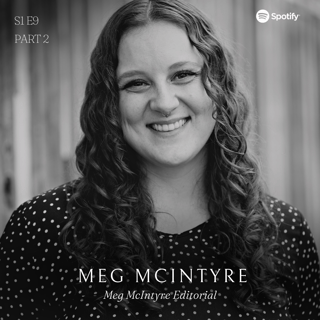
Speaker: Yeah, so tonight we have the lovely Meg McIntyre from Meg McIntyre Editorial.
Speaker: How are you doing?
Speaker: Hi, I'm great, Sam.
Speaker: Thank you so much for having me.
Speaker: Thank you for being here.
Speaker: Yeah, it's really exciting having you on.
Speaker: And yeah, no, I really, as I was saying to you before, for me, it's really lovely to have different people with different perspectives in the industry to come on and share their knowledge and their experiences as well.
Speaker: As most of the time, it's mostly authors and you are an author yourself.
Speaker: But tonight I want to focus on your editorial business and what you do.
Speaker: Yeah, I love that.
Speaker: It really is such a long process to get a book out into the world.
Speaker: And I think so much of it is not necessarily seen by the public who ends up getting to read those pages.
Speaker: So it's awesome to be able to share a little bit about what goes into it from beginning to end.
Speaker: Oh, absolutely.
Speaker: And yes, definitely.
Speaker: It really, really is.
Speaker: It's a very long and oftentimes very difficult process.
Speaker: I was sitting today trying to figure out the trim size for my novel and I had no idea what I was doing.
Speaker: I think I slammed my head against the keyboard a couple of times because I don't know what works, what doesn't work, what you're supposed to do.
Speaker: So yeah, no, definitely.
Speaker: It really is.
Speaker: It's a very difficult process.
Speaker: And a lot of work goes into it.
Speaker: I mean, I've spoken to how many authors who have gotten to a certain point and they kind of just want to give up because it's a lot of work, but then they end up pushing through.
Speaker: And I never realized,
Speaker: before, you know, how much work goes into it.
Speaker: So I think, yeah, hats off to everyone who has published a book, but also to people who work behind the scenes and work incredibly hard to allow us to get those books out there.
Speaker: Yeah, absolutely.
Speaker: I definitely agree.
Speaker: You work as an editor, obviously, as I've mentioned, but you were a journalist and you graduated with a degree in journalism studies, French and creative writing, and then went on to spend a year in the French Alps teaching English and French.
Speaker: Can you tell us a little bit about that?
Speaker: That seems really, really exciting.
Speaker: Yeah, I would say I've taken a little bit of a winding path to end up where I am now.
Speaker: But I think, honestly, everything that I have done professionally has sort of really combined in a really unique and interesting way to make me really suited to what I do now.
Speaker: I have always loved writing and reading and just like playing with words in general.
Speaker: And I think when I got to college, I just really felt like,
Speaker: I was still kind of finding my voice as a writer, right?
Speaker: Like I think it takes so many of us a long time to feel comfortable kind of sharing our ideas and feeling comfortable standing behind them.
Speaker: And so that's sort of what drew me to journalism is I felt like I could be sort of a conduit for telling other people's stories.
Speaker: And I really fell in love with that industry.
Speaker: I think it's so important that
Speaker: the kind of impact of local journalism really can't be understated.
Speaker: And that's what I worked in for about five years of my career.
Speaker: But I've always been someone who has a lot of interests and that's why I also studied French and I also couldn't stay away from creative writing.
Speaker: And I think, you know, taking that time after I graduated to be a teacher, to live abroad, to work as a journalist, it kind of just gave me really new and interesting perspectives and helped me sort of start to cultivate that voice, you know, start to pay more attention to kind of different parts of myself.
Speaker: And so starting my editorial business and kind of going independent was a really big turning point because I
Speaker: I was allowed to kind of create a business and a career that allowed me to combine all of those different interests and those things that I've become skilled at over time.
Speaker: So it's been, like I said, a little bit of a winding path.
Speaker: I've done quite a few different things, but I think all of it has really prepared me pretty well for this kind of unique work of being an editor.
Speaker: Oh, definitely.
Speaker: Yeah.
Speaker: And that's actually really interesting that you mentioned, you know, that it's been a unique experience.
Speaker: I think for most of us on the writing side as well, it has been that way.
Speaker: You know, we're not all, at least those of us who aren't full-time authors, we've all sort of found...
Speaker: found out who we are as authors.
Speaker: You know, we've all come to this point through different ways and experiences.
Speaker: And I think that's really, really cool because I think each of us, you know, that gives us our own sort of distinct voice, not only as authors, but also on the page.
Speaker: And that ends up shaping what we write now and who our characters are, I think, if that makes sense.
Speaker: Absolutely.
Speaker: Yeah, because so much of creating art is just about
Speaker: living and understanding people and taking in what's happening around you and creating meaning from it, right?
Speaker: Like you have to have experience beyond what's happening on your page or in your book to really make those characters and those stories come to life.
Speaker: And I think it's
Speaker: It's wonderful that the self-publishing industry has allowed so many more people to get back to their art in this way and still be able to create and have that voice and be part of publishing and the creative world without having to necessarily drop everything and make it your entire life.
Speaker: It's really opened up so many more possibilities for whose voices we get to hear.
Speaker: Yeah, that's really true.
Speaker: And I think in the past it may have been a controversial topic, talking about self-publishing, because I remember when I was initially researching which avenues go down, whether that was going to be traditional or indie publishing, I'd always been made to feel that self-publishing was not really...
Speaker: official you know yeah I feel like a lot of people thought that oh if you're a self-published author that means that you're actually you haven't really made it you know your book's not good enough to be considered for traditional publishing but you're trying anyway and and I I think I'm really grateful that that views at once self-publishing have changed um you know because it is it's incredibly hard work I think on both ends um whether you're traditionally published or self-published and
Speaker: Yeah, I definitely agree.
Speaker: I think that there still are, you know, certain circles or, you know, segments of the industry where there's a little bit of stigma around self-publishing, which is really unfortunate because, you know,
Speaker: as I said, it has really created another avenue for authors, especially authors who have traditionally sort of been shut out by the traditional publishing industry, not because of the fact that they don't have talent, not because of the fact that they don't have value, but because of the fact that the traditional publishing industry is built in such a way to privilege, you know, certain ideas and perspectives and voices.
Speaker: And so I think it's,
Speaker: wonderful to see self-publishing continuing to grow to kind of gain more respect because
Speaker: The basis of it is choice.
Speaker: Authors should have choice of what journey that they want to go on.
Speaker: And it's really attractive to a lot of creatives to have this level of control.
Speaker: Because really, even if you have a very, very polished manuscript, you've done the work, you've learned your writing craft, you've learned about the process, you've worked with maybe beta readers and editors on your own, there's still so much...
Speaker: that is out of your control with traditional publishing and so much relies on luck.
Speaker: Just, you know, getting your manuscript into the right agent's inbox at the right time, you know, managing it to get it on submission when there's not another project that's similar.
Speaker: Like there's so much that
Speaker: really is out of your hands as the author.
Speaker: And that industry has also been very opaque for a very long time.
Speaker: There's not a ton of transparency about how it works and what authors can do to sort of position themselves better as they start that process.
Speaker: And so self-publishing is like,
Speaker: really freeing in a way because yes, of course, there's still a certain degree of luck involved and there will always be things that you can't control, but, um, it takes away the sort of gatekeeping aspect of someone saying your book is only worth this much to us.
Speaker: Um, so I think that's really powerful.
Speaker: And I do, um,
Speaker: You know, I hope that it continues to sort of gain more respect in the wider creative community, which I think it is, especially now as we have some authors who have been traditionally published that are choosing to go self-published in the future because of that control.
Speaker: You know, I think.
Speaker: things definitely are changing.
Speaker: But for people who maybe are not avid readers, or maybe who are not writers or have not sort of been immersed in this world, I think it still is a little bit unknown.
Speaker: It's a little bit of a mysterious entity for people who are used to just going to their bookstore and picking a book off the shelf and not having any idea where it came from, you know?
Speaker: So there's still a lot of work for us to do as well, I think, in terms of connecting with audiences and really kind of like shouting to the rafters what the possibilities are with self-publishing.
Speaker: Yeah, yeah, definitely.
Speaker: No, I definitely agree with that.
Speaker: I also think in terms of traditional publishing, the other thing I think that people may not always remember, especially when you get that particularly painful rejection letter, you know, is that it doesn't always mean that your book's a failure or that you haven't been able to meet certain criteria for that novel, but it could just mean that your book is not the right fit for them.
Speaker: Yeah.
Speaker: Um, because yeah, I've, I've, I've been down that road, you know, I've had a couple of rejections in the past and, um, my decision to, to go indie was, was not because of that, but mostly because I want to control over cover design, uh, control about what stays in the book, what goes out obviously after editing and all of that stuff, you know.
Speaker: And yeah, you know, those rejection letters aren't always the end of the world.
Speaker: You know, they may just mean that your book isn't isn't the right fit for that specific publisher.
Speaker: And that's OK.
Speaker: You know that that's OK.
Speaker: And I think that's why having both options, I think, is a really nice thing to have, because I feel in the past we didn't always have, you know, the options that we do now.
Speaker: Yeah, absolutely.
Speaker: And I think we're always going to need a traditional publishing industry as well.
Speaker: I don't think that every author should drop their publisher and go self-pub, certainly.
Speaker: I think what we need, like you said, is the choice and the ability for authors to have more than one path to getting their book in the world.
Speaker: And self-publishing is –
Speaker: I think it can be empowering even for authors who do want to go that traditional route to see others self-publishing and see how they're getting their book out there and making a name for themselves.
Speaker: I think that can be empowering for traditionally published authors as well to know that
Speaker: I don't necessarily need the validation of this agent or this publisher to know that I have value as an author.
Speaker: And yeah, you're completely right that a rejection does not necessarily reflect at all on you or your book.
Speaker: It's...
Speaker: part of the process when it comes to traditional publishing.
Speaker: But I think having that second avenue can also help take the sting away a little bit because when we know that a no is not a final thing, when there's possibilities beyond that no, I think it can be really helpful.
Speaker: yeah definitely yeah i definitely agree with that so it's really really lovely to have a choice and to be able to to sort of weigh it up for yourself you know what would be the better option for you i think as an author um and and for your novel and kind of you know where you want to go with that uh because i've seen hugely successful uh indie authors you know um
Speaker: you know, hugely, hugely successful.
Speaker: But I think it also depends on what your own personal definition of success is as an author and kind of where you see yourself going and what you want, because success, you know, it doesn't always mean a feature film or, you know, but it could just mean getting your book out then and sharing that story.
Speaker: And I think hopefully that's where it starts for everyone is having that passion and
Speaker: and wanting to to put the story out to the world you know knowing that it can't just sit on your laptop on your notebook or in your head but actually sharing that with people hopefully I think would be the starting point yeah so when did you start writing and was there a specific novel that ignited that passion both for reading and for writing
Speaker: Oh, gosh.
Speaker: Well, I have been writing pretty much as long as I can remember, probably as long as I've been reading.
Speaker: And I started reading pretty young.
Speaker: I don't know that I could pinpoint...
Speaker: one specific book or novel, but I do remember as a kid just sort of being so enamored by the book, Scary Stories to Tell in the Dark, which is, you know, a collection of short stories that are very spooky.
Speaker: Campfire read that one.
Speaker: Yes, exactly.
Speaker: And I've always kind of been drawn to those darker subjects.
Speaker: I remember I had a summer camp counselor, like a day camp counselor,
Speaker: summer camp counselor who I used to beg her to tell me scary stories.
Speaker: And it got to the point where she was just kind of like recounting the plots of horror movies and things like that with, you know, I would say some censorship for my young years, probably.
Speaker: But I think just like storytelling has always been
Speaker: so exciting to me.
Speaker: And so I started out very early scribbling little stories and little poems and things and continued writing throughout school, throughout high school.
Speaker: But I think, as I said, I struggled for a long time to really feel like I understood myself and my voice and what I wanted to say with my writing.
Speaker: And I think this is very common.
Speaker: I think a lot of people who are creative
Speaker: struggle with this idea that maybe we don't actually have anything useful or important to say that someone will want to listen to.
Speaker: And that partly has to do with that structure that we were talking about of these industries that are very much built around gatekeeping and sort of hypercriticism.
Speaker: And so that was part of the reason that I went into journalism originally, but I still kind of had that creative urge within me.
Speaker: And I think
Speaker: When I decided to, you know, become an independent journalist and start exploring different sort of ways of using my skills, it really was reawakened in me.
Speaker: And that was a turning point where I sort of realized that.
Speaker: I do have something to say and I have been kind of not admitting that to myself because it's scary, right?
Speaker: Like it's scary to put yourself out there and say, I stand behind myself.
Speaker: my message and my voice.
Speaker: Um, and so it's, you know, I think it's always a work in progress for any creative.
Speaker: Um, no matter how many books you've written, no matter, no matter how many times you've been published, um, to kind of every time you put something new out, it's a little bit of a, um,
Speaker: It's a little bit of a whirlwind or like a heart attack almost that, you know, what if someone doesn't see what I'm trying to say?
Speaker: And I think that's part of the reason that I'm so passionate about being an editor and a mentor and helping writers.
Speaker: kind of get to that point of feeling comfortable sharing their work because everyone deserves to be heard.
Speaker: That's like the thing that I believe above everything else is that everyone deserves to be heard.
Speaker: Everyone has something worthwhile to share.
Speaker: And so I really see my role as an editor as helping you make sure that that message is received, helping you make sure that what you are trying to accomplish and what you're trying to say with your writing gets across.
Speaker: And that's so...
Speaker: It's so invigorating and it's so just fulfilling to see that happen when an author comes to me and maybe is a little bit lost with their draft or they feel like they don't know what direction they're going in or they don't know what needs to stay, what needs to go.
Speaker: And to watch them sort of whittle that down into the heart of the thing and kind of have renewed
Speaker: excitement and renewed passion for what they're doing is just, it's the best feeling in the world.
Speaker: So I still very much see myself as a writer and I'm working on a manuscript right now, but I think I will also always continue to be an editor, even if I get to the point where I'm publishing books frequently, because I think it's so important to have
Speaker: to have those people who are creating that support system and creating that I don't know just that space where authors can feel safe to to figure it out really no I love I really I love that so much because as as we've said and as I've continued to say on this podcast as well it's really difficult I mean I mentioned just last week that you know it's really really difficult putting yourself out there
Speaker: And most of the time, you don't really want to show that manuscript to anyone.
Speaker: You know, it's kind of your baby and you kind of want to protect that.
Speaker: But you can't do that forever, especially if you want to, you know, put that out to the world.
Speaker: At some point, you're going to have to let that go.
Speaker: And I think, yeah, I think it's really, really great what you do.
Speaker: So yeah, so touching on your business, could you tell us a little bit about what you do in more detail and how you work with authors?
Speaker: Yeah, so I primarily specialize in developmental editing, which really focuses on the story.
Speaker: It's sometimes also called content editing.
Speaker: But what I'm there for really is to help you kind of go through that draft with
Speaker: sort of a fine-tooth comb and look at everything from the characters to the setting to the plot to the voice, really kind of drilling down and figuring out what is making this book tick and what can make it shine even more.
Speaker: What are the sort of little seeds or the little glimmers that are happening that we can reflect
Speaker: We can pull out and we can expand on to make your book really shine.
Speaker: And that's something that I really love because I feel like it's not as well sort of known or understood as part of the editorial process from the outside looking in.
Speaker: I think when people think of the word editor, they think of something more like a copy editor who's going through looking at your grammar and making red marks and those sorts of things.
Speaker: Um, whereas developmental editing is really about like getting to the heart of the book.
Speaker: And that's my favorite part of, of writing and reading in general.
Speaker: So, um,
Speaker: That's what I really love.
Speaker: I do also offer the line and copy editing a lot of times in sort of a package, which I also love.
Speaker: I think having worked as a journalist and spent a lot of time being edited myself, I have that firsthand experience of what it's like to have someone kind of rip apart
Speaker: your words.
Speaker: And that's not, that's what I try not to do as an editor.
Speaker: Like I'm not there to slash, slash, slash, or cover your whole draft in red.
Speaker: I'm there to be a partner and to kind of, you know, help you see like what could be approved, but I'm also there to show you what's really working well.
Speaker: I think that's so important.
Speaker: And something that a lot of authors worry about is that working with an editor, they're just going to get a barrage of feedback about all the things they've done wrong.
Speaker: But
Speaker: A good editor should also be there to cheer you on and say, hey, look at this really awesome thing you've done or this character you created that I loved or this way that you're using language that is so interesting and unique.
Speaker: That's my underlying philosophy is that I'm not here to tell you what's wrong with your work.
Speaker: I'm here to tell you what's right with your work and how you can make it even better.
Speaker: And then I also, you know, I lead workshops.
Speaker: I do some one-on-one coaching.
Speaker: I kind of just try to be as involved in the author community as I can and support indie authors, even who I haven't worked with, I think,
Speaker: We need more champions for self-publishing, and so that's something that I really try to prioritize in my business.
Speaker: But yeah, it's really lovely to...
Speaker: get to kind of build relationships with the authors that I work with.
Speaker: And I do primarily work with authors who write the darker stuff that I've always been interested in.
Speaker: It's a lot of crime fiction, mysteries, thrillers, horror, and those sorts of things.
Speaker: And that's really where I'm most comfortable.
Speaker: So that's kind of my
Speaker: One of my favorite things about owning my own business is I get to decide who I want to work with, what I want to work on, and I'm able to really spend my time connecting with clients and having that one-on-one relationship instead of feeling like I'm always kind of rushing to the next thing.
Speaker: Yeah, I think that's really brilliant.
Speaker: And as you mentioned, I was going to say, luckily, those are the darker things.
Speaker: Those are the things you enjoy because I was going to say, well, welcome to the podcast because we're quite dark on the crime fiction side.
Speaker: Yes.
Speaker: Yeah.
Speaker: Yeah, everyone I've spoken to so far, they're like, I write this thing and it's really dark.
Speaker: And I'm like, well, welcome.
Speaker: Because that's what we do.
Speaker: You've found your people.
Speaker: Yeah.
Speaker: I mean, obviously, without being really horrible and really quite bad.
Speaker: Yeah, but yeah.
Speaker: Yeah, so no, that's just really good.
Speaker: And I absolutely love that you...
Speaker: you know you you work with everyone and it doesn't really matter who they are or you know what kind of novel they're writing like you find a space for them and I think that's so important um you know especially like I said in an industry that's super competitive um you know you oftentimes especially when starting out you don't really know where you slot in um so yeah I think I think that's really really good so how important then is it for you um
Speaker: Or, well, I guess as the author, how important is it to find the right editor for you and your novel?
Speaker: Yeah, I think it is maybe one of the most important decisions that you make as an indie author, especially.
Speaker: I think there are so many different...
Speaker: styles of editing in terms of how an editor approaches their work.
Speaker: There are so many different personalities, genre preferences like we've been talking about.
Speaker: And so it really is important to find someone who is going to be
Speaker: cheerleader for your work, someone who really believes in the book that you're writing, someone who understands the concept, who is someone who hopefully would want to read this book if they weren't editing it.
Speaker: You know, not every editor.
Speaker: Oh, yeah, that's true.
Speaker: Yeah.
Speaker: Yeah.
Speaker: Not every editor specializes by genre.
Speaker: There are some editors who are more generalist, which I think is totally fine.
Speaker: But I think the important thing to figure out is, does this editor
Speaker: enjoy this genre enough to be able to kind of look at the conventions and the tropes and the sort of genre-specific things that are happening and be able to provide helpful feedback.
Speaker: So that's a really important aspect.
Speaker: I think as well, you know, making sure that
Speaker: You're looking at who your editor has worked with before, making sure that they have testimonials or examples of books that they've worked on, you know, kind of a vetting process you definitely want to go through because there are, you know, there are so many amazing editors out there and not all of them have come from a traditional background where they've worked in publishing.
Speaker: So many, like me, have come from other industries and they've kind of, you know, pulled themselves up by doing their own training and
Speaker: really getting involved with the industry.
Speaker: But there are also sometimes editors who are not as experienced yet and may not have the necessary skills yet.
Speaker: And so you want to make sure that you know what you're getting when you go into that relationship.
Speaker: But sort of above all that, I think it's about
Speaker: like vibes, for lack of a better word.
Speaker: Like vibes.
Speaker: And this is a reason that I always do consultations with any prospective client who comes to me for an inquiry because I think it's really important to get that face-to-face opportunity to kind of make sure that
Speaker: we're on the same page.
Speaker: We kind of have a similar perspective on things.
Speaker: We can get along well.
Speaker: We can chat well.
Speaker: And that doesn't mean that your editor has to be your best friend, certainly.
Speaker: You're allowed to set whatever professional boundaries you want to set and all of that, but it should be someone that you feel comfortable being vulnerable with.
Speaker: Because as you were saying, Sam, it is such a scary thing to
Speaker: just like hand your baby over to somebody who you might not know that well yet.
Speaker: And you have to be able to feel confident that this person is going to treat your book with care and that they're going to be able to provide feedback in a way that
Speaker: feels supportive to you, even when it's constructive, even when it's feedback on what's not working well, it should be feedback that feels like you can put it into use.
Speaker: And that's why I also, you know, I offer sample edits and I think that's a big thing to look for when you're looking for an editor is whether they do a sample edit.
Speaker: Not all developmental editors do them because it's so focused on kind of like the book as a whole and being able to look at it from
Speaker: that sort of 10,000-foot view, but I think it's still really important for an author to be able to see, you know, the kinds of things that I might be commenting on in their manuscripts.
Speaker: What is my style like when I'm leaving a comment?
Speaker: Am I, you know, a casual commenter where I'm going to be kind of like squealing over things if it's like a romance or screaming over things if it's a scary book?
Speaker: Or am I going to be a little bit more formal?
Speaker: Am I, you know, I think finding out
Speaker: what their approach is and how that feels to you when you read through it.
Speaker: That's what the sample edit is really important for.
Speaker: And I think this is such an important conversation to have because nine times out of 10 when I hear from an author that they had a bad experience with editing or that they weren't happy with the deliverables that they received or they don't want to work with an editor again because they –
Speaker: really didn't like the person that they worked with.
Speaker: It's a question of fit.
Speaker: It's a question of that editor might not have been the right editor for your project or that author.
Speaker: And it can, you know, if you aren't able to take the time to really do that vetting and background research and figuring out whether the relationship works, you
Speaker: you might end up in a situation where you don't feel safe working with an editor again because the fit wasn't right and it didn't end up being the experience that you were expecting.
Speaker: So I do think it's something that indie authors should start thinking about pretty much as soon as they start writing.
Speaker: You certainly don't need to reach out when you've written one page to look for your editor, but...
Speaker: You know, start following editors online or looking through professional databases and directories.
Speaker: Start reading up a little bit about choosing your editor.
Speaker: Kind of have it on your radar when you start writing so that when the time comes to actually start looking and interviewing, you have a sense of what you actually want and what you need from that relationship.
Speaker: Yeah, and that's exactly what you mentioned.
Speaker: Now it is essentially is about relationships, isn't it?
Speaker: Because you need to feel comfortable working with that person.
Speaker: You know, I think to a certain extent, you need to be able to connect with that person because they're working on on this project with you.
Speaker: Shouldn't be one sided.
Speaker: Exactly.
Speaker: Exactly.
Speaker: And I think that's also another reason that it's important to just start plugging into the creative community and the indie publishing community in general because that's how you're going to sort of stumble on people that you connect with, people that you feel like –
Speaker: have that sort of kindred spirit vibe where, you know, this is like someone who I want reading my book.
Speaker: And it doesn't necessarily need to be a process of like, okay, today I'm going to sit down and I'm going to research for editors.
Speaker: It can be something that's more organic over time of just seeing, you know, when you're in online spaces or when you're in in-person creative spaces, like who
Speaker: who feels safe or who feels exciting, like when you see their content online or, you know, just like keeping an eye on those things and being part of that wider creative community in general so that you have other writers who you can talk to about this, other people you can ask for referrals and recommendations.
Speaker: Like there really is no downside to getting involved in the creative community and, um,
Speaker: it makes it so much easier to find that right editor when the time comes.
Speaker: Yeah, definitely.
Speaker: Definitely.
Speaker: Yeah.
Speaker: A hundred percent agree with that.
Speaker: It's, you know, it's about connecting with people.
Speaker: And I think half the time I wouldn't have found the people that I needed, like industry contacts that I needed without having that community, especially on Instagram for me, without reaching out to people and being like, Hey, who did you use for this?
Speaker: Or who's your cover designer or who, who edited your novel?
Speaker: You know, can I, can I reach out to that person?
Speaker: So yeah, definitely community, I think is really, really important, especially for, uh, for indie authors.
Speaker: Um,
Speaker: I would say traditionally published authors as well.
Speaker: But I think in our circle as well, yeah, it's really important.
Speaker: And also just having that community where you feel safe and you feel supported is a really big one.
Speaker: Yes, absolutely.
Speaker: Absolutely.
Speaker: Thank you so much for listening.
Speaker: If you enjoyed this episode, stay tuned for part two, which will be out in the next few weeks.
Speaker: Part two was basically just a Q&A session that I had with Meg based on questions that you, the listener, submitted to me on Instagram and on Twitter.
Speaker: um so yeah so we had a bit of a deep dive into those and really looked at them um in detail so yeah if that's something you're interested in um yeah stay tuned for part two and that will be out soon thank you so so much for all your support um so far it's really really been really very much appreciated and i look forward to the next few