Transcript
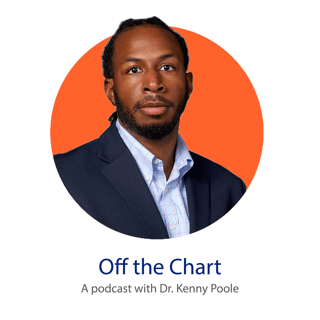
Speaker: Hello and welcome to Optum's Off The Chart podcast, where we introduce you to Optum's nationwide family of dedicated clinicians by highlighting their human side.
Speaker: I'm your host, Dr. Kenny Poole.
Speaker: I'm a healthcare experience champion, and I'm also a general internal medicine physician.
Speaker: Today's guest is Dr. Neil Gokul, a family medicine physician from Southwest Medical Associates Optum, Nevada.
Speaker: Here's what's on the chart regarding Dr. Gokul.
Speaker: Dr. Gokul went to medical school at St.
Speaker: George's University School of Medicine and completed his residency in family medicine at Atlantic Health Systems in affiliation with Mount Sinai in New York with a certificate in global health.
Speaker: Dr. Gokul is Medical Director of Clinical Education for Southwest Medical Associates, Associate Program Director of the Valley Health System Family Medicine Residency Program, and a regional champion for One World Surgery, which provides medical care to communities in need in the villages of the Dominican Republic, even through virtual consultations during the pandemic.
Speaker: He is also an associate professor of family medicine at Roseman University and adjunct clinical faculty at UNLV School of Medicine.
Speaker: Dr. Gokho, it's a pleasure to meet you.
Speaker: Thank you.
Speaker: Likewise.
Speaker: All right.
Speaker: So now let's go off the chart a little bit and start with your upbringing.
Speaker: Tell me about where you grew up and how you grew up and what led you to a career in medicine.
Speaker: Absolutely.
Speaker: I was born and raised in Charlotte, North Carolina to immigrant parents who moved to the United States from South Africa.
Speaker: My parents migrated here in search of, like most people, a better life, but largely better health care, especially for my oldest sister,
Speaker: She was born with a medical condition called hydrocephalus and medical care was difficult to access in South Africa.
Speaker: It was heavily discriminated against based on your color of skin, race and beliefs and other things.
Speaker: So by the time my parents had moved to the USA and
Speaker: My sister started receiving care.
Speaker: She underwent 18 surgeries on her spine by the age of 12.
Speaker: And it was a difficult road for a family who's living in a new country with a new language, let alone having to navigate a health care system, which we all know can be exceptionally challenging without a lot of guidance.
Speaker: We spent a lot of time in and out of doctor's offices, in and out of hospitals with my sister.
Speaker: And it was very confusing and struggling and hard to be around and see my parents struggle with that.
Speaker: But there was one orthopedist, a surgeon who really was life-changing for my family, especially for my sister, who really helped make a physical change.
Speaker: But more than that,
Speaker: helped guide a family who was otherwise lost and not sure what to do next.
Speaker: He was a wonderful person and really did impact the entire trajectory of my sister's life and my parents' life as well.
Speaker: And that's when I recognized that that was what I wanted to do in medicine.
Speaker: That was the person I wanted to try to be for others.
Speaker: And so I knew at a very young age,
Speaker: that that's what I wanted to strive for.
Speaker: And I think about that position all the time.
Speaker: In fact, as I'm speaking with you, I look up at a photo I have of him and my sister from many, many years ago, but I reflect on it often.
Speaker: So, you know, going into college then where you already sat on being pre-med as a major,
Speaker: That's a great question.
Speaker: I was not pre-med as a major.
Speaker: In addition to wanting to know I wanted to go into medicine, there were many other things I also wanted to do.
Speaker: And I didn't take no as a great answer many times in my life.
Speaker: I knew I wanted to work as an educator.
Speaker: So I did work as a student teacher in South LA.
Speaker: I knew I wanted to work in politics.
Speaker: So I spent a couple of years working for Congress in Washington, D.C.
Speaker: But I also knew I wanted to get my degree in engineering.
Speaker: I loved the philosophy of engineering principles.
Speaker: So that's what I went to school for in my undergraduate years to get a degree in biomedical and biochemical engineering.
Speaker: Okay.
Speaker: And where'd you go to college?
Speaker: I went to USC, the University of Southern California.
Speaker: Got it.
Speaker: So then, you know, all these different interests and experiences that you had,
Speaker: after college, take me to the decision to go ahead and start medical school.
Speaker: Yes, definitely.
Speaker: I would say the pinnacle of that would have been when I was offered a chief of staff position for the congressman for whom I worked at the time in Washington, D.C., and it was a
Speaker: high stakes game as you can imagine being in the political world i loved the energy i loved being in that city i loved the history of it and that was certainly the time point when that job opportunity presented itself to me and my response was a request for a letter of recommendation for medical school it was the time that i knew
Speaker: I had came, seen, and done the things that I had always wanted to.
Speaker: I was fortunate and blessed to be able to have that opportunity and was now ready to move forward with my initial and front and foremost dream of pursuing medicine as a career.
Speaker: Got it.
Speaker: So then, so you get into medical school and you decide to go into family medicine.
Speaker: What went into that decision?
Speaker: Why family medicine as a career?
Speaker: I remember almost to the moment when I decided I wanted to become a family physician.
Speaker: And it was when I was rotating as a medical student with a family physician, Dr. Joseph Tribuna in northern New Jersey, who later went on to become my program director and now great mentor and friend.
Speaker: recognizing the relationships that he had with each and every one of his patients.
Speaker: He was great at caring for them medically and more than that was a part of their family in such a great sense.
Speaker: He knew about anniversaries and graduations and proms and birthdays and was really a significant part of the lives of his patients.
Speaker: And I remember being in the office with him on my first day with him and having that moment of knowing
Speaker: That is who I want to be.
Speaker: This is what I want to do.
Speaker: That's great.
Speaker: So outside of work, what is your current support system or family look like away from the clinic?
Speaker: I have an amazing family.
Speaker: I'm very fortunate to live in close proximity to both my sisters, my parents, and then of course my spouse here in Las Vegas, and they definitely deserve a lot of credit for putting up with me.
Speaker: have busy days long days it's where that i get home on time i'm not even sure what on time really means or if that has a definition in this career but and i think that goes for most health care providers it really does require support of a great family system around us to be able to do what we do so i credit a lot of what i'm able to do to them and enjoy spending time with them we have a lot of fun together food definitely
Speaker: always brings us together.
Speaker: We all love to cook and prepare and enjoy food together.
Speaker: So that's definitely something that we enjoy doing.
Speaker: And then did you lure them from
Speaker: Charlotte, your extended family from Charlotte, or had the family already made their way west?
Speaker: Because I know you mentioned guys coming to Charlotte and growing up there, but then you went to USC for college.
Speaker: So how did everybody get it to Nevada?
Speaker: Yes, that trajectory was a little bit different.
Speaker: So when my family first came to this country, they actually...
Speaker: came very quickly and initially to California and then ended up here in Las Vegas working mostly in the motel and hotel industry.
Speaker: And it was from here that our family really dispersed all over to
Speaker: Tennessee, Georgia, us to North Carolina.
Speaker: And so that's where I was born and grew up most of my childhood.
Speaker: But over the years, especially as I finished college and such, that's when my parents and my sisters migrated back to Las Vegas, kind of the beginning point for all of us.
Speaker: That's good.
Speaker: Very cool.
Speaker: So what do you like to do for, you know, in terms of hobbies and your spare time?
Speaker: I love what I would consider baking and what others would consider making a complete mess in the kitchen.
Speaker: But I love the science and creativity that can go into making something that just looks and hopefully tastes really amazing and beautiful.
Speaker: Great.
Speaker: So describe your perfect day off.
Speaker: I know you do a lot of different things in terms of teaching and precepting, volunteer work, education, and obviously your own clinic.
Speaker: If you had a perfect day off, no responsibilities, what are you doing?
Speaker: Wow, the fact that there's a pause there is probably not a good thing.
Speaker: I was going to say that.
Speaker: You're doing all this thinking and you can't answer these.
Speaker: You're in need of one.
Speaker: I think it's pretty simplistic.
Speaker: I would love to not touch my phone or computer, have a little bit of time outdoors, and then some time in the kitchen would be a great day off for me.
Speaker: Okay.
Speaker: So kind of
Speaker: you know, we're going to get close to the end here and bringing it back to healthcare.
Speaker: I mean, you talked about two very impactful physicians, you know, one that certainly had, you know, a professional imprint on you and another whose imprint went beyond the professional piece, obviously with the personal part related to your sister.
Speaker: As it relates to you though, what's the best part of being a physician?
Speaker: The relationships absolutely.
Speaker: Anyone listening to this won't know that I was running late and that you and your team were kind to wait for me.
Speaker: But this morning I spent my morning with patients and some of them doing well, some of them not so well, but each and every one of them just so grateful.
Speaker: for our relationship, the fact that I know them and that I'm able to be there and be a part of their healthcare journey for better or for worse, whatever they were going through today.
Speaker: It really is just, it's majestic.
Speaker: It's fantastic.
Speaker: I love those connections with people.
Speaker: I love being able to connect with them and know that we're
Speaker: both on the same journey and doing things to improve their quality of life and just knowing how much that they have in respect for the system and healthcare because of our relationship means the world to me.
Speaker: I love it.
Speaker: Got it.
Speaker: Well, in closing, taking a step back from just you and looking at the entire healthcare system, if you're given a magic wand to make healthcare work better,
Speaker: to improve our healthcare system?
Speaker: We'll say for the United States, what would you do?
Speaker: I would remove cost as a factor in making decisions.
Speaker: It's difficult to see patients who you know are in need of a higher level of care or a more acute level of care, and their first question being how much is it going to cost
Speaker: When my first question is, how do I make sure you're not going to die?
Speaker: Those are two very starkly different points of view.
Speaker: And they unfortunately come together far often than they should.
Speaker: Yeah, it seems like more now than certainly before.
Speaker: So I hear you with that one.
Speaker: I think that's a perfect way to end our discussion.
Speaker: Dr. Gokel, thank you so much for being on the podcast.
Speaker: I really enjoyed speaking with you.
Speaker: It was my pleasure.
Speaker: Thank you so much for the opportunity.
Speaker: Certainly.
Speaker: So, well, that's it for this episode of Optums Off the Chart podcast.
Speaker: I want to thank everyone for listening.