Transcript
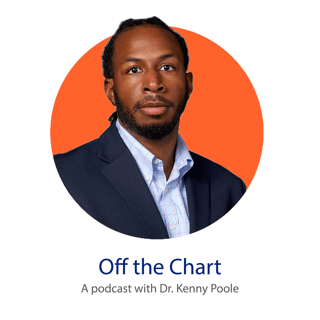
Speaker: Hello and welcome to Optum's Off The Chart podcast, where we introduce you to Optum's nationwide family of dedicated clinicians by highlighting their human side.
Speaker: I'm your host, Dr. Kenny Poole.
Speaker: I'm a healthcare experience champion, and I'm also a general internal medicine physician.
Speaker: Today's guest is Dr. Julia Riley, a podiatrist from New West Physicians in Colorado.
Speaker: Here's what's on the chart regarding Dr. Riley.
Speaker: So Dr. Riley obtained her doctorate degree from Dr. William M. Scholl College of Podiatric Medicine at Rosalind Franklin University of Medicine and Science in North Chicago, Illinois.
Speaker: She then completed her residency at the Edward Hines VA Loyola University Medical Center.
Speaker: Dr. Riley, it's a pleasure to meet you.
Speaker: Thank you for joining us.
Speaker: Thanks for having me, Kenny.
Speaker: All right.
Speaker: All right.
Speaker: Well, let's start with this.
Speaker: Tell me about your upbringing, where you grew up and how you grew up.
Speaker: So I am from a lot of places, but spent most of my time in Kentucky.
Speaker: My dad was a civil engineer, so he worked on bridges and highways.
Speaker: And so we moved a lot and settled in Kentucky when I was 14.
Speaker: And I stayed there until I left for Chicago.
Speaker: So 1990 to 2002.
Speaker: So I would say I'm a Kentuckian at heart.
Speaker: So and then where'd you go to undergraduate?
Speaker: Did you go to undergraduate?
Speaker: I went.
Speaker: No, I went to the University of Kentucky.
Speaker: Oh, OK.
Speaker: OK.
Speaker: Got you.
Speaker: So you were there until until you went on to graduate school.
Speaker: Yes, I was there for two basketball championships and the one runner up.
Speaker: OK, if you search, if you search the Internet, you might find a photo of me on top of a phone booth.
Speaker: Really?
Speaker: All right, I'm going to hold you to that.
Speaker: Yeah, glad you enjoyed the celebration.
Speaker: Yeah.
Speaker: So what led you to a career in podiatry?
Speaker: Well, I was always a science nerd.
Speaker: I liked science.
Speaker: And initially when I was at UK, I was going to be a dietician.
Speaker: And that's my undergraduate degree is in nutrition.
Speaker: And once I did my internship, I kind of decided it wasn't really for me, at least hospital work.
Speaker: And in the time, interestingly, in order...
Speaker: In order to have health insurance, you had to be a full-time student, okay, on your parents' insurance.
Speaker: So when I grew up- Yeah, you had to be like 26 or something like that.
Speaker: Yeah, you had to be a full-time student to have health insurance.
Speaker: So I was always kind of a nerd and I just had to have health insurance.
Speaker: So I went right back to school after I graduated because I just wasn't sure what I wanted to be.
Speaker: And I took some chemistry classes.
Speaker: I wanted to be a biochemist.
Speaker: Mm-hmm.
Speaker: And when I was in those classes, I went to Northern Kentucky University for that.
Speaker: And it's a pretty small school.
Speaker: So when you're doing analytical and organic chemistry, there's only about 10 or 15 people in your class.
Speaker: And at the time, everybody was going to go to med school and who were taking those classes.
Speaker: So my friend Olivia was like, you should apply to med school with me.
Speaker: So I was like, all right, I got nothing else to do.
Speaker: I got to be a student.
Speaker: So I applied to med school and somehow, some way when you apply or you take the MCATs, non-traditional medical schools get your information and they sort of start recruiting.
Speaker: So I got contacted by a recruiter at the Chicago podiatry school.
Speaker: And I didn't really know, honestly, what a podiatrist was.
Speaker: I mean, I was, you know, 20 something and I didn't realize it was a different school.
Speaker: And so he invited me to Chicago, but I was young and single and I went to Chicago and I loved it.
Speaker: It was the world's best place.
Speaker: And I still feel that way.
Speaker: So I was like, you know what?
Speaker: I want to move to Chicago.
Speaker: So I'm going to podiatry school.
Speaker: And I did.
Speaker: And I figured if I didn't like it, then I would just do something else.
Speaker: And that's kind of how I fell into it.
Speaker: And I did end up liking it.
Speaker: And here I am, you know, 15, 20 years later.
Speaker: So talk to me about like, like within podiatry, are there.
Speaker: Yeah.
Speaker: subspecialty areas within podiatry.
Speaker: And if so, do you subspecialize in any of those areas?
Speaker: So, yeah, I mean, there are, you can, you can do with it what you make of it.
Speaker: We all sort of learn the same things, you know, it's very similar to traditional medical school.
Speaker: We do our first two years of, you know, science classes and most schools are integrated with allopathic medical schools now, meaning that you're all sort of together, but we know going in that we're going to be podiatrists.
Speaker: So when clinical start, you kind of split up a little bit.
Speaker: But yeah, you can specialize in wound care.
Speaker: You can specialize in, you know, reconstructive surgery.
Speaker: There are fellowships available now.
Speaker: When I was graduating, there were very few of those.
Speaker: And fellowships kind of help you spend an extra year doing whatever it is that you want.
Speaker: But, you know, most of us choose our residencies based on what we want our practice to look like.
Speaker: Um, and you know, I went to a pretty well-rounded program, so I do a little bit of everything.
Speaker: I am board certified in wound care, but it's not, it's not the only thing I do.
Speaker: I did that as an extra certification because I mean, you just get a lot of wounds when you're a podiatrist.
Speaker: So, um, just for, for what was the pathway then from, from podiatry school to new West physicians?
Speaker: All right.
Speaker: So long story, I am from the, you know, Kentucky.
Speaker: And so when I was looking for a job, I wanted to be relatively close to, you know, my dad.
Speaker: And so I kind of looked within a hundred miles of where I grew up and I found this job at American health network, which was similar to new West before the, before it was purchased from Optum.
Speaker: And, um,
Speaker: I took a job there and it was an independent physician owned group.
Speaker: And I really liked the, just the way they had it set up.
Speaker: I'm not a business minded person really.
Speaker: So I didn't want to be someone who had to worry about billing and,
Speaker: coding and, you know, HR things.
Speaker: And so I wanted a larger group or a multi-specialty group.
Speaker: So I fell into that job, but neither my husband nor myself.
Speaker: And in the process, I ended up getting married.
Speaker: So we didn't like Indiana, no offense to people who live there.
Speaker: It just wasn't for us.
Speaker: It's just, we weren't real happy geographically.
Speaker: And my husband went to CU Boulder,
Speaker: And he loved Colorado.
Speaker: And to be honest, before I interviewed out here with Dr. Cohen, I'd only been to Denver once.
Speaker: So, and that was in my early twenties just to go skiing.
Speaker: But my husband had always wanted to come back here and he had worked for a tech company that did some major layoffs.
Speaker: And so he was kind of on a career sabbatical.
Speaker: And so one day I went to a all physician meeting at American health network and Dr. Ken Cohen
Speaker: was one of the keynote speakers and I just loved him and I loved everything he said.
Speaker: And I thought, man, that guy and I have a lot in common in how we think of healthcare.
Speaker: And so I emailed him.
Speaker: I said, Hey, I'm one of the podiatrists at American Health Network.
Speaker: And I don't, I'm just wondering if you've considered adding a podiatrist.
Speaker: And then I
Speaker: There was a big blizzard and so that they were supposed to have a meeting about it.
Speaker: The meeting got canceled.
Speaker: And then a couple months later, he called me and he had brought it up to the medical management committee and they said, yeah, they were interested.
Speaker: So I came out, met everybody and here I am.
Speaker: You are.
Speaker: So changing things up a little bit.
Speaker: Tell me about your family outside of medicine and your source of support.
Speaker: Uh huh.
Speaker: So I have a husband who is now a stay at home dad after once COVID started.
Speaker: Thankfully, he was able to stay home and homeschool our kids for a year, which was really nice because I don't know.
Speaker: I don't know what we would have done.
Speaker: I have two kids.
Speaker: I have a 10 year old daughter and I have an eight year old son.
Speaker: And we have a big German shepherd Malinois mix, four cats, two hamsters and two fish.
Speaker: So tell me about outside of family, your parents, what are some hobbies, special interests that you have outside of medicine?
Speaker: Um, I love to clean.
Speaker: So I spend most of my days off cleaning my house, which sounds ridiculous, but it's very, you want to visit, you want to visit me?
Speaker: I spend, I take Fridays off now and I spend most Fridays doing my chores and cleaning my house and it makes me happy.
Speaker: Everything's in order and everything's clean.
Speaker: And then I get to go into the weekend with nothing to worry about.
Speaker: I like to, while I've recently, I've always liked to
Speaker: you know, work out, but I've recently joined Peloton, which is a little, it's a little bit of a cult and I have officially joined the cult.
Speaker: And my husband said that if I talk about Peloton one more time, he's going to leave.
Speaker: We like to get outside.
Speaker: We live on some acreage up in the mountains.
Speaker: So we do a lot of outdoor, you know, easy hikes with my kids and walking with the dog and, you
Speaker: I don't know.
Speaker: That's kind of it really.
Speaker: So, so all that said, you know, with all those different things, what's described to me, you're a perfect day off.
Speaker: Yeah.
Speaker: Nothing on the calendar.
Speaker: What are you doing?
Speaker: So one of my favorite things about having Fridays off is that I can be a mom in the morning.
Speaker: So I get to wake my kids up and get them ready for school and feed them.
Speaker: If they feel like eating, I take them up to school.
Speaker: I usually come home and then walk my dog.
Speaker: We have a little private, about a mile and a half loop of a hiking trail.
Speaker: So I take him on that.
Speaker: Yeah, it's really nice.
Speaker: And then I start my chores.
Speaker: This morning I cleaned my kitchen and did a load of laundry.
Speaker: Then I usually work out, get my chores done, wait for my kids to get home.
Speaker: My kids love to play board games and
Speaker: do little crafts.
Speaker: So we do a lot of that, help them with homework and I don't know, just kind of take care of life's business, you know?
Speaker: Yeah.
Speaker: Nice and simple.
Speaker: Yeah.
Speaker: We like to eat.
Speaker: We like to go out to eat.
Speaker: That's one of our favorite things to do.
Speaker: Hence the need for Peloton.
Speaker: Trade-offs, right?
Speaker: So,
Speaker: So going back to medicine and close things out here, what's the best part about what you do?
Speaker: Tell me the best part of being a podiatrist.
Speaker: Well, even with all the stuff that goes on in healthcare, I still really enjoy forming relationships with my
Speaker: patients.
Speaker: I have a lot of long-term patients that I see, you know, over and over again, whether they have injuries or surgical or, you know, they're diabetics.
Speaker: So I still have patients from my old job in Indiana that I keep in touch with.
Speaker: In reality, sometimes they'll email me.
Speaker: I got a Christmas card from one of them.
Speaker: Yeah.
Speaker: It's really nice.
Speaker: And it's really fun just to get to know people and, um,
Speaker: you know, help them.
Speaker: And in podiatry, some of the, you know, some things are harder, but a lot of stuff I can fix same day, you know?
Speaker: And so I do a lot of in-office procedures and, you know, people will come in and say, oh, this has bothered me for 10 years and I can, I can fix it in 15 minutes.
Speaker: And then they think I'm a foot genius, you know?
Speaker: So it's fun.
Speaker: It's fun to help people and make relationships with my patients and,
Speaker: You know, I generally like everybody that I work with at the office, all the assistants.
Speaker: So it's honestly my social outing.
Speaker: As you know, we spend a lot of time at work.
Speaker: So, you know, I would say mostly patient care, which is one of the reasons that I like working for companies like this, because I don't really have to do much else other than patient care, you know?
Speaker: So I don't have to worry about, you know, logistics.
Speaker: That's all sort of taken care of for me.
Speaker: Yep.
Speaker: Then, you know, as a final question, when you look at the health care system as a whole, if I gave you a magic wand, what would you change about health care and the practice of medicine to make it work better?
Speaker: Oh, Kenny, cost by definition.
Speaker: Absolutely.
Speaker: 100 percent.
Speaker: My husband has some serious health conditions and we spend.
Speaker: And we're not struggling financially, but I mean, a good large percentage of our income goes to pay in for medications and procedures.
Speaker: And so I feel my patients pain when they're making decisions based on deductibles and finances and everything.
Speaker: I mean, I think if we could change anything, we could try to make health care more affordable for people.
Speaker: For everybody.
Speaker: Yeah.
Speaker: Well, I like that.
Speaker: And that's a perfect way to end our discussion.
Speaker: Dr. Riley, thank you so much for being on the podcast.
Speaker: This was great.
Speaker: Thanks, Kenny.
Speaker: It was fun.
Speaker: Thanks for having me.
Speaker: Certainly.
Speaker: So that's it for this episode of Optum's Off the Chart podcast.
Speaker: We want to thank everyone for listening.